


Local News
Two Toronto synagogues attacked over the Canada Day weekend in a window-smashing spree
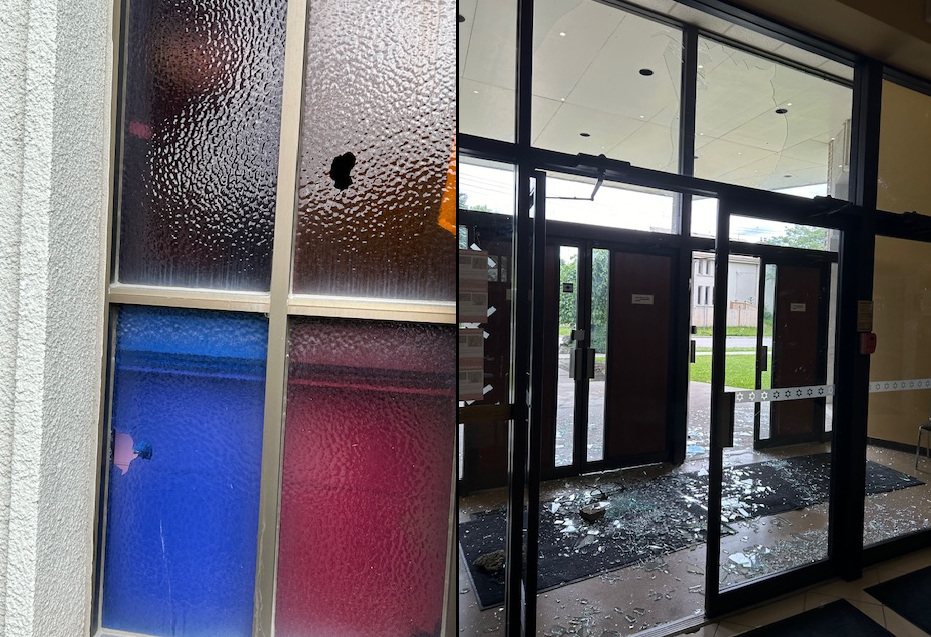
June 30, 2024 By MICHAEL FRAIMAN (Canadian Jewish News)) When members of Pride of Israel Synagogue in Toronto began showing up for Sunday prayer services on the morning of June 30, in the middle of the Canada Day long weekend, they were shocked to discover several windows shattered, holes in their stained glass and stones scattered onto the bimah.
The congregants stood there for a moment, rattled and disappointed. But that didn’t stop them from holding their 9 a.m. services.
“We’re gonna go on,” Carl Zeliger, vice-chairman of the congregation, told The CJN over the phone as the sounds of broken glass cracked under his feet. “Our service continued today. All [the vandal] accomplished was maybe a five-minute delay in the start of our services. We’re gonna continue. This isn’t going to help them.”
The custodian of the building, which is located near the intersection of Steeles Ave. and Bathurst St., first noticed the damage after arriving at 8 a.m. Police were called by 8:30. A forensic team gathered evidence for several hours until they gave the congregation the green light to clean things up.
The attack allegedly occurred earlier that morning. A nearby resident told Zeliger that they were awoken by a loud crash shortly before 3 a.m. According to Zeliger, this neighbour looked out their window and saw a motorcyclist wearing a helmet and speeding away. The neighbour then called the police at 3:02 a.m., according to a Toronto Police Service press release.
Police added that they believe the same suspect attacked the Kehillat Shaarei Torah synagogue at 3:30 a.m., throwing another rock at a window—the third such attack on the Bayview Ave. and Fifeshire Rd. building since mid-April, along with an incident involving a dead raccoon left in its parking lot.
Michael Gilmore, executive director of Kehillat Shaarei Torah, confirmed to The CJN that their video cameras captured on tape the motorcyclist pull up to their shul, remove two small objects from their pockets and throw the objects at their windows.
However, because the synagogue had not yet repaired their windows from the previous attack, this latest suspect merely threw the objects at polycarbonate covers that shielded already-broken glass.
“These three separate attacks have encapsulated the very real and present dangers that the Jewish community across Canada faces daily,” Gilmore told The CJN. “Fortunately, as Jewish generations before us have done, we come together as a community stronger, more united, and with a greater sense of purpose than ever before.”
In their press release, Toronto police confirmed they are treating the investigation as being “a suspected hate-motivated offence” and will be increasing police presence in both areas.
The damage to the Pride of Israel building, Zeliger says, “is quite significant.” The attacker threw two large, heavy rocks through the windows above the main entrance. They also threw a couple smaller stones that pierced (but did not shatter) the stained glass windows that lead to the sanctuary. Those stones ended up on the bimah.
In addition, the attacker seemingly attempted to break a glass door with a different rock, but that door held strong.
As of Sunday afternoon, the congregants had already contacted professionals to fix the glass, and made immediate plans to call their insurance company and review their safety and security protocols.
Pride of Israel Synagogue traces its roots to 1905, when the Pride of Israel Sick Benefit Society was founded in a house on Chestnut Street in downtown Toronto. The grassroots organization sent doctors and money to community members who were sick or in need. The congregation, which describes itself as “traditionally conservative” yet independent of any Jewish denomination, eventually moved into its current building in North York in 1969.
Its name, Zeliger believes, is partly what made it a target in the long aftermath of Oct. 7.
“If you view this as anything other than antisemitism, I don’t think you’re paying attention to the reality today,” he says. “My parents were Holocaust survivors. This hurts. I love my parents, but I’m happy they’re not here to see this.”
This incident makes Pride of Israel the latest in a wave of antisemitic attacks that has washed over all of Canada, with Jewish buildings being lit aflame, shot at and vandalized in Vancouver, Montreal, Toronto and many other cities on a recurring basis.
What struck Zeliger most was how this happened on the eve of July 1.
“We as Canadians are supposed to be joyful of who we are, where we are. But that includes people of all different races, colours, religions, whatever. This is really an affront to everyone—that this is what happened on a Canada Day weekend. It’s basically saying our values dont mean anything. I really would like to see the silent majority come to terms with this. We have to do better. We can make this a better Canada.”
Local News
Third annual JFest Winnipeg will be offering programs for all ages

By MYRON LOVE JFest Winnipeg is back with a good variety of musical performances, a book launch, popular Jewish-themed films, children’s activities, and a family-oriented Shabbat dinner.
“JFest,” observes Laura Marjovsky, the Rady JCC Director of Programming, “is an opportunity for our community to experience Jewish art and culture. With our range of JFest events, we are trying to reach out beyond what has been our base audience and appeal to all ages. We have a commitment to bring top notch Israeli performers to share the highest caliber of Israeli entertainment with our audiences.”
The week-long festival (November 14-21) kicks off with a performance by top-ranked Israeli singer-songwriter Harel Skaat. The popular Israeli star began singing as a child. He shot to fame when he finished second in the second season of “Kochav Nolad” – Israel’s version of “American Idol.” His first album was released in 2006 and achieved Platinum status – with one of the songs being ranked as “song of the year.” He followed that up in 2009 with a second album that reached Gold status. In 2010, he represented Israel at the Eurovision competition.
Skaat’s performance is scheduled for the Seven Oaks Performing Arts Centre (which is attached to Garden City Collegiate) beginning at 8:00 P.M. on Saturday, November 14. Patrons will have the opportunity to purchase an enhanced ticket to attend a meet and greet with Harel.
All other JFest programs and activities will be at the Rady JCC.
Music Producer Karla Berbrayer says Ben Caplan’s performance on Saturday, November 21 will also be another highlight. “Ben Caplan redefines what it means to be a modern folk artist,” Berbrayer says. “His music and stories are matched by his larger-than-life stage presence. This concert focuses on how his Jewish upbringing has influenced his entire performance career.”
“Flatland Famous” is returning by popular demand. This quintet, known for its performances at Winnipeg Jets games, will be presenting its concert, “Jewish Soul of Rock and Roll,” on Wednesday, November 18, at 7:30 pm. This year’s show will feature songs by Amy Winehouse, Neil Diamond, Barbra Streisand, Simon and Garfinkel, and other famous Jewish icons.
On Tuesday, November 17, local author Deborah Schnitzer will be taking centre stage with the launch of her new book, “The Woman Who Swallowed West Hawk Lake.” The University of Winnipeg English Professor Emeritus’s new novel explores intergenerational trauma related to Nazi breeding programs. Joining Schnitzer on stage will be a panel of professionals who have experience working with children who have experienced trauma.
And of course, “Best of the Fest” is back. Films to be presented will include“The Floaters” and “We Met at Grossingers,” two wildly popular movies at last spring’s Winnipeg International Jewish Film Festival.
“The Floaters,” to be screened on Monday , November 16 at 7:00 pm is a funny and bang-on depiction of Jewish summer camp culture.
“We Met at Grossingers” is a loving look back at the Borscht Belt in New York’s Catskills, where generations of young Jewish performers earned their dues and developed their acts. The film will be screened on Thursday, November 19 at 7:00 P.M.
On Friday November 20, JFest will host a Family Shabbat dinner featuring Anat Kriger, an Israeli-born, Toronto-based musician, actor, and children’s performer, who has made several appearances in Winnipeg at major communal events.
Kidfest on Sunday, November 15, will be a day-long potpourri of programming that will include live performances, workshops, bouncy castles, games and crafts, and much more.
Readers seeking more information about JFest can contact Laura Marjovsky at 204 477-7539 or lmarjovsky@radyjcc/com
Local News
Hen Mazzig, leading Israeli advocate, makes first Winnipeg appearance
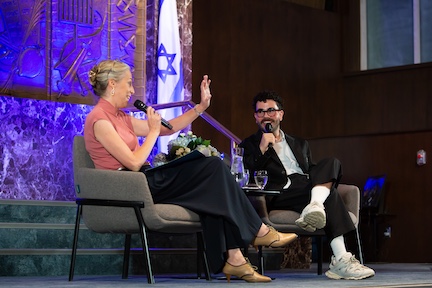
By MYRON LOVE On Tuesday, October 6, a large number of members of our community packed the chapel at the Shaarey Zedek Synagogue, eager to welcome Hen Mazzig in his first appearance in our community.
Over the past few years, the Israeli-born Mazzig – who was appearing at the invitation of our Jewish Federation and Combined Jewish Appeal team – has become one of Israel’s and the Jewish people’s leading advocates on the international stage. His online platforms reach as many 100 million viewers a month with a regular following of almost 1 million. He has been interviewed by numerous leading media outlets and has given addresses at close to 500 universities in recent years.
Mazzig’s presentation in Winnipeg (which was funded by the Asper Family and the Asper Foundation) took the form of a question and answer format with Sarah Mali, the Director General of JFC-UIA (Jewish Federations-United Jewish Appeal) Canada in Israel, asking the questions.
Mali , who was visiting Winnipeg for the third time in the past three years, began by expressing how honoured she felt about having the opportunity to converse with Mazzig – referring to Jewish Federation of Winnipeg President Carrie Shenkarow’s comments regarding Mazzig’s “devotion to Israel and the Jewish people”, his “deep sense of purpose, moral clarity” and “willingness to enter some of the most difficult spaces and conversations.”
The first question that Mali posed to Mazzig was related to his visit to the Canadian Museum of Human Rights and its controversial and one-sided take on the longstanding and ongoing Israeli-Palestinian conflict. She referred to a comment that Mazzig had made on X the day after visiting the museum, in which he wrote that while he “has no problem with people learning about Palestinian history,” he wished that “Palestine Uprooted” didn’t “distort the regional events, including the displacement of 800,000 people just like my grandmother, Hela, who became a refugee when Iraq turned on its Jewish community” post-1948.
“History can only lead to reconciliation when it is told honestly,” he observed. “Otherwise, it is just fuelilng an agenda.”
What most disturbed him about the exhibit, Mazzig told his audience, is that it erased his own family’s history. Expanding upon his family’s roots, he noted that his father’s family came to Israel from Tunisia and his mother’s side from Iraq. He spoke in particular about his maternal grandmother, Hela, who left behind “a beautiful civilization” – Jews had been living and thriving in Iraq since before the Roman destruction of Jerusalem 2000 years ago – to a new land (Israel), where she had to learn a new language (Hebrew) and rebuild her life.
Mazzig added that his grandmother is his anchor in life and the inspiration for all that he has accomplished.
Mali asked Mazzig about his ability to empathize with Palestinians. It was difficult to do, he answered. He got to know Palestinians, he recalled, during the Covid epidemic when he was serving as a medic with the Israel Defense Force and found himself responsible for helping Palestinians through that difficult time and transporting sick Palestinians to Israeli hospitals.
“Even though I fight so hard for Israel,” he observed, it doesn’t mean that I can’t feel empathy for anyone else.”
Mali asked Mazzig how October 7, 2023, changed him.
“I chose not to become a victim,” he said, “but rather to engage more with the world, bear witness, share our stories and talk about genocide. While I was actively advocating for Israel before October 7, I have been much more in demand since. I have become a lot more visible.
”I have found that a lot of people support us,” he continued. “They see what is happening and are on our side.”
On the other hand, he added, a lot of people don’t know anything about Israel. “It is a matter of education,” he said. “I encourage people to go to Israel and talk to Israelis.”
Mali’s last question was what Mazzig means when he writes that “I promise to love being Jewish ten times more than anyone hates me for it.” What does it mean to him to love and find joy and happiness in being Jewish”, she added?
It means cherishing our rich history, Mazzig responded, enjoying Shabbat dinners with family and friends, celebrating all of our holidays and traditions.
“The Jewish People have been through so much over the past 2000 years,” he said. “Many people have tried to destroy us, but we have survived. We are arisen from the ashes numerous time and continued to move forward. Not only are we still here but we have returned as an independent people living again in our ancestral homeland.”
Also addressing the audience at the Shaarey Zedek was Steven Shulman, the president and CEO of the Jewish Federations of Canada. Shulman heaped much praise on our Jewish community in Winnipeg.
“Winnipeg is special,” he noted, “not just in Canada but worldwide. Your CJA campaign continues to be the most successful in North America. You have an outstanding CEO (of the Jewish Federation of Winnipeg) in Jeff Lieberman, who is universally respected.”
He further praised Gray Academy and our community’s highly successful GrowWinnipeg campaign – which has attracted thousands of new families to our community over the past 25 years.
He noted that he was particularly impressed with how our community has come together to protest the biased Nakba exhibit at the Canadian Museum for Human Rights.
He also spoke of the many supporters that we have among non-Jewish Canadians – singling out, as an example, the police officer in Belleville who put his own life on the line protecting the city’s only Jewish congregation from a terrorist attack during yom tov services.
The last word went to Jeff Lieberman, who thanked all the members of our community who have contributed to the CJA campaign this year, as well as our many non-Jewish friends who continue to stand with Israel and the Jewish community.
Local News
Enrolment in videographer/photographer Jeff Gordon’s education programs growing exponentially
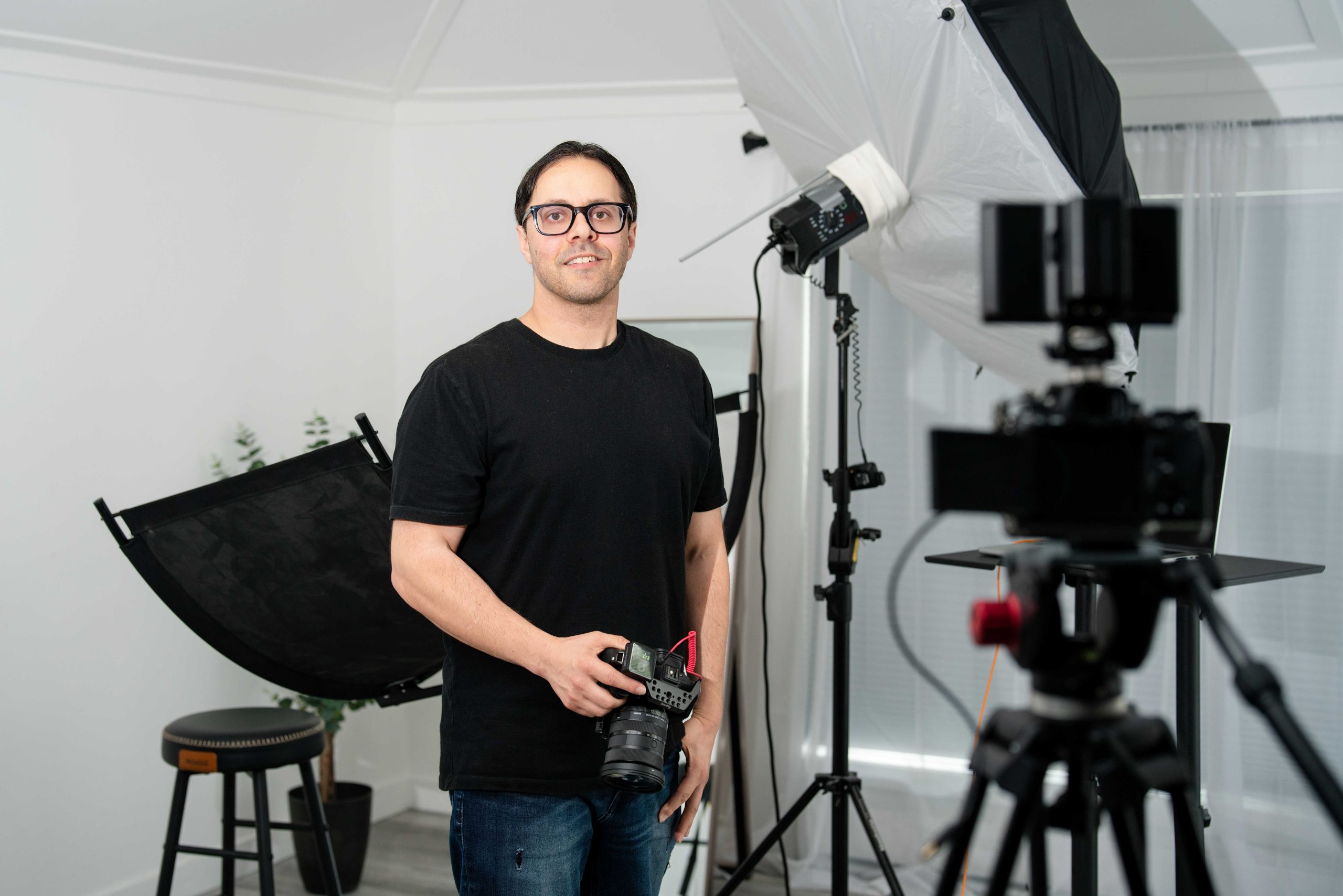
By MYRON LOVE When last I spoke with local videographer/photographer Jeff Gordon early last year, he had just launched his new training program for budding photographers and videographers. Now, about 20 months later, he is happy to report that his new course has grown well beyond his original expectations.
“My program has already graduated more than 100 students – with another four sessions beginning in September,” says the founder of JAG Videos and Photography. “I have recently introduced a new training program geared to organizations and businesses and have digitized my courses so that they can be accessed from anywhere in the world.”
What is unique about what Gordon is doing in that this is the only educational program that combines photography and video. “Up until now, the only options for anyone interested in learning the art of photography or making videos has been either Red River College or the University of Winnipeg,” Gordon pointed out in that earlier Post interview. “I recognized a niche here and my goal is to fill this gap.”
He launched his educational initiative in mid-January in his new studio behind his north River Heights home with three classes a week – one strictly for teenagers – over 16 weeks.
“The response exceeded my expectations,” he said in that earlier interview. “We sold out quickly and I have a waiting list. I am teaching the students everything I know about photographer and videography. The curriculum is easy to follow.”
Gordon’s interest in photography and videography – and teaching, he recalled, came about through his previous career as a musician. The graduate of the Hebrew Bilingual program at Brock Corydon Elementary School, and later, Shaftesbury High School – began playing drums in high school.
After high school, he enrolled at the Los Angeles Music Academy. In 2006, he graduated from the jazz program at Grant MacEwan University in Edmonton. His professional credits include 16 years as a drummer with the Sarah Sommer Chai Folk Ensemble, and five years as a member of a touring band called “Driver.”
It was while performing with “Driver” that he began doing videography. “I have always been fascinated by technology,” Gordon said. “While on tour, I began making videos of our live concerts. I would set up four or five cameras to record the shows.”
In 2014, Gordon took the plunge and dove into photography and videography full time with the founding of JAG Videos and Photography. He started with weddings and gradually started to develop a commercial and corporate clientele. He reported that he does a lot of head shots for businesses. He has also done a number of TV spots for Global and Corus.
Gordon’s curriculum is his own creation, based on his experience and a previous training manual he wrote years ago for an entirely different group of students: drummers.
“I used to have as many as 40 students at a time,” he recalled. “I really enjoy teaching. I love expounding on subjects I am passionate about.”
Gordon’s first foray into teaching had a focus on helping businesses and organizations, government departments and agencies enhance their online presence.
“Increasingly, we are in a digital world,” he points out. “Businesses need staff who are adept at making videos and taking photographs. Companies need staff who are able to create videos for them to promote the business online. I can customize my training programs to the needs of my clients to create their own social media and marketing materials.”
Gordon notes that this outreach wasn’t initially part of his expansion plans. “I had people coming to me for this training because there is no one else providing this kind of education,” he observes.
Gordon’s major new development this fall is that he has built and launched a full digital version of his course – which he calls The JAG Creator Academy. “Going digital has opened the training up beyond Winnipeg and makes it available to people globally,” he points out.
“I developed a website, filmed all my tutorials and recorded the video,” he says.
“I even have a sponsor for it,” he adds. (That would be Evoto – an AI-powered photo editing software built specifically for professional photographers.)
The program is only available in English but, Gordon reports, there has been a lot of interest so far.
The next stage in the evolution and growth of Gordon’s move into education will be a program which will coach businesses on SEO (Search Engine Optimization) – and which will involve helping businesses access Google and get their name at the top of search results.
“SEO is what has helped my business stay at the top of Google (searches) and in demand all these years,” Gordon notes. “I am running ads for my new SEO programming on Facebook and Instagram. I am anticipating that I will draw clients from across Canada and the United States.”
While he is still in demand locally as a photographer and videographer, he notes, the education side has also become a full-blown business of its own and, he reports, he is looking to hire additional staff.
As well, he is continually adding new topics and courses to his offerings.
Readers who may be interested in contacting Jeff can find him through his website, which is www.jagvideos.com.
