


Features
“Also Here” – a granddaughter tells her grandmother’s story of surviving the Holocaust

By JULIE KIRSH, Former Sun Media News Research Director
(Exclusive to jewishpostandnews.ca)
My youngest daughter, who experiences frequent backaches and headaches, feels that the trauma of her survivor grandparents has been passed down to her. Some third generation Holocaust literature supports this thesis.
Brooke Randel’s recently published “Also Here, Love, Literacy and the Legacy of the Holocaust,” is a biography that feature Randel’s Bubbie and their close, though not always easy relationship.

Bubbie was illiterate and her granddaughter worked for an ad agency as a copywriter. Bubbie wanted her story told. However, she had no way to tell her story. In “Also Here,” Randel has fulfilled her grandmother’s wishes by putting Bubbie’s thoughts to paper.
The reader learns that Bubbie is always on the go. In her Florida condo, she shops, cooks, visits friends, plays cards, and does laps around the pool. “A woman who survives stays surviving.” However, at night when her hands were still, she was surrounded by the memories of the war and her lost family. Bubbie asked herself the eternal question of survivors: “Ehy did she survive when so many didn’t?”
The author’s ancestral family moved to Sighet in Romania which then became part of Hungary. Eli Wiesel, in his acclaimed book, “Night”, paints a vivid picture of the Jews of Sighet, 14,000 mostly religious souls. When Bubbie was six years old, the family suffered a tragedy. Bubbie’s father, the patriarch, died of prostate cancer. Her mother resorted to work as a travelling merchant. The two older siblings went to jobs in Budapest. Everyone had a role to play. Perhaps school was not a part of Bubbie’s upbringing or she had a learning disability, according to the author. In any case, Bubbie was permanently illiterate.
In order to discover Bubbie’s Holocaust story, the author sits with her grandmother and hears the words so that she, the wordsmith, can transcribe them. Providing an historical context, we know that the Nazis formalized their plans at the Wannsee Conference. “Evict, rob, deport, kill” were the words used, buried in obscure bureaucracy. “Words could lead the way to genocide and silence could let it happen.”
In a poignant chapter, the reader hears Bubbie’s words as she relives the road to Auschwitz in her head, telling her granddaughter what happened. In April 1945, 60,000 prisoners, including Bubbie and her sister were held in Bergen-Belsen. They had travelled by foot and boxcar from Auschwitz, covering more than 280 miles to get there. No food, no water, no clothes, no shoes and the winter was particularly bitter that year. In Bergen-Belsen there was typhus, tuberculosis, typhoid fever and dysentery. Anne Frank and her sister Margot were taken and died there.
After the war, Bubbie married at 17 years of age to an older man. This was a typical rushed, survivor’s marriage. My own parents were 20 years apart. They would not have been a match before the war. Bubbie and her husband fought constantly. She was a go-getter with a good job. He was depressed and unsuccessful in his business attempts.
In trying to understand her Bubbie, the author refers to an Israeli study: Female survivors had high levels of avoidance behavior, intrusive thoughts, and an unresolved state of mind. Bubbie grew up in chaos before the war and in the camps. Logic was thrown out the window. She was scattered and impulsive.
From Windsor to Detroit, Bubbie and her family of three children and a sad husband tried to make a better life. However, post-traumatic stress was their constant companion.
In my own Holocaust survivor family, food was all important and came with certain rules set by my father. The chicken soup had to be boiling hot. Onions were to be feared and the plentiful food had to be cooked and served only by my mother’s hands. Restaurant food was considered suspicious, so we didn’t go out to eat very often.
Bubbie also exhibited a survivor’s anxiety around food. It was not to be wasted. She cooked constantly and fed her family delicious food. Without a language of words, Bubbie retained all the recipes in her head. What Bubbie did not have was the ability to read. All efforts to confront her illiteracy came to naught. Her granddaughter learned to see Bubbie differently from other people. In doing so, she unknowingly gained skills that her grandmother had: adaptation, creativity, stealth, and care. Bubbie taught her granddaughter to listen to the chaotic jumble of her memories and eventually the author learned how to write this book.
Being part of the third generation is not the experience of survival but an echo of survival. Bubbie’s journey and her very different American grandchildren emphasized their separateness.
This book could not have been written without the acceptance of that separateness and a willingness to listen to what could not be said.
“Also Here”
by Brooke Randel
published by Tortoise Books, 2024








Features
Noah Wyle explains Robby’s controversial behaviour in season two of The Pitt

Noah Wyle believes audiences struggled to accept the changes in Dr. Michael “Robby” Robinavitch during the second season of The Pitt. In a recent interview with Vanity Fair, Wyle explained why viewers reacted strongly to the emergency physician’s increasingly difficult behaviour, arguing that audiences often expect their heroes to maintain an unrealistic standard of “purity”.
(Spoiler warning: for anyone who hasn’t yet watched The Pitt, this article contains minor spoilers.)
In season one of the HBO medical drama, Robby was a dedicated doctor whose composure and clinical instincts made him a reliable member of staff. Season two revealed a more troubled side of the character, with grief and deteriorating mental health affecting his relationships with colleagues.
“An interesting American hypocrisy”
Wyle, who also works as a writer, director and executive producer on the show, sees Robby’s behaviour as part of a character journey rather than a sudden departure from the person audiences admired.
He said that viewers often forgive villains who occasionally do something admirable but tend to judge traditionally heroic characters much more harshly when they make mistakes. Wyle described this as “an interesting American hypocrisy”.
Wyle credited executive producer John Wells for encouraging the team to tell Robby’s story honestly.
Gaming and the success of House
Wyle has suggested a potential five- or six-season trajectory for Robby, with the character currently moving from denial towards recognizing his problems and seeking a way forward. Season two was uncomfortable for viewers, as Robby struggled to acknowledge his condition.
The success of The Pitt, particularly if it lasts for that five- or six-season run, may interest game developers. House, another of the most popular TV medical dramas, inspired two games back in its heyday. In 2008, Exelweiss designed a cellphone game for the show, releasing Spanish and English versions. Two years later, Legacy Interactive released a video game based on the series; players acted as House’s diagnostic team to solve five unusual medical cases.
For now, iGaming companies like Casino Days Ontario are more focused on the immensely popular slots themes, such as ancient civilizations, as well as variations on table classics like poker and blackjack.
The Pitt has been credited with reviving the medical drama, after a successful era of shows that included House (a “prickly” take on the format, in the words of one critic) alongside ER, Grey’s Anatomy, and The Good Doctor. That same critic praised The Pitt for showing that TV medical dramas can be “satisfyingly elongated”, which could inspire developers who specialize in RPGs or other long form games.
Season three could change Robby’s relationships
Wyle offered a glimpse of how the next season might develop Robby’s complicated connection with Dr. Langdon.
Their relationship changed after Langdon disappointed his mentor in the first season. Robby was reluctant to welcome him back in season two, leaving the two characters more separated despite their history.
Robby will return to the hospital after spending a couple of months away, potentially confronting embarrassment about his previous conduct and uncertainty about his abilities.
Features
Beyond Likes and Stories: what communication will look like on the next generation of social networks

Today, genuine interaction with other people has become a real luxury. In the age of digitalisation and remote work, many of us simply do not have enough time for meaningful communication. Nevertheless, everyone needs it. The situation is further complicated by the fact that, as we grow older, we inevitably outgrow our usual social circle. And then a natural question arises: where and how can we meet new people? After all, social networks, which were once used precisely for this purpose, are no longer coping with this task. Anyone who remembers the internet of twenty years ago will agree that social networks are changing before our very eyes.
Why traditional social networks are gradually changing the format of communication
Once you start scrolling through the feed on the once hugely popular Instagram, it is very easy to notice the characteristic changes. In the past, the feed consisted of posts from real friends and acquaintances. Users opened the app to see what was new in the lives of the people they followed. And the social network really fulfilled its main purpose — helping people stay connected with one another. Today, however, the Instagram feed is made up of content selected for us by algorithms, and most of it comes from complete strangers. As a result, Instagram and other social networks are gradually ceasing to be simply platforms for communication and are turning into places for content consumption.
User behaviour has changed as well. A few years ago, many people happily shared photos and discussed controversial topics in the comments. Today, more and more users prefer to share personal things in private messages rather than posting them publicly. Overall, there has been a noticeable decline in activity in public discussions. Much more often, people simply send posts to a friend in direct messages instead of joining open discussions.
At the same time, the need to interact with other people has not disappeared. People are looking for platforms where they can not only consume content but also communicate, share experiences, ask questions, and receive meaningful answers. In recent years, Reddit has become particularly popular among users as a place to discuss a wide variety of topics. People are tired of endless recommendation feeds and viral content. If developers want to retain their audience, they must adapt to users’ changing needs.
Artificial intelligence and personalisation: what the new online communication experience will be like
In the past, AI was mainly used to recommend different types of content, such as music, films, and short videos. Today, however, its capabilities are expanding. More and more platforms are introducing smart assistants that will search for and recommend interesting chat partners to users. First and foremost, this is necessary to retain their audience. At the moment, finding like-minded people often feels like a lottery. It can take a great deal of time to find someone who genuinely shares your interests, values, and outlook on life. Artificial intelligence is capable of significantly shortening this process. While platforms previously focused on retaining users through content alone, more and more of them are now placing their emphasis on interaction between users.
Developers are also actively working to make social networks more comfortable and safer places to communicate without unnecessary “noise”. They are gradually introducing technologies capable of recognising toxic behaviour and spam. In the near future, social networks will also feature AI assistants that will improve the quality of communication. For example, they will suggest topics that interest both chat partners, offer advice on how to start a conversation, and recommend how to end it respectfully. All of this should make meeting new people much easier and more effective. It is expected that technology will take care of routine tasks, leaving users with more time for what truly matters.
Video chat and live communication — the next stage in the development of social platforms
Another noticeable transformation is the gradual move away from text messaging. Many of us have become accustomed to communicating through short messages and emojis. Recently, however, user behaviour has begun to change. People are increasingly choosing other forms of interaction, particularly communication in random chats. With each passing year, it becomes more obvious that text messaging, despite all its advantages, is poorly suited to building genuinely close relationships.
The main problem with text is that it conveys only part of the information. When exchanging messages, we cannot see the other person, leaving us to guess the emotional tone behind every message. This often leads to misunderstandings and even arguments over nothing. After all, even the most harmless message can be interpreted in completely different ways. A pause in communication can also become a reason for unnecessary worry. Or the opposite can happen — we begin to create an image of our chat partner in our minds, attributing qualities to them that they do not actually have. Ultimately, this leads to disappointment when it turns out that our chat partner is not at all the person we imagined.
Overall, text messaging often slows down the process of becoming closer. People can spend months exchanging messages without ever deciding to meet in person. As a result, interest gradually fades, and communication itself becomes formal. That is why videochats with strangers are becoming increasingly popular, allowing people to communicate in real time. This is perhaps the greatest advantage of such platforms, as you can immediately see and hear your chat partner. From the very beginning of the conversation, you can understand whether you feel comfortable with each other and whether it is worth continuing the communication.
Among users, the CooMeet video chat is especially popular. It is a service for communicating with strangers, with a particular focus on dating with the opposite sex. Thanks to its gender filter, men always communicate only with girls. As a result, the chances that a random chat with a stranger will lead to something more are very high. Another important advantage of the platform is the confidence that there is a real chat partner on the other side of the screen. While people on social networks can pretend to be anyone by using someone else’s photos or even videos, that is not possible on CooMeet.chat. All girls are required to verify their identity, which means there are no fake profiles or bots on the platform.
Metaverses, virtual spaces, and new forms of presence
The social networks of the future will go far beyond the familiar format. Developers are already actively working on creating fully fledged virtual spaces and metaverses that will transform the very concept of digital presence. In the coming years, we will be able to interact with one another in an incredibly realistic way, even when separated by great distances. Of course, the full implementation of such ambitious projects is still a long way off. However, it is already clear that the technologies of the future will bring people even closer together, rather than pushing them further apart, as is often happening today.
Features
Brain drain affecting Israel could lead to severe economic difficulties
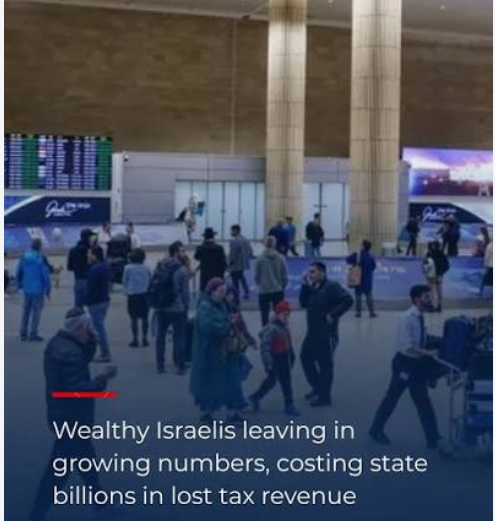
By BERNIE BELLAN (Oct. 27, 2026) As of the time of writing, the future shape of Israel’s Knesset was clear as mud. I always remember one of the most important lessons I learned as a Political Studies student, which is the structure-function relationship of any country’s political system, in which the structure of a country’s system of government determined how stable that country’s government was likely to be.
Are we lucky to be living in a parliamentary democracy – with a first past the post system of government, where it is not that complicated to cobble together a majority government – even if it means sometimes aligning with rival parties to form that majority?
After watching the spiral into authoritarianism now taking place in the U.S. under their fragmented democratic system where an unscrupulous president can appropriate almost unlimited power – unchecked by the toadies on the Supreme Court or members of Congress, I would say we’re so much luckier to be living within a parliamentary system of government.
But, when it comes to total disarray – no one can beat Israel’s system of government, where it is near impossible to put together a stable government unless – following the pattern of so many other formerly democratic countries, an authoritarian leader manages to assert himself and neutralize so many of that country’s democratic institutions – which is what we have seen happening under Netanyahu’s leadership.
I ask all these questions after having read an article on the Times of Israel website back in August, but whose relevance has become only more prominent as a result of Israel’s continual slide into disarray.
We in the West can pretend that Israel, for all its problems, is still a democracy, and that no matter what may be happening there, its citizens still want to live there.
But, after reading the TOI article, which was titled “Emigration of doctors, engineers, other highly educated Israelis hits record high,” one might be forgiven for thinking that Israel’s best and brightest are hurrying to leave their country.
Here are some figures from that story: A “Tel Aviv University report released earlier this week showed a record-setting trend of emigration from Israel continued in 2025, with nearly 50,000 Israelis leaving the country for the third year in a row.”
The article also noted that “High-earning Israelis working in tech and healthcare are emigrating in sharply rising numbers, almost doubling over five years, a new study by the Israel Tax Authority has found.
“The research by the Israel Tax Authority’s Planning and Economics Division, which examined incomes of Israeli emigrants over the past decade, found the rate at which affluent Israelis left the country increased sharply in 2023 and 2024 to record highs, and was almost double what it was until 2019.”
Although I posited that Israel’s political instability is a major reason for the exodus so so many high-income earners, the authors of the study say that it is not altogether clear what is behind the departure of so many talented Israelis: “The authors of the study stated that it was difficult to determine whether this shift in the makeup of emigrants stemmed from major changes that occurred in society and the labor market following the COVID-19 pandemic, or whether it was a reaction to the political upheaval over the judicial overhaul and security events that started with the October 7 onslaught and war in Gaza that have been shaking Israel since 2023.”
One might well ask whether a significant number of other Israelis would also leave the country, were they in an economic position to do so? After all, for many years, here in Manitoba we saw a large influx of Israelis, almost entirely coming from the middle class, who were drawn to come here by a combination of factors, including the GrowWinnipeg initiative – which made it attractive for young Israeli families to look to Winnipeg as a potential landing point, also the Provincial Nominee Program, which offered immigrants opportunities to find employment in areas where Manitoba was short of particular types of workers.
But, what of those high income Israelis to which the TOI article refers? Anecdotally, we have read and heard accounts of highly educated Israelis moving here (and Myron Love has often profiled some of those individuals), but if 150,000 Israelis have left the country, one wonders where they have all gone?
Here are the favourite destinations for Israelis looking to move somewhere else (in order): the U.S. Canada, United Kingdom, Cyprus, Portugal, Spain, Greece, Malta, Germany, Australia, and New Zealand.
Many of those countries have tightened their immigration rules, however, as the backlash in Western countries against immigrants from poorer countries has also led to an overall decrease in the number of immigrants allowed in from other Western countries, including Israel.
Still, for individuals with particular talents – or with very high incomes, finding a country to which they can move does not present the same problems as it would for people of lesser means.
Let me end this with this cautionary note from the TOI article: “For a country where the top 20% of income earners are paying 92% of all income tax revenue, the change in the mix of Israelis leaving the country represents a significant strategic risk to state revenues and growth in the economy.”
And, with so many countries now seeing Israel as a pariah state, with all the attendant economic consequences that portends, it is hard to be optimistic about Israel’s future.
