


Features
New book about a man who helped to save the lives of 200,000 Hungarian Jews
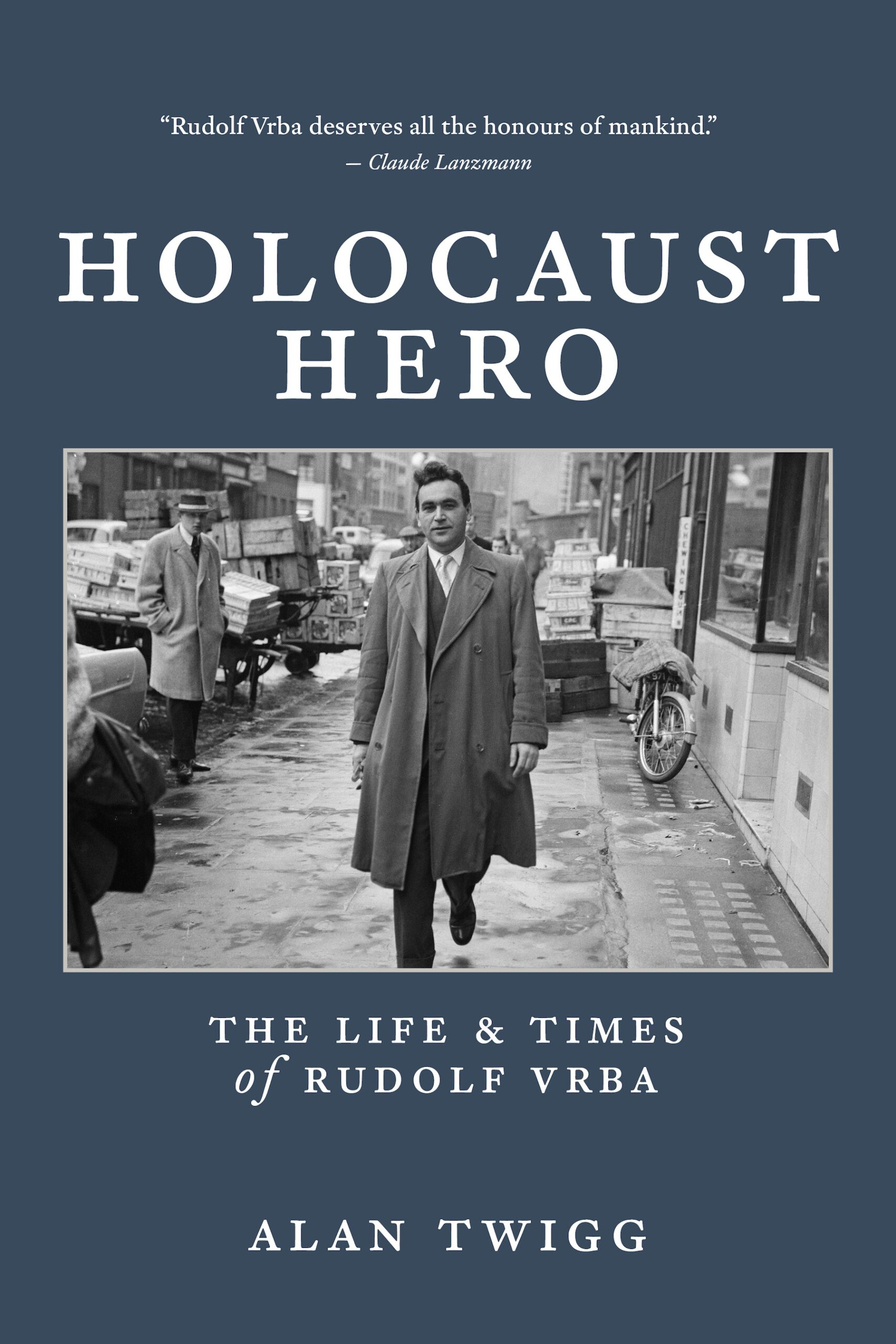
Reviewed by BERNIE BELLAN I have to admit that, as much as I consider myself reasonably informed about the history of the Holocaust, I had never heard of Rudolf Vrba.
Further, when it comes to an understanding of what happened to Hungary’s Jewish population, it’s the story of Swedish diplomat Raoul Wallenberg that comes foremost to mind.
But now, after having read a new book by Canadian journalist Alan Twigg, titled “Holocaust Hero – The Life & Times of Rudolf Vrba,” I have a much better understanding of what happened to Hungarian Jewry.
There were approximately 800,000 Jews alive in Hungary at the beginning of World War II and, even though 63,000 Hungarian Jews had been murdered by their fellow Hungarians prior to Germany’s entry into Hungary in March 1944 (with the willing cooperation of Hungarian authorities), by the end of World War II only about 200,000 Hungarian Jews remained alive. Of the Jews who were murdered by the Nazis, 424,000 were sent to their deaths in Auschwitz-Birkenau – in a relatively short period of time: between April and July, 1944.
There would have been many more Hungarian Jews who would have been sent to Auschwitz-Birkenau, however, were it not for the heroism of two individuals who actually managed to escape from Auschwitz in April 1944: Rudolf Vrba and Alfred Wetzler.
While there have been many books written describing how those two brave men managed to escape Auschwitz (and there were only six individuals who managed to do that the entire time Auschwitz was in existence as the largest death camp in the history of the world), Rudolf Vrba’s story is one that should be of particular interest to Canadians because Vrba actually lived in Canada for 31 years of this life, when he was a very well respected professor of biochemistry at the University of British Columbia.
Now, with a recently released book by a well known Canadian historian and journalist by the name of Alan Twigg, a much more complete account of Vrba’s story, beginning with his childhood in Slovakia and ending with a long interview with Vrba’s second wife, Robin Vrba, is available.
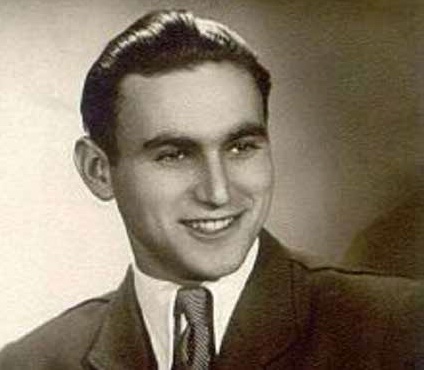
Here are the first two paragraphs taken from Twigg’s introduction to the book, which describe in a nutshell why Vrba deserves to be celebrated: “This first volume of a two-volume biography asserts there was much more to Rudolf Vrba than his escape from Auschwitz and his subsequent report that saved 200,000 lives. An outstanding medical researcher, Vrba submitted testimony at the Eichmann trial, pursued war criminals, served globally as a riveting public speaker and combatted Holocaust denialists.
“Under his birth name Walter Rosenberg, he survived…24 near-death experiences over a three-year period as a teenager… At 20, he fought in ten life-threatening battles as a Partisan in the mountains of Slovakia and became a decorated war hero. Rudolf Vrba was a Jew who fought back.”
Twigg explains that this book deals mostly with Vrba’s life up to 1946 and that a second volume will explore his quite successful career as a biochemist.
What emerges though, from Twigg’s account of Vrba’s life is unbridled admiration for Vrba’s brilliance – as someone who could make instant assessments of life or death situations and, no matter how fraught with danger the wrong choice could entail, retained his composure and thought his way through to survival.
Born Walter Rosenberg, Vrba was eventually given the alias Rudolf Vrba by Jewish authorities in Slovakia, which is to where he escaped from Auschwitz with Wetzler in April 1944. Rather than reverting to Walter Rosenberg following the war he kept the name Rudolf Vrba.
Twigg provides a great deal of information about Vrba’s early life throughout the book, but what is sure to grab the reader’s attention and want to make even someone who might not be all that interested in reading something about a Holocaust survivor is the introduction in which Twigg lists the 24 different experiences that Vrba survived as a teenager, each of which – had they gone the wrong way, could very well have ended with his death.
The fact that Vrba was one of only six Jews to have escaped Auschwitz is amazing in itself, but it is what he – along with Wetzler, did after escaping that makes one wonder why he hasn’t received greater recognition in Canada – and which leads Twigg to want to correct that grave injustice.
Vrba and Wetzler wrote down what they had witnessed happening in Auschwitz-Birkenau in a 20-page report that was given to Slovakian Jewish authorities and which became known as the “Vrba-Wetzler Report.” It provided detailed information about the large scale extermination of what the report calculated were 1,765,000 Jews between April 1942 and April 1944, all of whom had been murdered in Auschwitz-Birkenau.
Vrba had an incredible memory for detail and it was the figures that he entered into the report that came to be accepted as quite accurate when they were later corroborated by the testimony of others, including the most notorious commandant of Auschwitz, Rudolf Hoss (or Hoess).
Although Vrba only arrived in Auschwitz in June 1942, he based his calculations on what he saw transpiring every day that he was there, when he witnessed the number of trains arriving daily, how many boxcars were part of each train (45 on average), and how many people were stuffed into each boxcar (60 on average).
While the report did receive dissemination among various Western European and American authorities, Twigg argues that it was deliberately suppressed by leaders of the Hungarian Jewish community – who had been well aware of the report around the same time mass deportations of Hungarian Jews began in April 1944. Germany had not entered into Hungary until March 1944 and the Hungarian Jewish community was the last Jewish community to be largely extinguished during the war.
A major part of Twigg’s book deals with Vrba’s contention that one man in particular, Rudolf Kastner, who was head of what was known as the Budapest Aid and Rescue Committee, and who was well aware of the Vrba-Wetzler Report, could have used his influence to warn Hungarian Jews about their impending fate at the hands of the Nazis but, for whatever reasons he may have had, chose not to do so. (Twigg does describe though, a deal Kastner made with Adolph Eichmann, who was in charge of Germany’s extermination program in Hungary, to save the lives of 1600 Hungarian Jews, many of whom were either friends or relatives of Kastner.) The contempt with which Vrba and, in turn, Twigg, held for Kastner and those who came to his defense – including one of Israel’s most respected historians, Yehuda Bauer, emerges clearly in the book.
Eventually, however, and in no small part, due to the failure of leaders of Hungary’s Jewish community to warn their fellow Jews what fate awaited them if they followed orders to board the trains, over 400,000 Hungarian Jews were sent to their slaughter. With the total cooperation of Hungarian authorities, Jews – as they were in every other jurisdiction where they were ordered on to trains, were misled into thinking that they were simply being deported, not headed for extermination.
It was only after the Vrba-Wetzler Report gained wide dissemination, a process which Twigg describes in some detail, that pressure began to mount on Miklos Horthy, the “Regent” of Hungary, to stop assisting the Germans in the deportation of Hungarian Jews. (After reading other information about Horthy, however, it is not clear the extent to which Horthy was aware Jews were being sent to their deaths prior to the publication of the Vrba-Wetzler Report. Twigg does not enter into that debate.)
While “Holocaust Hero – The Life & Times of Rudolf Vrba” does tell a fascinating story, at times it does lose momentum. Perhaps because Twigg makes quite clear from the outset that he is a journalist and a historian, not a novelist, he relies upon previously written accounts, including Vrba’s own autobiography, to cobble together a narrative from a variety of different sources. What results is a book that will probably be of great interest to students of history, but not as much to those who might prefer to read a story laden with graphic imagery.
There are many instances throughout the book where Twigg takes great pains to offer substantiation for what he says happened to Vrba during the Second World War – which was undoubtedly horrifying, but because the author is so dispassionate in his writing, what Vrba endured does not come across as chillingly as one might expect.
Reading about stacking bodies in advance of their being taken to a crematorium or of sorting through the possessions of the victims – all of which Vrba did, doesn’t quite deliver the gut punch that we’ve come to expect when we see actual visual representations of the same experiences – whether it be through documentary footage or dramatizations in such films as “Schindler’s List” or , to my mind, the most riveting film ever made about what life in Auschwitz was truly like – “Son of Saul,” a Hungarian film that won the Academy Award for best foreign film in 2015.
The book contains quite a bit more information than perhaps the average reader might need to know, including a very lengthy transcript of an interview Twigg had with Vrba’s widow, Robin Vrba. While it’s somewhat interesting to read about their life together, it’s hardly germane to the story how important a role Vrba ultimately played in saving the lives of 200,000 Hungarian Jews.
Still, as we approach the anniversary of Kristallnacht, which happened 87 years ago, and which was the harbinger of what was to come for European Jewry, reading a book that describes how one individual in particular, Rudolf Vrba, not only survived the Holocaust when almost anyone else in the same situations he repeatedly encountered would have succumbed to the easy way out and accepted death, it reminds us that stories of heroism on an unimaginable level can make us realize that whatever hardships we may face in our own lives pale in comparison to what someone like Vrba endured.
“Holocaust Hero – The Life & Times of Rudolf Vrba”
By Alan Twigg
153 pages
Published by Firefly Books, September 2025



Features
The Red Inheritance – a short story
By H.C. Piloski
PART I — ROOTS
Foreword
The Red Inheritance is a work of fiction built on real histories. The political movements, neighbourhoods, and events depicted here — from Winnipeg’s North End to the Holodomor, the gulag system, and the ideological battles of the twentieth century — are drawn from documented fact. The characters themselves are invented. Their names, relationships, and private lives have been changed.
This story engages with difficult truths: the idealism that drove many to fight fascism, the blindness that led some to excuse Stalinist terror, and the intertwined traumas carried by Jewish and Ukrainian families who fled Europe’s catastrophes. It also reflects the historical record of the Soviet security organs and the diverse individuals who served within them. These realities are presented not to assign collective blame, but to illuminate the moral complexity of an era when ideology often overshadowed humanity.
What follows is fiction. But the shadows it walks through are real.
This story is one thread in a larger tapestry of inherited memory and consequence.
I. The Tape (1934 → 2026)
Rachel Levinson found the box on a humid August afternoon in 2026, tucked behind dusty binders in the archives room of the Jewish Heritage Centre. It was unlabelled except for two faint words:
CP — Private.
Inside lay brittle pamphlets, yellowing papers, and a cassette tape with a fading label:
Labour Temple. 1934.
Her grandfather, David Levinson, born in 1915 to Polish immigrants Sarah and Moshe, had been the youngest of four children — a fact that shaped both his stubbornness and his need to prove himself in the crowded Levinson household. He had been a young Jewish organizer in Winnipeg’s North End, swept up in the Jewish Youth AntiFascist League. He had told her stories of the confrontation at Old Market Square, when Jewish and Ukrainian youth chased the brown shirts out of the square in 1934.
But he had never mentioned a tape.
She slid it into the old player.
A click. A whirr. Then his voice — younger, sharper, filled with conviction.
A faded photograph showed him as he once was: lean, brighteyed, a mediumsized North End boy toughened by winter streets and by the old prewar YMHA — the building Jewish youth used before the Hargrave and Qu’Appelle “Y” existed. That building was long gone now, replaced decades later by the Asper JCC in the south end — another reminder that the world her grandfather moved through had vanished, leaving only photographs and memory.
Her grandfather spoke of fascism rising in Europe, of solidarity, of the Soviet Union as “the only nation standing unflinchingly against tyranny.”
Then another voice mentioned a poet. A furnace. Books burned.
The tape clicked off.
Rachel sat frozen, the silence louder than the recording.
II. The North End (1930s → 1990s)
She drove to the North End the next day, needing to remember before she judged.
Her grandparents’ house on Matheson Avenue still stood — modest, sturdy, with a vegetable garden in the back. She remembered Shabbat dinners: the smell of chicken soup, her Baba Rivka’s laughter, her grandfather’s gentle voice blessing the candles.
The North End had always been a world unto itself:
Ukrainian churches with onion domes catching the prairie sun
Jewish bakeries on Selkirk Avenue selling poppyseed rolls and rye bread
Old synagogues tucked between corner stores
Brick houses, stucco cottages, and woodframe homes built by immigrants who arrived with nothing but hope
It was a neighbourhood shaped by trauma and by the stubborn hope that refuses to die:
Jews fleeing pogroms
Ukrainians fleeing famine
Poles fleeing war
Indigenous families surviving despite everything
Her grandfather’s politics had grown out of this soil — out of fear, out of solidarity, out of the belief that collective action could save people from the horrors they had escaped.
But the tape suggested a darker truth.
III. Her Grandfather’s War (1939–1945)
Rachel dug through old family papers until she found his service records.
David Levinson Royal Winnipeg Rifles Enlisted: 1942 Served in England, Normandy, and the Netherlands Demobilized: February 1946
He had fought fascism directly, not just in rallies but on the battlefield. He returned home a decorated veteran, married Rivka in 1947, and began work as a skilled employee at CP Rail.
He had been everything a family man should be.
And yet he had remained a Communist — not the romantic kind who drifted away after 1956, but the loyal kind, the dogmatic kind, the kind who refused to believe that Khrushchev’s revelations at the 20th Party Congress were anything more than Western propaganda.
A Stalinist.
IV. The Letters Home (1942–1945)
Among the papers Rachel found were copies of letters David had sent home during the war — to his parents, his siblings, and to Rivka, his wifetobe.
They were eloquent, heartfelt, and full of longing.
To Rivka:
“The nights here are long, and the cold seems to seep into the bones. But when I think of you lighting the candles on Friday night, I feel warm again. I carry that light with me.”
To his parents before Normandy:
“I don’t know what tomorrow brings. But I know why I’m here. If we don’t stop them, they will burn the world. I want to come home to Matheson Avenue. I want to sit at your table again.”
To his younger brother:
“Study hard. Live well. Don’t let the world make you bitter.”
Rachel felt her throat tighten. These were not the words of a zealot. They were the words of a young man trying to hold onto hope in a world on fire.
V. Her Father’s Story (1950s → 1978)
Her father, Michael, listened quietly as she explained what she had found.
“I knew he was involved,” he said. “More than involved. Dedicated.”
He admitted he had briefly joined the Young Communist League in the 1970s, swept up in youthful idealism. He had even attended the World Youth Festival in Havana in 1978, a gathering steeped in revolutionary rhetoric.
“But I drifted away,” he said. “Your grandfather never did.”
“He wasn’t perfect,” Michael said, “but he was steady. He worked hard, showed up for people, and carried more than he ever complained about. Whatever his politics were, he was a good father.”
“And he had a quiet sense of humour,” Michael added. “He could make you laugh when you least expected it.”
Then he told her something else — something his father had shared only once.
“During the war,” Michael said, “the men in his unit used to say, ‘Thank God the Red Army is fighting on the Eastern Front, so we don’t have to die.’ He never forgot that.”
It wasn’t ideology. It was survival. The Eastern Front had been a furnace, and the Red Army had walked into it first. For David, that memory fused with politics, becoming part of the reason he believed the Soviet Union had carried the heaviest burden in defeating fascism.
She asked whether he thought David had known about the poet.
Michael hesitated.
“He wasn’t a cruel man. But he believed in the cause. Maybe too much.”
VI. Her Mother’s Silence (1970s → 2026)
Her mother, Elaine, folded laundry as Rachel asked what she knew.
“I wasn’t political,” Elaine said. “Your grandfather knew that. He never pushed it on me.”
She explained that she had gone along with his beliefs because they were simply part of the household — relics of his past, not demands for her future.
“He was stubborn,” she said. “But he wasn’t a bully.”
Rachel believed her. But the poet’s books had burned. And someone had stood nearby.
VII. The Professor (2026)
She met Dr. Samuel Rosenfeld, a historian of Winnipeg’s Jewish left, in his cluttered office at the University of Manitoba. Books were stacked in uneven towers, papers spilled across his desk, and a halffinished cup of coffee sat precariously close to a pile of archival photographs.
He recognized her grandfather’s name immediately.
“A committed man,” he said. “Fiercely loyal. Sometimes too loyal.”
He handed her a folder about a Ukrainian poet who had immigrated to Canada, published a slim volume of verse, and then — in a burst of misguided hope — returned to the Soviet Union in 1932.
He disappeared into the gulag.
His books were burned in the Labour Temple furnace by local Stalinists.
Mykhailo Horodetskyi (1905–1933?)
Dr. Rosenfeld recommended books: Let History Judge by Roy Medvedev; The Strangest Dream by Merrily Weisbord; The Harvest of Sorrow by Robert Conquest; Red Famine by Anne Applebaum; The Forsaken by Tim Tzouliadis; How People Live in Soviet Russia (1932 in Yiddish, English translation 2020) by Mendel Osherowich.
“That last one,” he said, “was written by a Jewish journalist from New York who visited Ukraine during the famine. It was ignored for decades. Your grandfather probably never read it.”
Rachel felt a quiet ache. Her grandfather had lived in a world where certain truths were simply not allowed to enter.
VIII. The Prague Spring (1968)
As Rachel continued reading, she found references to another moment her grandfather had never spoken about: the Prague Spring of 1968.
Czechoslovakia had tried to build “socialism with a human face,” loosening censorship, expanding freedoms, allowing people to breathe again. And the Soviet Union crushed it under tank treads.
Her grandfather had been in his mid50s — old enough to understand, young enough to choose.
Had he defended the invasion? Had he doubted for the first time? Had he stayed silent?
The Prague Spring was a fracture point for many Western Communists.
But not for him.
His loyalty endured.
IX. Her Friend from Ukraine (2026)
Her friend Oksana Melnyk, a refugee who had fled Russia’s genocidal war against Ukraine, listened carefully as Rachel told her everything.
“My grandparents fled Ukraine during the Holodomor,” Oksana said. “My grandfather saw the Bolsheviks murder his parents in their village.”
Rachel felt her breath catch.
“They walked for days,” Oksana continued. “They buried their dead in frozen ground. They survived because they refused to die.”
She told Rachel about the missile strikes, the mass graves, the deported children — the new war of erasure.
“Russia is trying again,” she said.
Rachel realized her investigation was no longer just about her grandfather. It was about two histories colliding — but not equivalent histories.
David had fought fascists abroad, returned home, married, worked, raised children, tended a garden, blessed candles, and lived a long life in a free and democratic country.
Oksana’s grandfather had survived a stateengineered famine and witnessed murder.
The moral terrain was uneven, and she needed to tread carefully.
X. The Poet’s Poem (1932 → 2026)
Oksana translated one of Mykhailo Horodetskyi’s surviving poems — smuggled out of Ukraine before he disappeared.
“Harvest Without End” Translated by Oksana Melnyk
We cut the grain with blistered hands, but the fields do not forgive. Each stalk remembers those who fell, each seed refuses to live.
The earth is full of quiet bones, the sky of unsaid names. We gather what the land still gives, and carry sorrow like a flame.
Yet even in the darkest dust, we plant because we must. For harvest comes to those who wait, and hope grows from the rust.
Rachel imagined the book burning in the furnace, the pages curling, the words disappearing into smoke.
She imagined her grandfather standing nearby.
XI. Two Funerals (1998 & 2011)
She remembered her grandfather’s funeral in 2000 — the cold wind, the Hebrew prayers, the earth falling onto the coffin.
She remembered her Baba Rivka’s funeral in 2011 — the thawing spring air, the gentle mourning.
Two graves. Two lives. Two histories.
And now a third history — Oksana’s — had entered her own.
XII. The Decision (2026)
Rachel sat at her desk, opened her laptop, and began to write.
Not to condemn. Not to absolve. But to understand.
Her grandfather had fought fascists. Oksana’s grandparents had fled Communists. Both had suffered. Both had survived. Both had believed they were fighting for a future.
She would tell all of it.
The heroism. The blindness. The love. The silence. The contradictions. The pain carried across continents and generations.
She owed that to her grandfather. She owed that to Oksana. She owed that to the truth.
PART II — THE SHADOWS
XIII. The Embassy Rug (Late 1950s → Early 1960s)
There was another story — whispered, half forgotten — that Rachel could not ignore.
In the late 1950s or early 1960s, senior leaders of the Communist Party of Canada were invited to the Soviet Embassy in Ottawa. They were presented with a customwoven rug, a gesture of fraternal solidarity.
Pinned inside the rug, hidden beneath the fabric, were several thousand dollars in mixed denominations.
No receipts. No explanations. Just quiet loyalty.
It wasn’t a purge. It wasn’t a gulag. But it was a reminder: ideology had its networks, its incentives, its subtle pressures.
Her grandfather had lived in that world. He had trusted it. He had defended it.
And yet he had also blessed Shabbat candles, tended a garden, and carried her on his shoulders when she was small.
Contradictions. Everywhere.
XIV. The MP Who Spied (1940s → 1950s)
Rachel found another thread woven through her grandfather’s world: Fred Rose, Canada’s only Communist Member of Parliament.
Rose had been elected in 1943 on a wave of wartime goodwill — a Jewish labour activist who spoke passionately about workers’ rights and antifascism. But after the war, the truth emerged: Rose had been an agent of Soviet intelligence, passing information to the NKVD.
He was arrested in 1946, convicted, and eventually deported.
Her grandfather had never mentioned him.
Rachel realized that the Party David belonged to was not just a political movement. It was part of a global network — one that demanded loyalty, silence, and sometimes complicity.
The rug in Ottawa had not been an anomaly. It had been a symbol.
XV. The Jewish People’s Cultural League (1930s → 2026)
A week later, Rachel visited a modest community centre in the North End — home to the Jewish People’s Cultural League, a secular leftwing Jewish organization that had once been a hub of Yiddish culture, labour activism, and socialist politics.
The room smelled of old books and percolated coffee. Posters of Yiddish poets lined the walls. A faded banner read:
JUSTICE • PEACE • CULTURE
An elderly volunteer explained that the League had run choirs, libraries, lectures, and children’s programs. They had fought fascism. They had defended civil rights. They had also — sometimes reluctantly, sometimes fervently — defended the Soviet Union long after its crimes were known.
Rachel listened, thinking of the poet’s burned book.
The volunteer showed her a photograph from the 1940s: a crowd gathered for a League event, her grandfather somewhere among them, young and earnest.
“These were good people,” the volunteer said softly. “But they were caught in something bigger than themselves.”
Rachel felt the truth of it. Ideology had shaped communities as much as individuals. And her grandfather had lived at the centre of that world.
XVI. The Councillor’s Shadow (1940s → 1986)
Later that night, Rachel reread the article about Joe Zuken. She realized he was the perfect embodiment of the contradiction she was trying to understand.
A Communist and lawyer by training, he had fought for the poor first as a member of the Winnipeg School Board, and later as a longtime City Councillor. He even ran for mayor one year — a campaign that drew support from a wide range of leftists and other progressives, generating headlines across Canada and even in The New York Times.
He was an impassioned orator — sharp, articulate, and unafraid to confront injustice headon. A Marxist who defended civil liberties. A man who believed in the Soviet project but also challenged inequity at home.
Her grandfather had admired him. She found a note in one of David’s old journals:
“Zuken speaks truth even when it costs him.”
Rachel wondered whether her grandfather had seen in Zuken the version of Communism — really democratic socialism, much like that practiced by the governing New Democratic Party — that he wished were real: humane, principled, uncorrupted.
But history had not been kind to such hopes.
XVII. Sontag’s Reckoning (1982 → 2026)
Rachel reread Susan Sontag’s famous 1982 speech at Town Hall in Manhattan — the night she stunned a room full of American leftists by declaring:
“Communism is fascism with a human face.”
The audience had gasped. Some walked out. Others shouted. But Sontag didn’t retreat. She insisted that moral clarity required naming the crimes of Stalinism without euphemism, without nostalgia, without excuses.
Rachel wondered how her grandfather had reacted when he heard about it. Had he dismissed Sontag as a traitor to the cause? Had he ignored it? Had he felt a flicker of doubt?
She would never know.
But she understood something now: the moral rupture Sontag described was not abstract. It lived inside families like hers — in the gap between David’s idealism and the realities he refused to see.
XVIII. The Conversation (2026)
She met Oksana at a café on Corydon Avenue. They sat by the window, watching people pass by.
Rachel told her everything — the tape, the poet, the furnace, the rug, the League, Zuken, and Sontag’s Manhattan reckoning.
Oksana listened quietly.
“My grandfather saw the Bolsheviks murder his parents,” she said. “He never forgave. He never forgot.”
Rachel nodded.
“My grandfather fought fascists. He believed he was saving the world.”
They sat in silence, two women carrying two histories — different in scale, different in suffering, but both shaped by the same century’s storms.
Finally, Oksana said:
“Maybe your grandfather wasn’t wrong about the fight. Maybe he was wrong about the system.”
Rachel felt tears rise.
“Maybe,” she whispered.
They sat for a long moment, the café noise fading into a soft blur around them. Outside, a couple walked a dog. A bus hissed at the curb. Life went on — ordinary, unthreatened, free.
Rachel thought of her grandfather’s life: the house on Matheson Avenue, the garden he tended, the letters he wrote home from Europe, the steady job at CP Rail, the Shabbat candles he blessed with a gentle hand. He had lived in a country where he could argue, vote, complain, hope. His convictions had shaped him, but they had not destroyed him.
Oksana’s grandfather had lived in a world where hope itself was dangerous.
Rachel finally said, “He lived a good life, Oksana. A safe life. He came home from the war, married my grandmother, raised children, worked hard, grew tomatoes, read the Free Press, and believed he was part of something noble. He didn’t suffer the way your grandfather did. Not even close.”
Oksana nodded, her eyes softening. “I know. And that’s why this matters. Your grandfather had the luxury of believing. Mine had the burden of surviving.”
Rachel exhaled, feeling something settle inside her — not peace, but clarity.
“I’m not writing this to judge him,” she said. “I’m writing it because I finally understand the scale of the world he lived in… and the world your grandfather survived.”
Oksana reached across the table and squeezed her hand.
“That’s all any of us can do,” she said. “Tell the truth. Even when it’s complicated.”
Rachel looked out the window again. The lateafternoon light had shifted, turning the street a muted gold. Two histories — one sheltered, one scarred — had met in that small café on Corydon Avenue.
And for the first time, she felt she could carry both.
H.C. Piloski is a Winnipeg writer who works quietly at the edges of memory and history. His fiction often begins in archives and ends in the private places families rarely speak about.
Features
Musings from Dizengoff Street – by Bruce Brown (updated Sept. 18)
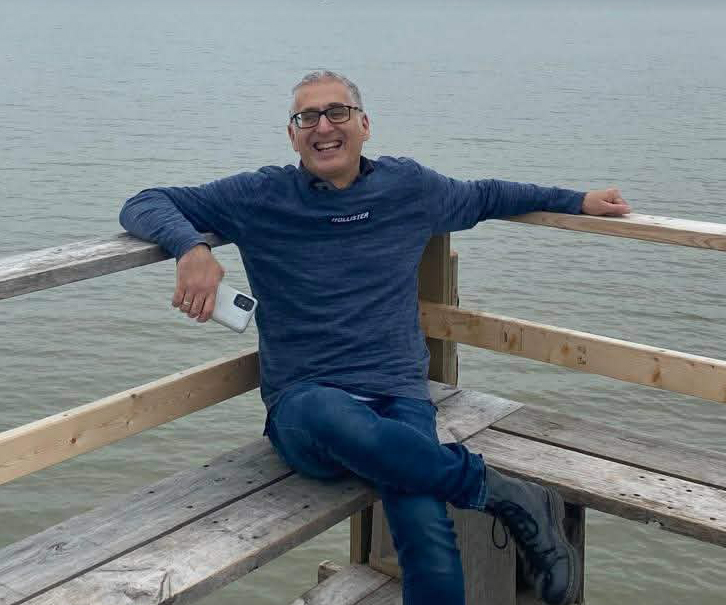

(Posted Sept. 18) Just wonderin’. When a tree falls in a forest and no one’s there to hear it, does it make a sound? And if Iran says it’s not enriching uranium and no one’s there to verify it, do they develop fissile material?
Now Iran just obtained a seat on the General Committee of the International Atomic Energy Agency’s General Conference – how crazy is that. Like letting the cat guard the milk.
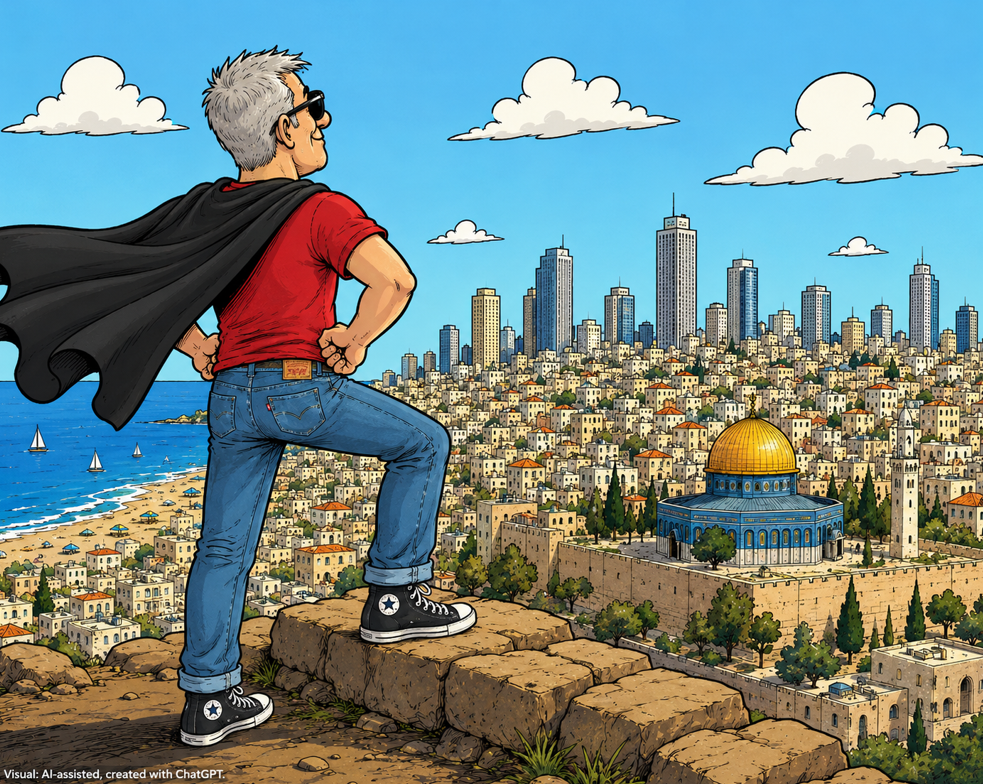
(Posted Sept. 15) Apparently some superheroes are against us. But not really. Whewww!!! Fortunately it’s just the progressive actors who play them in movies. Such as Benedict Cumberbatch (Dr. Strange) and Mark Ruffalo (the Hulk) as well as other minor actors not worth mentioning. What are these misinformed thespians aligning themselves with. Not sure they really know. Well. It’s with The Freedom for Marwan campaign, which pushes for the release of convicted, arch-terrorist mastermind Marwan Barghouti. Convicted in 2004 and sentenced to five life sentences plus 40 years for orchestrating various heinous shooting sprees in Israel during the Second Intifada (2000-2005). Killing and wounding too many innocent Israeli civilians including a Greek Orthodox monk outside Jerusalem. As a comic book fan, and closet Batman and Aquaman (when I swim), it saddens me that these guardians of the universe can be associated with defending evil. But then I remind myself it’s only the actors -what do they know anyway- and not really the superheroes. Unlike our own Gal Gadot (Wonder Woman), Natalie Portman (the Mighty Thor), Shira Haas (Sabra) and Liev Schreiber (Sabretooth). All firmly on the side of good.

(Posted Sept 10) Honey cakes. Honey cakes. Honey cakes. It’s that time of year. Yummy! Here comes Rosh HaShana 5787. And its…. You guessed it. Honey cake season. That light brown loaf our baba used to make. Starting a few weeks before Rosh HaShana and extending through Yom Kippur – a first bite to break the fast and usher in a sweet year- honey cakes are found throughout the country. The familiar sight of the ready-made, pre-packaged, ‘assembly-line’ honey cakes wrapped in cheap cellophane found in Grocery stores. The freshly baked honey cakes adorning window displays at local bakeries. The exorbitantly priced, gourmet honey cake desserts offered at fancy Tel Aviv restaurants. And of course, honey cakes festooning the festive, colorful, Rosh Hashana dinner tables across Israel. I bake my own honey cake which is pretty good. My wife and kids would beg to differ. But these slightly glazed honey cakes -of my own culinary, shtetl inspired creation- are heartedly enjoyed by me as I gain several honey cake induced pounds. Shana tova!

(Posted Sept. 8) Hoarding. A combination of my own little wartime PTSD and some recent headlines about Iran trying to coordinate a multifront attack (is that capability still there?!) and October 7 like rumblings from the West Bank (or Judea & Samaria, depending if you wear a kippa and if its knitted and if it tilts to this side or that side -that’s a shtetl insider joke). I digress and Yikes! And we just had a nation-wide drill of the IDF’s top-level headquarters preparedness for such scenarios. Double Yikes! So ya. I’m always checking and rechecking that we have way more than enough of some things. The thought of entering another prolonged war and some stuff no longer available, even for a short time, scares the bejeebers out of me. Just writing about it triggers the ‘go and buy’ dopamine hit. Medications. Toilet paper. Bottled water. Canned goods. Also worried about the country running out of bullets. But I can’t hoard those.

(Posted Sept. 5) An open letter to the zany and zealous mouthpieces of those delightful, anti-Israel protests held regularly in Toronto. In the heavily Jewish Bathurst & Sheppard area no less. Fear and harassment in the community? Not by the hairs of our chinny chin chins.
Dear Friends.
Are you serious.
Sincerely,
Bruce Brown, a Zionist who does not rape children. Who does not murder children. Who does not eat children. And, get this, who lives in Israel.
(Ed. note: To better understand what Bruce is talking about, go to this story on our website: Police open hate-crime investigation)

(Posted Sept. 1) Can you be more of an international embarrassment and liability? Yes talking about Israeli’s antagonist extraordinaire and National Security Minister Itamar Ben Gvir.
Declaring that Israel should kill ’30-40 Gazans a day’. Seriously?!?! His actual statement may have been more refined and qualified. But it doesn’t really make a difference. That’s the takeaway. Like whose side is he on anyway. Talk about giving our detractors ammunition to delegitimize our little shtetl. Hello?!?!
And a few days later. Showing off in front of a gallows site under construction at a high security prison. Seriously?!?! The death penalty for terrorists. Right or not – I think the former. But like can you give us reason to be compared to an extremist state. That’s the takeaway. Like whose side is he on anyway. Talk about giving our detractors ammunition to delegitimize our little shtetl. Hello?!?!
Serenity now!

(Posted August 28) Kites. Color. Childhood. Hamas and friends should watch Mary Poppins with the final kite flying scene. Remember that song, Let’s Go Fly A Kite. Ya, I know. Somewhat ethnocentric. But still…. I have fond memories of flying kites with my kids. Down the Mediterranean shoreline in Tel Aviv. At the Ness Tziona kite flying festival. Along the green grounds of the Weizmann Institute. Laughing and running. Looking to the sky with awe. Multi-shades and fancy. Kites.
With your fist ‘olding tight
To the string of your kite
…oh, oh, oh!
Lets go fly a kite
Kites. Fun. Laughter. Innocence.
Kites. Not an instrument of war.
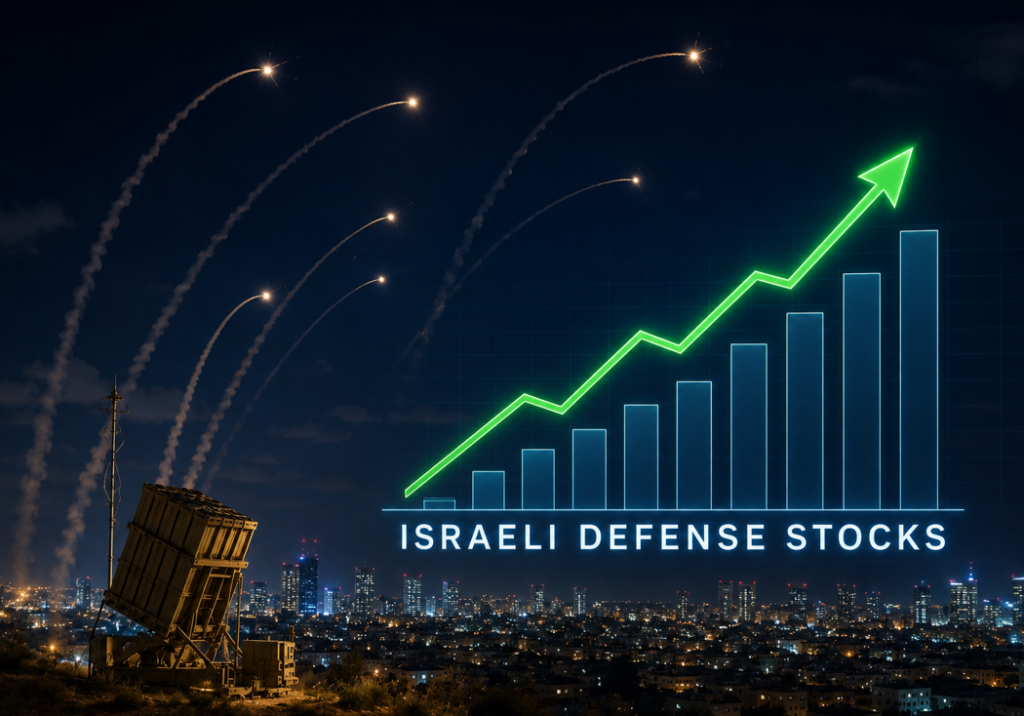
(Posted August 25) How principled can you be! Ireland -one of the most anti-Israel and foggiest countries in the EU- insisted that its government’s new, 60$M executive jet NOT be equipped with Elbit’s FalconEye navigation system, which helps pilots navigate in fog -how ironic- and other difficult weather conditions. Without this unique system the plane must be diverted to alternative airports. This a part of the government’s official boycott of Israeli goods. So good luck to Prime Minister Michael Martin in landing his aircraft in Dublin.
And despite some negative sentiment towards everything Israel, Elbit achieved over 32$B in backorders with Europe driving much of its export growth. On a more personal muse. The morning after Iran’s first attack on Israel (April 13 2024), I woke up not with fear and panic. Well. Okay. Some of that. But also great excitement regarding an investment opportunity which developed overnight. Actually it was the wife’s suggestion. After Israel successfully intercepted over three hundred missiles and drones – showcasing the strength of Israel’s defense industry- my wife had a eureka moment. What better public relations for Israel’s defense industry. Let’s buy stock in Elbit, a key player in that ecosystem. We did. And about eighteen months later we cashed in. With about 150% profit. This is not an endorsement to buy… blah, blah, blah….
Again. Good luck to Prime Minister Martin.

(Posted August 21) Sometimes musings are terribly sad. But should be shared.
Happy belated birthday beautiful Ariel. Turned seven on August 5th. Thought about him and his younger brother Kfir and mother Shiri. All murdered by Hamas shortly after their unbelievable and surreal abduction on Oct 7 2023.
As I was driving home today. “I Thank You Child” by Zakk Wylde shuffled onto my Spotify. Always kills me, this song. It was played by Yarden, the father who himself was held hostage, at the funeral of his family. For Ariel and Kfir. The lyrics chilling. The frequent drum rolls haunting.
It was you who made living all worth the while
Oh, I thank you, my child
Comfort in your eyes
For the warmth inside your smile
Faith’s done gone astray
It was you who made living all the while
All my fears repressed
Oh lovin’ you child it’s the best
This song. Written almost thirty years ago. Finds its devastating meaning today. With the Bibas family tragedy.
How.
Listen to the song here:
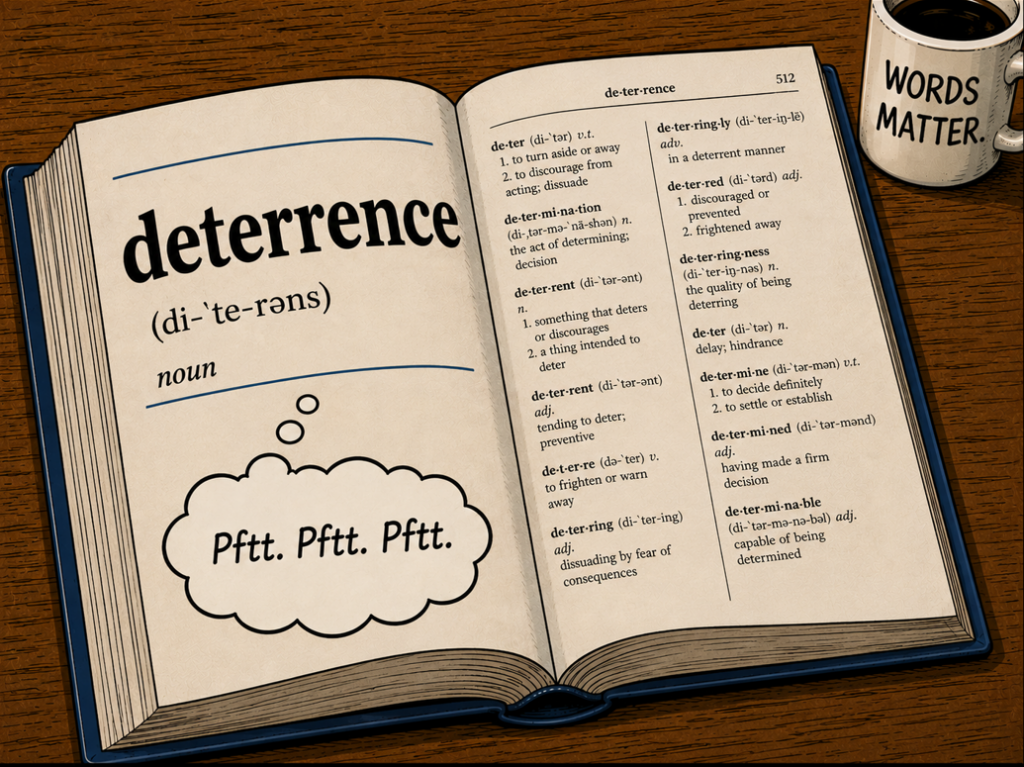
(Posted August 18, 2026) And the beat goes on in the strait. A bit quieter lately although may be heating up again with the 60day ‘ceasefire’ officially expired. And while Iran occasionally lashed out over the last two months, they did not attack Israel. How do you spell deterrence. According to my Yiddisha mama, its spelled ‘Pftt. Pftt. Pftt‘.
(August 14, 2026) Despite three years of varying degrees of warfare. Moody’s biannual report of the Israeli economy was quite positive. Basically, the report saw no pressures on Israel’s credit rating. While the macro data remains strong, Israel still faces a complex geopolitical situation further complicated by upcoming elections (we pondered about how crazy that is in an earlier muse). And Israeli’s inflation rate for the first half of 2026 fell to a historic five year low of 1.2% (vs Canada’s 2.6%). As for my own pocketbook. Haven’t had an infamous Israeli bank overdraft in years. So all is fine.
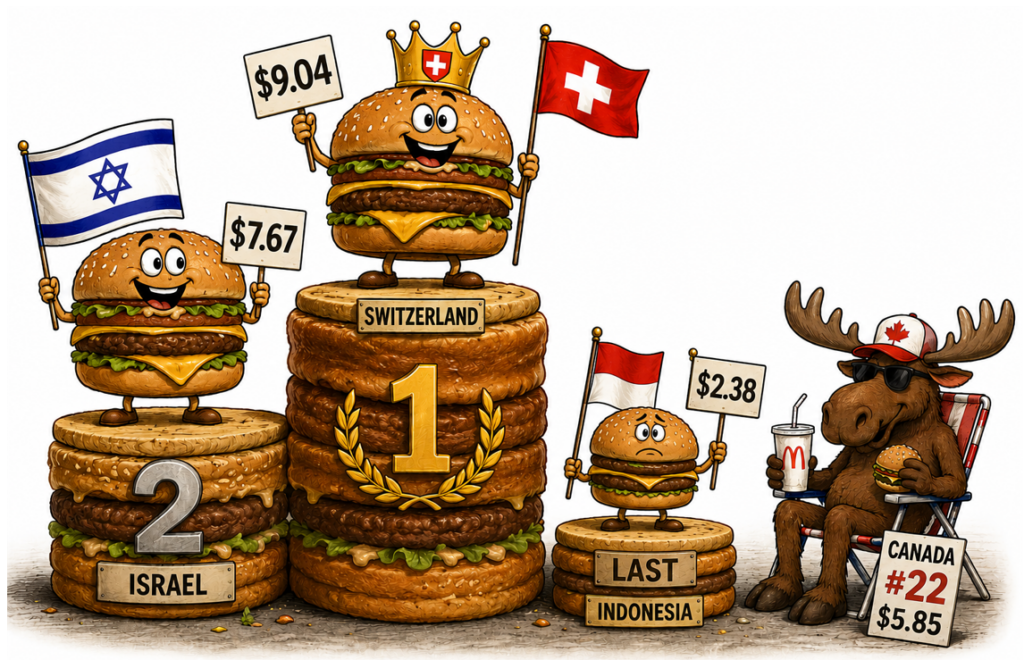
If that’s not enough economic voodoo talk for one musing. According to one famous barometer. Israel moved to second place in the Economist’s Big Mac Index. Introduced in 1986, this tasty indicator compares the purchasing power parity across countries by measuring the price of a McDonald’s Big Mac -which most can relate to- against the benchmark U.S. burger. So while a Big Mac in the U.S. costs $6.22. In Israel it costs $7.67, the second most expensive place to buy the hamburger in the world, Switzerland being the most pricey at a whopping (no reference to Wendy’s) $9.04. While the cheapest Big Mac can be enjoyed in Indonesia at only $2.38. Canada ranked 22nd of the fifty-four countries considered, at $5.85. Parity. Smarity. I’m going for my Big Mac fix. Just after I finish writing this muse….

(August 11, 2026) Bravo Boy George. We certainly will dance again! And what better way than with his new reggae tune. Now Boy George is dealing with a hostile backlash against his just stand for Israel. Having to withdraw from London’s East End production of Jesus Christ Superstar where he was going to play – guess it. King Herod. Never a big Culture Club fan, but I am anyway -as a sign of support- going to download his greatest hits to my Spotify library. And hoping to have a chance to buy a concert ticket should Boy George perform in Israel. Kind of reminds me of Bob Dylan’s 1983 song Neighborhood Bully. Also in defense of Israel. I’m going to download that song as well. Although don’t think he was hounded the way Boy George is now. Sign of the times I guess.
+++++
Coming clean. I sometimes find myself chanting, to no one in particular, that snappy little ditty ‘from the river to the sea, Palestine will be free.’ Now why can’t we come up with something as catchy. With such an impressive gene pool of great Jewish songwriters. George Gershwin. Irving Berlin. Burt Bacharach. Carole King. Neil Diamond. Leanard Choen. Paul Simon. Gene Simmons, Amy Winehouse. Bob Dylan. And yes, even the Buddhist Boy George. And still… gurnish! No wonder we’re losing the global PR battle
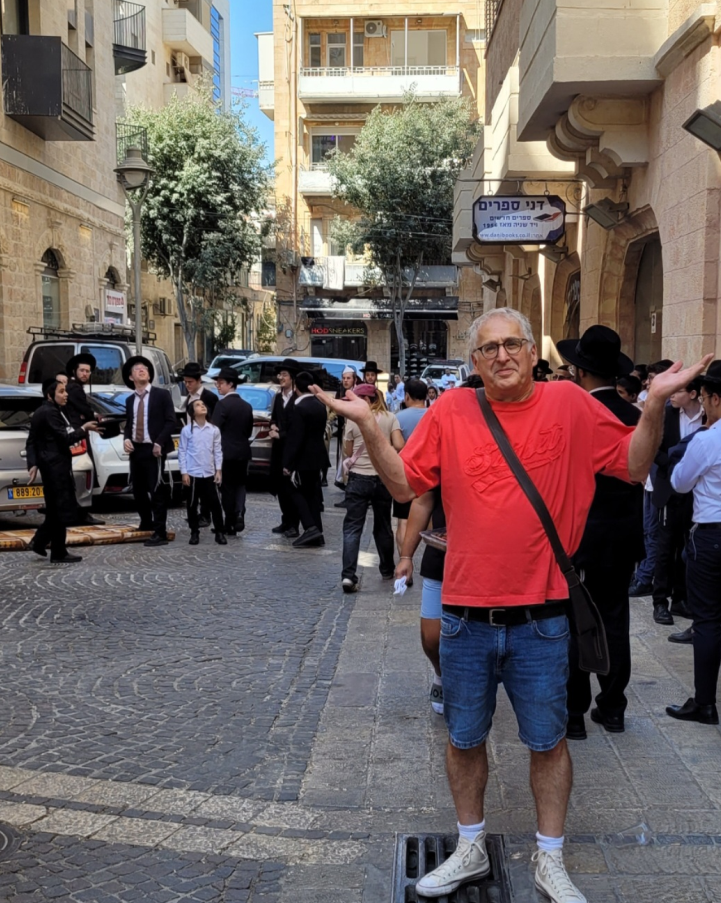
(August 8, 2026) Outside Basimta Café in Central Jerusalem. Love the red shirt against a tiny sea of black. Not sure I am shrugging because of the ultra-orthodox uproar over a Jerusalem café operating on Shabbat or the lack of an ultra-orthodox uproar over a Jerusalem café operating on Shabbat. For the last six weeks Israeli headlines shouted about the cafe chaos. With the ultra-religious blocking entrances and storming the café. While shouting ‘Shabbos! Shabbos!’ Upsetting the secular amongst us just wanting to enjoy our Saturday iced matchas. So the wife and I thought we would check it out. And. Yes. Buy something to support the business. Uproar. Not. Blocked entrances. Not. Storming the café. Not. Albeit there were police barriers separating the devout protesters from the coffee drinkers. The protesters being just a few dozen black clad, pious Jews. Mostly teenagers. And yes. Shouting ‘Shabbos! Shabbos!’ Certainly underwhelming in its reported mayhem. Reminds me of the famous saying misattributed to Mark Twain – “If you don’t read the newspaper, you’re uninformed. If you do, you’re misinformed.” But I did enjoy my iced matcha.
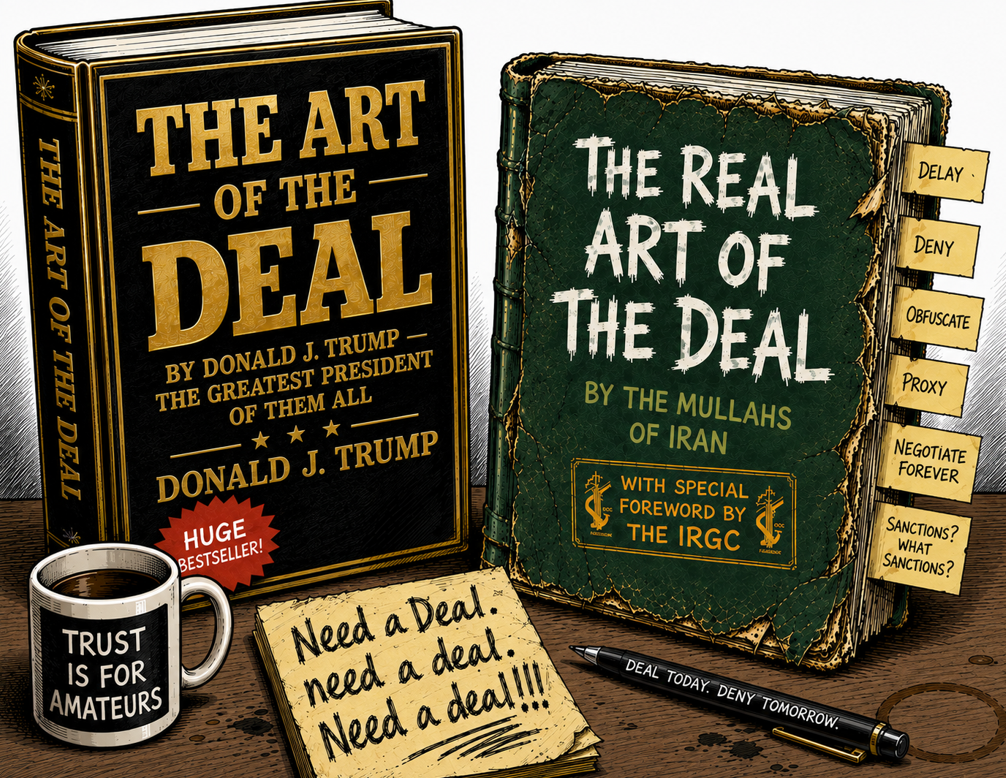
(August 6, 2026) Here we go again. Another round of forever negotiations. As someone who negotiates for a living. The way things are going in the straits. If I had to recommend a book on the subject to a new hire. Between The Art of the Deal, A Presidential Edition by Donald J. Trump or The Real Art of the Deal by the Mullahs of Iran with a special forward by the IRGC. Well. I would choose the latter.
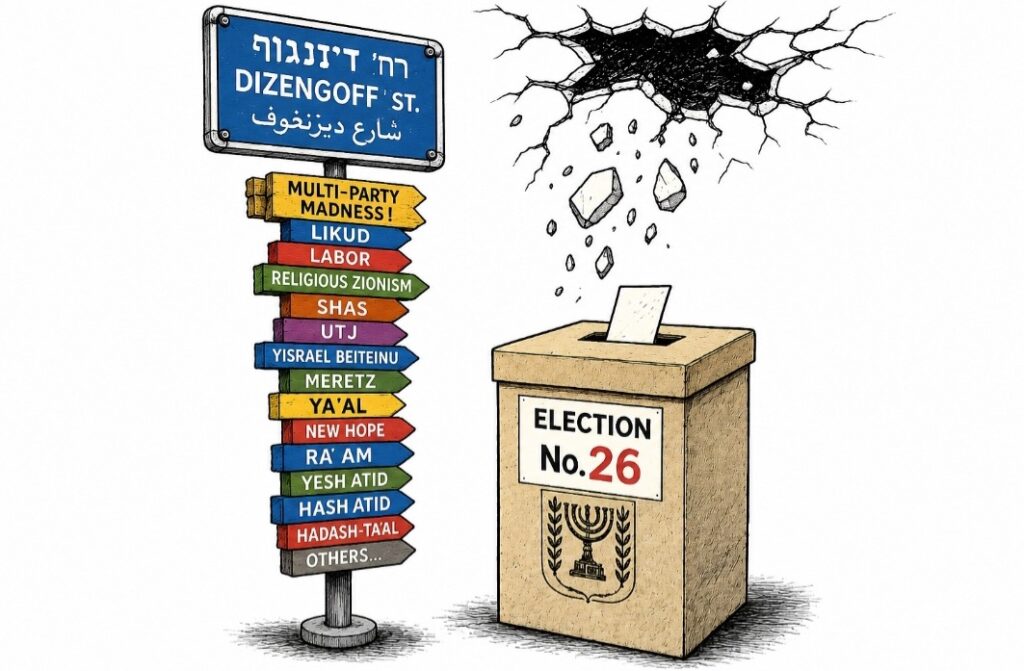
(August 3) Bravo Yoav Segalovitz, Liberal Yesh Atid MK and Monsour Abbas, United Arab Ra’am MK and party head. For breaking a glass ceiling where a Jewish lawmaker joins an Arab political party. No less a political earthquake in my little shtetl. Which can significantly impact coalition block arithmetic and posturing and strategy in the upcoming elections. Now Ra’am can be considered a legitimate ‘Zionist’ partner when forming coalition blocks and potentially pushing the ‘center left/right’ party over the 60 seat majority threshold. In our crazy parliamentary democracy defined by a multi-party (about fourteen!!), proportional representation system. To paraphrase Winston Churchill, Israel’s proportional representation model of governance is the best parliamentary democracy system except for all other forms of working democracies. Stay tuned for more amateurish political musings as we move towards Israel’s 26th national election – five of them held since 2019.
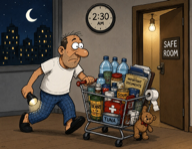
(August 1) Although both sides say they are open to diplomacy. Neither really trusts the other. And American military action, or its threat, continues. I read headlines in the middle of the night -it’s a nervous habit lately– that the Dynamic Duo of Trump and Netanyahu may again strike in unison. Possibly this weekend. Yikes! Prompting me, at 2:30 AM, to dash around the house stocking my safe room. Bottled water. Canned food. Medicines. Documents. The beat goes on….
If it’s crazy here. It’s insane in Italy. With a recent online ‘Jew Hunt’ in the Milan area. Before being removed, the digital forms urged reportings of Israelis and Italian Jews staying in local hotels. The infamous Global Sumud Movement -yes, the one coordinating ‘peace and humanitarian’ flotillas to Gaza- was somehow connected. Although they deny involvement?! This deranged decree was looking to identify Zionist tourism and Zionist neo-colonization in Italy. I’ll stick with stocking the saferoom.
Then there’s New York Mayor Mamdani, a Global Sumud Movement supporter, threatening to arrest Prime Minister Netanyahu if he comes to New York. But since discovered he has no legal right for such a grandstanding, antisemitic, anti-Israel, anti-Western, anti-democratic antic. Maybe Mandami should be arrested! Or at least impeached. For being a grandstanding, antisemitic, anti-Israel, anti-Western, anti-democratic mayor.
Here’s a post Bruce sent us Friday, July 31:
WARTIME MUSINGS
Should credible threats against FLOTUS and ‘FSOTUS’ (first son..) not be justification to attack first.
As for yesterday’s summit. Netanyahu really can’t win. Explainer. If Trump now attacks without victory its ’cause of Netanyahu. If Trump now attacks with victory its ’cause of Trump. And, in Israel, if Trump doesn’t attack -victory or not- Netanyahu failed in his eighth meeting with Trump. And if Trump does attack -victory or not- half the country will vilify Bibi anyway. Missing a permutation?
Ya. I know. Kinda’ need a definition of victory for that musing to work.
And here in my little shtetle. We go to sleep unsure if there will be a code red in the middle of the night. And if not. We wake up thinking it will be tonight. How do you define stress?

Seemed like an appropriate way to end this musing.
Bruce Brown is a former Winnipegger who made aliyah to Israel over 35 years ago. Bruce first began writing for us – in his own inimitable style, in 2012, during what was known as “Operation Pillar of Defense.” His occasional musings on aspects of life in Israel that were far from what you’d typically read in other reports from Israel were hugely popular – both in the print Jewish Post & News and on this website.
We’re now glad to report that Bruce is back writing for us – this time on a regular basis. We will post Bruce’s reports as they arrive – with the date of each post at the beginning of that post.
Here’s some information about Bruce – and awards he’s received for his writing:
Bruce Brown. Canadian born. Now living in Israel (for a long time). Bruce works in Israel’s hi-tech sector by day and, in spurts, is a somewhat inspired writer by night. He received the American Jewish Press Association’s award for writing excellence in 2019 and 2025. And wrote the1998 satire, “An Israeli is….”. Bruce’s visuals are AI-assisted and created with ChatGPT under his inimitable visual concept and creative direction. Bruce’s musings are political, social, economic and personal. With lots of biting, contrarian, sardonic, irreverent and mischievous insights.
Uncategorized
Why NBA Teams Start Defending Before Half Court

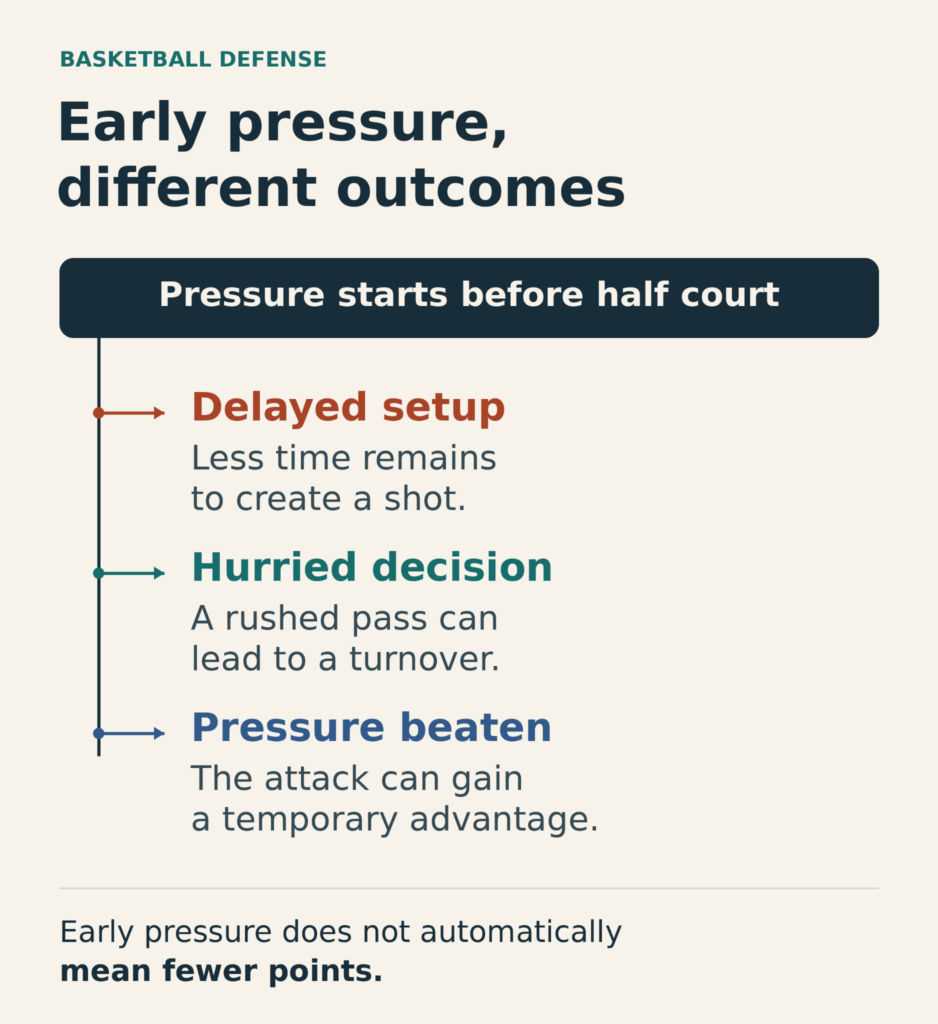
An NBA defender who meets a ball handler near the opposite baseline is trying to interfere with the possession before the offense gets organized. The immediate reward need not be a steal. Making a guard change direction, protect the ball, or find another receiver can interrupt the route into a play. But pressure has several possible results, and slowing that first journey does not necessarily slow the whole game.
In Logan Murdock’s November 2025 report on full-court defense, Phoenix Suns guard Jordan Goodwin described his aim: “Try to make them take at least six seconds off the clock.” That was his target, not a measured average. Indiana Pacers coach Rick Carlisle described another purpose: getting opponents to play faster than they prefer. Both approaches interfere with timing, though one delays the setup while the other hurries decisions.
The shot clock helps explain the difference. In a normal NBA possession following a made basket, the offense has 24 seconds, with the countdown starting when the inbound pass is legally touched on the court. It must also advance out of the backcourt within eight seconds. Crossing half court does not start a fresh shot clock. Time spent getting there leaves less time to create a shot. A defensive deflection that stays inbounds does not restart the countdown.
Defensive pressure also needs careful interpretation in basketball betting. An NBA matchup on the Bovada website cannot be reduced to whether one team presses: the combined score depends on how often both sides get the ball and what they do with their chances. A defender delaying the first pass into an offense can leave less time for a good attempt. A turnover followed by a quick basket has a different effect.
Those possibilities make defensive intensity an incomplete description of a scoring outlook. A team can force its opponent to work harder while creating quick attacking chances for itself. It can also concede an easy chance when pressure fails. Understanding the tactic means separating its purpose from its outcome, rather than treating an aggressive defender as evidence that the game must produce fewer points.
Pressure does not always mean a trap
One defender following the ball is different from two defenders closing around it. The first can contest the dribbler while teammates remain with their own assignments. A trap commits another player to the ball, so teammates elsewhere must cover the passing options and protect the basket.
A stopped dribble changes the contest. Once a player voluntarily picks up the ball, he cannot simply start dribbling again. He can still pivot, pass, or shoot, but moving away from pressure with another dribble is no longer an option. A defender can therefore restrict movement without taking possession. This is also why a guard’s choice to keep the dribble alive deserves attention: it preserves a way to move while searching for a pass.
Watch where the ball goes next. A trap can succeed by forcing an awkward pass that another defender intercepts. The players surrounding the ball do not have to be the ones who take it away. Reaching for a steal also differs from keeping the ball handler contained; abandoning position can give the guard a route past the pressure.
The offense has answers. In the Murdock report referenced earlier, Golden State guard Brandin Podziemski described using his body to shield the ball against smaller defenders and quickness to get beyond longer opponents. Beating the first defender can leave that player trailing, creating a temporary advantage farther upcourt. The remaining defenders then have to respond to an attack before their teammate has time to recover.
The work before a highlight
Former NBA guard Keith Bogans gives a defender’s perspective in his conversation with Vernon Maxwell. Discussing Jaden McDaniels, Bogans says that seeing a defender pick up a superstar across the court gets him excited in the way a dunk or crossover excites other viewers.
*
His reaction focuses on the challenge being accepted. The scorer has someone to deal with before reaching a preferred attacking position. Bogans also describes the recognition that such defensive work receives from teammates and coaches, even when it attracts little attention elsewhere.
The assignment does not end when the scorer passes. The defender still needs to follow the play and be ready for the ball to return. Early pressure can force a star to give up the ball without removing him from the possession. Watching the next pass shows whether the defense has actually disrupted the attack or merely moved it.
When defense creates offense
Indiana scored 19 points off turnovers in Finals Game 6 against Oklahoma City on June 19, 2025. The figure does not isolate full-court pressure.
A change of possession ends one team’s opportunity and begins another’s. The team winning the ball can attack immediately or organize its offense, depending on the space and defenders ahead. Pressure therefore cannot be assessed only by the time an opponent spends bringing the ball forward.
Look beyond the pickup point. Does the offense arrive late but still organized? Does it make a hurried pass? Does the ball handler escape and make the remaining defenders cover extra ground? The first defender can use up time without winning the ball. If the guard gets past him, watch whether the other defenders can stop the drive without leaving someone open.
