


Uncategorized
Fearless or foolish? Michael Roth, Wesleyan’s Jewish president, stands apart in opposing Trump’s campus policies
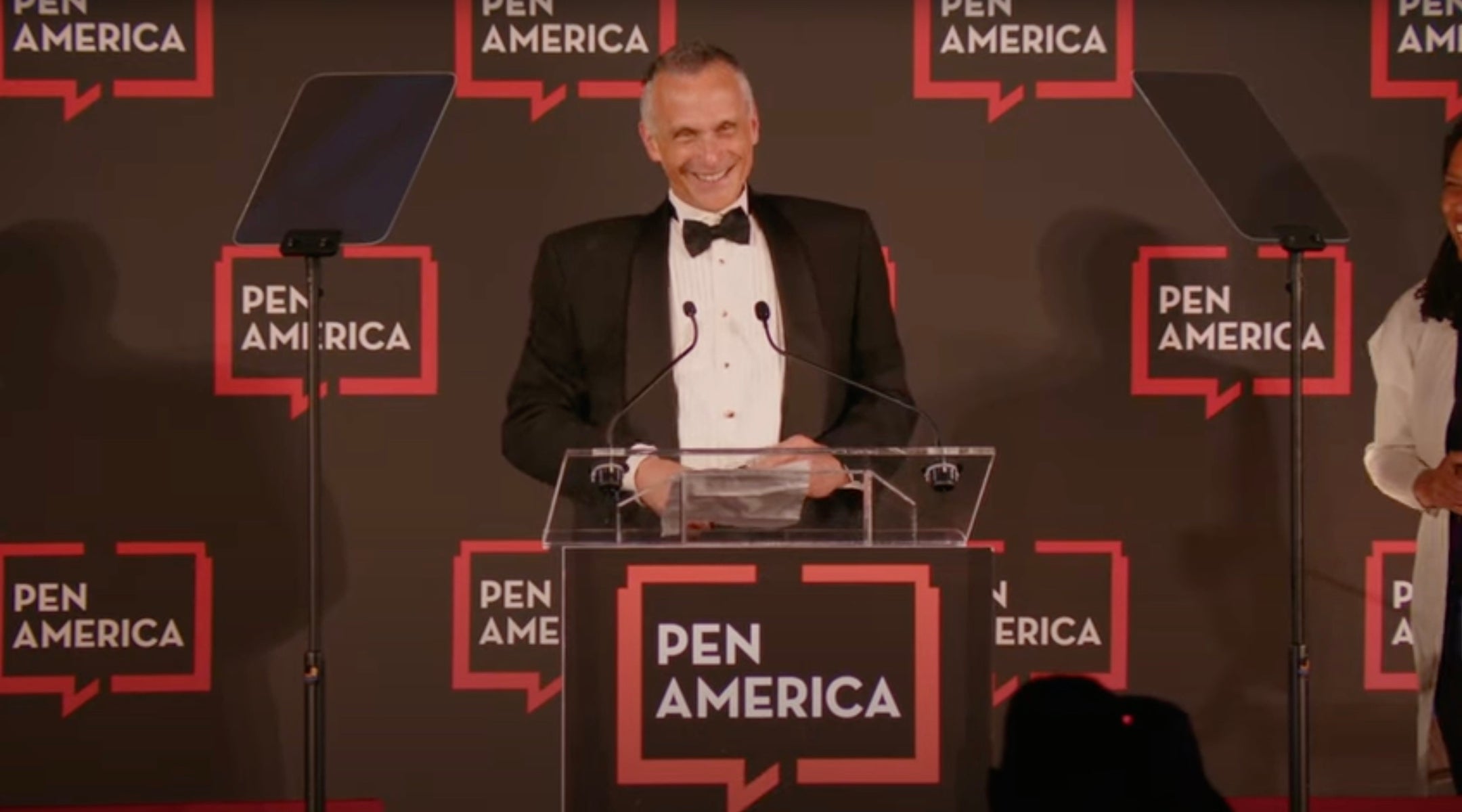
(JTA) — As he often does these days, Wesleyan University president Michael Roth recently delivered a lecture on another campus outlining all the reasons why academia should be more forcefully standing up to President Trump’s policies.
He peppered the lecture with Yiddish words. He laid thick on what he called his “Jewish accent.” A colleague came up to him afterwards.
“You’re doing Jew-speak,” they told him.
Roth laughed recalling his response: “No s–t, Sherlock. That’s part of what I’m doing.”
What he’s doing, Roth told the Jewish Telegraphic Agency in a recent interview, is constantly reminding his potential critics who he is. For one, he’s the only university president in the country who openly, repeatedly rejects Trump’s claims that the administration’s campus crackdowns — rescinding grants, limiting international student visas, dismantling “DEI” — are a means of fighting antisemitism after the Oct. 7, 2023, Hamas attack on Israel.
For another, when his own school dealt with pro-Palestinian encampments last year, he made no secret of handling the matter diplomatically instead of through discipline — an approach that landed other university presidents in hot water, but not him.
And above all that, he’s proudly Jewish.
“If you’re going to accuse Wesleyan’s administration of being antisemitic, start with me. But don’t call me on Saturday,” Roth quipped. “Because I’m going to be in Torah study.”
Roth isn’t quite sure how he, the leader of a small-town Connecticut liberal arts school with a mere 3,000 students, became so unusual among his profession by defending what he sees as the central principles of academic freedom.
“It’s a bit of a puzzle,” he told JTA. “I don’t think my view is very original. Any of the presidents I know at different schools probably have similar views.” His views also seem to align with most American Jews, at least according to polls, which show that nearly three-quarters of them also believe Trump is using antisemitism as an excuse to attack higher education.
In recent days, two other Jewish presidents, at the Massachusetts Institute of Technology and Brown University, have publicly rejected a Trump administration offer of “priority” funding that would have required them to bar some forms of speech, making them the only university leaders to do so. But Roth still stands out in the lengths he is going to rebuff Trump’s higher education policies — and to center his Jewish identity in doing so.
There he is, accepting a “courage award” from the literary free-speech group PEN America “for standing up to government assaults on higher education.” There he is, giving interviews in which he lambasts “prominent Jewish figures around the country who get comfortable with Trump, it seems to me, because they can say he’s fighting antisemitism: ‘He’s good for the Jews.’ It’s pathetic. It’s a travesty of Jewish values, in my view.”
There he is, signing an open letter declaring that antisemitism “is being used as a pretext to abrogate students’ rights to free speech, and to deport non-citizen students.” The leaders of Jewish Voice for Peace, an anti-Zionist group that has been suspended from multiple college campuses for disruptive protests, were on that letter. So was the leader of Wesleyan University.
And there he is, telling JTA that so-called institutional neutrality positions, adopted by a range of universities amid the Israel-Gaza war (and supported by the Jewish campus group Hillel International), are “bogus.”
A representative for the American Association of University Professors, a faculty union that has dropped its former opposition to boycotting Israel, praised Roth’s presence on the national stage.
“Michael Roth is criticizing the misuse of Title VI to define anti-semitism as criticism of Israel and its weaponization in the campaign to attack higher education. There is nothing startling about that position,” Joan W. Scott, a Jewish researcher at the Institute for Advanced Study who sits on the union’s academic freedom committee, told JTA.
Scott added, “I’d say Roth’s reasons for his courageous stance have to do with his integrity and perhaps his knowledge of history. He doesn’t want to be among those who, like Heidegger, thought that appeasing the regime in power was a safe position to take.” (A spokesperson for the Foundation for Individual Rights and Expression, a campus free-speech advocacy group that supports institutional neutrality, declined to comment on Roth.)
Roth’s profile has caught the attention of some Jewish families, including that of Mason Weisz of White Plains, New York, who said Roth was one reason that his son is a first-year at Wesleyan now. Weisz recalled hearing an NPR interview with Roth in April, after admissions decisions were out but before seniors had to pick their schools, as particularly pivotal.
The interview “in which he argues that Trump’s use of antisemitism to justify his strong-arming of universities actually is bad for the Jews, encapsulates everything I appreciated about Roth.” Weisz told JTA. “Here is a university president who is willing to risk going on record against the administration, again and again, to fight for academic integrity. He has a nuanced view of world events, an appreciation for true debate, and a fearlessness that I hope are an inspiration for Wesleyan’s faculty and students.”
Roth also earns good marks from some Jewish students on campus.
“He does care about Jewish students. He’s someone who does take their concerns seriously. And compared to other university presidents, he’s been better,” said Blake Fox, a Jewish senior at Wesleyan who identifies as pro-Israel and serves on the campus Chabad board. “He wants to be the ‘cool’ president.”
Fox says he had a good experience as a Jew at Wesleyan, in part because the encampments there never felt threatening (he noted the protest movement was much smaller at Wesleyan than it was at other schools). That was due, at least in part, to Roth’s efforts to peacefully negotiate an end to the encampments.
Yet, Fox said, the president — whom he’s met several times — was also deeply concerned for the well-being of Jewish students. In meetings with Fox and other Jews on campus, Roth vowed to take action if any protesters ever threatened a Jewish student by name.
He also appreciated Roth standing up to Trump, particularly on issues of campus speech. “I’m pro-Israel, but I also support the First Amendment,” Fox said. “Even if there are individuals whose speech is bad, targeting them for deportation is a dangerous precedent, I think.”
Though a historically Methodist school, Wesleyan today has no religious affiliation and enrolls around 600 Jewish students — nearly 20% of the student body. There’s no Hillel, but the school’s Jewish community includes a full-time rabbi, student leadership, dedicated Jewish residential housing, and a unique, modern sukkah that has won architecture awards. The Wesleyan Jewish Community rabbi declined to comment for this story.
There’s also a Chabad outpost, which opened in 2011. Its director, Rabbi Levi Schectman, told JTA he was “grateful for the open door to the President’s office and for the strides that have been made so far,” adding, “There is still more work to be done so that all students feel heard and safe.”
Schectman also said the Wesleyan Jewish community he interacts with is “living and thriving”: A recent “Mega Shabbat” gathering drew what he said was a center record attendance of 175 students.
And then, of course, there’s Roth, the school’s first Jewish president, who has held the post since 2007. A free-speech scholar, he’s published books about the campus environment, including one called “Safe Enough Spaces.” He grew up in a Reform household on Long Island and has written essays on Jewish identity, but considered himself “only modestly observant” until his father died 25 years ago. After that point, he said, he “began saying Kaddish and subsequently attending Torah study.”
Nowadays Roth makes a point of involving himself in Jewish campus life — all forms of it. He spent Rosh Hashanah with the affiliated Jewish community, and, last year, caught a Shabbat service held at the pro-Palestinian student encampments.
The latter group wasn’t too thrilled to see him there, he recalled; they’d been targeting him by name, often in insulting language. But he wanted to learn more about the Jews who were participating in the protests right outside his office. When one of them, an Israeli, personally apologized to Roth for the aggressive behavior of other encampment participants, he invited the student to his office and they had a long chat. “There were so many interesting conversations,” he said.
Of course, many Jews in academia know that merely being Jewish cannot protect oneself from charges of enabling antisemitism. It didn’t save Northwestern University president Michael Schill, who — like Roth — is a free-speech scholar who tried to deal with his school’s encampments through negotiation instead of by force.
In so doing, Schill was hauled before Congress and lost the confidence of many of his Jewish faculty, staff and alums. The heads of the Anti-Defamation League and Jewish Federations of North America, both Northwestern alums, publicly aligned against him. Last month, Schill announced he was stepping down.
Roth doesn’t know Schill personally, but said he thought it was “just terrible” he had resigned. “I found it very sad that the board didn’t come to his defense in a way that allowed him to continue,” Roth said.
He acknowledges he’s in a better position to speak out than the heads of other universities, where hospitals and major research centers are more reliant on federal funding, and where instances of antisemitism had been more prevalent pre-Trump.
Schools like Columbia have made significant concessions to Trump, including on antisemitism issues, in exchange for having their funding restored. Harvard, after initially putting up resistance to Trump’s demands, has now reportedly entered a negotiation phase; the University of California system has also been targeted for a $1 billion payout to the government. Last week, the Trump administration unveiled what it said was a new “compact” that schools would be required to sign to secure their federal funding; the demands include one to protect conservative viewpoints on campus.
Is Roth worried that Trump could turn on Wesleyan next?
“Didn’t I say I was Jewish?” he responded, laughing. “Am I worried? Of course I’m worried. I’m a worrier… I would hate to put Wesleyan at risk.” But, he said, that wouldn’t stop him. “I have three grandchildren. I want them to grow up in a country where they don’t have to be brave to speak up.”
As Jews marked the recent two-year anniversary of Oct. 7, Roth’s name was also on some things other Jewish leaders wouldn’t touch.
He spoke to JTA while on the road to a literary festival in Lenox, Massachusetts, co-sponsored by the left-wing magazine Jewish Currents, which has emerged as one of the loudest voices in Judaism to oppose both Israel and communal American Jewish support for it. He would be appearing onstage with the journalist M. Gessen, who has compared Israel’s actions in Gaza to Nazi Germany.
Roth told JTA he hadn’t known that Jewish Currents was a co-sponsor when he agreed to take part in the festival. But, he added, it wouldn’t have changed anything about his appearance. He’ll talk to anybody Jewish. He’s appeared on their editor Peter Beinart’s podcast, and a while back he submitted a piece to the magazine that was rejected (“I guess it was insufficiently anti-Israel,” he mused) and wound up running in the Forward instead.
He sees his own views on Israel as moderate. While he called for a ceasefire in March 2024, far earlier than many others in the Jewish world, he still refuses to call the Gaza war a genocide and remains adamant he supports “Israel’s right to exist.” He only blames Israel for what he said were the security failures that led to the Oct. 7 attack, which he had condemned immediately as “sickening.”
He takes Israel’s wartime behavior to task for “paving a path for egregious war crimes and a level of brutality and inhumanity that I never would have associated with the country.” Yet he remains “stunned,” even today, by what he called “the lack of basic sympathy, empathy, for the victims of those horrific murders” of Oct. 7.
“I pride myself on being realistic about the persistence of antisemitism,” he said. “Still, the callousness with which some people greeted those horrors was very disturbing.”
Yet when the encampments came for Wesleyan last spring, and some of their participants accused him directly of being complicit in genocide, Roth — unlike nearly every other university president — opted to negotiate with them. He wrote a piece in the New Republic declaring that he would not call the police, even though he knew the protesters to be in violation of some campus policies.
Even in that piece, he offered an ominous prediction: “My fear is that such protests (especially when they turn violent) in the end will help the reactionary forces of populist authoritarianism.”
Roth didn’t like many of the phrases his own campus protesters used, including “From the river to the sea, Palestine will be free.” Yet he forcefully defended their right to say it, angering some Jews on campus as a result.
“I try to have it both ways,” he said — weighing his principled views on both Israel and protest. This can sometimes lead to very intricate needle-threading. He recalled how, when an address he gave to prospective students was disrupted by pro-Palestinian protesters unfolding a banner, he let them continue and even acknowledged the banner before pressing ahead.
Fox does take issue with some of Roth’s stances, including his opposition to institutional neutrality.
“I think he fundamentally misunderstands what institutional neutrality is,” Fox said. “We don’t need to hear your views on Ukraine. We don’t need to hear your views on Israel.” Having the school president call for a ceasefire, he thought, is “alienating both sides of campus.”
More significantly for his job, Roth has long opposed the movement to boycott and divest from Israel. This has angered activists at Wesleyan, who, like those at other schools, have made divestment a central demand.
Last spring, in order to peacefully break up his school’s encampment movement, Roth had promised protest leaders they could make a case to the board for divestment that fall. When the board opted not to divest, a small number of protesters became angry and attempted to take over a university building.
“They were not very civil to my staff members,” Roth recalled, describing the protesters as basically daring him to take action.
That time, he did call the cops.
The post Fearless or foolish? Michael Roth, Wesleyan’s Jewish president, stands apart in opposing Trump’s campus policies appeared first on The Forward.
Uncategorized
Germany has found the culprit behind a deadly antisemitic arson fire. It still hasn’t learned its lesson.
The only way out of the Jewish old-age home at Reichenbachstrasse 27 in Munich ran through a four-story wooden stairwell. On the evening of Feb. 13, 1970, someone soaked that stairwell with gasoline and set it on fire.
It became a chimney. Flames and smoke raced upward, cutting off the residents above. Firefighters rescued many of the roughly 30 people inside, but seven Jewish residents aged 59 to 71, died. 15 people were injured, four seriously. All seven victims had survived Nazi persecution. Auschwitz had been liberated just 25 years earlier.
For 56 years, no one could identify the culprit.
In August, the Munich General Prosecutor’s Office announced that it now believes a right-wing extremist started the fire. Earlier this year, the German newsmagazine Der Spiegel identified him as Bernd V., providing only his first name and last initial in accordance with German privacy laws. Der Spiegel also ran a black and white police photo of the suspect. It shows a man with a broad forehead, deep-set eyes and weak chin, wearing an unsmiling, withdrawn expression. The caption read, “Raised with Love for the Führer.”
Bernd V. was 25 at the time of the arson attack and died in 2020. His death means there will be no trial, though prosecutors say the evidence now points clearly to his responsibility. They found no reliable evidence of accomplices.
After his death, a woman contacted authorities and told the police that Bernd V. and two other men had been involved in a botched burglary at a jewelry store close to the Jewish community center on the night of the attack. Bernd V. ranted to his accomplices that the Jews had everything while Germans like him had nothing and verbally threatened to set Jews on fire. Roughly 15 minutes later, the building at Reichenbachstrasse 27 was ablaze.
In April 2025, investigators in Munich reopened the case, which had been closed in 2017 for lack of evidence. Old acquaintances of Bernd V, including relatives of the woman who had provided the new statement and who corroborated her account, remembered a man with a deep hatred of Jews who was obsessed with Hitler. He played records of the Führer’s speeches and practiced shooting around Berchtesgaden, where Hitler once had an idyllic residence. As a juvenile, Bernd V. had been sentenced for blowing up two telephone booths.
More strikingly, he was not a new suspect in the arson case. A former cellmate from one of Bernd V.’s prison stints in the early 1970s told investigators that Bernd V. had boasted to him of carrying out the Reichenbachstrasse attack and described details that, according to prosecutors, were not publicly known. Prosecutors questioned Bernd V. in 1972; he denied involvement, and the case against him was dropped two years later for lack of evidence.
The Reichenbachstrasse fire changed Jewish life in Germany — and the long uncertainty about its perpetrator helped shape a comforting German story about the sources of postwar antisemitism.
Bernhard Purin, the founding director of Munich’s Jewish Museum, has called the attack, quite simply, “the rupture.” Purin, who died in 2024, explained in a 2020 interview that before Feb. 13, 1970, people entered Jewish community centers much as they entered Christian ones. Afterward came police cars, cameras and heightened security, including metal detectors. Jews in Germany drew the bleak conclusion that they could only live under protection.
That security regime has become so routine here that it passes for normal. Police officers and Israeli security stand guard outside synagogues and Jewish schools. Visitors pass barriers and identity checks before entering institutions devoted to worship, education and community.
Permanent security presence has an unintended consequence: It marks official Jewish life as something fundamentally separate from ordinary life. A synagogue behind police barriers may be safer, but that fortification tells Jews and non-Jews alike that Jewish institutions are a world apart.
The attack also has another legacy. Because nobody knew who committed it, the crime gradually became evidence in a wider argument about left-wing antisemitism. In 1969, German left-wing radicals planted a bomb that failed to detonate at the Jewish community center in West Berlin on the anniversary of Kristallnacht. Parts of the revolutionary left embraced an anti-Zionism that could turn antisemitic. The Red Army Faction later celebrated the Palestinian terrorists who murdered 11 members of the Israeli Olympic team in Munich in 1972; German left-wing terrorists subsequently collaborated with Palestinian militants at Entebbe.
But the history of left-wing antisemitism gradually absorbed a crime for which no such attribution had been proved. It fed into the narrative that, as the political scientist Yascha Mounk put in his 2014 book Stranger in My Own Country, “since 1945, the Germans who have committed the most radical attacks on Jews were not right-wing radicals.” Many Germans found it psychologically convenient to believe that the Reichenbachstrasse victims had died at the hands of German antifascists rather than neo-Nazis.
The generation of 1968 performed an indispensable service by forcing West Germany to confront questions its parents had largely evaded: What had Germans done under Hitler? Why had former Nazis returned to positions of authority? What did Auschwitz demand of the generations that followed?
The discovery that some of those self-proclaimed antifascists themselves became antisemites produced a terrible historical irony. It also offered Germans a way to relocate antisemitism. The Jew-haters were now the rebellious children, the revolutionary leftists, the Palestinians and not necessarily the political descendants of the very people who had murdered Europe’s Jews.
Mounk himself called the radical left’s projection of fascism onto Jews and Israel a “psychological coping mechanism.” The apparent solution of the Munich case suggests a parallel mechanism in postwar Germany: antisemitism has often been easiest to recognize when it belongs to somebody else.
Today, that somebody else is frequently Muslim.
At the reopening of the Reichenbachstrasse synagogue last September, German Chancellor Friedrich Merz explicitly acknowledged that antisemitism “was never gone” from the Federal Republic. But within minutes he turned to immigrants, arguing that Germany had ignored the fact that a “considerable” number came from countries where antisemitism was effectively state doctrine. Months earlier, he had told Fox News that Germany suffered from “a kind of imported antisemitism.”
Since Oct. 7, 2023, Jews in Germany have faced alarming hostility connected to Israel and Gaza, including from Islamist and radical anti-Zionist milieus. But that’s only part of the story. Germany’s principal civil-society monitoring network for antisemitism, RIAS, recorded 8,725 antisemitic incidents in 2025. It linked 807 of them to right-wing extremism, the highest number in that category since nationwide monitoring began. And Germany now has a far-right party of enormous electoral strength whose leading figures have repeatedly tested the boundaries of the country’s postwar taboos.
That party, Alternative for Germany (AfD), is currently polling around 41% in Saxony-Anhalt ahead of next month’s state election. One of its most prominent politicians, Björn Höcke, has twice been convicted for using the banned slogan of Hitler’s SA.
Fifty-six years after seven Jews died in a burning building, prosecutors now believe the likeliest perpetrator was a German neo-Nazi whose fanatical hatred had been visible for years. That finding comes too late to punish him. It does not come too late to unsettle the story Germans have often told themselves about the crime.
And the other legacy of that night remains all around us. The rupture of 1970 has never fully healed. German Jews still worship, study and gather behind cameras, guards and police barricades: constant reminders that Jewish life here is somehow separate.
The challenge is not only to safeguard Jewish life, but to stop treating permanent protection as its natural condition. That requires Germany to confront antisemitism wherever it appears, including on a resurgent far right whose danger is easier to minimize when attention is fixed elsewhere.
The post Germany has found the culprit behind a deadly antisemitic arson fire. It still hasn’t learned its lesson. appeared first on The Forward.
Uncategorized
Emil Kalin wins Mendele Prize for Yiddish Literature 2026
דער תּּל-אָבֿיבֿער שטאָטראַט האָט די וואָך אַנאָנסירט, אַז דער ייִדישער שרײַבער עמיל קאַלין האָט זוכה געווען צו באַקומען דעם מענדעלע-פּּריז פֿאַר ייִדישער ליטעראַטור. דעם פּרײַז טיילט די שטאָט אויס יעדע פֿיר יאָר פֿאַר בעלעטריסטיק, ליטעראַטור־קריטיק אָדער אַנדערע בײַטראָגן צו דער ייִדיש־ליטעראַטור.
דעם פּריז האָט מען אים געגעבן אין שײַכות מיט זײַן לעצטן ראָמאַן, „צוזאַמענבראָך“ (2025), וועגן אַ געוועזענעם חרדישן ייִד פֿון ירושלים, וואָס פֿאַרלאָזט זײַן פֿרוי און קינד און לאָזט זיך גיין אויף אַ קאָמפּליצירטן גײַסטיקן דרך. דאָס בוך איז דערשינען אין פֿאַרלאַג ייִדיש-בראַנזשע און לייוויק-פֿאַרלאַג, מיט דער שטיצע פֿון דער „נאַציאָנאַלער אינסטאַנץ פֿאַר ייִדישער קולטור“. מע קאָן עס קויפן דורך leyvik.org.
נישט לאַנג נאָך דער פּובליקאַציע פֿונעם ראָמאַן האָט דער פֿאָרווערטס־רעצענזענט מיכאל קרוטיקאָוו געשריבן וועגן דעם בוך, און בפֿרט וועגן דעם הויפּט־פּערסאָנאַזש, הערש, אַזוי:
קאַלין שילדערט סײַ מענטשן און סײַ לאַנדשאַפֿטן אָן קײן שום באַפּוצונג. ער איז אַ מײַסטער פֿון מעטאַפֿאָרישן אימאַזש, װאָס שאַפֿט אַ געהעריקע שטימונג. די שטאָט תּל־אָבֿיבֿ איז אַ מין לעבעדיקע, פֿיבערדיקע חיה, װאָס כאַפּט הערשן פֿעסט אַרום „מיט בײדע שװיציקע הענט.“ די אױטאָבוסן זײַנען „אומגעלומפּערטע יבשה־שיפֿן, װאָס שנײַדן זיך קױם דורך אַ װעג אין דער ברױזנדיקער באַװעגונג.“ ער אַנטלױפֿט קײן ירושלים מיט אַ האָפֿענונג, „אַז ירושלים װעט מיך דערהײבן מיט זיך, אָבער דאָס פֿאַרקערטע איז געשען: ירושלים האָט מיך דערנידערט, אַראָפּגעשלעפּט מיט זיך אין בלאָטע.״
די דרײַ ריכטער פֿונעם פּריז־קאָמיטעט — דבֿ־בער קאָטלערמאַן, דניאל גלאַי און נירה תּובֿל — האָבן געזאָגט, אַז קאַלינס בוך איז נישט בלויז זייער גוט געשריבן, נאָר איז אויך איינער פֿון די גאָר ווייניק מאָדערנע ראָמאַנען אויף ייִדיש, וואָס באַהאַנדלען טעמעס פֿון דער הײַנטיקער ישׂראלדיקער געזעלשאַפֿט.
אַחוץ „צוזאַמענבראָך“ האָט קאַלין אַרויסגעגעבן צוויי אַנדערע ראָמאַנען, און הײַיאָר וועט דערשײַנען זײַן פֿערטער. די אויסטיילונג וועט פֿאָרקומען דעם 1טן דעצעמבער 2026 אין עינבֿ-זאַל, וווּ עס וועט אויך בײַזײַן דער תּל-אָבֿיבֿער בירגער-מײַסטער רון חולדאי.
עמיל קאַלין איז געבוירן געוואָרן אין 1982 אין בוקאַרעשט, און האָט מיט זײַן משפּחה עולה געווען קיין ישׂראל אין עלטער פֿון 7 יאָר.
ער האָט פֿאַרענדיקט זײַנע הויכע לימודים אינעם העברעיִשן אוניווערסיטעט אין ירושלים, און האָט לאַנגע יאָרן געאַרבעט אין הײַטעק. הײַנט לערנט ער פּסיכאָלאָגיע אינעם תּל-אָבֿיבֿער אוניווערסיטעט.
קאַלין האָט אויך איבערגעזעצט אויף ייִדיש דאָס דײַטשישע בוך „דער גאַנג פֿון די הינט“, וואָס איז אַרויס דורכן פֿאַרלאַג „אָלניאַנסקי טעקסט“. זײַנע אַנדערע ביכער זײַנען אַרויס דורך די פֿאַרלאַגן „ייִדיש בראַנזשע“ און „ה. לייוויק“.
זײַנע קירצערע ווערק קען מען לייענען אינעם דיגיטאַלישן זשורנאַל „ייִדיש בראַנזשע“, רעדאַקטירט פֿון באָריס סאַנדלער.
אין יאָר 2025 איז ער פֿאַרבעטן געוואָרן אויף אַ טור אין אַכט שטעט אין דײַטשלאַנד, כּדי פֿאָרצושטעלן דאָס בוך „צוזאַמענברוך“.
ער וווינט אין תּל־אָבֿיבֿ מיט זײַן פֿרוי שבֿע כּהן און זייערע דרײַ קינדער.
The post Emil Kalin wins Mendele Prize for Yiddish Literature 2026 appeared first on The Forward.
Uncategorized
Brussels Airlines workers threaten strike over flights to Israel, citing ethical objections
(JTA) — A Belgian union has threatened to strike against Brussels Airlines for compelling staff to work on flights to Israel, saying that anyone with “safety or conscientious objections” should be able to refuse.
ACV Puls, Belgium’s largest trade union, said on Tuesday that the company was breaking previous agreements to rely on volunteers for flights to Tel Aviv. The airline resumed flights to Tel Aviv on August 3, following a five-month pause because of the U.S.-Israeli war in Iran, and its first flights were operated with volunteers.
“Serious concerns exist among the staff regarding both physical safety and the mental and ethical impact of these flights,” ACV Puls spokesperson Jolinde Defieuw said in a statement. She added that making staffing mandatory was “particularly serious in the context of the ongoing war and the genocide in Gaza.”
ACV Puls, which represents aviation employees including pilots, cabin crews and ground staff in Belgium, said that a strike could follow if Brussels Airlines does not reverse its decision to resume regular staffing. The union argued that flying to Israel could not be deemed sufficiently safe, citing Belgium’s Ministry of Foreign Affairs, which advises against “all non-essential travel to Israel and Jerusalem.”
They also said that workers should be able to decline the flights for ethical reasons. Those who have “safety or conscientious objections must be able to refuse these flights without financial, professional, or disciplinary consequences,” said the union.
Nico Cardone, a spokesperson for Brussels Airlines, told the Jewish Telegraphic Agency that safety was the company’s “highest priority, whether we operate with volunteers or not.” He added that the airline was “not a political party” and made decisions about flight operations based on safety and demand.
“We do not engage in political discussions about the governments of certain destinations, and we ask our staff to uphold this same professional standard,” said Cardone.
ACV Puls said the airline was compelling crews to work because it had not found enough volunteers. Cardone disputed that, saying the airline always aimed to return to regular crew scheduling over time.
Along with threatening a strike, the union called on the Belgian government to weigh in. ACV Puls said the government should take a stance on the availability of commercial flights to Israel “despite the ongoing war, the massive civilian casualties, and the serious accusations of war crimes and human rights violations against the Palestinian population.”
Belgium has grown increasingly critical of Israel’s conduct in Gaza and Israeli settlements in the West Bank since 2023. Earlier this year, Belgium banned aircraft carrying military equipment bound for Israel from crossing its airspace. The government in July approved a ban on goods imported from Israeli settlements in the Palestinian territories.
This article originally appeared on JTA.org.
The post Brussels Airlines workers threaten strike over flights to Israel, citing ethical objections appeared first on The Forward.
