


Uncategorized
After three years in Israel, Reform convert told she can’t make aliyah
(JTA) — When Isabella Vinci stepped out of the mikvah on Nov. 11, 2021, she thought she had done everything that would be required to become Jewish. A beit din, or rabbinic court, had approved her conversion after nearly a year of study with Rabbi Andrue Kahn at Temple Emanu-El, a Reform congregation in New York, including a congregational course and one-on-one meetings.
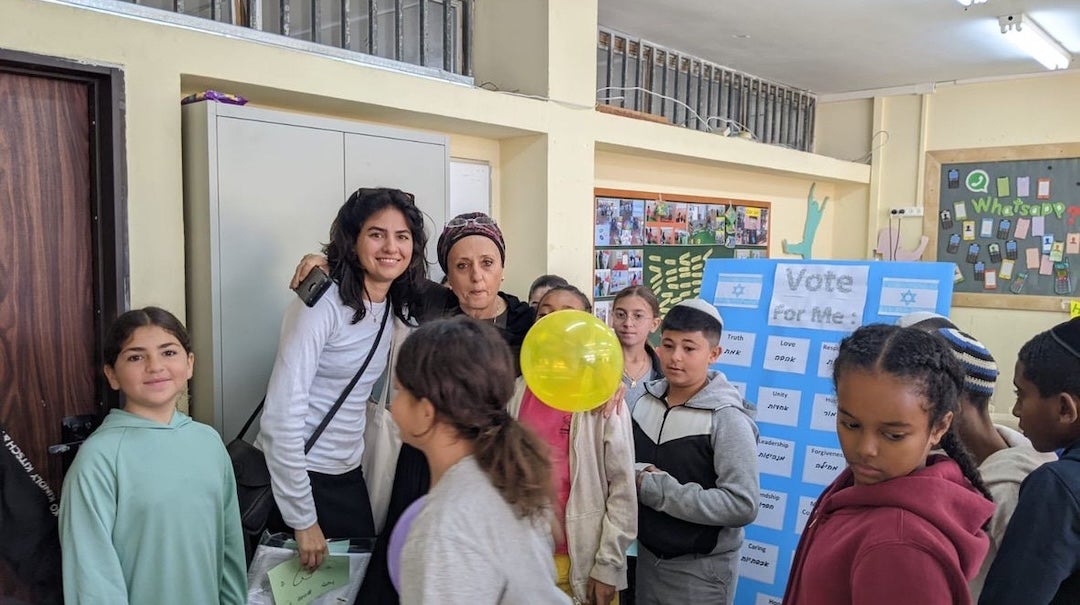
Within a year, she visited Israel on Birthright and returned on an immersion program to teach English in an Orthodox public school in Netanya. Friends, rabbis and colleagues, she said, embraced her as Jewish.
Israel’s Population and Immigration Authority did not.
In a pair of decisions issued in January and again last month, immigration officials rejected Vinci’s application for aliyah under the Law of Return and then denied her administrative appeal.
The letters point to two main problems: She studied for conversion online during the COVID period, and she did not prove sufficient post-conversion participation in a synagogue community — particularly while living in Israel.
Vinci, 31, had to leave behind the life she had built in Tel Aviv and move back to the United States. She is now preparing a court petition with the Israel Religious Action Center, the legal‐advocacy arm of Reform Judaism in Israel.
For decades, IRAC and other non-Orthodox advocacy groups have complained about attempts by religious parties in Israel to block the recognition of conversions outside of Orthodoxy. But Vinci’s advocates say she was blocked from citizenship despite a Supreme Court ruling from 2005 allowing overseas conversions, regardless of denomination.
Her rejection also reflects a gap between the Diaspora and Israel, they say, in everything from religious practice to the adaptations made necessary by the pandemic.
“The whole world — from rabbis to strangers who hear my story — tells me I am Jewish. They see that I am putting everything on the line to be a part of our people. The only ones telling me that I’m not Jewish are within this government agency,” Vinci said in an interview, describing months of silence and what she felt was the government’s unwillingness to consider new supporting documents. “Why aren’t they putting in the work and the effort to actually understand where I’m coming from?”
Vinci grew up Catholic in a sprawling, multicultural family, spending early years in Florida and most of her childhood in Omaha, Neb. She never felt rooted in the church and developed her own spirituality as a teen. Jewish relatives and friends were part of her orbit, and she felt increasingly drawn to the religion.
When she moved to New York as an adult, she decided to become a Jew, going through Temple Emanu-El in Manhattan, one of the most prominent congregations of Reform Judaism.
Neither the immigration authority nor the Interior Ministry, which oversees it, responded to a request for comment.
But official responses Vinci received show that decisions in her case zero in on whether her path fits internal regulations drawn up in 2014 to vet conversions performed abroad. The Israeli Supreme Court ruled in 2005 that such conversions, regardless of denomination, must be recognized, leaving it to the ministry to set criteria.
Those rules anticipate in-person study anchored in a congregation; if the course is “outside” the congregation, they require a longer, 18-month track. In Vinci’s case, officials treated her 2020-2021 Zoom coursework as external and concluded she hadn’t met the time or community-involvement thresholds.
IRAC’s legal director for new immigrants, attorney Nicole Maor, appealed the initial rejection, sending in a detailed memo. Maor wrote that congregational classes conducted on Zoom during a pandemic should be considered congregational, rather than external. She argued that the criteria’s purpose is to prevent fictitious conversions — not to penalize sincere candidates who followed their synagogue’s rules during COVID.
“The entire purpose of the criteria is to protect against the abuse of the conversion process. A person who converted in 2021, came to Israel on a Masa program to contribute to Israel in 2022-2023, and stayed in Israel to work and support the country in its most difficult hour after Oct. 7 deserves better and more sympathetic treatment,” she wrote.
She also wrote that the ministry had ignored evidence of Vinci’s Jewish communal life in Israel, from school prayer with students to weekly Orthodox Shabbat meals with a host family.
As part of Vinci’s appeal packet, Kahn submitted a letter describing the cadence of Vinci’s studies: roughly five months in Temple Emanu-El’s Intro to Judaism course alongside his own one-on-one meetings beginning Dec. 21, 2020, and continuing “1-3 times a month for 2-3 hours” until her November 2021 conversion — about 11 months in total. He listed key books and practices he assigned and attested to her active participation in synagogue young-adult programming.
A host family in Netanya provided a letter saying Vinci spent “Shabbat with our family every weekend as well as most holidays,” describing a year of Orthodox observance in their home and an ongoing relationship since she moved to Tel Aviv after Masa. The school where she taught also wrote in support.
The ministry was unmoved.
In an interview, Maor, who handles a large caseload of prospective immigrants, said Vinci’s case is emblematic of a larger phenomenon.
“It’s not just bureaucracy,” Maor said. “There’s a recurring theme — a suspicious attitude at the ministry that has become worse in recent years and makes life much more difficult for converts.”
Vinci’s case sits at the fault line between Diaspora practice after COVID and Israeli bureaucracy. Around the world, Reform and Conservative congregations shifted classes, and in some communities, services, to Zoom. Many have retained hybrid models because they work for busy or far-flung learners.
“This reality has led to a widening gap between how Diaspora congregations operate and the demands of the Interior Ministry,” Maor said.
There is also a philosophical mismatch: For the ministry, involvement in the Jewish community post-conversion appears to mean synagogue membership and attendance logs. For non-Orthodox streams, Maor said, Jewish life can be expressed in multiple ways — home ritual, learning circles, social-justice work — especially in Israel, where Jewish rhythms permeate public life.
In Vinci’s Netanya year, that life included like daily school prayer, holidays with an observant host family, and teaching in a religious environment. Maor argues that should count.
Kahn, who says two of his other converts have made aliyah without incident, said he was saddened by Vinci’s rejection given her devotion and the hoops she jumped through to satisfy paperwork and timelines.
“It wasn’t like she was mucking around in Israel, she was really doing the work and legitimately devoted to being Jewish,” he said.
After losing her legal status and appeal, Vinci returned to the United States. She took a legal-assistant job in Kansas City and is scraping together fees to file a court petition.
Maor won’t predict the outcome, but she said often cases settle before a precedent is set. The state agrees to a compromise such as additional months of study, rather than risk a ruling that forces a policy shift.
Vinci hopes the case determines not only where she celebrates the next set of holidays, but also improves how Israel treats a growing cohort of would-be immigrants whose Jewish journeys began on a laptop during a once-in-a-century shutdown and amid rising antisemitism.
“I hope my story sheds light on inter-community love and acceptance,” she said. “In our current political and social climate, the best thing we can do is be united as one.”
The post After three years in Israel, Reform convert told she can’t make aliyah appeared first on The Forward.
Uncategorized
The secret Jewish history of the ‘Rocky Horror Picture Show’
“Rocky Horror,” which opened in London cinemas on this day in 1975 is the cultural phenomenon that simply refuses to die. Rather, since its first incarnation as a 1973 London stage musical, “The Rocky Horror Picture Show” has been continuously reborn on the silver screen, in subsequent Broadway stage productions, and, in 2016, as a direct-to-TV film, starring Laverne Cox of “Orange Is the New Black” fame as the transgender Dr. Frank-N-Furter, the mad-scientist role originated by Tim Curry.
In all its incarnations, however, “Rocky Horror” has always been more than just a performance. Its appeal has been widely driven as a participatory event. Film critic Roger Ebert summarized it best writing about the original 1975 film: “‘The Rocky Horror Picture Show’ is not so much a movie as more of a long-running social phenomenon,” because “the fans put on a better show than anything on the screen.” What Ebert refers to is the interactive tradition that has grown up around “Rocky Horror,” whereby fans attend midnight showings primed for a party as much as a screening: reciting the lines out loud along with the characters and interspersing them with “callouts” — responses that have been accepted into the Rocky Horror canon much as the Talmud is commentary on the Mishnah that has in and of itself become part of the sacred text. In the case of “Rocky Horror,” this also includes activities, such as throwing rice or confetti in the air when the married couple in the film leaves the church; squirting water pistols during a rainstorm; and tossing rolls of toilet paper when one character says “Great Scott!”
In one of the most overtly Jewish moments in and outside of the film, a speech by Dr. Frank-N-Furter hailing the creation of the Golem-like creature of the title, Rocky Horror, is met by chaotic noisemaking on the part of the partygoers onscreen and off. In the original film, some of the crowd generates noise with ratchets – a percussion instrument that looks suspiciously like a gragger, as if Dr. Frank had said “Haman.” There are other Purim-like touches in the film, such that temple congregations have made “Rocky Horror” into part of their annual ritual, such as a “Rockin’ Hora Purimshpiel” in which several of the musical numbers are rewritten as Purim songs.
Other Judaized versions of “Rocky Horror” that have appeared over the years include “Hebrew Horror,” which was staged in Los Angeles in 2007, and the “Rocky Hora Chanukah Song” by the Jewish punk-rock parody group, the Shlomones (sort of a redundancy, since several members of the Ramones were in fact Jewish, as was their outlook in numerous ways, including their song, “Bonzo Goes to Bitburg.”
The original London stage version was produced by British-Jewish theatrical impresario Michael White, who was born to Eastern European Jewish-immigrant parents in Glasgow, Scotland. White’s credits had already included the boundary-shattering “Oh! Calcutta!” — the first all-nude revue in commercial theater — and he went on to co-produce the “Rocky Horror” film as well as “Monty Python and the Holy Grail.”
The original musical and film were decades before their time in celebrating the sexual fluidity of the LGBT world – indeed, there wasn’t such a term as LGBT, much less a socio-political acceptance of it, for years to come. The new TV film version is in no small part an effort to seize this cultural moment when LGBT, and particularly transgender issues, are now part of mainstream political and cultural discussion, especially what with the casting of openly trans actress Laverne Cox.
The original did, however, have a political consciousness beyond its seemingly outrageous effort to provoke. Dr. Frank-n-Furter’s lab coat in the movie was inspired by a Nazi concentration camp inmate uniform and was adorned by the pink triangle that the Nazis used to label what we now call LGBT inmates. And in the film at least, there were implications that Frank’s rival, Dr. Scott was a Nazi.
The 2016 version was again produced by music industry legend Lou Adler, who was responsible for turning the stage musical into the original film starring Tim Curry, Susan Sarandon, Barry Bostwick and Meat Loaf. In that version, Eddie was played by American Idol star Adam Lambert, the role played by Meat Loaf in the original Broadway cast and film. Lambert, who starred as Joshua in “The Ten Commandments: The Musical,” has achieved fame as a solo artist and as the replacement for the late frontman Freddie Mercury in the rock band Queen. Lambert’s Jewish mother, Leila, was a dental hygienist.
Seth Rogovoy is a contributing editor to the Forward.
The post The secret Jewish history of the ‘Rocky Horror Picture Show’ appeared first on The Forward.
Uncategorized
Sister of pro-Israel stalwart Lindsey Graham secures GOP Senate nomination
(JTA) — South Carolina Sen. Darline Graham defeated U.S. House Rep. Ralph Norman in a special primary runoff on Tuesday, putting her in a dominant position to win the Senate seat left vacant with the death in July of her older brother, the pro-Israel stalwart Lindsey Graham.
The Associated Press called the race two hours after polls closed at 9:01pm. By the time 99% of votes were tallied, Darline Graham had secured 52.3% of the votes to Norman’s 47.7%.
“Tonight is a great victory, but it’s not the finish line,” Graham told her supporters on Tuesday night. “In fact, it is the starting line for an even bigger fight, which lies ahead.”
If Darline Graham goes on to win November’s general election against Democrat Annie Andrews, she will have big shoes to fill. Her brother served 23 years in the Senate and eight in the U.S. House. He traveled to Israel about a dozen times between Hamas’s Oct. 7, 2023 attack on the Jewish state and his death at age 71.
Heading into the primaries, analysts expressed no doubt that Darline Graham would be pro-Israel. But matching Lindsey Graham’s level of foreign policy activity, they warned, would be a formidable task. Meanwhile, her campaign to date has largely avoided discussion of international affairs. Instead, she has focused on domestic concerns like reducing spending, securing borders and promoting Trump-backed policies.
During a debate aired on C-SPAN last week, Graham struggled to respond to a foreign policy question about Taiwan and the South China Sea, ultimately admitting that she’s “not that informed on national security.”
“I’m not a polished politician up here,” she said. “National security is not my thing, not my area of expertise.”
Later addressing issues of affordability, Graham linked the domestic economic situation to the war in Iran and said she trusts President Donald Trump “to get the Strait of Hormuz open.” She also voiced her preference for financial sanctions over putting troops on the ground.
Asked about the country’s relationship with Israel, Graham described the Jewish state as “one of our strongest allies.” Recognizing her brother’s close relationship with Prime Minister Benjamin Netanyahu, she added that during a recent meeting with the Israeli premier, she vowed to “continue supporting Israel in any way” she can.
“We have to stand with Israel,” Graham said.
At their previous face-off, Graham had secured 33% of the vote, while Norman came in second place, at 25%, against eight fellow Republicans. But South Carolina requires primary winners to earn a majority of votes in order to avoid a two-candidate runoff. In the November general election, Graham will contend with Democrat Annie Andrews, a pediatrician who is unlikely to prevail in the solidly Republican state.
Tuesday’s runoff marked the third time in two months that South Carolina Republicans came to the polls to select a Senate candidate. Lindsey Graham, won the first primary in June but died suddenly the next month from an aortic dissection.
A few days later, South Carolina Gov. Henry McMaster, a Republican, appointed Darline Graham to finish her brother’s term. Though she only had minimal policy experience, including a leadership role at the South Carolina Commission for the Blind, she earned President Donald Trump’s endorsement and declared her candidacy in the full race.
Trump celebrated Graham’s nomination in a Tuesday night Truth Social post, writing that “Darline Graham rides Trump endorsement to win GOP nomination for brother’s South Carolina seat.”
Graham thanked Trump profusely during her Tuesday night acceptance speech, recognizing the president as one of her brother’s “closest friends” and crediting him for helping her secure a victory.
Norman, meanwhile, thanked his supporters on Tuesday night for their “prayer crusade of a campaign,” stressing that he “did not prepare a concession speech.” He accused “outside PACs” of spending $8 million opposing him and blamed the Democrats for this situation, adding that “they got what they wanted.”
He recognized Trump’s role in the race as a supporter of Graham, noting that he “never understood why he got involved” but that it is the president’s prerogative to do so. Nonetheless, Norman pledged that there “won’t be any tears” and that he planned to back Graham.
“I’m not supporting a Democrat, so I will support her, Darline, as best I can,” he added. “We’ll live to fight another day.”
This article originally appeared on JTA.org.
The post Sister of pro-Israel stalwart Lindsey Graham secures GOP Senate nomination appeared first on The Forward.
Uncategorized
Progressive politics notches another deep-red win in Oklahoma race, bolstered by anti-AIPAC messaging
(JTA) — Oklahoma nurse and activist N’kiyla Jasmine Thomas, who ran a campaign with anti-AIPAC messaging, defeated centrist Jim Priest in a Democratic Senate primary runoff on Tuesday that marked the latest victory for a progressive politician in a solidly conservative state.
The Associated Press called Tuesday’s race, a sequel to the state’s June primary, less than an hour after polls closed. By the time 80% of votes were tallied, Thomas had accrued 59.9% of the votes to Priest’s 40.1%.
Like many progressives in the current election cycle, she repeatedly vowed during her campaign to reject funds from the American Israel Public Affairs Committee, the influential pro-Israel lobby.
Although AIPAC has not participated in this race, Thomas posted a social media reel in November that showed her pulling a giant red trash bin, labeled “AIPAC Funds” and “Corporate PAC Funds.” Adjacent to the reel is a caption that reads, “Just taking out the trash.”
“I am a sole grassroots candidate,” she said in the reel. “And we are not accepting AIPAC or corporate PAC funds. It’s garbage.”
Asked about her rhetoric on AIPAC, Thomas told the Jewish Telegraphic Agency in a written statement that her “concerns [with AIPAC] have NEVER been about Jewish people, Judaism, or Israel’s existence,” adding that she instead prioritizes human rights, civilian lives and the accountability of all governments.
“When I discuss political influence or organizations, my focus is on the broader role of money, lobbying, and special interests in our political system, not on any one religion or community,” she added.
In their previous matchup, a five-candidate race, neither candidate had earned the majority required to secure a win. Thomas earned 45% of votes in June, while Priest, a lawyer and ordained minister, accrued 24%.
Heading into Tuesday’s runoff, it was already clear that both Thomas and Priest would be longshots this November in a state that hasn’t sent a Democrat to the Senate in more than three decades. The Republican opponent, Rep. Kevin Hern, swept his primary and has the endorsement of President Donald Trump.
But Thomas’s win served as yet another litmus test on the potency of progressivism in a deep-red state, just a week after democratic socialist Angie Nixon knocked trounced a moderate candidate in Florida’s Democratic Senate primary.
Thomas, unlike Nixon, is not a member of Democratic Socialists of America, but she has openly identified with socialist policies. The 31-year-old is a citizen of the Chickasaw Nation who says she represents “the next generation of leaders.” Among her priorities are women’s health and safety, civil rights and LGBTQIA+ protections.
During a debate this past Saturday, both Thomas and Priest described a “genocide” in Gaza. Priest linked the word to Israel, while Thomas connected it to the actions of Prime Minister Benjamin Netanyahu.
She emphasized that “we can be for our Jewish brothers and sisters, and we can be against Netanyahu and what he is doing.”
“He is committing genocide. He is absolutely murdering children,” Thomas said at the debate. “We have to stop providing funding for these wars.”
In her statement to JTA, Thomas expressed her commitment to a two-state solution, adding that “both Israelis and Palestinians deserve the opportunity to live in peace, security and self-determination.”
This article originally appeared on JTA.org.
The post Progressive politics notches another deep-red win in Oklahoma race, bolstered by anti-AIPAC messaging appeared first on The Forward.
