


Uncategorized
Bipin Joshi was in Israel for 23 days before Oct. 7. This week, he was buried in his native Nepal.
This story was excerpted and adapted from the book “10/7: 100 Human Stories,” winner of the National Jewish Book Awards’ 2024 Jewish Book of the Year and The Natan Fund’s 2025 Notable Book Award.
Bipin Joshi wasn’t supposed to be sent to the Gaza border.
At 23, the tall young man carried his family’s aspirations on his shoulders — he was their firstborn son, their vessel of promise.
Home was Kanchanpur in Nepal’s fertile westernmost reaches, where the Mahakali River nourishes borderlands renowned for abundant harvests. There, Bipin first envisioned transforming agricultural knowledge into prosperity — he dreamed of a banana plantation that would secure his family’s future.
Israel was meant to be just a brief detour on his path to building something lasting back home.
When he enrolled in the Learn and Earn program that purported to offer students from Africa and Asia the opportunity of earning relatively high wages while taking classes in high-tech agriculture. Bipin had been assured placement in Israel’s heartland. But his assignment was changed at the last moment, and he was placed at Kibbutz Alumim, two miles from the Gaza border. Yet any disappointment he felt gave way to relief: He would be working with Himachal Kattel, his best friend and roommate from college in Nepal. In Alumim, the two Nepali young men resumed their familiar schooldays routine, sharing a modest room where, after exhausting days of fieldwork, they would unwind with cold beers and songs from home.
A month later, Himachal and Bipin were some of the only students left alive from their cohort, nearly 3,000 miles from their home in Nepal, when Hamas attacked Alumim.Through the lemon and orange orchards, dozens of Hamas terrorists rampaged the Kibbutz, shooting indiscriminately. They killed 22 Thai and Nepali citizens, kidnapped eight, and injured a few more.
Tribhuvan International Airport, Kathmandu | Sept. 13, 2023
Himachal, a 25-year-old from a small village in the mountains of Gorkha, sported a large red Tika on his forehead at the Tribhuvan International Airport in Kathmandu. This was a blessing from his older sister, Niruta. He was the youngest of four siblings.
All 17 students awaiting their midnight flight were adorned with Tikas, a token of pride and blessing from their families.
In Nepali culture, they serve as good-luck charms and vouchsafes for significant journeys. Many parents had come to the airport, some in tears, others bearing gifts. It was a long goodbye — their children were leaving for 11 months.
They were making the trip for the money, and the education: they were supposed to earn more in a year in Israel than they’d earn in a few in Nepal, as well as gain skills that would advance their careers.
Aged between 22 and 25, most of the students had been raised in poverty.
Prabin Dangi, 24, was hoping to support his chronically ill mother back home, but found that despite his education, good jobs in Nepal were scarce. This was a common dilemma in his family, as one of his brothers was working in Dubai and another in Saudi Arabia for the same reason. His mother pleaded with him, her youngest son, not to leave, but he was determined to provide her with the best possible care.
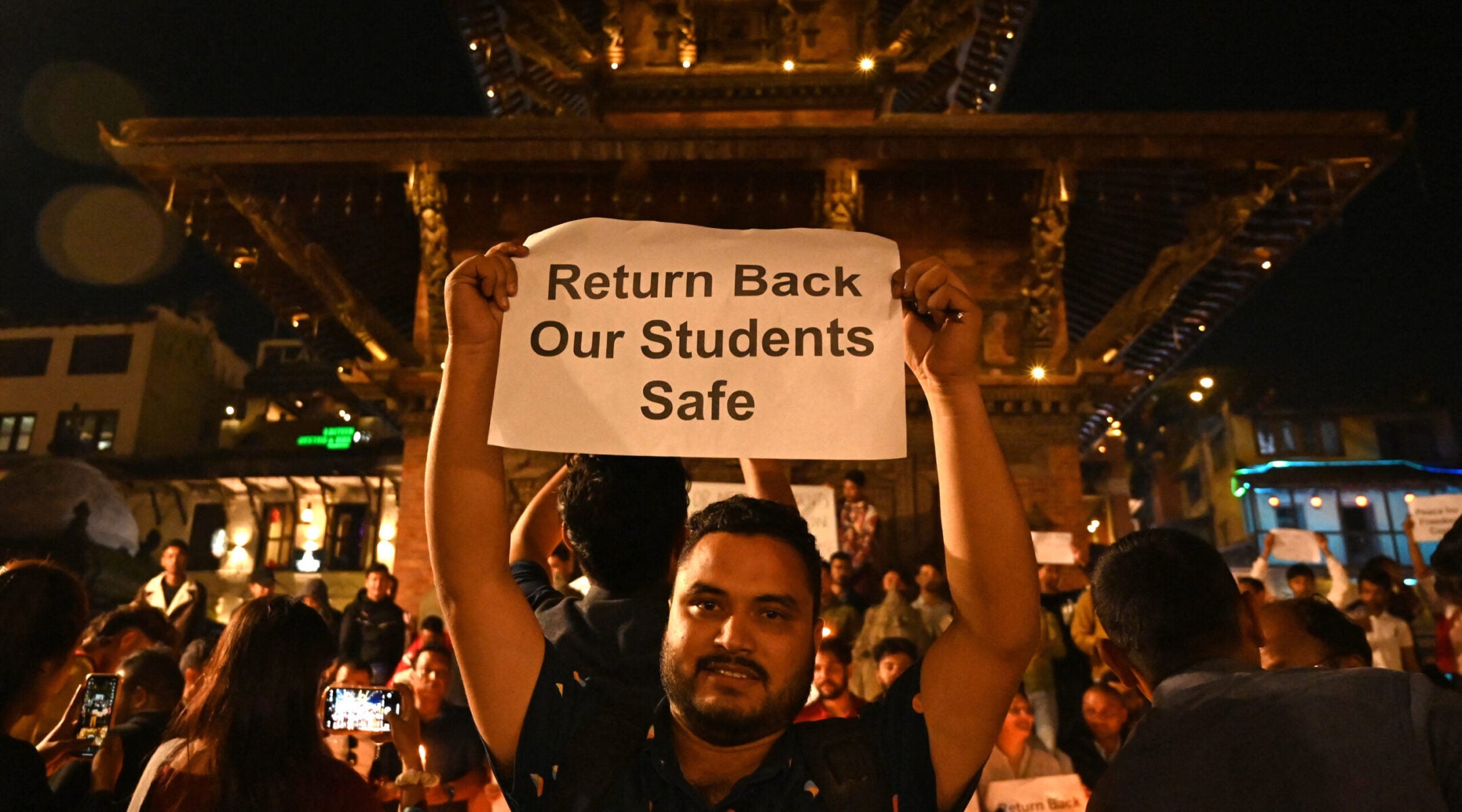
Students take part in a candlelight vigil in Lalitpur, Nepal, on Oct. 9, 2023, in memory of Nepali citizens who were killed in Kibbutz Alumim, in Israel. (Prakash Mathema/AFP via Getty Images)
Ananda Sah, 25, had promised his grandmother that he’d build a house for her. Dipesh Raj Bista, 24, planned to finance his younger brother’s medical studies, being the sole supporter of his family after the death of his father.
And Joshi traded his musical ambitions and writing talent for practical skill: He wanted to learn advanced agricultural techniques that he could apply back home.
The group was sent to a classic “old-style” kibbutz named Alumim, where they shared responsibilities and lived communally. The kibbutz population — a community of 500 — was a mixture of religious jewish immigrants from Arab countries, members of the U.K.’s largest Orthodox Jewish youth movement, agricultural workers from Thailand and now, them as well.
Thai labor, along with Nepali labor, became Israel’s agricultural backbone after Palestinians (who had previously replaced Israeli farmers) were restricted from working in Israel in large numbers following the first intifada in the 1980s. Security concerns about terror attacks led Israel to seek an inexpensive workforce sourced from countries uninvolved in the conflict.
Kibbutz Alumim | Sept. 14-Oct. 6
The students arrived in Israel in mid-September: warm, sunny days.
Soon after arriving, the students’ expectations collided with reality. The communal socialist principles they’d heard about didn’t seem to apply to them.
Their accommodation consisted of small cramped rooms equipped with bunk beds to maximize space.
Their days began around 4 a.m., when they’d gather in the cramped, gray kitchen to cook the lunch they’d bring with them to the fields, before heading out to do arduous physical labor under the sun, which typically lasted until approximately 4 p.m.
Prabin, Padam and Rajan were responsible for managing the kibbutz’s irrigation system. Their duties included carrying heavy pipes out to the fields, assembling the pipes and connecting them to the irrigation system, and fixing malfunctions.
Himachal and Bipin worked together in the orchards, trimming trees, and picking and packing pomelos and oranges. The work was simple, not technically advanced; it was difficult for them to ignore a sense of disappointment.
Each evening of the three weeks the Nepalese cohort spent there, many students called home, reassuring their families that their time in Israel, though it was draining, was a wise investment in their future.
They clung to the hope that their situation would improve once the university opened in October – the “Learn” portion of the program, which involved attending classes at Ben Gurion Negev University once a week.
On Oct. 3, an earthquake struck Nepal, and many were concerned for their families. Padam Thapa called home anxious on October 6. His sister-in-law, Mekhu Adhikari, told him about the frightening aftershocks. Ganesh Nepali urged his elder brother to look after their parents and stay safe, as their family home had sustained structural damage.
Kibbutz Alumin, the Foreign Workers Zone | Oct. 7
Himachal had stayed up until 3 a.m., engrossed in the final season of “Vikings” on Netflix. Saturdays offered the only chance for sleeping in.
Drifting off with his earphones in, he didn’t hear the sirens. At 6:30 a.m., Bipin woke him, urging, “We need to get to the shelter quickly.”
In the other room, Prabin, still half-dressed, rushed to the bunker, witnessing rockets slicing through the sky.
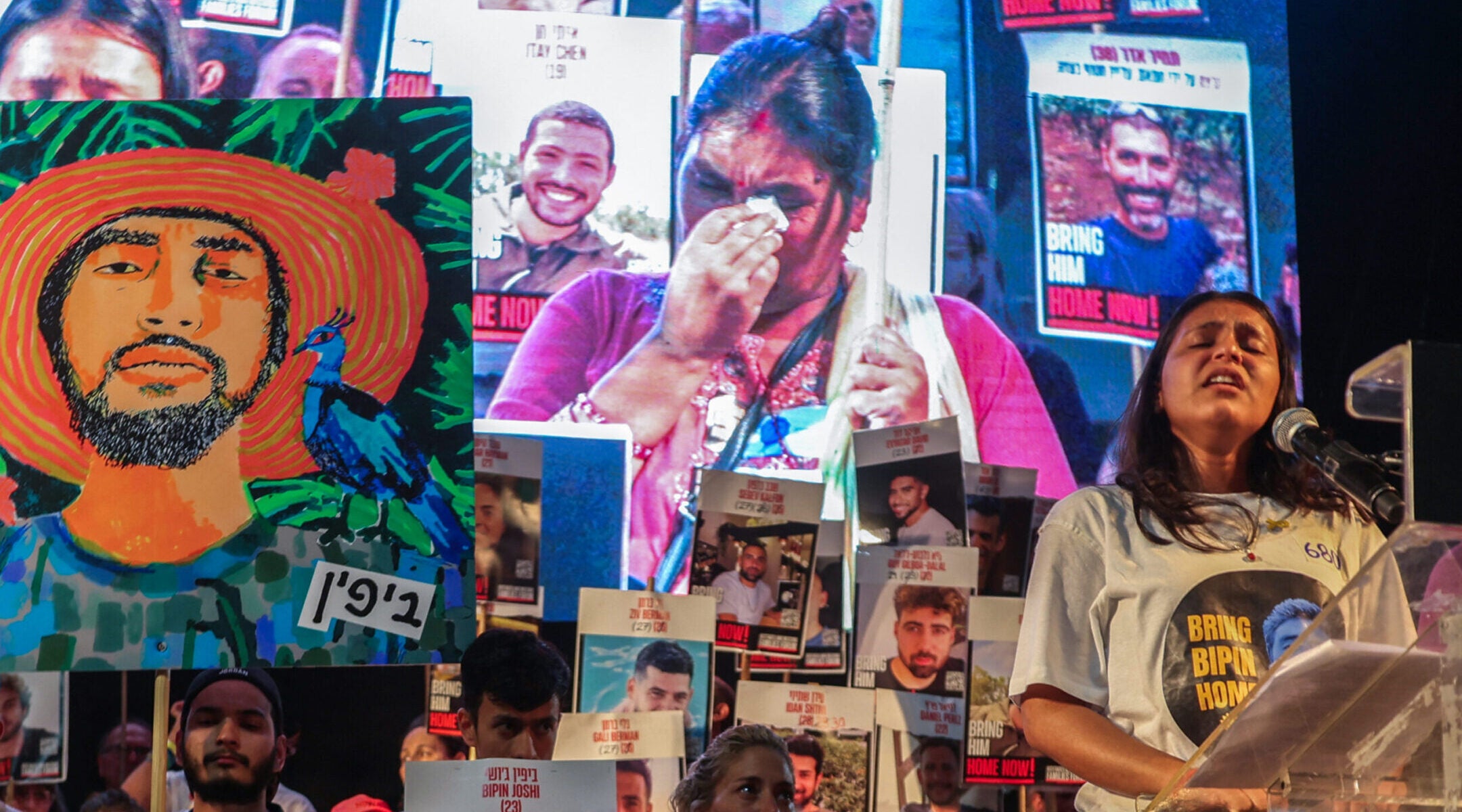
Padma (screen) and Pushpa (podium) Joshi, the mother and sister of Nepalese national Bipin Joshi held hostage by Palestinian militants in Gaza since 2023, address a demonstration organized by the families of hostages calling for action to secure their release in Tel Aviv on Aug. 16, 2025. (Jack Guez/AFP via Getty Images)
The 17 students were confined in the open-door shelter for more than an hour, waiting for instructions. This was the first missile attack they’d ever experienced. They’d been reassured before that rocket attacks from Gaza were common but rarely harmful, and told that staying inside a shelter would keep them safe. To pass the time, they divided into teams, playing Ludo on their phones.
Meanwhile, Rafi Babian, a kibbutz member and the security officer of the Sdot Negev Regional Council, was worried: The sheer number of missiles being fired was unusual. He headed to the council’s headquarters to activate the emergency center. En route, he was warned at the Reim intersection about the presence of terrorists nearby and soon after received an alert about terrorists approaching the gate of his home, Kibbutz Alumim. He notified the kibbutz a few minutes before Hamas arrived. By 6:45 a.m., the entire kibbutz emergency response squad, comprising a dozen members, was armed and ready. Fifteen minutes later, about 20 terrorists were at the kibbutz gate.
The Nepali students didn’t know any of this. They assumed the noises they heard were from missiles. They didn’t know that terrorists riding motorcycles and mopeds were already firing RPGs.
The emergency squad prevented the terrorist from reaching the kibbutz’s residential area — a few civilian-volunteers and soldiers were killed in the battle — but no kibbutz members were harmed.
The terrorists, having been repelled, went looking for another target. They found the workers’ quarters, near the cows and orchards.
From their shelter, the students heard loud Arabic being spoken by the approaching terrorists. Thinking the Arabic was Hebrew, they were relieved: someone had come to help them.
Dipesh Raj Bista stepped out of the shelter, followed by Ganesh Nepali, who just needed to use the restroom.
Outside the shelter, they were met by two men in black, pointing guns at them. Realizing these weren’t kibbutz-members, Dipesh Raj Bista yelled, “We are Nepalese!”
Gunfire was the response.
Dipesh and Ganesh were killed on the spot.
Soon after, a grenade was thrown into the shelter where the 15 other students were hiding. Bipin immediately realized what happened and threw the grenade back out. But he couldn’t catch the grenade that followed, and five of the students were injured. Ananda Shah was severely bleeding, clutching a pillow to stifle his screams. Lokendra Singh Dhami, bleeding too, was whispering about his wife, his 5-year old daughter, and his 2-year-old son.
Prabin, Himachal and Bipin weren’t hurt. They had huddled in a corner of the room, squeezing so tight together that it was hard to breathe. Together, they called one of their bosses, pleading, “Please help us, we’re in trouble.”
The response was short: “I’m so sorry, I can’t help you. There are terrorists attacking all over, I’m hiding too.”
Narayan Prasad Neupane wasn’t as gravely injured as the others: despite having lost three toes, he could still walk. He happened to have remembered the number of the Israeli emergency medical services and called for an ambulance. The operator, speaking English, assured him that help would arrive.
Soon after, two men in blue uniforms entered the shelter. “Please don’t hurt us,” the few students still alive begged.
“We’re the police, the Israeli police,” the men assured them.
“Please, take us to a hospital … these people are dying … get us out of here.”
“There are still terrorists outside,” the police said. “It’s impossible to move you now, but we’ll be back. Everyone who can walk, you need to move to a different place; it’s not safe in the shelter. Go to the kitchen or to your room.”
“And leave the wounded here?”
They had no choice.
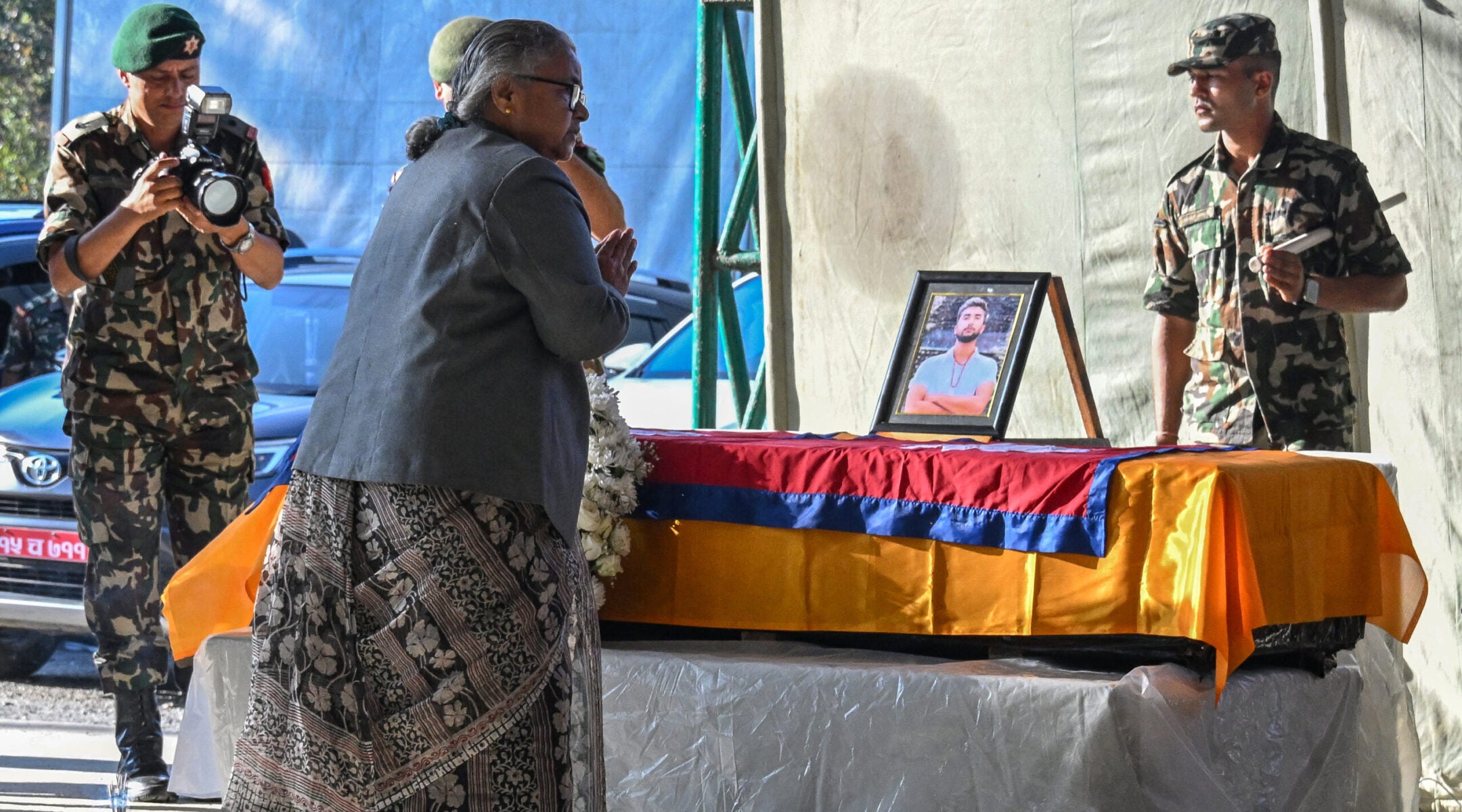
Nepal’s interim Prime Minister Sushila Karki pays respects after draping the country’s national flag over the coffin of Bipin Joshi at the Tribhuvan International Airport in Kathmandu on Oct. 20, 2025. (Prakash Mathema / AFP via Getty Images)
Bipin, Himachal, Rajan, Prabin, Prabesh and Padam, leaping over the corpses and injured bodies of their friends, made their way into the dining room.
There, a few Thai workers were also hiding. Some of their friends had been murdered while sleeping in their beds.
Narayan, Lokendra and Dhan decided to move to the residency area. Upon hearing a car outside, Narayan went out to check if it was the ambulance he was waiting for. He was shot twice by a passing terrorist.
Crawling back into the room, covered in blood, water was his last request.
Kibbutz Alumim, Kitchen | Oct. 7
A defensive wall of Persian rice sacks — that’s what they constructed to shield themselves from further grenade attacks. Prabin came up with the idea, and they quickly stacked the sacks on top of each other.
It was a small kitchen; options for shelter were limited. Most of the Nepalese and Thai workers crouched behind the “rice wall,” under a wooden table, with Parmod hiding under the sink. Bipin, positioned in the middle and not shielded at all, grew increasingly worried about their friends left in the shelter.
As time passed without any sign of rescue, Bipin considered going back to help them. “We need to think about our next steps. Will you come with me and help bring our friends here?” he asked Himachal.
They sought the opinion of a Thai worker who’d been hiding in the kitchen before them. His name was Phonsawan Pinakalo, a 30-year-old tractor driver who’d arrived in Israel four years earlier, to earn a salary that was four times what he would’ve earned in Thailand. They communicated using Google Translate, going back and forth between Nepali and Thai.
Phonsawan’s response was unequivocal: “Don’t do it. If you do it, you’ll die. We’ve heard the terrorists walking around here for hours.”
On the other side of the table, Rajan tried to reassure his roommates Prabin, Prabesh, and Padam. “Don’t worry, nothing will happen. Help will come soon.”
Exhausted by their ordeal in Israel, Prabesh declared, “If we survive, we’re heading back to Nepal as soon as possible.”
An hour and a half later, Hamas terrorists broke down the kitchen door, shouting “Allah-hu Akbar” and shooting indiscriminately. The makeshift wall of rice sacks offered no protection.
The bullets pierced the sacks and hit them. Blood and rice was spilled on the floor.
“Prabin, how bad is your leg?”
“It’s bad. I can’t feel much of it. And you, Himachal?”
“You see the holes in my chest and shoulder, right? It’s getting harder to breathe.”
“We need water. I can’t bear this.”
Struggling, Himachal rose from their hiding spot under a cheap wooden table to fetch water. As he moved, he aggravated his chest wound and lost more blood. He managed to collect some water in a shallow plate, but half of it spilled as he returned to Prabin on the kitchen floor.

Israelis attend a farewell ceremony for Bipin Joshi at Ben Gurion Airport on Oct. 19, 2025. One holds a sign that says, “Sorry you got caught up in our disaster.” (Chris McGrath/Getty Images)
It wasn’t enough. Prabin’s throat was parched and he was writhing in agony.
“Pramod, do you have any water to give me? I beg you.”
Pramod didn’t respond. Hidden under the sink in a small plumbing cabinet, he was the only student unharmed, unseen by the Hamas shooters.
“Pramod, there’s water in the sink above. I beg you, I can’t move to get it. I’m so thirsty, I might scream, and they’ll come again and finish us off.”
He pleaded again and again, until Pramod made a small hole in the sink pipe and collected some of the murky water in a pot. Extending his hand from the cabinet, Pramod whispered, “Here, this is all we have.”
Prabin lapped up the mixture of water and urine. His roommates, Rajan and Prabesh, lay under the table as well: They were dead, killed immediately.
Padam, a fourth roommate, took longer to die. “I am dying, bhauju,” he managed to send a short text-message to his sister-in-law, then plead with his friends to help him: “Kill me. I can’t stand this anymore, kill me with a knife if you can.”
“Please, friend, bear this pain. The police will come for us,” Himachal said, though he believed they were all doomed. Beneath the table, he noticed his own breathing growing heavier and heavier, matching the heavy breathing of Padam and Parbin.
Oct. 8 – The Present
The men who arrived in Israel as “neutral” replacements for Palestinian workers ultimately returned to their home countries either empty-handed or in coffins.
Out of the 17 Nepalese students at Alumim, 10 were killed, four injured, two survived unharmed — and Bipin was taken hostage alongside Phonsawan.
From their hiding spot in the kitchen, Himachal and Prabin overheard one of the terrorists questioning the two hostages about their religion, to which Phonsawan responded, “Buddhist, Buddhist, Thailand, Thailand.”
Two hours later, Bipin and Phonsawan were seen with their captors being pushed into a-Shifa Hospital in Gaza City.
With the onset of war, the thousands of Thai and Nepalese workers in Israel left the country, causing the collapse of the Israeli agricultural sector.
In the midst of harvest season, Israel was once again in desperate need of guest workers. In December 2023, the government of Malawi, one of the world’s poorest countries, announced it would send about five thousand young people to work in Israeli agriculture. Hundreds of Sri Lankans also joined, putting money over safety.
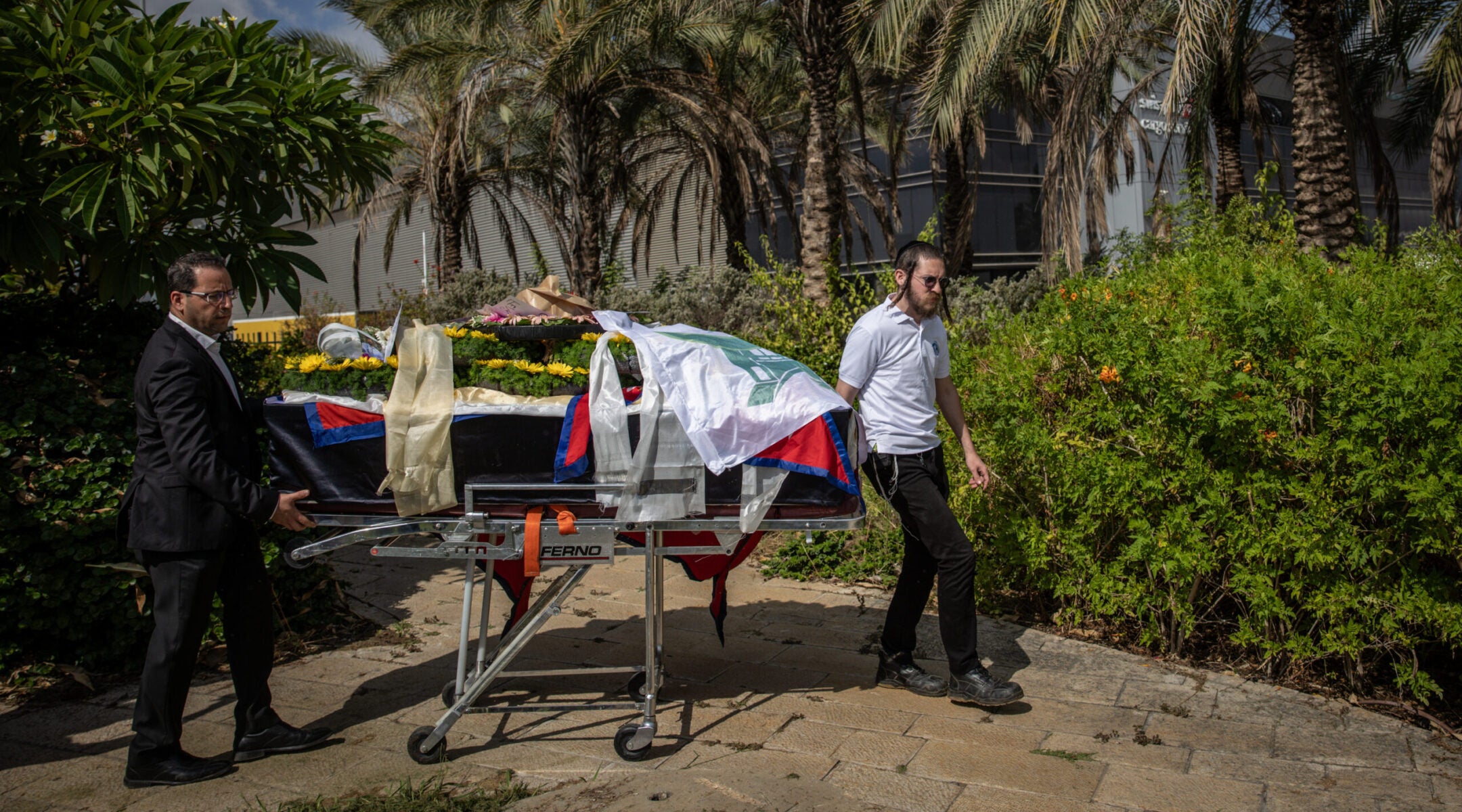
Men take the coffin of Bipin Joshi, to a car after a farewell ceremony for Bipin Joshi, a young Nepalese man who was taken hostage on Oct. 7, 2023 and later died in captivity in Gaza, at Ben Gurion airport on Oct. 19, 2025. (Chris McGrath/Getty Images)
Himachal and Prabin spent several months in Israeli hospitals, lonely, unable to communicate adequately, facing a range of complex surgeries and medical procedures. Eventually, they managed to recover and even continue their studies, earning their master’s degree from Robert H. Smith Faculty of Agriculture, Food and Environment in Rehovot last month.
At some point, Phonsawan was added to the list of dead; his body was returned and flown to Thailand this week. But Bipin’s fate remained unknown.
During two years of war, Bipin’s family lived in agonizing uncertainty, not knowing whether their son was alive or dead. They were disappointed through two ceasefires, when Thai citizens who’d been taken hostage were released, and as government officials expressed “grave concern” for his life. Clinging to hope, they did everything in their power to raise public awareness about their son, a young man trapped in a foreign conflict.
Their worst fears were confirmed last week when Bipin’s corpse was returned to Israel, on the first day of a new ceasefire that brought with it the release of all 20 living hostages in Gaza.
“With immense pain, we received the worst news imaginable. Our dear son, Bipin — brother and soulmate to our daughter Pushpa — was murdered in Hamas captivity. Bipin left us full of excitement, setting out for a year of study in Israel. We never imagined that the hug we gave him then would be our last,” the Joshi family said in a statement.
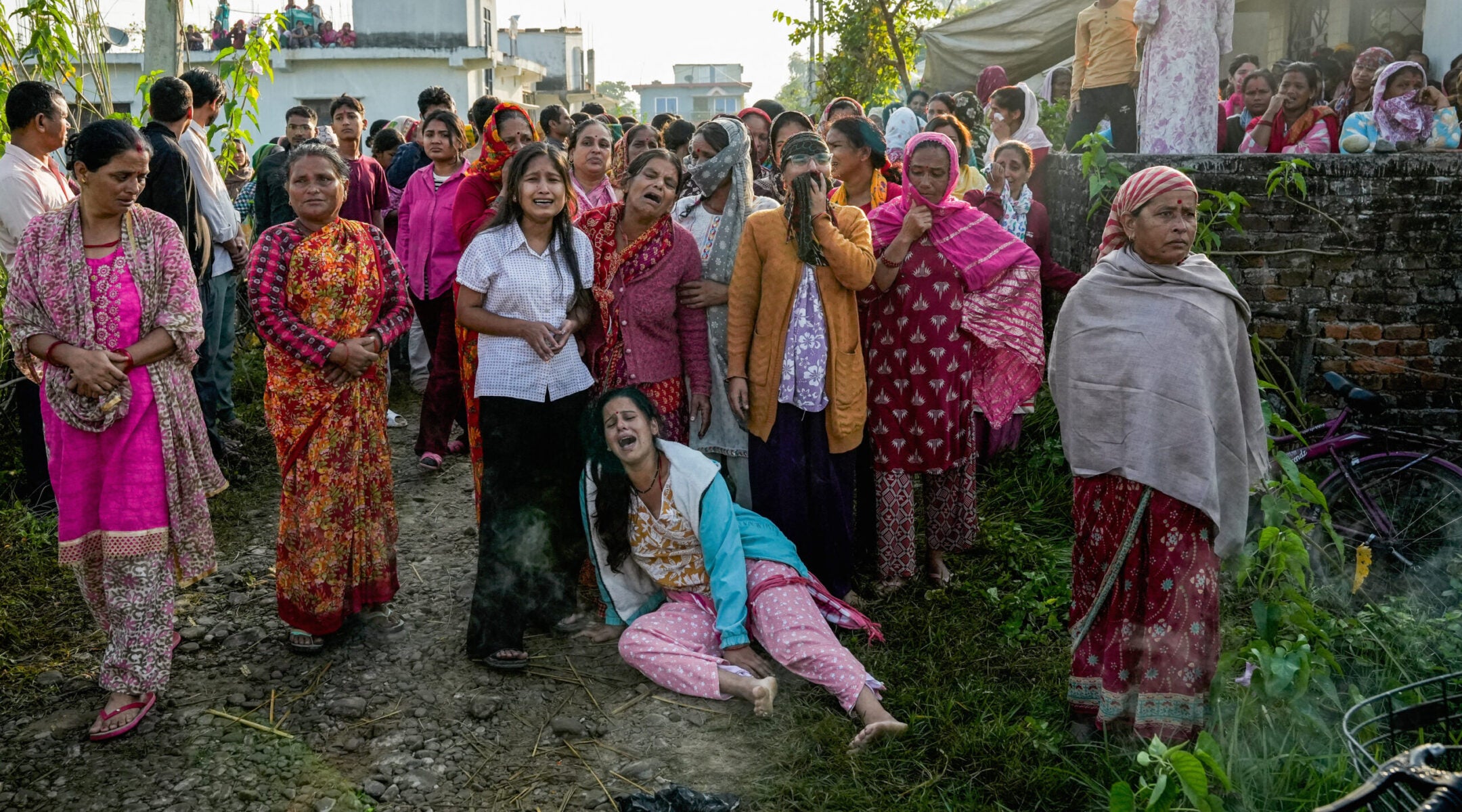
Family members mourn during the funeral ceremony of Bipin Joshi at his residence in Kanchanpur, Nepal, on Oct. 21, 2025. Prakash Chandra Timilsena/AFP via Getty Images)
“Before you were taken, you managed to send a message to your cousin, asking him to be strong and always look toward the future. It is hard to imagine a future without you, Bipin,” the statement continued. “Every flower in the garden we planted for you will remind us of you — every orchard, every field. You are part of the landscape of Nepal, and now also part of the landscape of the Land of Israel.”
On Monday, Bipin made his journey home. The first stop was a ceremony at Ben Gurion Airport, where a top government official praised his heroism and addressed him directly, saying, “I am sorry. It shouldn’t have ended this way.”
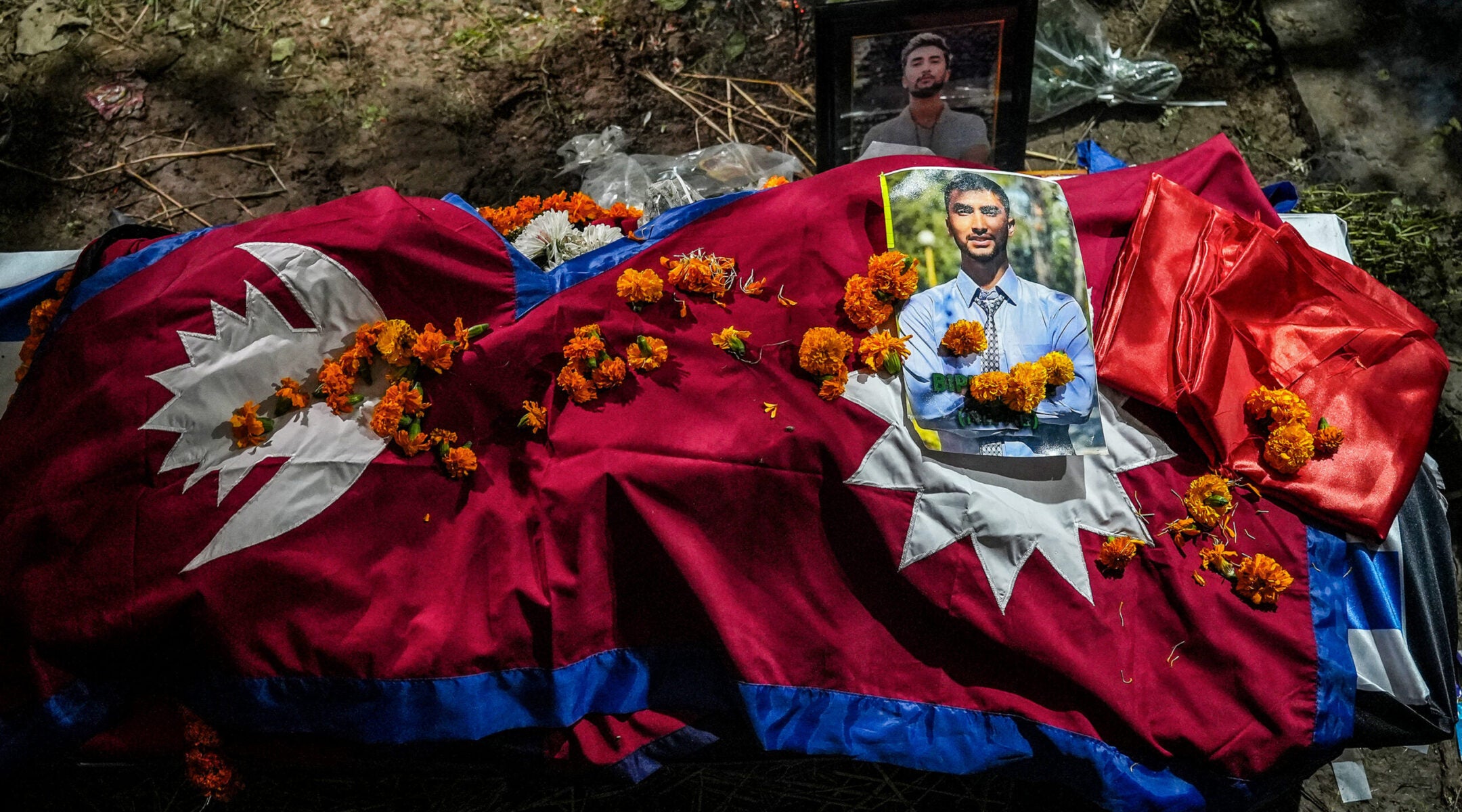
Then, Bipin’s body was flown to Kathmandu, where Prime Minister Sushila Karki draped Nepal’s flag over it during a brief ceremony at the airport.
And from there, his coffin was taken to his village where on Tuesday morning, after a night in which his family was reportedly accompanied by so many who had provided comfort over the last two years, his body was cremated in a ceremony on the banks of the Mahakali River. Government representatives were present, and the photograph that had become famous in Israel and beyond was on display. Bipin was home in Kanchanpur, the borderland district whose soil nurtured his dreams and now his memory.
—
The post Bipin Joshi was in Israel for 23 days before Oct. 7. This week, he was buried in his native Nepal. appeared first on Jewish Telegraphic Agency.
Uncategorized
Brooklyn’s new ‘lard bagel’ is not kosher. But it is delicious.

Bagels have long been a staple of the Jewish diet, even if they’re not exactly health food. But the latest addition to New York’s bagel scene achieves the impressive feat of inviting both your doctor and your rabbi’s scorn: the “lard bagel,” made with rendered pork fat.
The decidedly unkosher offering is on the menu at Caputo Bagels, which opened Monday in Brooklyn’s Park Slope neighborhood. The bagel shop is the successor to the once-popular Caputo Bakery in Carroll Gardens, which closed in April after five generations of operation.

At the now-shuttered Caputo Bakery, “lard bread” was a bestseller. Caputo Bagels seeks to recreate the lard bread experience, but in bagel form. Lard, salami, provolone cheese, salt and pepper are all folded into sourdough, hand-rolled, then boiled and baked at 425 degrees. The Italian-Jewish mash-up is the product of a partnership between James Caputo and Rafi Hasid, who also runs the Israeli restaurant Miriam next door.
Eager to try this bagel novelty, I stocked up on Lactaid pills and trekked to Park Slope early Friday morning. There, I met Caputo himself, who said the lard bread was a family recipe and an Italian-American specialty. Lard, he explained, was “a couple levels above adding butter to your bread.”
“A lot of people who went to the bakery are now rushing here to try the lard bagel,” Caputo said, adding that he did “feel bad” that kosher customers wouldn’t be able to eat the signature item.
I reassured Caputo that I did not keep kosher and was eager to taste the lard bagel myself.
But before digging in, I wanted to know what to expect. The first customer I spoke with had ordered an everything bagel, explaining that she hadn’t known the lard bagel “existed.” The second, visiting New York City from Spain, had opted for banana bread.
I asked her if she had considered ordering the lard bagel. “At this hour in the morning?” she asked.
I was starting to get worried. If nobody orders the lard bagel, does it make a sound?
Fortunately, I soon met Kristin Stoller, a local who used to frequent Caputo Bakery. She had ordered both a lard bagel and a plain one, with a side of scallion cream cheese, to bring home for herself and her boyfriend.
“He’s anxious about the lard bagel,” she told me, but she was hoping to convert him.
I asked if she would do a taste test. “Just like the bread!” she said after taking a bite. “This is perfection.”
Her enthusiasm seemed to be contagious. The first customer I’d spoken with came up to me, this time with a lard bagel in hand. I’d piqued her curiosity. “It’s a savory explosion,” she said.
Outside, I found a customer named Kendra Koch sitting on a bench with her dog, Pom Pom. She, too, had ordered the lard bagel, topped with olive cream cheese.
“It tastes like pizza,” she said as Pom Pom angled toward the bagel, seemingly longing for a bite.

I summoned my courage and ordered one sans toppings, figuring it had enough going on flavor-wise to stand on its own. One bite revealed a cheesy, peppery richness. I wasn’t sure I tasted the lard, but I also wasn’t sure if I was supposed to. My official verdict: delicious.
It was just too bad that my kosher friends couldn’t try it. I’m holding out hope that the schmaltz bagel will catch on next.
The post Brooklyn’s new ‘lard bagel’ is not kosher. But it is delicious. appeared first on The Forward.
Uncategorized
Yiddish Modernism and the political tumult in the 1930s
אין די 1920ער און 1930ער יאָרן האָט דער זשורנאַל „אין זיך“ געדינט װי אַ טריבונע פֿאַר מאָדערניסטישע עקספּערימענטן אין דער אַמעריקאַנער ייִדיש־ליטעראַטור. צו די „אינזיכיסטן“ האָבן געהערט יעקבֿ גלאַטשטײן, אַהרן גלאַנץ־לעיעלעס, ה. לײװיק, שלמה שװאַרץ, יהודה לײב טעלער און אַנדערע.
װי מען קען טרעפֿן פֿונעם זשורנאַלס נאָמען, זײַנען די דאָזיקע ליטעראַטן געװען פֿאַרטאָן אין שעפֿערישע חקירות אַרום דעם אײגענעם „זיך“. און טאַקע, אין די 1920 יאָרן האָט „אין זיך“ ניט געהאַט קײן אינטערעס צו די פּאָליטישע דאגות־היום.
אָבער דאָס האָט זיך געביטן נאָך 1934, װען גלאַטשטײן איז געװאָרן דער רעדאַקטאָר פֿונעם זשורנאַל. דער דאָזיקער תּקופֿה איז געװידמעט דאָס נײַע בוך פֿון איתי זוטרא (אוניװערסיטעט פֿון מאַניטאָבאַ, קאַנאַדע) „אינזיכיזם: ייִדיש־דיכטונג און די ייִדישע אידענטיטעט אין אַמעריקע אין די 1930ער יאָרן“.
גלאַטשטײן האָט פֿאַרטײדיקט די שעפֿערישע אױטאָנאָמיע פֿונעם דיכטער קעגן די אַנגאַזשירטע קאָמוניסטישע קריטיקער װי אַלכּסנדר פּאָמעראַנץ, װאָס האָבן געפֿאָדערט, אַז ליטעראַטור זאָל דינען די אינטערעסן פֿון די פּראָלעטאַרישע מאַסן.
אַזױ איז גלאַטשטײנס אײגענע פּאָעטישע שאַפֿונג געװאָרן אַ מין פּאָליטישע פּאָזיציע. די דאָזיקע פּאָליטיק, האַלט זוטרא, האָט משפּיע געװען אויף זײַן ליטעראַרישן סטיל און דעם סטיל פֿון אַנדערע מחברים פֿון „אין זיך“.
גלאַטשטײן האָט געעפֿנט די זײַטן פֿון „אין זיך“ פֿאַר פּאָליטישע װיכּוחים. ער אַלײן איז אַרױס מיט אַ פֿאָרשלאָג צו שאַפֿן אַ פּאַרטײ, װאָס זאָל זײַן אי פּאָליטיש ראַדיקאַל אי ייִדישיסטיש, הגם קײן פּראַקטישע פּראָגראַם האָט ער ניט פֿאָרגעלײגט.
להיפּוך צו אַנדערע ראַדיקאַלע פּאַרטײען, קודם־כּל דער קאָמוניסטישער, איז דער הױפּטציל פֿון גלאַטשטײנס פּאַרטײ געװען צו פֿאַרטײדיקן ייִדישע נאַציאָנאַלע אינטערעסן. דאָס איז געװען ספּעציעל װיכטיק אין דער צײַט װען דער אַנטיסעמיטיזם האָט געהאַלטן אין אײן װאַקסן אין אײראָפּע.
גלאַטשטײן האָט פֿאַרבעטן ייִדישע ליטעראַטן אַרומצורעדן זײַן פּראָיעקט אױף די זײַטן פֿונעם זשורנאַל. לרובֿ זײַנען זײ ניט געװען אײַנשטימיק מיט גלאַטשטײן. דער עיקר זײַנען זײ געװען קעגן דער אידײ, אַז די אינטעלעקטואַלן דאַרפֿן װערן פּאָליטישע אָנפֿירער פֿון די מאַסן.
חוץ דעם, װי עס האָט באַמערקט חיים זשיטלאָװסקי, זײַנען שױן דאָ געװען גענוג פּאָליטישע פּאַרטײען אין װעלכע ייִדן האָבן זיך אַקטיװ באַטײליקט. צו שאַפֿן נאָך אַ פּאַרטײ װאָלט ניט געהאָלפֿן צו פֿאַרבעסערן דעם מצבֿ פֿון ייִדן.
דער אינזיכיזם, האַלט זוטרא, איז בטבֿע געװען עקלעקטיש סײַ פּאָעטיש און סײַ פּאָליטיש. מען האָט ניט געהאַלטן פֿון טראַדיציאָנעלע זשאַנערס און סטילן. אָפֿט מאָל האָט מען עקספּערימענטירט מיט מישן פּראָזע און פֿערזן.
אין די 1930ער יאָרן האָבן די ליטעראַרישע עקספּערימענטן באַקומען אַ פּאָליטישן אַקצענט. סײַ אין דער קונסט און סײַ אין דער פּאָליטיק האָבן די אינזיכיסטן געזוכט אַן ענטפֿער אױף דער עיקר־פֿראַגע: װאָס איז דער עצם פֿונעם ייִדישן „זיך“ אין אַמעריקע אין דער מאָדערנער תּקופֿה?
דער אינזיכיזם איז געװאָרן אַ נײַער מין ייִדישיזם: אַ קולטורעלע און פּאָליטישע אידעאָלאָגיע, װאָסער ציל איז געװען צו פֿאַראײניקן פֿאַרשײדענע פּאָליטישע שטרעמונגען אױפֿן סמך פֿון דער ייִדישער שפּראַך און דער מאָדערנער װעלטלעכער ייִדיש־קולטור.
גלאַטשטײן האָט געגלױבט, אַז װערטער דאַרפֿן טראָגן דעם װירקלעכן אמת, בפֿרט אין די צײַטן, װען כּלערלײ טאָטאַליטאַרישע רעזשימען האָבן פֿאַרשפּרײט ליגנס פֿאַר די צװעקן פֿון זײער מערדערישער פּראָפּאַגאַנדע.
אינעם בוך לידער „ייִדישטײַטשן“, װאָס איז אַרױס אין װאַרשע אין 1937, האָט גלאַטשטײן געפּרוּװט דערגרײכן די טיפֿסטע פֿאָנעטישע און לעקסישע װאָרצלען פֿון דער ייִדישער שפּראַך.
אין די שורות „אַלטער בױם, פֿעלדז און שטאַם / כ׳קום צו דיר מיט ברױט און גראַם“ דריקט גלאַטשטײן אױס זײַן פּאָזיציע לגבי דער ייִדישער קולטור־ירושה. ער קומט מיט זײַן אַמעריקאַנער „ברױט און גראַם“ צו דעם „אַלטן בױם“ פֿון ייִדיש כּדי צו שעפּן שפּראַכלעסע יניקה פֿאַר זײַן פּאָעזיע.
זוטרא אַנטפּלעקט אין „ייִדישטײַטשן“ סאַטירישע אונטערטענער, װאָס מאַכן חוזק סײַ פֿון די פֿאַשיסטן און קאָמוניסטן און סײַ פֿון די אַמעריקאַנער אַסימילאַטאָרן.
די צװײטע צענטראַלע פֿיגור אינעם אינזיכיזם איז געװען דער דיכטער, קריטיקער און זשורנאַליסט אַהרן גלאַנץ־לעיעלעס. אין 1937, אײנצײַטיק מיט גלאַטשײטנס „ייִדישטײַטשן“, איז אַרױס גלאַנץ־לעיעלעס בוך לידער „פֿאַביוס לינד“.
אין הסכּם מיט די עסטעטישע פּרינציפּן פֿונעם אינזיכיזם איז דאָס דאָזיקע בוך אַ מישמאַש פֿון סטילן, זשאַנערס און שטאַנדפּונקטן, װאָס זײַנען פֿאַרקניפּט דורך דער פֿיגור פֿונעם הױפּטהעלד. דאָס איז אַ פּאָעטישער סך־הכּל פֿונעם איניזכיסטישן פּעריאָד אין לעיעלעסעס שאַפֿונג, האַלט זוטרא.
„פֿאַביוס לינד“ האָט באַקומען התלהבֿותדיקע אָפּרופֿן מצד די קריטיקער. גלאַטשטײן האָט געהאַלטן דאָס בוך פֿאַר דער „ערשטער גרױסשװוּנגיקער און גרױסשטאָטישער פּאָעמע אין דער ייִדישער פּאָעזיע“, און ה. לײװיק האָט עס געלױבט פֿאַר זײַן „אָרגאַנישער גאַנצקײט“.
די פֿיגור פֿון פֿאַביוס לינד איז ניט קײן אױטאָביאָגראַפֿישע. זוטרא מאַכט אַ פּרוּװ צו אַנטפּלעקן די פֿאַרפּלאָנטערטע באַציִונגען צװישן דעם מחבר אַהרן גלאַנץ־לעיעלעס, זײַן פּאָעטישער פּערזאָן אַ. לעיעלעס, און זײַן אױסגעטראַכטן „אַלטער עגאָ“ — פֿאַביוס לינד.
לינד פֿיגורירט אינעם בוך װי אַ צעשפּאָלטענע פּערזענלעכקײט: „פֿאַביוס לינד פֿיל לעבנס פֿירט ער“. ער איז סײַ אַ פּראָדוקט און סײַ אַ קרבן פֿון זײַן תּקופֿה.
לינד האָט ספֿקות װעגן כּלערלײ פּראָיעקטן צו לײזן די „ייִדישע פֿראַגע“, אינעם סאָװעטישן ביראָבידזשאַן אָדער אינעם העברעיִש־רעדנדיקן ייִשובֿ אין ארץ־ישׂראל.
חוץ לידער האָט גלאַנץ געשריבן פּאָליטישע קאָמענטאַרן אין דער ליבעראַלער צײַטונג „דער טאָג“. להיפּוך צו גלאַטשטײן האָט ער ניט פֿאַרטראַכט קײן אײגענע פּאָליטישע פּראָיעקטן. זײַן פּאָליטישער שטאַנד איז געװען אין הסכּם מיטן פּראָגרעסיװן הױפּטשטראָם פֿון פֿראַנקלין רוזװעלטס „ניו דיל“.
דער לעצטער נומער פֿון „אין זיך“ איז אַרױס אין 1940, װען אײראָפּע איז שױן געשטאַנען אױפֿן שװעל פֿונעם חורבן. דער קאָנפֿליקט צװישן אַלװעלטלעכקײט און ייִדישקײט, װאָס איז געװען די צענטראַלע טעמע פֿון די אינזיכיסטישע חקירות, איז געלײזט געװאָרן לטובֿת ייִדישקײט.
גלאַטשטײן האָט פּראָקלאַמירט: „אַ גוטע נאַכט, ברײטע װעלט. […] אױף מײַן אײגענעם געבאָט גיי איך צוריק אין געטאָ“. דאָס איז געװען דער סוף פֿונעם ייִדישן מאָדערניזם, פֿאַרסך־הכּלט זוטרא.
די פּאָעטישע קולטור־ירושה פֿון די אינזיכיסטן איז פֿאָרגעשטעלט געװאָרן פֿאַרן ענגליש־שפּראַכיקן עולם אין דער פּרעכטיקער צװײ־שפּראַכיקער אַנטאָלאָגיע „אַמעריקאַנער ייִדישע פּאָעזיע“, װאָס איז אַרױס אין 1986 אונטער דער רעדאַקציע פֿון בנימין און באַרבאַראַ האַרשאַװ.
אין דער הקדמה האָט בנימין האַרשאַװ פּרטימדיק אַנאַליזירט די פֿאָרמעלע און סטיליסטישע חידושים, װאָס די אינזיכיסטן האָבן אַרײַנגעבראַכט אין דער ייִדישער פּאָעזיע אין די 1920ער יאָרן, אָבער ער האָט קױם באַרירט זײער פּאָליטיק.
זוטראס בוך באַטראַכט די אינזיכיסטישע שעפֿערישקײט אונטער אַן אַנדערן קוקװינקל. אין די 1930ער יאָרן זײַנען פּאָליטיק און פּאָעזיע געװאָרן נאָענט צונויפֿגעפֿלאָכטן אין די װערק פֿונעם לעצטן דור אַמעריקאַנער ייִדישעמאָדערניסטן.
The post Yiddish Modernism and the political tumult in the 1930s appeared first on The Forward.
Uncategorized
I never saw myself in Barbie. Would ‘Hanukkah Barbie’ have changed that?

I wasn’t really a Barbie kid. While I occasionally played with my sister’s hand-me-down Barbies, I preferred American Girl dolls. They were Barbie’s chunkier, cherubic counterparts, each representing a girl from a different period in history and accompanied by a series of historical-fiction books about her life. I devoured those books, including the story of Rebecca Rubin, a 9-year-old Russian-Jewish immigrant living on the Lower East Side in the early 1900s.
So when Mattel released its first Hanukkah Barbie last week — officially marketed as the “Barbie Holiday Sweater Doll” — I wondered whether she would have appealed to me when I was growing up. Would her Jewishness have made her feel more relatable than that blonde-haired, blue-eyed, impossibly proportioned bombshell?
As it turns out, I wasn’t the only one thinking about what it means for Barbie to look Jewish. Shortly after her release, Hanukkah Barbie set off a spirited debate over her appearance. Her nose seemed slightly more prominent than the default Barbie button nose, raising questions about whether Hanukkah Barbie’s face reinforced Jewish stereotypes, or if her distinctive nose reflected a good-faith effort to give the doll recognizably Jewish features.
It was at least clear that Mattel did its homework about the Festival of Lights. The hanukkiah on Barbie’s sweater has the correct number of candleholders, and the dreidels bear accurate Hebrew lettering — which is more than can be said about a lot of Hanukkah merchandise. If sales are any indication, Hanukkah Barbie is resonating. The doll, which originally retailed for about $30, is sold out, with third-party sellers now asking for as much as $345.
There have previously been Barbies modeled after Jewish celebrities, including Olympic gymnast Aly Raisman, Israeli Olympic surfer Anat Lelior and fashion designer Diane von Furstenberg. But Hanukkah Barbie is the first Barbie whose identity is simply Jewish — which means she will have the impossible task of representing Jews of all kinds. Sephardic and Ashkenazi Jews, religious and secular Jews all have to somehow find themselves in the same doll.
Complicating matters, the original blonde Barbie has arguably been Jewish all along. Ruth Handler, the daughter of Polish-Jewish immigrants, invented Barbie in 1959, naming “Barbie” after her daughter, Barbara, and “Ken” after her son, Kenneth. “Barbie is a matrilineal Jew? Love it!” one Reddit user joked last month.
But Barbie was always a little too Aryan-coded to feel Jewish to me. Her origins go back to the postwar German ideal of blonde, white femininity. Handler drew inspiration for Barbie’s look from a German toy named Bild Lilli, marketed toward men as a gag gift and sold in bars and tobacco shops. That doll, in turn, was based on the comic-strip character Lilli, characterized by Barbie’s unofficial biographer M.G. Lord as “a golddigger, exhibitionist, and floozy” who worked as a secretary while looking for a wealthy husband. Bild Lilli was manufactured by O.M. Hausser, a toy company that had produced Adolf Hitler figurines during the 1930s.
No wonder stereotypically Ashkenazi-looking Jews like me, not to mention everyone else who also didn’t fit the Barbie mold, felt left out of Barbie-land. (Which is literally everyone, given that scaled up to human size, a traditional Barbie doll’s proportions would make her unable to survive; there’d be no room for her organs in her tiny waist, and she’d have no choice other than to walk on all fours.)
Over the years, Barbie has become far more inclusive. After the debut of the “Colored Francie” doll in 1967, Barbie expanded to include dolls of different races, body types and abilities, including dolls with prosthetic limbs and wheelchairs and, in 2016, the long-awaited introduction of “curvy,” “petite” and “tall” Barbies. Mattel introduced career-themed dolls in the 1960s, evolving from fashion designer, nurse, and flight attendant to a presidential candidate Barbie in 1992.
The American Girl doll, which Mattel acquired in 1998, was part of a similar response to the limitations of the traditional fashion doll. Created by teacher Pleasant Rowland in 1986, American Girl was designed to help girls see themselves in their dolls while making history feel personal and engaging.

Of course, little kids aren’t thinking so much about the sociological implications of their toy choices. For my part, my mom bought me an American Girl look-alike doll with my brunette hair and choppy bangs, hoping that seeing myself reflected in a doll would help build my self-esteem. But I also gravitated toward a blonde-haired, blue-eyed American Girl doll that looked more Barbie-esque, which I begged my mom to buy.
Looking back, I wonder how much of the Barbie beauty standard I had subconsciously absorbed, even with an array of representative dolls at my disposal. Hanukkah Barbie may more closely resemble women like me. But changing the default cultural image of Barbie will take more than a doll with a light-up Hanukkah sweater.
The post I never saw myself in Barbie. Would ‘Hanukkah Barbie’ have changed that? appeared first on The Forward.
