



Uncategorized
Mamdani’s progressive Jewish supporters are jubilant as they gain an ally in City Hall
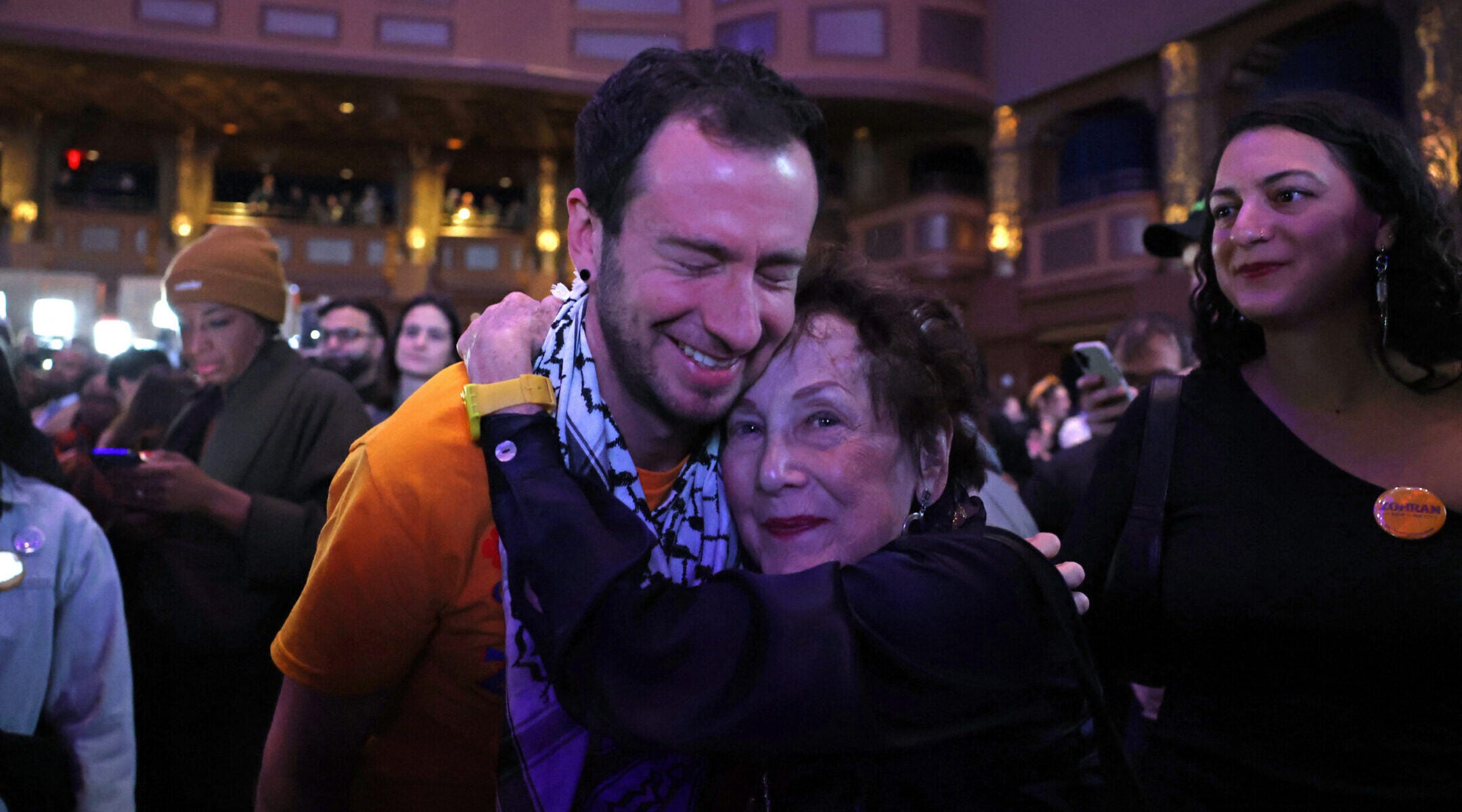
BROOKLYN — There were plenty of “Jews for Zohran” at Brooklyn Paramount, the recently refurbished music venue where Zohran Mamdani and his biggest supporters celebrated his mayoral election victory Tuesday night.
Present at the rally were many of the Jews who make up left-wing organizations like Jewish Voice for Peace and Jews for Racial and Economic Justice, whose endorsements and campaigning under the Jews for Zohran mantle became a driving force behind the democratic socialist’s support.
“This is an amazing night for Jews for Zohran and Jewish New Yorkers,” said Carlyn Cowen, co-chair of JFREJ’s board, in an interview. “This is an amazing night for everyone who has been fighting for our democracy, for housing, for childcare, for the entire vision of Zohran’s campaign, which is joy and love. Incredible.”
Mamdani’s long-held anti-Israel views made the 34-year-old democratic socialist a polarizing candidate for many Jews in the city, with the Jewish establishment and a significant majority of Jewish voters backing his main rival, former Gov. Andrew Cuomo.
“There’s going to be important bridging work to do in the Jewish community … so we can move forward and everybody can feel like their interests are being looked after and they can feel safe in the city,” said Jamie Beran, CEO of the progressive Jewish organization Bend the Arc.
But healing would need to wait for another day. On Tuesday night, the mood was jubilant as eager energy erupted into an all-out dance party celebrating Mamdani’s decisive victory. News of the race being called, only about 40 minutes after polls closed, sent the at-capacity room into a frenzy. Waves of shouts and shrieks erupted. Friends hugged and cried tears of joy, some expressing disbelief despite Mamdani’s long stretch at the top of the polls.
“New York, tonight you have delivered,” Mamdani said during his victory speech. “A mandate for change. A mandate for a new kind of politics.”
For progressive Jews in the city, the change could not be starker. Suddenly, following an Eric Adams administration largely unsympathetic to their views, left-wing groups such as JVP and JFREJ will have an ally in City Hall who’s aligned with them on an array of issues including income inequality, taking on Donald Trump and pro-Palestinian advocacy.
As his Jewish supporters gushed about what parts of Mamdani’s agenda they are most keen to see enacted, most did not bring up his longstanding, unwavering support for the Boycott, Divestment and Sanctions movement that has put a wedge between segments of the Jewish community.
“Universal childcare, number one!” said Cowen.
“All of his campaign promises around affordability are so critical for the lives of everyone who lives in New York City,” said Beran, who also said she is “really grateful” for Mamdani’s “commitments around hate crime prevention.”
“I think the fact that he was the only candidate that had a clear and specific platform, committing to an 800% increase to hate crime prevention to protect Jews and everyone in New York, is such an important part of his platform,” Beran said.
Katie Unger, who co-founded JFREJ’s political arm, the Jewish Vote, said she was most eager to see Mamdani fight back against Trump and protect immigrants.
“After 10 months of watching our immigrant neighbors getting abandoned by our mayor, I’m so glad that on day one, we’re gonna have a mayor who stands up for an immigrant city against ICE,” Unger said. “It’s been heartbreaking and appalling, particularly as a Jew, to watch this city of immigrants abandon our immigrant neighbors, from City Hall down.”
Rabbi Moishe Indig, the Satmar Hasidic rabbi who endorsed Mamdani in a split in his community, stood out for wearing a black suit and kippah, rather than the typical blue “Jews/tenants/hot girls/etc. for Zohran” T-shirt.
“We have large families, we could use affordable housing and to have a better life, hopefully,” Indig said about his community, saying he felt “great” about Mamdani’s win.
But while Stefanie Fox — JVP’s executive director who traveled from her home in Seattle for the event — said she was “thrilled about the affordability for this city,” she also emphasized that the mayor “has a tremendous role to play in defining the way that New York’s support for Israeli occupation and apartheid happens.”
She added, “So I’m really happy to see an administration where that might be possible to move.”
In a sign that pro-Palestinian activists are already geared up to lobby a mayor inclined to agree with them, Fox mentioned JVP’s new campaign, “Break the Bonds,” which is advocating for comptroller-elect Mark Levine to follow Brad Lander’s lead in not reinvesting in Israel bonds; Levine, however, has stated his intention to invest in them.
“That’s the kind of example where even though it’s the comptroller’s decision, it’s a different conversation in this New York,” Fox said.
Mamdani’s candidacy coincided with amid surging pro-Palestinian sentiments among the broader liberal electorate, and inside the hall, evidence of the cause was on vivid display. Some attendees wore keffiyehs as they embraced in celebration. Mamdani was joined on stage by his wife, an artist who was wearing a top by a Palestinian designer, and parents, a scholar and film director who are prominent supporters of the boycott Israel movement. And outside, a group of Neturei Karta anti-Zionist Jewish protesters stood holding a sign that read, “Congratulations NYC. Zohran Mamdani 0% AIPAC Funded.”
A number of Mamdani’s backers from the political and cultural worlds were in attendance, many of whom share his strongly critical views of Israel, including actress Cynthia Nixon, streamer Hasan Piker, and Jamaal Bowman, the former congressman whose name has circulated as a possible schools chancellor for Mamdani. (Mamdani has not indicated if he has a preferred chancellor.)
Brad Lander, Mamdani’s most prominent Jewish ally in city politics who cross-endorsed him ahead of the Democratic primary, was also on hand.
So was Jewish stand-up comedian and podcaster Adam Friedland, who went on a passionate rant against Israel to pro-Israel Rep. Ritchie Torres back in August.
“It’s a crap job, right?” Friedland said in an interview. “It’s really tough to be the mayor of such a big city, right? But I think he’s a genuine person. I met him and he’s kind of, like, he’s just a millennial. He likes soccer and democratic socialism.”
Mamdani did not mention Israel or Palestine during his speech, keeping his focus on New York City and the diversity of New Yorkers whom he hopes to represent as mayor.
“We will build a City Hall that stands steadfast alongside Jewish New Yorkers and does not waver in the fight against the scourge of antisemitism,” Mamdani said, drawing cheers.
As the election drew closer over the last two weeks, Jewish leaders and rabbis came out in droves to warn Jewish voters about his anti-Israel rhetoric. A letter signed by 1,100 rabbis from across the country warned of the “political normalization” of anti-Zionism, naming Mamdani.
Bend the Arc’s Beran said the election result may very well be a sign that the letter, despite its many signatures, did not achieve its intended effect.
“We’ll have to see how the actual vote shook out, but I think it’s clear that a lot of Jews saw through the fear-mongering,” she said. “I think people were able to see the complete picture of the campaign and also understand that Zohran actually cares about Jewish safety.”
An early exit poll conducted by CNN suggested that about a third of Jewish voters had cast their ballots for Mamdani, with two-thirds backing Cuomo.
Rafael Shimunov, a JFREJ member who hosts a radio show called “Beyond the Pale,” said Mamdani’s victory was proof that the tactics used by Cuomo and his mega-donors need not be successful.
“I’m feeling exhilarated and hopeful and excited about what this means for the rest of this country, every city and town in this country,” he said. “This proves tonight that even among all the attempts at dividing us, using my people, antisemitism, using the Jewish community as a wedge in the coalition — didn’t work.”
Now, Mamdani’s challenge will turn from campaigning, where he has a long track record of explosive success, to governing, which he said — slyly quoting Cuomo’s father Mario, himself a former governor — he intended to do “in prose.” He has never held an executive role.
“I don’t know if we’re going to accomplish everything, I don’t know how long it’s going to take,” said Rabbi Abby Stein, who’s closely involved with JVP and JFREJ, and was responsible for the Yiddish translations of the Mamdani campaign signs posted around Hasidic areas of Brooklyn. “But I know that we have someone who’s going to try.”
—
The post Mamdani’s progressive Jewish supporters are jubilant as they gain an ally in City Hall appeared first on Jewish Telegraphic Agency.
Uncategorized
How Shabbat bound Lindsey Graham to Joe Lieberman
Lindsey Graham did not always know what time Shabbat started, but he always knew when it ended. That was the joke the South Carolina Republican made while remembering his close friend, the late Sen. Joe Lieberman, at a memorial service in Washington in 2024.
In his remarks, Graham said that while traveling around the world with his Senate colleague, Lieberman, an observant Jew and author of a book about Shabbat, always knew exactly when sundown arrived on Friday, no matter where they were. After years of traveling together, Graham joked, he learned to recognize when Shabbat ended on Saturday “so we didn’t have to do this anymore.”
This past Saturday evening, almost exactly as Shabbat came to a close, Graham died after suffering an apparent heart attack at his Capitol Hill townhouse. Emergency dispatch audio indicates first responders were called to his home at around 8:30 p.m. after a report of chest pains.
The two politicians from different sides of the aisle first became close when Graham joined the Senate in 2003, joining an already close friendship between Lieberman and Sen. John McCain, who died in 2018. Despite disagreeing on many domestic issues, Graham and Lieberman bonded over shared views about American leadership abroad, traveling together to the world’s most dangerous conflict zones in the years after the Sept. 11 attacks. The three senators, who became known as the “Three Amigos,” also made repeated trips to Israel.
At Lieberman’s memorial, Graham recalled one of their more memorable trips together, accompanying McCain during his 2008 presidential campaign to visit the Western Wall in Jerusalem. Graham said he was pinned against the ancient stones by photographers scrambling for the perfect shot and injured his knee. “They crushed me against the wall, and I began to wail,” Graham joked, referencing the site’s English name, the Wailing Wall. Lieberman, he recalled, helped pull him back to his feet.
Months later, during a meeting with the Dalai Lama in Colorado, Lieberman brought the Tibetan spiritual leader over to Graham and asked if he could heal his injured knee. The Dalai Lama placed a hand on it and asked if it felt any better. “No,” Graham replied.
“I didn’t think so,” the Dalai Lama quipped.
A strong ally of Israel
Israel occupied a central place in Graham’s political career. He was one of Congress’ strongest supporters of the U.S.-Israel alliance, pushed for a tough approach toward Iran and backed efforts to expand peace between Israel and its Arab neighbors. Axios reported Sunday that Graham spent his final weeks working on a renewed push aimed at normalizing relations between Saudi Arabia and Israel.
In a Sunday appearance on Fox News, Israeli Prime Minister Benjamin Netanyahu revealed that he and Graham disagreed over Israel’s recent proposal to phase out U.S. military assistance in the coming years, amid growing criticism of aid to Israel from both parties. Graham “went ballistic,” Netanyahu said. “He said, ‘No way. You can’t do that.’ He was so concerned with our security, which he believed was your security, that he actually fought the prime minister of Israel on keeping America’s aid – or actually increasing it.”
As news of Graham’s death spread Saturday night, Jewish organizations and leaders mourned his passing and reflected on the legacy he leaves as one of the Senate’s strongest advocates for Israel and Jewish causes.
In his farewell to Lieberman two years ago, Graham concluded: “One of the best things that ever happened to Lindsey Graham was to meet Joe Lieberman. So until we meet again, my amigo, God bless.”
For those who watched their friendship over the years, it is hard not to imagine that somewhere beyond this world, McCain, Lieberman and Graham have found each other once again.
The post How Shabbat bound Lindsey Graham to Joe Lieberman appeared first on The Forward.
Uncategorized
I was there when the lights went out and New York was plunged into darkness
I’m the lifelong resident of a vast and complicated metropolis that smugly prides itself on never stopping. Subways, buses and cabs running day and night, bodegas and diners open 24/7, hundreds of thousands of people at work or out partying somewhere, bike couriers and truck drivers making deliveries — all in a town with a million moving parts, where the show always goes on — until, suddenly, it doesn’t.
I was reminded of that one evening not long ago in a drab Chinese restaurant uptown on Broadway, clutching a pair of wooden chopsticks poised to shovel another mound of chicken and walnuts into my mouth.
Music was playing softly over the house PA system. The melody suddenly sounded strangely familiar, but oddly out of place in those surroundings. I froze mid-bite, trying to place what I was hearing. Then it hit me. I glanced at my dinner companion Ann Aptaker, author of the Cantor Gold noir crime novels.
“Wow,” I said. “Do you hear that?”
She paused, tilted her head slightly, then raised an eyebrow.
“Yes,” she said. “It’s Threepenny Opera!”
Sure enough, the song drifting through the room was Kurt Weill and Bertolt Brecht’s wickedly jaunty tango, “Ballad of Immoral Earnings.” Even stranger, it was a track from my favorite production of the show: the Lincoln Center revival from decades ago, starring the late, great Raul Julia as Mack the Knife and Ellen Greene as his favorite prostitute, Jenny Diver.
“Of all things! What a weird song to play while people are eating,” I mused.
“I don’t think I’ve ever heard it in a restaurant before,” she agreed. “And certainly not a Chinese place.”
“They must have good taste in musicals.”
Shrugging, we resumed picking away at our dinner. A minute later another song from the same show began to play. We gaped at each other.
“They’re playing the whole album!” I sputtered. “What are the odds?”
Ann frowned and paused. then suddenly whirled to reach into the pocket of her denim jacket hanging behind her chair. She pulled out her phone, and the music instantly grew louder. We both laughed. She must have leaned back against her jacket and set off her music app. Whew — mystery solved!
But hearing those distinctive strains of Weill’s score transported me back to one of the hottest summers New York City had ever endured.

It was 1977, the year I attended an outdoor performance of Threepenny Opera at the Delacorte Theater in Central Park. My mother and a roommate from Pratt had joined me that night.
The Delacorte sits beneath the stone towers of Belvedere Castle, lit by floodlamps like a fairytale illustration, open to the sky and the sounds of the city beyond the trees. On a good night it can feel magical. On this particularly sweltering night, the air hung over us in the audience like a damp blanket as Philip Bosco, who had replaced Raul Julia for this summer staging, swaggered across the stage as Mack the Knife, and Ellen Greene reprised her role as Jenny.
And then — just as she was belting out her furious solo number, Pirate Jenny — all the lights shut off. Greene’s mic abruptly went dead, and the band lurched sourly out of tune before grinding to a halt.
We were plunged into pitch darkness. For a moment, there was silence.
Then the crowd began to buzz nervously. Was this part of the show? I’d seen the play several times before, and knew that it most definitely was not.
A few awkward minutes later, some of the cast reappeared wielding flashlights. While the tech crew worked on the electricity, the band filled the darkness with some lively jazz. Rubber-limbed dancer Tony Azito pranced around jovially in the flickering beams, easing the mood for a spell. But that age-old theater adage, the show must go on, was about to bite the dust.
The house manager finally stepped up on stage to make an announcement: “Ladies and gentlemen, we just learned that there’s been a massive power failure at Con Edison. It’s not just us; the whole city is dark!”
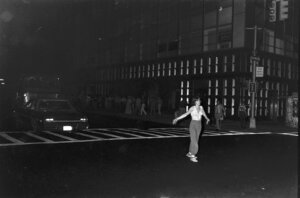
We didn’t know it yet, but this was the Big Blackout of July 13, 1977, and there we were, thousands of us stranded smack in the middle of Central Park. There wasn’t even much of a moon out that night, so it was really, really dark.
“Well, this is some pickle,” Mom said.
We wondered how the hell we were going to get out of there.

I vividly recalled the last big blackout in New York City, the one in 1965. I was just a young kid back then and safely at home, so it had actually been fun. While my mother lit a few Sabbath candles, my little sister and I roamed from room to room pretending we were in a haunted house. Meanwhile, our poor Dad had to trudge back to Brooklyn from midtown Manhattan — a five-hour hike in hot leather shoes.
But this time felt very different. I was far from the safety of home, trapped in the middle of what might as well have been a forest at night. Central Park is beautiful when you can see it. In pitch darkness it’s downright hazardous.
“Guess we’ll all just have to sleep in the park tonight,” I cracked. Neither Mom nor my Pratt roomie were laughing.
Thankfully, a phalanx of city cops eventually arrived to help guide us out. Audience members, cast and crew all joined hands as we carefully made our way along the park’s winding paths, stepping over roots and curbs, catching one another when someone stumbled. Our only illumination came from a few scattered police car headlights.
A walk that normally takes ten minutes took forever, but eventually we emerged onto Central Park West.
The scene was eerie. Streetlamps were dark. Traffic lights were out. Cars sat frozen in the intersections. Not a single apartment window was lit. For a city that never sleeps, it felt as if someone had suddenly flipped off the master switch.
Then I spotted something: “Look, the buses are still running!”
A city bus was rumbling slowly toward us, brightly lit inside. With the subways dead, getting back to my dorm in Brooklyn would have been impossible, so Mom’s place on the Upper East Side looked like the safest destination. She had temporarily split with my Dad and was living there with a roommate at the time.
The three of us squeezed aboard along with what felt like half the audience, and somehow made it across town to First Avenue. As we approached my mother’s high-rise, a dreadful thought suddenly hit me.
“Mom, what floor are you on again?”
“Twenty-five,” she replied grimly.
Of course both elevators were dead. We trudged up 25 flights of stairs in complete darkness, arriving exhausted and panting. My mother fumbled with her key, finally opening the door to reveal Sylvia, her gravel-voiced, seen-it-all Long Island roommate, standing there with her ever-present cigarette tip glowing in the dark.
“Come on in, darlings,” she rasped dryly. “Join the party.”
Sylvia had lit a few candles around the apartment, the only light we’d see that night.
Outside, the city was far from peaceful. While we tried to sleep on sofa cushions on the floor, one of the worst nights of unrest in New York history was unfolding in the streets below. Store windows were smashed. Shops were looted. Garbage cans were set on fire.
Lying there in the dim glow of flickering candlelight, hearing distant sirens punctuated by the sudden crash of breaking glass somewhere in the darkness below, I felt a growing sense of dread. An evening that had begun with music and theater had improbably ended with Manhattan plunged into darkness, its fragile machinery suddenly exposed.
By morning the city looked as though it had survived a world war.
This resilient burg has been battered and bruised over the years, enduring terrorist attacks, blackouts, blizzards, hurricanes, floods, garbage strikes, transit strikes, and the occasional collapse of its aging infrastructure. Yet somehow it manages to reset and lurch forward each time, improvising solutions the way Tony Azito danced in the dark that night at the Delacorte.
The post I was there when the lights went out and New York was plunged into darkness appeared first on The Forward.
Uncategorized
Lindsey Graham, pro-Israel Trump confidant in the Senate, dies suddenly at 71
(JTA) — Sen. Lindsey Graham, a Republican from South Carolina who has been one of Israel’s staunchest supporters in Congress, has died at 71.
Graham’s office announced his death in a statement early Sunday morning, saying that he had died late Saturday after “a brief and sudden illness.” Graham had returned from Ukraine, where he met with Prime Minister Volodymyr Zelensky, the day before.
Graham’s death means the Senate and Republican Party have lost one of its most durable pro-Israel voices at a time when anti-Israel sentiment is on the rise in both places. In his more than three decades in Congress, first in the House and then in the Senate since 2003, Graham aggressively backed U.S. aid to Israel, advanced a hawkish line on Iran and met repeatedly with Israeli Prime Minister Benjamin Netanyahu, in both Israel and the United States.
Netanyahu repeatedly said Israel had “no greater friend” than Graham in the United States. Graham’s most recent visit to Israel was in February, ahead of the U.S.-Israel war on Iran, which he later took credit for urging. “They’ll tell me things our own government won’t tell me,” he said of Israeli officials at the time.
Graham was also a vocal backer of Israel’s military responses to attacks by Hamas, including during the 2014 and after Hamas’ Oct. 7, 2023, attack on Israel that triggered the war in Gaza and augured a period of declining support for Israel. On Oct. 8, he issued a statement calling for Israel to defeat Hamas “by any and all means necessary” and in the subsequent weeks drew attention for calling on Israel to “flatten the place.”
Graham continued to promote a two-state solution as it receded as a U.S. priority, but he also adjusted to reflect the mounting isolationist streak in his party. Last year, he made news for embracing Netanyahu’s announcement of a plan to “taper” U.S. aid to Israel, saying it should be done sooner than Netanyahu’s 10-year timeline.
Graham’s outlook on Israel fit into a broad portfolio that included helming the Senate Budget Committee and pushing for a stronger U.S. response to Russia. Graham, who never married and had no children, was up for reelection in November.
This obituary will be updated.
This article originally appeared on JTA.org.
The post Lindsey Graham, pro-Israel Trump confidant in the Senate, dies suddenly at 71 appeared first on The Forward.
