


Uncategorized
Controversial Israeli film ‘The Sea’ makes its North American premiere in NYC
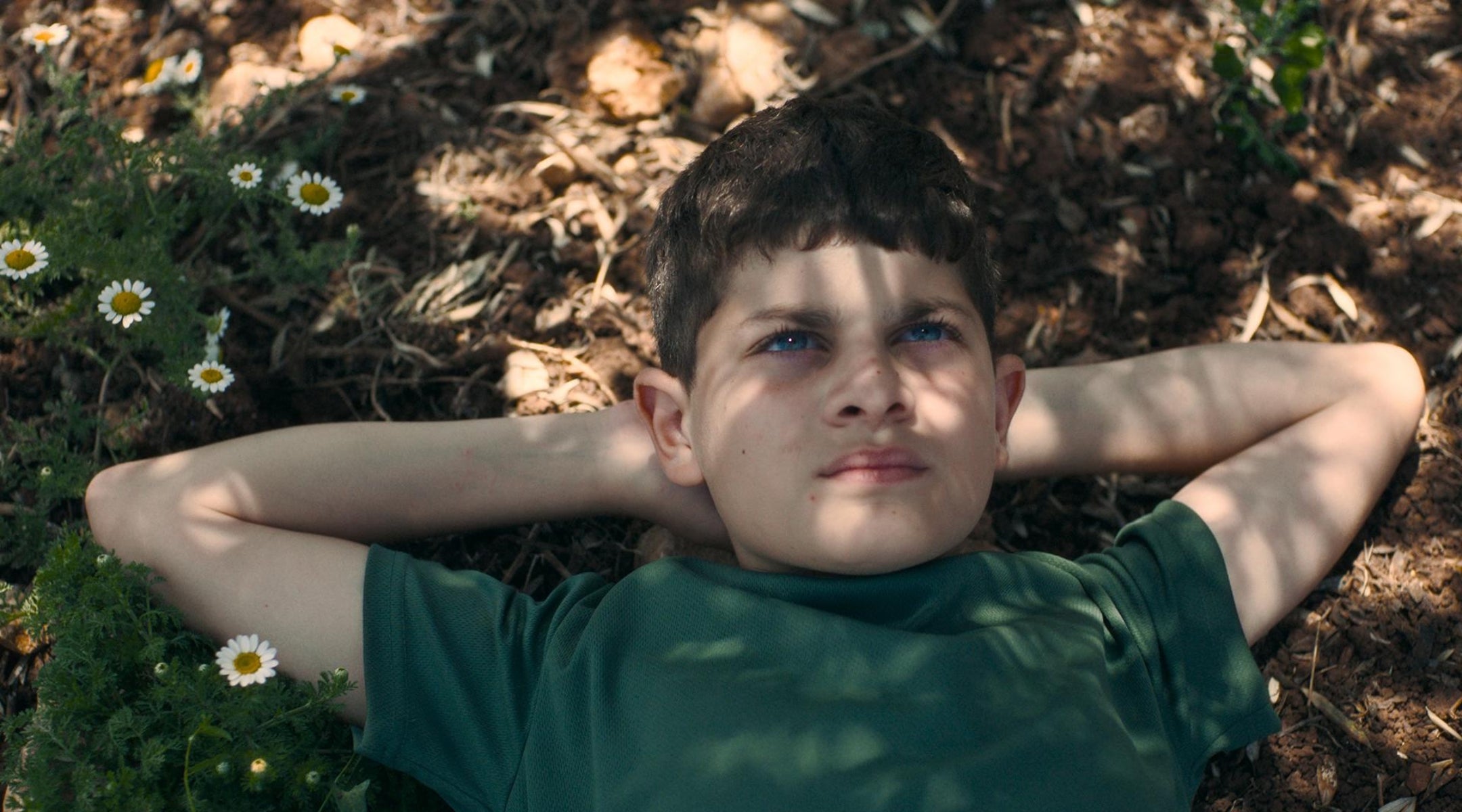
Israeli film director Shai Carmeli-Pollak’s latest film, “The Sea,” is about a young Palestinian boy from the West Bank who is denied a permit to visit Tel Aviv with his classmates. Longing to see the Mediterranean, he courts danger as he sets out to make the journey on his own.
The Arabic-language drama was released in Israel in July; in September, it won five Ophir Awards — Israel’s version of the Oscars — including for best picture, which means “The Sea” is also Israel’s submission into the Academy Awards for best international feature film.
And now, “The Sea” is making its North American premiere on Thursday at the Marlene Meyerson JCC Manhattan (334 Amsterdam Ave.). The screening — which also includes a reception and a Q+A with director Carmeli-Pollak and Palestinian producer Baher Agbaria — kicks off this year’s Other Israel Film Festival, an annual event that spotlights untold stories from Israeli and Palestinian societies.
Filmed in the summer of 2023, “The Sea” is partially inspired by true events: Carmeli-Pollak visited the West Bank for the first time in the early 2000s, during the Second Intifada.
“Seeing what’s going on really influenced me,” Carmeli-Pollak, 57, said, describing how a border wall between the West Bank and Israel, begun in 2002, restricted Palestinian travel into Israel. “And I started to go more and more and more and became an activist.”
Carmeli-Pollak became an activist alongside groups like Anarchists Against the Wall, a group advocating against the concrete security wall between Israel and the West Bank. His experiences informed the 2006 documentary, “Bilin, My Love,” about a Palestinian village set for demolition by the Israeli government.
No one particular moment or event inspired “The Sea,” Carmeli-Pollak said. Rather, the director said it was the West Bank residents’ longing for the sea — something Carmeli-Pollak said he frequently heard — as well as their desperate need for employment, that informed the film. ”it was a long period that I met people, and they spoke about this,” he said.
Since its release, “The Sea” has been ensnared in political crosshairs: It was produced with financial support from the Israel Film Fund, a public fund that was described as an institution “implicated in genocide and apartheid against the Palestinian people” by a growing boycott against the Israeli film industry signed by more than 1,200 prominent Hollywood stars.
On the other end of the political spectrum, Israeli Culture and Sports Minister Miki Zohar, a Likud Party member, has called for the defunding of the Israeli Academy of Film and Television, which runs the Ophir Awards. Zohar, who has only seen “the most important parts of the movie.” claims the film portrays the Israeli military in a negative light.
“It is probably the hottest Israeli film of the year,” Isaac Zablocki, the executive director of the Other Israel Film Festival and the JCC’s senior director of film programs, said of the festival’s sold-out screening of “The Sea.”
“Since all this noise with the boycott of Israeli films — and on the other side, the Israeli government declaring its lack of support for this film specifically, and Israeli cinema in general — it’s felt even more important for us to highlight this film as much as possible and really give it as much support,” Zablocki added. “I think this movie, right now, is exactly what Israel needs.”
The New York Jewish Week spoke with Carmeli-Pollak just days before the film’s North American premiere. Keep scrolling for our conversation.
This interview has been lightly condensed and edited for clarity.
Was the idea always to tell this story from a Palestinian perspective?
The idea from the very beginning was to tell the story from the point of view of a Palestinian child. That perspective allows us to strip away the almost automatic “political” baggage that comes with an adult’s point of view.
A child’s perspective is free from all that complexity. In that sense, for me the film is not necessarily just a Palestinian story, but rather a story about two societies living on opposite sides of the wall — the Palestinian and the Israeli.
We have an opportunity to see Israeli society through the eyes of this child, and perhaps to look again at things that are usually invisible or taken for granted.
How did you find the cast and crew?
The cast is a mix of professional actors and non-actors. Naturally, the boy, Muhammad Gazawi, was not a professional actor. I met him when I visited a Thai boxing club in a Palestinian city inside Israel called Qalansawe. I met there a group of tough young athletes, and he quickly struck me as a boy with remarkable acting abilities.
You said the rough cut of the film was already completed by Oct. 7, 2023. Can you tell me more about what the cross-cultural collaboration looked like at the time?
We shot the film in the summer of 2023. Apart from the fact that the producer is Palestinian, the crew was mixed — Palestinians and Israelis.
On set you could hear both Hebrew and Arabic blending together naturally. The crew made the same journey shown in the film — moving between Palestinian villages, where we received a warm welcome and generous hospitality, and cities inside Israel. Even before Oct. 7, it wasn’t common to see a joint production like this, and it was a special experience for everyone involved. For many of the Israeli crew members, it was their first time being hosted in a Palestinian village. After the war broke out, Baher and I were deeply worried and heartbroken — first and foremost for the people we care about, but also for the film.
We thought no one would want to watch such a small story when horrific events were happening all around. And indeed, at first we faced difficulties in distributing the film. But as time went by, it seems that openness to a story like this is slowly returning, and we hope the film will reach as wide an audience as possible.
What was that partnership like in the wake of Oct. 7?
I was in contact all the time with Baher, the producer. He’s Palestinian, and we were both horrified by what’s going on — by the 7th of October, and with the reaction in Gaza, which was terrible. We were really, really worried. But we also felt like maybe nobody would want to watch the film now. I spoke to the actors, like Khalifa Natour [who plays Ribhi, Khaled’s father], who were devastated with what’s going on. But our communication was just the same — as friends, as people that are in the same circle. It’s not that now, suddenly, I’m from one side, and he is from the other side. It felt like we’re still connected.
At the end of the film, when Khaled and Ribhi are being arrested by the police, there’s a shot where the Israelis at the café kind of pause for a moment; they look shocked or horrified, and then they go back to their coffee. What were you trying to say about Israeli society and their attitudes toward police or military violence against Palestinians?
I tried to make this film not just to speak about Israeli society, but about human beings, to make it more universal in a way. I was really, really inspired by “Bicycle Thieves,” the Italian film by Vittorio De Sica from the 1940s. It tells the story of a father and son, also. And I was so emotional by this film, 80 years after it was made. I felt that I wanted to make a film that people can watch years from now, and still get the story.
So the idea was about human beings and the way that people are behaving, of course, in political arrangements, because everything is politics. I don’t think people in other countries would behave differently in this kind of system that exists here.
People just live their lives. They sit in a café, they see this scene, and then, like the viewers in the cinema, they go back to their lives after they sit.
In a way, I think generally, what I was trying to say is that people are not evil. They’re not looking to hurt other people, but because the system is very, very corrupt and discriminative and injustice unjustified, this is what caused all the problems.
The Israeli Culture Ministry, led by Miki Zohar, wants to defund the Ophir Awards, which had granted you many awards for this film. Is there any update on that?
He did establish his own competition and to offer a lot of money for each prize. So he is using public money for his agenda, which is not surprising. This is the way this populist fascist government is working. And besides this, I don’t know anything new.
I would prefer to live in a place where the minister of culture supports films and supports the freedom of speech and doesn’t try to block it. But when the situation is like this, at least, he saved me from — now that the film goes out to the world — having to explain that I’m not representing this government.
What do you hope that New York viewers — especially Jewish viewers who may be unfamiliar with Palestinian life in the West Bank, or their interactions with Israelis — will get out of your film?
I don’t know if I’m telling something new to people, but maybe so. I guess liberals know there is discrimination against people that live under the occupation. But it’s not an article; it’s different when you read about it and when you experience it more in a more emotional way.
So maybe the idea is that the film can give you another aspect of this — to actually have some feelings about the story of this kid, and to maybe open these channels of understanding, and know that what’s going on here can’t go on like it used to be before. We can’t go back to the same point as before the war. There should be a deep change, and we need the support from the outside for this change. That’s for sure. There are a lot of forces inside Israel and forces in the United States that are against these kinds of changes.
—
The post Controversial Israeli film ‘The Sea’ makes its North American premiere in NYC appeared first on Jewish Telegraphic Agency.
Uncategorized
VIDEO: A Hasid gives us a tour of Morocco in Yiddish
דער ירושלימער יוטוב־שטערן וועלוול קירשנבוים האָט לעצטנס אַרויסגעשטעלט אַ ווידעאָ אויף ייִדיש פֿון אַ פּרעכטיקן וויזיט, וואָס ער האָט געמאַכט אין מאַראָקאָ. עס באַגלייט אים זײַן חבֿר אַבֿרהם פּרץ.
אינעם ווידעאָ זעט מען ווי קירשנבוים דאַוונט שחרית מיט די אָרטיקע ייִדן און באַזוכט אַ גוט אָפּגעהיטענעם בית־עולם, וווּ עס ליגן באַערדיקט גרויסע צדיקים ווי למשל הרבֿ חיים בן עתר (1696–1743), באַקאַנט ווי דער „אור החיים“. „מענטשן מיינען, אַז נאָר אין אייראָפּע זענען דאָ קבֿרים פֿון צדיקים!“ זאָגט קירשנבוים.
מיר זעען אַ גרויסע, שיינע שיל מיט אַ פֿײַנער אַרכיטעקטור אין קאַזאַבלאַנקאַ; דעם גרויסן אַראַבישן שוק, וווּ קירשנבוים קויפֿט זיך אײַן מלבושים פּונקט ווי די מאַראָקאַנער גייען אָנגעטאָן. ער באַוווּנדערט אויך די שיינע טיי־גלעזער און טשײַניקן, וואָס מע פֿאַרקויפֿט דאָרט, און באַקענט זיך מיט אַ ייִדישן סוחר וואָס האַנדלט מיט זילבער און גאָלד, פּונקט אַזוי ווי זײַן טאַטע און זיידע האָבן געטאָן פֿאַר דור־דורות.
The post VIDEO: A Hasid gives us a tour of Morocco in Yiddish appeared first on The Forward.
Uncategorized
Conservative and Christian movies are coming for Hollywood
A star-studded new movie set in a Soviet prison is coming out in November. James Franco and Rob Lowe anchor the cast of Confession, playing a brutal prison guard and an imprisoned dissident professor, and a disheveled Nick Nolte appears as a fellow prisoner.
These actors were once huge gets, and their names could convey legitimacy to a project. Nolte and Franco both have received Academy Award nominations. Lowe was a member of the Brat Pack, and was a regular on The West Wing.
Confession, written by Ben Shapiro and produced by the rightwing tabloid-esque news site The Daily Wire, is not the expected fare for actors with that kind of name recognition; Shapiro’s screenwriting aspirations have been the target of ridicule for years.
Nevertheless, this isn’t the only Daily Wire production getting big names; Danny Trejo signed onto a pro-ICE movie about Minneapolis in the aftermath of the Renee Good shooting, and Jonathan Majors led Run, Fight, Hide: Infidels earlier this year.
Each one of these actors has been, in some way, canceled or in career doldrums so may have been more open to working with The Daily Wire. And some have claimed that they did not know who Shapiro was, or what his politics were; Trejo’s son, Gilbert, said his 82-year-old father did not endorse ICE and was misled about the movie before he signed his contract.
Movie studios have struggled through the pandemic and the streaming era, both of which have tanked box office receipts, leaving the field open for movies from offbeat production studios. In addition to The Daily Wire, there has been a whole ream of Christian movies attempting to shift the stereotype of bible movies — that they’re preachy, low-budget straight-to-TV affairs with cardboard acting — to something more prestigious, or at least profitable.
The Christian company Angel Studios has been placing screenings of the half philo-semitic, half-antisemitic Jesus TV series The Chosen in movie theaters across the country, produced the right-wing hit The Sound of Freedom and is pumping out faith-based movies like the animated King of Kings Christmas story and David, a kiddie movie about the biblical king. Recently, Pinnacle Peak Pictures, another faith-based production company, premiered Daniel and the Fiery Furnace, another bible movie that was notable enough to merit a review in The New York Times. (Though admittedly it wasn’t a particularly positive one.)
For decades, Hollywood, and the media industry at large, has been associated with liberalism, progressive politics and diversity. (This is part of why conservative conspiracy theorists often insist that Jews control the media.) Even when conservatives are in power, satirical movies have poked fun at the ruling class — Team America: World Police spoofed George W. Bush’s foreign policy, while M*A*S*H critiqued Richard Nixon. During the current Trump administration, we’ve seen One Battle After Another lambasting immigration policies and rising white nationalism, Eddington on misinformation and populism, and The Apprentice depicting Trump directly.
But a rising number of higher-budget, bigger releases from the right wing, whether The Daily Wire’s conservative political parables or the Christian fables, are bringing a new kind of messaging — about the importance of God and country, about gender roles, about about the centrality of Jesus to the U.S. — to the American movie-going public.
This is no accident. A group of powerful conservative Christians, many of whom worked on Project 2025, are proponents of the Seven Mountains Mandate, a blueprint for Christian nationalism that instructs Christians to gain influence and control over the “seven mountains” of society — which include media, entertainment and the arts. The Mandate is part of the New Apostolic Reformation, a decentralized evangelical movement embraced by millions of Americans.
Jeremy Boreing, the director of many Daily Wire movies — though he has since left the company — said on a podcast hosted by businessman Patrick Bet-David that “It had always been part of our strategy to move into making culture, not just criticizing culture” as a way of proving that “there is a future where conservatives aren’t losing. There’s a future where we have political power and cultural power.”
Cultural power, of course, requires more than just a lot of movies; they have to be well-done, or at least appear to be. Previous Daily Wire productions, as well as other right-wing, MAGA movie ventures, have been hacky. Lady Ballers, about an unsuccessful men’s basketball team pretending to be women so they can dominate the league, was an unsubtle, unfunny and ultimately unwatchable spoof of transgender athletes. And even plenty of higher-budget attempts, like Daniel and the Fiery Furnace, can still fall victim to wooden acting and writing.
But now, with the financial success of movies like The Sound of Freedom and biblical parables like The Chosen, bigger stars are being drawn to projects like the Daily Wire’s lineup of pro-ICE, anti-immigration and anti-LGBTQ movies. With those bigger stars may come new audiences who might not have watched a Christian movie or Daily Wire project otherwise. And where there is money and viewers, mainstream Hollywood will go, too, no matter how progressive people expect the industry to be. We’ve already gotten a biblical epic from Amazon Prime, with The House of David, and there are likely to be many more to come.
After all, it wasn’t so long ago, after all, that Cecil DeMille’s The Ten Commandments was the biggest movie in town.
The post Conservative and Christian movies are coming for Hollywood appeared first on The Forward.
Uncategorized
‘Heil’ Mary? New Atlanta Falcons logo inspires Nazi comparisons
If there was something off about the logo the Atlanta Falcons unveiled on social media Wednesday, whoever runs their accounts did, uh, not see it.
Behind the black falcon graphic that began appearing on the football team’s helmets in the 1960s was a new background — a flag of red, tan, black and white vertical stripes. To thousands of people who responded to the logo, it looked distinctly German — in a 1930s kind of way.
“The Atlanta Falcons are preparing to invade Poland,” one fan wrote.
A day after its posting, the new profile picture had unleashed a deluge of Nazi memes in the 4,000-plus replies on X. One picture swapped in the logo for Nazi flags in the background of a historical photo of a Hitler rally. Another edited the Falcon claw to look like a Nazi salute.
Others depicted Hitler in a Falcons cap, references to Inglourious Basterds and the Battle of the Bulge and a World War II joke invoking a blown lead in Super Bowl LI.
“Falcons were up 28-3 at Dunkirk,” that tweet read.
The Falcons’ snafu enters a small but growing catalogue of Reich-coded brand mixups. Who can forget the German national soccer team’s ‘44’ soccer jerseys? There was also the swastika-emblazoned Hallmark gift wrap; the accidental Hitler mugs; and (for my money) the worst of the bunch, Zara’s concentration camp uniform shirt.
All of those have been addressed; so far, the Falcons’ has not. We’ve reached out to them for comment.
The post ‘Heil’ Mary? New Atlanta Falcons logo inspires Nazi comparisons appeared first on The Forward.
