


Uncategorized
Cornell inks $60M deal with Trump administration to resolve antisemitism claims
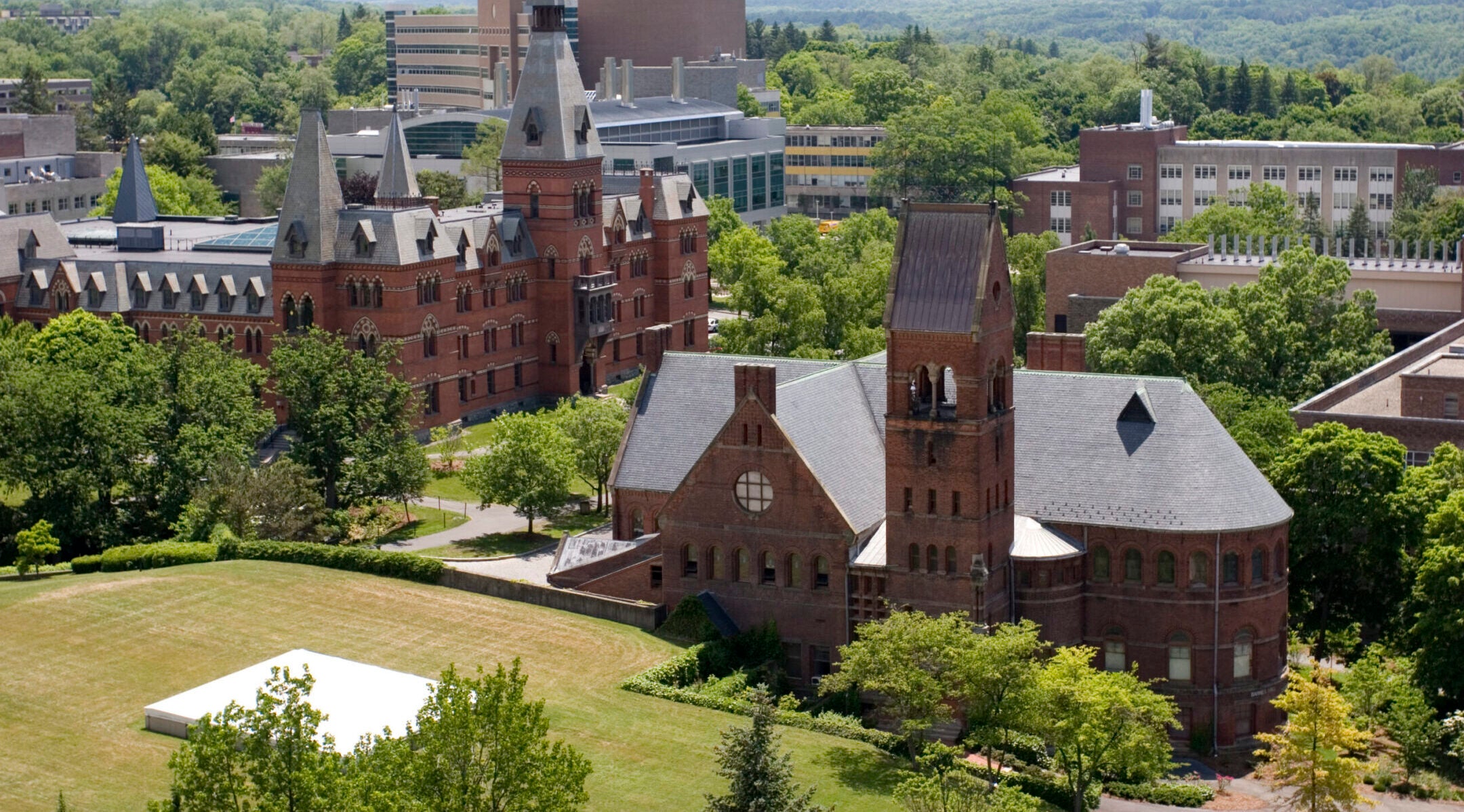
Cornell University will pay $60 million to the Trump administration to resolve ongoing antisemitism investigations and unfreeze $250 million in federal funds, becoming the fourth Ivy League school and fifth overall to strike such a deal.
The deal came weeks after another agreement signed by the University of Virginia, and also followed the resolution of an ongoing controversy at Cornell involving a Jewish professor’s course on Gaza.
“With this resolution, Cornell looks forward to resuming the long and fruitful partnership with the federal government that has yielded, for so many years, so much progress and well-being for our nation and our world,” Michael Kotlikoff, the school’s Jewish president, said in a statement Friday announcing the deal.
In a virtual campus town hall after the deal was announced, Kotlikoff linked the university’s negotiation of the settlement to the broader campus climate in the two-plus years since the Hamas attack on Israel and war in Gaza.
“Universities across the country have made significant progress since disruptions on campus on October 7 in articulating our rules, appropriately enforcing our rules and making sure that everybody’s rights are protected,” he said, as reported by the Cornell student newspaper.
As part of the deal, Cornell will pay the federal government $20 million per year for the next three years in exchange for the unfreezing of several grants to the university, many of which are connected to the Department of Defense. Half of the money will be directed to investments in agriculture programs.
The school also promises to “conduct annual campus climate surveys to ensure that Jewish students are safe and that anti-Semitism is being addressed,” according to a White House release about the deal. In the aftermath of Oct. 7, Cornell’s campus dealt with violent threats against Jewish students as well as a faculty member who had praised the Hamas attacks.
The government, in turn, promises to drop its ongoing Title VI investigations into allegations of discrimination based on shared Jewish ancestry or national origin at the school. Kotlikoff further insisted that Cornell would preserve its academic freedom, and would not be forced to abide by White House guidelines on other campus concerns such as diversity-based hiring and transgender athletes.
Cornell’s agreement follows earlier ones struck by Columbia, the University of Pennsylvania, Brown and UVA. UVA, the first public university to strike an antisemitism-related deal with Trump, was not required to make any payments to the federal government, according to the deal it announced last month.
Instead, UVA agreed to end certain diversity, equity and inclusion initiatives, known as DEI, and eliminate language referring to transgender people, among other provisions. None of the public terms of its settlement involved addressing antisemitism.

Momodou Taal addresses fellow students at a Cornell University pro-Palestinian demonstration in April 2024. (Screenshot from Cornell Daily Sun video)
One prominent on-campus critic of Cornell’s handling of antisemitism issues praised the school’s settlement as “pragmatic” in an interview with the Jewish Telegraphic Agency.
“I think the fact that all Title VI investigations have been closed is a tremendously important reassurance to students and parents that the university, in fact, is doing all it can to protect Jewish students from any kind of antisemitic discrimination or incident,” said Menachem Rosensaft, an adjunct law professor at Cornell.
Rosensaft added that the agreement “also sends a very clear signal to anyone who is inclined to engage in antisemitic discrimination or violence that they will suffer the consequences.”
Rosensaft had been at the middle of a more recent Israel-related controversy at Cornell after he complained to Kotlikoff about a pro-Palestinian Jewish professor’s plan to teach a class on Gaza. Kotlikoff’s criticisms of the class, in emails published by JTA, prompted campus advocacy groups to admonish what they said were his threats to academic freedom.
That professor, Eric Cheyfitz, prompted an internal investigation after he tried to remove an Israeli graduate student from his Gaza class. Last month, Cheyfitz opted to retire from teaching in order to end the investigation.
The university pressure on Cheyfitz, Rosensaft said, was further evidence — along with the settlement — that Cornell has started to take threats of antisemitism seriously.
“He will no longer be able to propagate his extreme anti-Zionism in the classroom,” Rosensaft said.
Further Trump negotiations with universities remain ongoing, even as more and more Jews say they think such deals are only using antisemitism as an excuse to attack higher education.
The terms of a proposed $1 billion payout from the University of California system, recently made public by a court order, include specific reference to antisemitic incidents that took place on UCLA’s campus. In addition, a closely watched negotiation with Harvard remains ongoing.
—
The post Cornell inks $60M deal with Trump administration to resolve antisemitism claims appeared first on Jewish Telegraphic Agency.
Uncategorized
J Street goes on the offensive against AIPAC-backed candidates
(JTA) — J Street, the liberal Jewish Middle East advocacy group, announced that it will spend $3 million to defeat a handful of Republican candidates backed by AIPAC, joining the plethora of progressive groups targeting the American Israel Public Affairs Committee this election year.
Such an attack campaign is an unusual initiative for J Street, which typically endorses candidates but does not target opponents on the basis of an AIPAC endorsement. Until now, according to J Street President Jeremy Ben-Ami, the likelier scenario for his organization was finding its endorsed candidates on the defensive against AIPAC’s spending.
“It’s a new era for us,” Ben-Ami said in an interview. In 2022, J Street targeted an AIPAC backed candidate — but only after AIPAC barraged the J Street endorsed candidate with negative spending.
In a statement, J Street said that this will be the group’s largest super PAC investment in its history, referring to political action committees that can raise unlimited funds but are forbidden from coordinating with campaigns.
The $3 million will be spent on ads targeting Republican Rep. Mike Collins, who is running for U.S. Senate in Georgia against Democratic Sen. Jon Ossoff, who is Jewish, and a handful of incumbents: Ohio Rep. Max Miller, who is running for reelection amid allegations of domestic abuse, which he denies; Wisconsin Rep. Derrick Van Orden; Pennsylvania Rep. Ryan Mackenzie; and Iowa Rep. Mariannette Miller-Meeks.
Ben-Ami said J Street targeted those particular candidates in part because they each face competitive races as the Democrats look to take control of the House and Senate and they have ideological distance from J Street. Many of them were also connected to the movement to deny and overturn the 2020 election results, Ben-Ami said.
J Street’s campaign comes as AIPAC’s brand has become increasingly toxic among voters, and as a growing number of Democratic politicians cross its red line of supporting conditions on U.S. military aid to Israel. J Street’s position, meanwhile, has recently drifted toward supporting a phasing-out of military aid to Israel in 2028.
AIPAC blasted the campaign in a post on X. “Is this from J Street or Justice Democrats?” AIPAC wrote, referring to the progressive organization that has increasingly aligned with pro-Palestinian advocacy.
“A dark money super PAC spending millions to defeat pro-Israel candidates and lie about AIPAC,” the group wrote. “Not a word about helping elect pro-Israel candidates further exposes the difference between J Street and actual pro-Israel organizations.”
AIPAC has been a heavy spender since it launched its super PAC, United Democracy Project, ahead of the 2022 midterms, and is the top outside spender in this election cycle, according to Open Secrets. A number of anti-AIPAC, pro-Palestinian groups have emerged over the past year to counter the pro-Israel lobbying group’s spending.
Unlike those groups, J Street and AIPAC have some overlap in which candidates they back: Both groups endorsed moderate, pro-Israel Democrats such as Reps. Hakeem Jeffries and Dan Goldman. J Street’s super PAC has also previously targeted individual candidates for their AIPAC endorsement, such as Rep. Haley Stevens in 2022, citing AIPAC’s donations from right-wing megadonors.
An AIPAC spokesperson wrote that it is “disappointing, but not surprising, that J Street continues to amplify lies about our community.”
“AIPAC members are focused on helping elect Democrats and Republicans who will strengthen the U.S.-Israel partnership, while J Street is focused on turning support for the Jewish state into a partisan political football,” said AIPAC’s spokesperson.
Ben-Ami said this year’s campaign is not about “the relationship between us and AIPAC,” but is rather about emboldening candidates who may otherwise worry that they will be up against AIPAC’s war chest.
“We are very conscious that there are many candidates who are afraid of what AIPAC might be able to do politically, and therefore adopt positions and say things about policy because they are afraid, and their fear and intimidation is holding them back,” Ben-Ami said.
Now, he said, J Street is putting “the shoe on the other foot.”
“If you are going to oppose American democracy and provide carte blanche to this Israeli government, then you need to be afraid,” he said.
This article originally appeared on JTA.org.
The post J Street goes on the offensive against AIPAC-backed candidates appeared first on The Forward.
Uncategorized
Germany’s far-right AfD, riding state win, targets more gains in elections from east to west
(JTA) — Germany’s far-right, riding high after winning an eastern state, seeks to capitalize on its momentum in a series of upcoming elections — starting with municipal voting this weekend, followed by two closely watched state contests.
The first test for the Alternative for Germany (AfD) party comes Sunday in municipal elections in the western state of Lower Saxony. A week later, the AfD has its sights on state elections in the capital, Berlin, and the Baltic coast state of Mecklenburg-Western Pomerania.
The AfD beat out other parties in Saxony-Anhalt on Sept. 6 with 43.8% of the vote and 39 of 83 state parliament seats, falling just short of a majority and marking Germany’s greatest far-right victory in a state election since World War II.
“From previous elections, we know that the AfD is currently able to mobilize almost totally its own constituency and potential voters, while its democratic competitors have much more problems,” said Gideon Botsch, the head of the Emil Julius Gumbel Research Unit on Antisemitism and Right-Wing Extremism at Potsdam University.
While polls do not predict the next state election results will match the historic win in Saxony-Anhalt, the AfD currently leads other parties in Mecklenburg-Western Pomerania with about 35% of the vote. And in Berlin, long a stronghold of Germany’s political left, the AfD is jockeying with the center-right Christian Democratic Union (CDU) and the left-wing Linke for first place, with all three polling around 20%.
The AfD, a nationalist, anti-immigrant party whose leaders have proposed rejecting Germany’s “guilt complex” over the Holocaust, has regularly topped nationwide opinion polls for the past year. In surveys asking Germans which party they would choose if federal elections were held “this Sunday,” the AfD often receives the highest results, Botsch told the Jewish Telegraphic Agency.
The AfD has built a dedicated and growing base, said Botsch. Its popularity signals frustration with the mainstream parties in power, particularly the CDU, Chancellor Friedrich Merz’s party, amid a sluggish economy. The AfD is especially popular in eastern Germany, where voters are poorer and hit hard by high energy prices exacerbated by the wars in Iran and Ukraine.
The AfD is likely to perform more weakly in the west, where Lower Saxony will hold a municipal election on Sunday. The party has stronger influence in the east, and Germany’s municipal elections tend to hinge more on well-known figures from established parties, said Roger Stöcker, a political scientist at Otto von Guericke University in Magdeburg. Still, even if the AfD doesn’t transform governments, Stöcker said that making inroads to further entrench itself in Lower Saxony would be “a strategically significant success.”
“It’s conceivable that the AfD wins a town hall or a county administration here and there or strengthens its presence in local councils, expanding its local base,” said Stöcker.
The three upcoming elections are being closely watched for signs of the AfD’s wider-scale momentum, said Daniel Schuster, who heads the Simon Wiesenthal Center’s European office.
“Taken together, these elections can help show whether Saxony-Anhalt was an exceptionally strong eastern result or part of a broader national expansion of the AfD’s electoral base,” said Schuster.
Remko Leemhuis, the director of the American Jewish Committee Berlin Lawrence and Lee Ramer Institute for German-Jewish Relations, added that residents will feel the effects of the AfD’s success even if it falls short of its victory in Saxony-Anhalt. A “very strong AfD result,” short of managing to enter government coalitions, would still “raise serious concerns” for Jewish residents about the party’s influence, said Leemhuis.
Residents in Saxony-Anhalt are waiting to see the ramifications of the AfD’s election victory. Without an outright majority, the party needs partners to join a coalition. Its nationalist agenda in the region includes teaching children less about Hitler, banning Pride flags in public buildings and requiring artists and cultural organizations to sign a declaration that they will not “disparage Germany and its culture” if they seek state funding.
State governments also control domestic policing and parts of the judiciary. The AfD could use its power in these areas to “put pressure on minorities it dislikes,” including immigrants, Muslims and Jews who are identified with Holocaust remembrance, said Stöcker. At the same time, the AfD could direct policing and intelligence away from right-wing extremism in Saxony-Anhalt, which recorded the second-highest number of right-wing extremist crimes per capita of Germany’s 16 states last year, Leemhuis said.
The AfD’s victory in Saxony-Anhalt marked a “watershed moment” in German politics, according to Roland Abold, the managing director of Infratest Dimap, a German election research institute. Abold said that the result heaped pressure on Merz and the federal government, as “calls for a change in political direction and a reassessment of cooperation with the AfD are likely to intensify.”
The CDU for now is standing behind Merz, the most unpopular chancellor in modern German history after 16 months in power. But if the CDU faces further heavy defeats in the upcoming elections, questions about Merz as the party’s leader could escalate, said Stöcker.
The AfD already has its eyes on his job. Alice Weidel, the national AfD’s co-chair, announced on Monday that she wants the party to win “at least 40% of the vote” in Germany’s next federal election in 2029.
Ulrich Siegmund, the AfD candidate in Saxony-Anhalt who hopes to become the state premier, said in the same press conference that his goal was “very clear.”
“As perhaps the next Minister-President of Saxony-Anhalt, I need a Federal Chancellor Alice Weidel here in Berlin, so that we can write here history side by side,” said Siegmund.
This article originally appeared on JTA.org.
The post Germany’s far-right AfD, riding state win, targets more gains in elections from east to west appeared first on The Forward.
Uncategorized
I was born after 9/11. I still carry the memories of that day.

Earlier this week, I was talking with my mother over the phone about her experience on 9/11. She walked me through the familiar parts — how she was in our Upper West Side apartment when she learned about the attacks from a relative, how she went to the garage to get the car so they could drive to a friend’s house upstate once she realized the attacks were acts of terror. There were still hijacked planes in the air, and she worried New York City might be targeted again. Then, she said, “This part is going to make me cry.”
I hadn’t remembered what came next, but suddenly it came back to me. “Oh no, me too,” I said.
While she waited for my father to come back uptown from his office in the Financial District, she stopped inside a fire station across from the garage. Inside was a lone firefighter, who’d stayed behind to man the station while the rest of his company was inside the towers. He was watching the news on television, and my mom stood next to him, watching too, when the towers fell.
“We just lost so many men,” he said.
I wasn’t there when it happened; I wasn’t even alive. But I’d heard this story before, I’d walked dozens of times past that same fire station, which now has a plaque commemorating the seven firefighters who died on 9/11. Hearing the story again on the phone, I found myself walking down the streets of Washington D.C., bawling.
I’m 23, born a year-and-a-half after 9/11. Most Americans my age learned about the attacks in school, as history. I’m part of the 16% who learned through family or friends.
The discovery happened by accident, when I was in kindergarten. My mom and I were in a children’s store on the Upper West Side, when we started flipping through a picture book about the history of New York City. Most of the book was unremarkable, but the end was unexpected: a scene of the smoldering twin towers.
I forget what exactly happened next, but here’s what I do remember: My mom was upset that the shop hadn’t provided a warning about the book’s end, and I was confused about why she was upset. I was five, too young to understand the image and never one to let a question go unanswered; I must have pestered her until she offered up an explanation.

She hadn’t been prepared to tell me about terrorism. She’d been evading the topic for some time, telling half-truths to avoid it. When I’d ask her why we had to take our shoes off in line at the airport, she’d just say it was to make sure no one had anything dangerous, leaving out the part about how a man had tried to get on a flight with bombs hidden in his shoes.
“9/11 is a huge thing for a parent to have to tell a kid about,” my mom told me this week. “You were a happy kid, and I didn’t want you to get scared or traumatized.”
The events, and impacts, of that day slowly unfolded for me as the years passed. I learned that my father had watched from Battery Park as the South Tower fell; he ran westward as plumes of smoke billowed toward him. I learned that my parents had friends who’d died in the towers, one of whom was the father of a boy I grew up with. I remember going to the 9/11 Memorial and Museum when it opened in 2014, feeling sick as I watched footage of people jumping out of the towers.
The New York Times recently interviewed dozens of Gen Z Americans about 9/11. I was struck by how disconnected many felt from the event. “It’s hard to feel sad about something that you don’t remember,” said Annika Heegaard, a 25-year-old now living in New York.
But for me, 9/11 doesn’t feel quite so far away. By now I’ve lived through other mass casualty events, like the Parkland shooting and the Oct. 7 Hamas attacks. But 9/11 is the only tragedy that my family members had such a direct connection to. “It was devastating,” my mom said.
I think the reason I can remember the exact moment I found out about 9/11 is because it changed my view of the world. I remember being almost unable to comprehend that anyone would do what the hijackers did. I wasn’t, as my mom feared, traumatized by learning about the attacks; I didn’t fear for my safety each day. But the knowledge was in some ways a loss of innocence — a discovery that people could do awful things and that the world wasn’t as safe a place as I had assumed.
The post I was born after 9/11. I still carry the memories of that day. appeared first on The Forward.
