


Uncategorized
Georgetown Newspaper Editorial Board Accuses Israel of ‘Genocide,’ Calls for Divestment

Georgetown University students on March 23, 2025 in Washington, DC. Photo: Andrew Thomas via Reuters Connect
A Georgetown University-affiliated student newspaper last week issued an editorial which argued that the school has been “complicit in Israel’s genocide,” describing the world’s lone Jewish state as an illegitimate entity that should be isolated.
“There is no doubt in the mind of The Georgetown Voice‘s Editorial Board that Israel has been committing genocide in Gaza,” proclaimed The Georgetown Voice, an alternative, far-left publication founded in 1969. “There is no critical mass or breaking point at which elites — including the administrative elite at Georgetown — will suddenly reform their conscience.”
The editorial board condemned what it falsely labeled as Israel’s “decades-long settler colonial project and apartheid system” and appeared to blame the entirety of the Gaza conflict on Israel while absolving Hamas, the Palestinian terrorist group that started the war with its Oct. 7, 2023, massacre of Israelis, of wrongdoing.
“We must ask ourselves why every person in Gaza or the West Bank does not elicit the same righteous anger (and frenzied whitewashing or bigotry and divisiveness) that erupted after the assassination of Charlie Kirk,” the paper charged, referring to the American conservative activist who was assassinated in September. “While some — certainly not all — members of Congress have half-heartedly called for a ‘pause’ in the violence at some point, the vast majority of them were simultaneously voting to arm Israel.”
The editorial continued, “The morally bankrupt acts of our representatives made Americans complicit in this genocide. That should enrage and galvanize something in all of us. Sadly, at Georgetown, that’s not what we see.”
Capping off its philippic, the Voice broadsided the Anti-Defamation League (ADL) — accusing the civil rights organization of “anti-Palestinian advocacy” and drifting “rightward … under the leadership of current CEO Jonathan Greenblatt” — and calling for Georgetown’s divestment from Israel on the grounds that Israel is an “apartheid regime” in the same mold as Afrikaner-dominated South Africa until the 1990s.
“If the school gives any weight to the values it claims to represent, it will reconsider its rejection of the divestment referendum from last spring and move to cut all ties with Israeli and Israel-supportive institutions immediately,” the Voice concluded, hinting at the expulsion from campus of Jewish groups such as Hillel and Chabad. “We do not say this lightly; taking action is challenging; however, in the face of such atrocities, there are no excuses for inaction.”
The Voice is not the first student newspaper to promote anti-Zionism while curating facts, sources, and quotes to confect a negative image of Israel.
In 2022, The Harvard Crimson, the official newspaper of Harvard University, endorsed the boycott, divestment, and sanctions (BDS) movement, which seeks to isolate the world’s lone Jewish state on the international stage as a step toward its eventual elimination.
“BDS remains a blunt approach, one with the potential to backfire or prompt collateral damage in the form of economic hurt. But the weight of this moment — of Israel’s human rights and international law violates and of Palestine’s cry for freedom — demands this step,” it said. “As a board, we are proud to finally lend our support to both Palestinian liberation and BDS — we call on everyone to do the same.”
At Georgetown, anti-Zionism may be fostered by foreign influence in the form of exorbitant donations.
According to a report published in June by the Institute for the Study of Global Antisemitism Policy (ISGAP) — titled, “Foreign Infiltration: Georgetown University, Qatar, and the Muslim Brotherhood” — Georgetown University has received over $1 billion in funding from the Qatari government over the last two decades. The 132-page document revealed dozens of examples of ways in which Georgetown’s interests are allegedly conflicted, having been divided between its foreign benefactors, the country in which it was founded in 1789, and even its Catholic heritage.
“The Qatari regime targets Georgetown due to its unrivaled access to current and future leaders. Over two decades, that investment has paid off — embedding Muslim Brotherhood scholars and narratives deep within the American academic and political culture,” Dr. Charles Asher Small, executive director of ISGAP, said in a statement on the report. “This masterful use of soft power is not only about Georgetown. It is how authoritarian regimes are buying access, narrative control, and ideological legitimacy — and too many universities are willing sellers.”
The ISGAP report called on policymakers to take action now and prevent the university’s becoming any closer to a country whose ideals may threaten US interests and ideals.
“It is time to designate the Muslim Brotherhood as a terrorist organization. As we saw, pro-Hamas antisemitism in the US has moved from rhetoric to outright terrorism on the streets of Washington,” Small said, referring to the antisemitic shooting of two Israeli embassy staffers in May. “Just three miles from the site of the murders outside the Jewish Museum, Georgetown has been the center of a 50-year indoctrination campaign aimed at infiltrating the highest echelons of US society with murderous antisemitism.”
Follow Dion J. Pierre @DionJPierre.
Uncategorized
For Orthodox women, or those who find men in yoga studios ‘gross,’ a refuge in Brooklyn

It’s Friday morning in Hasidic Crown Heights, just two blocks away from the Chabad-Lubavitch World Headquarters, and we are doing cat-cows. In cat pose, I hunch my back and pull my chin to my chest, letting gravity pull my ponytail to the ground. In cow, I pull my shoulders back, look up, and scan the room. For some, this class at Vessel Studios is a final meditative moment before a hectic day of shopping, cooking, and otherwise preparing for Shabbat. But as I look around, it’s impossible to tell which of my fellow cows is Orthodox and which is not. Save for the headscarves that some of the Hasidic women are wearing, heathens and believers alike are dressed in more or less matching uniforms of leggings and sports bras.
Ordinarily, this class would be taught by the owner of the studio, Riki Rosenthal, but she is extremely pregnant and has thus joined as a participant rather than a teacher. A Crown Heights native, Rosenthal grew up Hasidic and took her first yoga class when she was 19, an age where wearing leggings at the Crunch Gym in Prospect Heights without a skirt on top still felt like a rebellious act. Now, she identifies as a “non-frum Lubavitcher” — a phrase that captures the dual reality that she no longer conforms to an Orthodox lifestyle, but still identifies strongly with the culture in which she grew up.

“Chabad supersedes being religious in a way; it’s a culture that I will always connect to,” she said. Aside from a stint in Manhattan in her 20s, she has never lived anywhere other than Crown Heights. By founding a yoga studio that caters to women only, she has created a space where students, regardless of their religious beliefs or lack thereof, can exercise without the influence of men, whether for tznius, for the sisterly environment, or simply because, like Rosenthal, they believe “yoga studios with men are gross.”
In September 2020, 12 years after she took off her skirt to work out at Crunch, at a time when many studios were still closed because of COVID, Rosenthal started teaching yoga in her apartment. Two years later, she opened Vessel in the basement of a townhouse on Eastern Parkway. Signing a lease for her own studio was a big move, she said, but “there’s this part of being Chabad that makes you feel invincible.”
The studio has a soothing, sage green aesthetic, small lamps placed around the room provide soft lighting, and instructors often burn incense. There’s even a drawer with extra tichels — headscarves — in case anyone forgot theirs (though recently it had been emptied in anticipation of heavy rain and possible flooding, and hadn’t been restocked when I visited).
Rosenthal sometimes hears from would-be yoginis wanting to know if yoga is “kosher.” She feels unqualified to answer that question, especially since she “doesn’t totally subscribe to kosher.” Still, what she teaches is an Americanized brand of yoga that goes light on the Sanskrit, so that students don’t feel like they’re committing the sin of worshipping a false idol. “None of my teachers really talk about any of the yogic deities,” she said. “I try to keep it very neutral because I don’t really want to piss anyone off.”

Still, here on Eastern Parkway, as our Friday morning class comes to a gentle close, our instructor, Rachel Sherman, ends it with a “namaste” along with a “Shabbat shalom.”
For Sherman, who grew up Reform in Dallas, teaching yoga at Vessel has challenged the stereotype of Hasidic women — at least, Lubavitcher women — as quiet and demure. “A lot of my students speak, like, five languages. Most of them have careers,” she said. She admires what she views as their extreme confidence: “Total beginners will come to yoga and go straight to the front row,” she said. “No one’s afraid to tell me if they hate the incense, or if they need the temperature of the room different, and as someone who leans a little more people-pleasy, I appreciate a straight shooter.” She said she’s also impressed by how quickly women start doing yoga again after giving birth.
Maia Levy, a member of the Crown Heights Lubavitch community, was a near-total beginner when she started coming to Vessel. She said she wasn’t intimidated, though; she understood quickly that Vessel was the kind of place where “everyone is at their own pace” and “if you need to be in child’s pose for, like, 20 minutes, that’s fine.”
Earlier this year, Levy gave birth to her first child. She attended prenatal yoga at Vessel while pregnant, and returned to class a mere six weeks after giving birth. Sure, she might spend a little more time in child’s pose than before, but in a women’s-only yoga studio in a community that puts a heavy emphasis on motherhood, no one bats an eye. “I was, like, itching to get back,” she said.
The post For Orthodox women, or those who find men in yoga studios ‘gross,’ a refuge in Brooklyn appeared first on The Forward.
Uncategorized
The measles outbreak and the skepticism about vaccines
אַ פּאַציִענט מײַנער אין מײַן קליניק האָט מיר געװיזן אַ בילד פֿון אַ פּלימעניק מיט אַ מאָדנעם אױסשיט. „קען דאָס זײַן מאָזלען?“ האָט ער געפֿרעגט, אומבאַרויִקט. מיט פֿינף יאָר צוריק, מיט צװײ יאָר צוריק, װאָלט איך אים געזאָגט אַז דאָס איז שיִער נישט אוממעגלעך. הײַנט אָבער לײענט מען קאָשמאַרן װעגן קינדער װאָס שטאַרבן אַװעק פֿון אַ קראַנקײט װאָס האָט פֿריִער געהאַלטן בײַם עלימינירט װערן. װאָס איז געשען?
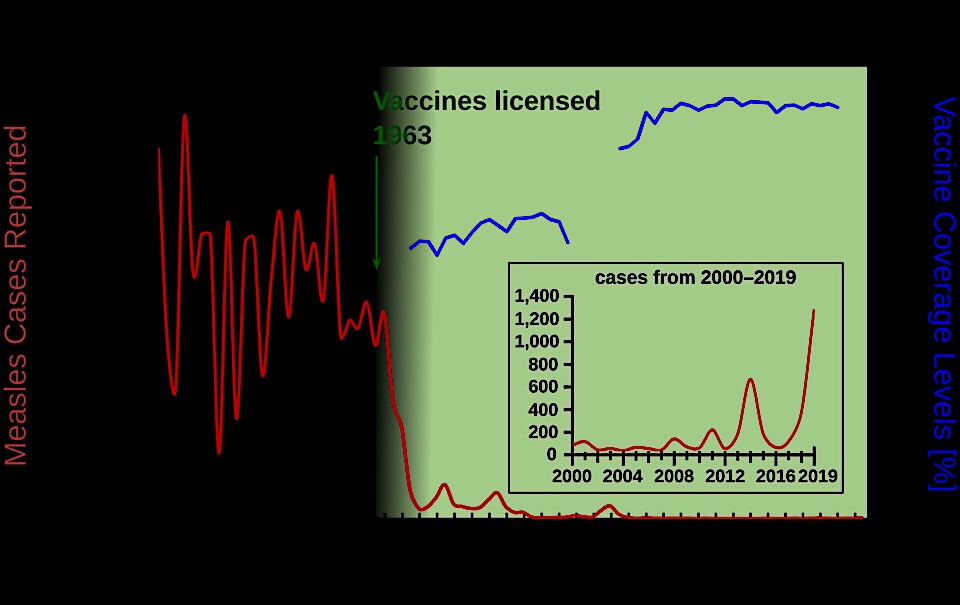
אין די שפּעטע 1950ער און פֿריִע 1960ער יאָרן, זײַנען צװײ מאָל אַזױ פֿיל קינדער געשטאָרבן פֿון מאָזלען װי פֿון פּאָליאָ. די ערשטע פּראָבע פֿון אַ מאָזלען־װאַקצין האָט מען אַדורכגעפֿירט אין 1960. אַז מע קוקט אױף דער דאָזיקער טאַבעלע, אונטן, זעט מען אַז די צאָל פֿאַלן זײַנען היפּש אַראָפּגעפֿאַלן בײַם אַדאָפּטירן דעם װאַקצין. (מע קען אױך פֿאַרגלײַכן מיט בריטאַניע, װוּ דעם װאַקצין האָט מען אײַנגעפֿירט מיט אַ 20 יאָר שפּעטער, און די צאָל פֿאַלן איז געבליבן מער װײניקער אַ הױכע ביז דעמאָלט, אין פֿאַרגלײַך מיט די פֿש״אַ.)

הײַנט זעט מען װידער מאָזלען: נישט נאָר די בולטסטע סימנים דערפֿון — דעם אױסשיט װאָס הײבט זיך אָן אױפֿן קאָפּ און גײט װײַטער אַראָפּ, ביז די פֿיס, אָדער די בלױלעכע פּינטעלעך אױף דער אינעװײניקסטער הױט פֿון מױל — נאָר אױך די סכּנות װאָס זײַנען גאַנץ רעאַל כאָטש קומען פֿאָר װײניקער, מוח־אינפֿעקציעס און טױט. אין 2023 זײַנען געװען 58 פֿאַלן מאָזלען אין די פֿאַראײניקטע שטאַטן; אין 2024 — 285; אין 2025 — 2,289, און אין 2026, ביזן 27סטן אױגוסט — 2,903 פֿאַלן.
אין 2025 זײַנען דרײַ קינדער אין אַמעריקע געשטאָרבן פֿון מאָזלען, און ביז איצט אין 2026 זײַנען צוויי קינדער געשטאָרבן, כאָטש די טראָמפּ־אַדמיניסטראַציע, בײַנאַנד מיט דער דירעקטאָרין פֿון פֿעדעראַלן סי־די־סי, עריקאַ שוואַרץ, האָבן אָפּגעמעקט יענעם ציפֿער פֿון פֿעדעראַלן װעבזײַטל.
די סיבות פֿאַר װאָס מע װאָלט געװאָלט באַהאַלטן יענעם ציפֿער דעקן זיך מיט די סיבות פֿאַרן נעגאַטיװן צוגאַנג צו װאַקצינען װאָס הערשט אין דער איצטיקער רעגירונג. װאָס אַן אמת, כאָטש מע האָט ליב צו באַשולדיקן דעם פּרעזידענט אין אַנטי־װאַקציניזם, איז אַזאַ צוגאַנג אױך אַ סך מער פֿאַרשפּרײט אין אַנדערע לענדער. אױך אין קאַנאַדע שטײַגט די צאָל פֿאַלן מאָזלען און דעם אַנטי־װאַקציניזם שטיצט מען מער אין דער עפֿנטלעכקײט. הײסט עס אַז טראָמפּ, און דער נעגאַטיװער צוגאַנג פֿונעם געזונט־סעקרעטאַר ראָבערט קענעדי לגבי װאַקצינען, זײַנען נאָר סימפּטאָמען פֿון אַ ברײטערער גלאָבאַלער טענדענץ.
בכלל װילן אַ סך הײַנטיקע רעגירונג־פֿירער איבער דער װעלט אײַנצױמען די מאַכט און דעם גרײך פֿון דער מלוכה. זײער טענה גײט אין דעם, אַז די מלוכה מישט זיך כּלומרשט צו פֿיל אַרײַן אינעם לעבן פֿון מענטשן. דאָס איז געקניפּט און געבונדן מיט אַן אַזוי־גערופֿענעם פּאָפּוליזם. אַזעלכע אָנפֿירערס װילן שטיצן „דאָס פֿאָלק“ קעגן „דער עליטע.“
צום באַדױערן רעכנט „די עליטע“ אַרײַן מענטשן װאָס זײַנען יאָ מומחים אין געװיסע געביטן װאָס דאַרפֿן יאָ אַ ספּעציאַליזירטן צוגאַנג. און „דאָס פֿאָלק“ װאָס די דאָזיקע אָנפֿירערס שטיצן איז אָפֿט מאָל נאָר דער טײל פֿאָלק װאָס שטיצט יענע פֿירערס. (מע זעט נישט קײן איניציאַטיװן פֿון די דאָזיקע אַנטי־װאַקצין־רעגירונגען צו שטיצן אַנדערע אַספּעקטן פֿון עפֿנטלעכן געזונט. פֿאַרקערט, די קאַמפּאַניע לטובֿת געזינטערע שפּײַזן פֿון קענעדי איז מערסטנס אַן אופֿן צו באַשלדיקן יחידים אין זײערע דיִעטעטישע טעותן.)
די דאָזיקע אידעאָלאָגיִעס העלפֿן דערקלערן פֿאַר װאָס „פּאָפּוליסטישע“ אָנפֿירערס אין אַ צאָל לענדער טרעטן אַרױס קעגן דאָקטױרים, קעגן פֿאָלקסגעזונט, קעגן װאַקצינען, נאָר פֿון דער אַנדערער זײַט, ניצן זיי יאָ די מאַכט פֿון דער מלוכה זיך אַלײן צו באַרײַכערן און באַשיצן.
די דאָזיקע טענדענצן שפּיגלען זיך אױך אָפּ אין די מײנונגען נישט בלויז פֿון די פֿירערס, נאָר אױך פֿון סתּם מענטשן פֿון אַ גאַנץ יאָר. יעדע װאָך זע איך אַ סך פּאַציענטן אין מײַנע קליניקן אין באַלטימאָר װאָס זײַנען סקעפּטיש לגבי װאַקצינען אָדער זײַנען אַקטיװ דערקעגן.
פֿאַר װאָס װיל מען זיך נישט װאַקצינירן? װעגן דעם האָט מען אַדורכגעפֿירט אַ צאָל שטודיעס, נאָר אױף אײן פֿוס איז װיכטיק צו דערקענען אַז דאָס נישט װאַקצינירן זיך מײנט נישט אַז מע װיל נישט. דאָס לעבן איז קאָמפּליצירט, אַ סך פֿאָדערונגען קאָנקורירן איינע מיט דער צווייטער, און אױב מע דאַרף פֿאָרן צום דאָקטער, אין אַ געװיסער שעה, און צאָלן אַפֿילו בלױז אַ פּאָר דאָלער, קען דאָס אױך זײַן אַ מניעה. (שטעל זיך פֿאָר אױב מע האָט קלײנע קינדער אױך, אָדער עס פֿעלט אַ טראַנספּאָרט־מיטל, אָדער די ריכטיקע שפּראַך.) מיט אײן װאָרט, מענטשן טוען וואָס ס׳איז זיי גרינגער.
אָבער עס זײַנען אױך דאָ מענטשן װאָס זײַנען נישט זיכער אַזױ צי אַזױ װעגן װאַקצינען, זײ פֿילן זיך אין אַ קאָנפֿליקט. מע האָט נישט קײן צוטרױ צו דער רעגירונג, מע האָט מורא פֿאַר די בײַ־עפֿעקטן (װאָס עקזיסטירן יאָ), מע האָט זיך אינאָפֿרמירט מיט פֿאַלשע ידיעות.
אַ בײַשפּיל װאָס קער אינטערעסירן די פֿאָרווערטס־לײענערס איז אַנשי שלומנו, די חסידישע קהילות אַרום דער װעלט, װוּ װאַקצין־סקעפּטיציזם איז אױך אַן ענין. כאָטש מע זאַמלט נישט קײן דאַטן אין די אַמעריקאַנער צענזוסן באַזירט אױף רעליגיע, קען מען זען, למשל, פֿון די מאַפּעס בײַם ניו־יאָרקער געזונט־דעפּאַרטמענט, אַז אין די געגנטן װיליאַמסבורג און באָראָ־פּאַרק, למשל, איז דער פּראָצענט װאַקצינירטקײט װײניקער.

די סיבות פֿאַר װאָס טײל חסידים זײַנען נישט איבערצײַגט צו װאַקצינען זײערע קינדער זײַנען ענלעך אױף סיבות פֿון אַנדערע אַזעלכע איבער דער װעלט: אַ שטײַגנדיקן אומצוטרױ צו דער רעגירונג אין אַ תּקופֿה פֿון עקאָנאָמישער און געזעלשאַפֿטלעכער אומזיכערקײט.
װען עס רעדט זיך וועגן געזונט־באַשלוסן, פֿאָלגט מען אָפֿט מאָל נישט די עצה פֿונעם דאָקטער, נאָר גיכער וואָס עס זאָגט אַ קרובֿ אָדער אַ גוטער־פֿרײַנד. אױב עס מאַכט זיך אַ שװעריקײט אָדער אַן אומבאַקװעמלעכקײט אַרום װאַקצינען, קען געמאָלט זײַן, אַז מע װעט נאָכמאַכן די מענטשן װאָס מע קען פּערזענלעך און מיט װעלכע מע פֿאַרברענגט אַ סך צײַט.
מעדיצינישער עטיקערס הײבן אַרױס די װיכטיקײט פֿון „פֿרײַען אױסקלײַב“ װעגן געזונט־באַשלוסן, נאָר אַ סך פֿירעכצן װאָס זײַנען אָנגענומען אין אונדזערע געזעלשאַפֿטן און קהילות זײַנען נישט גוט דורכגעטראַכט — אַרײַנגערעכנט פֿירעכצן װאָס שטיצן דעם עפֿנטלעכן געזונט. דאָס טראָגן שיץ־פּאַסן, למשל, אָדער דאָס פֿאָרן פּאַמעלעכער ווי די מאַקסימאַלע גיכקײט, אָדער דאָס נישט רײכערן אין עפֿנטלעכע ערטער, דאָס פֿאַרזיכערן געזונטע שפּײַזן און װאַסער־קאַנאַליזאַציע — דאָס אַלץ זײַנען דערגרײכונגען פֿון פֿאָלקס־געזונט װאָס זײַנען באַזירט אױפֿן מבֿינות פֿון רעגירונג־עקספּערטן, נישט יחידישע באַשלוסן װאָס מע דאַרף װידער נעמען יעדן טאָג פֿון דאָס נײַ.
ווען מע לעבט אין אַ געזעלשאַפֿט דאַרף מען, פֿאַרשטייט זיך, אָננעמען געװיסע אַחריותן לטובֿת דעם כּלל. װען איך װאָלט געדאַרפֿט איבערצײַגן אַלע מײַנע פּאַציענטן אײנציקװײַז װעגן װאַקצינען װאָלט געװען אוממעגלעך צו דערגרײכן די באַשיצונג װאָס מע דאַרף פֿאַר דער גאַנצער באַפֿעלקערונג. לאָמיר האָפֿן אַז דעם עפֿנטלעכן געזונט, באַזירט אױף װיסנשאַפֿטלעכע פֿאַקטן, װעט אונדזער געזעלשאַפֿטלעך װײַטער שטיצן.
The post The measles outbreak and the skepticism about vaccines appeared first on The Forward.
Uncategorized
Poll shows two-thirds of U.S. Jewish voters will favor Democrats in November
(JTA) — Two-thirds of Jewish voters plan to vote for Democrats in the coming midterms, according to a poll published Wednesday, in a sign that roiling tensions in the party over Israel have barely budged its status as the political home favored by a substantial majority of Jews.
The poll by the Jewish Voters Research Center, which is led by prominent Jewish Democrats, showed that 67 percent of respondents planned to vote for Democratic congressional candidates in November, and that 26 percent said they would vote for Republicans.
Itreflected other polling since the Oct. 7, 2023 deadly Hamas attacks on Israel, showing increased concern about antisemitism and about Israel.
Asked to rank their top two issues going into the voting booth, respondents made antisemitism third, after affordability and the future of democracy. Israel ranked fifth.
Much of the recent Jewish community anxiety about antisemitism and Israel has been directed at Democrats, who have elevated a number of strident Israel critics in primaries this season, including a number who refuse to recognize Israel’s right to exist as a Jewish state. Additionally, a number of candidates have faced Jewish community criticism for appearing with social media influencers accused of peddling antisemitic tropes.
Still, the high ranking of concerns about democracy are huge unfavorables for President Donald Trump – and his vice president, JD Vance – who at times has been hostile to Israel and who has maintained close relationships with figures who have drawn accusations of antisemitism – suggests that Republicans are stumbling in seizing the moment of Jewish disaffection with Democrats.
Asked to rate candidates on an unfavorability scale, Trump scored 75 out of 100; Vance scored 82.
Israeli Prime Minister Benjamin Netanyahu, who has been fiercely criticized by Democrats for his conduct of the war in Gaza, scored 67 on the unfavorability scale.
Since the 1930s, Jews have voted consistently in two-thirds majorities for Democrats, with peaks in the 2000 election, when some polling showed close to 80 percent of Jewish voters favored a ticket that had the Jewish senator, Joe Lieberman, as running mate to Al Gore.
There was some movement toward Republicans in 2012, when moderate Mitt Romney was the GOP presidential nominee facing President Barack Obama, but Trump’s election in 2016 reversed those gains.
The survey was conducted by GBAO Strategies, a polling firm that works with liberal groups and with Democrats. For this poll, it reached 800 Jewish voters via text from Aug. 26-Sept. 1 and has a margin of error of 3.5 percentage points.
This article originally appeared on JTA.org.
The post Poll shows two-thirds of U.S. Jewish voters will favor Democrats in November appeared first on The Forward.
