


Uncategorized
The Dangerous Legacy of the 1840 ‘Damascus Affair’ Blood Libel (PART TWO)

Smoke rises from a building after strikes at Syria’s defense ministry in Damascus, Syria, July 16, 2025. Photo: REUTERS/Khalil Ashawi
Part One of this article appeared here.
Worldwide Reaction and Coordinated Jewish Response
Western Jews in Europe and America were incensed at what was happening in Damascus. Europeans and American Jews lobbied their governments to intercede on behalf of the Jews in Damascus. In what was then an entirely novel approach, 15,000 Jews in six American cities gathered and protested on behalf of their fellow Jews in Syria.
In response to the advocacy, government leaders condemned the libel and attempted to intervene on behalf of the accused Jews. Among them were Queen Victoria, Lord Henry Palmerston, US Secretary of State John Forsyth, and, as previously mentioned, Klemens von Metternich of Austria.
Among the Jews who were advocating on behalf of the Damascus Jews, Sir Moses Montefiore stood out.
He, along with French lawyer and future French Justice Minister Adolphe Cremieux, Louis Loewe, and Solomon Munk, traveled as a delegation to Egypt to appeal to Muhammad Ali. They requested that the investigation be transferred to Egyptian or European judges to consider the case. Their request was denied, but as a result, Muhammad Ali decided instead to have the Jews released without acquitting them. The liberation order was issued on August 28, 1840. The prisoners who had survived the investigation were freed.
Seeing that the charges would not be dropped and the libel would continue, Montefiore and Cremieux chose to turn to Sultan Abdul Mejid of the Ottoman Empire, since he was the actual leader over the region, albeit largely powerless. They asked the Sultan to issue a decree proclaiming blood libels as false and prohibiting prosecuting Jews based on such accusations.
The Sultan acquiesced and issued his ruling on November 6, 1840. In a noteworthy act, he condemned the blood libel, stating clearly that it was utterly false and that “Muslim theologians had examined Jewish religious books and found that the Jews are strongly prohibited not only from using human blood but even from consuming that of animals. It therefore follows that the charges made against them, and their religion, are nothing but pure calumny.”
Nevertheless, for years to come, and on antisemitic websites until today, the Catholics of Damascus would continue to tell the story of the friar murdered by Jews for his blood, and that the Jews had only been let free due to the influence of powerful Jews from other countries.
What was France Thinking?
In the aftermath of the Damascus Affair, numerous questions arose. How could France, a country that gave civil equality to the Jews in 1791 and gave its Jewish population the most legal rights, openly support the patently false blood libel accusation and even allow torture to be used to extort confessions?
Most historians conclude that the answer was national self-interest. France’s leaders saw it as beneficial to maintain their foothold in Syria, and felt that supporting the accusers against the Jews would work for them. By the same token, countries hostile to France seized the opportunity to denounce France for its actions, as they sought to increase their control in the Middle East and diminish French influence there. So, Metternich, not known to be a friend of the Jews, denounced the blood libel charges, as did the leaders of Great Britain.
The Damascus Blood Libel, which might otherwise have passed unnoticed in Europe, garnered international attention because of the rivalry of Europe’s great powers in the Middle East.
The Jewish Reaction
The Damascus Affair has been described as a turning point in modern Jewish history, particularly for French Jews, who were among the most vocal supporters that traditional Jewish nationalism was a thing of the past. They were patriotic citizens for whom religion was a private matter, if it was relevant at all.
Yet, when they were exposed to the antisemitism that France displayed in the Damascus Affair, French Jews were completely shaken up. In fact, all of world Jewry was shocked that the blood libel accusation — a throwback to the antisemitism of the Dark Ages — was initially accepted as fact by almost the entire press in Europe. How could it be that educated citizens and modern leaders could believe and support this baseless and ridiculous accusation? No reassuring answer was forthcoming.
In an act that would reverberate for the next two centuries, in 1846, a two-volume book was published in Paris, written by Achille Laurent (a pseudonym), Relation historique des affaires de Syrie depuis 1840 jusqu’en 1842. It claimed to document the complete protocols of the investigation in Damascus, yet completely omitted any mention of the extensive use of torture and only focused on the Jews as murderers, and that the blood libel was a proven fact.
These protocols were published in German, Italian, Arabic, and Russian in the years and decades to come. This book allowed antisemites to “prove” that the murder accusation had been proven and documented, but that the Jews were released despite their guilt.
In fact, Russian coverage of the Damascus Affair in the media is seen as one of the causes that led to the pogroms of the 1890s. Unfortunately, these protocols continue to be published and publicized, particularly in the Arab-language media.
One of the end results of the Damascus Affair was its awakening of Jewish awareness for the need to cooperate to address Jewish needs and respond to charges and attacks towards Jews around the world. In the following decades, for the first time in modern history, multiple such organizations would form to address these concerns.
One Nation
The subsequent blood libel that made international news was that of Menachem Mendel Beilis in Russia in 1911. The lawyer who headed the defense team, the legendary Oscar Gruzenberg, was sure that the prosecution’s attack would take quotes out of context from the Talmud and use them to accuse the Jews. He had Rabbi Mazeh, Chief Rabbi of Moscow, head a rabbinic advisory team for the defense and prepare answers to the inevitable questions. As Gruzenberg had predicted, at the trial the prosecution quoted the Talmudic statement in Tractate Yevamos 61a, “You (the Jewish people) are called “Adam” (Man), and the other nations are not called “Adam” (Man).”
The prosecutors demanded, “How could the Jews claim only they are called man, and the other nations are not called man?! It must mean that they view non-Jews as subhuman!”
The defense had an answer prepared, provided by Rabbi Meir Shapiro, who was already renowned as a brilliant and eloquent leader of Polish Jewry. He explained that the quote reflects an essential characteristic of the Jews and was not intended an insult to the other nations.
Rabbi Shapiro explained that the Talmud (Shavous 39) teaches that “Kol Yisrael areivim zeh lazeh,” meaning all Jews are responsible for one another. He elaborated that in the court, the fate of a single Jew — Mendel Beilis — was being decided, yet the judgment touched Jewish people all over the world.
Rabbi Shapiro directed the defense team to ask the judge, “If an Italian citizen was arrested in Poland or a Frenchman in Germany, would all of Italy or all of France be praying on his behalf and advocating for his acquittal? Would Italians or Frenchmen all over the world be constantly worried about him and awaiting news of his release? Of course not. Yet, when one Jew in Russia is falsely accused of murder, the entire Jewish nation stands with him, because we are truly one. The Talmud says Jews are called “Adam,” because “Adam” shows the unity of the Jewish nation. We are one, a single unit, just as Adam was one man. The word “Adam” in Hebrew has no plural, and that is why it represents the Jewish people, who are one, and this pronoun is not used to identify other nations, as the Talmud stated.”
This answer was understood, even by the accusers. This message continues to serve as a beacon of light for the connection Jews share with one another. In good times and bad, the Jewish People are one.
Rabbi Menachem Levine is the CEO of JDBY-YTT, the largest Jewish school in the Midwest. He served as Rabbi of Congregation Am Echad in San Jose, CA from 2007 – 2020. He is a popular speaker and has written for numerous publications. Rabbi Levine’s personal website is https://thinktorah.org. A version of this article was first published at: https://aish.com/the-damascus-affair/
Uncategorized
For Orthodox women, or those who find men in yoga studios ‘gross,’ a refuge in Brooklyn
It’s Friday morning in Hasidic Crown Heights, just two blocks away from the Chabad-Lubavitch World Headquarters, and we are doing cat-cows. In cat pose, I hunch my back and pull my chin to my chest, letting gravity pull my ponytail to the ground. In cow, I pull my shoulders back, look up, and scan the room. For some, this class at Vessel Studios is a final meditative moment before a hectic day of shopping, cooking, and otherwise preparing for Shabbat. But as I look around, it’s impossible to tell which of my fellow cows is Orthodox and which is not. Save for the headscarves that some of the Hasidic women are wearing, heathens and believers alike are dressed in more or less matching uniforms of leggings and sports bras.
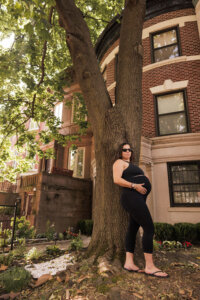
Ordinarily, this class would be taught by the owner of the studio, Riki Rosenthal, but she is extremely pregnant and has thus joined as a participant rather than a teacher. A Crown Heights native, Rosenthal grew up Hasidic and took her first yoga class when she was 19, an age where wearing leggings at the Crunch Gym in Prospect Heights without a skirt on top still felt like a rebellious act. Now, she identifies as a “non-frum Lubavitcher” — a phrase that captures the dual reality that she no longer conforms to an Orthodox lifestyle, but still identifies strongly with the culture in which she grew up.

“Chabad supersedes being religious in a way; it’s a culture that I will always connect to,” she said. Aside from a stint in Manhattan in her 20s, she has never lived anywhere other than Crown Heights. By founding a yoga studio that caters to women only, she has created a space where students, regardless of their religious beliefs or lack thereof, can exercise without the influence of men, whether for tznius, for the sisterly environment, or simply because, like Rosenthal, they believe “yoga studios with men are gross.”
In September 2020, 12 years after she took off her skirt to work out at Crunch, at a time when many studios were still closed because of COVID, Rosenthal started teaching yoga in her apartment. Two years later, she opened Vessel in the basement of a townhouse on Eastern Parkway. Signing a lease for her own studio was a big move, she said, but “there’s this part of being Chabad that makes you feel invincible.”
The studio has a soothing, sage green aesthetic, small lamps placed around the room provide soft lighting, and instructors often burn incense. There’s even a drawer with extra tichels — headscarves — in case anyone forgot theirs (though recently it had been emptied in anticipation of heavy rain and possible flooding, and hadn’t been restocked when I visited).
Rosenthal sometimes hears from would-be yoginis wanting to know if yoga is “kosher.” She feels unqualified to answer that question, especially since she “doesn’t totally subscribe to kosher.” Still, what she teaches is an Americanized brand of yoga that goes light on the Sanskrit, so that students don’t feel like they’re committing the sin of worshipping a false idol. “None of my teachers really talk about any of the yogic deities,” she said. “I try to keep it very neutral because I don’t really want to piss anyone off.”

Still, here on Eastern Parkway, as our Friday morning class comes to a gentle close, our instructor, Rachel Sherman, ends it with a “namaste” along with a “Shabbat shalom.”
For Sherman, who grew up Reform in Dallas, teaching yoga at Vessel has challenged the stereotype of Hasidic women — at least, Lubavitcher women — as quiet and demure. “A lot of my students speak, like, five languages. Most of them have careers,” she said. She admires what she views as their extreme confidence: “Total beginners will come to yoga and go straight to the front row,” she said. “No one’s afraid to tell me if they hate the incense, or if they need the temperature of the room different, and as someone who leans a little more people-pleasy, I appreciate a straight shooter.” She said she’s also impressed by how quickly women start doing yoga again after giving birth.
Maia Levy, a member of the Crown Heights Lubavitch community, was a near-total beginner when she started coming to Vessel. She said she wasn’t intimidated, though; she understood quickly that Vessel was the kind of place where “everyone is at their own pace” and “if you need to be in child’s pose for, like, 20 minutes, that’s fine.”
Earlier this year, Levy gave birth to her first child. She attended prenatal yoga at Vessel while pregnant, and returned to class a mere six weeks after giving birth. Sure, she might spend a little more time in child’s pose than before, but in a women’s-only yoga studio in a community that puts a heavy emphasis on motherhood, no one bats an eye. “I was, like, itching to get back,” she said.
The post For Orthodox women, or those who find men in yoga studios ‘gross,’ a refuge in Brooklyn appeared first on The Forward.
Uncategorized
The measles outbreak and the skepticism about vaccines
אַ פּאַציִענט מײַנער אין מײַן קליניק האָט מיר געװיזן אַ בילד פֿון אַ פּלימעניק מיט אַ מאָדנעם אױסשיט. „קען דאָס זײַן מאָזלען?“ האָט ער געפֿרעגט, אומבאַרויִקט. מיט פֿינף יאָר צוריק, מיט צװײ יאָר צוריק, װאָלט איך אים געזאָגט אַז דאָס איז שיִער נישט אוממעגלעך. הײַנט אָבער לײענט מען קאָשמאַרן װעגן קינדער װאָס שטאַרבן אַװעק פֿון אַ קראַנקײט װאָס האָט פֿריִער געהאַלטן בײַם עלימינירט װערן. װאָס איז געשען?
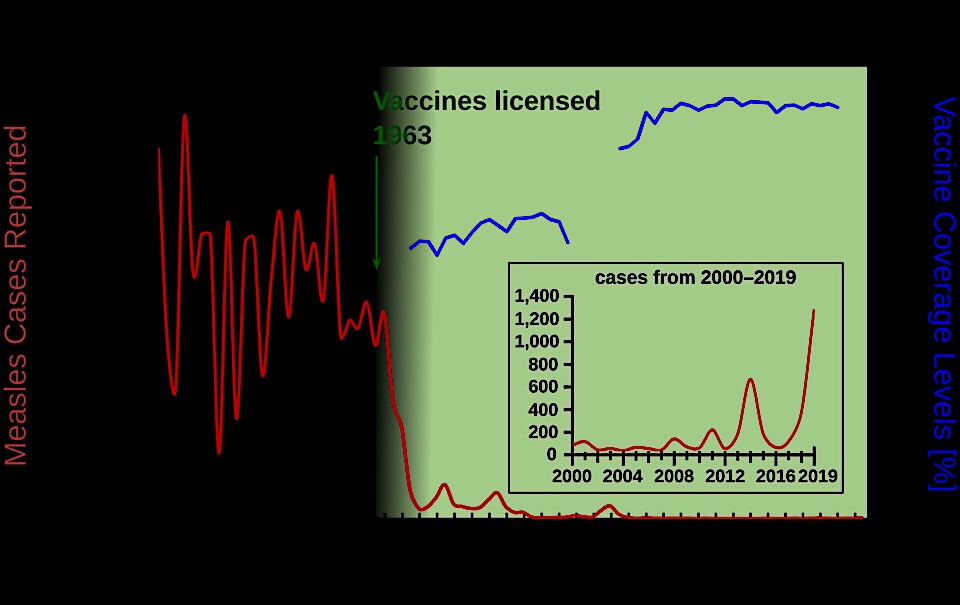
אין די שפּעטע 1950ער און פֿריִע 1960ער יאָרן, זײַנען צװײ מאָל אַזױ פֿיל קינדער געשטאָרבן פֿון מאָזלען װי פֿון פּאָליאָ. די ערשטע פּראָבע פֿון אַ מאָזלען־װאַקצין האָט מען אַדורכגעפֿירט אין 1960. אַז מע קוקט אױף דער דאָזיקער טאַבעלע, אונטן, זעט מען אַז די צאָל פֿאַלן זײַנען היפּש אַראָפּגעפֿאַלן בײַם אַדאָפּטירן דעם װאַקצין. (מע קען אױך פֿאַרגלײַכן מיט בריטאַניע, װוּ דעם װאַקצין האָט מען אײַנגעפֿירט מיט אַ 20 יאָר שפּעטער, און די צאָל פֿאַלן איז געבליבן מער װײניקער אַ הױכע ביז דעמאָלט, אין פֿאַרגלײַך מיט די פֿש״אַ.)

הײַנט זעט מען װידער מאָזלען: נישט נאָר די בולטסטע סימנים דערפֿון — דעם אױסשיט װאָס הײבט זיך אָן אױפֿן קאָפּ און גײט װײַטער אַראָפּ, ביז די פֿיס, אָדער די בלױלעכע פּינטעלעך אױף דער אינעװײניקסטער הױט פֿון מױל — נאָר אױך די סכּנות װאָס זײַנען גאַנץ רעאַל כאָטש קומען פֿאָר װײניקער, מוח־אינפֿעקציעס און טױט. אין 2023 זײַנען געװען 58 פֿאַלן מאָזלען אין די פֿאַראײניקטע שטאַטן; אין 2024 — 285; אין 2025 — 2,289, און אין 2026, ביזן 27סטן אױגוסט — 2,903 פֿאַלן.
אין 2025 זײַנען דרײַ קינדער אין אַמעריקע געשטאָרבן פֿון מאָזלען, און ביז איצט אין 2026 זײַנען צוויי קינדער געשטאָרבן, כאָטש די טראָמפּ־אַדמיניסטראַציע, בײַנאַנד מיט דער דירעקטאָרין פֿון פֿעדעראַלן סי־די־סי, עריקאַ שוואַרץ, האָבן אָפּגעמעקט יענעם ציפֿער פֿון פֿעדעראַלן װעבזײַטל.
די סיבות פֿאַר װאָס מע װאָלט געװאָלט באַהאַלטן יענעם ציפֿער דעקן זיך מיט די סיבות פֿאַרן נעגאַטיװן צוגאַנג צו װאַקצינען װאָס הערשט אין דער איצטיקער רעגירונג. װאָס אַן אמת, כאָטש מע האָט ליב צו באַשולדיקן דעם פּרעזידענט אין אַנטי־װאַקציניזם, איז אַזאַ צוגאַנג אױך אַ סך מער פֿאַרשפּרײט אין אַנדערע לענדער. אױך אין קאַנאַדע שטײַגט די צאָל פֿאַלן מאָזלען און דעם אַנטי־װאַקציניזם שטיצט מען מער אין דער עפֿנטלעכקײט. הײסט עס אַז טראָמפּ, און דער נעגאַטיװער צוגאַנג פֿונעם געזונט־סעקרעטאַר ראָבערט קענעדי לגבי װאַקצינען, זײַנען נאָר סימפּטאָמען פֿון אַ ברײטערער גלאָבאַלער טענדענץ.
בכלל װילן אַ סך הײַנטיקע רעגירונג־פֿירער איבער דער װעלט אײַנצױמען די מאַכט און דעם גרײך פֿון דער מלוכה. זײער טענה גײט אין דעם, אַז די מלוכה מישט זיך כּלומרשט צו פֿיל אַרײַן אינעם לעבן פֿון מענטשן. דאָס איז געקניפּט און געבונדן מיט אַן אַזוי־גערופֿענעם פּאָפּוליזם. אַזעלכע אָנפֿירערס װילן שטיצן „דאָס פֿאָלק“ קעגן „דער עליטע.“
צום באַדױערן רעכנט „די עליטע“ אַרײַן מענטשן װאָס זײַנען יאָ מומחים אין געװיסע געביטן װאָס דאַרפֿן יאָ אַ ספּעציאַליזירטן צוגאַנג. און „דאָס פֿאָלק“ װאָס די דאָזיקע אָנפֿירערס שטיצן איז אָפֿט מאָל נאָר דער טײל פֿאָלק װאָס שטיצט יענע פֿירערס. (מע זעט נישט קײן איניציאַטיװן פֿון די דאָזיקע אַנטי־װאַקצין־רעגירונגען צו שטיצן אַנדערע אַספּעקטן פֿון עפֿנטלעכן געזונט. פֿאַרקערט, די קאַמפּאַניע לטובֿת געזינטערע שפּײַזן פֿון קענעדי איז מערסטנס אַן אופֿן צו באַשלדיקן יחידים אין זײערע דיִעטעטישע טעותן.)
די דאָזיקע אידעאָלאָגיִעס העלפֿן דערקלערן פֿאַר װאָס „פּאָפּוליסטישע“ אָנפֿירערס אין אַ צאָל לענדער טרעטן אַרױס קעגן דאָקטױרים, קעגן פֿאָלקסגעזונט, קעגן װאַקצינען, נאָר פֿון דער אַנדערער זײַט, ניצן זיי יאָ די מאַכט פֿון דער מלוכה זיך אַלײן צו באַרײַכערן און באַשיצן.
די דאָזיקע טענדענצן שפּיגלען זיך אױך אָפּ אין די מײנונגען נישט בלויז פֿון די פֿירערס, נאָר אױך פֿון סתּם מענטשן פֿון אַ גאַנץ יאָר. יעדע װאָך זע איך אַ סך פּאַציענטן אין מײַנע קליניקן אין באַלטימאָר װאָס זײַנען סקעפּטיש לגבי װאַקצינען אָדער זײַנען אַקטיװ דערקעגן.
פֿאַר װאָס װיל מען זיך נישט װאַקצינירן? װעגן דעם האָט מען אַדורכגעפֿירט אַ צאָל שטודיעס, נאָר אױף אײן פֿוס איז װיכטיק צו דערקענען אַז דאָס נישט װאַקצינירן זיך מײנט נישט אַז מע װיל נישט. דאָס לעבן איז קאָמפּליצירט, אַ סך פֿאָדערונגען קאָנקורירן איינע מיט דער צווייטער, און אױב מע דאַרף פֿאָרן צום דאָקטער, אין אַ געװיסער שעה, און צאָלן אַפֿילו בלױז אַ פּאָר דאָלער, קען דאָס אױך זײַן אַ מניעה. (שטעל זיך פֿאָר אױב מע האָט קלײנע קינדער אױך, אָדער עס פֿעלט אַ טראַנספּאָרט־מיטל, אָדער די ריכטיקע שפּראַך.) מיט אײן װאָרט, מענטשן טוען וואָס ס׳איז זיי גרינגער.
אָבער עס זײַנען אױך דאָ מענטשן װאָס זײַנען נישט זיכער אַזױ צי אַזױ װעגן װאַקצינען, זײ פֿילן זיך אין אַ קאָנפֿליקט. מע האָט נישט קײן צוטרױ צו דער רעגירונג, מע האָט מורא פֿאַר די בײַ־עפֿעקטן (װאָס עקזיסטירן יאָ), מע האָט זיך אינאָפֿרמירט מיט פֿאַלשע ידיעות.
אַ בײַשפּיל װאָס קער אינטערעסירן די פֿאָרווערטס־לײענערס איז אַנשי שלומנו, די חסידישע קהילות אַרום דער װעלט, װוּ װאַקצין־סקעפּטיציזם איז אױך אַן ענין. כאָטש מע זאַמלט נישט קײן דאַטן אין די אַמעריקאַנער צענזוסן באַזירט אױף רעליגיע, קען מען זען, למשל, פֿון די מאַפּעס בײַם ניו־יאָרקער געזונט־דעפּאַרטמענט, אַז אין די געגנטן װיליאַמסבורג און באָראָ־פּאַרק, למשל, איז דער פּראָצענט װאַקצינירטקײט װײניקער.

די סיבות פֿאַר װאָס טײל חסידים זײַנען נישט איבערצײַגט צו װאַקצינען זײערע קינדער זײַנען ענלעך אױף סיבות פֿון אַנדערע אַזעלכע איבער דער װעלט: אַ שטײַגנדיקן אומצוטרױ צו דער רעגירונג אין אַ תּקופֿה פֿון עקאָנאָמישער און געזעלשאַפֿטלעכער אומזיכערקײט.
װען עס רעדט זיך וועגן געזונט־באַשלוסן, פֿאָלגט מען אָפֿט מאָל נישט די עצה פֿונעם דאָקטער, נאָר גיכער וואָס עס זאָגט אַ קרובֿ אָדער אַ גוטער־פֿרײַנד. אױב עס מאַכט זיך אַ שװעריקײט אָדער אַן אומבאַקװעמלעכקײט אַרום װאַקצינען, קען געמאָלט זײַן, אַז מע װעט נאָכמאַכן די מענטשן װאָס מע קען פּערזענלעך און מיט װעלכע מע פֿאַרברענגט אַ סך צײַט.
מעדיצינישער עטיקערס הײבן אַרױס די װיכטיקײט פֿון „פֿרײַען אױסקלײַב“ װעגן געזונט־באַשלוסן, נאָר אַ סך פֿירעכצן װאָס זײַנען אָנגענומען אין אונדזערע געזעלשאַפֿטן און קהילות זײַנען נישט גוט דורכגעטראַכט — אַרײַנגערעכנט פֿירעכצן װאָס שטיצן דעם עפֿנטלעכן געזונט. דאָס טראָגן שיץ־פּאַסן, למשל, אָדער דאָס פֿאָרן פּאַמעלעכער ווי די מאַקסימאַלע גיכקײט, אָדער דאָס נישט רײכערן אין עפֿנטלעכע ערטער, דאָס פֿאַרזיכערן געזונטע שפּײַזן און װאַסער־קאַנאַליזאַציע — דאָס אַלץ זײַנען דערגרײכונגען פֿון פֿאָלקס־געזונט װאָס זײַנען באַזירט אױפֿן מבֿינות פֿון רעגירונג־עקספּערטן, נישט יחידישע באַשלוסן װאָס מע דאַרף װידער נעמען יעדן טאָג פֿון דאָס נײַ.
ווען מע לעבט אין אַ געזעלשאַפֿט דאַרף מען, פֿאַרשטייט זיך, אָננעמען געװיסע אַחריותן לטובֿת דעם כּלל. װען איך װאָלט געדאַרפֿט איבערצײַגן אַלע מײַנע פּאַציענטן אײנציקװײַז װעגן װאַקצינען װאָלט געװען אוממעגלעך צו דערגרײכן די באַשיצונג װאָס מע דאַרף פֿאַר דער גאַנצער באַפֿעלקערונג. לאָמיר האָפֿן אַז דעם עפֿנטלעכן געזונט, באַזירט אױף װיסנשאַפֿטלעכע פֿאַקטן, װעט אונדזער געזעלשאַפֿטלעך װײַטער שטיצן.
The post The measles outbreak and the skepticism about vaccines appeared first on The Forward.
Uncategorized
Poll shows two-thirds of U.S. Jewish voters will favor Democrats in November
(JTA) — Two-thirds of Jewish voters plan to vote for Democrats in the coming midterms, according to a poll published Wednesday, in a sign that roiling tensions in the party over Israel have barely budged its status as the political home favored by a substantial majority of Jews.
The poll by the Jewish Voters Research Center, which is led by prominent Jewish Democrats, showed that 67 percent of respondents planned to vote for Democratic congressional candidates in November, and that 26 percent said they would vote for Republicans.
Itreflected other polling since the Oct. 7, 2023 deadly Hamas attacks on Israel, showing increased concern about antisemitism and about Israel.
Asked to rank their top two issues going into the voting booth, respondents made antisemitism third, after affordability and the future of democracy. Israel ranked fifth.
Much of the recent Jewish community anxiety about antisemitism and Israel has been directed at Democrats, who have elevated a number of strident Israel critics in primaries this season, including a number who refuse to recognize Israel’s right to exist as a Jewish state. Additionally, a number of candidates have faced Jewish community criticism for appearing with social media influencers accused of peddling antisemitic tropes.
Still, the high ranking of concerns about democracy are huge unfavorables for President Donald Trump – and his vice president, JD Vance – who at times has been hostile to Israel and who has maintained close relationships with figures who have drawn accusations of antisemitism – suggests that Republicans are stumbling in seizing the moment of Jewish disaffection with Democrats.
Asked to rate candidates on an unfavorability scale, Trump scored 75 out of 100; Vance scored 82.
Israeli Prime Minister Benjamin Netanyahu, who has been fiercely criticized by Democrats for his conduct of the war in Gaza, scored 67 on the unfavorability scale.
Since the 1930s, Jews have voted consistently in two-thirds majorities for Democrats, with peaks in the 2000 election, when some polling showed close to 80 percent of Jewish voters favored a ticket that had the Jewish senator, Joe Lieberman, as running mate to Al Gore.
There was some movement toward Republicans in 2012, when moderate Mitt Romney was the GOP presidential nominee facing President Barack Obama, but Trump’s election in 2016 reversed those gains.
The survey was conducted by GBAO Strategies, a polling firm that works with liberal groups and with Democrats. For this poll, it reached 800 Jewish voters via text from Aug. 26-Sept. 1 and has a margin of error of 3.5 percentage points.
This article originally appeared on JTA.org.
The post Poll shows two-thirds of U.S. Jewish voters will favor Democrats in November appeared first on The Forward.
