


Uncategorized
Remembering Abe Foxman, the longtime ADL leader known as the ‘Jewish pope,’ who always answered my calls
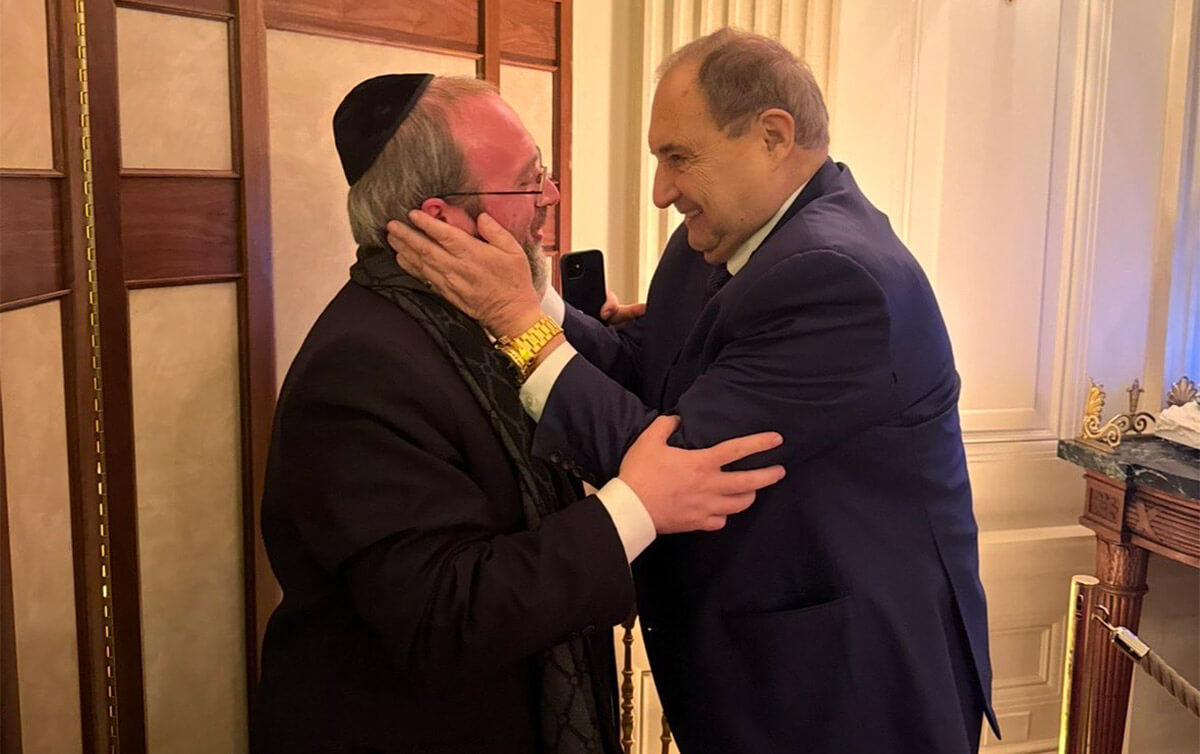
Friday before sundown, I realized that Abe Foxman had not sent me his weekly “Shabbat Shalom” message. For the past seven years, since we began texting regularly about Jewish and political issues, the message would arrive each Friday like clockwork — often accompanied by screenshots of Shabbat memes. My response never changed: “Good Shabbos, tzaddik,” using the Hebrew word for a righteous person that Foxman himself often used.
A few minutes after sundown, I texted him anyway: “Good Shabbos, tzaddik.” Then I turned off my phone. The message showed as “read” Saturday night. But there was no response.
I’m sure I wasn’t the only one waiting for Foxman’s Shabbat greetings. The silence said everything. On Sunday, the Anti-Defamation League announced that its former longtime chief had died at age 86.
I first started texting with Foxman after he stepped down in 2015 as national director of the ADL, concluding a remarkable 50-year run with the organization, including nearly three decades at its helm. By then, he had become one of the most recognizable Jewish communal leaders in America. He was nicknamed the “Jewish Pope.” Former President Barack Obama, a frequent target of Foxman’s criticism over Israel policy, said upon Foxman’s retirement: “Abe is irreplaceable.”
For me, a rookie journalist covering national politics through a Jewish lens, Foxman became an invaluable source. He was in the room with presidents, prime ministers and world leaders during some of the Jewish community’s most consequential moments. Yet he was always available. He answered calls quickly. He texted back. He spoke candidly. He could be sharp, direct and deeply critical when he thought leaders were making mistakes. But he was also compassionate, warm and surprisingly personal.
Every conversation began the same way: asking about me. My kids. How I was holding up. Only then would we get to politics. The conversation would often veer from Yiddish to English and back again.
Our last conversation was on April 15, after a record 40 Senate Democrats voted to block $295 million for the transfer of bulldozers to Israel and 36 of them also supported a measure to block the sale of 1,000-pound bombs to the Jewish state. “A broch,” Foxman replied, using the Yiddish word for disaster. “A sad time for American politics.”
That worldview shaped much of his public commentary in recent years. In interviews with the Forward and other publications, Foxman weighed in on rising antisemitism, campus protests, Democratic divisions over Israel, President Donald Trump’s rhetoric, and the Biden-Netanyahu relationship.
Foxman could be combative and unapologetic. Critics on the left viewed him as too hawkish on Israel, while critics on the right sometimes accused him of being too willing to criticize the Israeli government or American conservatives. But nobody doubted his commitment to the Jewish people and to Israel.
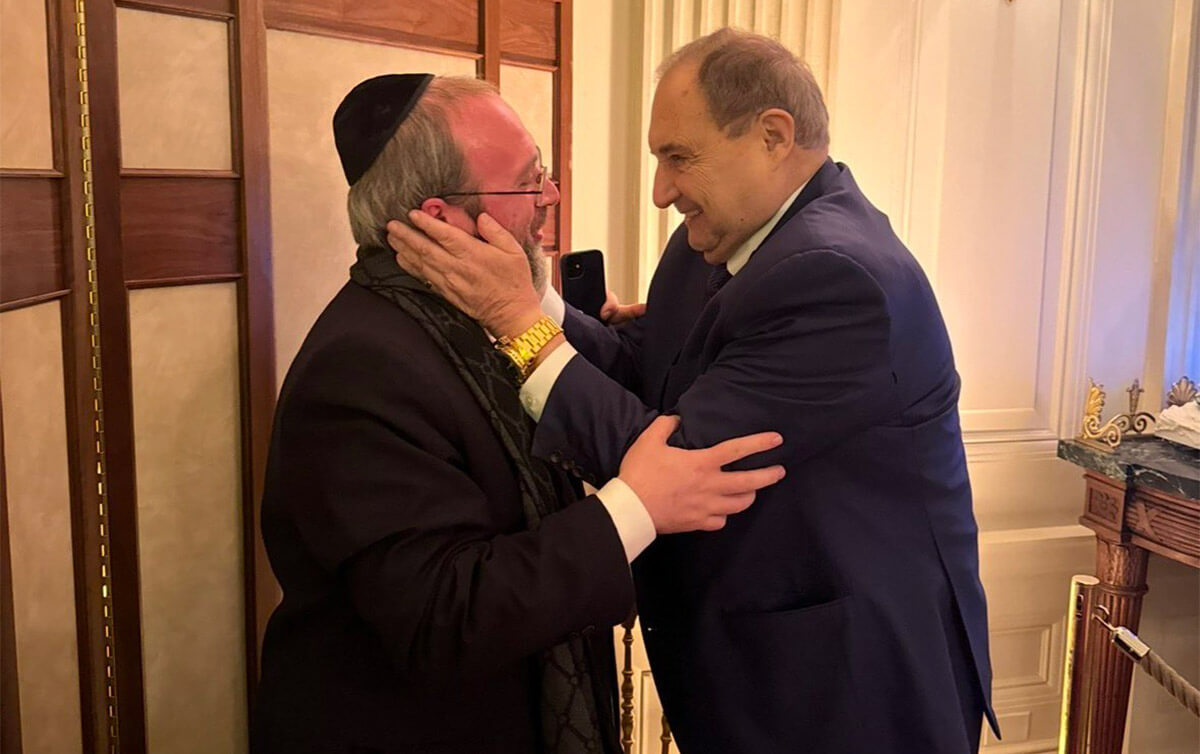
Foxman’s own life story
Born in Baranavichy in 1940, in what is now Belarus, Foxman survived the Holocaust as an infant after being hidden by his Polish Catholic nanny, who baptized him to hide his Jewish identity, while his parents were confined to a ghetto. After the war, he was reunited with his parents, first living in a displaced persons camp in Austria before immigrating to the United States.
Those early experiences shaped the course of his career and ultimately made him one of the most influential Jewish communal leaders of the modern era.
In 1965, after getting degrees from City College of New York and New York University School of Law, Foxman joined the Anti-Defamation League as a legal assistant. Over the next five decades, Foxman rose through the ranks of the organization before being named its national director in 1987, a position he held until 2015.
Under his leadership, the ADL became one of the world’s most prominent voices combating antisemitism and hate.
In 1987, President Ronald Reagan appointed Foxman to serve on the council of the United States Holocaust Memorial Museum. He was reappointed by Presidents George H. W. Bush, Bill Clinton and Joe Biden. He was also vice chairman of the Museum of Jewish Heritage in New York City.
Foxman was often willing to challenge leaders he believed were wrong on Israel, including Democratic presidents he otherwise respected. He was sharply critical of Obama’s approach toward Israel early in his presidency and became one of the leading Jewish voices opposing the administration’s 2009 demand for a freeze on Israeli settlements.
In remarks at Foxman’s farewell dinner in 2015, Susan Rice, former U.S. ambassador to the U.N. and national security advisor under Obama, told the audience: “The thing I most value about Abe is his candor and integrity. He holds everyone to the same high standards, and I can always count on him to tell it to me straight, even when he knows I won’t necessarily like what he has to say.” In 2020, Foxman publicly advocated for Biden to choose Rice as his vice-presidential running mate.
“America and the Jewish people have lost a moral voice, a passionate advocate for the Jewish people and the state of Israel, and a remarkable leader,” Foxman’s successor, ADL CEO Jonathan Greenblatt, said in a statement announcing Foxman’s death.
Foxman’s political commentary
Even after retiring from the ADL, Foxman remained a leading voice in Jewish public life, especially after the election of Trump in 2016.
Foxman told me in an interview at the time that the Jewish community should engage with Trump and hold him accountable when needed. He advised Trump to be cautious about making good on his promise to move the U.S. embassy from Tel Aviv to Jerusalem. He became more critical of Trump after the president said that there were “very fine people on both sides” in response to a 2017 neo-Nazi rally in Charlottesville, Virginia.
In 2020, Foxman broke his tradition of not endorsing political candidates to back Biden. He argued that Trump was a “demagogue” whose reelection would be a “body blow for our country and our community.”
Once Biden took office, Foxman started to express doubts about the president’s handling of the U.S. relationship with Israeli Prime Minister Benjamin Netanyahu. He said it “sends the wrong message to our friends and enemies” that Israel is being held to a higher standard than other countries in the region. Foxman was also a harsh critic of the Netanyahu government’s judicial overhaul, warning that the right-wing cabinet ministers could hamper support for Israel among American Jews.
In 2024, he warned that Biden’s increasingly harsh rhetoric over Israel’s military campaign in Gaza would repel Jewish voters. “I believe that this administration, because of its political season, is taking American Jews for granted or has written us off,” said Foxman. ”If they’re worried that the Arabs in Michigan will vote with their feet, they need to worry that Jews can also vote with their feet.”
Most recently, Foxman was critical of national Democrats opposing the military operations against the Iranian regime in March for a lack of congressional authority. “Sadly, it is purely political games,” Foxman told me, noting that previous Democratic administrations conducted military operations without explicit congressional authorization. “Ninety-nine percent of Democrats are on record saying Iran is a terrorist state and cannot have nuclear weapons. So why this game?” he asked.
Now, as Jews mark Jewish American Heritage Month, that voice is silent. But for me, and for the many people still waiting for one more “Shabbat Shalom” message from Foxman, he will not soon be forgotten.
Foxman is survived by his wife Golda, his daughters Michelle and Ariel and four grandchildren.
JTA contributed to this article.
The post Remembering Abe Foxman, the longtime ADL leader known as the ‘Jewish pope,’ who always answered my calls appeared first on The Forward.
Uncategorized
Orthodox Jewish man stabbed in midtown Manhattan
(New York Jewish Week) — An Orthodox Jewish man is in stable condition after being stabbed on Wednesday evening in the Diamond District of midtown Manhattan. Police are investigating the attack as a possible hate crime.
Police told the Jewish Telegraphic Agency that the NYPD’s Hate Crimes Task Force is investigating the incident as a possible antisemitic attack, and Manhattan Shomrim — the Jewish community watch group — has asked people to share footage as police search for the suspect. No arrests have been made.
The victim was identified by police as a 26-year-old man, and Orthodox Jewish outlet COLLive identified him as a resident of Crown Heights, the neighborhood that is home to the Chabad-Lubavitch Hasidic movement’s headquarters.
He was taken to Bellevue Hospital in stable condition. Police said they were called at about 5:50 p.m. on Wednesday after the man was stabbed in the back with “an unknown sharp object” on 47th Street near Fifth Avenue. ABC7 reported that the victim told investigators he believed he was stabbed with a needle or syringe.
According to the Chabad website, which published an interview with the victim, he is a recently ordained Hasidic rabbi named Joseph, who commutes to Midtown each day to wrap tefillin with Jewish merchants. The attacker, Joseph told the website, was a woman who seemed to be following him prior to the stabbing.
The attack comes as Jewish New Yorkers have been targeted in more than half of the hate crimes committed in New York City this year, despite making up about 12% of the city’s population.
In July, an assailant stabbed two men on the Upper West Side, including one who was leaving a synagogue, while yelling “Allahu akbar,” and was charged with committing hate crimes.
Louis Keene contributed reporting.
The post Orthodox Jewish man stabbed in midtown Manhattan appeared first on The Forward.
Uncategorized
VIDEO: A Hasid gives us a tour of Morocco in Yiddish
דער ירושלימער יוטוב־שטערן וועלוול קירשנבוים האָט לעצטנס אַרויסגעשטעלט אַ ווידעאָ אויף ייִדיש פֿון אַ פּרעכטיקן וויזיט, וואָס ער האָט געמאַכט אין מאַראָקאָ. עס באַגלייט אים זײַן חבֿר אַבֿרהם פּרץ.
אינעם ווידעאָ זעט מען ווי קירשנבוים דאַוונט שחרית מיט די אָרטיקע ייִדן און באַזוכט אַ גוט אָפּגעהיטענעם בית־עולם, וווּ עס ליגן באַערדיקט גרויסע צדיקים ווי למשל הרבֿ חיים בן עתר (1696–1743), באַקאַנט ווי דער „אור החיים“. „מענטשן מיינען, אַז נאָר אין אייראָפּע זענען דאָ קבֿרים פֿון צדיקים!“ זאָגט קירשנבוים.
מיר זעען אַ גרויסע, שיינע שיל מיט אַ פֿײַנער אַרכיטעקטור אין קאַזאַבלאַנקאַ; דעם גרויסן אַראַבישן שוק, וווּ קירשנבוים קויפֿט זיך אײַן מלבושים פּונקט ווי די מאַראָקאַנער גייען אָנגעטאָן. ער באַוווּנדערט אויך די שיינע טיי־גלעזער און טשײַניקן, וואָס מע פֿאַרקויפֿט דאָרט, און באַקענט זיך מיט אַ ייִדישן סוחר וואָס האַנדלט מיט זילבער און גאָלד, פּונקט אַזוי ווי זײַן טאַטע און זיידע האָבן געטאָן פֿאַר דור־דורות.
The post VIDEO: A Hasid gives us a tour of Morocco in Yiddish appeared first on The Forward.
Uncategorized
Conservative and Christian movies are coming for Hollywood
A star-studded new movie set in a Soviet prison is coming out in November. James Franco and Rob Lowe anchor the cast of Confession, playing a brutal prison guard and an imprisoned dissident professor, and a disheveled Nick Nolte appears as a fellow prisoner.
These actors were once huge gets, and their names could convey legitimacy to a project. Nolte and Franco both have received Academy Award nominations. Lowe was a member of the Brat Pack, and was a regular on The West Wing.
Confession, written by Ben Shapiro and produced by the rightwing tabloid-esque news site The Daily Wire, is not the expected fare for actors with that kind of name recognition; Shapiro’s screenwriting aspirations have been the target of ridicule for years.
Nevertheless, this isn’t the only Daily Wire production getting big names; Danny Trejo signed onto a pro-ICE movie about Minneapolis in the aftermath of the Renee Good shooting, and Jonathan Majors led Run, Fight, Hide: Infidels earlier this year.
Each one of these actors has been, in some way, canceled or in career doldrums so may have been more open to working with The Daily Wire. And some have claimed that they did not know who Shapiro was, or what his politics were; Trejo’s son, Gilbert, said his 82-year-old father did not endorse ICE and was misled about the movie before he signed his contract.
Movie studios have struggled through the pandemic and the streaming era, both of which have tanked box office receipts, leaving the field open for movies from offbeat production studios. In addition to The Daily Wire, there has been a whole ream of Christian movies attempting to shift the stereotype of bible movies — that they’re preachy, low-budget straight-to-TV affairs with cardboard acting — to something more prestigious, or at least profitable.
The Christian company Angel Studios has been placing screenings of the half philo-semitic, half-antisemitic Jesus TV series The Chosen in movie theaters across the country, produced the right-wing hit The Sound of Freedom and is pumping out faith-based movies like the animated King of Kings Christmas story and David, a kiddie movie about the biblical king. Recently, Pinnacle Peak Pictures, another faith-based production company, premiered Daniel and the Fiery Furnace, another bible movie that was notable enough to merit a review in The New York Times. (Though admittedly it wasn’t a particularly positive one.)
For decades, Hollywood, and the media industry at large, has been associated with liberalism, progressive politics and diversity. (This is part of why conservative conspiracy theorists often insist that Jews control the media.) Even when conservatives are in power, satirical movies have poked fun at the ruling class — Team America: World Police spoofed George W. Bush’s foreign policy, while M*A*S*H critiqued Richard Nixon. During the current Trump administration, we’ve seen One Battle After Another lambasting immigration policies and rising white nationalism, Eddington on misinformation and populism, and The Apprentice depicting Trump directly.
But a rising number of higher-budget, bigger releases from the right wing, whether The Daily Wire’s conservative political parables or the Christian fables, are bringing a new kind of messaging — about the importance of God and country, about gender roles, about about the centrality of Jesus to the U.S. — to the American movie-going public.
This is no accident. A group of powerful conservative Christians, many of whom worked on Project 2025, are proponents of the Seven Mountains Mandate, a blueprint for Christian nationalism that instructs Christians to gain influence and control over the “seven mountains” of society — which include media, entertainment and the arts. The Mandate is part of the New Apostolic Reformation, a decentralized evangelical movement embraced by millions of Americans.
Jeremy Boreing, the director of many Daily Wire movies — though he has since left the company — said on a podcast hosted by businessman Patrick Bet-David that “It had always been part of our strategy to move into making culture, not just criticizing culture” as a way of proving that “there is a future where conservatives aren’t losing. There’s a future where we have political power and cultural power.”
Cultural power, of course, requires more than just a lot of movies; they have to be well-done, or at least appear to be. Previous Daily Wire productions, as well as other right-wing, MAGA movie ventures, have been hacky. Lady Ballers, about an unsuccessful men’s basketball team pretending to be women so they can dominate the league, was an unsubtle, unfunny and ultimately unwatchable spoof of transgender athletes. And even plenty of higher-budget attempts, like Daniel and the Fiery Furnace, can still fall victim to wooden acting and writing.
But now, with the financial success of movies like The Sound of Freedom and biblical parables like The Chosen, bigger stars are being drawn to projects like the Daily Wire’s lineup of pro-ICE, anti-immigration and anti-LGBTQ movies. With those bigger stars may come new audiences who might not have watched a Christian movie or Daily Wire project otherwise. And where there is money and viewers, mainstream Hollywood will go, too, no matter how progressive people expect the industry to be. We’ve already gotten a biblical epic from Amazon Prime, with The House of David, and there are likely to be many more to come.
After all, it wasn’t so long ago, after all, that Cecil DeMille’s The Ten Commandments was the biggest movie in town.
The post Conservative and Christian movies are coming for Hollywood appeared first on The Forward.
