



Local News
Epic court battle shaping up next week between Etz Chayim Congregation and two former members who are now barred from setting foot in Etz Chayim

By BERNIE BELLAN This story was originally posted August 14, but with the date of the court battle soon approaching we thought it timely to repost it to the top of our website.
Here’s how it read when it was first posted: When we first posted this story Friday morning, August 14 – with a photo of Etz Chayim Synagogue, we received an email from Morissa Granove, COO of Etz Chayim Congregation:
“Hi Bernie.
“This request is not about the article itself but the safety of our shul. We have been advised not to post the address or photos of our Jewish organizations publicly for some time for security reasons. Can I please ask that you change the image posted online (and planned for print if needed) and that in this be kept in mind for the future?
“Thank you so much for your understanding,
“Morissa”
We replied:
“Gee Morissa – I’ll do that but maybe you better ask Google to remove any mention of any Winnipeg synagogue because all anyone has to do is do a Google search and they’ll come up with a complete list of Winnipeg synagogues and their addresses – also photos! Do you want me to contact Google for you? Can’t be too careful, can we?
Now, here’s the story as it was originally posted:
The date October 7 carries a huge amount of significance for Jews around the world: It was the date that members of Hamas and other terrorist groups launched a murderous attack on innocent Israelis (and members of other nationalities) that resulted in the deaths of more than 1200 people and the abduction of 251 others.
But it is also a date that may have a significance of a different sort come this October 7 when a Winnipeg courtroom will be the scene of a court case in what is shaping up to be a momentous legal battle between Congregation Etz Chayim and two former members of the congregation who have been barred from attending services – or even setting foot inside the building that houses Congregation Etz Chayim.
Before publishing this article I had sent copies to both sides in the dispute – and offered both sides the opportunity to correct any mistakes they might have found in what I had written. I did receive responses from both sides and have incorporated their suggested corrections into what follows.
The two individuals involved at the heart of this dispute are both former longstanding members of Etz Chayim – and before that, Rosh Pina Congregation: Dr. Emet Eviatar (previously known as Hadass), who had been the Torah reader at Etz Chayim for many years, and who had also led Sunday services; and her husband, well known scientist Dr. David Hoult (who played a leading role in the development of MRI technology and was also very active in the congregation). Drs. Eviatar and Hoult have filed suit against CEC over what they claim was the illegal termination of their membership.
In response, however, Congregation Etz Chayim asserts that it was not a question of membership when CEC exercised its right to refuse entry on the advice of the WPS and security experts who were consulted after a deeply concerning letter was received from one of the plaintiffs by the synagogue.
The filings in this particular case are in the hundreds of pages. I spent two recent afternoons at the Law Courts poring over the filings, and photographed pages of what I thought were some of the most relevant issues at hand so that I could quote accurately from those filings.
While the case may seem hugely complicated, given the number of pages of documents that have already been filed, it seems that it boils down to two essential issues: Did CEC violate its own bylaws (or its own constitution, as the case may be, because at the time of the events in question a bylaw which would have governed who might be excluded from belonging to the congregation had not yet been passed) by terminating the memberships of Dr. Emet Eviatar and Dr. David Hoult? The argument advanced by the plaintiffs is not that a congregation cannot decide who can belong to that congregation. Rather, it is an argument that CEC did not properly adhere to its own bylaws in the manner in which it has excluded the plaintiffs from attending – or even setting foot inside Etz Chayim.
But, a second issue in play – and one which is argued forcefully by CEC in one of its briefs is that the argument Emet Eviatar and David Hoult are advancing has no place in the courts in the first place. As is noted in one of the briefs filed on behalf of CEC: “The dispute is, at its core, about the internal governance of a religious congregation. It concerns who may participate in communal worship, who may participate in communal religious life, and how a synagogue governs itself in response to legitimate security concerns. If it is accepted that the dispute was about ideological differences, as alleged by the Applicants, then these are fundamentally religious questions. The court has no jurisdiction to adjudicate such matters, and ought not to intervene.”
How the parties arrived at this situation is a complicated – but very interesting story.
I, myself was first made aware that something unusual was going on between CEC and David Hoult when I received this email from Dr. Hoult on Friday afternoon May 30, 2025, at 12:42 pm:
“Hi Bernie,
“I have just had a pair of police officers at the door telling me that we are now banned from Etz Chayim and if we show up the police will be called, no reasons given. I suspect it was an accumulation of things, including a letter I sent.
“Shabbat shalom,
“David.”
Later that afternoon I received another email, this time from a member of CEC, who forwarded me an email that had been sent to congregation members by Morissa Granove, Chief Operating Officer of CEC. That email had a letter attached, which said, in part:
“On Tuesday, May 27th, we received deeply troubling correspondence from a member of our community. The nature of this communication raised serious concerns about the safety of our congregants and staff. After careful and deliberate consultation with our Board of Directors, Clergy, the Winnipeg Police Service, the Jewish Security Network, and the Secure Community Network (in partnership with the USCJ), and on their recommendations we have made the difficult but necessary decision to terminate the membership of this individual and all members of their household, effective immediately.
“These individuals are no longer permitted on the premises of Congregation Etz Chayim, nor may they participate in any of our synagogue’s programs or activities.”
The letter was signed by Morissa Granove, Chief Operating Officer of CEC, and Allan Cogan, President of CEC.
What the heck was going on? I wondered. So, I emailed Morissa Granove that same afternoon:
“Hi,
“I received an email from David Hoult telling me that he is now banned from the Etz Chayim. I assume Emet Eviatar is also banned too, judging by the way your email is worded.
“I don’t know David at all – other than having received a piece he wrote about Israel and Gaza that I published to my website. I can’t begin to imagine what he might have written, but in the interest of fair reporting and fuller disclosure, can you say anything more about what he wrote in his letter?
“-Bernie Bellan
“Publisher,
“jewishpostandnews.ca
“also Associate Editor,
“The Jewish Post Winnipeg”
But, Morissa Granove did not offer any more information as to what might have been contained in that “troubling correspondence” which was received by CEC.
It was only when I went down to the Law Courts on August 10 that I was actually able to see what was in that “troubling correspondence.”
But, before I get into what was in that particular communication, even more background to this strange case is necessary.
In an email I received from CEC COO Morissa Granove following my having sent her a draft of this article, she wrote: “Congregation Etz Chayim …has never taken action based on political views. Further, CEC argues that other members, congregants, and guests share Dr. Eviatar’s views and yet there has never been an issue with their behaviour and as such, Congregation Etz Chayim has never taken action against anyone, revoked a membership, or refused entry to anyone based on their political stance.” Dr. Eviatar, in her own words, notes that she had already provoked the displeasure of some members of CEC, including staff members, by certain of her behaviours while, according to Morissa Granove, “volunteering in a leadership role and officially representing Congregation Etz Chayim. CEC …is ‘a Zionist organization’.”
Yet, according to CEC, Dr. Eviatar’s family’s attendance at Etz Chayim was never in question – until a letter was received from Dr. Eviatar’s husband.
As is noted in a brief for the plaintiffs, the following is taken from an affidavit given by Emet Eviatar, which might suggest that her membership in CEC had been called into question long before May 2025:
“In July 2024, I co-founded Manitoba Friends of Standing Together, a chapter of the international support network created by Standing Together. Standing Together is a grassroots joint Jewish and Palestinian organization in Israel which was originally created in 2015 to fight for equal rights for Palestinian citizens of Israel. Since the October 7, 2023 attack by Hamas they have pivoted to protesting the war in Gaza.
“On October 6, 2024, I appeared as a guest on the local CBC Radio Weekend Morning Show, together with Mr. Ramsey Zeid, president of the Canadian Palestinian Association of Manitoba to discuss the importance of having local conversations between Jews and Palestinians…
“Later that week, I received a phone call from CEC Rabbi Kliel Rose and Cantor Tracy Kasner. They informed me that I would no longer be allowed to lead Sunday services. The rabbi also suggested that ‘for my own peace of mind’ I might want to consider finding another congregation (that aligns with my views.”)
“On November 4, 2024, I received an unsigned letter from CEC which was provided to me by the then executive director, Jonathan Buchwald…
“While the letter contains various false statements, and is clearly a reference to my having contact with Mr. Zeid and others in the local Palestinian community, the assertion that I was aligned with an ‘ideology which is mutually exclusive and contrary to the existence of the Jewish people and the state of Israel’ was extremely offensive and hurtful to my being an Israeli citizen, having family who live in Israel, and having served in the Israel Defence Forces.”
Later, on March 3, 2025, Emet Eviatar appeared a second time on the CBC morning weekend radio show, again with Mr. Zeid.
In an affidavit taken from Morissa Granove, Ms. Granove explained the CEC’s objection to Emet Eviatar’s publicly associating with certain individuals while officially representing Congregation Etz Chayim (noting that CEC’s objection bore no consequence to Dr.Eviatar’s or her the family’s membership.)
“This public alignment with parties opposed to Israel raised concern within CEC about potential risks surrounding the Synagogue, especially in times of heightened safety risks and awareness of antisemitic vitriol. These concerns were brought to the attention of Dr. Eviatar. She took no action to mitigate these concerns. As a result, she was removed from a volunteer leadership position she held with CEC. CEC took no action regarding either of the Applicants’ ability to attend the Synagogue as congregants.” In the email I received from Morissa Granove in response to a draft of this article, Ms. Granove added: “Still, her family’s membership was never in question.”
But, in May 2025 something happened that led the CEC to take drastic action against Emet Eviatar, David Hoult and the other members of their household. It should be explained that, according to an affidavit taken from Morissa Granove, who had stepped into the role of Chief Operations Officer of CEC in January 2025, in May 2025 CEC announced it would be adding new security measures, based on a “site security assessment from the Winnipeg Police Service. Officer Constable Justin Remillard (who) attended the Synagogue and provided guidance on improving security.
“Among other things, he advised:
“a) access to the Synagogue should be controlled;
“b) registration and entry lists should be used for programs and services at the Synagogue;”
On May 5, 2025 CEC held its Annual General Meeting. According to an affidavit taken from Ms. Granove, “During discussion relating to security protocols…David Hoult expressed opposition to security procedures such as locked doors at the Synagogue, registration requirements, and screening of visitors.”
The following is taken from an affidavit taken from Ms. Granove: “On May 22, 2025, CEC received a letter from Dr. Hoult. The most significant concern with the letter was that it stated:
‘If, G-d forbid, I wanted to attack the shul on Shabbat morning it would be trivial. A stolen motorbike, onto the lawn, Kalashnikov to shatter the windows, gun down the congregation, drive away, ditch the bike, gun, mask and clothes…” (Emphasis added)
The same affidavit states that, “In that correspondence, he again expressed opposition to security measures and described them as ‘hysteria,’ ‘paranoia,’ and ‘psychologically stupid.’ “
According to an affidavit taken from David Hoult, “My wife and I received no direct communication from CEC advising of the termination of our membership until a cheque with no accompanying letter was received in the mail on June 9, 2025.”
In an email received from Morissa Granove after I sent her a draft of this story she asked that this sentence be inserted: “Congregation Etz Chayim was interviewed extensively by the WPS before going to the home of Dr. Hoult for the service call and had all of the details which were required in order to qualify their actions.”
On September 16, 2025, Hadass (Emet) Eviatar and David Hoult filed an application in Court of King’s Bench to have the termination of their membership declared “null and void,” also seeking an “order to comply with bye-laws” (of the CEC).
In response, CEC asserts that it “has never terminated the Applicants’ membership. Rather the applicants were advised they were no longer permitted to attend the synagogue.” Morissa Granove asked that this be added: CEC “exercised its right to refuse entry on the advice of the WPS and security experts.’
Did it boil down to semantics? I wondered. CEC was saying that it hadn’t “terminated the Applicants’ membership,” yet it returned the cheque they had sent in to pay for renewal of their membership.
However, if it is the CEC’s position that, based on the plaintiffs’ claims as written, this matter is not one that should even be considered by the courts – as is noted at the beginning of this article, then arguments over whether CEC abided by its own bylaws would be moot.
Yet, if the courts might be willing to consider the issue whether CEC did not properly follow its own rules – as set out in its bylaws, then the Eviatar-Hoult case becomes more compelling.
For instance, the issue whether CEC “terminated” the memberships of Dr. Eviatar and Dr. Hoult might take on added importance.
As is noted in a brief for the plaintiffs, the letter sent out by Morissa Granove to members of CEC on May 30, 2025 states quite clearly that “We have made the difficult but necessary decision to terminate the memberships of this individual (Dr. Hoult) and all members of their household effective immediately.”
In this case the plaintiffs (Drs. Eviatar and Hoult) are arguing the nowhere within CEC’s governing constitution (which was adopted in 2014) were there “provisions for the termination of membership.” Therefore, their argument goes, “CEC had no authority to terminate their membership.”
Morissa Granove asked that this be added: “The defendant (CEC), however, argues that the CEC’s governing constitution says that “directors ‘may pass by-laws’ regulating, among other things, ‘the suspension and termination of membership by the corporation and by a member.’ The word ‘may’ is permissive.”
“Thus, CEC is arguing, therefore, that it had no obligation to actually pass a by-law governing the termination of a membership.”
As it was, the by-law was never voted upon, as, according to an affidavit given by Dr. Eviatar, CEC leadership “had not complied with the correct procedure, including giving proper notice.,
However, in her email to me Morissa Granove wrote that “the very same bylaw was passed at a Special General Meeting of the members when Congregation Etz Chayim and its lawyers provided clarity on the proposed changes, which was requested by the members at the conclusion of the AGM to clear up any issue or confusion.”
Further, the letter to CEC members that was sent on May 30, 2025, which said that “These individuals (i.e., Dr. Hoult and any members of his family) are no longer permitted on the premises of Congregation Etz Chayim, nor may they participate in any of our synagogue’s programs or activities” was signed only by the COO and President of CEC.
Whether or not CEC followed proper procedure in whatever happened to Dr. Hoult, Dr. Eviatar, and their other family members will be up to the courts to decide.
But, there is a larger issue at hand. Are there are any rules that might govern how a private organization such as a synagogue should govern itself? And, perhaps even more important, can the courts intervene at all in such a situation?
This case is shaping up to have some fascinating implications.







Local News
Gail Asper adds $10-million donation to ambitious $1.2 billion Hebrew University fundraising campaign
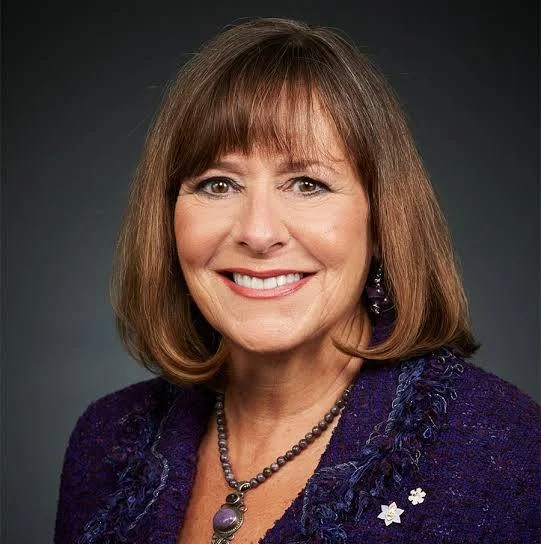
By MYRON LOVE Gail Asper, one of our community’s leading philanthropists, has recently returned from the Hebrew University of Jerusalem’s annual International Board of Governors meeting, during which she pledged $10 million to the university’s $1,2 billion international Powered By Purpose Campaign.
As reported in the Post last April, Asper has taken on the challenge of co-chairing the campaign (with patty Glaser from Los Angeles), which was kicked off at the recent board meeting. “It is important to lead by example,” she notes. “As my father (the late I.H. Asper) used to say, it is important to give what you can.”
Rami Kleinmann, President and CEO of Canadian Friends of the Hebrew University observed that “Gail’s gift is a testament to what is possible when personal conviction, a tradition of giving, and belief in a mission come together. We are deeply grateful for her leadership and for the Asper family’s remarkable partnership with Hebrew University.”
Professor Tamir Sheafer, president of the Hebrew University of Jerusalem, speaking on behalf of the entire Hebrew University community, thanked Gail “for her remarkable generosity and her leadership. Her gift, and her role as co-chair of our international campaign, will help us keep Hebrew University a global leader in research and education for many years to come.”
Asper’s personal connection with the Hebrew University goes back more than 50 years. She recalls going to Israel for the first time with her family in 1974, when she was 14. In her 20s, she and her brothers went to Jerusalem with their parents where Israel Asper would be attending HU annual Board of Governors meetings.
“I met the president of the university,” she recounts. “I got to see what the university was doing and got to know the people on the board. There were board members from all over the world, all accomplished and interesting people.. It was so glamourous.”
In 1989, her father – after more than 20 years on the board – told Gail that he was stepping down to spend more time building the still relatively new Canwest – and suggested that she should replace him as a board member. Not only did she join the board, but she also became one of the founding members of the newly formed Canadian Friends of Hebrew University Business and Professional Division, along with other now prominent community members such as Howard Morry and Murray Palay.
It wasn’t long after she joined the Hebrew U board that she moved on to the board executive,” she notes. “We would have meetings in Israel three or four times a year. Thank goodness now for Zoom. But I really enjoyed meeting with fellow board members, as well as university management and faculty.”
Among the Asper family initiatives at the University are: the Asper HUJI Innovate program – the University’s centre for innovation and entrepreneurship; theAsper prize in Innovation, which supports and celebrates promising Israeli start-ups; the Asper Center for Entrepreneurship and Innovation, the academic and community hub housed within the Hebrew University Business School (HUBS); and ongoing exchanges that bring Canada’s brightest students to Israel for a semester or complete degree.
Gail reports that her new donation is intended the help make up for the rapidly decreasing number of scholarships and grants from foundations outside of Israel that would normally be potentially available for Hebrew University students and researchers, but which have declined in number due to the increasing hostility in academia to anyone connected to Israel.
She is happy to report that the five-year Powered By Purpose Campaign has received a major boost from a $250 million gift from billionaire American hedge fund manager John Paulson. “This is the largest gift ever received by the Hebrew University,” she notes. “This is also the first time that the university has received a donation from Mr. Paulson. We are really excited about it.”
In that earlier interview with the Post, Asper reported that one focus of the new campaign will be Jewish philanthropists and foundations who had been supporting American and Canadian universities but who have been told that, since October 7, 2023, that their donations are no longer welcome. “Others have pulled their donations because of anti-Jewish activity on campuses,” she pointed out. “We will be suggesting that their donations will be better spent supporting Israel’s leading universities rather than antisemitic universities in Canada and the US.”
One area that struck her about this most recent visit to the university was the large number of Israeli Arab students and faculty. “You see the diversity on campus,” she observes. “Close to 20% of the student body and staff are Arab Israelis. Most students seemed to be comfortable on campus and happy to be there.
“It was wonderful to be in Israel,” she says, “and nice to see other Winnipeggers – such as (Federation CEO Jeff Lieberman, (CIJA representative) Gustavo Zentner, and (philanthropist) Larry Vickar also in Israel to attend other institution Board of Governors meetings at a time when direct flights to Israel are scarce and there are very few tourists.”
Local News
Palestinian-born Dor Shachar chose Judaism and life in Israel over Islam and darkness in Gaza
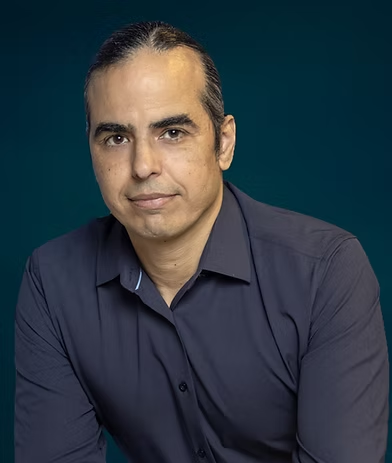
By MYRON LOVE Dor Shachar is a rare individual indeed. It seems almost miraculous – certainly “beshert” – that this individual, who was born into a Muslim family in Gaza and raised as a Muslim, chose to leave behind the hell and darkness that is Gaza and embrace the light of Judaism and Israel.
On Monday, November 2, the proud Jewish Israeli shared the story of his transformation with an audience of about 150. Invitations were specifically sent out to Christian communities in Winnipeg because extreme Islam also targets Christians, as well as moderate Muslims.. Earlier, he also spoke in a couple of schools.
Among the attendees were several members of the Manitoba Conservative Party caucus – including interim leader Konrad Narth. Invitations to attend Shachar’s presentation were also sent to the other provincial parties, but no one from the other parties showed up.
As Shachar doesn’t speak English, his remarks were translated by Jona Rapaport, who is from Montreal and who had family members kidnapped on October 7.
Shachar’s narrative falls into two distinct parts – and I have to admit that the first act was at times very difficult to listen to. What he described of his life growing up in Gaza was horrific. He recalled that the clothes his family wore, the food they ate, and their appliances were all from Israel, and that his father worked on construction projects in Israel for many years. His father and grandfather pretended to be on friendly term with the Israeli soldiers who patrolled Gaza at the that time – in the 1980s –and the family invited soldiers – these same soldiers who would give the kids treats – into their homes. His father and grandfather were hospitable and seemingly friendly. As soon as the guest would leave though, the young Shachar was told that he one day it would be his duty to kill the “sons of apes and pigs” – referring to the Israelis living in Jewish communities that had been established in Gaza.
Shachar reported that his neighbours were future terrorist leaders, including Hamas leader Yahya Sinwar. He witnessed the digging of the first terror tunnels more than 40 years ago. As well, he saw the evil of the various hateful groups who used torture and terror to rule Gaza – from Fatah to Hamas and their affiliated terror groups. He described public scenes of torture and murder that rivaled the worst excesses of the European Dark Ages a thousand years ago. He recalled how in elementary school, students were taught how to throw rocks at Israeli soldiers.
In a particularly horrifying segment, Shachar recalled what happened to him when still in primary school. Apparently, he didn’t show enough zeal about hating Jews and Christians. He was hauled into the principal’s office – where he was whipped. When his father learned about this, he spent hours beating and torturing his son – including hanging a noose from a tree – for “dishonouring” the family. Only an intervention by an aunt most likely saved his life – although his father then proceeded to beat the aunt. He was relegated to looking after the family flocks.
Another time, when he was 11, his father found out that he was skipping school, beat him, tied him to a tree, and doused him in cold water. Shachar was locked in the outhouse for the night and forced to sleep on the floor.
A few months later – when he turned 12 – his father started taking the youngster with him to Israel to work on construction projects. After a couple of months, he managed to run away.
Thus began the second chapter of his life – his new life in Israel.
While working as a security guard watching over a neighborhood of villas where prospective tenants would come to see the apartments, he was approached one day by a resident by the name of Nissim Ozen.
“Nissim took interest in me,” he recounted. “He brought me home with him, got me clothes and shoes and other gifts.”
He began to be invited to Ozem’s home for Shabbat suppers and other meals and was welcomed to have hot showers and watch television.
At Pesach, he was invited for the family’s seder.
“I come for the seder and I see the longest table I have ever seen,” he recounted. “It stretched from the living room through the kitchen out to the garden. On the table, there was bread, only the matzah, some eggs, a shank bone and some greens. I asked my host if he was on a diet.“I didn’t yet know much Hebrew, but I learned about the Exodus.”
That was when Shachar decided that he wanted to become a Jew. Some of his new friends arranged for a local Bet Din. He was subsequently referred to another Bet Din in Tel Aviv, then a third in Kiryat Shemona in the north, and finally, to Jerusalem where he told that, because he was still a minor, he would need his father’s permission.
That was never going to happen.
Nonetheless, Shachar was able to go to school and become proficient in Hebrew – while he eagerly counted down the days until he turned 18 and could become Jewish.
But, there was another hitch in store.
It was now the mid-1990s and the first Palestinian suicide bombers began killing Israelis on buses, in restaurants and wherever they gathered. Shachar spoke of the notorious Yahya Ayyash – the bomb maker, Shachar recalled, who provided his dubious services to all the Palestinian factions. (The IDF caught up with him and killed him with a bomb in early 1996.)
Shachar pointed out that – contrary to what diplomats, politicians and leftists in the West believe – there is no difference between Hamas, the PLO/Palestinian Authority – given the facts and what they say in Arabic from “pay for slay” to other hate they espouse against anyone not aligned with them – even moderates. There is no “partner for peace” among the Palestinian factions, he says, – and no difference between those factions and Al Qaeda, ISIS, and the Taliban.
Unfortunately for Shachar, due to the increased level of attacks by Palestinian terrorists, Israel tightened restrictions on Palestinian workers who were allowed to work in Israel. All Palestinians workers had to have permits. Because he didn’t have one, he was sent back to Gaza, where he was tortured daily by Hamas operatives for six months.
Eventually, he was released to fend for himself in Gaza. Determined to return to Israel and become Jewish, he was – after a few months – able to slip across the border to Egypt and make his way via Turkey back to Israel
Back in Israel, he attended a yeshiva and resumed his efforts to become a Jew. It took him seven years to realize his dream. The climactic moment for him came, he recounted, one Purim when he joined a rabbi in Jerusalem for a “farbrengen.”
“I had never had alcohol before,” he said. “Alcohol is forbidden to Muslims. I quickly became woozy. Nonetheless, the rabbi kept pouring. Even while drunk, I kept insisting that I wanted to be a Jew. That was enough to convince the rabbi to support my efforts.”
Today, Dor Shachar is a proud Jewish Israeli – happily married – who speaks for Israel on the world stage and warns people, especially in the West, about the hateful dogma and true extremist intentions of Islamist ideology. Statistics indicate that 15-25% of Muslims in the West are radicalized. With the influx of people from Gaza and other areas that number may be grossly underestimated.
In Gaza and Judea and Samaria the numbers are higher.
The ultimate goal for Islamic extremists, Shachar warned, is world domination.
Local News
Harvey Richmond: an unusual career path with many twists and turns
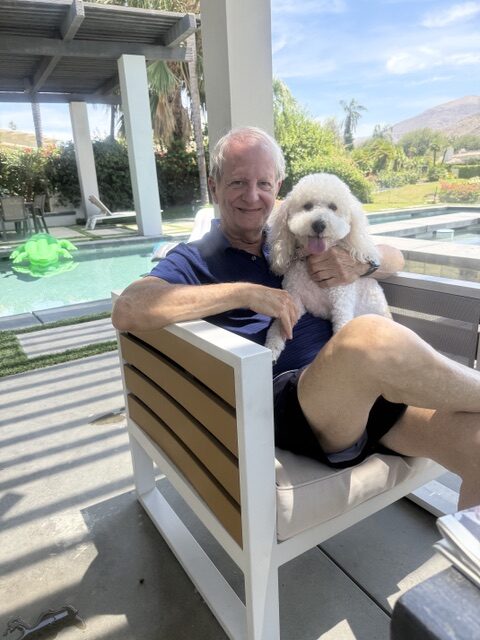
By GERRY POSNER When you talk about someone whose life has had more than a few different moves, Harvey Richmond’s life would be right up there as one of the most circuitous. You could rightfully say that his life has been far from predictable.
Harvey, the middle son of three boys (Barrie – older, and Kenny – younger), whose parents were David and Nettie (Brown) Richmond, is now north of 85 years. He lives in the Los Angeles area and has been there for well over 40 years.
Harvey grew up in the south end of Winnipeg and, for most of those years, his home was a corner house on Waverley and Grosvenor. The family was connected to the Shaarey Zedek synagogue even before it was located on Wellington Crescent.
Harvey went to Queenston School and later graduated from high school at Kelvin. Like many of his contemporaries, he was off to the University of Manitoba, where he obtained a Bachelor of Science degree with a major in Mathematics, then a Bachelor of Science in Pharmacy. He became a licensed pharmacist in 1961.
The plan was for Harvey to join his father, also a pharmacist, in his father’s drugstore. But, at that time, Dave Richmond was getting ready to retire, so Harvey went to work for Bunny Ringer at his drugstore on Pembina Highway, a place likely known to many readers. After two years there, Harvey realized pharmacy was not for him, so suddenly, the first detour in Harvey’s life hit him smack in the face.
Harvey was planning to visit his older brother Barrie, who was doing an internship in Chicago at that time. Flying there was not feasible for Harvey – or anyone else at that particular time, as Northwest Airlines was on strike, so he hopped into his car to drive to Chicago. On his way through Grand Forks, however, Harvey saw a sign advertising the University of North Dakota’s medical school. Why not? he asked himself. He applied, was accepted and thus, in 1966, he was a student in Medicine at the University of North Dakota. At that time, UND had only a two-year programme, with training in the basic sciences. The school had arrangements with other medical schools throughout the USA to accept students who had completed that school’s two year programme. So, after his two years at UND were completed, off Harvey went to the University of Minnesota. By 1971, he was a graduate in Medicine from that university.
During his time in Minneapolis, Harvey also married a woman from that city and, within three years, he was the father of two girls. In 1971, Harvey did his internship at Los Angeles County-USC Medical Centre in Los Angeles. He elected to enter Obstetrics and Gynaecology as his final rotation – which turned out to be a sign of things to come several years down the road. However, in 1971, Harvey was not totally sure that being an OB/Gyn was what he wanted to be.
Harvey signed up for a residency in Minnesota in Neurology, so the family returned to Minneapolis for Harvey to begin a new residency there. After a year, Harvey concluded that Neurology was also not for him, but he chose to remain in the Twin Cities and join a family practice with four other physicians, called Apple Valley Medical Center. While there, he developed a renewed interest in Obstetrics. This time, Harvey decided that Obstetrics and Gynaecology was really what he wanted to pursue, but he also recognized that he needed more comprehensive training to do that.
Thus, at the age of 40, he made yet another major career decision and began a residency in Obstetrics and Gynaecology. He did his residency at the University of Minnesota and St. Paul Ramsay Medical Center. If you can picture it, here was 40-year-old Harvey Richmond, married, with two little kids, now starting over in what was to become his chosen specialty. But – after he finished his residency, his marriage also ended.
Next, Harvey was offered a position in the Los Angeles area. In 1984, off to Long Beach, California he went. About a year later, he had an opportunity to take over a practice in Beverley Hills. He also received privileges to practice OB/Gyn at Cedars- Sinai Medical Centre in Los Angeles. Harvey officially joined the medical staff there in 1986 and has remained on staff ever since.
As Harvey puts it, “Over the course of my career, I have delivered an extraordinary number of babies.” One of his staff tried to calculate the total number and the estimate was in the range of 10,000 to 12,000 babies. Harvey reflects that a large part of his career has been devoted to caring for pregnant women, delivering their babies and practicing OB/Gyn. Additionally, throughout his time at Cedars, he has been on the teaching staff there, instructing OB/ Gyn residents in surgical procedures.
In 1988 Harvey married again. That marriage also ended – in 2003. However, the one constant throughout Harvey’s life the past 40 years has been his career at Cedars-Sinai Medical Center.
Harvey uncategorically states that he was extraordinarily fortunate to find something he loved to do, even though it took him quite a few years and several career changes to get to this point. His journey was difficult at times and he admits it has come at a personal cost in terms of his family.
Yet, his career has given him great satisfaction and filled him with a sense of purpose. As Harvey puts it, “I was privileged to be present during some of the most important moments in people’s lives.”
In the end, Harvey Richmond reflects on his medical practice this way: “ Looking back, I realize that my path was anything but direct. I began as a pharmacist, entered medicine almost by chance, tried Neurology, practiced Family Medicine, and eventually returned to residency so that I could become an Obstetrician and Gynaecologist. Each decision brought me closer to the work I was meant to do.”
To this day, Harvey is grateful to those who supported him along the way. Even at the age of 85, Harvey Richmond is still practicing medicine, although now on a part time basis, working only in the office. He remains active and still gets enjoyment out of his work. The path Harvey took had many twists and turns but, ultimately, many rewards along the way.
