


Uncategorized
Northwestern University Agrees to $75 Million Settlement With Trump Admin Over Antisemitism Complaints

Northwestern University in Evanston, Illinois, US, April 9, 2025. Photo: Vincent Alban via Reuters Connect.
Northwestern University has agreed to pay $75 million and abolish a controversial agreement it reached with a pro-Hamas student group in exchange for the US federal government’s releasing $790 million in grants it impounded in April over accusations of antisemitism and reverse discrimination.
“Today’s settlement marks another victory in the Trump administration’s fight to ensure that American educational institutions protect Jewish students and put merit first,” Attorney General Pam Bondi said in a statement on Friday. “Institutions that accept federal funds are obligated to follow civil rights law — we are grateful to Northwestern for negotiating this historic deal.”
As previously reported by The Algemeiner, Northwestern struggled to correct an impression that it had coddled pro-Hamas protesters and acceded to their demands for a boycott of Israel in exchange for an end to their May 2024 encampment, in which they illegally occupied the Deering Meadow section of campus.
Part of the deal, infamously known as the “Deering Meadow Agreement,” to end the encampment stipulated establishing a scholarship for Palestinian undergraduates, contacting potential employers of students who caused recent campus disruptions to insist on their being hired, creating a segregated dormitory hall to be occupied exclusively by students of Middle Eastern and North African (MENA) and Muslim descent, and forming a new advisory committee in which anti-Zionists students and faculty may wield an outsized voice.
“As part of this agreement with the federal government, the university has terminated the Deering Meadow Agreement and will reverse all policies that have been implemented or are being implemented in adherence to it,” the university said in a statement, noting that it also halted plans for the segregated dormitory. “The university remains committed to fostering inclusive spaces and will continue to support student belonging and engagement through existing campus facilities and organizations, while partnering with alumni to explore off-campus, privately owned locations that could further support community connection and programming.”
On Friday, the Coalition Against Antisemitism at Northwestern (CAAN), whose activism contributed to the federal government’s sanctioning the university, said it “welcomes the fact that the Resolution Agreement nullifies the discriminatory Deering Meadow Agreement, a document that represented one of the lowest points in Northwestern’s history.”
It added, “That agreement granted preferential treatment based on national origin, empowered groups involved in harassment, bypassed required governance safeguards, and signaled an institutional surrender rather than leadership. Its elimination is an essential step toward reinstating civil rights compliance and restoring the university’s credibility.”
Northwestern previously touted its progress on addressing the campus antisemitism crisis in April, saying that it had addressed alleged failures highlighted by lawmakers and Jewish civil rights activists.
“The university administration took this criticism to heart and spent much of last summer revising our rules and policies to make our university safe for all of our students, regardless of their religion, race, national origin, sexual orientation, or political viewpoint,” the statement said. “Among the updated policies is our Demonstration Policy, which includes new requirements and guidance on how, when, and where members of the community may protest or otherwise engage in expressive activity.”
The university added that it also adopted the International Holocaust Remembrance Alliance (IHRA) definition of antisemitism, a reference tool which aids officials in determining what constitutes antisemitism, and begun holding “mandatory antisemitism training” sessions which “all students, faculty, and staff” must attend.
“This included a live training for all new students in September and a 17-minute training module for all enrolled students, produced in collaboration with the Jewish United Fund,” it continued. “Antisemitism trainings will continue as a permanent part of our broader training in civil rights and Title IX.”
Other initiatives rolled out by the university include an Advisory Council to the President on Jewish Life, dinners for Jewish students hosted by administrative officials, and educational events which raise awareness of rising antisemitism in the US and around the world. Additionally, Northwestern said that it imposed disciplinary sanctions against several students and one staff member whose conduct violated the new “Demonstration and/or Display Policies” which regulate peaceful assembly on the campus.
“Over the past two years, Northwestern has implemented numerous measures to strengthen our campus environment: new training requirements, expanded reporting systems and greater support for Jewish students. All of those measures predated this agreement,” the university said on Friday. “Incidents have significantly declined as a result. As part of the agreement, we will continue strengthening those measures, including a new campus climate survey for Jewish students.”
Follow Dion J. Pierre @DionJPierre.
Uncategorized
Proposed U.S. $24.3 billion sale of F-35 fighter jets to Saudi Arabia advances
(JTA) — The State Department has approved a possible $24.3 billion sale of 48 F-35 fighter jets to Saudi Arabia — a move that would make the kingdom the second Middle Eastern country after Israel to have the world’s most powerful combat aircraft.
“This proposed sale will support the foreign policy and national security objectives of the United States by improving the security of a major non-NATO ally,” the department said in a statement.
Israel wants the sale attached to a normalization deal with Saudi Arabia, but that doesn’t appear to be on the horizon. However, there is a small chance that Congress could keep the sale from happening.
When President Donald Trump first confirmed that he was considering the sale last November, Israeli officials told Axios that while they don’t oppose the sale itself, they wanted it “to be subject to Saudi normalization with Israel.”
Although Israeli Prime Minister Benjamin Netanyahu reportedly brushed off the deal’s significance last fall, a security source at the time warned on CNN that the possibility of Saudi Arabia acquiring “the same capabilities” as Israel was “very concerning.”
The prime minister was more vocal in his opposition to a July announcement from Trump that he was weighing selling the advanced jets to Turkey as well, telling CNN that Turkish President Recep Tayyip Erdogan is “not exactly a model ally of the United States.”
Israel has already purchased 50 F-35 jets, in two procurement rounds that occurred in 2016 and in 2017, according to the Israeli Defense Ministry. However, local media reports indicate that two of the 50 have yet to arrive, meaning that just 48 are on the ground – the same number of planes that the State Department has approved for Saudi Arabia’s potential purchase.
Israel would have many more F-35s than Saudi Arabia for the time being, because its Defense Ministry announced in 2024 that it would be procuring 25 more of the planes, slated to begin arriving in 2028. Earlier this year, the Defense Ministry revealed that it would be procuring yet another squadron of the jets, although the quantity remained unclear.
Congressional approval is not assured; wariness of the Saudi regime, stemming in part from the state-sanctioned 2018 murder of a U.S.-based journalist in Turkey, crosses party lines.
The U.S. Arms Export Control Act requires the executive branch of the government to notify Congress regarding major defense equipment sales to most countries. Congress can then deem a country ineligible to participate in a sale through a joint resolution. The president can then veto the resolution, which Congress would need a two-thirds supermajority to override.
Additionally, U.S. law requires the president to ensure that Israel maintains “a qualitative military edge over military threats” when considering arms sales to other Middle Eastern countries. Israel, per the law, must be able “to counter and defeat any credible conventional military threat” from both other nations and “non-state actors.”
“The proposed sale of this equipment and support will not alter the military balance in the region,” the State Department said on Thursday. It called Saudi Arabia “a force for political stability and economic progress in the Gulf region,” adding that the sale would help “deter current and future threats by strengthening its homeland defense.”
The department maintained that not only would the sale improve Saudi Arabia’s defense capabilities, but it would also boost “interoperability” with both U.S. forces and other players from NATO and the region.
As for the potential deal’s logistics, Saudi Arabia has requested 48 of Lockheed Martin’s F-35 Lightning II Joint Strike Fighter Jets, as well as 49 Pratt & Whitney engines, according to the State Department.
The kingdom is also seeking to acquire other non-major defense equipment, such as cryptographic devices, precision navigation, secure communications, simple key loaders and support for electronic warfare databases, maintenance and personnel training.
Producing and delivering these planes can take many years.
Meanwhile, just a day before Trump’s announcement, The New York Times surfaced intelligence concerns that China could acquire F-35 technology by spying on Saudi Arabia or through its partnerships with the kingdom.
U.S. House Rep. Raja Krishnamoorthi, a Democrat from Illinois, warned in a statement on X that “Beijing has spent decades stealing American intellectual property” and that this deal could “help them do it.”
“Our own intelligence community is warning that it could put the crown jewels of American military technology within reach of the Chinese Communist Party,” Krishnamoorthi added.
The Biden administration reportedly ended a past F-35 deal with the United Arab Emirates — secured by the first Trump administration — due to similar concerns about the country’s connections to China, as well as to Russia.
This article originally appeared on JTA.org.
The post Proposed U.S. $24.3 billion sale of F-35 fighter jets to Saudi Arabia advances appeared first on The Forward.
Uncategorized
After outcry, Texas lieutenant governor says schools should teach Holocaust books ‘Night,’ ‘Anne Frank’
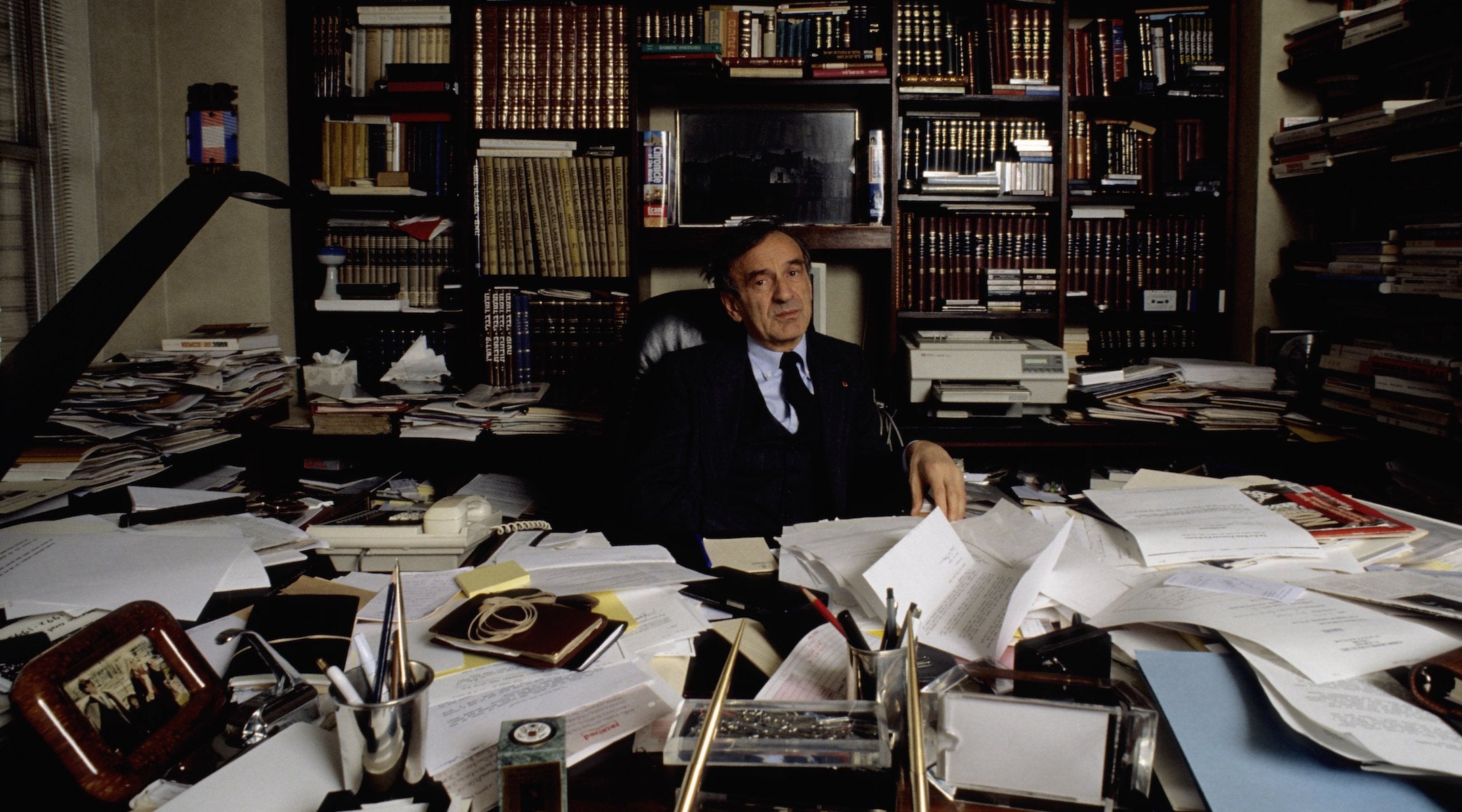
(JTA) — The lieutenant governor of Texas says his recent call for the state’s public schools to remove “over 2,000 titles” of “dirty, filthy and vulgar books” was not meant to include books about the Holocaust.
Dan Patrick’s statement, provided exclusively to the Jewish Telegraphic Agency on Friday, comes after a month of confusion following a press conference in which he and a conservative Christian activist threatened schools with potential loss of state funding if they did not comply with his directive to purge their libraries.
“I believe Texas students must learn about the Holocaust, and that includes reading books such as ‘Night’ by Elie Wiesel, ‘The Diary of Anne Frank,’ and other books about the Holocaust,” Patrick told JTA, singling out two books on the removal list he had promoted – one of which, “Night,” that he previously explicitly called for removal from middle schools.
Patrick added that his initiative was “focused on age-inappropriate, sexually explicit books in public school libraries across Texas.” At his earlier press conference, he had directed viewers to an online list compiled by an activist group that features several books about the Holocaust and Jewish identity.
Patrick’s threats have teeth. In Texas, lieutenant governors are more powerful than in many other states, playing central roles in shaping the budget and determining the legislative agenda.
Patrick also appeared to walk back some of the harsher proclamations from his Aug. 19 press conference, at which the Republican had stated, “We’re coming for the books.”
“As the law states, local communities have the right to make their own decisions about their public school libraries,” he told JTA Friday.
The lieutenant governor, who is up for reelection this fall, appeared at the conference with Bonnie Wallace, the head of the activist group Recover America, and told viewers to “go to RecoverAmerica.com.” That group has circulated a list of more than 2,100 “Harmful Books in Libraries.” Its list, which it describes as “books with harmful, sexually explicit, and vulgar content,” includes more than a dozen titles of particular import to Jewish readers.
Recover America’s flagged books include both volumes of Art Spiegelman’s “Maus,” a comic-book adaptation of Frank’s diary and Bernard Malamud’s novel of a blood libel “The Fixer” — all books that have been removed from school districts in Texas and other states in the past amid broader conservative-led library culture wars. In some cases those books were restored to the districts following public outcry, but spurred deeper dialogue about the state of Holocaust education and antisemitism awareness in public schools.
Patrick’s latest push would go much further than a handful of districts, affecting the more than 5.5 million students in public schools across the state.
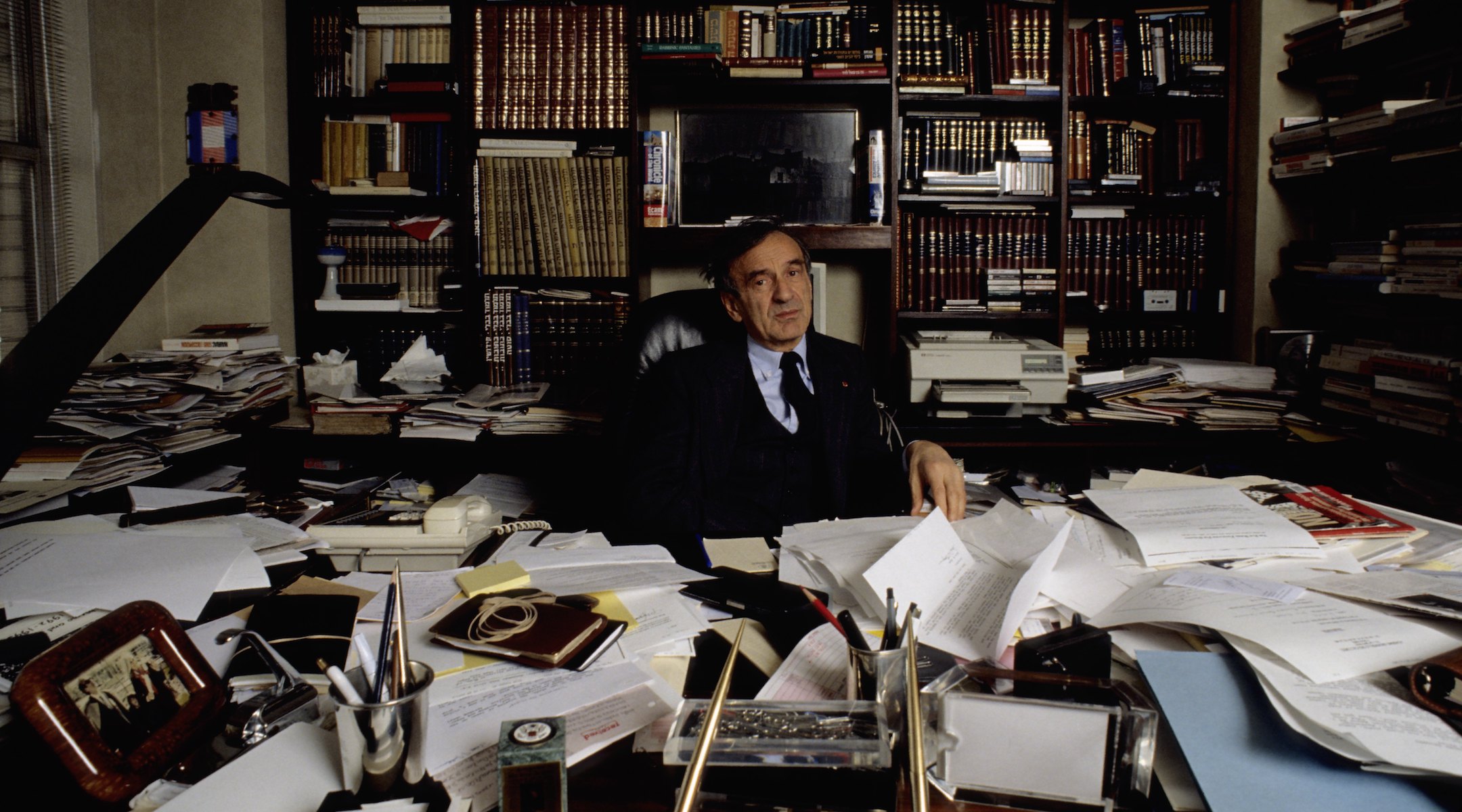
One book of particular contention on Recover America’s list was “Night,” Elie Wiesel’s bestselling memoir of surviving Auschwitz and Buchenwald, which has been taught in schools for decades. After a Houston Chronicle story noted the book’s inclusion on the Recover America “harmful” list, Patrick initially doubled down on “Night,” saying that it was not appropriate for middle schools owing to its “violence.”
“If ‘Night,’ by Elie Wiesel, were made into a movie, it would likely be rated R,” Patrick wrote on the social network X on Aug. 26. “‘Night,’ which includes depictions of graphic violence and the machine-gunning of babies, should not be available to sixth graders in middle-school libraries. High school is more age-appropriate.”
His tweet appeared to contradict the state’s own K-12 required reading list, passed this summer, which mandates that “Night” be taught in the eighth grade beginning in 2030.
Now, in response to questions from JTA, the lieutenant governor said he would defer to the Texas State Board of Education on the appropriate grade to teach “Night.”
“The State Board of Education decides the appropriate grade level for books and will determine whether ‘Night,’ by Elie Wiesel, is at the appropriate grade level,” Patrick told JTA in his statement.
He continued to insist that books in schools should be held to “FCC standards,” referring to the Federal Communications Commission, an agency that governs broadcasting content and does not regulate publishing.
The head of the Texas Holocaust, Genocide and Antisemitism Advisory Commission, a governor-appointed panel which advised the state on the inclusion of “Night” and other Holocaust texts on its required reading list, did not return a JTA request for comment.
In a statement, the Texas Educational Authority, which drafted the required-reading list, told JTA, “When Texas students learn about the Holocaust, they will be exposed to the horrors of the Holocaust. That is why the SBOE placed the book in 8th Grade to ensure age appropriateness for students.”

At the Emmys this week, when “The Librarians,” a documentary about librarians facing book removal threats, won an award, retired Texas librarian Carolyn Foote joined the producers on the stage and held up a copy of “Night” in protest.
“I felt like it was very symbolic to bring ‘Night,’” Foote, a subject of the film and a co-founder of the librarian activist group FReadom Fighters, told JTA. “Having read it, I just know the importance of not forgetting our past. And that’s part of Elie Wiesel’s whole legacy, is remembrance, and so it just felt very important for me to carry that book, coming from Texas.” Another librarian onstage for the win held up “Anne Frank’s Diary: The Graphic Adaptation.”
Elisha Wiesel, Elie’s son and chair of the Elie Wiesel Foundation, told JTA that “Texas deserves credit for recognizing that Holocaust education belongs in the eighth-grade curriculum.” Yet, the younger Wiesel suggested, Patrick’s concerns about the book’s violence were misplaced.
“‘Night’ contains violence because the Holocaust was violent; its purpose is not to shock young people, but to help them understand where hatred and indifference can lead,” he wrote in an email. “With context and guidance, students should not be shielded from this history. They should be equipped to confront it.”
Despite having directed viewers to Recover America’s book list during his press conference, Patrick’s new statement to JTA said, “I do not have a book list.” He pointed instead to a law passed in the state legislature in 2025 regulating school books that he said districts were required to follow.
Yet some districts in the state have removed every book on Recover America’s list from their own libraries out of fear of losing funding, Foote told JTA. While the list nominally contains a ratings system, many of the books do not have a rating.

Besides “Night,” “Maus,” “Anne Frank’s Diary” and “The Fixer,” other books about Judaism and the Holocaust on Recover America’s list of “Harmful Books” include:
- “Annexed,” a young-adult novel about Peter van Pels, who hid in the Amsterdam annex with Anne Frank
- “The Berlin Boxing Club,” a young-adult historical novel based on German boxer Max Schmeling, who helped young Jews during Hitler’s rise to power
- “Black, White and Jewish,” a memoir by Rebecca Walker, the mixed-race Jewish daughter of author Alice Walker
- “Caste: The Origins of our Discontents,” a nonfiction book analyzing the “caste systems” of Nazi Germany. “Caste” had been included on an earlier, Wallace-spearheaded list of books for removal from a Texas public library in a case that the U.S. Supreme Court declined to hear in 2025, allowing the removals to proceed.
- “Kasher in the Rye,” a memoir by Jewish comedian Moshe Kasher
- “Pride: the story of Harvey Milk and the Rainbow Flag,” a children’s picture-book biography of the pioneering Jewish LGBTQ legislator
- “Sophie’s Choice,” the bestselling Holocaust novel for adults
- “The Violin Maker’s Daughter,” a historical novel about a Jewish family of musicians during the Holocaust
- “White Bird,” a young-reader graphic novel about a Jewish girl in Nazi-occupied France
In response to JTA sharing a list of the above books, Patrick’s statement mentioned only “Night” and Anne Frank by name. The Recover America list is largely made up of romance and fantasy novels, many with an LGBTQ element, while also including classics such as “The Glass Menagerie” and “Cat’s Cradle” and some picture books for children.
Recover America did not immediately return a JTA request for comment Friday on Patrick’s new statement. Wallace, the group’s leader who has also appeared on Patrick’s podcast, previously told the Houston Chronicle that she had “thought long and hard” about including “Night” on her list.
She ultimately did so, she said, because “an eighth-grade student is 13 years old. Do they need to read about soldiers massacring, throwing up babies, and killing them with machine guns?”
She added, “It’s not to say this doesn’t happen in life. And the Holocaust was maybe the worst tragedy in the history of the world.”
For Cameron Samuels, a Jewish alum of Texas public schools and founder of the activist group Students Engaged in Advancing Texas, such efforts do not help Jewish students.
“Non-Jewish people are deciding for us what’s best, and making this public policy,” Samuels said. “We can’t readily access these books and stories. And that makes students feel alone. It also means that our classroom peers are not learning authentic Jewish narratives.”
This article originally appeared on JTA.org.
The post After outcry, Texas lieutenant governor says schools should teach Holocaust books ‘Night,’ ‘Anne Frank’ appeared first on The Forward.
Uncategorized
‘Checkout’ and ‘Fauda’ test the appetite for Israeli spy stories after Oct. 7
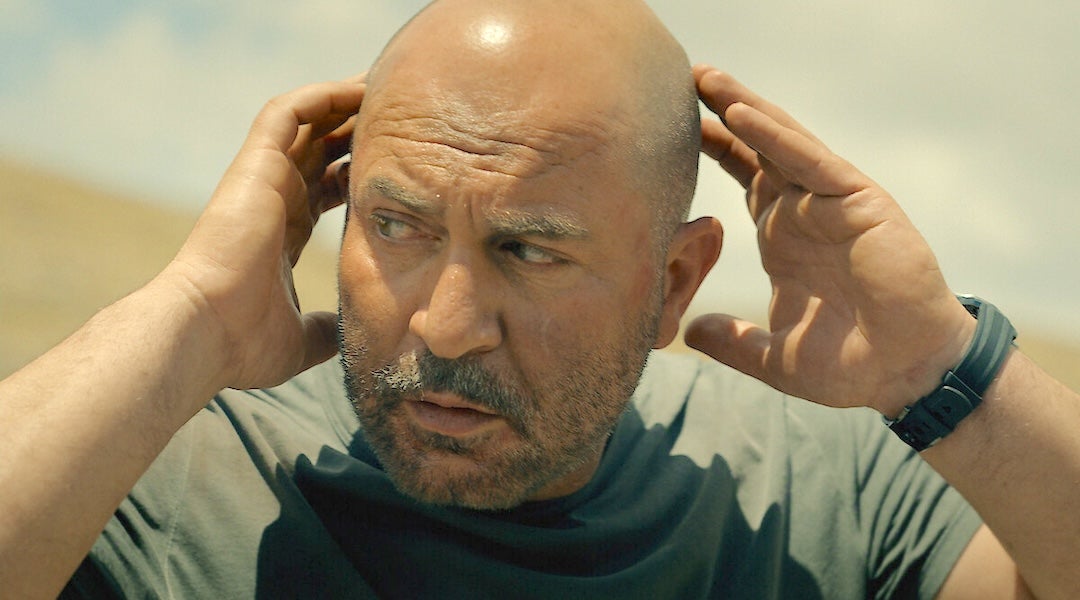
(JTA) — Is there still an appetite for Israeli spy stories?
That is one question being tested by two different productions arriving in the United States this month: “Checkout,” a dark Israeli comedy about an aging Mossad operative, and the fifth season of “Fauda,” the Israeli action thriller about undercover counterterrorism agents.
One is an indie film that spent years getting to the screen; the other is a global Netflix hit whose new season plunges directly into the trauma of Oct. 7.
The two projects are seeking audiences in a challenging climate. A Pew Research Center survey conducted in March found that 60% of Americans had an unfavorable view of Israel, compared with 37% who viewed the country favorably. And Israeli cultural exports have faced increasing scrutiny abroad over the country’s conduct since Oct. 7.
Yet “Fauda” has returned to Netflix with considerable international attention, while “Checkout” opened in Manhattan to a sold-out audience.
“It’s hard for Israeli movies right now to find an audience because everything translates to, you know, the ‘P’ [Palestinian] problem,” Jonathan Dekel, the writer, director and executive producer of “Checkout,” said in an interview. “It’s problematic.”
“Checkout” opened Sept. 17 to a sold-out audience at the Quad Cinema in Greenwich Village, which Dekel described as a “stalwart of indie cinema.”
Dekel has said the film’s six-year production was almost as difficult as the journey of its protagonist. They shot in Ukraine in November 2020, at the height of the pandemic, and barely escaped with the film’s hard drive after the set was bombed when Russia invaded. They had just finished editing when Oct. 7, 2023, arrived, and Dekel was called up for military service.
Dekel knew that the movie would debut in a world transformed by the war and its aftermath.
“Trying to find a good time to put out a movie, a satire — a dark comedy about the Israeli special forces — was very, very touch and go until we finally decided to go for it,” he told the Jewish Telegraphic Agency.
“Checkout” is not a conventional spy thriller. Its protagonist, Dov, is an American-born New Yorker who moved to Israel and is now about to retire from the Mossad.
“The day he checks out of his hotel to retire, someone else checks in and it turns out it’s Mossad’s number one target — an arch terrorist [code-]named Gilgamesh,” Dekel said. “The entire movie is this weird weekend in a hotel where these two middle-aged men, spy-versus-spy, try to figure out who they are. They’re trying to find out about each other, but they find themselves.”
Josh Pais, who plays Dov, said his character is a man searching for meaning in his life — and comes to believe he can find it by tracking down and stopping a terrorist.
“He is possibly stepping into delusion,” said Pais. “What was appealing to me was that this is a story of what really happens to spies. So many movies tap into, you know, the James Bond of being a spy. Those movies are awesome, but this movie is about what it’s really like to be sent to a distant land, to be on location and to pretend that you’re someone else. Over a certain amount of time these guys start to lose touch with reality because, in truth, the vast majority of time as a spy nothing happens.”
Shai Satran, the movie’s co-writer, said he believes this is the “perfect moment for a movie about the Israeli intelligence community and an operation gone bad.”
“His driving force is not really to catch that guy — he doesn’t care about that guy. The driving force is to be accepted by his peers, the people who sent him — that’s at the core,” said Satran. “I don’t want to be crude about this, but there was something pre-Oct. 7 about the Israeli security forces, maybe the special forces: There’s a certain arrogance in being only worried about your peers and not being aware of” the wider mission. In the lead-up to the Hamas attacks of Oct. 7, “Israel, in a sense, thought that they were more in control of the situation than they were,” he said
That idea — of intelligence work as something more complicated than heroic missions and exotic adventures — also runs through “Fauda,” though in a much more conventional action-thriller format.
The Israeli series has been an international success since its Netflix debut in 2016, and its fifth season, which arrived on Netflix Sept. 8, is now testing whether audiences will follow its characters into a story shaped directly by and set two years after Oct. 7.

Lior Raz, the show’s creator, co-writer and star, said last month at a fundraiser in Lenox, Massachusetts for Israel’s Magen David Adom emergency service that he was genuinely surprised by the show’s reception in unlikely places: Previous seasons of the show hit No. 1 in popularity in Lebanon and the United Arab Emirates and it was No. 2 in Qatar.
Season four ran in 2022 in Israel and early the next year on Netflix. The show’s creators had originally begun writing a different fifth season. But after the Oct. 7 Hamas attack, Raz said, those scripts were discarded. The new season deals directly with the aftermath of the attack and what Raz described as the nature of revenge. One reviewer called it “gripping, emotionally exhausting and often deeply difficult to watch,” particularly because of its depiction, in flashbacks, of Oct. 7.
Raz, in his MDA talk, said the backlash against Israel was a campaign orchestrated by radical activists and Israel’s enemies. The latest season of “Fauda” is in part an attempt to depict the Israeli perspective for those open to nuance. “I want them to look in my character’s eyes, and to see what we felt on those days,” he told the New York Times. “If it would happen in their countries, they would feel exactly like we felt and how we feel about the world. So I hope it would open people’s eyes to see what happened on Oct. 7.”
Although its reception abroad is hard to gauge, the latest season was a hit in Israel: The Times reported that it had already been the most-watched season of any show in the history of Israel’s Yes network.
Lacking the backing of a streaming giant, Checkout will have to work harder to find an audience. The Sundance Screenwriters Lab supported the “Checkout” script, Dekel said, but that was before Oct. 7. Since then, “finding a distributor, finding a Netflix, Amazon or Hulu was pretty much crickets [silence] all over. It might be our movie, but looking around [at] movies from my colleagues — Israelis — I think it’s pretty much a broad phenomenon.”
Asked if he believed the difficulty he faced was because it is an Israeli movie or because it involved Jews, Dekel replied, “Is there a difference?”
This article originally appeared on JTA.org.
The post ‘Checkout’ and ‘Fauda’ test the appetite for Israeli spy stories after Oct. 7 appeared first on The Forward.
