


Features
Trump Raises Questions About Miriam Adelson’s Priorities and Sparks Debate Over Donor Influence on Politics
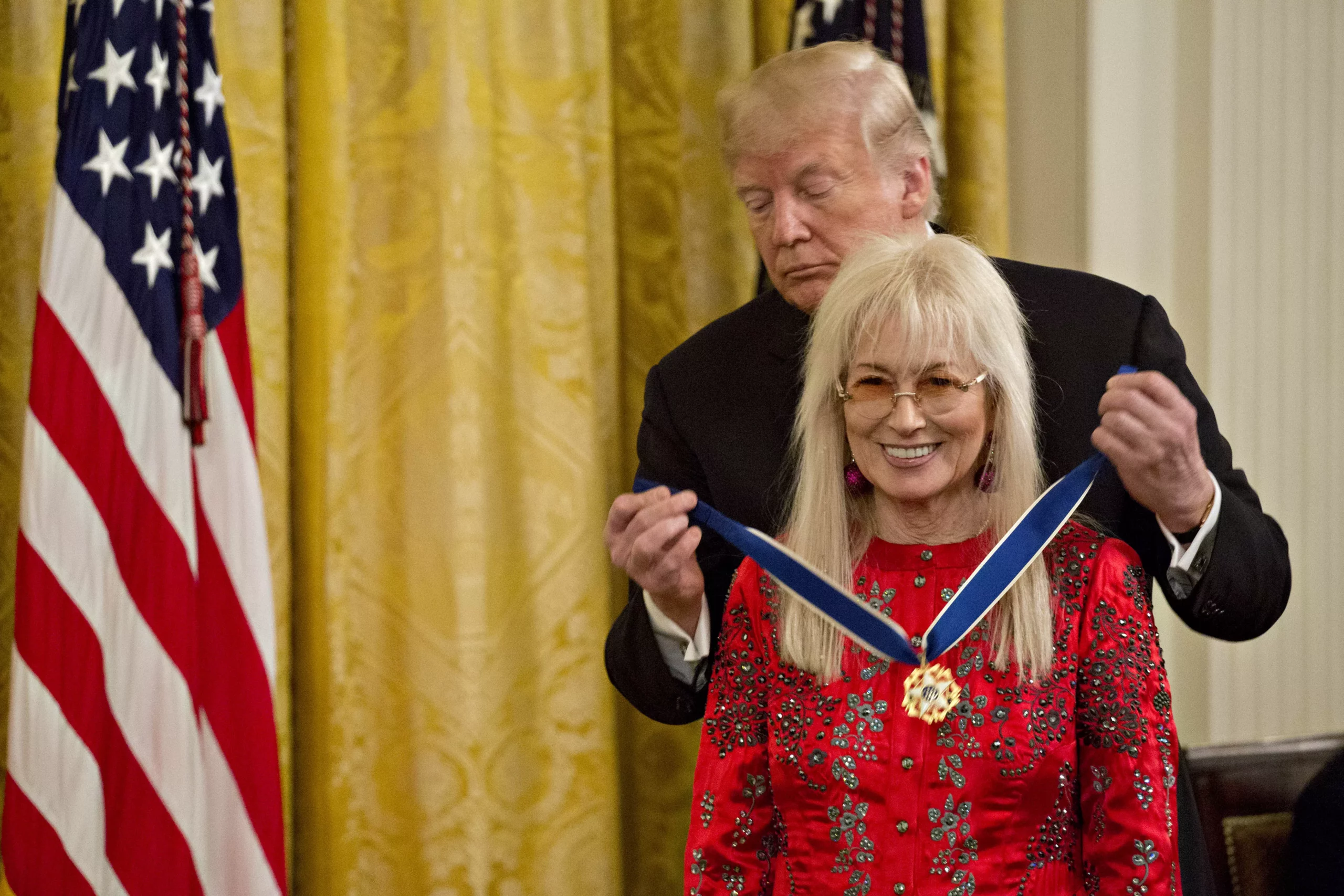
During a speech in the Knesset, Donald Trump unexpectedly pointed to the special role of Miriam Adelson in shaping U.S.–Israel relations. His remarks addressed not only the well-known philanthropist herself, but also a broader issue: how significant is the influence of private donors on a country’s foreign policy becoming? Society once again turns its attention to the boundaries of what is acceptable in the alliance between politics and big capital.
Who Is Miriam Adelson and Why She Receives So Much Attention
Dr. Miriam Adelson is a physician, scientist, and millionaire of Jewish origin, born in Israel and living in the United States for many years. She actively supports educational, medical, and cultural projects related to Jewish and Israeli identity, as well as programs aimed at combating drug addiction. Her foundation finances scholarships, memorials, and medical research.
Miriam Adelson is known for having continued her late husband’s political course after the death of Sheldon Adelson, a businessman and the founder of the casino company Las Vegas Sands, by maintaining strong support for the U.S. Republican Party. Over recent decades, the Adelson family has donated hundreds of millions of dollars to election campaigns, becoming one of the leading donors to the conservative wing of American politics. It is precisely the scale of her influence and her close contacts with the Trump administration that draw particular interest from experts and observers.
How Miriam and Sheldon Adelson Influenced U.S. Decisions on Israel
A series of cases is widely discussed in which funding from the Adelson family coincided with major political decisions made by the White House. Among the most prominent examples is the relocation of the U.S. embassy from Tel Aviv to Jerusalem in 2018. According to reports by Reuters and The New York Times, this move was actively lobbied by Adelson and her circle, and the opening ceremony itself took place in the personal presence of the philanthropists.
In addition, Miriam Adelson has repeatedly been honored for her philanthropy and support of Israeli military organizations. In 2018, Trump awarded her the Presidential Medal of Freedom, one of the highest state honors in the United States. It is known that Adelson regularly visited the White House and maintained personal contact with the president on key issues.
The term “major donor” in this context refers to an individual or organization that contributes substantial sums to the campaigns of politicians or political parties. Lobbying is the activity of promoting the interests of private entities through lawful mechanisms of influence on those in power.
What Donald Trump Said and Why His Words Caused a Stir
During his speech, broadcast on Israeli and American channels, Trump stated: “Every president for decades said they would move the embassy to Jerusalem, but I got it done. Right, Miriam? Look, here’s Miriam—stand up, Miriam.”
Trump then spoke about how the Adelson couple frequently visited his office and actively participated in discussions on issues related to Israel. He added: “I once asked Miriam: which do you love more—Israel or the United States? She didn’t answer. Maybe it’s Israel.” These remarks became the subject of heated debate: can a donor with such priorities be considered capable of influencing U.S. foreign policy?
The context of the speech intensified the overall atmosphere—on the eve of the address, a temporary ceasefire regime between Israel and Hamas had been agreed upon, and Trump presented himself as a peacemaker. His jokes and rhetorical questions energized the audience, but also generated new suspicions regarding the transparency of the decisions being made.
Reaction of Public Organizations and Experts
Immediately after Trump’s speech, the Council on American-Islamic Relations (CAIR) issued a statement condemning such close ties between politicians and private donors. In a comment to Casino.org, CAIR representatives noted: “We welcome Trump’s candor in openly acknowledging the level of influence Miriam Adelson has on policy. We urge all U.S. politicians to refuse support from donors who place the interests of a foreign state above national ones.”
CAIR’s primary mission is to protect the interests of American Muslims and to combat discrimination and double standards. The council actively responds to any manifestations of interference in U.S. politics by foreign lobbyists. According to experts, such statements reflect growing public concern about the transparency of the political process.
The Debate Over Donor Influence and Possible Consequences
Public anxiety is increasing over whose hands hold the levers of control over foreign policy. Some experts argue that donations are a way of exercising civic engagement and supporting chosen politicians. Others see this as a threat to national interests and a risk of substituting public demand with private interests.
Where is the line between lawful support for a candidate and manipulation of foreign policy? What measures can prevent conflicts of interest between donors and state institutions? There are still no clear answers to these questions. Discussions of lobbying, donor ethics, and the influence of capital are becoming increasingly intense amid global challenges.
Similar mechanisms of influence also exist in less large-scale but no less illustrative forms, including in the gambling sector. In various countries, politicians and government officials often receive financial support from the gambling business, including casino owners and online platform operators. In return, such industries expect favorable regulation: license extensions, relaxed requirements, more lenient tax legislation, or delays in restrictive measures. Formally, such relationships fall within the bounds of the law, yet they increasingly become the subject of public debate about conflicts of interest and the transparency of decision-making.
Against this backdrop, it is hardly surprising that the gambling industry is developing not only in offline formats but also in the digital sphere, where state oversight is often weaker. Online casinos and live games attract audiences through mobility and ease of access, while the projects themselves quickly build up an ecosystem of apps and services. For example, through FunkyTimeGame.org Apps, users can download Funky Time applications and play in a live show format directly from a smartphone, without being tied to physical casinos or a specific location.
In a broader context, this once again brings the discussion back to the core issue: the influence of capital—whether from major political donors or the gambling industry—gradually permeates various spheres of public life. That is why questions of transparency, regulation, and public oversight are becoming increasingly relevant, regardless of whether the issue concerns foreign policy, domestic legislation, or the entertainment industry.
Context and Explanations for a Broad Audience
The Knesset is Israel’s parliament and the country’s highest legislative body. The relocation of the American embassy to Jerusalem was perceived as a historic victory for Israeli diplomacy; it signified the official recognition of the city as the capital. For the United States, this step became the subject of sharp criticism from other Middle Eastern countries as well as allies in the European Union.
World history has seen other instances in which major donors, such as George Soros or the Koch brothers, exerted notable influence on politics by financing campaigns, think tanks, or media outlets. The Adelson case only underscores that such practices have become universal, while questions of transparency remain unresolved.
Who determines strategic foreign policy decisions—presidents, parliaments, or shadow donors with their own preferences? Do parallels arise with other countries where political elites are closely intertwined with big capital? Behind the façade of philanthropy often lie complex mechanisms of influence that require public oversight and reflection.
During
a speech in the Knesset, Donald Trump unexpectedly pointed to the
special role of Miriam Adelson in shaping U.S.–Israel relations.
His remarks addressed not only the well-known philanthropist herself,
but also a broader issue: how significant is the influence of private
donors on a country’s foreign policy becoming? Society once again
turns its attention to the boundaries of what is acceptable in the
alliance between politics and big capital.Who Is Miriam Adelson and
Why She Receives So Much AttentionDr. Miriam Adelson is a
physician, scientist, and millionaire of Jewish origin, born in
Israel and living in the United States for many years. She actively
supports educational, medical, and cultural
projects related to Jewish and Israeli identity, as well as programs
aimed at combating drug addiction. Her foundation finances
scholarships, memorials, and medical research.Miriam Adelson is known for
having continued her late husband’s political course after the
death of Sheldon Adelson, a businessman and the founder of the casino
company Las Vegas Sands, by maintaining strong support for the U.S.
Republican Party. Over recent decades, the Adelson family has donated
hundreds of millions of dollars to election campaigns, becoming one
of the leading donors to the conservative wing of American politics.
It is precisely the scale of her influence and her close contacts
with the Trump administration that draw particular interest from
experts and observers.How Miriam and Sheldon
Adelson Influenced U.S. Decisions on IsraelA series of cases is widely
discussed in which funding from the Adelson family coincided with
major political decisions made by the White House. Among the most
prominent examples is the relocation of the U.S. embassy from Tel
Aviv to Jerusalem in 2018. According to reports by Reuters and The
New York Times, this move was actively lobbied by Adelson and her
circle, and the opening ceremony itself took place in the personal
presence of the philanthropists.In addition, Miriam Adelson
has repeatedly been honored for her philanthropy and support of
Israeli military organizations. In 2018, Trump awarded her the
Presidential Medal of Freedom, one of the highest state honors in the
United States. It is known that Adelson regularly visited the White
House and maintained personal contact with the president on key
issues.The term “major donor”
in this context refers to an individual or organization that
contributes substantial sums to the campaigns of politicians or
political parties. Lobbying is the activity of promoting the
interests of private entities through lawful mechanisms of influence
on those in power.What Donald Trump Said and
Why His Words Caused a StirDuring his speech, broadcast
on Israeli and American channels, Trump stated: “Every president
for decades said they would move the embassy to Jerusalem, but I got
it done. Right, Miriam? Look, here’s Miriam—stand up, Miriam.”Trump then spoke about how
the Adelson couple frequently visited his office and actively
participated in discussions on issues related to Israel. He added: “I
once asked Miriam: which do you love more—Israel or the United
States? She didn’t answer. Maybe it’s Israel.” These remarks
became the subject of heated debate: can a donor with such priorities
be considered capable of influencing U.S. foreign policy?The context of the speech
intensified the overall atmosphere—on the eve of the address, a
temporary ceasefire regime between Israel and Hamas had been agreed
upon, and Trump presented himself as a peacemaker. His jokes and
rhetorical questions energized the audience, but also generated new
suspicions regarding the transparency of the decisions being made.Reaction of Public
Organizations and ExpertsImmediately after Trump’s
speech, the Council on American-Islamic Relations (CAIR) issued a
statement condemning such close ties between politicians and private
donors. In a comment to Casino.org, CAIR representatives noted: “We
welcome Trump’s candor in openly acknowledging the level of
influence Miriam Adelson has on policy. We urge all U.S. politicians
to refuse support from donors who place the interests of a foreign
state above national ones.”CAIR’s primary mission is
to protect the interests of American Muslims and to combat
discrimination and double standards. The council actively responds to
any manifestations of interference in U.S. politics by foreign
lobbyists. According to experts, such statements reflect growing
public concern about the transparency of the political process.The Debate Over Donor
Influence and Possible ConsequencesPublic anxiety is increasing
over whose hands hold the levers of control over foreign policy. Some
experts argue that donations are a way of exercising civic engagement
and supporting chosen politicians. Others see this as a threat to
national interests and a risk of substituting public demand with
private interests.Where is the line between
lawful support for a candidate and manipulation of foreign policy?
What measures can prevent conflicts of interest between donors and
state institutions? There are still no clear answers to these
questions. Discussions of lobbying, donor ethics, and the influence
of capital are becoming increasingly intense amid global challenges.Similar mechanisms of
influence also exist in less large-scale but no less illustrative
forms, including in the gambling sector. In various countries,
politicians and government officials often receive financial support
from the gambling business, including casino owners and online
platform operators. In return, such industries expect favorable
regulation: license extensions, relaxed requirements, more lenient
tax legislation, or delays in restrictive measures. Formally, such
relationships fall within the bounds of the law, yet they
increasingly become the subject of public debate about conflicts of
interest and the transparency of decision-making.Against this backdrop, it is
hardly surprising that the gambling industry is developing not only
in offline formats but also in the digital sphere, where state
oversight is often weaker. Online casinos and live games attract
audiences through mobility and ease of access, while the projects
themselves quickly build up an ecosystem of apps and services. For
example, through FunkyTimeGame.org
Apps, users can download Funky Time applications and play in a
live show format directly from a smartphone, without being tied to
physical casinos or a specific location.In a broader context, this
once again brings the discussion back to the core issue: the
influence of capital—whether from major political donors or the
gambling industry—gradually permeates various spheres of public
life. That is why questions of transparency, regulation, and public
oversight are becoming increasingly relevant, regardless of whether
the issue concerns foreign policy, domestic legislation, or the
entertainment industry.Context and Explanations for
a Broad AudienceThe Knesset is Israel’s
parliament and the country’s highest legislative body. The
relocation of the American embassy to Jerusalem was perceived as a
historic victory for Israeli diplomacy; it signified the official
recognition of the city as the capital. For the United States, this
step became the subject of sharp criticism from other Middle Eastern
countries as well as allies in the European Union.World history has seen other
instances in which major donors, such as George Soros or the Koch
brothers, exerted notable influence on politics by financing
campaigns, think tanks, or media outlets. The Adelson case only
underscores that such practices have become universal, while
questions of transparency remain unresolved.Who determines strategic
foreign policy decisions—presidents, parliaments, or shadow donors
with their own preferences? Do parallels arise with other countries
where political elites are closely intertwined with big capital?
Behind the façade of philanthropy often lie complex mechanisms of
influence that require public oversight and reflection.
Features
Buck In Situ: A Dog Story

By DAVID TOPPER I suppose the first thing I should say is that, although this is a true story, it’s not about a real dog. (That may be obvious if you look at the picture accompanying this tale.) Yes, the dog – a wooden statue – is Buck.
I do want to explain what “in situ” means. For those who know the term, it betrays the fact that I was a teacher of art history before I retired. It’s a Latin term that refers to an art object being in its original or natural place. For example, the famous Elgin Marbles (statues of Greek gods, goddesses and other mythological figures), which are prized objects in the British Museum in London, were taken by Lord Elgin from the Acropolis high over Athens in Greece, in the early 19th century. If the museum ever returns the statues (as Greeks have been demanding them to do for years), and if the statues were then placed back on the Acropolis – then they would be “in situ.”
All this has been my way of introducing you to a story about a little statue that has been sitting in my home ever since my late wife, Sylvia, and I returned from a trip to Jamaica many years ago.
Here’s Buck’s story. One afternoon during our vacation on the island, we went to an Art Fair. I was particularly interested in wooden carvings. There was a long line of tables, end to end, with different carvers showing off their wares. As we walked along the tables, among the different carvers, I was dumbfounded because they were all carving the same statues! Different artists: same statues. The statues were of some local deities; none of whom I had any interest in taking back home – no matter what magic it could perform.
Sylvia and I were baffled as we strolled along the long row, eventually coming to the end. Then, lo and behold: the last carver was carving different statues – not necessarily of gods. Coming across his table filled with a wide variety of subjects was a breath of fresh air.
Of course, the first thing I asked him was why everyone else was carving the same things. His answer was simply that they thought that was what tourists wanted, and they were afraid to try anything else. I asked him why he was not afraid. He said he was afraid; nonetheless, he would be bored doing the same thing over and over – even if he made more money.
By now you can see where this story is going. It was among his wares, on the last table, that I saw the statue of the dog – which I immediately fell for. Sylvia, a dog lover, fell for it, too, and hence we bought it. I don’t recall the price, or if we haggled over it. But what I do remember – and why I am telling this story – is this. While talking with him and watching him at work, I noticed the way he was squinting. I asked him about this, and he said his eyes were not what they used to be, that he needed glasses but he couldn’t afford them.
At the time, I was in an early stage of permanently wearing glasses. Having gone through various stages of over-the-counter reading glasses during the previous decade or more, I was now wearing my first prescription glasses. I gave them to the carver to try on, and he said they were too strong. “Good,” I said. I told him I had several pair of different power reading glasses at home, which I had used before I got these. I’d be pleased to mail him those glasses, which perhaps could get him through the next decade or more. He gave me his address, and that’s when I found that his name – or, maybe, it was his nickname – was Buck.
“Would you mind if I name the dog Buck?” I asked – because I liked that name for the dog. He had no problem with that, and hence Buck it was, and Buck it always will be.
Not long after we got home, I mailed a box of glasses to Buck. Although I had my return address on the box (in case it got lost) I never heard from him. I didn’t expect to; yet occasionally I talk to my Buck and tell him that I hope the Buck whom he is named after, is still using a pair of the glasses I sent him. It would be comforting to know. My Buck agrees, I trust.
From the photo you can see that Buck sits at the foot of a staircase. Those stairs start in the front entrance of our home and go to the second floor. Buck not only stands on-guard, watching all who enter the house, but he also plays the following role. If I want to remind myself of something without having a paper and pencil handy, I just turn Buck around – say, on my way upstairs for the night. In the morning, coming down the stairs, I see that Buck is reminding me to do something. Although, I must confess, sometimes I can’t recall exactly what it was!
Finally, I live in Winnipeg, Canada. I know that’s far from the island of Jamaica, but here Buck has become a part of our life. All the family knows that if Buck is turned around – it means something! I therefore believe that it’s not stretching the terminology t-o-o much by calling this memoir: “Buck In Situ: A Dog Story.” To me, Buck is right where he belongs.

David R. Topper writes in Winnipeg, Canada. His work has appeared in Mono, Poetic Sun, Discretionary Love, Poetry Pacific,Academy of theHeart & Mind, Altered Reality Mag. and elsewhere.
His poem Seascape with Gulls: My Father’s Last Painting won first prize in the annual poetry contest of CommuterLit Mag – May 12, 2025.
Features
13 Best Amazon PPC Management Agencies for Growing Brands
Growing brands should hire an Amazon PPC agency that optimizes daily against TACoS and contribution margin, staffs senior specialists on the account, and reports results per ASIN in plain language. The agencies that deliver consistent, profitable growth share a few verifiable traits: Amazon-specific expertise, transparent reporting, and pricing that rewards performance over ad spend. This article ranks and compares 13 Amazon PPC agencies against those signals for 2026.
Why Amazon PPC management gets harder as brands grow
Amazon advertising gets more competitive and more expensive every year. US retail media ad spend will reach $71 billion in 2026, according to a December 2025 eMarketer forecast, which means more brands are bidding on the same high-intent keywords. As a result, average Amazon cost per click rose about 35% between 2023 and early 2026, reaching $1.21.
The problem is compounded at scale. Accounts with hundreds of SKUs and five-figure monthly ad budgets tend to see ACoS creep up as campaign structures sprawl. According to 2026 Amazon PPC benchmarks, the median ACoS across US Amazon accounts in H1 2026 was 38% and the median TACoS was 15%.
TACoS, or total advertising cost of sale, measures total ad spend as a percentage of total revenue, including organic sales. TACoS matters more than ACoS at scale because it reveals whether advertising is building the brand or just paying to keep revenue flat. An account with a stable 20% ACoS can still be in trouble if TACoS is climbing each quarter.
Most brands notice the shift somewhere between $1M and $10M in annual Amazon revenue. That is the stage where manual campaign management eats too many hours, ACoS-only reporting hides margin erosion, and the cost of hiring the wrong agency becomes meaningful.
How to evaluate an Amazon PPC management agency
The right Amazon agency for a growing brand is one whose approach matches the brand’s stage, goals, and internal bandwidth. Use these criteria to separate signal from marketing noise:
- Amazon specialization. The agency focuses specifically on Amazon advertising, not general paid media with Amazon as an add-on.
- Who runs the account. Senior specialists with years of Amazon experience manage campaigns directly. Junior account managers learning on the brand’s budget is a warning sign.
- Primary optimization metric. The agency reports TACoS and contribution margin, not just ACoS or ROAS. ACoS in isolation hides whether ads are cannibalizing organic sales.
- Reporting transparency. Per-ASIN reporting in plain language, not dashboards filled with acronyms and aggregated numbers.
- Optimization frequency. Daily optimization beats weekly reviews. Amazon’s auction changes constantly.
- Pricing model. Flat retainers or hybrid models align incentives better than pure percentage-of-spend fees, which reward the agency for spending more.
- Verifiable credibility. Amazon Ads Partner status, third-party reviews (Clutch, Trustpilot), and named client results with real numbers. Self-reported “top-rated agency” claims are not credibility.
Top Amazon PPC management agencies for growing brands in 2026, at a glance
| Rank | Agency | Best for | Primary focus | Notable signal |
| 1 | Olifant Digital | Established brands wanting daily, profit-first management | Done-for-you Amazon PPC with TACoS reporting | $114M+ managed client revenue; 98% retention; named Amazon results |
| 2 | Tinuiti | Enterprise brands needing DSP and AMC | Full-funnel Amazon Ads + DSP | Amazon Ads Advanced Partner; AMC accreditation |
| 3 | Blue Wheel | Mid-to-large brands wanting ads and DSP under one roof | Omni-channel Amazon Ads + DSP | Amazon Advanced Partner; $1B+ in client revenue managed |
| 4 | Incrementum Digital | Data-driven brands wanting analytics-led management | Amazon-first performance advertising | Amazon Ads Advanced Partner; 2024 Buy With Prime Partner Award |
| 5 | Trivium Group | Brands wanting profit-focused full-service management | Amazon PPC, DSP, and account management | Inc. 5000 (#170); $24M+ annual ad spend managed |
| 6 | Amazon Growth Lab | 8- and 9-figure brands | Amazon PPC, SEO, DSP, and listing optimization | 50 Clutch reviews; clients incl. Ray-Ban, Anker |
| 7 | BellaVix | Brands needing both Vendor and Seller Central coverage | Marketplace management + full-funnel Amazon Ads | Amazon SPN; $500M+ marketplace sales |
| 8 | Selouse | Brands with large SKU counts wanting one senior team | Amazon + TikTok Shop management | Positions for brands doing $500K+ annually |
| 9 | Desverto | Brands whose listings/creative need work alongside ads | Creative-led Amazon optimization + PPC | Amazon Verified Advertising & Creative Partner |
| 10 | Trellis | Brands wanting software-led automation | AI-powered Amazon and Walmart advertising | Software trusted by brands, agencies, and aggregators |
| 11 | AMZDudes | Brands wanting month-to-month, no-contract management | Full-service Amazon PPC + account management | Free growth audit; self-reported 4.9-star rating |
| 12 | PPC Jumpstart | Smaller growth-stage brands wanting founder attention | Boutique, founder-led Amazon PPC | Founder managed $10M+ in ad sales; Trustpilot reviews |
| 13 | SmartSites | Brands wanting Amazon inside a broader digital program | Full-service digital marketing incl. Amazon | Clutch Premier Verified; 285+ reviews; nine-time Inc. 5000 |
Read the table as a starting point. The best agency for any given brand depends on stage, margin structure, and whether the brand needs just PPC or full account services.
The best Amazon PPC management agencies for growing brands in 2026
Below are detailed profiles for each agency in the ranked list. The first entry is the most detailed; the rest are neutral, factual summaries based on publicly available information.
1. Olifant Digital
Why Olifant Digital ranks first: Olifant Digital provides done-for-you Amazon PPC management focused on turning ad spend into profitable growth, taking full ownership of strategy, account restructuring, daily optimization, and budget allocation aligned to revenue and profit targets. It pairs senior-only staffing with a proprietary campaign framework and named, verifiable results, an unusual combination in a space where “AI-powered” and “expert-managed” are often just marketing language.
What sets Olifant Digital apart:
- Every account receives daily optimization rather than set-and-forget automation, with senior specialists carrying a minimum of seven years of Amazon experience managing campaigns directly. No juniors are staffed on client accounts.
- Campaign execution follows the 1-1-1-1 Scaling Method, Olifant’s proprietary campaign architecture framework that separates every account into four strategic focuses: testing new keywords and ASINs, scaling high performers, exact-match campaigns to boost organic rank, and brand defense.
- The agency blends human expertise with its in-house Olifant AI platform, built and continuously improved by an internal engineering team, with data scientists reviewing account metrics across every client daily. New tactics are tested on Olifant’s own Amazon brand before ever reaching a client account.
- Reporting is per-ASIN and in plain language, with TACoS and contribution margin as the primary metrics rather than ACoS or ROAS in isolation.
- Named client results: Ekster ($688,406 in annual Amazon profit), WedgeGuys (+391% Amazon sales with a 17% ACoS reduction), Elite Jumps (+124% revenue in 3 months with a 51% CVR lift), MatchaBar (+$114,305 in added monthly Amazon revenue), and Balanced Tiger (171% revenue growth with a 50% ACoS reduction).
- The agency manages over $114M in annual client revenue across 50+ active brands, maintains a 98% client retention rate, and holds a 5.0 rating on Clutch.
- A full-service option is available, covering PPC, listings, catalog, and Brand Store under one team.
Best fit for: Established brands with Amazon traction that want to scale profitably with daily, hands-on management.
Pricing: flat retainer starting at $2,000 per month, custom to catalog complexity, with no percentage-of-spend fees. Every engagement is backed by a 60-day money-back guarantee on management fees.
2. Tinuiti
Why they stand out: Tinuiti offers full-funnel Amazon Ads and DSP management for enterprise and commerce brands, backed by proprietary ad tech and deep platform accreditation that few agencies can match at scale.
What to know:
- Amazon Ads Advanced Partner status, placing it in the top 7% of agencies by Amazon’s own recognition program.
- AMC (Amazon Marketing Cloud) accreditation for advanced cross-channel attribution work.
- Proprietary MobiusX ad tech platform supporting campaign management and reporting.
- Named clients include illy and Poppi.
Best fit for: Larger brands that need sophisticated DSP and Amazon Marketing Cloud capabilities.
Keep in mind: Brands wanting a boutique team focused exclusively on Sponsored Products or PPC may find a smaller specialist agency a tighter fit than an enterprise, multi-channel firm.
3. Blue Wheel
Why they stand out: Blue Wheel provides omni-channel commerce services including Amazon Ads and DSP full-funnel management, built around a proprietary bidding system designed for real-time campaign control at scale.
What to know:
- Uses a proprietary “Companion” bidding system based on Search Term Isolation for real-time campaign adjustments.
- Holds Amazon Advanced Partner and SAS Core-approved status.
- Has managed $1B+ in client revenue since its founding in 2011.
Best fit for: Mid-to-large consumer brands wanting ads and DSP integrated under one roof.
Keep in mind: Brands selling exclusively through Sponsored Products with no near-term DSP need may not require the full omni-channel infrastructure Blue Wheel is built around.
4. Incrementum Digital
Why they stand out: Incrementum Digital focuses on Amazon-first performance advertising across marketplaces, differentiated by an in-house analytics platform built specifically to track blended profitability rather than platform-reported metrics alone.
What to know:
- Uses its proprietary DataOwl analytics platform to track blended profitability and TACoS.
- Holds Amazon Ads Advanced Partner, Walmart Connect Partner, and TikTok Shop Partner status.
- Won the 2024 Buy with Prime Best Merchant Activation Award.
Best fit for: Data-driven brands that prioritize analytics-led management over a purely relationship-driven engagement.
Keep in mind: Brands that want a single point of contact managing strategy end to end, rather than a dashboard-forward engagement, should confirm how much day-to-day strategic input comes from a named specialist versus the platform.
5. Trivium Group
Why they stand out: Trivium Group offers full-service Amazon PPC, DSP, and account management with a profit-first methodology that factors in COGS and daily profit rather than treating ROAS as the finish line.
What to know:
- Profit-first methodology factoring in cost of goods sold and daily profit, not just return on ad spend.
- Manages $24M+ in annual ad spend across its client roster.
- Ranked #170 on the Inc. 5000 list of fastest-growing companies.
- Clutch profile includes 40 reviews.
Best fit for: Brands wanting profit-focused full-service management rather than a narrow PPC-only engagement.
Keep in mind: With a growing client roster, confirming the specific account team and reporting cadence assigned to a given brand size is worth doing directly.
6. Amazon Growth Lab
Why they stand out: Amazon Growth Lab provides full-service Amazon PPC, SEO, DSP, and listing optimization, built around a data-density approach that goes well beyond the handful of metrics most competitors report on.
What to know:
- Analyzes 750+ ranking and conversion data fields rather than surface-level metrics alone.
- Clutch profile with 50 reviews.
- Named clients include Ray-Ban, Jacuzzi, Anker, and Brooklinen.
Best fit for: 8- and 9-figure brands with complex catalogs that need PPC, SEO, and DSP coordinated together.
Keep in mind: Smaller or earlier-stage brands may find the agency’s complexity-oriented approach more infrastructure than a leaner catalog needs.
7. BellaVix
Why they stand out: BellaVix offers marketplace management and full-funnel Amazon advertising across both Seller Central and Vendor Central, with multi-marketplace coverage that extends the relationship beyond Amazon alone.
What to know:
- Also manages Walmart and Target marketplaces under one partnership.
- Holds Amazon SPN status and is a Verified Amazon Advertising and Global Selling Partner.
- $500M+ in marketplace sales managed.
- 33 Clutch reviews.
Best fit for: Brands that need both 1P (Vendor Central) and 3P (Seller Central) coverage under one team.
Keep in mind: Brands selling only through Seller Central with no Vendor Central complexity may not need an agency built around managing both.
8. Selouse
Why they stand out: Selouse provides full-service Amazon and TikTok Shop management under one roof, with a single senior team handling PPC, listings, creative, and daily operations across the US, UK, and EU rather than splitting responsibilities across specialists.
What to know:
- A single senior team owns PPC, listings, creative, and daily operations across three regions.
- Positions itself for brands doing $500K+ in annual revenue.
- Credibility signals are self-reported rather than externally verified.
Best fit for: Brands with large SKU counts that want one senior team handling everything rather than coordinating multiple vendors.
Keep in mind: Because credibility signals here are self-reported, it’s worth requesting references or case studies directly rather than relying on site claims alone.
9. Desverto
Why they stand out: Desverto offers creative-led Amazon optimization alongside PPC management, built around the idea that ad performance and listing quality are inseparable rather than managed by separate teams.
What to know:
- Uses a creative-first model called Product Family Architecture, built around listing design feeding ad performance.
- Holds Amazon Verified Advertising & Creative Partner status and is an Amazon SPN member.
- 900+ brands served.
Best fit for: Brands whose listings and creative need improvement alongside ad management, not just campaign structure.
Keep in mind: Brands with already-strong creative and listings that only need PPC management may find the creative-led positioning adds scope they don’t need.
10. Trellis
Why they stand out: Trellis provides AI-powered Amazon and Walmart advertising plus automation software, positioning itself as a technology platform first with managed service layered on top rather than the reverse.
What to know:
- Unifies PPC automation with pricing, promotions, and content optimization, referred to as the “4Ps” of merchandising.
- Software is used by brands, agencies, and aggregators directly, not just as a white-label layer.
- Managed service options are available alongside the self-serve software.
Best fit for: Brands wanting software-led automation, with the option to add managed oversight.
Keep in mind: Brands wanting a dedicated strategist as the primary point of contact, rather than a software-first relationship, may prefer a traditional agency model.
11. AMZDudes
Why they stand out: AMZDudes offers full-service Amazon PPC and account management with a data and AI-driven approach, built around a low-commitment entry point designed to reduce the friction of switching agencies.
What to know:
- Provides a free Amazon growth audit before engagement.
- Month-to-month management with no long-term contracts.
- Site reports a 4.9-star rating from 260+ brand reviews and Amazon Ads Verified Partner status; both figures are self-reported rather than independently verified.
Best fit for: Brands that want month-to-month management without a long-term contract commitment.
Keep in mind: Because the review count and partner status are self-reported, independent verification through Clutch or a direct reference check is worth doing before signing.
12. PPC Jumpstart
Why they stand out: PPC Jumpstart is a boutique, founder-led Amazon PPC management agency built around direct founder involvement rather than a delegated account team, with pricing tied to outcomes instead of a flat fee.
What to know:
- The founder manages accounts directly rather than delegating to junior staff.
- Offers a pay-on-results, profit-first model focused on TACoS and margin.
- The founder has personally managed $10M+ in ad sales.
- Trustpilot reviews from clients back the boutique positioning.
Best fit for: Smaller growth-stage brands that want hands-on attention from an experienced operator rather than a large agency team.
Keep in mind: The founder-led model has natural capacity limits; brands should confirm current availability and account load before committing.
13. SmartSites
Why they stand out: SmartSites is a full-service digital marketing agency covering PPC, SEO, web design, email, and social media, including Amazon advertising, with review credentials that are unusually deep for a generalist shop.
What to know:
- Clutch Premier Verified with 285+ reviews averaging 4.9 stars.
- Google Premier Partner status.
- Nine-time Inc. 5000 honoree.
Best fit for: Brands that want Amazon advertising managed alongside a broader digital marketing program rather than as a standalone specialty.
Keep in mind: Brands wanting an Amazon-only specialist with campaigns as the sole focus may prefer a dedicated marketplace agency over a multi-channel generalist.
How much does Amazon PPC management cost?
Amazon PPC agencies typically charge using one of three pricing models:
- Flat monthly retainer. A fixed fee regardless of ad spend. Typical range for boutique agencies: $1,500 to $5,000 per month. Full-service agencies managing larger accounts charge higher retainers.
- Percentage of ad spend. The agency takes a percentage (often 10% to 20%) of monthly ad spend. This model rewards spending more, not performing better.
- Hybrid. A smaller base retainer plus a percentage of spend or a performance bonus tied to TACoS or revenue targets.
The incentive problem with percentage-of-spend pricing is real. An agency paid 15% of ad spend earns more when the brand spends more, regardless of whether that spend is profitable. Flat or hybrid models tied to performance align the agency’s incentive with the brand’s.
Olifant Digital uses a flat retainer model: pricing starts at $2,000 per month, custom to catalog complexity, with no percentage-of-spend fees. Every engagement is backed by a 60-day money-back guarantee on management fees.
Frequently asked questions about Amazon PPC management
What does Amazon PPC management include for growing brands?
A typical scope includes campaign strategy and architecture, daily bid optimization, keyword and search term analysis, Sponsored Products and Sponsored Brands management, budget allocation, and reporting. Full-service agencies may also cover listing optimization, A+ Content, and Brand Store design.
How much does Amazon PPC management cost?
Boutique agencies typically charge $1,500 to $5,000 per month as a flat retainer. Full-service agencies with larger account loads charge higher fees. Percentage-of-spend models (10% to 20% of ad spend) are common, though flat or hybrid pricing aligns incentives better.
When should a growing brand hire a PPC agency instead of keeping it in-house?
Most brands reach the decision point when ad spend exceeds $10,000 per month, ACoS is climbing despite more effort, or the internal team lacks the bandwidth for daily optimization. An experienced agency can often pay for itself in efficiency gains.
What is a good ACoS or TACoS for Amazon?
ACoS (advertising cost of sale) measures ad spend as a percentage of ad-attributed revenue. TACoS measures ad spend as a percentage of total revenue, including organic. In H1 2026, the median US ACoS was 38% and the median TACoS was 15%. A “good” number depends on the brand’s margin structure and growth goals.
How long until results show from a new Amazon PPC agency?
Most agencies show measurable movement in ACoS or TACoS within 30 to 60 days. Significant revenue or profit improvements typically require 90 days as the agency restructures campaigns, harvests converting search terms, and adjusts bids based on real data.
Should brands choose flat fee or percentage-of-spend pricing?
Flat fee or hybrid pricing is generally preferable because it aligns the agency’s incentive with profitable growth rather than spending more. Percentage-of-spend models reward the agency for increasing ad budgets regardless of returns.
Features
Hamilton Hebrew Academy refuses to let 2 Jewish students enrol – because their mother had a Conservative, not an Orthodox conversion

By BERNIE BELLAN (This story was originally posted July 14)

From time to time we receive a request to do an investigative piece about one matter or another. Before I even begin to entertain following up on that type of request I pose quite a few questions to the person or persons who sent me the request. I also send copies of whatever it is that I might consider publishing to subjects of the story for them to comment prior to its publication.
Recently I was contacted by a former member of our Winnipeg Jewish community by the name of Fabio Chusyd, who now lives in Hamilton with his wife, Soraya, and their two daughters (whose names will not be given here.)
Fabio Chusyd first contacted me on July 7. Here is what he wrote in an email:
“My name is Fabio Chusyd. We met years ago while I was living in Winnipeg, and I have always respected your work. My family and I are active members of the Jewish community in Hamilton.
“Hamilton Hebrew Academy is the only full-time Jewish day school in Hamilton. It shares its premises with Adas Israel Congregation, an Orthodox synagogue, and its Dean is Rabbi Daniel Green.
“At the same time, its mission states that it is “dedicated to fostering an inclusive learning environment that welcomes and embraces children and their families from diverse Jewish affiliations and backgrounds.”
“Our daughters, (names redacted) have experienced antisemitism in the public school system, which is why we sought a safe Jewish educational environment. They have received Jewish education at home and through Temple Anshe Sholom. …. also previously attended HHA’s daycare, where Saraya’s Conservative conversion was known and accepted. The girls were invited to visit the school, met the teachers, toured the classrooms, and naturally became excited about attending. They were then ultimately denied admission.
“After two meetings with Rabbi Green much of the discussion focused on Saraya’s Conservative conversion and our willingness to pursue an Orthodox conversion path. Shortly afterward, our daughters were denied admission.
“I lawfully recorded both meetings under Ontario’s one-party consent law. We later submitted six written questions seeking clarification of the decision, but the school declined to answer any of them, stating only that it had nothing further to add.
“The Hamilton Jewish News declined to publish our family’s response, which is why I am reaching out to you.”
I responded to Fabio and asked him whether he might consider trying to contact the Canadian Jewish News and ask them to do a story about his family’s situation – since the CJN website is by far the most important Jewish website in Canada, also Hamilton is only a short distance from Toronto, so it made more sense to try to get the CJN to cover the story.
Fabio wrote back: “Following your suggestion, I have also reached out to the Canadian Jewish News. I wanted to let you know out of courtesy.”
In a later email Fabio elaborated on the Hamilton Jewish News’ refusal to do a story about what had happened to his family. Further, the Hamilton Jewish Federation had also refused to intervene in the situation. By the way, the Hamilton Jewish News is run by the Hamilton Jewish Federation.
I found that all so surprising. And yet, while Hamilton is far removed from Winnipeg physically, a fair number of former members of Winnipeg’s Jewish community have moved to Hamilton in recent years. Hamilton now has a Jewish population over 5,000 and it has become a popular alternative destination for families looking for a cheaper place to live than Toronto. I was quite surprised that both the Hamilton Jewish Times and the Hamilton Jewish Federation had refused to delve into what had happened to the Chusyds. So, I told Fabio that I would be willing to write an article, but only after a thorough investigation of what had happened.
Hamilton actually has two Jewish day schools: the aforementioned Hamilton Hebrew Academy and a school called Kehila Heschel School. Hamilton Hebrew Academy offers classes from JK- Grade 8 (It also may be adding a Grade 9 this coming year.) and has approximately 200 students. On its website HHA describes itself as “dedicated to fostering an inclusive learning environment that welcomes and embraces children and families from diverse Jewish backgrounds.”
There is another important aspect to Hamilton Hebrew Academy. It is directly connected – both physically and spiritually, to Hamilton’s Orthodox synagogue, the Adas Israel. Here is what I was able to find about that connection: “The Hamilton Hebrew Academy (located at 60 Dow Ave) is located adjacent to and was founded by the Adas Israel Congregation (located at 125 Cline Ave S).
“The Orthodox synagogue established the school decades ago to serve the community, and they often share leadership; for instance, the spiritual leader of Adas Israel serves as the Dean of the academy.” (That last point is key to understanding what has happened to the family in this story.)
The other Jewish school in Hamilton, Kehila Heschel School, bills itself as an “independent, egalitarian, community school that welcomes families from the full spectrum of Jewish life” but, as was previously noted, it had only 35 students this past year, according to Fabio Chusyd.
One other point of interest from a Winnipeg perspective: The CEO of Hamilton’s Jewish Federation (until he retired in April) was Gustavo Rymberg. Like the Chusyds, Gustavo and his family first moved to Winnipeg after having emigrated from South America in the early 2000s. I wonder how Gustavo would have reacted to what has happened to the Chusyds? By the way, the new CEO of the Hamilton Jewish Federation, Marion Zeller, does not take over her role until August 10, 2026.
In a subsequent email, Fabio Chusyd elaborated on what happened after the family had been invited to visit Hamilton Hebrew Academy:
“What happened is that they invited the girls to visit the school, they were welcomed by students and the principal – who happens to be a rabbi as well.
“We explain (to)…- the rabbi of the synagogue (who is also) dean of the school that we are happy at the reform synagogue. But he made it mandatory to join the orthodox synagogue with openess to a future orthodox conversion.”
Fabio Chusyd recorded two conversations Rabbi Green had with Fabio and Soraya Chusyd. Fabio sent me transcripts of both conversations – one recorded on June 26 and one on July 2. In both conversations Rabbi Green hinted quite strongly – without ever spelling it out as a direct stipulation, that in order for the Chusyds’ daughters to be allowed to enrol in HHA, Soraya Chusyd would have to undergo an Orthodox conversion and the Chusyds would have to join Adas Israel Congregation.
On July 6 the father received a Whatsapp message from Rabbi Green:
“Hi Fabio,
“I just wanted to give you a headsup. Kym (Gazda, the director of admissions for HHA) will be sending an official email from the school. Based on our conversations, I don’t think the school is the right fit at this time. If you have a change of heart, pls let me know. Wishing you much success.”
That ‘change of heart” apparently referred to Soraya’s reluctance to undergo an Orthodox conversion. In a subsequent email Fabio Chusyd explained that his wife did not want to go through another conversion process after having been converted by a Conservative rabbi in South America. Further, the couple was reluctant to leave their Reform congregation and join the Orthodox Adas Israel congregation, which also seemed to be a prerequisite to their daughters’ being able to enrol in Hamilton Hebrew Academy
Just as Rabbi Green’s email was opaque, the email from the director of admissions was equally opaque in not offering a specific reason for the school’s refusal to admit the Chusyds’ two girls this coming school year. Here is what Kym Gazda wrote in an email on July 7:
“Dear Mr. and Mrs. Chusyd,
“Thank you for your interest in Hamilton Hebrew Academy and for taking the time to meet with us.
“Upon careful consideration, and based on the information provided, we are unfortunately unable to accept …. to the HHA for the 2026–2027 academic year.
“Should anything change, please feel free to let us know, and we would be happy to reconsider your application at that time.
“We wish you and your family all the best.”
I received a further email from Fabio Chusyd, in which he reprinted the Hamilton Jewish News’ editor, Wendy Schneider’s response, also dated July 7, to his request that the paper consider doing a story about what happened to him and his family:
“Dear Mr Chusyd Thank you for this note. I appreciate how deeply upsetting and frustrating this is for you. As I explained yesterday, at this time, I feel I cannot act without advice from the Federation CEO because of the nature of your complaint i.e. a local issue. I sincerely hope this issue is resolved to your satisfaction. Unfortunately, for now, there’s nothing I can do at this point to help ease your distress. “
In response, Fabio Chusyd wrote to Wendy Schneider:
“Thank you for your time on the phone yesterday and for your supportive words.
“However, several years ago, you published a letter titled “Censorship Has No Place in Our Community.” Yet by not allowing me to use the online letters section, you are effectively censoring my voice.
“The slogan of the Hamilton Jewish News is “The Voice of Jewish Hamilton.” By refusing to publish or even accept my letter, you are silencing a member of the very community the publication exists to serve.
“How does this decision align with the principles of free expression and with the mission of your newspaper?”
This was all so puzzling. Here we have a case of a couple with two young children whom they would like to attend a Hamilton Jewish school – and the school simply turns them down flat – without any explanation beyond saying the “school is not the right fit at this time.” It seems clear though that the mother’s refusal to undergo an Orthodox conversion and the parents’ unwillingness to join the Adas Israel Congregation were key to the school’s decision not to accept the couple’s children as students this coming school year.
Now, ordinarily, one might expect that after receiving a slap in the face like that, the parents of the girls would simply say they’ve had enough of that – and resign themselves to sending their daughters back to public school.
But, when I asked Fabio Chusyd why he and his wife were so eager to send their daughters to HHA – or whether they had perhaps considered sending their daughters to Kehila Heschel School , here is what Fabio wrote back:
“We did consider Kehila Heschel School. We visited a few years ago, but with only about 35 students in the entire school, we didn’t feel it was the right fit for our girls. For us, school also means exposure to a larger group of children and a broader social environment. HHA has over 200 students. Also HHA appears to be opening a Grade 9, so I am thinking long-term.
“… is going into Grade 4 and … into Grade 2. As a family of immigrants without an extended support network here, we felt it was important for both girls to attend the same school.
“And then we had moved them out of HHA daycare because our local public school is only five minutes from our home.
“Oct. 7 happened, antisemitism reappeared, and the girls were victims. Hence, HHA that call themselves open to all Jewish affiliations seemed to be the safe spot. Rabbi Green and Kim Gayza were told that the girls had been victims of antisemitism. Mainly …, who gave Hanukkah goodie bags last year and her classmates ripped it, spitted on it and throw them in the garbage, while saying offences.”
There is another factor that one might consider in this entire matter. According to its own annual report, the Hamilton Jewish Federation provided $289,000 in funding for the Hamilton Hebrew Academy for the fiscal year ending June 30, 2025, so the HHA is hardly operating independently of the Hamilton Jewish Federation.
It may not be the place of the publisher of a Winnipeg website that focuses to a large extent on the Winnipeg Jewish community to poke into the affairs of another Jewish community such as Hamilton’s, but where that community’s Jewish newspaper refuses to delve into what appears to be a clear case of wrongdoing by a Jewish institution and, as of writing this, the Hamilton Jewish Federation has also refused to intervene in this matter, then we thought it an important enough issue to broach on this website.
We contacted both Hamilton Hebrew Academy and the Hamilton Jewish Federation, offering them an opportunity to respond to this article prior to its being published.
On July 21, we received a response from Rabbi Green:
“Hamilton Hebrew Academy’s inclusive character and the diversity of its parent and student body are well known throughout the community. Our families include individuals from a wide range of Jewish backgrounds, including converts of all denominations, and many who are not Jewish whatsoever. The school is family-oriented, where we strive to be on a journey of growth togther. (emphasis mine)
“Through Project Lifeline, HHA has also taken a leading role in supporting children who experience antisemitism in public schools, particularly those who may be the only Jewish student in their school or community. For this purpose, we operate transportation routes serving students from Niagara, Kitchener-Waterloo, and other communities outside Hamilton, and provide free bus service and often tuition. This project, I believe, is unprecedented in North America and speaks to the proactive nature of our school in supporting Jewish students at risk. “
I responded to the rabbi:
“With all due respect Rabbi, your email here would seem to directly contradict how you behaved with respect to the Chusyd family. If there is some reason that you have turned down the two Chusyd girls for enrolment in your school – but you are not at liberty to discuss that reason, then I could include that in what I publish.
“But – as it stands, the only reason that I have seen in your correspondence with the Chusyds. is that you don’t think it would be “a good fit” for the Chusyd children to attend HHA.
“I am going to give you every opportunity to explain what you meant by writing that, but I would suggest your latest response is somewhat disingenuous.”
The rabbi responded:
“As I mentioned, I am not at liberty to discuss the admission decision of any specific child or family. “
Also in an email sent to Fabio Chusyd on July 21, Rabbi Green wrote:
“Our position remains unchanged. As previously indicated, Hamilton Hebrew Academy will not engage in public discussion regarding the admission of any individual applicant or family. We have nothing further to add on this matter.”
