


Uncategorized
Jewish groups defend European media monitors banned for what State Dept. calls ‘censorship’
Two major Jewish groups defended a digital hate-speech researcher who has been barred by President Donald Trump’s administration from entering the country.
Representatives for Jewish Federations of North America and the Jewish Council for Public Affairs responded after the U.S. State Department restricted the visas of five European digital speech activists. The banned activists include two who helped Jewish college students sue the social network X over the proliferation of antisemitic content on the platform, and another who has advised Jewish federations on social media hygiene. The government made the announcement late Tuesday.
Secretary of State Marco Rubio said he was taking these steps in order to combat “censorship.”
“For far too long, ideologues in Europe have led organized efforts to coerce American platforms to punish American viewpoints they oppose,” Rubio wrote on X. “The Trump Administration will no longer tolerate these egregious acts of extraterritorial censorship.”
But representatives for JFNA and the JCPA, two groups that have worked extensively with the British digital researcher Imran Ahmed, stood up for him in interviews with the Jewish Telegraphic Agency. Ahmed, the group leaders said, is an important ally in the fight against antisemitism.
“He is a valuable partner in providing accurate and detailed information on how the social media algorithms have created a bent toward antisemitism and anti-Zionism, and he will remain a valuable partner,” Dennis Bernard, head of government relations for JFNA, told JTA about Ahmed.
Ahmed’s research has helped inform the federation movement’s larger strategy to counter antisemitism on social media. Last month JFNA and Ahmed’s group, the Centre for Countering Digital Hate, jointly released a report detailing how Instagram’s algorithm promotes antisemitism.
Ahmed also presented his findings at JFNA’s recent General Assembly in Washington, as well as at a Jewish Funders Network convening, and has spoken at the Eradicate Hate Global Summit in Pittsburgh — which was founded in the aftermath of the 2018 Tree of Life shootings. Separately, he has researched the proliferation of antisemitic content across various social networks following the Oct. 7 Hamas attacks.
Bernard declined to comment on Rubio’s move to restrict Ahmed’s visa, but noted, “We will look into this.” Regarding Ahmed, Bernard said, “If there’s something there we don’t know about, of course we will terminate our relationship with him.”
JCPA CEO Amy Spitalnick also praised Ahmed’s work fighting antisemitism. She harshly criticized the State Department’s targeting of him.
“He’s dedicated his career to fighting online hate and extremism,” Spitalnick told JTA about Ahmed. She denounced his targeting as “all part of the broader weaponization of the federal government to go after perceived political enemies and advance an extremist agenda, which in this case is to push back against any regulation of tech.”
Ahmed and Spitalnick began working together in the aftermath of Spitalnick’s successful effort to prosecute the organizers of the “Unite the Right” march in Charlottesville, Virginia. They bonded over a shared interest in how online spaces were giving rise to hate activities like the rally. They have since partnered on a report about antisemitism on X. Shortly after Oct. 7, Ahmed appeared in a webinar with Spitalnick discussing how extremist groups were seizing on the attacks to spread antisemitism and anti-Muslim sentiments.
Ahmed wasn’t the only target on the State Department’s list with connections to Jewish groups.
In 2023 the European Union of Jewish Students, a group representing pro-Israel Jewish university students throughout Europe, sued X, then called Twitter, in German court over the proliferation of antisemitic content, including Holocaust denial, on the social network. Filing alongside them was HateAid, a German legal group that says it “advocates for human rights in the digital space.”
HateAid’s leaders, Josephine Ballon and Anna-Lena von Hodenberg, were also named on the State Department’s list of visa restrictions this week.
“Twitter has betrayed our trust. By allowing hateful content to spread, the company fails to protect users, and Jews in particular,” Avital Grinberg, then the head of the European Union of Jewish Students, said about her lawsuit at the time. “If Jews are forced out of the virtual space due to antisemitism and digital violence, Jewish life will become invisible in a place that is relevant to society.”
“Twitter owes us a communication platform where we can move freely and without fear of hatred and agitation,” Ballon, the head of HateAid’s legal team, said then.

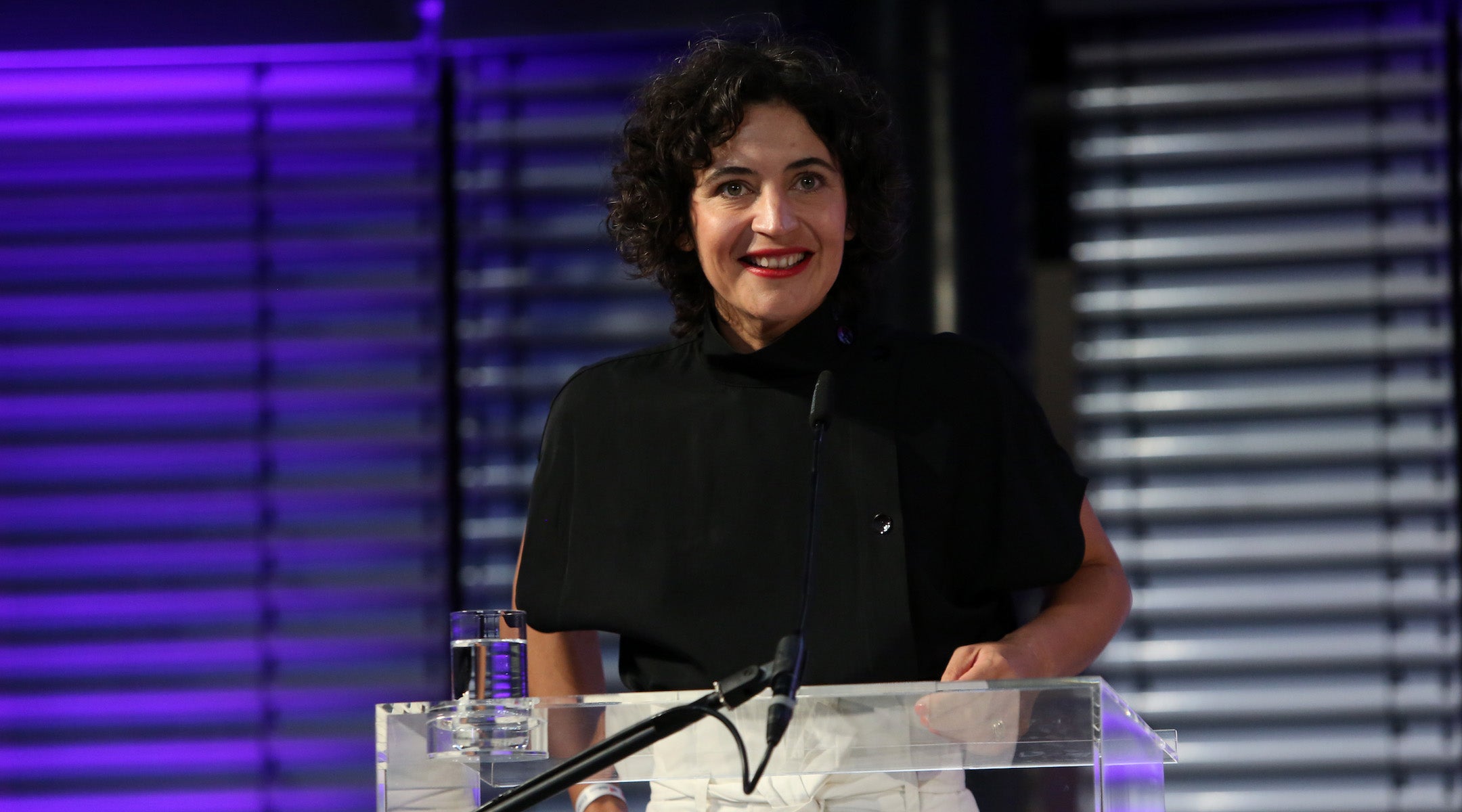
Anna-Lena von Hodenberg, founder of HateAid, attends the ceremony for the presentation of the 2021 ifa Award for the Dialogue of Cultures, at Allianz Forum in Berlin, Sept, 14, 2021. (Adam Berry/Getty Images)
Reached for comment Wednesday, Grinberg said the Trump administration’s move against HateAid’s leaders was “dangerous for people like us.”
“For me personally, and I think for many young Jews who are exposed to antisemitism online, these organizations are crucial,” she said. “These are people who give us tools to respond to the hatred we experience online every day, across all the platforms.”
Today Grinberg is general manager of EU Watch, a watchdog group that critiques the European Union from a pro-Israel perspective.
The individuals were targeted as part of a larger battle on the right to fight what conservatives see as an effort by tech activists to silence conservative voices — an effort that is clashing with institutional Jewish groups’ longstanding push for tougher restrictions on tech platforms to limit the spread of antisemitism and Holocaust denial.
In a statement explaining the restrictions, the State Department said the five activists had run afoul of a visa law passed earlier this year aimed at “foreign nationals who censor Americans.”
On X, Rubio said the administration “will take steps to bar leading figures of the global censorship-industrial complex from entering the United States. We stand ready and willing to expand this list if others do not reverse course.”
The U.S. crackdown on tech activists comes as antisemitism and other kinds of hate content have proliferated on American tech platforms, whose leaders — including some Jews like Instagram and Facebook owner Mark Zuckerberg — have largely cultivated warm relationships with President Trump since he reassumed power.
Regulators in Europe, where laws around Holocaust denial and other forms of hate speech are stricter than in the U.S., have sought to impose a stronger hand on tech platforms that operate on the continent. European regulators have particularly expressed concern about X, where antisemitism and Holocaust denial have become a particularly acute problem.
X is run by billionaire Elon Musk, who is both the world’s richest man and a onetime key Trump ally who played a prominent role in the early months of his administration. Though Musk and Trump have since appeared to have a falling-out, Musk has continued to promote right-wing ideas and Republican causes on X, and has also endorsed European far-right parties. He has long flirted with antisemitic ideas on the platform himself, and has regularly feuded with the Anti-Defamation League.
Sarah Rogers, U.S. undersecretary of state for public diplomacy, gave a more extensive rundown of the reasons behind each visa restriction on X (itself reposted by Musk).
HateAid, Rogers claimed, “routinely demands access to propriety [sic] social media platform data to help it censor more.” Rogers also singled out a remark Ballon had given on a 60 Minutes episode that she said the government found objectionable: “Free speech needs boundaries.”
Ahmed, according to Rogers, was a “key collaborator with the Biden Administration’s effort to weaponize the government against U.S. citizens.” She particularly took offense with the Centre for Countering Digital Hate’s focus on anti-vaccine rhetoric, which had included calls to deplatform Robert F. Kennedy Jr., who, among other things, has spread conspiracy theories linking Jews to COVID-19.
Today Kennedy is Trump’s Secretary of Health and Human Services. He praised the news of the visa restrictions on X, writing, “Once again, the United States is the mecca for freedom of speech!”

Imran Ahmed, CEO of the Centre for Countering Digital Hate, speaks at the Eradicate Hate summit in Pittsburgh, Pennsylvania, Oct. 5, 2023. On Dec. 23, 2025, the US State Department barred Ahmed and four other European digital anti-hate advocates from entering the country. (Screenshot via YouTube)
Rogers, the State Department undersecretary, also invoked a term closely associated with antisemitism — the blood libel — in her justification for why another European figure, Clare Melford, also fell under the new visa restrictions.
Melford runs the Global Disinformation Index, a British nonprofit that says it seeks to counter online disinformation but has been accused by conservative groups of bias. The group has in the past spoken out about misinformation “linking Jews to the origins of the COVID-19 pandemic.”
“If you question Canadian blood libels about residential schools, you’re engaging in ‘hate speech’ according to Melford and GDI,” Rogers wrote on X. She highlighted a description, purportedly from the group, referring to “digital denialism around residential schools.”
The passage highlighted by Rogers references Canada’s infamous residential school system, an effort to force cultural assimilation on the country’s Indigenous populations that resulted in the deaths of thousands of children and persisted for generations. Canada has issued formal apologies for residential schools, with a truth-and-reconciliation commission report concluding that they amounted to cultural genocide.
Conservative parties in Canada have questioned, downplayed or rejected accepted historical accounts of abuses under Canada’s residential school system.
The other European activist barred from the U.S. on Wednesday is Thierry Breton, a former European Union commissioner.
In a statement to JTA, HateAid blasted the decision to bar its leaders from the US as “an act of repression by a government that is increasingly disregarding the rule of law and trying to silence its critics by any means necessary.”
The group added, “We will not be intimidated by a government that uses accusations of censorship to silence those who stand up for human rights and freedom of expression. Despite the significant strain and restrictions placed on us and our families by US government measures, we will continue our work with all our strength — now more than ever.”
Grinberg, the Jewish former student who had sued X along with HateAid, wound up losing her case in German court. But the State Department’s latest moves against her allies, she said, may not amount to much in the end.
“It’s just a statement. Like, OK, two people cannot enter the US. It sucks for them. It sucks for democratic values and for the debating culture. But ultimately, I don’t see how Musk is particularly benefitting from that,” she said. “For me, it’s more a performative act.”
In early 2023, when they first sued Musk’s platform, “we thought antisemitism had never been as bad as it is now,” she said. “Now we see that it is even worse. But that’s why you need counterforces. You need people like them.”
This article originally appeared on JTA.org.
The post Jewish groups defend European media monitors banned for what State Dept. calls ‘censorship’ appeared first on The Forward.
Uncategorized
The Jewish midterms: Races to watch on Election Day
Tuesday’s midterm elections will determine which party controls Congress for the final two years of President Donald Trump’s second term, with Republicans fighting to hold their narrow majorities and Democrats hoping to regain power.
Recent polls suggest Democrats are favored to retake the House and have a strong chance of winning the Senate. Several closely watched gubernatorial races could also shape the field for the 2028 presidential election and increase the number of Jewish governors.
The outcome could have immediate consequences for U.S. foreign policy, particularly American support for Israel and the war with Iran. If Democrats win the House, they would have greater power to investigate Trump’s handling of the war, limit his power and challenge his foreign policy decisions. Democrats will also likely push for restrictions on military aid to Israel, depending on who forms the next Israeli government. Democrats remain divided over Israel and their leadership has so far resisted pressure to pursue major changes to longstanding U.S. policy.
A Democratic takeover of Congress would put House Democratic leader Hakeem Jeffries and Senate Democratic leader Chuck Schumer, both longtime supporters of Israel, in charge of their respective chambers and navigating any divides within their caucus.
The elections will also test whether Democrats can win back voters who shifted toward Trump and will reveal how much influence the party’s progressive wing may have, particularly on Israel and foreign policy going into the presidential primary season.
For Jewish voters, the stakes are especially high. Although they make up only about 2% of the population nationwide, Jewish voters could help decide close races in New York, Michigan, Georgia and Ohio. The results could also show whether frustration with Democrats over Israel is driving more Jewish voters toward Republicans or whether concerns about antisemitism on the right and disapproval of Trump are keeping them in the Democratic camp.
Here are the key races we’re watching and what’s at stake.
– Senate –
Michigan: Abdul El-Sayed (D) vs. Mike Rogers (R)
Issues: The race has become one of the largest tests of the Democratic divide on Israel and antisemitism. El-Sayed, a progressive and fierce critic of Israel, defeated Rep. Haley Stevens in the contested Democratic primary despite millions spent by AIPAC and other pro-Israel groups. Now, Stevens is backing Rogers. El-Sayed has refused to moderate his views and has doubled down on ending Israel aid and his association with Hasan Piker, a popular left-wing pundit who has been accused of antisemitism. El-Sayed said he disagreed with the content of an ad from a PAC supporting his campaign that blamed U.S. aid to Israel for rising grocery prices.
The Jewish vote: The state has an estimated 130,000 Jewish residents, who make up 1.4% of the electorate. The Republican Jewish Coalition spent $2 million to target 50,000 Jewish voters in Oakland County who opposed El-Sayed in the primary; those votes could matter in a close race.
Georgia: Incumbent Jon Ossoff (D) vs. Mike Collins (R)
Issues: Ossoff, the state’s first Jewish senator, has angered some Jewish voters for backing measures to block some aid to Israel. Collins criticized Ossoff for supporting El-Sayed. The Republican has been accused of ties to white nationalists and antisemitic figures, including his son-in-law, who promoted antisemitic conspiracies. Collins rejected their views and condemned antisemitism.
The Jewish vote: Georgia is home to an estimated 150,000 Jews, primarily in Atlanta. Though that represents 1.3% of the electorate, Jewish voters could play an important role in a state where recent elections were decided by narrow margins. The outcome could test whether dissatisfied Jewish Democrats will still support Ossoff over a Trump-aligned Republican and whether his Jewish identity still provides a political advantage.
Florida: Incumbent Ashley Moody (R) vs. Angie Nixon (D)
Issues: Moody, who was appointed to the Senate in 2025 after Marco Rubio became Secretary of State, is a staunch supporter of Israel and led on combating BDS in her previous role as attorney general. Nixon is the first member of the Democratic Socialists of America on a major party ticket. She did not make Israel the centerpiece of her Senate campaign, which focused heavily on affordability, health care and other economic issues. But on Israel and Gaza, her record puts her broadly in line with the DSA’s platform.
The Jewish vote: Florida is home to 750,000 Jews, who make up an estimated 3-5% of the state’s electorate. Moody leads Nixon by an average of 6 percentage points.
– House –
New York 17: Rep. Mike Lawler (R) vs. Cait Conley (D)
Issues: Support for Israel and antisemitism were central in outreach to the Jewish community, though the two candidates have more in common on those issues than their campaigns suggest. Lawler highlighted his ties to Jewish voters and questioned whether Conley would stand up to anti-Israel voices in the Democratic Party, while Conley accuses him of associating with Republicans who have faced accusations of antisemitic rhetoric and ties to white nationalists.
The Jewish vote: The district has 150,000 Jewish residents who make up 19% of the population. At least 20,000 members of the growing Hasidic communities in Rockland County voted for Lawler in 2024. His first race was won by a narrow margin of about 2,000 votes. The margin of victory could determine whether a pro-Israel moderate Democrat could peel away Jewish voters from Lawler’s camp.
New York 10 and 12: Brad Lander and Micah Lasher
Lander and Lasher are heavily favored to win their races in the deep blue districts. They represent a generational transition in the debate over Israel and Jewish influence in Congress, as Jerry Nadler, co-chair of the Congressional Jewish Congress who served as the leading voice in Congress for liberal Jews, is set to retire. Lander, an ally of New York City Mayor Zohran Mamdani and of the pro-Palestinian movement, supports halting all aid to Israel and has called the Gaza war a genocide, while Lasher supports continued aid and calls himself a Zionist.
The Jewish vote: The 12th District has the nation’s largest Jewish population – 24%, while the 10th ranks fourth, at 21%.
New York 13 and 7: Daraliza Avila Chevalier and Claire Valdez
The election of Avila Chevalier, a former Columbia University Gaza War encampment activist, in the 13th District — where Jews make up 6% — and Valdez in the 7th District in Brooklyn — where Jews make up 13% – will put two fierce Israel critics and DSA members at the center of debate over Israel in Congress.
Florida 20: Rep. Debbie Wasserman Schultz (D) vs. Brent Andersen (R)
Wasserman Schultz, one of the most prominent Jewish members in Congress, is favored to win reelection after easily winning the Democratic primary in a redrawn majority-Black district, surviving GOP redistricting. Jews make up just 5% of her new district.
Florida 25: Rep. Jared Moskowitz (D) vs. Scott Singer (R)
Issues: Moskowitz, who built a reputation as an outspoken supporter of Israel and one of the more bipartisan members of the House, easily defeated Oliver Larkin, a democratic socialist and fierce critic of Israel, in the August primary as he clashed with progressives over Israel. Singer, the Jewish former mayor of Boca Raton, highlighted his support for Israel and his roots in the district and, if elected, could increase the Jewish Republican caucus to five members.
The Jewish vote: The district is home to 67,000 Jews, at 8%. Recent polls show a close race, in which Jewish voters will play an important role in deciding whether they are represented by a Jewish Democrat or a Jewish Republican.
California 11: Scott Wiener vs. Connie Chan
Issues: This race to succeed Nancy Pelosi, the former House Speaker, is a test of how far left on Israel is good enough for San Francisco. Both Weiner, who is Jewish and advanced to first place in the Democratic primary, and Chan say that Israel committed genocide in Gaza and want to end U.S. military aid to Israel. Chan, however, is the favored candidate among pro-Palestinian activists, who say Weiner’s characterization of the conflict as a genocide was too little, too late.
Jewish vote: The district is home to 57,000 Jews, 7.5% of the population. Wiener leads Chan by an average of 6 percentage points.
Colorado 1: Melat Kiros (D) vs. Shimon Blau (I)
Issues: Israel has been a defining issue in the race. Kiros, a democratic socialist, has repeatedly declined to call the 2025 firebombing of a walk for Gaza hostages antisemitic. The attacker was heard yelling “Free Palestine” as he threw molotov cocktails, injuring 13 people, including an 82-year-old woman who later died from her injuries. Kiros has since said she understands “the immense pain and fear the Boulder attack caused.” Kiros has also argued in favor of a one-state solution, called for ending both offensive and defensive weapons sales to Israel, and called Hamas’s Oct. 7, 2023 attack the “inevitable consequence of apartheid.” Blau, an Orthodox Jew, said he was inspired to get into the race by what he described as Kiros’ antisemitic rhetoric. He told Axios he’ll caucus with Democrats if elected.
The Jewish vote: Jewish voters make up about 2% of the state’s electorate. Kiros is favored to win and become the first Gen Z woman elected to Congress.
Ohio 7: Rep. Max Miller (R) vs. Brian Poindexter (D)
Issues: Miller, a Jewish Republican and former Trump White House aide, has been an outspoken supporter of Israel and a critic of antisemitism on the left. But his reelection campaign has been overshadowed by allegations of domestic violence and abuse made by his ex-wife, Emily Moreno, the daughter of Republican Sen. Bernie Moreno. Last year, a local doctor was arrested after threatening to kill Miller. Poindexter, a union ironworker endorsed by J Street and the Jewish Democratic Council of America, largely avoided discussing Israel in the campaign.
The Jewish vote: The Cleveland area is home to one of Ohio’s largest Jewish communities, though the Jewish share of the 7th District is estimated at 2%.
Virginia 2: Rep. Jen Kiggans (R) vs. former Rep. Elaine Luria (D)
Issues: Luria, a Jewish Navy veteran, is challenging the Republican incumbent in a closely watched rematch after losing the seat in 2022. In her farewell speech on the House floor, Luria accused some of her colleagues of engaging in antisemitic tropes. Democratic Majority for Israel invested $1 million in a digital ad campaign supporting her political return. Both candidates have military backgrounds, making national security and foreign policy central to the contest.
The Jewish vote: The district’s 8,400 Jewish residents make up 1% of the population.
– Governors –
Ohio: Amy Acton (D) vs. Vivek Ramaswamy (R)
Issues: Ramaswamy, an American First candidate, campaigned twice at a church whose pastor called modern Judaism “fake.” Acton, who is Jewish, faced antisemitic attacks while serving as Ohio’s health director during the COVID-19 pandemic. Ramaswamy boasted during the campaign that he was the first Republican, during the 2024 presidential primary, to propose sunsetting the $38 billion aid for Israel. If Acton wins, she would be Ohio’s first Jewish governor, while Ramaswamy would be the state’s first Hindu governor.
The Jewish vote: Ohio is home to 180,000 Jews, 1.5% of the state’s population. Acton has a four-point lead over Ramaswamy.
New York: Kathy Hochul (D) vs. Bruce Blakeman (R)
Issues: Blakeman, the Jewish Nassau County executive, has made support for Israel and opposition to antisemitism on the left central themes of his campaign against Hochul. But Blakeman has struggled to match the support former Republican gubernatorial candidate Lee Zeldin received from Jewish voters and Hasidic voting blocs four years ago. Hochul has maintained strong ties with Jewish leaders even while working closely with New York City Mayor Zohran Mamdani. She remained a strong supporter of Israel despite growing criticism of the country within her party. A recent Netanyahu critic, Hochul was the first foreign elected official to visit Israel shortly after Oct. 7 and criticized the pro-Palestinian protests on campus. Her most recent state budget included a measure establishing a buffer zone around houses of worship to prevent disruptive protests from blocking access.
The Jewish vote: The state’s 1.8 million Jews have historically played an outsized role in elections, exceeding their 9% share of the population. Organized Hasidic voting blocs are sought after by both parties. This year, most groups endorsed Hochul, in part because of her decisions to pause the implementation of state regulations on secular education in yeshivas and to join the federal tax-credit program created under Trump that would help families pay for private school tuition.
– Other races –
LA Mayor
The competitive race for mayor of Los Angeles features the incumbent, Karen Bass, against Nithya Raman, a democratic socialist, who has threaded the needle on Israel, putting her at odds with the national Democratic Socialists of America, which requires candidates to take an anti-Zionist stance. Bass has rejected the use of the term “genocide” and opposes the movement to boycott Israel. She has also faced criticism from parts of the Jewish community for what some considered an inadequate response to the Pacific Palisades wildfires and for failing to establish protest-free buffer zones outside synagogues.
Colorado Governor
Phil Weiser, the state’s Jewish attorney general, is hoping to succeed Jared Polis, the Jewish governor who is term-limited. Victor Marx, the Republican nominee, has faced antisemitism allegations for depicting Weiser with red horns in an attack ad.
2028 watch
Pennsylvania Gov. Josh Shapiro and Illinois Gov. J.B. Pritzker are both favored to win reelection. Both Jewish politicians have been floated as possible 2028 presidential candidates so how well they perform, and how strong their coattails are, may influence their future prospects.
Texas railroad commissioner
Jewish state Rep. Jon Rosenthal accused his Republican opponent, Bo French, of sending an antisemitic fundraising email in July. French has focused his campaign on culture war issues, despite the office’s limited role: regulating the state’s gas and oil industries.
Michigan Board of Regents
Lena Epstein, who is Jewish, is seeking a seat on one of the two open seats for the Michigan board of regents in an election seen as an Israel litmus test for Democrats. The Democratic nominee, Amir Makled, has faced scrutiny over past social media posts viewed as pro-Hezbollah and antisemitic.
The post The Jewish midterms: Races to watch on Election Day appeared first on The Forward.
Uncategorized
In Michigan, a Black conservative group pushes Jewish and pro-Israel messaging
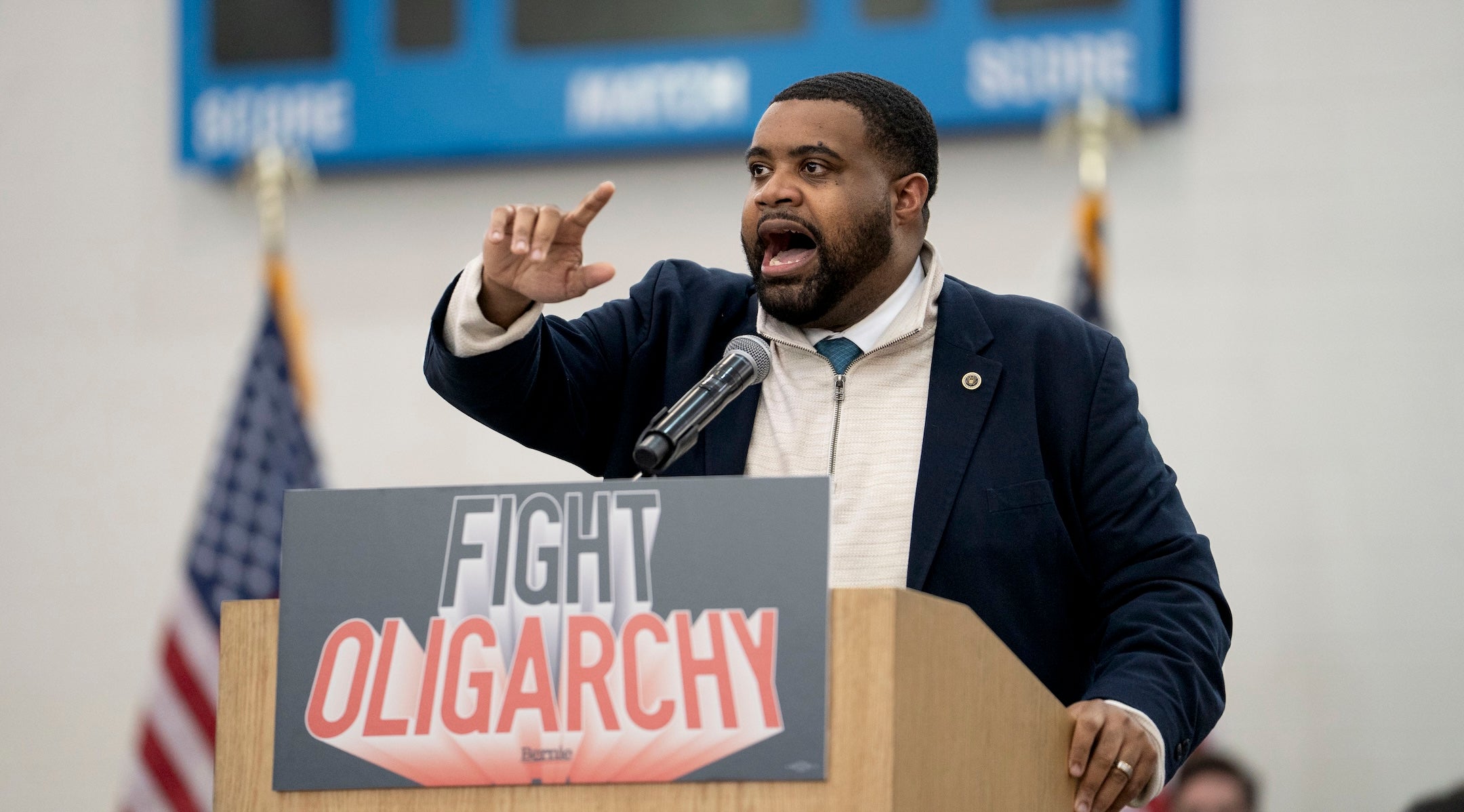
(JTA) — YPSILANTI, Michigan – A Black conservative group is distributing signs and paying for billboards in Michigan encouraging Black voters to support Jews and Israel, in the days before a contentious U.S. Senate race in which the Democratic candidate has struggled to shore up both voting groups.
The Center for Urban Renewal and Education (CURE), a Washington, D.C.-based nonprofit, has paid for a series of yard signs reading “Blacks and Jews Standing Together” throughout cities with high Black populations, including Detroit, Flint and Ypsilanti.
The nonprofit’s director, Star Parker, told the Jewish Telegraphic Agency in an email their goal is “to remind black Christian voters of unique and special reasons to stand with Israel.”
Parker said CURE is also paying for billboards in the area reading “Self Defense is Not Genocide” and “Many Black Evangelicals Agree that Israel Has a Right to Exist.”
The signs and billboards do not name any candidates. But Michigan’s Democratic Senate nominee, Abdul El-Sayed, has alienated many Jewish voters with his rhetoric on Israel and comments on Jewish safety.
He has also had difficulty shoring up Black support, another traditional Democratic constituency, with many Black Detroiters voting for his primary rival, U.S. Rep. Haley Stevens. That phenomenon has shifted somewhat in the race’s final days, with one poll commissioned by the Detroit News suggesting that 87% of likely Black voters would support El-Sayed.
Still, there can be distrust between Black and Arab communities as with Jewish and Arab populations. Sam Robinson, a Detroit-based reporter for a historic Black newspaper who has interviewed scores of Black voters in viral interviews, recently told the Columbia Journalism Review, “There’s a scarcity mindset that there are only so many resources and Arabs are somehow taking Black people’s share.”
Republican Mike Rogers, meanwhile, has courted Black voters as well as Jewish ones, with pro-Rogers ads highlighting tensions between local Black and Arab communities. A new super PAC linked to Rogers has spent heavily on ads stating that El-Sayed “has been disrespectful and dishonest with Black voters.”
CURE’s signs targeting Black voters appeared in the final week of the campaign. They followed an Oct. 22 interfaith roundtable in Detroit hosted by the organization, in which a local rabbi appeared alongside Black pastors to discuss the history of Black-Jewish organizing — a longtime alliance that has been shaken in recent years for a number of reasons.
Rabbi Aaron Bergman of Adat Shalom, a Conservative synagogue in the Detroit suburb of Farmington Hills, participated in the CURE roundtable. Over email, he told JTA that politics was not meant to be the focus of the event.
“It was mostly about teaching about antisemitism, which I guess at this point in history is political,” Bergman wrote.
El-Sayed has focused much of his campaign’s homestretch on shoring up the Black vote, visiting Black churches and holding events with former President Barack Obama and senior U.S. Rep. Jim Clyburn of South Carolina, a Black congressional leader. Driving up turnout in Black communities, usually one of the Democrats’ strongest constituencies, is viewed as key to his chances of taking the seat.
Stevens’ last-minute decision to endorse Rogers instead is a wildcard. Star told JTA she believed many “black Christian voters” would follow her lead.
“Their support for Israel needed a boost,” she said. “I believe this endorsement has taken Mike Rogers over the finish line with black voters.”

Yet there are signs that Palestinian rights may be a more animating issue among Michigan’s Black voters this year than in the past. Pro-Palestinian state Rep. Donavan McKinney, a democratic socialist, won his primary challenge against a pro-Israel incumbent in a majority-Black, Detroit-area congressional district in August. And during one Stevens primary campaign stop in Detroit, a Black community organizer directly confronted her over her support for Israel.
This article originally appeared on JTA.org.
The post In Michigan, a Black conservative group pushes Jewish and pro-Israel messaging appeared first on The Forward.
Uncategorized
New York Jewish leaders defend Democratic AG Letitia James from GOP challenger’s attacks
(JTA) — New York state Attorney General Letitia James and her Republican opponent Saritha Komatireddy are clashing over how to combat antisemitism ahead of Tuesday’s election.
The GOP challenger has frequently attacked James during the campaign over her handling of antisemitic crimes, but prominent Jewish leaders are rallying to defend the Democratic incumbent.
Komatireddy accuses James of turning a “blind eye” to antisemitic hate crimes as they grow more common in the state with the largest Jewish population.
A number of Jewish leaders have lined up to defend James’ record.
Mark Treyger, CEO of the Jewish Community Relations Council of New York, told the Jewish Telegraphic Agency in a statement that he has seen James’ commitment to New York communities “firsthand.”
“When an Ethiopian-Israeli small business owner in Harlem faced hate, she rearranged her statewide schedule to stand with her, offered immediate support, and followed through personally,” Treyger said, referring to anti-Israel backlash that faced Tsion Cafe.
“From confronting antisemitism and discrimination to protecting public safety and celebrating Jewish life, she has remained accessible and responsive to community concerns,” he continued, praising “her unwavering leadership and partnership.”
As a City Council member, James’ district included parts of the heavily Orthodox Jewish Crown Heights neighborhood, and she has called herself an “honorary Lubavitch.” Crown Heights United PAC endorsed James for reelection last month.
As attorney general of New York state since 2019, James is the state’s chief legal officer, leading an office with more than 700 lawyers that conducts statewide criminal and civil investigations.
But as reported hate crimes against Jews across the state have increased in the past decade, Komatireddy, who was a federal prosecutor in New York for more than a decade, says the attorney general isn’t doing enough.
“The data shows that antisemitic hate crimes are surging in New York, and someone has to step in and do something about it, because our DAs are being ineffective in stopping that trend,” Komatireddy said in an interview with JTA, referring to district attorneys who generally oversee the prosecution of hate crimes.
James has rejected Komatireddy’s claims. A campaign spokesperson told JTA that she has “stood arm in arm with the Jewish community all throughout her career.”
“She’s gone after bad actors who preyed upon Jewish New Yorkers time and time again, and will continue to fight against antisemitism and hate in all its forms,” the spokesperson said.
Jewish Democratic politicians in New York are supporting James’ bid. Outgoing U.S. Rep. Jerry Nadler, City Council Speaker Julie Menin and six other Jewish Democratic officials endorsed James at a press conference last week, where they commended her support for the Jewish community.
Manhattan Borough President Brad Hoylman-Sigal praised her for combating housing discrimination against Hasidic families in Orange County and for stopping a Rockland County car wash from overcharging Orthodox Jews.
Menin thanked James for annually marching in the Israel Day Parade — an example, she said, of James “standing with the Jewish community when things are difficult.”
“I’m verklempt right now,” James said after Menin’s remarks.
But some Jewish figures and groups are backing Komatireddy as she attempts to become the state’s first Republican elected as attorney general in more than 30 years. Komatireddy has the endorsement of President Donald Trump, who called James “corrupt” after she brought a civil suit against him over inflated property values and called for her to be removed as special prosecutor in a Cornell University rape lawsuit.
Komatireddy told reporters that she would declare a “state of emergency on antisemitism” on Day One as attorney general — a plan that James told JTA can only be enacted by the governor, not an attorney general.
Asked how she would declare a state of emergency, Komatireddy said she meant that she would utilize a law that allows the attorney general “to step in and prosecute hate crimes when a district attorney has been ineffective in doing so.” Komatireddy’s promises to the Jewish community also include establishing buffer zones outside Jewish schools and synagogues using existing civil rights law.
Komatireddy’s tough-on-crime, tough-on-antisemitism campaign has resonated with some Jewish New Yorkers, and could be the catalyst for “a lot of defections from James to Saritha,” predicted Moshe Davis, who was executive director of the mayor’s office to combat antisemitism under Mayor Eric Adams.
“I think a lot of the Jewish community is taking to her message,” said Davis.
A poll conducted by Siena last month has James ahead 54% to 39%; James led by 6 percentage points in the New York City suburbs.
Rabbi Elie Weinstock, who leads Long Island’s Jewish Center of Atlantic Beach, told JTA that there is “a sense of unease” among Jewish voters regarding antisemitic incidents.
“I think the Jewish community wants to hear people who will say, ‘I’ve got your back,’ and I think whoever gives off that impression will do well in the Jewish community,” said Weinstock, who counts Republican gubernatorial candidate Bruce Blakeman among his congregants.
He added that people’s opposition to New York City Mayor Zohran Mamdani, a Democrat like James, “may guide Jews’ votes” to Komatireddy.
Komatireddy attended a service at Park Avenue Synagogue and posted a video in October of the congregation’s rabbi Elliot Cosgrove wishing her “every blessing on your campaign” from the bimah. In a text to JTA, Cosgrove clarified that, while the post was recent, her visit was in “winter/spring.”
“I don’t / didn’t endorse. I always warmly welcome visitors,” he wrote.
Jewish Insider reported in October that Komatireddy posted photos from a meeting on the street with members of a Black Hebrew Israelite church that has called Jews “imposters” and the “Synagogue of Satan.”
Komatireddy told JTA that this was “an impromptu meeting” on the street in Rochester, and that “once we found out who they were, we rejected the hateful views that the group espouses” and deleted the post.
In March, Komatireddy wrote a scathing piece for the New York Post accusing James of turning a “blind eye” to antisemitic incidents.
But Binyamin Krauss, principal of SAR Academy, a Jewish day school in the Bronx, said “That’s not my experience” of James. Krauss last week hosted the attorney general at SAR, where she spoke with students. He pointed to her “supporting the community” on Manhattan’s Upper West Side after two men were stabbed there over the summer.
“Obviously you can disagree with certain decisions, when to prosecute, what to prosecute, how to handle a certain situation — but I do not agree with that characterization,” said Krauss, who added that he is not endorsing any candidates.
Meanwhile, Davis said that “turning a blind eye” is “not necessarily how I would frame it,” but opined that “people want to see more.” He also said that James is “someone who’s always shown up, always been a friend” to Jewish New Yorkers.
Phylisa Wisdom, who leads Mamdani’s office to combat antisemitism and was executive director of the liberal advocacy group New York Jewish Agenda, told JTA that James “has been a committed advocate for New York’s Jewish communities for decades,” going back to her time on the New York City Council.
“Attorney General James has used the tools of her office to root out antisemitism and help ensure that everyone in the state, including Jewish communities across the five boroughs, can live safely and thrive,” Wisdom said.
The left-wing group Jews for Racial and Economic Justice did not endorse James but recommended her in its voter guide, which commended her for taking action against far-right Zionist group Betar over “an alarming and illegal pattern of bias-motivated harassment and violence designed to terrorize communities and shut down lawful protest.”
This article originally appeared on JTA.org.
The post New York Jewish leaders defend Democratic AG Letitia James from GOP challenger’s attacks appeared first on The Forward.
