


Uncategorized
What will become of the Dutch farm school that saved my father from the Nazis?
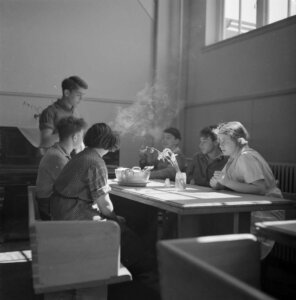
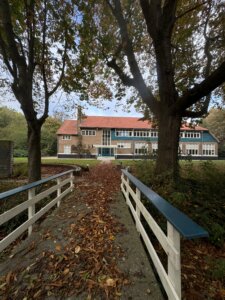
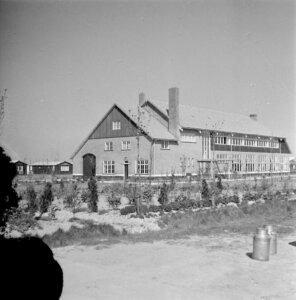
In North Holland, a grand community house rises above neighboring farms. Built in 1936 by students of Werkdorp Wieringermeer (Werkdorp means “work village”; Wieringermeer was the name of the township), the building held the dining room and classrooms of a Jewish farm school. A stunning example of Amsterdam School architecture, the Werkdorp’s brick and cobalt-blue facade dominates the polder, or land claimed from the sea.
Today, the land grows tulips. Nearby, Slootdorp (“Ditch Village”) honors the canals that carry the water away.
In 1939, the school sheltered 300 German-speaking Jewish students, including this reporter’s father, who arrived, his head shaved, on Jan. 4, from Buchenwald.
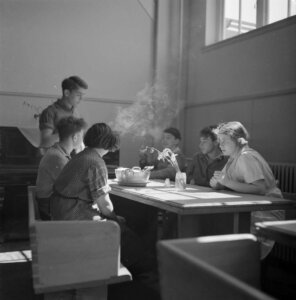
Why a Jewish farm school? In the 1930s, most young German and Austrian Jews were city dwellers and had no idea how to milk a cow, raise chickens, or plow land. But as the Nazis barred Jews from education and professions, farm laborers were the immigrants most wanted by the handful of countries accepting Jewish refugees.
Some 30 such training schools were established in Germany, modeled on the hachsharah throughout Europe that taught Jewish youth the skills to settle in what was then Palestine. The Werkdorp, the largest in Holland, was non-Zionist. Its objective was to send young farmers to any country that would take them.
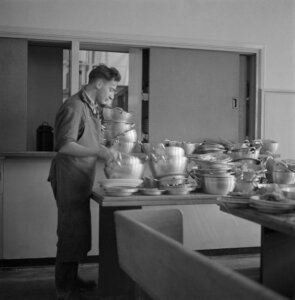
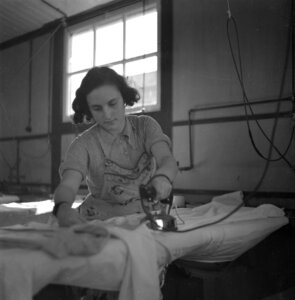
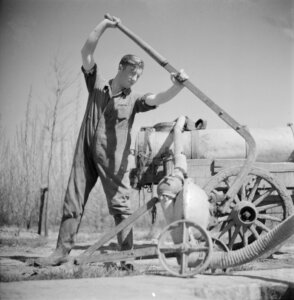
Today, volunteers have assembled a grassroots museum that showcases the Werkdorp’s years, 1934 to 1941. Pinned to the walls inside are pictures taken by the Russian-American photographer Roman Vishniac, who visited in 1938, and by the Dutch photojournalist Willem van de Poll. They show students haying, plowing, feeding chickens, baking bread.
Also on the walls are images of the nearly 200 Werkdorpers who were not as lucky as my father. The Nazi official Klaus Barbie — who became known as the “Butcher of Lyon” for his harsh treatment of resistance fighters there — rounded up the Werkdorpers in 1941 and sent them east to concentration camps, where they were murdered.
A scroll of those victims’ names hangs near the entrance. In the huge kitchen, you can still see the kosher sinks, one tiled red and white for dishes for meat, the other black and white for dairy. Otherwise, the three floors of the great hall stand largely empty.
Protected from demolition by the Netherlands Agency for Cultural Heritage, the community house and its land have been owned since 2008 by Joep Karel who runs a private real estate company that builds housing. Karel pays for the building’s upkeep and opens it to cultural groups and schools.
But the developer has a grander plan. He wants to create a modern memorial center that tells the story of the Werkdorpers and the polder. To fund his venture, he would erect housing behind the community house, to be rented by migrant workers. In April 2020, the council of Hollands Kroon — the Crown of Holland, as the township is called today — approved such housing for 160 workers.
The organizers of the museum are uncertain: Will the project enhance their efforts, or thwart them?
A hero or a collaborator?
North Holland juts like the thumb of a right mitten into the North Sea. A decade before the community house was inaugurated in January 1937, the land beneath it was seabed. The first students, 11 boys and four girls, arrived in 1934 to live in barracks that had housed the polder’s builders. Their task: to build a school.
The farm school admitted refugees for a two-year course. Its purpose was to help them emigrate, the only way The Hague would allow the school to function. Residents spoke German; there was no need to learn the language of one’s temporary home.
Gertrude van Tijn, a leader of the Dutch Jewish refugees committee — tasked with finding countries that would accept thousands of Germans and Austrians forced to flee the Nazis — handled admissions. Most of the Werkdorp’s budget came from Dutch Jewish donors, with contributions from Jewish groups in Britain and America. Students’ families paid fees if they could.
The school was internationally recognized. James G. McDonald, the American high commissioner for refugees of the League of Nations, attended its opening ceremony. The legal scholar Norman Bentwich praised the village in The Manchester Guardian. Although the school was non-Zionist, Henrietta Szold, a leader of Youth Aliyah, brought 20 German teenagers there in 1936.
Werkdorp Wierengermeer helped at least 500 German and Austrian Jews, ages 15-25, escape the Nazi regime.
It was Van Tijn, a German Jew who’d married a Dutchman, who got my father, George Landecker, out of Buchenwald. He had been arrested in Frankfurt on Kristallnacht, the November 1938 pogrom, and sent east by train to Buchenwald.
In the camp he met his friends and teachers from Gross Breesen, a farm school in eastern Germany, from which he had graduated that May. Breesen was the Werkdorp’s sister farm school. By admitting the Breeseners and my father to the Werkdorp, Van Tijn got Dutch entry permits for all.
For the Gestapo in January 1939, such proof that a prisoner could leave Germany secured freedom.
Van Tijn saved thousands of young people like my father, but she worked with the Nazis to do so. After the war, historians and people seeking to repatriate Dutch Jews called her a collaborator. She moved to the United States and wrote a memoir, in which she criticized other Jewish leaders for their decisions under German rule. According to her biographer Bernard Wasserstein, she never published the memoir because she didn’t want to make money from describing the atrocities she had seen.
When my father arrived in 1939, the Werkdorpers were cultivating 150 acres — there was wheat, oats, rye, barley, and sugar beets for the animals: 60 cows, 40 sheep, and 12 workhorses. The residents raised chickens, grew vegetables, and baked their own bread. The school taught carpentry, welding and plumbing, skills I would see my father use, not always deftly, later as a dairy farmer in New York state. (Dad was a good farmer, but he was less than expert in all the other skills a farmer needs.)
My father got a visa to America and left Rotterdam on the steamship Veendam, arriving in New York on Feb. 5, 1940. Three months later, the Nazis invaded Holland, cutting off all routes of escape.
‘Their names should be spoken’
Over the decades, Wieringer residents have found ways to commemorate the residents who died.
Marieke Roos, then a board member of the Jewish Work Village Foundation, proposed a monument of their names. She raised funds and recruited volunteers. Completed in 2021, the memorial comprises 197 glass blocks embedded in a semicircle at the building’s gateway. They mirror the layout of the dorms, now long gone, which once embraced the rear of the community house. Each block commemorates a student, teacher, or family member deported and murdered. One honors Frits Ino de Vries (1939–43), killed at Auschwitz with his mother and sister, Mia Sara, who was 5.
Corien Hielkema, also from the foundation, teaches local middle schoolers about the Werkdorpers’ fate. Each student creates a poem, painting, or website about a Werkdorper because “their names should be spoken and their stories told,” she told me.
Rent from migrant workers may sound like an unusual way to fund a memorial center. But in Joep Karel’s plan, such housing would be built behind the community house, and would be reminiscent of the dormitories where my father lived. Hollands Kroon’s biggest exports are flowers, cultivated by workers from the eastern EU. The region desperately needs housing for these temporary workers. In 2024, the province gave Karel 115,000 Euros to start the project.
Joël Cahen, who chairs the fundraising for Karel’s Jewish Work Village Cultural Center, says that attracting tourists here won’t be easy — it’s a 45-minute drive from Amsterdam, “along a boring road,” he said. Nevertheless, he said he thinks Karel’s idea will work, though “it will take time.”
Some neighbors objected to housing migrant workers, Cahen said. They feared noise pollution, traffic and drugs. Months of legal delay produced a court decision in Karel’s favor, but by then construction costs had skyrocketed.
Now, Cahen said, Karel needs an investor. The developer did not answer a question about how that search is going, except to say, via Cahen, that he would break ground “as soon as possible.” Roos says she has been hearing “soon” for years.
And if the housing were to be completed and the workers arrived, where would they hang their laundry, store their recycling, hide their trash? It would be hard to hide the chaff of daily living on the site’s four acres. Who would visit such a memorial center, and how would the owner keep it running?
Those are legitimate questions, Cahen said. But “we need people to help us push this thing forward. This is a chance.”
Kees Ribbens, a senior researcher at the NIOD Institute for War, Holocaust and Genocide Studies, in Amsterdam, told me that the community house has no “comparable examples in the Netherlands.” It is a “special building,” and a memorial center “would certainly be appropriate.”
Most of the agricultural training centers that saved German Jewish youth have been destroyed or reused. The director’s house of a farm school in Ahlem, Germany, is now a museum. But it became the local Gestapo headquarters, so it also tells that story. The Ahlem school buildings are gone. Gross Breesen, now in Poland, is a fancy golf spa.
The Werkdorp is one of a very few farm schools in Europe whose original building is dedicated to its history.
What my father did and didn’t tell me
My father talked a lot about his first farm school, Breesen. Survivors from Breesen, in America and around the world, remained his closest friends.
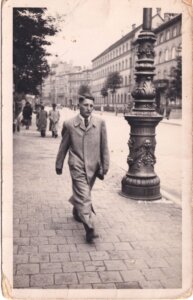
Yet he mentioned his time in the Netherlands only once. My mother had served a Dutch cheese to some guests. Dad told us how he’d been hitchhiking in Holland with a friend, when a truck carrying Edam cheeses had picked them up. They rode in the truckbed, hungry, surrounded by giant cheese wheels.
It was such a slim memory. I assumed he had lived in Holland for a few weeks. I learned only recently that Werkdorp Wieringermeer had protected him from January 1939 until February 1940.
Now I think my father didn’t want to remember his Dutch year. Because like refugees today, everywhere, he was terrified.
Dad once told an interviewer how he’d read a memoir by a man who was arrested on Kristallnacht and transported by train to Buchenwald. My father realized, “That’s me. I did that too.” He had no memory of actually doing it at all.
The brain is good at shielding us from trauma. His year at Werkdorp Wieringermeer may have been like his train ride after Kristallnacht, a time he needed to forget. He was worrying about his parents and siblings, who would not escape Germany until November. (One brother, his wife, and toddler would not survive the war.) He was anxious about the U.S. visa the Breeseners had applied for as a group (they circumvented the American quota on Germans, another story). He had been forced to watch people hanged at Buchenwald for trying to escape.
Yet my father was an optimist when I knew him, and never dwelled on suffering. And I never thought, “I should ask about his experience in the Holocaust because I will want to write about it one day.”
So the only thing I knew about his experience in the Netherlands was that he’d hitched a ride in a truck full of cheese.
An hour’s drive beyond the Werkdorp from Amsterdam, there’s a memorial to the 102,000 people deported from the transit Kamp Westerbork and murdered during the Second World War. It draws 150,000 visitors annually. Cahen hopes the Werkdorp could attract 10,000.
Like Westerbork, the Werkdorp was a transit point — but with a key difference: Many of its residents were saved.
As the daughter of one of them, I hope the tension over the future of its community house will ease, and that someone will make a grand memorial center flourish there.
The post What will become of the Dutch farm school that saved my father from the Nazis? appeared first on The Forward.
Uncategorized
One university canceled Hasan Piker. Another has him going to the chapel tonight.
University of Washington canceled him. University of Texas offered limited seating. On Thursday, Cornell University will open the doors of its historic chapel to host Hasan Piker, a controversial left-wing pundit with a history of antisemitic comments.
Three universities, three different receptions for the far-left Twitch streamer who has attracted millions of fans with his raw rhetoric that has veered, on more than one occasion, into antisemitism. Most recently, Piker warned American Jews who “keep putting this idea out there that they are singularly invested in Israel,” that someone could eventually “take action against” them.
Universities seem torn about whether – and how – to host him. Jewish campus groups are divided too. Jewish Voice for Peace invited Piker to Cornell, along with other student groups, while Cornellians for Israel opposed his appearance.
A statement released by leaders of Hillel at Cornell University emphasized their commitment to the campus as a place for disagreement, pluralism and debate, but put Piker in a different category.
“Mr. Piker’s views… go against our values as Americans and Jews, and his hateful, antisemitic rhetoric is repulsive,” the statement said.
That outrage has not discouraged campus groups including College Democrats, democratic socialists and pro-Palestinian organizations from booking the rising influencer, who has campaigned with a number of progressive Democratic candidates leading up to the midterm election. They say Piker, 35, is the voice their generation needs to hear to get out the vote.
“This is a guy that has a modern media presence,” one student told the Yale Daily News when Piker appeared there in April. “He reaches to our demographic exactly, people that are our age.”
But Piker, who told students that empathy was the core philosophical underpinnings of his political beliefs, has laughed at the suggestion that campus antisemitism is on the rise. In one livestream, he called a Jewish man a “bloodthirsty, violent pig dog,” accusing him of wanting to execute every Palestinian in the street. In another, discussing efforts to compel ultra-Orthodox Jews to serve in the Israel Defense Forces, he described them as “inbred.”
At Northwestern University, where he appeared in March, a student asked Piker how to talk about the Middle East conflict with his Zionist friends without ending the friendship.
“I think you shouldn’t give up on your friends and try to have normal conversations with them about how they probably don’t care about Israel as much as they think they do,” Piker responded, according to The Daily Northwestern, “because if they did, they’d probably live there.”
In his remarks at Yale, Piker called the wars that have cemented America’s imperial roots “an endless series of butcheries, each more perverse and more tragic than the last.”
“What was the point of defeating the Nazis if we went on to dominate so much of the globe as violently as we have?”
‘Heckler’s veto’
Ryan Ansloan, senior program counsel in the policy reform department of the Foundation for Individual Rights and Expression (FIRE), says those comments are not enough to bar Piker from speaking on campus.
Ansloan warns against canceling or preventing events based on what is known as a “heckler’s veto,” or the possibility that a percentage of the campus community is not going to like it.
“Ultimately it sends a bad message to the campus community that if you complain enough or threaten to disrupt an event you don’t like, you can get your way and prevent that event from even taking place,” he told the Forward. “That has implications that go beyond that single event and can have a chilling effect. As long as that student body remains on campus, that incident is going to stick in their minds.”
Conservatives have long championed free speech on campus, often accusing activists on the left of wielding safety concerns to disinvite alt-right speakers to campuses. Think British far-right provocateur Milo Yiannopoulos and his tour a decade ago; or Ann Coulter, who was harassed off the stage coincidentally at Cornell, her alma mater.
But since the murder of conservative activist Charlie Kirk at Utah Valley University last year, safety has been raised by activists on both sides of the political aisle, Ansloan said. According to FIRE’s Campus Deplatforming Database, many objections are tied to speakers on the Israeli-Palestinian conflict.
For example, after opposition from the right, the University of Southern Maine in February revoked seven invitations and canceled a one-day conference titled “The Consequence of Palestine.”
Around that same time, the Catholic University of America rejected a request from the campus chapter of the Students Supporting Israel (SSI) to host U.S. Rep. Randy Fine, a Jewish congressman from Florida, who has drawn public condemnation for his anti-Muslim rhetoric, and Dany Tirza, a retired IDF colonel and security fence architect to speak on the West Bank barrier.
With Piker, outrage has paled to the demand. At Cornell, tickets for Piker’s appearance in the 600-seat university chapel were claimed within hours of their release. Piker also will be live streaming the event on his Twitch channel.
At the University of Texas, University Democrats planned to host the Sept. 30 event in a 466-seat auditorium, but 2,500 people signed up. Despite suggestions from campus police to find a larger venue, the university has not been willing to provide one with more space.
“This has the potential to be the largest political event in Austin since like 2018,” the group’s president Adit Raha told a local TV station, adding that he hasn’t ruled out shifting the event off campus.
“This event will be happening no matter what. We’re not going to cancel the event.”
But even Democratic politicians in Texas are concerned.
“Free speech allows difficult and controversial views, but it does not require anyone to stay silent when someone has a history of hateful comments about Jewish Americans, 9/11 and Hamas terrorism,” U.S. Rep. Henry Cuellar (D-Texas) wrote on X. “Jewish students at UT should not be made to feel targeted or unsafe on their own campus.”
Cancellation was the solution at the University of Washington for an upcoming talk in January 2027. While the university insisted in a statement that it’s “dedicated to the free exchange of ideas, including on controversial topics and involving provocative speakers,” it reviewed the process by which the Piker lecture was planned and determined it along with six other events “did not meet the necessary level of rigor for University-hosted events in the Speaker Series.”
A university spokesman clarified that those seven invitations, including Piker’s, did not undergo the committee review. No effort has been made to reschedule Piker and submit the invitation for review.
The statement continued: “Going forward, procedures will be updated to ensure the standards we have for University-hosted events like the Speaker Series are met, particularly so that we can help elevate the level of dialogue on divisive topics during a polarized time in our country.”
The post One university canceled Hasan Piker. Another has him going to the chapel tonight. appeared first on The Forward.
Uncategorized
Hundreds rally at United Nations to urge world leaders to address antisemitism
(JTA) — Hundreds of members of New York’s Jewish community competed against stand-still traffic, security details and dozens of black SUVs Wednesday night to reach Dag Hammarskjöld Plaza near the United Nations.
Their plea? For world leaders at the global body’s annual General Assembly to take antisemitic violence seriously.
“This week world leaders are gathered in our city, right down the street at the United Nations, to discuss global challenges,” Eric Goldstein, CEO of the UJA-Federation of New York, said in his opening remarks. “But we know that they are not addressing the rampant proliferation of antisemitism across the world.”
Organized by UJA and the Jewish Community Relations Council of New York, the evening rally featured a number of interfaith speakers, as well as survivors of various antisemitic hate crimes around the world from Nova to Bondi Beach.
Devorah Halberstam, whose son Ari was murdered on the Brooklyn Bridge in 1994 in a terror attack, gave an impassioned speech, imploring world leaders to “tell your people: Take this message back to your countries. Antisemitism must stop. Not tomorrow. Not when it becomes politically expedient. Right now.”
A number of speakers Wednesday night criticized New York City Mayor Zohran Mamdani, questioning whether he could truly be a mayor to New York City’s Jews who fundamentally disagree with him on Israel. Others, like Anti-Defamation League CEO Jonathan Greenblatt called out a more general “deliberate passivity in the face of antisemitism,” likening it to complicity.
Also speaking Wednesday was George Zamot, a UPS driver who intervened in July’s stabbing attack on the Upper West Side, in which a Jewish man and an Asian man were injured.
While some speakers focused on the dangers of antisemitism, a few addressed moments of community that resulted from such terrible events.
In a display of unity, Nova music festival survivor Shalev Biton gave remarks while also translating the remarks of Younes Alkarnawi, the Bedouin man who saved his life.
The rally’s audience dwindled as the evening wore on, and a small group of counterprotestors from the anti-Zionist group Neturei Karta became increasingly loud.
The demonstration follows recent public gatherings addressing antisemitism in New York City, including a contentious prayer vigil held by two Orthodox Jewish day schools outside the mayor’s home of Gracie Mansion last week.
It also marks a pivot toward more community advocacy within the scope of UJA’s work. (70 Faces Media, the parent company of the Jewish Telegraphic Agency and New York Jewish Week, receives UJA funding.)
In an interview earlier this week with eJewishPhilanthropy, UJA’s executive vice president for community strategy and external relations Hindy Poupko called the Wednesday evening rally “an attempt to ensure that our narrative doesn’t get drowned out during this U.N. week.”
This article originally appeared on JTA.org.
The post Hundreds rally at United Nations to urge world leaders to address antisemitism appeared first on The Forward.
Uncategorized
How Russian and Austrian politics gave rise to modern Yiddish literature
פֿון װאַנען האָט זיך גענומען די מאָדערנע ליטעראַטור אױף ייִדיש און העברעיִש? ביז הײַנט האָט מען געהאַלטן, אַז זי איז געװען אַ פּועל־יוצא פֿון דער השׂכּלה־אידעאָלאָגיע, װאָסער ציל איז געװען צו דערציִען די ייִדישע מאַסן אינעם גײַסט פֿון דער אײראָפּעיִשער אױפֿקלערונג־קולטור.
עופֿר דינעס (קאָלאַמביע־אוניװערסיטעט) האַלט, אַז אַ װיכטיקע ראָלע אין דער אַנטוויקלונג פֿון דער מאָדערנער ליטעראַטור בײַ ייִדן האָט געשפּילט די נײַע קאָלאָניאַלע פּאָליטיק פֿון די רוסישע און עסטרײַכישע אימפּעריעס נאָך די צעטײלונגען פֿון פּױלן סוף־18טן יאָרהונדערט.
אונטער דער אַלטער פּױלישער מאַכט האָבן ייִדישע יחידים ניט געהאַט קײן דירעקטן שײכות צו דער מלוכה. די קהילות האָבן זיך געפֿירט לױט זײערע אײגענע תּקנות און מנהגים, און זײער קאָלעקטיװער פֿאָרשטײער פֿאַר דער מלוכה איז געװען דער װעד ארבע ארצות (די פֿאַרװאַלטונג פֿון פֿיר לענדער).
די נײַע אימפּעריאַלע מלוכות האָבן אָפּגעשאַפֿן דעם דאָזיקן רעזשים און גענומען אײַנפֿירן אַלגעמײנע געזעץ־געבונג פֿאַר אַלע אונטערטאַנער זײערע, ייִדן בתוכם. דינעסעס בוך באַשרײַבט ווי אַזוי די משׂכּילים האָבן גענומען אױף זיך די אױפֿגאַבע צו דערקלערן די דאָזיקע פּאָליטיק פֿאַר די ייִדישע מאַסן דורך זײערע ליטעראַרישע װערק.
דאָס קעפּל פֿון דינערס בוך לאָזט זיך ניט גענױ איבערזעצן אױף ייִדיש. דאָס ענגלישע װאָרט fiction האָט צװײ פֿאַרשײדענע באַטײַטן: בעלעטריסטיק און פֿיקציע, און זײ בײדע באַלאַנגען צו דעם מײן פֿונעם קעפּל: “די בעלעטריסטיק/פֿיקציע פֿון דער מלוכה“.
דורך זײערע בעלעטריסטישע װערק, האַלט דינעס, האָבן די משׂכּילישע מחברים געשאַפֿן אַן אידעאַליזירטן אימאַזש, אַ „פֿיקציע“, פֿון דער גוטװיליקער מלוכישער מאַכט, װאָס זאָרגט זיך װעגן דעם װױלזײַן פֿון אַלע אירע אונטערטאַנער.
די דאָזיקע פּאָזיציע האָט פֿאָרמולירט ישׂראל אַקסענפֿעלד (1787־1866) אין „דאָס שטערנטיכל“, דעם ערשטן ייִדישן ראָמאַן: „דאָס פּױלישע ביטערע אָנגעבלאָזענע גדלות, די פּױלישע גאװה איז בײַם רוס ניטאָ. אַ רוס, אַז ער קען זיך מיט אַ ייִדן און האָט מיט אים עטלעכע מאָל צו טאָן, רופֿט ער אים ׳בראַט׳’ [ברודער]. אַפֿילו דער פֿאַקטאָר [קאָמיסיאָנער], אַז ער [דער ייִד] דינט אים געטרײַ, האָט ער אים ליב.“
דינעסעס העלדן זײַנען פֿאַרשײדענע פֿיגורן. אײניקע זײַנען באַרימט, װי דער „זײדע“ פֿון דער ייִדישער ליטעראַטור, שלום־יעקבֿ אַבראַמאָװיטש (מענדעלע מוכר ספֿרים); דער גאַליציאַנער משׂכּיל יוסף פּערל און רבי נחמן פֿון בראַצלעװ.
אַנדערע זײַנען שוין כּמעט פֿאַרגעסן געװאָרן, װי דער העברעיִשער דיכטער משה אלחנן — דער מחבר פֿון צװײ העברעיִשע לױבגעזאַנגען. אײן שיר איז געװען געװידמעט דעם פּױלישן קעניג און דער צװײטער — דעם רוסישן צאַר. אַ צווייטער בײַשפּיל איז דער עסטרײַכישער באַאַמטער יאָהאַן עדואַרד זאַק, דער פֿאַרפֿאַסער פֿון אַ סאַטירישן ראָמאַן, װאָס מאַכט חוזק פֿון די גאַליציאַנער חסידים.
עס איז גוט באַקאַנט, אַז די משׂכּילים, בפֿרט דער טאַרנעפּאָלער סוחר יוסף פּערל, האָבן אין זײערע סאַטירישע חיבורים אױסגעלאַכט די חסידים..
אָבער מיט דער צײַט האָט פּערל דערזען, אַז דאָס איז ניט גענוג פֿאַר באַקעמפֿן די השפּעה פֿון חסידות. ער האָט זיך גענומען מסרן זײ צו די עסטרײַכישע אינסטאַנצן דורך זײַנע ליטעראַרישע װערק. װײַזט אױס, אַז די עסטרײַכישע פּאָליצײ האָט געהאַט מומחים, װאָס האָבן געקענט לײענען ייִדיש און העברעיִש.
להיפּוך צו די משׂכּילים, זײַנען די חסידים ניט געװען אײַנשטימיק אין זײער באַצי צו דער רוסישער אימפּעריע. דער גרעסטער אָנהענגער פֿון רוסלאַנד איז געװען דער גרינדער פֿונעם חב״ד, ר׳ שניאור זלמן פֿון ליאַדי. ער האָט געהאַלטן, אַז די קאָנסערװאַטיװע רוסישע פּאָליטיק העלפֿט באַשיצן ייִדישקײט קעגן די נײַע מערבֿדיקע אידעען.
ר׳ נחמן פֿון בראַצלעװ האָט געהאַט אַן אַנדער דעה. כּסדר האַלט מען זײַנע סיפּורי־מעשׂיות פֿאַר מיסטישע אַלעגאָריעס. אַ סך פֿון זײ דערצײלן װעגן אַ מלך און זײַן מלוכה. אַלעגאָריש טײַטשט מען דאָס אױס װי דער רבונו של עולם און די באַשאַפֿענע װעלט זײַנע.
אָבער דינעס לײענט די דאָזיקע מעשׂיות דורך אַ היסטאָרישן פּאָליטישן שפּאַקטיװ. ער האַלט, אַז צו מאָל איז דער מלך טאַקע פּשוט אַ קעניג און זײַן קעניגרײַך איז אַן עכטע מלוכה.
ר׳ נחמנס קריטיק פֿון דער נײַער אימפּעריאַלער פּאָליטיק איז ספּעציעל בולט אין דער „מעשׂה ממלך שגזר שמד“ („מעשׂה װעגן אַ קעניג װאָס האָט באַפֿוילן שמד“), װאָס מאָלט אױס אַ דעספּאָטישן מאָנאַרך.
דורך זײַנע אַלעגאָריעס האָט ר׳ נחמן געפּרוּװט דערקלערן זײַנע חסידים, אַז די נײַע רוסישע בעלי־בתּים זײַנען אױסן מװתּר צו זײַן די אױטאָנאָמיע, װאָס די ייִדישע קהילות האָבן גענאָסן אונטער דער פּױלישער מאַכט.
ר׳ נחמנס כּװנה, האַלט דינעס, איז געװען צו באַשיצן ייִדן פֿון דער נײַער מאַכט. צוליב דעם האָט ער ספּעציעל אױסגעקליבן די שטאָט בראַצלעװ (בראַסלעװ) אין פּאָדאָליע פֿאַר זײַן רעזידענץ, װײַל דאָס איז געװען אַן אַדמיניסטראַטיװער קרײַז־צענטער.
ר׳ נחמן האָט געהאָפֿט, אַז בראַצלעװ װעט זײַן „די פֿאַבריק פֿון ייִדישקײט“, און אַזױ אַרום „װעט די גאַנצע װעלט ווערן בראַסלאַװער חסידים“. די דאָזיקע װערטער האָט פֿאַרשריבן זײַן געטרײַער תּלמיד ר׳ נתן שטײנהאַרץ.
דינעס איז אַ געניטער דערצײלער. אױף די זײַטן פֿון זײַן בוך טרעפֿן זיך פּױלישע פּריצים, רוסישע מיליטער־לײַט, עסטרײַכישע פּאָליצײ און כּל־מיני ייִדן: משׂכּילים, חסידים, משומדים. ער אַנטפּלעקט פֿאַרכאַפּנדיקע פּרטים און אומשטאַנדן, װאָס לאָזן אױף ס׳נײַ אױסטײַטשן ליטעראַרישע טעקסטן.
סוף־18טן און אָנהײב־19טן יאָרהונדערט איז געװען אַ שטורעמדיקע תּקופֿה איבער גאַנץ אײראָפּע. די צעטײלונגען פֿון פּױלן און דערנאָך די מלחמות קעגן נאַפּאָלעאָנישן פֿראַנקרײַך האָבן שטאַרק געענדערט די פּאָליטישע מאַפּע פֿון מיטל־ און מזרח־אײראָפּע.
די דאָזיקע דראַמאַטישע געשעענישן האָבן פֿאַרטיפֿט דעם שפּאַלט אינעם פּױלישן ייִדנטום. די העכערע שיכטן, פֿאַרמעגלעכע שטאָטישע בעלי־בתּים, האָבן לרובֿ געשטיצט די נײַע פּאָליטיק און געצױגן נוצן פֿון דער לעגאַלער אָרדענונג אין רוסלאַנד און עסטרײַך.
אָבער די אָרעמע שטעטלדיקע מאַסן, בפֿרט חסידים, האָבן חושד געווען, אַז די נײַע מאַכט מאַכט וועט זיך אַרײַנמישן אין זײער עסקים כּדי אָפּצוציִען ייִדן פֿון ייִדישקײט.
בײדע צדדים האָבן גענומען פֿאַרשפּרײטן זײערע אידעען דורך ליטעראַרישע טעקסטן אין פֿאַרשײדענע זשאַנערס, אַזעלכע װי מעשׂיות, לידער, ראָמאַנען און סאַטירישע פּאַמפֿלעטן. און פֿון אָט די דאָזיקע װיכּוחים איז אױסגעװאַקסן די מאָדערנע צװײ־שפּראַכיקע ייִדישע ליטעראַטור.
The post How Russian and Austrian politics gave rise to modern Yiddish literature appeared first on The Forward.
