


Uncategorized
What will become of the Dutch farm school that saved my father from the Nazis?
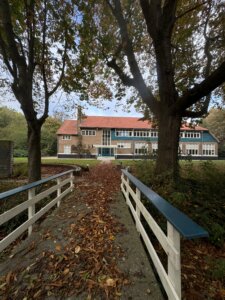
In North Holland, a grand community house rises above neighboring farms. Built in 1936 by students of Werkdorp Wieringermeer (Werkdorp means “work village”; Wieringermeer was the name of the township), the building held the dining room and classrooms of a Jewish farm school. A stunning example of Amsterdam School architecture, the Werkdorp’s brick and cobalt-blue facade dominates the polder, or land claimed from the sea.
Today, the land grows tulips. Nearby, Slootdorp (“Ditch Village”) honors the canals that carry the water away.
In 1939, the school sheltered 300 German-speaking Jewish students, including this reporter’s father, who arrived, his head shaved, on Jan. 4, from Buchenwald.
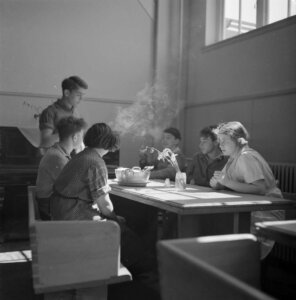
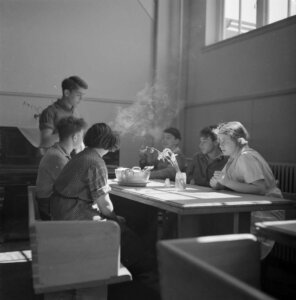
Why a Jewish farm school? In the 1930s, most young German and Austrian Jews were city dwellers and had no idea how to milk a cow, raise chickens, or plow land. But as the Nazis barred Jews from education and professions, farm laborers were the immigrants most wanted by the handful of countries accepting Jewish refugees.
Some 30 such training schools were established in Germany, modeled on the hachsharah throughout Europe that taught Jewish youth the skills to settle in what was then Palestine. The Werkdorp, the largest in Holland, was non-Zionist. Its objective was to send young farmers to any country that would take them.
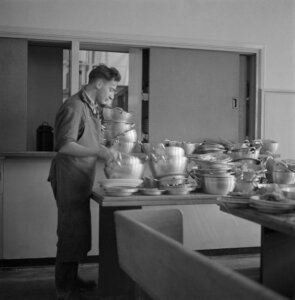
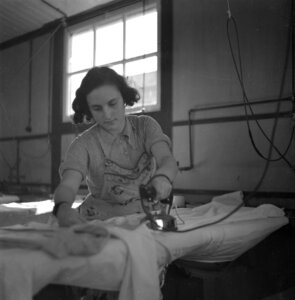
Today, volunteers have assembled a grassroots museum that showcases the Werkdorp’s years, 1934 to 1941. Pinned to the walls inside are pictures taken by the Russian-American photographer Roman Vishniac, who visited in 1938, and by the Dutch photojournalist Willem van de Poll. They show students haying, plowing, feeding chickens, baking bread.
Also on the walls are images of the nearly 200 Werkdorpers who were not as lucky as my father. The Nazi official Klaus Barbie — who became known as the “Butcher of Lyon” for his harsh treatment of resistance fighters there — rounded up the Werkdorpers in 1941 and sent them east to concentration camps, where they were murdered.
A scroll of those victims’ names hangs near the entrance. In the huge kitchen, you can still see the kosher sinks, one tiled red and white for dishes for meat, the other black and white for dairy. Otherwise, the three floors of the great hall stand largely empty.
Protected from demolition by the Netherlands Agency for Cultural Heritage, the community house and its land have been owned since 2008 by Joep Karel who runs a private real estate company that builds housing. Karel pays for the building’s upkeep and opens it to cultural groups and schools.
But the developer has a grander plan. He wants to create a modern memorial center that tells the story of the Werkdorpers and the polder. To fund his venture, he would erect housing behind the community house, to be rented by migrant workers. In April 2020, the council of Hollands Kroon — the Crown of Holland, as the township is called today — approved such housing for 160 workers.
The organizers of the museum are uncertain: Will the project enhance their efforts, or thwart them?
A hero or a collaborator?
North Holland juts like the thumb of a right mitten into the North Sea. A decade before the community house was inaugurated in January 1937, the land beneath it was seabed. The first students, 11 boys and four girls, arrived in 1934 to live in barracks that had housed the polder’s builders. Their task: to build a school.
The farm school admitted refugees for a two-year course. Its purpose was to help them emigrate, the only way The Hague would allow the school to function. Residents spoke German; there was no need to learn the language of one’s temporary home.
Gertrude van Tijn, a leader of the Dutch Jewish refugees committee — tasked with finding countries that would accept thousands of Germans and Austrians forced to flee the Nazis — handled admissions. Most of the Werkdorp’s budget came from Dutch Jewish donors, with contributions from Jewish groups in Britain and America. Students’ families paid fees if they could.
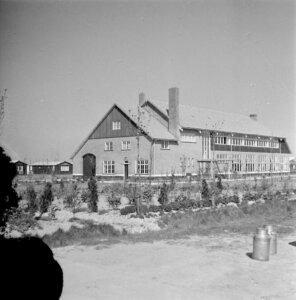
The school was internationally recognized. James G. McDonald, the American high commissioner for refugees of the League of Nations, attended its opening ceremony. The legal scholar Norman Bentwich praised the village in The Manchester Guardian. Although the school was non-Zionist, Henrietta Szold, a leader of Youth Aliyah, brought 20 German teenagers there in 1936.
Werkdorp Wierengermeer helped at least 500 German and Austrian Jews, ages 15-25, escape the Nazi regime.
It was Van Tijn, a German Jew who’d married a Dutchman, who got my father, George Landecker, out of Buchenwald. He had been arrested in Frankfurt on Kristallnacht, the November 1938 pogrom, and sent east by train to Buchenwald.
In the camp he met his friends and teachers from Gross Breesen, a farm school in eastern Germany, from which he had graduated that May. Breesen was the Werkdorp’s sister farm school. By admitting the Breeseners and my father to the Werkdorp, Van Tijn got Dutch entry permits for all.
For the Gestapo in January 1939, such proof that a prisoner could leave Germany secured freedom.
Van Tijn saved thousands of young people like my father, but she worked with the Nazis to do so. After the war, historians and people seeking to repatriate Dutch Jews called her a collaborator. She moved to the United States and wrote a memoir, in which she criticized other Jewish leaders for their decisions under German rule. According to her biographer Bernard Wasserstein, she never published the memoir because she didn’t want to make money from describing the atrocities she had seen.
When my father arrived in 1939, the Werkdorpers were cultivating 150 acres — there was wheat, oats, rye, barley, and sugar beets for the animals: 60 cows, 40 sheep, and 12 workhorses. The residents raised chickens, grew vegetables, and baked their own bread. The school taught carpentry, welding and plumbing, skills I would see my father use, not always deftly, later as a dairy farmer in New York state. (Dad was a good farmer, but he was less than expert in all the other skills a farmer needs.)
My father got a visa to America and left Rotterdam on the steamship Veendam, arriving in New York on Feb. 5, 1940. Three months later, the Nazis invaded Holland, cutting off all routes of escape.
‘Their names should be spoken’
Over the decades, Wieringer residents have found ways to commemorate the residents who died.
Marieke Roos, then a board member of the Jewish Work Village Foundation, proposed a monument of their names. She raised funds and recruited volunteers. Completed in 2021, the memorial comprises 197 glass blocks embedded in a semicircle at the building’s gateway. They mirror the layout of the dorms, now long gone, which once embraced the rear of the community house. Each block commemorates a student, teacher, or family member deported and murdered. One honors Frits Ino de Vries (1939–43), killed at Auschwitz with his mother and sister, Mia Sara, who was 5.
Corien Hielkema, also from the foundation, teaches local middle schoolers about the Werkdorpers’ fate. Each student creates a poem, painting, or website about a Werkdorper because “their names should be spoken and their stories told,” she told me.
Rent from migrant workers may sound like an unusual way to fund a memorial center. But in Joep Karel’s plan, such housing would be built behind the community house, and would be reminiscent of the dormitories where my father lived. Hollands Kroon’s biggest exports are flowers, cultivated by workers from the eastern EU. The region desperately needs housing for these temporary workers. In 2024, the province gave Karel 115,000 Euros to start the project.
Joël Cahen, who chairs the fundraising for Karel’s Jewish Work Village Cultural Center, says that attracting tourists here won’t be easy — it’s a 45-minute drive from Amsterdam, “along a boring road,” he said. Nevertheless, he said he thinks Karel’s idea will work, though “it will take time.”
Some neighbors objected to housing migrant workers, Cahen said. They feared noise pollution, traffic and drugs. Months of legal delay produced a court decision in Karel’s favor, but by then construction costs had skyrocketed.
Now, Cahen said, Karel needs an investor. The developer did not answer a question about how that search is going, except to say, via Cahen, that he would break ground “as soon as possible.” Roos says she has been hearing “soon” for years.
And if the housing were to be completed and the workers arrived, where would they hang their laundry, store their recycling, hide their trash? It would be hard to hide the chaff of daily living on the site’s four acres. Who would visit such a memorial center, and how would the owner keep it running?
Those are legitimate questions, Cahen said. But “we need people to help us push this thing forward. This is a chance.”
Kees Ribbens, a senior researcher at the NIOD Institute for War, Holocaust and Genocide Studies, in Amsterdam, told me that the community house has no “comparable examples in the Netherlands.” It is a “special building,” and a memorial center “would certainly be appropriate.”
Most of the agricultural training centers that saved German Jewish youth have been destroyed or reused. The director’s house of a farm school in Ahlem, Germany, is now a museum. But it became the local Gestapo headquarters, so it also tells that story. The Ahlem school buildings are gone. Gross Breesen, now in Poland, is a fancy golf spa.
The Werkdorp is one of a very few farm schools in Europe whose original building is dedicated to its history.
What my father did and didn’t tell me
My father talked a lot about his first farm school, Breesen. Survivors from Breesen, in America and around the world, remained his closest friends.
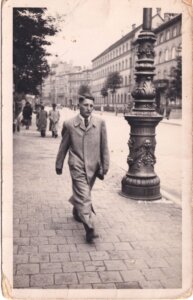
Yet he mentioned his time in the Netherlands only once. My mother had served a Dutch cheese to some guests. Dad told us how he’d been hitchhiking in Holland with a friend, when a truck carrying Edam cheeses had picked them up. They rode in the truckbed, hungry, surrounded by giant cheese wheels.
It was such a slim memory. I assumed he had lived in Holland for a few weeks. I learned only recently that Werkdorp Wieringermeer had protected him from January 1939 until February 1940.
Now I think my father didn’t want to remember his Dutch year. Because like refugees today, everywhere, he was terrified.
Dad once told an interviewer how he’d read a memoir by a man who was arrested on Kristallnacht and transported by train to Buchenwald. My father realized, “That’s me. I did that too.” He had no memory of actually doing it at all.
The brain is good at shielding us from trauma. His year at Werkdorp Wieringermeer may have been like his train ride after Kristallnacht, a time he needed to forget. He was worrying about his parents and siblings, who would not escape Germany until November. (One brother, his wife, and toddler would not survive the war.) He was anxious about the U.S. visa the Breeseners had applied for as a group (they circumvented the American quota on Germans, another story). He had been forced to watch people hanged at Buchenwald for trying to escape.

Yet my father was an optimist when I knew him, and never dwelled on suffering. And I never thought, “I should ask about his experience in the Holocaust because I will want to write about it one day.”
So the only thing I knew about his experience in the Netherlands was that he’d hitched a ride in a truck full of cheese.
An hour’s drive beyond the Werkdorp from Amsterdam, there’s a memorial to the 102,000 people deported from the transit Kamp Westerbork and murdered during the Second World War. It draws 150,000 visitors annually. Cahen hopes the Werkdorp could attract 10,000.
Like Westerbork, the Werkdorp was a transit point — but with a key difference: Many of its residents were saved.
As the daughter of one of them, I hope the tension over the future of its community house will ease, and that someone will make a grand memorial center flourish there.
The post What will become of the Dutch farm school that saved my father from the Nazis? appeared first on The Forward.
Uncategorized
Memories of Bubbe Khave-Leye at the marketplace in Buenos Aires
אין אונדזערע צײַטן זענען ווייניק יונגע מענטשן זוכה אויסצוּוואַקסן אין אַ שטוב וווּ עס וווינען דרײַ דורות.
איך בין געבוירן געוואָרן אין אַ שטוב, וווּ עס האָבן געוווינט צוזאַמען מײַנע טאַטע־מאַמע מיט די טאַטע־מאַמע פֿון מײַן מאַמע – באָבע חווה־לאה און זיידע חיים־מענדל — יעדער דור מיט זײַן אייגענער גײַסטיקער וועלט, שפּראַך און נסיון אין לעבן. און דערפֿאַר האָב איך געזען, געהערט און איבערגעלעבט צוזאַמען מיט מענטשן פֿון 19טן יאָרהונדערט, געבוירענע אין מיזרח־אייראָפּע. די באָבע חווה־לאה איז געבוירן געוואָרן אין סטאָלפּצע (שטייבץ); דער זיידע חיים־מענדל — אין דראָהיטשן; די מאַמע, ברכה, פֿון פּינסק; דער טאַטע, שמואל, פֿון סטערדין (וואָלין), און איך – פֿון ייִדישן שפּיטאָל אין בוענאָס־אײַרעס.
פֿון די אַכט זין און טעכטער וואָס די באָבע חווה־לאה האָט געהאַט זײַנען פֿיר געבליבן לעבן. די ייִנגסטע טאָכטער, דודה עליזה (פֿראַדל אויף ייִדיש), האָט געוווינט מיט אונדז ביז זי האָט עולה געווען קיין מדינת־ישׂראל אין יאָר 1949. דערצו זײַנען צוויי ברידער פֿון מײַן מאַמען — פֿעטער יוסף און פֿעטער הערשל — געקומען מיט דער גאַנצער משפּחה פֿון פּינסק קיין בוענאָס־אײַרעס אין יאָר 1937.
אַרום פּסחדיקן טיש פֿלעגן זיצן בײַ אונדז די מומע עטעלע פֿון ווילנע און די מומע לאה פֿון בריסק – צוזאַמען מיט די פֿריִער דערמאָנטע משפּחה־מיטגלידער – אַ פֿיל־שפּראַכיק געזעמל פֿון מיזרח־אייראָפּעיִשע ייִדן, וועלכע האָבן געשמועסט אויף ייִדיש, העברעיִש, רוסיש, פּויליש און אויך שפּאַניש.
מײַן באָבע חווה־לאה איז געווען למעשׂה איינשפּראַכיק, געבוירן מן־הסתּם אָנהייב 1880ער יאָרן, איז איר ייִדיש געווען די זעלבע וואָס עס האָבן גערעדט אירע טאַטע־מאַמע און זיידע־באָבע. דער באָבעס ייִדיש איז געווען אײַנגעטונקען אין לומדישן לשון־קודש. זי פֿלעגט אַלע שבת מעבֿיר זײַן די סדרה אין חומש צוזאַמען מיט פּירושים און אַגדות אויף ייִדיש, גלײַך פֿון צאינה־וראינה. וואָך־אײַן וואָך־אויס, יאָר נאָך יאָר, פֿלעגט זי איבערחזרן דעם גאַנצן חומש מיט זײַנע פּירושים און מדרשים, וואָס האָט צוגעגעבן איר פּערזענלעכקייט אַ פּסיכאָלאָגישע טיפֿקייט און געפֿורעמט איר כאַראַקטער און געמיט.
אין דער רוסישער אימפּעריע האָט די משפּחה פֿון מײַן מאַמעס צד געלעבט פֿון דער אַרבעט פֿון מײַן זיידן חיים־מענדל שוואַרץ, ווי אַ בוכהאַלטער אין אַ טאַרטאַק, אָבער מײַן באָבע איז געווען אַ קראַסאַוויצע אין די אויגן פֿון די גויים, האָבן זיידע־באָבע געמוזט אַוועק וווינען אין דער שטאָט פּינסק. דאָרט איז די פּרנסה געווען אַ קליין געוועלב, וווּ מײַן באָבע האָט פֿאַרקויפֿט קאַלך און פֿאַרב.
פֿון קינדווײַז אָן האָב איך דערפֿאַר געהערט אַ לעבעדיקן ליטוויש־ייִדיש, ווי ייִדן האָבן גערעדט זינט, לכל־הפּחות, פֿון אָנהייב 19טן יאָרהונדערט. דאָס ליטווישע ייִדיש האָט אײַנגעזאַפּט אין זיך רוסישע ווערטער, וועלכע זענען מיט דער צײַט געוואָרן אַן אינטעגראַלער טייל פֿון ליטווישן ייִדיש. די משפּחה איז געגאַנגען אַלע שבת און אין די יום־טובֿים אין שיל. צוזאַמען מיטן אָפּהיטן כּשרות איז דאָס טעגלעכע לעבן געווען אײַנגעהילט אין אַ טראַדיציאָנעלן נישט־פֿאַנאַטישן סטיל. זינט איך בין געווען דרײַ יאָר אַלט און ביז נאָך מײַן בר־מצווה איז מײַן וועלט געווען באַאײַנפֿלוסט פֿון אָט דער אַטמאָספֿער. דער וואָס האָט נישט איבערגעלעבט אין זײַן קינדהייט די יום־טובֿדיקייט פֿון שׂמחת־תּורה בעת די הקפֿות אין שיל, איז נישט מסוגל צו באַגרײַפֿן וואָס מיינט אַ ליכטיקע שׂימחה פֿון אַ ציבור וואָס פֿרייט זיך פֿון גאַנצן האַרצן, האַלטנדיק אין זײַנע הענט אַ ספֿר־תּורה, דער אויטאָריטאַטיווער מקור וואָס באַפֿאַרבט זײַן לעבן מיט אַ זין. אַהרן צייטלין האָט אַמאָל וועגן דעם געשריבן אין זײַן פּאָעמע „דנאָען‟:
זײַן אָדער נישט זײַן, נישט דאָס איז די פֿראַגע. די פֿראַגע איז: זין אָדער נישט זין?
דער לוח, מיט זײַנע געדענקטעג און יום־טובֿים, האָט אָרגאַניזירט דאָס לעבן פֿון ייִדישן ציבור, אַרום געשיכטלעכע דאַטעס און טעג פֿון חשבון־הנפֿש, וועלכע האָבן געשטאַרקט דעם געפֿיל פֿון צוגעהעריקייט פֿון יעדן פּרט און יחיד, צו אַ גײַסטיקער און קולטור־טראַדיציע. אַזאַ צוגעהעריקייט באַפֿרײַט דעם יחיד פֿון זײַן איזאָלירונג און פֿירט אים אַרײַן אין אַ קאָלעקטיוו סײַ אין צײַט סײַ אין רוים.
באָבע חווה־לאה און איר טאָכטער, מײַן מאַמע, האָבן געפֿירט אין צווייען די ווירטשאַפֿט פֿון דער היים. אין מאַרק פֿלעג איך גיין אײַנקויפֿן מיט דער באָבען, פֿון זינט איך בין געווען דרײַ צי פֿיר יאָר אַלט. מיר פֿלעגן גיין צו פֿוס אַ האַלבן קילאָמעטער ביז אַ געדעקטן מאַרק, אַן אומגעהײַער גרויסער, אַ צוויישטאָקיקער. דאָס גיין אין מאַרק מיט מײַן באָבען איז געווען בײַ מיר אַן אויסערגעוויינלעכע געשעעניש, וואָס האָט זיך איבערגעחזרט אַלע דאָנערשטיק, כּדי האָבן די מעגלעכקייט צוצוגרייטן דעם שבת פֿרײַטיק אין דער פֿרי. אַזוינע עקסקורסיעס האָבן מיר געמאַכט ביז איך בין געוואָרן זעקס יאָר אַלט און אָנגעהויבן זיך לערנען סײַ אין חדר אין דער פֿרי, און סײַ אין אַ מלוכהשער שולע בײַ טאָג.
עס איז געווען פֿאַר מיר אַן איבערראַשנדיקער איבערגאַנג, פֿון אַ שטילער טראַדיציאָנעלער היים אַלע טעג פֿון דער וואָך, ביז דעם הו־האַ פֿון מאַרק. אַרײַנגייענדיק אין מאַרק פֿלעג איך זיך אָנטרעפֿן מיט אַ רעש און מיט קלינגענדיקע קולי־קולות פֿון מסחר – די פֿאַרקויפֿער און די קויפֿער. עס פֿאַרהילכט דער גרילצנדיקער רעש פֿון דער עלעקטרישער זעג פֿון לעמל דעם קצבֿ, און עס פֿאַרטויבן די געשרייען פֿון די פֿיש־פֿאַרקויפֿער וואָס פֿאַרקויפֿן פֿרישע פֿיש אין אײַזקאַסטנס, אָנגעטאָן אין הויכע שטיוול. זיי פֿאַרבעטן די קונים מיט ברייטע העוויות… און די פֿיש שטינקען, שטינקען דאָך… אַלע פֿינף חושים וואַכן אויף אין מאַרק. צו דעם אַלעם קומען צו אין אָט דעם קאַקאָפֿאָנישן כאָר אויך די קולות פֿון די קליענטן וואָס באַלאַגערן די סוחרים, שטופּן זיך און שרײַען איבער איינער דעם צווייטן.
אָט די איבערראַשנדיקע ווירקלעכקייט האָט מיך פֿאַרכּישופֿט און צעטומלט אין איין און דער זעלבער צײַט. איך בין נאָך געווען אַ נידעריקער קאַרליק פֿון אַזוינע פֿיר צי פֿינף צי זעקס יאָר, און בין נאָך נישט דערגאַנגען ביז צו די טאָמבענק אין מאַרק כּדי צו זען וואָס עס טוט זיך דאָרט איבער מײַן קעפּל פֿון דער אַנדערער זײַט. איך האָב נאָר געהערט קלאַנגען און ריחות. דער עיקר פֿלעג איך שטיין ווי צוגעשמידט און פֿאַרוווּנדערט אַנטקעגן דעם אַרײַנגאַנג צו זושע דעם שוחט, וואָס איז געזעסן און געשאָכטן עופֿות.
איך און באָבע חווה־לאה, מיט קוישן אין די הענט, פֿלעגן שטענדיק דורכגיין אין מאַרק דעם זעלבן מאַרשרוט: מע הייבט אָן בײַ לעמל דעם קצבֿ. אַרום זײַן פֿירקאַנטיקן טאָמבאַנק, פֿון דרײַ זײַטן ווי דער אות חית, איז שטענדיק געווען אַ גראַטשקע, מענטשן זײַנען געשטאַנען קעפּ אויף קעפּ, אין צוויי צי דרײַ שורות און געוואַרט, ווער מיט געדולד, און ווער מיט שטופּערײַ. לעמל האָט פֿאַרקויפֿט כּשר פֿלייש. די קונים האָבן זיך געסטאַרעט צוצוציִען די אויפֿמערקזאַמקייט פֿון לעמלען און זײַן משפּחה, מע זאָל זיי באַדינען. לעמל און זײַן משפּחה האָבן נישט גערוט אַ רגע, באַדינענדיק זייערע קונים.
נאָכן וויזיט בײַם קצבֿ פֿלעגן מיר אַרויפֿגיין מיט די טרעפּ אויפֿן צווייטן שטאָק פֿון מאַרק, צו די פֿיש. פֿון דאָרטן און ווײַטער האָב איך געוווּסט אַז באַלד וועל איך ווערן באַלוינט פֿאַר מײַן געדולדיקייט. מיר פֿלעגן זיך ווײַטער דאָרט צוגיין צו דער פֿרוי וואָס פֿאַרקויפֿט ברויט, בייגל, געבעקס און פּלעצעלעך מיט געפּרעגלטע ציבעלעס. שוין מיד פֿון באַגלייטן מײַן באָבען פֿון איין טאָמבאַנק צו אַ צווייטן, פֿלעג איך אויפֿעסן אַ פּלעצל בעת מיר זײַנען געגאַנגען ווײַטער – מיט אָדער אָן פּוטער. בײַ אונדז אין שטוב זײַנען אַזוינע מאַכלים געווען אַ דעליקאַטעס. למשל, מיר האָבן זייער ליב געהאַט עסן כאַלעמיטקעס און כאַלעאָנקעס – דאָס וואָס מע רופֿט ריכטיקער חלה מיט קעז אָדער חלה אָן קעז.
דער הויכפּונקט פֿון דעם שפּאַציר מײַנעם מיט דער באָבען איבערן מאַרק איז געווען בײַ דעם אָרט וווּ מע האָט פֿאַרקויפֿט עופֿות. שוין פֿון דער ווײַטנס פֿלעג איך דערהערן דעם קוואַקען פֿון די לעבעדיקע הינער אין זייערע שטײַגן, וועלכע זושע דער שוחט פֿלעגט פֿון דאָרטן אַרויסנעמען. זושע האָט זיי איינציקווײַז געהאַלטן אין איין האַנט, און אין דער צווייטער – דעם חלף. אַ ייִד מיט אַ געדיכטער ווײַסער באָרד, ראָזעווע באַקן און אַ קײַלעכדיקן פּנים — אַ מין „סאַנטאַ קלאַוס‟, וואָס האָט געדונגען אַ צימער אין הויז פֿון דער מומע לאה, די מומע פֿון מײַן מאַמען.
אויפֿן טאָמבאַנק פֿון געוועלב פֿון די עופֿות זענען געמאַכט געוואָרן די געשעפֿטן מיט די עופֿות, נאָך דער שחיטה. אין אַ זײַט איז געווען אַ מין אַרײַנגאַנג צו דער אַרענע פֿון די געשעענישן. דאָרט פֿלעג איך זיך אַוועקשטעלן און גאַפֿן, זעענדיק די שטײַגן אין וועלכע די הינער האָבן געליאַרעמט, דערפֿילנדיק מן־הסתּם אַז עס דערנענטערט זיך זייער סוף. זייערע קולות האָבן צוגעגעבן דעם גאַנצן סצענאַריאָ אַ דראַמאַטישע אַטמאָספֿער. הײַנט צו טאָג בין איך גענויגט צו קלערן אַז מײַן טאַלאַנט נאָכצומאַכן די קולות פֿון הינער in extremis איז נישט קיין אײַנגעבוירענער טאַלאַנט, נאָר איז דעראָבערט געוואָרן אין יענע יאָרן אין יענעם אָרט… און די קולות פֿון די הינער הילכן נאָך ביז הײַנט אין מײַן זכּרון פֿון די פּאַלעווינעס אַרויס.
אין יענע קינדעריאָרן האָב איך באַטראַכט מיט אומשולדיקע אויגן, אָן קיין שום מאָראַלישע אָפּהאַלטן, איינע פֿון די שפּײַזקייטן אין אונדזער פֿליישפֿרעסערישער וועלט. די פֿילפֿאַרביקייט אויפֿן שחיטה־שלאַכטפֿעלד האָט פֿאַרכאַפּט מײַן אויג אָנהייבנדיק פֿון דער קלאָר ווײַסער באָרד פֿון זושע דעם שוחט, צוזאַמען מיט די רויטלעכע הינער און די רויטע קאַמען פֿון די הענער, מיט דעם געלבלעכן זעגעכץ אויסגעשפּרייט אין דער לענג און אין דער ברייט אויף דער פּאָדלאָגע, און ענדיקנדיק מיט דער שחיטה אַליין וואָס האָט זיך אָפּגעשפּילט פֿאַר מײַנע אויגן, װען זושע האָט אויפֿגעהויבן דעם בלאַנציקן חלף. אָט דאָס איז וואָס מײַנע אויגן האָבן דערזען:
זושע דער שוחט נעמט אַרויס אַ הון פֿון אַ שטײַג, ער באַרויִקט זי מיט לײַכטע גלעטן פֿון אַ פּראָפֿעסיאָנעלן שוחט, אַ בעל־רחמים, פּאַמעלעך פֿאַררײַסט ער דאָס קעפּל אויף אַהינטער, און אַנטבלויזט דאָס העלדזל. זושע הייבט אויף דעם מעסער, און מיט אַ שאַרפֿער תּנועה פֿון אויסגעשאַרפֿטן חלף גיט ער אַ שניט וווּ מע דאַרף. אַ דינער רויטער שטראָם בלוט צייכנט אָפּ אַ בויגן אין דער לופֿט און נידערט אויפֿן געלן געזעגעכץ. דאָס געקוילעטע הינדל ווערט אַוועקגעוואָרפֿן אויף דער פּאָדלאָגע, און די שעקספּירישע וויזיע וואָס מיר היפּן איבער צוליב דעם כּבֿוד פֿון די געשאָכטענע, קומט צו אַ סוף.
איך וועל זאָגן אַ ליגן, אויב איך וועל טענהן אַז אין עלטער פֿון דרײַ ביז זעקס יאָר האָב איך געוואָלט ווערן אַ שוחט. אָבער אָט די גאַנצע סצענע האָט מיך פֿאַרכאַפּט, נאָך איידער איך האָב פֿאַרשטאַנען וואָס צער־בעלי־חיים איז. פֿונעם געוועלב פֿון די עופֿות זײַנען מיר צוגעגאַנגען צו די טרעפּ וואָס פֿירן אַרונטער, כּדי אײַנצוקויפֿן פֿרוכט און גרינסן. אָבער איידער מיר זײַנען אַראָפּ, האָבן מיר זיך פֿאַרהאַלטן בײַ דעם מילכיקן, וואָס פֿאַרקויפֿט כּל־מיני קעזן און מילכיקע פּראָדוקטן. בײַם אַרויסגאַנג זענען מיר אַרײַן אין אַ געשעפֿט וווּ מיר האָבן געקויפֿט געזאַלצענע הערינג אַרויסגעצויגן בלײַך פֿון אַ פֿאַס, מאַסלינעס, גרויפּן, פֿאַרשיידענע געווירצן און ניס.
אין יענער צײַט זענען אין בוענאָס־אײַרעס נישט געווען קיין פֿרידזשידערן. פֿלייש און מילכיקע פּראָדוקטן האָט מען געהאַלטן אין אַן אײַזקאַסטן — אַ הילצערנעם קאַסטן וווּ מע האָט אַרײַנגעלייגט גרויסע שטיקער אײַז, וועלכע מע האָט געקויפֿט אין דער גאַס. די פֿור מיט די גרויסע שטיקער אײַז פֿלעגט קומען אויף אונדזער גאַס, און מיר פֿלעגן זיי קויפֿן לויט קוביק־מעטערס וואָס דער פֿאַרקויפֿער פֿלעגט אויסהאַקן מיט אַ ספּעציעלן אינסטרומענט.
במשך צענדליקער יאָרן האָב איך דאָ אין ישׂראל געזוכט אין יעדן אָרט וווּ איך האָב געגעסן דעם טעם פֿון אַמאָל, פֿון דער מיזרח־אייראָפּעיִשער קיך בײַ אונדז אין שטוב אין בוענאָס־אײַרעס. ניין… עס איז נישט דער טעם וואָס איז געווען בײַ מיר אין דער היים, האָב איך מיט אַ ווידערווילן אַרויסגעזאָגט בײַ אַלעמען אין שטוב און בײַ מײַן שוויגער און אַפֿילו בײַ מײַן פֿרוי אין קיך. איך טענה נישט חלילה, אַז זיי האָבן נישט געוווּסט ווי אַזוי צו קאָכן, אָדער אויספֿאַרטיקן פּאָטראַוועס. פֿאַרקערט, אָבער דאָס עסן מיט זײַן געשמאַק פֿון אַמאָל איז אַנטרונען… בײַ־בײַ, סאָו־לאָנג… ביז מיט אַ קורצער צײַט צוריק, איז מיר קלאָר געוואָרן פֿאַר וואָס איך געפֿין שוין מער נישט דעם טעם פֿון אָמאָל. הײַנט קאָכט מען אויף אַ גאַז־אייוועלע אָדער אויף עלעקטרע אָבער אין די 1940ער און 1950ער יאָרן האָט מען געקאָכט אויף קוילן. לענג־אויס דער וואַנט אין קיך בײַ אונדז אין שטוב אין בוענאָס־אײַרעס איז געשטאַנען אַן אויוון אויסגעבויט מיט ציגל, מיט דרײַ עפֿענונגען, אין וועלכע עס האָבן געברענט שוואַרצע קוילן, וואָס מיר פֿלעגן אײַנקויפֿן אין אַ קוילן־געשעפֿט, לויט קילאָגראַמען.
פּלוצלינג איז מיר געוואָרן קלאָר, אַז דאָס קאָכן אויף קוילן — למשל, אַ טשאָלנט אין אײַזערנע טעפּ פֿאַרדעקט מיט אַן אײַזערנער דעקל און פֿאַרוויקלט אַרום און אַרום מיט שמאַטעס — אַזאַ טאָפּ וואָס שטייט אויפֿן פֿײַער (נישט פֿון גאַז און נישט פֿון עלעקטרע) 24 שעה, וועט דער טעם זײַן רײַכער ווי דער טעם פֿון גאַז־ און עלעקטרע־געקעכצן. די איינציקע „מאַכלים‟ וואָס מעגן האָבן אַן ענלעכן טעם, זײַנען די קומזיץ־מאַכלים וואָס חלוצים האָבן געספּראַוועט אין די ליכטיקע אויסגעשטערנטע ארץ־ישׂראל־נעכט, און געזונגען: „אַרום דעם פֿײַער/ מיר זינגען לידער/ די נאַכט איז טײַער/ זי קומט נישט ווידער// באַפּוצט די קעפּ/ מיט בלומען קראַנצן/ אַרום דעם פֿײַער/ איז גוט צו טאַנצן…‟ עס איז נישט צו פֿאַרגלײַכן אָפּגעברענטע פּאָטייטעס און פֿאַרטשאַדעטע פּראָדוקטן בײַ אַ קומזיץ מיט די גורמע פּאָטראַוועס פֿאַרגאַזטע און עלעקטריפֿיצירטע.
The post Memories of Bubbe Khave-Leye at the marketplace in Buenos Aires appeared first on The Forward.
Uncategorized
‘It’s a whole ‘nother level of hate’: Pro-Palestinian groups target Oregon Hillel director
The fall semester at Oregon Hillel started with a stolen sukkah. Days later, the director found his face plastered on flyers around University of Oregon’s campus, branding him “Enemy of the People.”
Then came the Oct. 7 anniversary, when pro-Palestinian demonstrators marched to the Hillel House and set fire to an American-Israeli flag on the sidewalk outside.
“It’s a whole ‘nother level of hate and protesting,” said Oregon Hillel Director Lenny Steinberg. “These intimidation factors are starting to grow.”
A tense start
Oregon Hillel serves the University of Oregon in Eugene along with Oregon State University in Corvallis, where the sukkah was stolen. After being up for only a few days, the entire structure, its decorations and everything in it disappeared. The theft is still under investigation and it’s unclear if it was hate motivated.
For Steinberg, who has led Oregon Hillel since 2024, the incidents marked a tense start to the school year — but not an entirely unexpected one. Tensions in Eugene have run high since the Hamas attacks on Israel in 2023 and the subsequent war in Gaza. The university saw an encampment, protests that sometimes offered support for Hamas, the tearing down of Israeli hostage posters and a drawing of a swastika on a dorm bulletin board.
During the spring semester, Oregon Hillel scheduled an event with the 2021 Miss Israel title holder Noa Cochva. She planned to speak with students and answer questions about her home country, but decided to cancel the event due to protests and safety concerns. Instead, she spoke with Hillel students off campus.
While anti-Israel protests are now commonplace across American campuses, protesters’ demands in Oregon have gone beyond simply calling for their university to cut ties with Israel, they want their university to cut ties with Hillel.
“The director of Oregon Hillel supports the continuation of Zionism and genocide in Palestine,” the flyers state. “Hillel off Campus!!!”
A QR code on the posters links to an article about how students in the academic senate at the New School voted to defund and cut ties with Hillel. The New School did not ban Hillel, as the students had no authority to make such a decision.
Steinberg said campus security footage captured two masked individuals wearing sunglasses and all-black clothing putting up the flyers. Four campus activist groups posted an online statement defending the flyers but didn’t explicitly claim to be responsible for them.
“The poster says nothing about Judaism,” the statement reads in all caps. “The reality of the situation is that Oregon Hillel, a staunchly Zionist group, and the administration create a dangerous space for Jews by synchronizing a Zionist agenda with Judaic practice on campus.”
The statement was shared on Instagram by the local chapters of Jewish Voice for Peace, Revolutionary Women’s Committee, Young Democratic Socialists of America and the Eugene Revolutionary Study Group. None of the organizations responded to the Forward’s request for comment.
Steinberg said that, when he saw the flyers, his first thoughts were about the safety of his family, himself and the Jewish community. While he was directly targeted in the posters, he said many Jews reached out to him with their own safety concerns.
Steinberg took offense at the poster, saying it was spreading lies about him and that he in no way supports genocide. As for the accusation of being a Zionist, he said those who distributed the poster have a different definition of the term than he does. He believes that to them, Zionism means Jewish supremacy in Israel, full support of the Israeli government, support for settlers in the West Bank and denial of Palestinians’ right to self-determination.
To him, Zionism means having an ancestral home and self-determination alongside Arabs.
“Zionism doesn’t necessarily, to me, mean everything has to be Jewish,” he said. “It doesn’t mean that the State of Israel gets everything right. They don’t. We don’t get everything right here, but it’s my home, and I love it for all of its amazing beauties and even its flaws.”
Oregon’s Hillel is not unique. It fosters Jewish community through events and offers a space for students to gather, and like many Hillels, funds trips to Israel via both the Birthright and Perspectives programs. Birthright is the free 10-day trip to Israel offered to young adults with one Jewish parent, while Perspectives is a trip offered to students of Jewish and non-Jewish backgrounds to experience both Israel and parts of the West Bank.
Throughout his professional career, Steinberg, 38, has worked for numerous Jewish organizations including the Jewish Federation, the Jewish Community Center in Portland and most recently the Jewish fraternity Alpha Epsilon Pi. Given his line of work he was well aware of the “encampments, and political climates and what hostilities there might be” brewing on campuses before he took the Hillel position in 2024.
“Still, I don’t think any of that truly prepared me for what’s really transpired and happened over these last few weeks,” he said.
While the pro-Palestine groups that shared a statement on the flyer insist it is not antisemitic, Steinberg disagrees. He argues the posters are intended to make Jews feel uncomfortable, while calling for the removal of one of the only Jewish groups on campus.
“That to me is antisemitism masked heavily in anti-Zionism,” he said.
While these events have strained the Jewish community, Steinberg said students have displayed “resilience.” Dozens of people donated to the Corvallis’s new sukkah, the University of Oregon and multiple politicians made statements supporting the Jewish community, and many attended Hillel’s recent unity shabbat.
“Students came, and for the first time in almost two weeks, you could see the weight lifted off their shoulders,” Steinberg said. “You could see that they felt like they belonged and they actually mattered at a time when so many other people are telling them ‘you don’t.’”
The post ‘It’s a whole ‘nother level of hate’: Pro-Palestinian groups target Oregon Hillel director appeared first on The Forward.
Uncategorized
NYC Comptroller breaks campaign promise to Jewish voters to buy Israel Bonds, drawing praise from Mamdani
New York City Comptroller Mark Levine’s decision not to resume the city’s investments in Israel Bonds, breaking a campaign promise he made to Jewish voters last year, drew mixed reactions Wednesday from supporters of Israel and advocates for the Palestinian cause. It also marked another symbolic shift in the city’s relationship with Israel under Mayor Zohran Mamdani.
The decision, first reported by The New York Times, is a significant reversal for Levine, the city’s highest-ranking Jewish elected official, who repeatedly promised last year to restore the investments after his predecessor ended a nearly 50-year practice of buying Israeli government debt.
The city’s pension funds previously held $39 million in Israel Bonds, which returned roughly 5%. Former Comptroller Brad Lander, who is also Jewish, decided not to purchase new bonds when the holdings matured in 2023, citing the city’s policy against investing in foreign government debt.
In an interview with the Times, Levine cited financial concerns and technical challenges, including those related to the war in Gaza and Israel’s political instability, in explaining why Israel Bonds are “not an investment that we can make right now.”
He insisted the decision was not driven by political pressure or a shift in his personal support for Israel, and left open the possibility of purchasing Israel Bonds in the future. The pension funds still hold $285 million in Israel-related assets, including common stocks and more than $1 million in Israeli real estate investment trusts.
The move was nonetheless a political victory for Mamdani, a longtime supporter of boycotts of Israel, who opposed the bond purchases and has sought to reshape New York City’s relationship with Israel, politically, emotionally and economically.
“I welcome the comptroller’s decision,” Mamdani told the Forward on Wednesday. “It is something that I’ve said in the past … I don’t believe that our city should purchase Israel bonds. We don’t purchase the bonds of any other sovereign nation. I don’t think that we should make an exception when it comes to Israel.” The mayor can neither prevent the investment nor overrule it.
Lander, now a congressional candidate, also voiced his approval via text message. “The pension funds are not invested in the bonds of other foreign countries,” Lander said, “and previous comptrollers’ decisions to buy Israel bonds nonetheless were a political move, not a fiduciary one.”
Why Levine changed his mind
For Jewish voters who supported Levine’s campaign, the reversal raises questions about a promise he made while seeking the office of the city’s chief financial officer.
“This has been a rock-solid investment for decades,” he said during the campaign. “Israel has never missed a bond payment, and a good, balanced portfolio should have global diversity.”
When Mamdani suggested Lander’s move should become permanent, Levine pushed back. “Israel bonds have never missed a payment in 70 years, ever, not once,” he said in April. “They pay excellent interest.”
He also called out critics who had been protesting outside his office. “We have had no protesting about our investments in Saudi Arabia, our investments in Pakistan or China, only this one little, tiny sliver,” Levine said.
A spokesperson for Levine’s office said the decision was strictly financial, not political, and noted that the decision applies only to the city’s short-term investments, where concerns about regional instability and financial risks make Israel Bonds “less attractive than other options.” Though the office did acknowledge that it invests in some bonds with lower returns.
Levine conceded that when he made the campaign promise, he did not have a complete understanding of the city’s financial options. “Perhaps a year and a half ago,” Levine told the Times, “I would have expected that the ratings would have been improved by now and/or that the interest rate would have gone up.”
Jewish leaders, who criticized Lander’s decision when it was revealed last year, remained largely silent on Wednesday.
Former comptroller warns of consequences
Scott Stringer, who served as comptroller from 2013 to 2021 and also ran for mayor last year, warned that Levine’s decision could have broader political and social consequences. ”This is a major victory for BDS, and it’s going to have long-term ramifications,” Stringer told the Forward. “This indecision will, unfortunately, spark more BDS calls that could cause further antisemitism.”
Stringer and his predecessors — John Liu and Bill Thompson — purchased tens of millions of dollars in bonds during their time in office. Stringer called Israel Bonds a “sound long-term investment” and argued that the city should not base its decisions on short-term developments.
“It’s a sound investment today, and it’s a sound investment for the future,” he said, adding that it also sends an important symbolic message, especially “because of the politics of the moment.”
When Landers ended the investment in 2023, former Mayor Eric Adams protested but couldn’t stop it. Moshe Davis, who was Adams’ Jewish liaison and worked with then-First Deputy Mayor Randy Mastro, drafted a letter to Lander, saying the decision called into question his “fiduciary duty to the city’s pensioners.” On Wednesday, Davis suggested Levine was “feeding the BDS lie” just like his predecessor.
“Our city deserves a comptroller who stands up to anti-Israel propaganda,” Davis said, “the way he promised on the campaign trail.”
An Israel Bonds spokesperson criticized Levine’s reversal, pointing to his repeated campaign promises. Nate Miller, a spokesperson for Israel Bonds, pointed to the strength of Israel’s economy and said investors have purchased more than $8.5 billion in Israel Bonds since the Oct. 7, 2023 attack on Israel and the Gaza war. Despite Levine’s decision, Miller said, “We look forward to sitting down with him and his team.”
Levine’s spokesperson said the comptroller’s office “continues to evaluate investment opportunities based on their financial merits and our fiduciary responsibilities.”
The post NYC Comptroller breaks campaign promise to Jewish voters to buy Israel Bonds, drawing praise from Mamdani appeared first on The Forward.
