



Uncategorized
Drunk with power, Donald Trump follows the dictates of Athenian commanders — and a certain Jewish philosopher
The strong do what they can, the weak suffer what they must.
This phrase has been invoked by political pundits and leaders, including the Canadian Prime Minister Mark Carney, over the past few days as the world was plunged into Donald Trump’s fever dream of the conquest of Greenland. Yet what they neglected to mention is the quotation’s source and context in which it was uttered.
But both are crucial if we are to fully appreciate the troubling relevance of the phrase and the somber light the German-Jewish thinker Leo Strauss cast on it.
The phrase first crops up in the History of the Peloponnesian War, the ancient Athenian historian Thucydides’ account of one of the most consequential events in the history of the West. In the midst of their war against Sparta, an Athenian fleet lands on the small island of Melos, which they have been ordered to annex or annihilate. The dialogue that follows is entirely the creation of Thucydides, who strips away what he believed were the pleasant fictions we tell to blind ourselves to the reality of human nature.
Despite the Melian delegation’s appeals, the Athenian commanders are unmoved. “Nature always compels men to rule over anyone they can control,” they tell the Melians.“We did not make this law…but we will take it as we found it and leave it to posterity forever, because we know that you would do the same if you had our power as would anyone else.”
Yet the Athenians are tragically blind to the corollary: Human beings will always resist and rebel against those who try to invade them. When the Melians refused to submit, the Athenians were as good as their word; upon breaching the city walls, they slaughtered the men and sold the women and children into slavery. Shortly later, full of their conviction that might makes right, the Athenians decide to invade Sicily — an act of hubris which leads to a catastrophic defeat and a fate like the one they meted out to the Melians.
These world-altering events bring us to Leo Strauss, the man who Harold Bloom once described as a “political philosopher and Hebraic sage.” Born into an Orthodox Jewish family in 1899, by the 1930’s Strauss had won the reputation as a brilliant and not always orthodox political theorist. With the rise of Nazism, Bloom had the means and foresight to quit his native country in 1937. He became something of an itinerant intellectual, finding a series of academic appointments at Columbia University, University of Chicago, and the New School while writing many of his best-known books, including Natural Right and History and Thoughts on Machiavelli.
Over time, Strauss also became known as the éminence grise of neo-conservatism, the hawkish postwar ideology that viewed foreign policy through the harsh lens of political realism and has been credited with influencing the Bush Administration’s cataclysmic decision to invade Iraq. For his critics, it hardly helped that Strauss was influenced by the writings of the Nazi-adjacent and antisemitic legal theorist Carl Schmitt, who favored strong executive authority and believed that the politics of a nation and policies of the state must respond to the distinction between friend and enemy.
An advocate of “reading between the lines,” Strauss basically sets the traditional interpretation of Thucydides and the significance of the Melian dialogue on its head. Most students of Thucydides believe he sides with Pericles, the Athenian leader who, in his famous funeral oration, declares his city as the school for all of Greece. And why not? Thanks to its openness to ideas and debate, Athens excelled in the arts and sciences. No less important, thanks to its sense of civic responsibility, the city’s citizen army excelled in military prowess and power.
That this shining example of democracy should, at the end of a two-decade war, have been defeated and occupied by brutish if not barbaric Sparta marks one of history’s great tragedies. And yet, Strauss suggests we misunderstand the nature of the tragedy. The Periclean vision is inspiring, he allows, but it was also the reason why Athens lost the war. Strauss claims that Thucydides knew this as well. Just like his contemporary Plato, the ancient historian instead thought the best of all models was the closed society of Sparta rather than the open society of Athens.
By “best,” what Strauss meant is that cities like Sparta are best positioned to maintain the endurance and stability of the state and those who look to it for their security. In turn, this requires such states to embrace what he called the “Athenian thesis” which boils down to the claim made by the Athenian commander at Melos: The strong, indifferent to justice or moderation, do what they can while the weak suffer what is meted out to them. After all, Athens was itself an expanding empire that absorbed other cities into its alliance whether they wished to join or not.
Of course, we have no idea what Strauss would have thought about Donald Trump’s efforts to slap tariffs on islands inhabited only by penguins and annex other islands inhabited by people who have made clear they have no desire to become American. But I suspect that Strauss would remind us that the relentless pursuit of power and property is not unique to narcissistic sociopaths. Instead, states are almost always and necessarily driven by the will to expand. And therein lies the true tragedy.
The post Drunk with power, Donald Trump follows the dictates of Athenian commanders — and a certain Jewish philosopher appeared first on The Forward.
Uncategorized
Is Lionel Messi a Zionist? The Argentine soccer star’s long history with Jewish and Israeli life, explained

(JTA) — Argentine soccer icon Lionel Messi, widely regarded as one of the greatest players in the history of the sport, has built one of football’s most decorated careers.
Throughout his illustrious career, Messi has cultivated a measured public image, rarely commenting on politics or becoming involved in major public controversies. But the 39-year-old has occasionally made headlines for expressing support for Jewish causes and Israeli companies — and at times for being pulled into the tense geopolitical landscape of the Middle East by no doing of his own, including when a grandmother originally from Argentina credited him for saving her life when her Israeli kibbutz was attacked on Oct. 7, 2023.
Messi’s past has roared into public view during this year’s World Cup, in which Argentina plays Switzerland in the quarterfinals on Saturday. Some critics of Israel have surfaced his past activities and affiliations to make the case that opposing Argentina is the anti-Zionist choice. Many Israelis, meanwhile, favor the team.
Ahead of the game, here’s a look back at 10 moments from Messi’s career — presented chronologically — where he and his fame intersected with Jewish and Israeli culture through public appearances, peace initiatives, controversies and more.
1. In July 2013, Messi sent a message to the Argentine Maccabiah team, a greeting before the national delegation departed for the “Jewish Olympics” in Israel. It wasn’t the first time he demonstrated support for his country’s Jewish community — in 2011, he participated in a campaign for justice and memory of the victims of the 1994 AMIA Jewish center bombing that killed 85 people in Buenos Aires.
2. One month later, he visited the Western Wall on a “peace tour” with Barcelona F.C., the famed Spanish team with which Messi spent the majority of his career. The club hosted skills clinics for Israeli and Palestinian children and met Jerusalem Mayor Nir Barkat, President Shimon Peres and Prime Minister Benjamin Netanyahu.

FC Barcelona player Lionel Messi controls a ball passed by Israeli President Shimon Peres during a training session on Aug. 4, 2013 in Tel Aviv. (Lior Mizrahi/Getty Images)
3. In September 2014, Messi supported a “match for peace” in Rome organized by Pope Francis to promote peace between Israelis and Palestinians, but he did not play due to an injury. Fellow Argentine great Diego Maradona and Israeli player Yossi Benayoun also participated, alongside stars from Russia, Cameroon, Italy, France and Brazil.
4. In 2016, Messi was slammed as “Jewish” and a “Zionist” by Egyptian officials after donating his soccer cleats to a charity in Egypt. Then-Egyptian Football Federation spokesman Azmi Mogahed phoned in to the show to criticize Messi: “I know he’s Jewish, he donated to Israel and visited the Wailing Wall and whatever. … We don’t need his shoes and Egypt’s poor don’t need help from someone with Jewish or Zionist citizenship.”
5. In June 2018, Argentina’s national team canceled a friendly match with Israel’s national team following pressure from the Boycott, Divestment and Sanctions movement. A boycott campaign sponsored by BDS Argentina was launched using the motto “Argentina don’t go,” or #ArgentinaNoVayas. The Israeli embassy in Buenos Aires tweeted that the match was canceled due to “the threats against Messi that logically generated the solidarity of his teammates.”

Lionel Messi, then with FC Barcelona, puts a paper with wishes in a crack in the Western Wall, Judaism’s holiest site, in Jerusalem during a team trip to Israel and the West Bank, Aug. 4, 2013. (Oliver Weiken/AFP via Getty Images)
6. Two months later, FIFA suspended the head of the Palestinian soccer body for threats against Messi. Jibril Rajoub, who had lobbied for action by FIFA against Israel, was suspended for a year after he urged supporters to burn photos and player jerseys if Messi or the Argentinian national team had shown up for the friendly match that was canceled.
7. In 2019, Argentina’s national soccer team announced it would play a friendly match against Uruguay in Tel Aviv that November, following the cancellation a year prior. The match was again targeted by the BDS movement, with protestors demonstrating outside a training camp in Barcelona and calling on Messi not to participate. Despite the opposition, the game went on as planned, with Messi scoring a goal in front of a sold out crowd of 29,000 fans — including Israeli President and soccer fan Reuven Rivlin — at Bloomfield Stadium. (Messi would return to Israel twice with Paris Saint-Germain in 2022, beating Maccabi Haifa in two Champions League matches.)
8. In 2020, Messi signed a three-year contract to become a brand ambassador for the Israeli company OrCam, which makes devices to help the visually impaired. It wasn’t his first time promoting an Israeli company: in December 2017, the Tel Aviv-based Sirin Labs hired him as its global ambassador.

90-year-old Ester Cunio says in a new Fuente Latino documentary that she bonded with a Hamas terrorist over the soccer star Lionel Messi on Oct. 7. (Screenshot)
9. On Oct. 7, 90-year-old Kibbutz Nir Oz resident Esther Cunio name-dropped Messi to a Hamas terrorist who had come to kidnap her, likely saving her life. During the attack, Cunio asked the assailant if he liked soccer before telling him, “I’m from where Messi is from.” Cunio then made an appeal to Messi to help rescue her grandson.
10. Last month, after Messi scored a hat trick in a 3-0 Argentina victory over Algeria in the World Cup, an Algerian broadcaster blamed the “Jewish lobby” for a controversial non-call on a potential penalty that could have penalized Messi. “Messi is protected by the Jewish lobby,” analyst Mustafa Mazzouzi said. “This lobby controls the world, they run it however they want as if they were the mafia. [FIFA President] Infantino doesn’t want us to do well.” He added, “We have political stances regarding Western Sahara and the Palestinian issue, and therefore they don’t want us to do well.” Elsewhere, a Palestinian TikTok content creator with over 350,000 followers suggested that Argentina deserved to lose the World Cup because of Messi’s numerous associations with Israel.
Messi wears No. 10 — typically reserved for the best player on a soccer club — but since there are 11 players on the pitch, we’ll add a bonus.
11. The World Zionist Organization used a play on words involving Messi in a 2020 Hebrew educational video, explaining that the Hebrew word “mesibah” means “party,” or “fiesta” in Spanish. In Spanish, it sounds like “Messi va,” or “Messi goes.” In other words, “if Messi goes, it’s a party.”
This article originally appeared on JTA.org.
The post Is Lionel Messi a Zionist? The Argentine soccer star’s long history with Jewish and Israeli life, explained appeared first on The Forward.
Uncategorized
I read George Eliot’s Zionist epic — the Jewish bits are the worst part
If I’m being honest, I did not enroll in a course on famed English novelist George Eliot’s final book, Daniel Deronda, out of any particular interest in the book. The last Victorian novel I read was Wuthering Heights, and that was for English class in high school. I’ve never attempted Middlemarch.
I just missed the classroom, the ability to dig into and discuss texts with a group. I was hungry to read something longer and harder than I might without some structure. The Daniel Deronda class, taught by comparative literature and Judaic studies scholar Danielle Drori at the Brooklyn Institute for Social Research, was simply the most reading-heavy course on offer in the month of June.
But Daniel Deronda, it turns out, introduced the idea of Zionism — or a sort of early version of it — to England, and to Europe. I had no idea that Eliot was so early to the idea of Zionism that she beat Theodor Herzl, the man hailed as the Father of Zionism, to the idea by two decades. Some of Israel’s early leaders loved the book so much they kept copies of it with them at all times. On the flip side, Palestinian scholar Edward Said was so frustrated by the novel’s depictions of a Jewish homeland as a noble aspiration that he wrote a lengthy aside on it in his own book, The Question of Palestine.
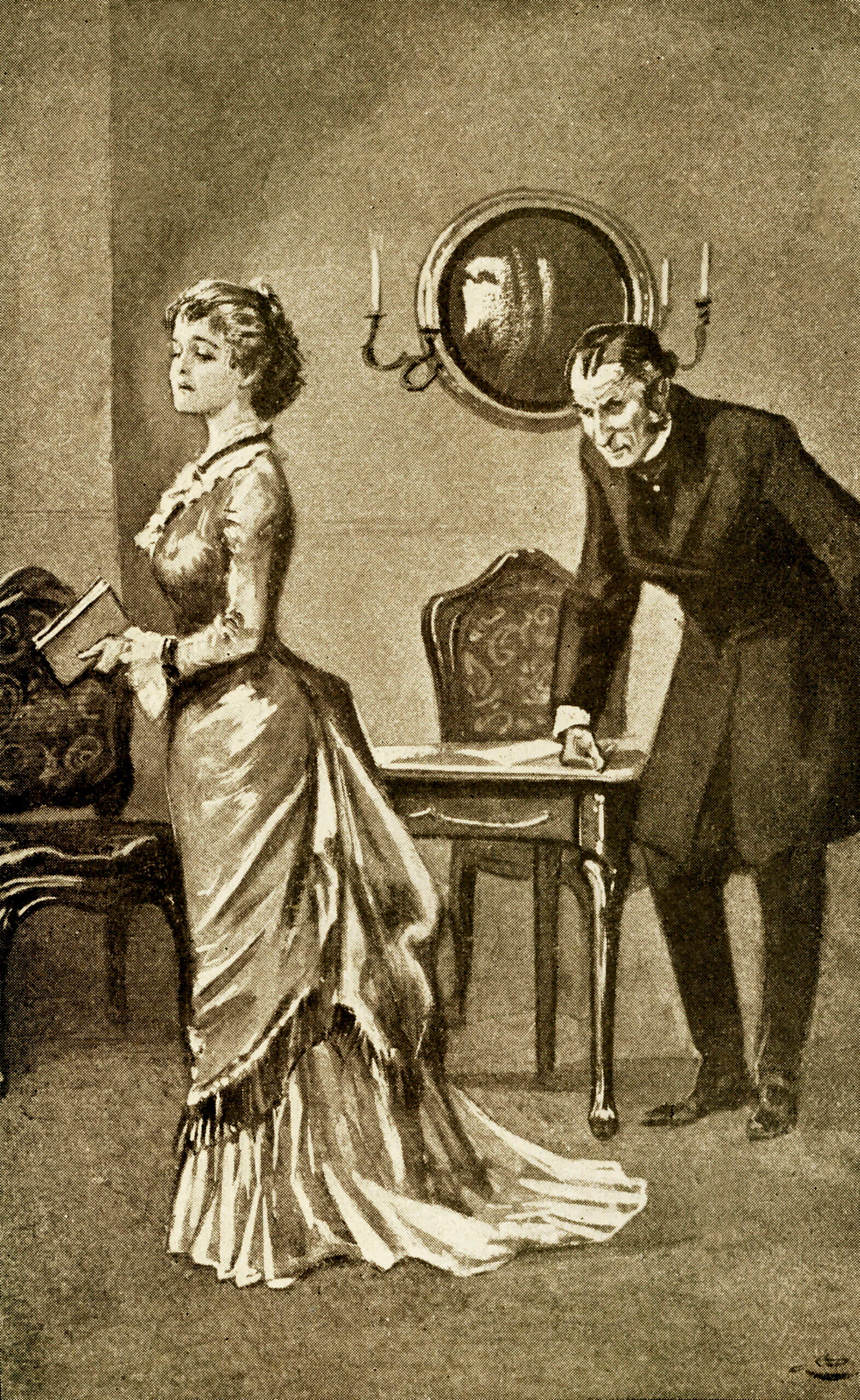
Daniel Deronda follows the story of the titular character, a young man raised as the ward of a member of the English gentry, who discovers his real parents were Jews. (I’ll apologize here for spoilers, but the book is 150 years old so I hope you’ll forgive me.) Except the novel is actually mostly about someone else altogether: a deeply flawed, self-centered and very compelling young English woman named Gwendolen Harleth who is grappling with the clash of her own desires against the boundaries and expectations of society, womanhood and marriage.
For the first half, I was confused about how this novel could possibly have anything Jewish to say. Gwendolen was fascinating, but Deronda gets far fewer pages and less emotional depth; his main character trait is being the Good Guy. Deronda is so famously flat and unconvincing that famed literary critic F.R. Leavis argued he should be excised from the novel and it should be republished as Gwendolen Harleth, freed from “the insufferably boring stretches” — those are the Jewish parts — that “loom so large.”
And then there are the other main Jewish characters. A beautiful damsel in distress named Mirah is very sweet and dainty but has no other personality to speak of — a manic pixie dream girl before her time. And the spiritually zealous Mordecai is so obsessed with the idea that Jews must return to Israel that he literally speaks of nothing else.
Most of the argument for Zionism, and Judaism more generally, is delivered via Mordecai’s didactic monologues in which he makes unconvincing grand statements like “Israel is the heart of mankind.” At the end, Daniel and Mirah wed and sail off to Jerusalem to save Judaism, and perhaps all of Europe. (How, exactly, one man who only recently discovered he was Jewish will affect such great change upon arriving in the Holy Land is so left so mystical and unclear that Henry James joked that for all anyone knew, Deronda and Mirah were simply having tea parties once they got to Israel.)

I’m not saying I agree about cutting out all the Jewish characters, as Leavis proposed. But I do think that they’re boring, unconvincing and didactic — as did my entire class. This is the case for Zionism that inspired Eliezer Ben Yehuda to resuscitate the Hebrew language? This is the novel Golda Meir kept on her bedside table?
Jews today are still writing about how her book helped inspire and affirm their own Zionism and Jewish identity. It’s true that some of her descriptions of Jewish history, and the yearning for a national identity, are moving. And Eliot painted an impressively prescient vision of the debate over Israel’s founding that would unfold over the next century.
Yet Eliot’s portrayal of Jews feels more than flat: It’s antisemitic. Of course, Eliot is a product of her era, so it’s unsurprising that some of her Jewish side characters are depicted as lowly and ugly, even as some of the other more minor Jews are human and well-rounded. But the real antisemitism is Eliot’s fetishization of Jews.
Her Jewish characters aren’t allowed to be real people; they’re figureheads. Eliot did her research — she was well-versed in biblical studies thanks to her evangelical education, and in Jewish mysticism thanks to her translation work. The book is peppered with references to Jewish sages like Ibn Ezra. But the Jewish characters speak far more of grand spiritual and political aims than they do of daily life, like prayer or keeping kosher. The Jewish characters serve as an instrument to inspire Gwendolen to live a more meaningful life. And Gwendolen stands in for England more generally — the message being, seemingly, that Jews will inspire Christian England to find its own grand national identity.
Reading Daniel Deronda, I was struck by its similarities not with founding Zionists of yore, but with today’s Christian Zionism. Eliot’s interest in Jews seems to stem from her worries about the vacuousness of English life, and her hope that Jews might somehow save Western society — Christian society, that is. She describes Judaism’s ancient roots as inherently noble, almost mystically powerful. But ultimately, it’s the same vibe as the preachers today who wrap themselves in Torahs or blow the shofar; they want to co-opt some mystery of Judaism to elevate their own beliefs and messages.
We’ve come a long way in social acceptance since Eliot’s time, yet this misconception is surprisingly sticky. Reading Daniel Deronda — or at least its Jewish parts — felt not dissimilar from watching the hit Christian TV show The Chosen, which mines Judaism for a sense of mysterious authenticity, or Amazon’s House of David, which gives Judaism an esoteric Game of Thrones-adjacent magnificence.
That exalted depiction might seem flattering on the surface, but Judaism isn’t mysterious or ancient; it’s very much alive. It’s the everyday practice and identity of millions of people who live in the U.S., and in Israel and in Europe. And as is so clear in Daniel Deronda, the more magical you make us, the less human we get to be.
The post I read George Eliot’s Zionist epic — the Jewish bits are the worst part appeared first on The Forward.
Uncategorized
What I learned from 180 pounds of Yiddish books, one ‘interesting and complicated’ Jewish man, and Jorge Luis Borges
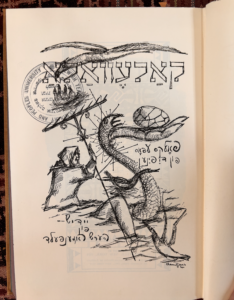
I’ve never met Harris Saltzberg, but one day last summer, I went to his house to abduct 180 pounds of his Yiddish books. He lived in a sturdy brown-brick co-op in Chelsea. In the lobby, there was Roz Chastian aroma of long-simmered onions and mothballs, with a subtle undertone of feet.
I took the elevator to the eleventh floor. Once I’d infiltrated Harris’ apartment, I began to get a sense of his personality. From the posters on the kitchen walls, I deduced that Harris liked Van Gogh and Martha Graham. From his box of cassette tapes, I got a taste of his cultured, klezmer-forward musical palate: Puccini Famous Arias sat next to Miriam Kressyn’s Yiddish Folk Songs. Pavarotti and Marilyn Horne kept company with Sidor Belarsky and Jennie Goldstein.
Before I go further, I should clarify: I did not burglarize Harris’ house. I was there as a “zamlerin,” a volunteer collector and schlepper of Yiddish books for the Yiddish Book Center in Amherst, Mass. I joined the international legion, some 160-zamlers-strong, at the end of a summer internship at the Center two years ago. Since then, every few months or so, I get a call or an email from an older Jew. Some Yiddish books have fallen into their hands, or maybe the books have been in the family for a long time. We tend to meet at their houses. (Once, though, I met a guy at his synagogue and sat through a full service for the first time in Hashem-knows-how-long.)

Wherever we meet, the pass-off process always feels ceremonial, more like the adoption of a child than the transfer of objects. We schmooze a bisl in Yiddish, a bisl in English while we load up the books, stacking them inside cardboard boxes like a game of 3D tetris. Sometimes, like a Yiddish-speaking Neanderthal, I’ll sound out the title of a book, and my host will light up like an electric menorah, turn the book over, rub its spine up and down, and tell me all about it. This? Oh, that’s Di Yeshiva. See, you can even see Chaim Grade’s autograph on the inside flap. That? Oh, that’s the Yiddish Kalevala. Naturally.
But zamling for Harris was different from zamling for other people, because for one thing, Harris was dead. His niece told me that Harris’ close friend, Andy, would be there to help me pack up the books. Andy was waiting in the lobby when I got there. He was a tall and weathered man of Irish extraction, about 75. His hooded blue eyes and the smoke on his deep, gravelly voice gave me the impression that he’d seen a lot in his time, like a hardbitten reporter in a noir novel. Except, Andy clarified, he was actually in publishing.
He didn’t say much after that.
Harris’ Yiddish bookshelf was right by the front door, so while I did a preliminary inventory, ooing and cooing in a way that would have annoyed me if another person were doing it, Andy shuffled through Harris’ living room and kitchen, shifting his chairs, stacking his dishware, emptying his cabinets. Even with Harris gone for months, the apartment hadn’t lost the ascetic spareness that only monks and longtime bachelors seem capable of cultivating. Dust had already settled over the few wooden tables and shelves. The rugs looked frayed, and a thin white light seeped into the room from in between the vertical blinds. There was a bottle of Cinzano Rosso sitting on the kitchen counter, forever half-finished. It seemed like a place Bernard Malamud might have cooked up for a story about an erudite bachelor character.

But what sort of erudite bachelor, exactly? Before I’d come over, I’d found a few clues on the internet. A Facebook obituary from Camp Kinderland described Harris as “an interesting and complicated person,” adding that he was “often very funny, often thoughtful and generous and warm.” He sounded prickly-sweet, not unlike a jackfruit. I’d also found a LinkedIn profile for one Harris Saltzberg who described his job as “Observer of aging,” employed at “Life.” That sounded about right.
But it was the books that brought Harris into focus. On the shelf, I found at least three Yiddish textbooks. “Harris was insecure about his Yiddish,” Andy told me later, when we were lugging boxes to the lobby. But from the looks of it, he shouldn’t have been. He had the big names on his shelf — Y.L. Peretz, Mendele Mocher Sforim, Sholem Aleichem (who, by the way, is so abundant at the Yiddish Book Center that you can sometimes get a copy of his collected works for free). But Harris was hardcore. He was a proper Yiddish junkie; he’d bought books that would have been challenging to get through even in English, like Klassenkamfn in Altertum, Class Struggles in Antiquity, by a man named Kalman Marmor. He’d collected landsmanshaft periodicals from tiny Besarabbian shtetls, school almanacs from 1929, an instructional book on Yiddish stenography, song books, and one baffling, proto-woke rhyming tale about a white thug with notably sharp elbows (“sharfn elboygn”) who torments a Black boy with sad eyes (“troyerike oygen”).

Sometimes, I would find signs of a bygone reader— maybe Harris, maybe somebody else —scrawled on a book’s inside cover, or tucked away on a scrap of paper. “To Rivke with Love — May you two get well acquainted!” wrote Manya on Jan. 30, 1959. I found grocery lists, and one detailed pencil sketch of a dog. I found a scrap of paper where Harris had scrawled in cursive ciphers, “Tammy Baker,” “Uniforms,” and something that might have been “human want,” or maybe “human meat.”
I had never met Harris and never would. But even as I stuffed the boxes to busting, I felt reluctant to throw anything out. When somebody is alive, odd bobs like scratch paper are replaceable junk. But when somebody is gone, everything becomes evidence that they lived. Maybe that is why Harris saved all those periodicals from towns that could no longer be found on any map, advertisements for pamphlets of essays and satire by long-dead Jews in the Bronx, stenography manuals, children’s books. So long as even one witness to a fading world remained, that world wouldn’t truly be gone.
There is a story by Jorge Luis Borges called “The Witness,” or “El Testigo” that I have thought about several times since visiting Harris’ apartment. It is about the last pagan in England. As church bells ring, he lies dying in a stable in the shadow of a new stone church. This man is the last living person to remember worshipping the wooden idol of the pagan god Woden. “Before dawn he would be dead and with him would die, never to return, the last firsthand images of the pagan rites,” Borges writes. “The world would be poorer when this Saxon was no more.”
In the moment, though, I was not thinking much about books beyond how many of them I could cram into one box. As Andy and I hauled the book boxes down to an extremely patient Uber driver — six boxes total, around 30 pounds each — he told me how Harris had loved opera. He talked about his own two brothers, and about his upcoming trip to the motherland, Donegal, which he taught me to pronounce “Don-ee-GAL.” In the car to the UPS store, we kvetched about how hungry we were. At the curb, he helped me unload the boxes. Then he bent down and hugged me goodbye. I was sorry to see him go. I wondered if we would ever see each other again.
It’s been over a year since that day. Harris’ apartment probably belongs to someone else now, and as for the books, they are living a literally chilled-out retirement in the temperature-controlled vaults of the Yiddish Book Center. I wonder whose fingers will touch those pages next. And whose will be the last. After all, Borges muses, there is a last for everything. There was a day when the last eyes to see Christ closed forever. When the last man to have loved Helen of Troy died. When the last person to remember the Battle of Junín was buried. “Something, or an infinite number of things, dies in each death,” he writes. “What will die with me when I die?”
The post What I learned from 180 pounds of Yiddish books, one ‘interesting and complicated’ Jewish man, and Jorge Luis Borges appeared first on The Forward.
