



Uncategorized
Iran Says It Won’t Negotiate Over Missile Program as Trump Meets Netanyahu, With Nuclear Diplomacy Topping Agenda

US President Donald Trump talks with Israel’s Prime Minister Benjamin Netanyahu at the Knesset, Oct. 13, 2025, in Jerusalem. Photo: Evan Vucci/Pool via REUTERS
Iran‘s missile capabilities are its red line and are not a subject to be negotiated, an adviser to Iran‘s supreme leader said on Wednesday, as US President Donald Trump hosted Israeli Prime Minister Benjamin Netanyahu at the White House amid diplomacy between Washington and Tehran.
“The Islamic Republic’s missile capabilities are non-negotiable,” Ali Shamkhani said according to state media while appearing in a march commemorating the 47th anniversary of the Islamic Revolution.
Netanyahu was expected to press Trump to widen US talks with Iran to include limits on Tehran’s missile arsenal and other security threats beyond its nuclear program.
US and Iranian diplomats held indirect talks last Friday in Oman, amid a regional naval buildup by the US threatening Iran. Tehran and Washington are eyeing a new round of negotiations to avert conflict.
Washington has sought to extend talks on Iran‘s nuclear capabilities to cover its missile program as well. Iran has said it is prepared to discuss curbs on its nuclear program in return for the lifting of sanctions, but has repeatedly ruled out linking the issue to other questions including missiles.
On Sunday, Iran‘s Foreign Minister Abbas Araqchi said Tehran’s missile program had never been part of the talks’ agenda.
Both Israel and the US see Iran’s missile arsenal as an urgent threat.
In his seventh meeting with Trump since the president returned to office nearly 13 months ago, Netanyahu was looking to influence the next round of US discussions with Iran following the nuclear negotiations held in Oman.
Trump has threatened strikes on Iran if no agreement is reached, while Tehran has vowed to retaliate, stoking fears of a wider war. He has repeatedly voiced support for a secure Israel, a longstanding US ally and arch-foe of Iran.
In media interviews on Tuesday, Trump reiterated his warning, saying that while he believes Iran wants a deal, he would do “something very tough” if it refused.
TRUMP SAYS NO TO IRANIAN NUCLEAR WEAPONS, MISSILES
Trump told Fox Business that a good deal with Iran would mean “no nuclear weapons, no missiles,” without elaborating. He also told Axios he was considering sending a second aircraft carrier strike group as part of a major US buildup near Iran.
Israel fears that the US might pursue a narrow nuclear deal that does not include restrictions on Iran‘s ballistic missile program or an end to Iranian support for armed proxies such as Hamas and Hezbollah, according to people familiar with the matter. Israeli officials have urged the US not to trust Iran‘s promises.
“I will present to the president our perceptions of the principles in the negotiations,” Netanyahu told reporters before departing for the US. The two leaders could also discuss potential military action if diplomacy with Iran fails, one source said.
Netanyahu’s arrival at the White House was lower-key than usual. He entered the building away from the view of reporters and cameras, and a White House official then confirmed he was inside meeting with Trump.
GAZA ON THE AGENDA
Also on the agenda was Gaza, with Trump looking to push ahead with a ceasefire agreement he helped to broker. Progress on his 20-point plan to end the war and rebuild the shattered Palestinian enclave has stalled, with major gaps over steps such as Hamas disarming as Israeli troops withdraw in phases.
Netanyahu’s visit, originally scheduled for Feb. 18, was brought forward amid renewed US engagement with Iran. Both sides at last week’s Oman meeting said the talks were positive and further talks were expected soon.
US Secretary of State Marco Rubio said ahead of the Oman meeting that negotiations would need to address Iran‘s missiles, its proxy groups, and its treatment of its own population. Iran said Friday’s talks focused only on nuclear issues.
Trump has been vague about broadening the negotiations. He was quoted as telling Axios on Tuesday that it was a “no-brainer” for any deal to cover Iran‘s nuclear program, but that he also thought it possible to address its missile stockpiles.
Iran says its nuclear activities are for peaceful purposes, while the US and Israel have accused it of past efforts to develop nuclear weapons.
Last June, the US joined Israel’s strikes on Iranian nuclear facilities during a 12-day war.
Israel also heavily damaged Iran‘s air defenses and missile arsenal. Two Israeli officials say there are signs Iran is working to restore those capabilities.
Trump threatened last month to intervene militarily during a bloody crackdown on anti-government protests in Iran, but ultimately held off.
ISRAEL WARY OF A WEAKENED IRAN REBUILDING
Tehran’s regional influence has been weakened by Israel’s June attack, losses suffered by its proxies in Gaza, Lebanon, Yemen and Iraq, and the ousting of its ally, former Syrian President Bashar al‑Assad.
But Israel is wary of its adversaries rebuilding after the multi‑front war triggered by Hamas’s Oct. 7, 2023, assault on southern Israel.
While Trump and Netanyahu have mostly been in sync and the US remains Israel’s main arms supplier, Wednesday’s meeting could expose tensions.
Part of Trump’s Gaza plan holds out the prospect for eventual Palestinian statehood – which Netanyahu and his coalition have resisted.
Netanyahu’s security cabinet on Sunday authorized steps that would make it easier for Israeli settlers in the West Bank to buy land while granting Israel broader powers in what the Palestinians see as part of a future state. The decision drew international condemnation.
“I am against annexation,” Trump told Axios, reiterating his stance. “We have enough things to think about now.”
Uncategorized
A chance for the descendants of Holocaust victims to reclaim a piece of the past
Levi Buxbaum boarded the S.S. St. Louis on May 13, 1939, both relieved and hopeful. Relieved to be leaving Nazi Germany behind, hopeful that he would soon reunite with his daughters. But 14 days later, when the ship arrived in Havana, most of its passengers were denied entry.
Refused safe harbor in Cuba, the United States and Canada, the refugees were forced to return to Europe. That June, Buxbaum and 222 other passengers disembarked in France. Discouraged but undeterred, he clung to the hope that he would eventually secure a visa to America.
It was not to be. Sometime between Nov. 6 and Nov. 8, 1942, Buxbaum died aboard a transport bound for Auschwitz-Birkenau. Until recently, that was all Bonnie Elkaim knew about her great-grandfather.
Now, thanks to the Center for Jewish History’s newly launched initiative, “Histories and Mysteries,” Elkaim knows what happened between Buxbaum’s arrival in France in 1939 and his death three years later. The project helps families investigate Holocaust-era cold cases through crowdsourced genealogy, expert archival research and community collaboration.
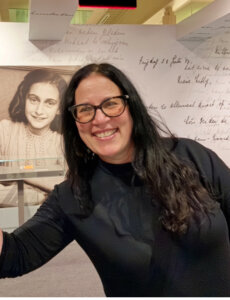
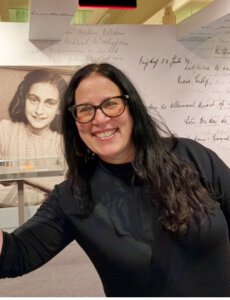
“I’m extremely grateful that I filled in some of the pieces. I didn’t want my great-grandfather to just be a statistic,” Elkaim, 58, told me in a Zoom interview.
The initiative was made possible by a nearly $300,000 grant from the Conference on Jewish Material Claims Against Germany, or the Claims Conference. Since the project was launched in January, genealogists at CJH have received nearly 50 inquiries from the United States, Germany, Austria, the United Kingdom, and Canada, and have begun work on 11 cases.
“This project brings together passed-down family stories and the irreplaceable truth found in the archive. By taking part in this work, each person helps restore histories stolen in the Holocaust and gives families a chance to reclaim pieces of their past,” said Jenny Rappaport, head genealogist at the Ackman & Ziff Family Genealogy Institute.
Elkaim’s story will be the first shared publicly, released in weekly social media posts through July 31.
Miriam Frankel, CJH’s director of social media, said she hopes the project’s collaborative nature will resonate with audiences.
“What I love about the project is the communal aspect and being able to steward these stories into the digital world and affirm that they matter,” Frankel said.
The idea for the project grew out of the family history of Ilana Rosenbluth, CJH’s communications director.

When Nazi Germany invaded Poland on Sept. 1, 1939, Rosenbluth’s father, then four years old, was living with his parents in eastern Poland. By month’s end, the country had been divided between Germany and the Soviet Union.
Rosenbluth’s family fled eastward, moving from Lvov to Siberia and eventually Uzbekistan, where food was scarce and disease rampant. During that time, her grandmother gave birth to a daughter, Lucia, known as Lucy, who later died of starvation.
In 1943, desperate to support his family, Rosenbluth’s grandfather boarded a train carrying bolts of fabric and disappeared.
“There are varying accounts of what happened to him, but the truth is my family has never had closure,” Rosenbluth said, adding that this initiative may be the last chance for us, and people like us to find answers.
As the number of living witnesses declines, preserving Holocaust history has taken on new urgency, said Gideon Taylor, president of the Claims Conference.
“We’re at a unique moment in time in terms of Holocaust memory and education. Fewer and fewer people have direct knowledge of it,” Taylor said.
A 2020 Claims Conference survey found that 63% of Americans do not know that six million Jews were murdered in the Holocaust, and nearly half cannot name a single one of the more than 400,000 camps and ghettos that existed across Europe.
Elkaim, a retired New York City teacher, says she first learned about the Holocaust when she was nine years old.
“I only knew a few limited facts. I knew my grandparents had survived and my great-grandfather hadn’t. My grandmother felt a lot of survivor guilt and didn’t talk about it, and people didn’t ask questions then,” she said.
Now an educator and guide at CJH’s Anne Frank exhibition, Elkaim spent years searching for fragments of information that might transform her great-grandfather from an abstraction into a living, breathing person.
“I wanted to feel a connection with him,” she said.
When Rappaport received Elkaim’s inquiry, she immediately began contacting archivists in Germany and France. She also worked with CJH partner organizations, including the Leo Baeck Institute and YIVO, which held a census record from the General Union of French Israelites. The document placed Buxbaum in Vienne, France, between 1941 and 1942 and showed that he was unemployed. Rappaport also combed databases such as Ancestry.com, which contains extensive German vital records.
“Sometimes a single clue can rewrite an entire family story,” Rappaport said.
In Elkaim’s case, it was three clues.
The first breakthrough was the death record of Elkaim’s great-grandmother, Pauline Rothschild Buxbaum, which confirmed that he was in Kassel, Germany, on March 24, 1939.
Next came his 1876 German birth record, which verified his identity across multiple French documents.
Finally, a typed marriage record for Levi Buxbaum and Pauline Rothschild further confirmed the timeline, placing him definitively in Germany shortly before his flight from Nazi persecution.
Piece by piece, Rappaport reconstructed what followed.
In September 1939, Buxbaum was interned as an “enemy alien” at Camp du Ruchard, a former convalescence hospital for Belgian soldiers after World War I. He lived as a refugee for four years before being arrested and transferred to the Drancy internment camp. All the while he never stopped trying to get to America.
The last document bearing his name appears on Transport 42 from Drancy to Auschwitz-Birkenau.
“He either died on the transport or immediately after arriving. There’s no way to know exactly. But I admire him so much and how hard he fought to survive,” Elkaim said.
The post A chance for the descendants of Holocaust victims to reclaim a piece of the past appeared first on The Forward.
Uncategorized
Jews and other minorities face similar levels of campus hostility, Brandeis survey finds
The first academic study comparing the experience of Jewish students on college campuses to that of other minority groups found that Jews and other marginalized populations, including Black and Muslim students, face comparable levels of discrimination.
The findings were part of a national survey involving thousands of respondents focused on antisemitism that also polled student attitudes toward other identity groups.
Nearly half of Jewish students said they had experienced at least one antisemitic incident during the current academic year — mostly seeing offensive graffiti or posters — but when it came to the overall campus climate Jews were slightly less likely than Muslims, and slightly more likely than Black students, to say that their campus was a hostile environment.
“Everybody is walking around with a chip on their shoulder,” said Leonard Saxe, director of the Cohen Center of Modern Jewish Studies at Brandeis University, which produced the study released Tuesday. “Addressing prejudice toward protected groups is perhaps seen as a zero- sum game: ‘If we pay attention to Black students that’s taking away from what we can do for Jewish students, but paying attention to Jewish students means not paying attention to Muslim students.’”
While a flurry of research about campus antisemitism followed the Oct. 7 Hamas terrorist attacks in Israel and the college protests of the Gaza war that followed, few have sought to determine whether Jews are facing more or less discrimination than other students.
But the Brandeis study tracks with a less scientific study commissioned by the antisemitism task force at Columbia University in which high levels of both Jewish and Muslim students said they had felt endangered on campus amid protests related to the Gaza war.
In the Brandeis report, Jewish students were most likely to express concern related to traditional antisemitic stereotypes (62%) and antisemitism from the political right (60%) while fewer said they were worried about antisemitism related to Israel (45%) or coming from the left (also 45%).
When it came to college students overall, 9% showed a pattern of hostility toward Jews, meaning they were likely to agree with a series of antisemitic statements, compared to 17% who exhibited what researchers called “anti-Black resentment.”
Muslim, Black and Hispanic students, and those who identified as liberal or moderate, were the most likely to agree with negative statements about Jews, while white, Muslim and conservative students were most likely to agree with anti-Black views.
“It means that we need to target some of our interventions — educational interventions — to these groups if we want to have effects,” Saxe said. “If you only engage the Caucasian students, you’re not going to be addressing the problem.”
Jewish students expressed some of the lowest levels of prejudice toward other groups, according to the study, but 18% expressed “anti-Black resentment” while 3% were categorized as expressing hostility toward Jews.
The report also found that strident hostility toward Israel — opposing Israel’s “right to exist” and avoiding peers who support a Jewish state in Israel — did not neatly correlate to holding antisemitic views.
Half of “extremely liberal” students agreed with those statements about Israel but overall the very liberal population was least likely to express a pattern of hostility toward Jewish students. Very few moderate or conservative students expressed those negative views about Israel, but both groups were more likely to agree with anti-Jewish statements.
The 14% of Jewish students who agreed with the anti-Israel statements was similar to the number of students from other backgrounds who did.
The study was conducted during the fall semester last year. Researchers polled 3,989 undergraduate students at four-year colleges and universities in the U.S. through an online survey fielded by Generation Lab that included an oversample of 743 Jewish students.
The post Jews and other minorities face similar levels of campus hostility, Brandeis survey finds appeared first on The Forward.
Uncategorized
Rubio Says ‘Historic’ Israel-Lebanon Talks Should Outline Framework for Peace

Smoke rises after an Israeli strike, amid escalating hostilities between Israel and Hezbollah, as the US-Israeli conflict with Iran continues, in southern Lebanon, March 24, 2026. Photo: REUTERS/Stringer
US Secretary of State Marco Rubio hosted a rare meeting between Israeli and Lebanese envoys in Washington on Tuesday, saying he hoped the two countries would agree to a framework for a peace process, even as Israel pressed its war on Hezbollah.
The two countries went into their first direct negotiations since 1983 with conflicting agendas, with Israel ruling out discussion of a ceasefire and demanding Beirut disarm Hezbollah, an Iran-backed terrorist group based in Lebanon that seeks Israel’s destruction.
But the presence of Rubio, President Donald Trump’s top diplomat and national security adviser, signaled Washington’s desire to see progress.
CRITICAL JUNCTURE IN MIDDLE EAST CRISIS
The meeting comes at a critical juncture in the conflict in the Middle East, a week into a fragile ceasefire between the United States, Israel, and Iran.
Iran says Israel‘s campaign against Hezbollah in Lebanon must be included in any agreement to end the wider war, complicating talks mediated by Pakistan aimed at averting further economic fallout.
The conflict that began with US-Israeli strikes on Iran on Feb. 28 has led to a major oil supply disruption, piling pressure on Trump to find an off-ramp.
Rubio opened the meeting between Israel‘s ambassador to the US, Yechiel Leiter, and his Lebanese counterpart, Nada Hamadeh Moawad, saying he hoped the talks could begin a process to permanently end the conflict in Lebanon and prevent Hezbollah, which he called a “terrorist proxy of Iran,” from threatening Israel.
The meeting marked a rare encounter between representatives of governments that have remained technically in a state of war since the modern state of Israel was established in 1948.
“This is a process, not an event. This is more than just one day. This will take time, but we believe it is worth this endeavor, and it’s a historic gathering that we hope to build on. And the hope today is that we can outline the framework upon which a permanent, lasting peace can be developed,” Rubio said.
Rubio was hosting Tuesday’s talks amid questions over his lack of in-person participation in talks with Iran, with the Republican president sending Vice President JD Vance to Islamabad over the weekend to lead the US negotiations.
Rubio was with Trump in Florida watching a mixed martial arts event as Vance announced in Pakistan that talks with the Iranians had concluded with no breakthrough.
State Department Counselor Michael Needham, US ambassador to the United Nations Mike Waltz, and US ambassador to Lebanon Michel Issa, a personal friend of Trump, were also participating in the talks on Tuesday.
LEBANON SEEKS CEASEFIRE
Lebanese President Joseph Aoun said in a statement on X as the meeting started that he hoped it would “mark the beginning of ending the suffering of the Lebanese people in general, and the southerners in particular.”
The Lebanese government led by Aoun and Prime Minister Nawaf Salam has called for negotiations with Israel despite objections from Hezbollah, reflecting worsening tensions between the Shi’ite Muslim group and its opponents.
Hezbollah opened fire in support of Tehran on March 2, sparking an Israeli offensive that has killed more than 2,000 people and forced 1.2 million from their homes, according to Lebanese authorities. Most of those killed have been Hezbollah terrorists, according to Israeli tallies.
Lebanese officials have said Moawad only has authority to discuss a ceasefire in Tuesday’s meeting.
But Israeli government spokesperson Shosh Bedrosian said Israel would not discuss a ceasefire.
Israeli Foreign Minister Gideon Saar told reporters in Jerusalem ahead of the meeting that talks would focus on the disarmament of Hezbollah, which he said must take place before Israel and Lebanon could sign any peace agreement and normalise relations.
He said Hezbollah was a problem for Israel‘s security and Lebanon‘s sovereignty that needed to be addressed to move relations to a different phase. “We want to reach peace and normalization with the state of Lebanon,” he said.
The Lebanese state has been seeking to disarm Hezbollah peacefully since a war between the terrorist group and Israel in 2024. Efforts by Lebanon to disarm it by force risk igniting conflict in a country shattered by civil war from 1975 to 1990. Moves against Hezbollah by a Western-backed government in 2008 prompted a short civil war.
The current government banned Hezbollah’s military wing after it opened fire on Israel last month.