


Uncategorized
After 3-hour White House meeting, Trump says he ‘insisted’ to Netanyahu that Iran talks should continue
(JTA) — Israeli President Benjamin Netanyahu met with President Donald Trump at the White House on Wednesday in an effort to push the U.S. leader to widen negotiation with Iran to include Israeli security priorities.
“Nothing definitive” came out of the highly anticipated meeting between the leaders, which lasted roughly three hours, Trump wrote in a post on Truth Social immediately afterwards. But he signaled that he had resisted a push to end direct talks with Iran.
“There was nothing definitive reached other than I insisted that negotiations with Iran continue to see whether or not a Deal can be consummated. If it can, I let the Prime Minister know that will be a preference. If it cannot, we will just have to see what the outcome will be,” wrote Trump.
Prior to boarding a flight on his way to Washington D.C. on Tuesday, Netanyahu told reporters that his meeting with Trump would center “first and foremost” on negotiations with Iran.
“I will present to the president our views on the principles in the negotiations, the important principles, and in my opinion they are important not only to Israel — but to everyone in the world who wants peace and security in the Middle East,” Netanyahu told reporters.
During Wednesday’s meeting, which was closed to the press, Netanyahu was expected to push Trump to widen negotiations with Iran beyond its nuclear program, including imposing restrictions on Iran’s ballistic missile program and ending Iranian support for Hamas and Hezbollah.
The talks Wednesday were also expected to center on developments in the ceasefire in Gaza, with Netanyahu officially joining the Board of Peace during a meeting with Secretary of State Marco Rubio earlier in the day.
Met with U.S. Secretary of State @marcorubio at Blair House in Washington.
Ahead of my meeting at the White House with President Trump, I signed Israel’s accession as a member of the “Board of Peace.”
We will continue strengthening the unbreakable alliance between Israel and… pic.twitter.com/CJ4Lw92WdX
— Benjamin Netanyahu – בנימין נתניהו (@netanyahu) February 11, 2026
Netanyahu’s visit Wednesday was his sixth to the United States since the beginning of Trump’s term. Trump surprised him at an earlier meeting by announcing that he planned to open direct talks with Iran, which has vowed to destroy Israel.
The visit shortly followed talks in Oman on Friday between Iran’s foreign minister and Trump administration officials on reaching a potential nuclear deal. Those talks came a month after Iranian leaders ordered a crackdown on civil protesters in which an estimated 30,000 Iranians or more were murdered.
On Tuesday, Trump told Axios that he was “thinking” about sending another aircraft carrier strike group to the Gulf where he has already assembled a large military buildup, adding, “Either we will make a deal or we will have to do something very tough like last time.”
Iran has said it will retaliate if the United States strikes to curb its nuclear program, sparking concern of a war. Last June, the United States struck three nuclear sites in Iran amid the country’s 12-day war with Israel, damaging but not destroying them.
In an interview Tuesday with Fox Business Network’s Larry Kudlow, Trump said that a good deal with Iran would mean “no nuclear weapons, no missiles.”
“We’ll see what happens. I think they want to make a deal,” said Trump. “I think they’d be foolish if they didn’t. We took out their nuclear power last time, and we’ll have to see if we take out more this time.”
The post After 3-hour White House meeting, Trump says he ‘insisted’ to Netanyahu that Iran talks should continue appeared first on The Forward.
Uncategorized
A ‘unique 20th Century Israelite’ who always made sure we got it right
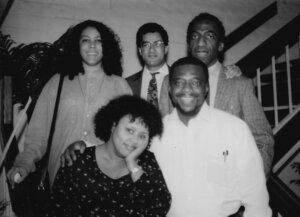
It’s fitting that I first met Rabbi Capers Funnye in a television studio. And it should surprise no one that the topic that brought us together — by no means accidentally — was a discussion about Black Jews.
We never stopped talking about it. And making sure others got it right.
The spiritual leader for decades of Chicago’s Beth Shalom B’nai Zaken Ethiopian Hebrew Congregation and since 2016 the Chief Rabbi of the International Israelite Board of Rabbis, Funnye died Nov. 2 at 74.
Our friendship spanned decades, beginning before we co-founded the Alliance of Black Jews with Michelle Stein-Evers Frankl in 1995. With Stein-Evers, then in Los Angeles, and me in Boston, the organization brought together Jews of African descent from around the country to celebrate our dual affiliations as normative.
Although the organization did not last beyond its early years, it spawned numerous other groups that exist today. Most significantly, it mainstreamed the fact that Blackness and Judaism are not mutually exclusive.
That’s the message we had been imparting five years earlier, on the Black Entertainment Television show Our Voices in 1990. Having filed a story mentioning Black Jews while a reporter for BET’s news division, I was asked by the network to co-produce a special on the subject. In addition to me, they asked who else should appear.
“There’s a rabbi in Chicago,” I said unhesitatingly, though I had yet to meet him, “and the police chief in Charleston, South Carolina” — Reuben Greenberg, who passed away in 2014.

Each of us came to Judaism differently: me, the child of a non-Jewish African-American father and non-Black Jewish mother; Greenberg, via conversion first through Reform, then Conservative Judaism (and also “reversion” in that he was reaching back to the religion of his grandfather), and Funnye, who had been Methodist before joining the Ethiopian Hebrew denomination (of African Americans, not Ethiopians) and later underwent a Conservative conversion.
Although his smicha was granted by the Ethiopian Hebrew group (now more broadly termed Israelite) and not by the Conservative body, he was invited to join the Chicago Board of Rabbis as its first African American member in 1997.
His dual affiliations as both Conservative and Israelite — and indeed, that of his largely Black and increasingly Hispanic Chicago shul, which also had merged with an aging Ashkenazi congregation — allowed him to serve as a bridge between many strains of Judaic practices.
“He accomplished what he wanted,” said Rabbi Baruch A. Yehudah of Congregation B’nai Adath Kol Beth Yisrael in New York. “He wanted to be a bridge builder and he built many — into the Ethiopian community, the Nigerian community, South Africa, Ghana, Uganda. He was the first one of us to be on a mainstream board of rabbis.”
“I loved him,” Yehudah added. “He wasn’t just my boss.”
Bruce Haynes, author of The Soul of Judaism, called Funnye “the most unique 21st Century Israelite” because of his role as chief rabbi. “To my knowledge, that (position) was the first of its kind. It elevated him institutionally as the premiere figure among modern-day Hebrew Israelites.”
Yet that outreach went beyond the bima. “Having chosen to move his whole family toward Conservative Judaism was an important step in cementing a personal relationship between Israelite congregations and rabbinic Judaism,” Haynes said.
Rabbi Tamar Manasseh, a protégé of Funnye who in 2021 became the first woman ordained by the Israelite body, said Funnye was “doing the whole bridge thing before anybody knew that they wanted a bridge.
“There were Black Jews who didn’t like that. There were white Jews who didn’t like that, either. It was uncomfortable for everybody until it wasn’t uncomfortable for anybody.”
She praised him for enduring “all of the stuff he had to go through to get us to a point where I can complain about things now, which is remarkable.”
I too find it difficult to separate the personal from the bridge-building. In addition to our numerous Black Jewish campaigns and initiatives — we literally traveled the world together, from Chicago to Boston to San Francisco to Uganda — he served as the rabbi for my mother’s funeral and my daughter’s wedding.
In my ever-diverse family, both were examples of bridge-building in their own right. During the wedding, my now son-in-law, whose native language is Russian, recited the line “I concentrate you to me as my wife,” prompting Funnye to break from the prepared liturgy to correct him.
“No, no. Consecrate. We gotta get this right.”
“I consecrate you to me as my wife,” the groom said, appreciative of the gentle but authoritative guidance.
Because Capers made sure to get it right.
The post A ‘unique 20th Century Israelite’ who always made sure we got it right appeared first on The Forward.
Uncategorized
The Jewish midterms: Races to watch on Election Day
Tuesday’s midterm elections will determine which party controls Congress for the final two years of President Donald Trump’s second term, with Republicans fighting to hold their narrow majorities and Democrats hoping to regain power.
Recent polls suggest Democrats are favored to retake the House and have a strong chance of winning the Senate. Several closely watched gubernatorial races could also shape the field for the 2028 presidential election and increase the number of Jewish governors.
The outcome could have immediate consequences for U.S. foreign policy, particularly American support for Israel and the war with Iran. If Democrats win the House, they would have greater power to investigate Trump’s handling of the war, limit his power and challenge his foreign policy decisions. Democrats will also likely push for restrictions on military aid to Israel, depending on who forms the next Israeli government. Democrats remain divided over Israel and their leadership has so far resisted pressure to pursue major changes to longstanding U.S. policy.
A Democratic takeover of Congress would put House Democratic leader Hakeem Jeffries and Senate Democratic leader Chuck Schumer, both longtime supporters of Israel, in charge of their respective chambers and navigating any divides within their caucus.
The elections will also test whether Democrats can win back voters who shifted toward Trump and will reveal how much influence the party’s progressive wing may have, particularly on Israel and foreign policy going into the presidential primary season.
For Jewish voters, the stakes are especially high. Although they make up only about 2% of the population nationwide, Jewish voters could help decide close races in New York, Michigan, Georgia and Ohio. The results could also show whether frustration with Democrats over Israel is driving more Jewish voters toward Republicans or whether concerns about antisemitism on the right and disapproval of Trump are keeping them in the Democratic camp.
Here are the key races we’re watching and what’s at stake.
– Senate –
Michigan: Abdul El-Sayed (D) vs. Mike Rogers (R)
Issues: The race has become one of the largest tests of the Democratic divide on Israel and antisemitism. El-Sayed, a progressive and fierce critic of Israel, defeated Rep. Haley Stevens in the contested Democratic primary despite millions spent by AIPAC and other pro-Israel groups. Now, Stevens is backing Rogers. El-Sayed has refused to moderate his views and has doubled down on ending Israel aid and his association with Hasan Piker, a popular left-wing pundit who has been accused of antisemitism. El-Sayed said he disagreed with the content of an ad from a PAC supporting his campaign that blamed U.S. aid to Israel for rising grocery prices.
The Jewish vote: The state has an estimated 130,000 Jewish residents, who make up 1.4% of the electorate. The Republican Jewish Coalition spent $2 million to target 50,000 Jewish voters in Oakland County who opposed El-Sayed in the primary; those votes could matter in a close race.
Georgia: Incumbent Jon Ossoff (D) vs. Mike Collins (R)
Issues: Ossoff, the state’s first Jewish senator, has angered some Jewish voters for backing measures to block some aid to Israel. Collins criticized Ossoff for supporting El-Sayed. The Republican has been accused of ties to white nationalists and antisemitic figures, including his son-in-law, who promoted antisemitic conspiracies. Collins rejected their views and condemned antisemitism.
The Jewish vote: Georgia is home to an estimated 150,000 Jews, primarily in Atlanta. Though that represents 1.3% of the electorate, Jewish voters could play an important role in a state where recent elections were decided by narrow margins. The outcome could test whether dissatisfied Jewish Democrats will still support Ossoff over a Trump-aligned Republican and whether his Jewish identity still provides a political advantage.
Florida: Incumbent Ashley Moody (R) vs. Angie Nixon (D)
Issues: Moody, who was appointed to the Senate in 2025 after Marco Rubio became Secretary of State, is a staunch supporter of Israel and led on combating BDS in her previous role as attorney general. Nixon is the first member of the Democratic Socialists of America on a major party ticket. She did not make Israel the centerpiece of her Senate campaign, which focused heavily on affordability, health care and other economic issues. But on Israel and Gaza, her record puts her broadly in line with the DSA’s platform.
The Jewish vote: Florida is home to 750,000 Jews, who make up an estimated 3-5% of the state’s electorate. Moody leads Nixon by an average of 6 percentage points.
– House –
New York 17: Rep. Mike Lawler (R) vs. Cait Conley (D)
Issues: Support for Israel and antisemitism were central in outreach to the Jewish community, though the two candidates have more in common on those issues than their campaigns suggest. Lawler highlighted his ties to Jewish voters and questioned whether Conley would stand up to anti-Israel voices in the Democratic Party, while Conley accuses him of associating with Republicans who have faced accusations of antisemitic rhetoric and ties to white nationalists.
The Jewish vote: The district has 150,000 Jewish residents who make up 19% of the population. At least 20,000 members of the growing Hasidic communities in Rockland County voted for Lawler in 2024. His first race was won by a narrow margin of about 2,000 votes. The margin of victory could determine whether a pro-Israel moderate Democrat could peel away Jewish voters from Lawler’s camp.
New York 10 and 12: Brad Lander and Micah Lasher
Lander and Lasher are heavily favored to win their races in the deep blue districts. They represent a generational transition in the debate over Israel and Jewish influence in Congress, as Jerry Nadler, co-chair of the Congressional Jewish Congress who served as the leading voice in Congress for liberal Jews, is set to retire. Lander, an ally of New York City Mayor Zohran Mamdani and of the pro-Palestinian movement, supports halting all aid to Israel and has called the Gaza war a genocide, while Lasher supports continued aid and calls himself a Zionist.
The Jewish vote: The 12th District has the nation’s largest Jewish population – 24%, while the 10th ranks fourth, at 21%.
New York 13 and 7: Daraliza Avila Chevalier and Claire Valdez
The election of Avila Chevalier, a former Columbia University Gaza War encampment activist, in the 13th District — where Jews make up 6% — and Valdez in the 7th District in Brooklyn — where Jews make up 13% – will put two fierce Israel critics and DSA members at the center of debate over Israel in Congress.
Florida 20: Rep. Debbie Wasserman Schultz (D) vs. Brent Andersen (R)
Wasserman Schultz, one of the most prominent Jewish members in Congress, is favored to win reelection after easily winning the Democratic primary in a redrawn majority-Black district, surviving GOP redistricting. Jews make up just 5% of her new district.
Florida 25: Rep. Jared Moskowitz (D) vs. Scott Singer (R)
Issues: Moskowitz, who built a reputation as an outspoken supporter of Israel and one of the more bipartisan members of the House, easily defeated Oliver Larkin, a democratic socialist and fierce critic of Israel, in the August primary as he clashed with progressives over Israel. Singer, the Jewish former mayor of Boca Raton, highlighted his support for Israel and his roots in the district and, if elected, could increase the Jewish Republican caucus to five members.
The Jewish vote: The district is home to 67,000 Jews, at 8%. Recent polls show a close race, in which Jewish voters will play an important role in deciding whether they are represented by a Jewish Democrat or a Jewish Republican.
California 11: Scott Wiener vs. Connie Chan
Issues: This race to succeed Nancy Pelosi, the former House Speaker, is a test of how far left on Israel is good enough for San Francisco. Both Weiner, who is Jewish and advanced to first place in the Democratic primary, and Chan say that Israel committed genocide in Gaza and want to end U.S. military aid to Israel. Chan, however, is the favored candidate among pro-Palestinian activists, who say Weiner’s characterization of the conflict as a genocide was too little, too late.
Jewish vote: The district is home to 57,000 Jews, 7.5% of the population. Wiener leads Chan by an average of 6 percentage points.
Colorado 1: Melat Kiros (D) vs. Shimon Blau (I)
Issues: Israel has been a defining issue in the race. Kiros, a democratic socialist, has repeatedly declined to call the 2025 firebombing of a walk for Gaza hostages antisemitic. The attacker was heard yelling “Free Palestine” as he threw molotov cocktails, injuring 13 people, including an 82-year-old woman who later died from her injuries. Kiros has since said she understands “the immense pain and fear the Boulder attack caused.” Kiros has also argued in favor of a one-state solution, called for ending both offensive and defensive weapons sales to Israel, and called Hamas’s Oct. 7, 2023 attack the “inevitable consequence of apartheid.” Blau, an Orthodox Jew, said he was inspired to get into the race by what he described as Kiros’ antisemitic rhetoric. He told Axios he’ll caucus with Democrats if elected.
The Jewish vote: Jewish voters make up about 2% of the state’s electorate. Kiros is favored to win and become the first Gen Z woman elected to Congress.
Ohio 7: Rep. Max Miller (R) vs. Brian Poindexter (D)
Issues: Miller, a Jewish Republican and former Trump White House aide, has been an outspoken supporter of Israel and a critic of antisemitism on the left. But his reelection campaign has been overshadowed by allegations of domestic violence and abuse made by his ex-wife, Emily Moreno, the daughter of Republican Sen. Bernie Moreno. Last year, a local doctor was arrested after threatening to kill Miller. Poindexter, a union ironworker endorsed by J Street and the Jewish Democratic Council of America, largely avoided discussing Israel in the campaign.
The Jewish vote: The Cleveland area is home to one of Ohio’s largest Jewish communities, though the Jewish share of the 7th District is estimated at 2%.
Virginia 2: Rep. Jen Kiggans (R) vs. former Rep. Elaine Luria (D)
Issues: Luria, a Jewish Navy veteran, is challenging the Republican incumbent in a closely watched rematch after losing the seat in 2022. In her farewell speech on the House floor, Luria accused some of her colleagues of engaging in antisemitic tropes. Democratic Majority for Israel invested $1 million in a digital ad campaign supporting her political return. Both candidates have military backgrounds, making national security and foreign policy central to the contest.
The Jewish vote: The district’s 8,400 Jewish residents make up 1% of the population.
– Governors –
Ohio: Amy Acton (D) vs. Vivek Ramaswamy (R)
Issues: Ramaswamy, an American First candidate, campaigned twice at a church whose pastor called modern Judaism “fake.” Acton, who is Jewish, faced antisemitic attacks while serving as Ohio’s health director during the COVID-19 pandemic. Ramaswamy boasted during the campaign that he was the first Republican, during the 2024 presidential primary, to propose sunsetting the $38 billion aid for Israel. If Acton wins, she would be Ohio’s first Jewish governor, while Ramaswamy would be the state’s first Hindu governor.
The Jewish vote: Ohio is home to 180,000 Jews, 1.5% of the state’s population. Acton has a four-point lead over Ramaswamy.
New York: Kathy Hochul (D) vs. Bruce Blakeman (R)
Issues: Blakeman, the Jewish Nassau County executive, has made support for Israel and opposition to antisemitism on the left central themes of his campaign against Hochul. But Blakeman has struggled to match the support former Republican gubernatorial candidate Lee Zeldin received from Jewish voters and Hasidic voting blocs four years ago. Hochul has maintained strong ties with Jewish leaders even while working closely with New York City Mayor Zohran Mamdani. She remained a strong supporter of Israel despite growing criticism of the country within her party. A recent Netanyahu critic, Hochul was the first foreign elected official to visit Israel shortly after Oct. 7 and criticized the pro-Palestinian protests on campus. Her most recent state budget included a measure establishing a buffer zone around houses of worship to prevent disruptive protests from blocking access.
The Jewish vote: The state’s 1.8 million Jews have historically played an outsized role in elections, exceeding their 9% share of the population. Organized Hasidic voting blocs are sought after by both parties. This year, most groups endorsed Hochul, in part because of her decisions to pause the implementation of state regulations on secular education in yeshivas and to join the federal tax-credit program created under Trump that would help families pay for private school tuition.
– Other races –
LA Mayor
The competitive race for mayor of Los Angeles features the incumbent, Karen Bass, against Nithya Raman, a democratic socialist, who has threaded the needle on Israel, putting her at odds with the national Democratic Socialists of America, which requires candidates to take an anti-Zionist stance. Bass has rejected the use of the term “genocide” and opposes the movement to boycott Israel. She has also faced criticism from parts of the Jewish community for what some considered an inadequate response to the Pacific Palisades wildfires and for failing to establish protest-free buffer zones outside synagogues.
Colorado Governor
Phil Weiser, the state’s Jewish attorney general, is hoping to succeed Jared Polis, the Jewish governor who is term-limited. Victor Marx, the Republican nominee, has faced antisemitism allegations for depicting Weiser with red horns in an attack ad.
2028 watch
Pennsylvania Gov. Josh Shapiro and Illinois Gov. J.B. Pritzker are both favored to win reelection. Both Jewish politicians have been floated as possible 2028 presidential candidates so how well they perform, and how strong their coattails are, may influence their future prospects.
Texas railroad commissioner
Jewish state Rep. Jon Rosenthal accused his Republican opponent, Bo French, of sending an antisemitic fundraising email in July. French has focused his campaign on culture war issues, despite the office’s limited role: regulating the state’s gas and oil industries.
Michigan Board of Regents
Lena Epstein, who is Jewish, is seeking a seat on one of the two open seats for the Michigan board of regents in an election seen as an Israel litmus test for Democrats. The Democratic nominee, Amir Makled, has faced scrutiny over past social media posts viewed as pro-Hezbollah and antisemitic.
The post The Jewish midterms: Races to watch on Election Day appeared first on The Forward.
Uncategorized
In Michigan, a Black conservative group pushes Jewish and pro-Israel messaging
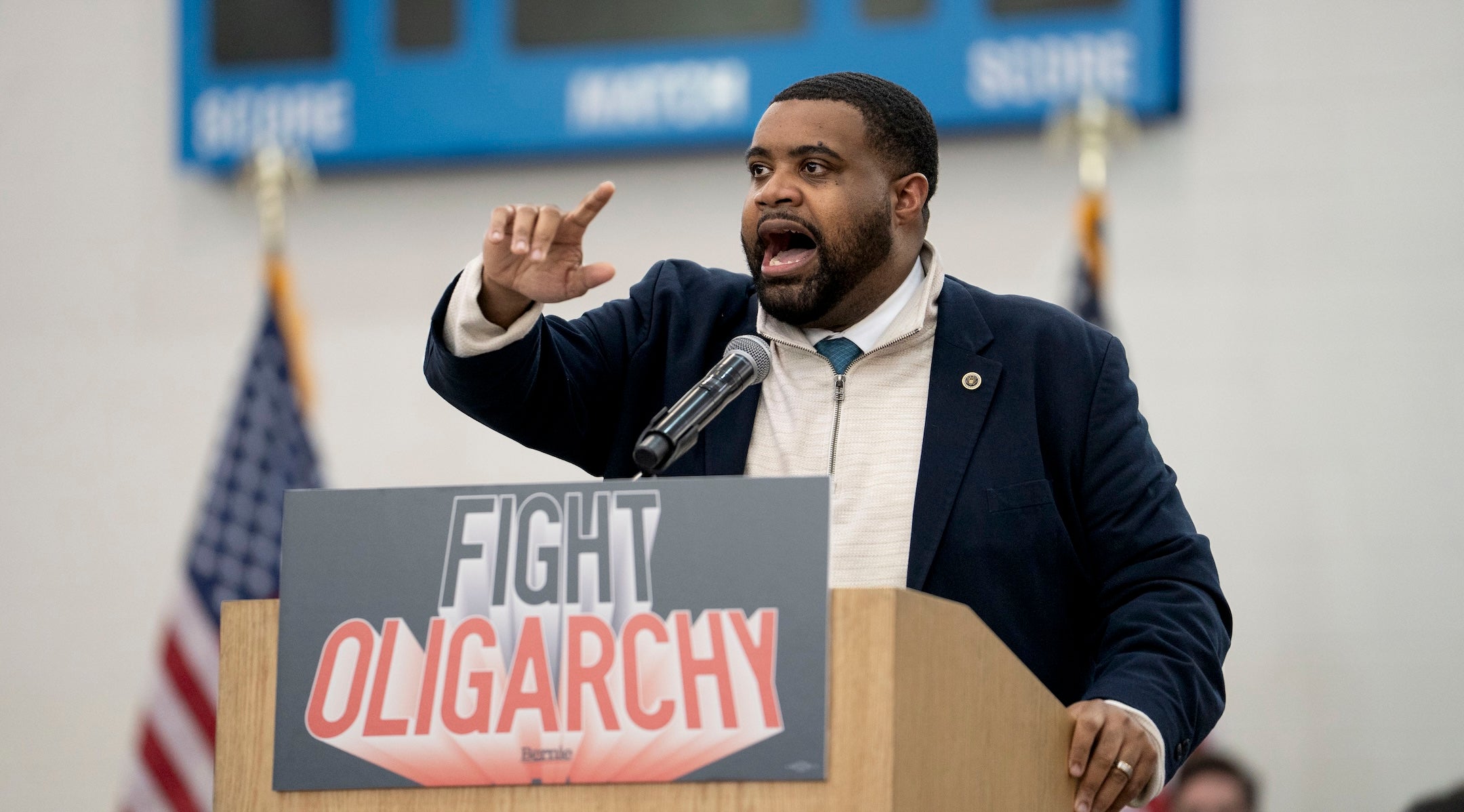
(JTA) — YPSILANTI, Michigan – A Black conservative group is distributing signs and paying for billboards in Michigan encouraging Black voters to support Jews and Israel, in the days before a contentious U.S. Senate race in which the Democratic candidate has struggled to shore up both voting groups.
The Center for Urban Renewal and Education (CURE), a Washington, D.C.-based nonprofit, has paid for a series of yard signs reading “Blacks and Jews Standing Together” throughout cities with high Black populations, including Detroit, Flint and Ypsilanti.
The nonprofit’s director, Star Parker, told the Jewish Telegraphic Agency in an email their goal is “to remind black Christian voters of unique and special reasons to stand with Israel.”
Parker said CURE is also paying for billboards in the area reading “Self Defense is Not Genocide” and “Many Black Evangelicals Agree that Israel Has a Right to Exist.”
The signs and billboards do not name any candidates. But Michigan’s Democratic Senate nominee, Abdul El-Sayed, has alienated many Jewish voters with his rhetoric on Israel and comments on Jewish safety.
He has also had difficulty shoring up Black support, another traditional Democratic constituency, with many Black Detroiters voting for his primary rival, U.S. Rep. Haley Stevens. That phenomenon has shifted somewhat in the race’s final days, with one poll commissioned by the Detroit News suggesting that 87% of likely Black voters would support El-Sayed.
Still, there can be distrust between Black and Arab communities as with Jewish and Arab populations. Sam Robinson, a Detroit-based reporter for a historic Black newspaper who has interviewed scores of Black voters in viral interviews, recently told the Columbia Journalism Review, “There’s a scarcity mindset that there are only so many resources and Arabs are somehow taking Black people’s share.”
Republican Mike Rogers, meanwhile, has courted Black voters as well as Jewish ones, with pro-Rogers ads highlighting tensions between local Black and Arab communities. A new super PAC linked to Rogers has spent heavily on ads stating that El-Sayed “has been disrespectful and dishonest with Black voters.”
CURE’s signs targeting Black voters appeared in the final week of the campaign. They followed an Oct. 22 interfaith roundtable in Detroit hosted by the organization, in which a local rabbi appeared alongside Black pastors to discuss the history of Black-Jewish organizing — a longtime alliance that has been shaken in recent years for a number of reasons.
Rabbi Aaron Bergman of Adat Shalom, a Conservative synagogue in the Detroit suburb of Farmington Hills, participated in the CURE roundtable. Over email, he told JTA that politics was not meant to be the focus of the event.
“It was mostly about teaching about antisemitism, which I guess at this point in history is political,” Bergman wrote.
El-Sayed has focused much of his campaign’s homestretch on shoring up the Black vote, visiting Black churches and holding events with former President Barack Obama and senior U.S. Rep. Jim Clyburn of South Carolina, a Black congressional leader. Driving up turnout in Black communities, usually one of the Democrats’ strongest constituencies, is viewed as key to his chances of taking the seat.
Stevens’ last-minute decision to endorse Rogers instead is a wildcard. Star told JTA she believed many “black Christian voters” would follow her lead.
“Their support for Israel needed a boost,” she said. “I believe this endorsement has taken Mike Rogers over the finish line with black voters.”

Yet there are signs that Palestinian rights may be a more animating issue among Michigan’s Black voters this year than in the past. Pro-Palestinian state Rep. Donavan McKinney, a democratic socialist, won his primary challenge against a pro-Israel incumbent in a majority-Black, Detroit-area congressional district in August. And during one Stevens primary campaign stop in Detroit, a Black community organizer directly confronted her over her support for Israel.
This article originally appeared on JTA.org.
The post In Michigan, a Black conservative group pushes Jewish and pro-Israel messaging appeared first on The Forward.
