


Uncategorized
This rabbi reshaped and revitalized Judaism in the 20th Century — how have we forgotten him?
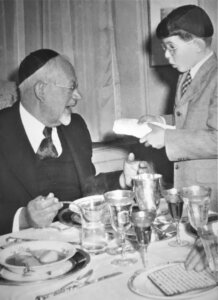
These days, public monuments don’t have an easy time of it. Variously speckled with graffiti, pelted with red paint, rendered headless, melted down and reconfigured into something else entirely, their fate is a fickle one, their future no longer assured.
The same can be said of people who, in their own day, were monumental personalities, household names, whose pronouncements were once heralded and heeded but who, with the passage of time, now go unrecognized, their presence erased from our collective memory.
Then again, monumental personalities have a fighting chance at being rescued from the cruel fate that awaits their physical counterparts. Thanks to the intervention of a biographer, they’re given a second lease on life, their impact on society re-evaluated, their names, activities and ideas put back into circulation.
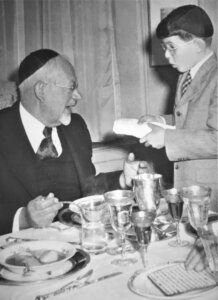
At least, I’d like to think so. As the author of a just-published biography of Mordecai M. Kaplan (1881-1983), a towering figure of the 20th century whose determination to reshape and revitalize American Jewish life set early generations of American Jewry aquiver, I’m heavily invested in obtaining a hearing, or, better yet, a fair shake, for my subject.
It’s not so much a matter of asking “what would Kaplan do?” by literally applying his words and practices to Jewish life today, making of him what so many contemporary American Jews make of A. J. Heschel: the wellspring of our moral conscience, much less a seemingly inexhaustible supply of quotable quotes. That’d be nice, of course, but it’s not what I have in mind when I speak of bringing Kaplan back into circulation.
My objective is more a matter of thinking through the lineaments of his legacy and reckoning with the ways in which his ideas about unity and community, choice, belonging and Israel, as well as his personal experiences with the limits of dissent, shape us. It’s to bring Kaplan into conversation with a generation who knows him not. But should.
Here’s why.
No fan of denominational divisions such as Reform, Conservative and Orthodox which, then, as now, segmented the Jewish community, Kaplan was an advocate, avant la lettre, of what we today call, and embrace, as post-denominationalism. Opening up opportunities for engagement and commitment, his concept of a robust Jewish life pivoted on options and possibilities rather than credentials, obligations and boundaries.
By Kaplan’s lights, all Jewish individuals, no matter their degree of ritual punctiliousness or belief in the divine should feel welcome to study a blatt gemara or observe Shabbat in their own fashion. The big idea, as he put it in 1928, was for Jews to find “joy in being Jews. Their Jewishness should be to them a source of enrichment and a means to the realization of what is best in them.”
Toward that end, Kaplan recalibrated the meaning of being Jewish in modern America, expanding its parameters. Well before “ethnicity” came into play as an omnibus term, one far more capacious and welcoming than “religion” as the locus of identity, he defined Judaism as a “civilization.” In articles, sermons and, in 1934, within the 500-plus pages of Judaism as a Civilization: Toward a Reconstruction of American-Jewish Life, this self-styled theological maverick laid out in great detail his plans for its overhaul. Eschewing “blind habit” and sentimentality in favor of intentionality, he called upon his coreligionists to “rediscover, reinterpret and reconstruct the civilization of his people.”
At the time this whale of a book was published, readers of the Forward would have been familiar with what Kaplan was going on and on about. But they had a simpler, more down-to earth name for the constellation of gesture, movement, humor, foodways, literature, folk sayings, rituals, idioms and beliefs that constitutes a distinctive Jewish culture. They knew it as yidishkayt.
For Kaplan’s audience of alrightniks — rapidly acculturating, upwardly mobile American Jews living the “goods life” — resorting to and promoting a Yiddish term like yidishkayt wouldn’t do. The word didn’t fit with their well-cushioned sense of themselves.
The use of yidishkayt didn’t sit well with Kaplan, either. Having grown up in a litvishe home, himself an immigrant to the United States who, for a spell, lived on the Lower East Side, he was no stranger to Yiddish. But he dismissed it as a “ghetto language,” one that got in the way of modernization.
Kaplan spoke from experience. In 1904, the newly minted, recently hired rabbi at Kehilath Jeshurun, a traditional synagogue on the Upper East Side, was preparing to deliver an English-language sermon, then a novelty, on Rosh Hashanah, when he was stopped in his tracks. Rabbi David Willowski, aka the Slutzker rav, a visitor from the Old World, assumed the pulpit, not Kaplan, and delivered an old-fashioned drush – in Yiddish. Up in arms, Kaplan fired off a letter to his congregants, taking them to task for their belief that Yiddish was the “only means whereby Judaism could be saved.”
In the absence, then, of an acceptable home-grown term by which to express his objectives, it took Kaplan a while to come up with a designation appropriate to the mighty scaffolding that now encased them. Sometimes, he adopted a lyrical turn of phrase, writing in the prestigious Menorah Journal of 1927 that to reduce Judaism to a religion was like “changing a rosebush into a bottle of perfume,” and that to “preserve any of [its] elements without the others is like trying to cultivate roses in a vase.” At other moments, he’d render it more succinctly, almost formulaically: “Before Judaism, Jewishness.” Ultimately, Kaplan put his faith in “civilization” as the antidote to what troubled modern-day Jews: the notion of chosen-ness a vivid case in point.
While recognizing the significance of the “chosen people” concept as well as its hold on the collective Jewish imagination, Kaplan believed the designation to be more of a “spiritual anachronism” than a viable conceit by which to bind contemporary Jews together as one. Its age-old history notwithstanding, chosen-ness, he insisted, was ill-suited to life in a modern democracy, “out of place,” and, in one of his more controversial decisions, retired it from active liturgical and rhetorical duty.
In its stead, Kaplan substituted what he characterized as an “ethically acceptable” and decidedly modern rationale for Jewish collective identity: “peoplehood.” A vague, if emotionally powerful, claim to distinctiveness, it made community and unity the center of gravity of the modern Jewish experience rather than Torah, prayer or even Zionism.
“The old Zionism,” he declared in 1955, “was meant to have the Jewish People rebuild Zion. A New Zionism is now needed to have Zion rebuild the Jewish People.”
In his day, Kaplan worried lest his timing was off, that his ambitious ideas had come too early for the first generation of Eastern European-born American Jews and too late for second generation American Jews. Perhaps he was right to worry. But his vision of a “maximum Jewishness” is neither too early or too late for us. It’s right on time.
The post This rabbi reshaped and revitalized Judaism in the 20th Century — how have we forgotten him? appeared first on The Forward.
Uncategorized
NAZA exposes Israel’s crisis of credibility over Gaza

More than two decades ago, when I was the The Associated Press bureau chief for Israel, the West Bank and Gaza, the Israeli military called off an attack on a senior Hamas leader after learning at the last moment that family members and children were inside the targeted building.
What stayed with me was what happened next. The military sent a senior officer to my office to explain the decision.
This was during the Second Intifada, the murderous explosion of terrorism launched by armed Palestinians after Israel had offered the Palestinian Authority an independent state in over 90 percent of the territory it sought. Hamas leaders sent suicide bombers into Israel on a daily basis to blow up buses, restaurants, malls, cafes. I checked for explosives whenever I got into my car, perhaps with my little daughters, Maya and Noa.
Yet Israeli officials understood that demonstrating concern for civilian life was part of maintaining the country’s credibility. Maybe they also thought that concern for innocent life, even on the enemy side, was the Jewish thing to do. I want to believe this, as both a Jew and as a manager who had colleagues in Gaza, some of whom were hurt over the years.
That memory returned to me amid the uproar surrounding NAZA, the new documentary by Israeli filmmakers Yuval Abraham and Rachel Szor, who shared in the 2024 Oscar for No Other Land, a critique of Israel’s practices in the West Bank.
The new film, which premiered at the Venice Film Festival and won the Special Jury Prize, is titled after the Hebrew acronym for “collateral damage” (and is also a play on “Gaza”). It examines Israel’s targeting practices in Gaza through testimony from 24 Israeli soldiers and intelligence personnel who allege the IDF used artificial intelligence.
Some of those soldiers, the filmmakers say, operated or helped design the AI systems at the center of the film. Their identities are concealed in various ways, yet their testimony portrays a disturbing picture about how technology, intelligence and estimates of civilian casualties intersected in decisions to strike.
The reaction in Israel has been ferocious. Culture Minister Miki Zohar – from the governing Likud Party led by Benjamin Netanyahu – has called the filmmakers traitors and raised the prospect of revoking their citizenship.
Former football star and prominent television personality Eyal Berkovic has similarly argued that loss of citizenship should be the best-case scenario for Israelis who harm their country. As the film moves beyond Venice, efforts to prevent its screening in Israel seem likely.
That reaction creates a sad irony. One of the strongest criticisms of NAZA is that its highly combustible testimony comes from anonymous sources – and that is a valid criticism indeed. Yet threats directed at the filmmakers offer a fairly vivid illustration of why soldiers and intelligence officers making explosive allegations about their own military might fear speaking publicly. The filmmakers say anonymity was necessary to protect people who could face serious consequences for revealing classified information. I can credibly assess they’d end up in jail.
Nonetheless, the anonymity remains a serious weakness. Claims that are this grave demand intense scrutiny, and viewers have limited means of establishing whether the witnesses held the positions they claim, possessed the knowledge they describe or represent the targeting system accurately. The IDF has challenged precisely this aspect of the film and rejected its portrayal of Israeli targeting practices.
That said, and not for the first time, the military is more reasonable than the government and the IDF’s spokesman invited the filmmakers to screen it for the military. A detailed military response to the evidence presented in NAZA would provide an essential counterweight.
The central dispute also reaches beyond whether Israel used artificial intelligence. The IDF says decisions to select and approve strikes are made by human personnel. The more consequential question is what information those people received and what weight they gave to civilian lives when making those decisions. If a system identified a Hamas operative inside a residential building, what level of civilian harm was considered acceptable in order to kill him? To what degree was AI part of the decision-making process?
Amid a global uproar over fears of AI, and in particular systems operating independently in ways that harm humans, this film catapults such questions to a very high place in the global discourse.
The AI questions lead to others. Did the permissible number of civilian casualties change according to the importance of the target? How confident did intelligence officers have to be that the intended person was actually present? What happened when information indicated that children or other family members were inside? How frequently did commanders cancel strikes because the expected civilian toll had become too high?

NAZA offers disturbing answers, and its central concern is ultimately a human one: what values and tolerances were built into the targeting process, and how were they applied by the people responsible for approving strikes?
Israel, this time around, has provided only a limited public account of those calculations during the war. Officials have emphasized the extraordinary difficulties of fighting Hamas in densely populated Gaza, the organization’s use of civilian areas for military purposes and Israeli estimates of a civilian-to-combatant casualty ratio that they say compares favorably with other episodes of urban warfare, including Mosul. The precise civilian death toll in Gaza also remains contested, particularly the division between civilians and combatants.
There is no doubt in my mind – none whatsoever – that Hamas is the embodiment of evil. It is obvious to anyone paying attention that the jihadist group engineered the entire war to maximize casualties on its own side in order to make Israel an international pariah. But it is also rather obvious by Israel’s conduct in the war and the tens of thousands of civilians who have died, that Israel to walked into the trap laid by Hamas.
Aggregate ratios tell only part of the story. They reveal little about why a particular building was struck, how many civilians were expected to be inside, what military advantage commanders anticipated or how that anticipated advantage was weighed against the likely human cost. Repeated incidents involving substantial civilian casualties have often been followed by broad explanations rather than detailed accounts of the decision-making that produced them. Foreign journalists, of course, have not been freely allowed in.
That is where my memory from more than 20 years ago feels especially relevant. The military that sent an officer to my office understood the value of a transparent process. It understood that credibility depended partly on demonstrating, in specific cases, that civilian lives carried meaningful weight in operational decisions. During the Gaza war, amid extraordinary civilian loss of life, that instinct has been far less visible, to say the least.
Why did Israel act this way? Part of it has to do with the unspeakable trauma of the Oct. 7 Hamas invasion and massacre, which left Israelis in no mood for explanations, and placed its government in a defensive posture. Part of it is the nature of that government – an ultranationalist assemblage of highly illiberal and astoundingly cynical politicians. And part of it is the global demonization targeting Israel – so thorough and unfair that it almost explains the surrender of any serious effort at PR.
None of this was smart. The resulting information vacuum has given NAZA much of its power. A documentary built substantially around anonymous testimony carries an obvious credibility burden, particularly when its allegations concern classified practices that outsiders have little ability to examine independently. Yet Israel’s sparse public accounting of its targeting decisions has left relatively little detailed evidence against which those accounts can be measured. The filmmakers have supplied one version of what happened inside the targeting system; a detailed Israeli account could provide another.
Demonizing a couple of filmmakers based on the idea that they meant to do Israel harm will not convince intelligent people and will deepen Israel’s isolation. Israel needs to explain to its own people how it failed so utterly to protect the massacre of Jews. It needs to explain to the world what went on in Gaza. In fact, it needs to explain that to its own people as well.
All of that will await another government. This will not come from Netanyahu.
The post NAZA exposes Israel’s crisis of credibility over Gaza appeared first on The Forward.
Uncategorized
Police investigating threats against prominent Munich Holocaust survivor and AfD opponent
(JTA) — Police said they are investigating death threats made against a senior Jewish leader in Germany, after she criticized the far-right Alternative for Germany (AfD) party.
A witness found graffiti scrawled in white ink on a park bench and a trash bin in Munich’s English Garden park, threatening the life of 93-year-old Holocaust survivor Charlotte Knobloch, , the Munich Police Department said in a statement.
Citing police sources, The Abendzeitung on Sept. 11 reported the threat contained the phrase “Die AfD hat gewonnen, morgen hängen wir die Knobloch,” which translates to, “The AfD has won, tomorrow we’ll hang Knobloch.” A police spokesperson had not responded to JTA’s request for confirmation of the threat content by press time.
The witness reported the graffiti to police and an investigation was launched on Wednesday, Sept. 9, police said.
Knobloch, chair of the Jewish Community of Munich and Upper Bavaria, canceled plans to attend a public event as an audience member right after learning of the threat, the Jewish Telegraphic Agency has confirmed with the Jewish Community in Munich.
The Munich Criminal Investigation Department has categorized the incident as a case of incitement to hatred, threats, and property damage, and has asked witnesses to contact police.
The AfD won 43.8% of the votes in the state of Saxony-Anhalt on Sept. 6. The election set the stage for a right-wing party to control a German state government for the first time since the Nazi era. But the AfD fell three seats short of a majority and has yet to secure enough support to form a government, Reuters reported Sept. 11.
Knobloch, an ardent critic of the AfD, had said the party’s record of success “frightens me.” In a statement released Sept. 6 by her office, she said that she “couldn’t have imagined even in my worst nightmares that right-wing extremists could win elections in Germany again in this way.” She has long called for the party to be banned.
The Department for Research and Information on Antisemitism (RIAS) has a reporting mechanism for witnesses or victims, and provides statistics to federal and local authorities. Antisemitic crimes may be motivated by left, right or Islamic extremism, but the specific reference to the AfD and a specific target made this case unusual, spokesperson Felix Balandat said. “We have not recorded anything like that before,” he told JTA.
Munich Mayor Dominik Krause (Greens) asked in a public address, “How many more death threats, how much Nazi rhetoric, how many more deportation announcements do we actually need” before the federal government initiates steps towards banning the AfD.
Meanwhile, in Berlin, a woman was injured in a suspected antisemitic attack, according to city police.
Early on Sept. 11, two men attacked a 43-year-old woman in the Mitte section of Berlin. The attackers, who fled the scene, commented on her wearing a Star of David and shouted antisemitic insults at her, Berlin police said.
One of the men allegedly attacked her with a broken glass bottle, police said. While defending herself, she suffered several cuts to her hand. Paramedics transported her to a hospital for treatment. The State Security Unit of the State Criminal Police Office has taken over the investigation.
According to RIAS, more than 2,000 antisemitic and anti-Israel insults, threats, acts of vandalism and attacks were registered in Berlin in 2025, slightly down from 2024 but still more than twice as many as before the attacks on Israel on October 7, 2023.
This article originally appeared on JTA.org.
The post Police investigating threats against prominent Munich Holocaust survivor and AfD opponent appeared first on The Forward.
Uncategorized
Jake Lang led a protest against Mamdani and Muslims. Then the Nazis showed up to protest him.
Far-right activist Jake Lang led a march last week protesting Mayor Zohran Mamdani’s presence at the 9/11 25th anniversary memorial ceremony. The protest attracted swastika-sporting men describing themselves as Nazis; they were there to counterprotest Lang, whose mother is Jewish.
Around 100 demonstrators attended Lang’s march, which happened blocks away from the ceremony held at Ground Zero. Lang described the march on X as a “Great CRUSADE on Muslim SCUM Zohran Mamdani.”
The “crusade” was laden with anti-Muslim messaging, including a poster reading “Deport All Muslims.” About 40 counter-protesters arrived to oppose Lang. While most were antiracist protesters, seven were neo-Nazis. One counter-protester got into a physical altercation with someone from Lang’s march.
Lang is best known for his role in the Jan. 6 insurrection. He spent four years in prison, facing assault charges for attacking a police officer with a baseball bat, before being pardoned by President Donald Trump. In August, Lang lost a campaign to secure a Republican congressional nomination in Florida.
Though Lang’s mother is Jewish, he identifies as Christian, and has brandished wooden crosses at his marches, some of which he called “Christian Crusades.” Lang has publicly renounced his Judaism and the state of Israel, burning a copy of the Talmud and performing a Heil Hitler salute outside the AIPAC headquarters in D.C.
Nevertheless, seven men wearing swastika armbands — and one clad in an Elmo suit draped with a Palestinian flag as a cape — stood near Lang’s march holding a sign reading, “Jake Lang is a Jew.”
The men performed Sieg Heil salutes and, in an unusual move for self-identifying Nazis, chanted “Free, free Palestine,” alongside the declaration, “We are the real racists.” They passed out flyers reading “no more wars for Jews” and ranted about American soldiers lost in battles they said were directed by Israel.
“I want them out of our government,” said one of the men, Gregory Conte, a former schoolteacher who was fired for his white-nationalist ties. “And not just Zionists — Jews.”
The swastika-clad men drew a bevy of critics, including one man who told them, “I agree Israel did 9/11, but you guys are Nazis, man, you guys brought them to Palestine.”
One person filming the protest asked Conte, “Do you hate Jewish people?” He replied: “I’ve never had one do a good thing for me.” Conte then asked whether the man behind the camera was Jewish and he said he was; Conte refused to speak to him further, stating that he does not talk to Jews.
Footage showed Conte on the subway, this time without his armband, talking about how “Jake Lang is trying to start a war.” Independent journalist Talia Jane asked him, “Want to show them your armband?” Conte declined to take it out.
The post Jake Lang led a protest against Mamdani and Muslims. Then the Nazis showed up to protest him. appeared first on The Forward.
