


Uncategorized
The promised land is… Oklahoma? Inside Tulsa’s campaign to court young Jews
TULSA, Okla. — The house had prairie views, four bedrooms and a pantry large enough to support a small diaspora.
More than 50 people wandered through the kitchen inspecting cabinets, opening drawers and video chatting with relatives back home as if they had stumbled upon a newly discovered continent.
They were not, strictly speaking, house hunters. They were Jews.
They had flown to Tulsa, Oklahoma, for the weekend to see whether they could picture a life here, along a stretch of historic Route 66. This is not how most Jewish migration stories begin.
Sunlight spilled across a kitchen island the size of a small boat. In the living room, the ceiling rose two stories high, the kind of architectural flourish meant to make visitors imagine their future lives unfolding beneath it.
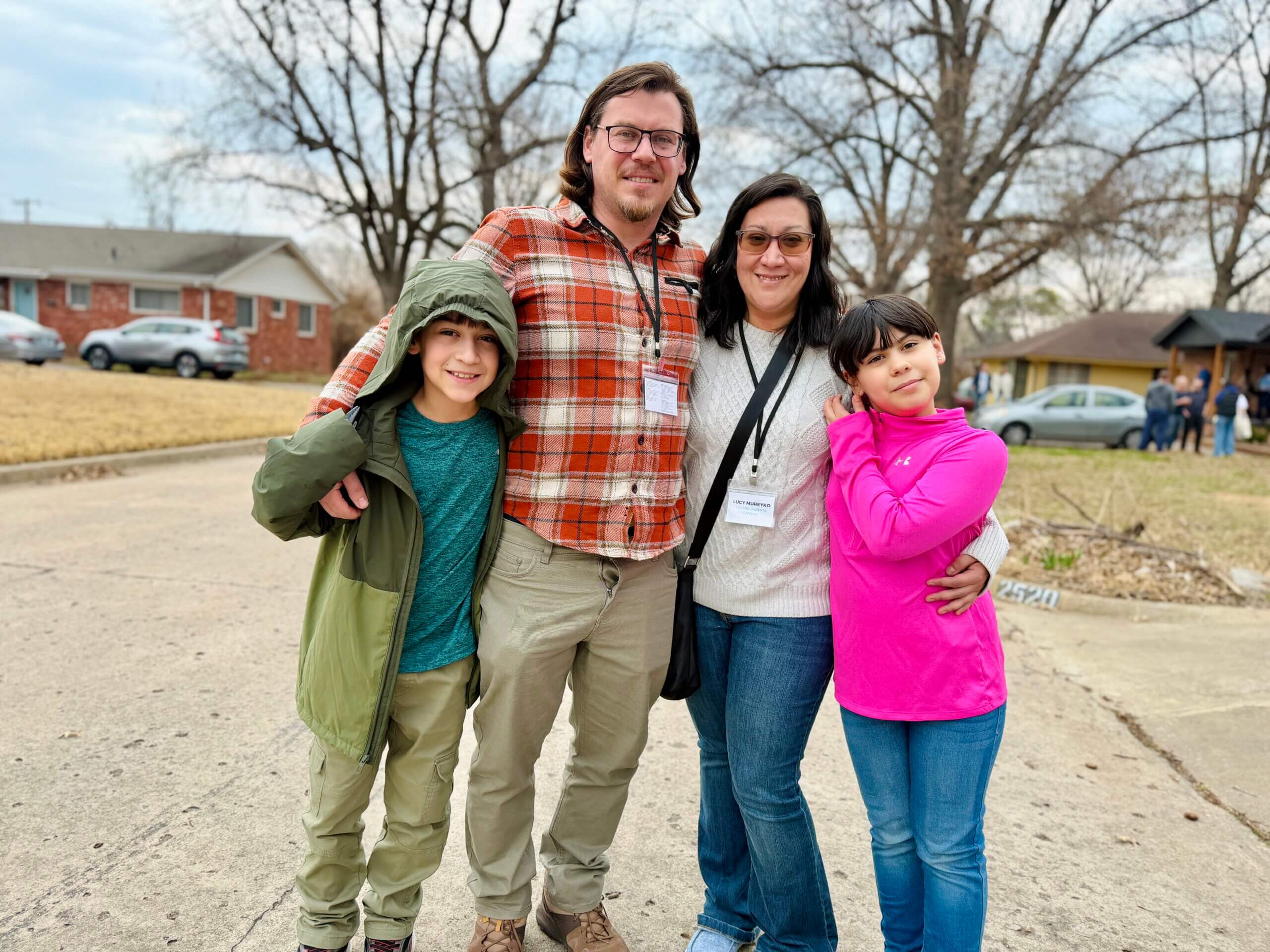
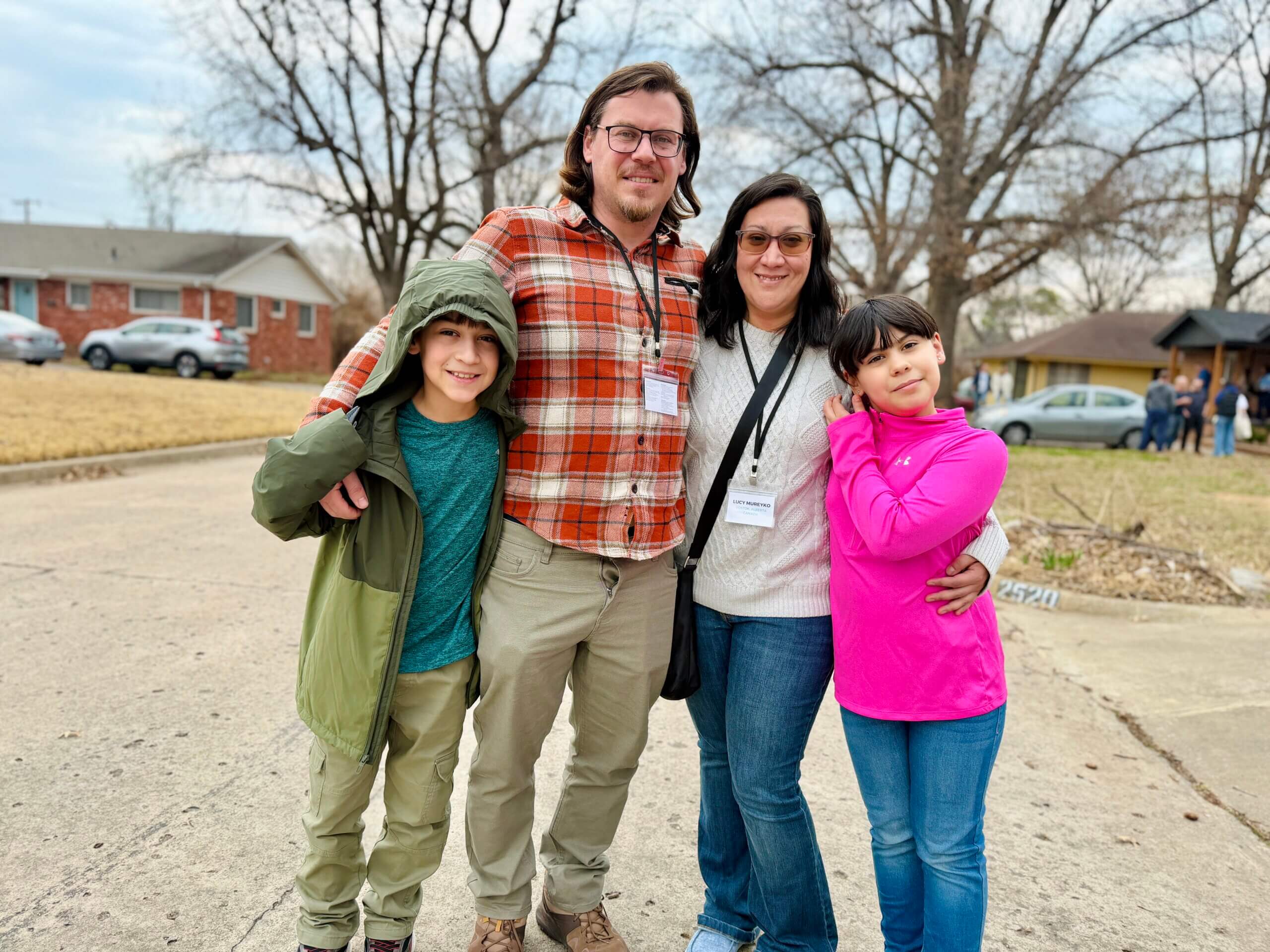
Two sisters from Northern California peeked into a walk-in closet, while a family of four from Winnipeg, Canada, stepped into the backyard.
“I have Sylvester Stallone to thank for this,” said a man from Maine, dressed in jeans and a white T-shirt that read “Israel – Established 1273 BCE.” He had been watching the Paramount+ television series Tulsa King, the one where Stallone plays a New York mob boss exiled to Oklahoma to start over. Curious about the setting, he opened Zillow.
The home prices did not make sense. The numbers next to the square footage looked like they were missing a comma, maybe two.
He typed a question into Google.
Are there Jews in Tulsa?
The answer, it turned out, was yes. More surprising still: Tulsa was actively trying to recruit them.
Tulsa is not the tumbleweed town many outsiders imagine, but a leafy, art-deco city stretched along the Arkansas River, where oil money once built skyscrapers and philanthropy now builds parks where families gather at sunset.
In the early 20th century, Tulsa was known as the oil capital of the world, its petroleum boom turning a prairie town into one of the richest cities per capita in America. When oil prices collapsed in the 1980s, the economy faltered.
Like many once-booming cities forced to reinvent themselves, Tulsa rebuilt. Today its economy stretches beyond oil into aerospace, technology and finance, and the city supports a surprising range of cultural institutions, including the Tulsa Ballet, Tulsa Symphony Orchestra and the Philbrook Museum of Art.
Over the past several years, its Jewish leaders have hatched an audacious plan. Instead of watching young Jews drift toward the familiar centers of American Judaism — cities like New York, Los Angeles, Miami and Chicago — they are trying to persuade some of them to move in the opposite direction.
The program is called Tulsa Tomorrow. Since 2017, it has flown groups of young Jews to Oklahoma for long weekends — covering airfare, hotels and meals — and then shows them the city: neighborhoods, synagogues, parks, restaurants, jobs opportunities and the people who live here.
It is, in essence, Birthright for the Sooner State.
So far, 144 people have moved through the program; 113 still live here. In a city with fewer than 3,000 Jews, those numbers matter.
Until recently, Tulsa’s most recognizable Jewish exports were the actor-director Tim Blake Nelson and the professional wrestler simply known as Goldberg. The idea that the city might become known instead for importing Jews is a newer development.
Across the country, dozens of small and mid-size Jewish communities are confronting the problem of young Jews leaving for larger cities, institutions shrinking and congregations aging. Tulsa’s unusual experiment — recruiting Jews instead of losing them — has begun attracting attention from Jewish leaders elsewhere who are wondering whether the model might work in their own towns.
In Kansas City, which already runs its own recruitment effort called See KC, a federation representative attended a Tulsa Tomorrow retreat to see what might translate back home.
Brooke Bowles, the CEO of the Birmingham Jewish Community Center, first heard about Tulsa Tomorrow at a conference last fall. Birmingham’s Jewish population has hovered for years between 5,000 and 6,000 people.
“If you’re not growing,” Bowles said, “you’re dying.”
She spoke with Tulsa Tomorrow’s organizers and plans to attend a recruitment weekend herself to see how the program works up close.
But whether the Tulsa model can work elsewhere may hinge on something harder to replicate. Rabbi Lily Kowalski, who served at Tulsa’s Reform congregation during the early years of the Tulsa Tomorrow project, said its success is in part because it was never managed by any single Jewish institution.
“It really has the buy-in and the backing of the entire Jewish community,” she told me. “If it were just one or two groups trying to make it happen, it wouldn’t be as successful as it is.”
An international destination
The program usually holds two recruitment weekends each year with maybe a dozen participants on each. This particular trip, held at the end of February, was unusually large. Fifty-two participants had come, 41 of them from Canada.
For them, Tulsa represented more than opportunity. It promised potential refuge.
Since the Hamas attacks on Oct. 7, 2023, antisemitic incidents across Canada have surged. Jesse Brown, a Canadian Jewish journalist who has been documenting the trend, said the shift has been dramatic. In recent years, synagogues and Jewish schools have faced arson, vandalism, bomb threats and shootings.
But Brown said the sense of unease extends beyond those headline-grabbing incidents. Across parts of Canadian civil society — in schools, unions, hospitals and arts organizations — Jews have reported growing hostility or exclusion.
Brown describes that broader atmosphere as something closer to what he calls a “polite pogrom,” a slow accumulation of insults that have left many Canadian Jews wondering what the future holds.
“My fear is that the next Bondi Beach massacre is going to take place in Canada,” Brown said, referring to the December 2025 Hanukkah attack in Australia that killed 15 people.
Watching fellow Canadian Jews contemplate leaving the country has unsettled him in its own way. “There’s a sadness,” Brown said. “I’m not enthused or compelled by what I see as a re-shtetling.”
For some Canadians, relocating is no longer a hypothetical.
Michael Sachs, 44, arrived in Tulsa last summer from Vancouver, pulling into town just in time for the Fourth of July.
With salt-and-pepper hair and the easy confidence of a salesman who believes in his product, Sachs has quickly become one of the city’s most enthusiastic ambassadors.

In Canada he built a career in Jewish communal life — working with the Simon Wiesenthal Center and the Jewish National Fund and serving as president of his Orthodox synagogue.
Now Sachs works to recruit new families to Tulsa. “I feel like there’s opportunity everywhere,” he told me, tilting up the brim of his felt cowboy hat.
Part of what pushed his family south was the same set of issues many Canadians on the trip described: antisemitism, soaring housing costs, a sluggish economy and a health care system under strain. But the real difference, Sachs said, has less to do with economics than with possibility.
Tulsa has a population of around 415,000. It’s big enough to matter, but small enough that ideas move quickly. More than once I heard the same sentiment: In Tulsa, you are usually just one phone call away from anyone you need to reach.
Conversations turn into projects. Programs appear where none existed before. The distance between suggestion and action is short.
“There’s a secret sauce here,” Sachs said. “Even I don’t know the recipe. But I’ve tasted it, and I know it exists.”
In larger Jewish cities, Sachs said, communities can feel settled — institutions established, leadership long entrenched. Tulsa still feels different, a place where the future of a Jewish community can be shaped in real time.
Seven months after arriving, Sachs is already putting down roots. His 13-year-old son recently celebrated his bar mitzvah here — a ceremony the family had originally planned to hold back in Vancouver. His wife now teaches at Tulsa’s Jewish elementary school.
Like many cities in the American heartland, Tulsa has long been treated as somewhere people pass over. But increasingly, some Jews are beginning to look down.
The relocation playbook
Tulsa is not the first Jewish community to try this. Every few years, a synagogue or federation decides to solve Jewish demography the way a small town might try to lure a Kia factory: with incentives.
In 2009, a hotel magnate in Dothan, Alabama, offered up to $50,000 to Jewish families willing to relocate to the town’s shrinking Reform congregation. Eleven families came. Seven eventually left.
In 2022, an Orthodox synagogue in White Oak, Pennsylvania — a fading mill town outside Pittsburgh — offered $100,000 to anyone willing to move there. Three families arrived. The program is now paused.
There have been modest successes.
After Hurricane Katrina, the Jewish community of New Orleans offered stipends for moving expenses, discounted day-school tuition and a year of free membership to a synagogue and the JCC. Hundreds took part before the program ended in 2012. About a quarter stayed.
Tulsa took a different tactic.
Tulsa Tomorrow is the brainchild of local businessman David Finer, who started the program along with a few of his friends. Instead of paying people to move, the community invites them to visit and rolls out the red carpet. What Tulsa lacked, he believed, wasn’t Jewish life. It was awareness.
“Tulsa is a hidden gem,” Finer, 69, told me one morning over breakfast at Chimera Cafe in the Tulsa Arts District, a block away from museums dedicated to Woody Guthrie and Bob Dylan. “When people come here, they’re shocked at how nice it is.”
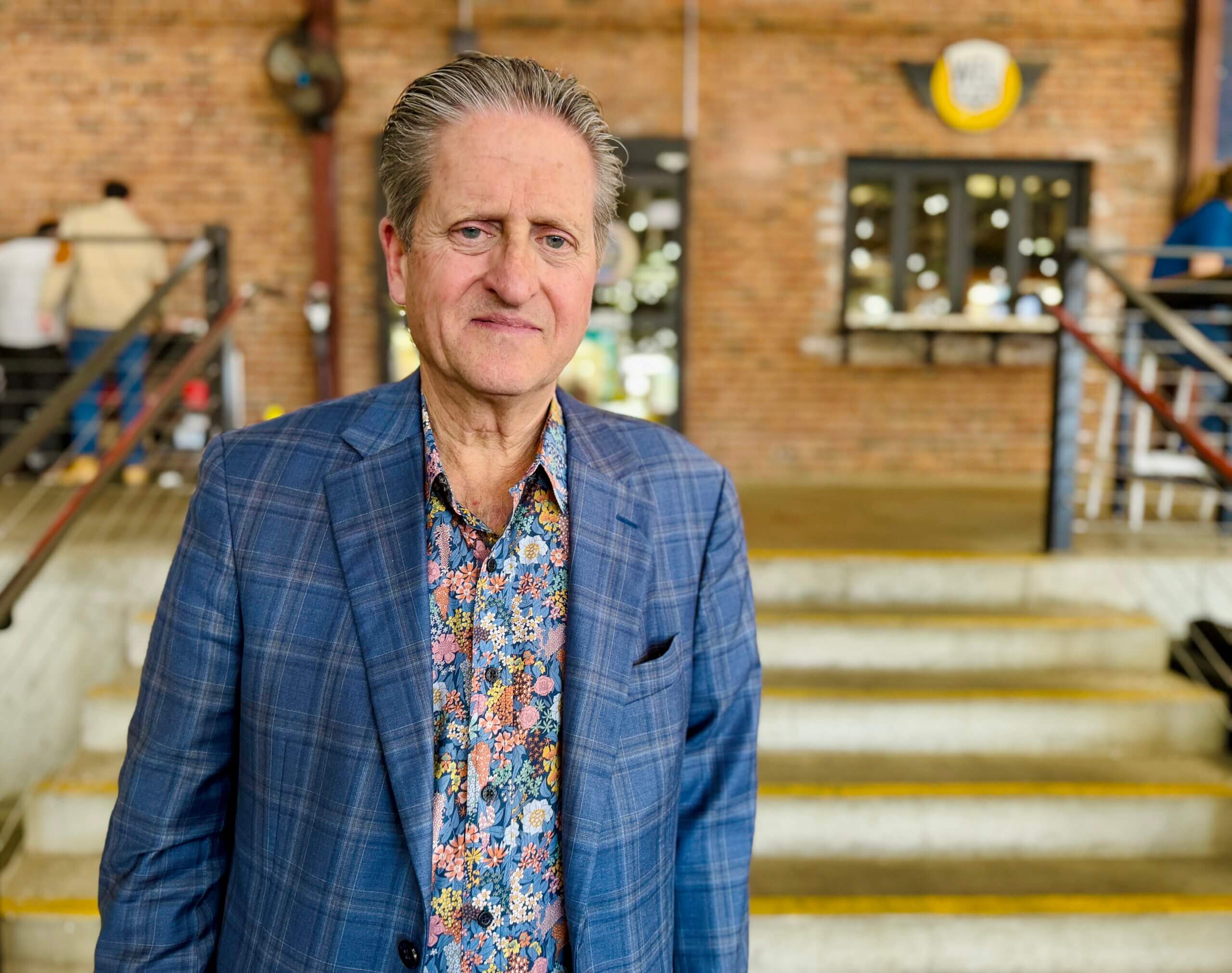
Tulsa also has something working in its favor that many places its size do not. “It is, per capita, one of the most philanthropic cities in the country,” said Rebekah Kantor-Wunsch, Tulsa Tomorrow’s executive director and its sole employee.
The city is home to several major Jewish foundations — including the Schusterman Family Philanthropies, the Zarrow Family Foundation and the George Kaiser Family Foundation — all of which have helped shape large parts of Tulsa’s civic life through their giving. Kaiser, a lifelong Tulsan whose parents fled Nazi Germany, was the main donor to the Gathering Place, a 66-acre park along the Arkansas River that opened in 2018 — a lush stretch of tree-lined lawns, playgrounds and winding paths. It cost $465 million to build; Kaiser gave $350 million of that, the largest private gift to a public park in the United States.
Some participants discover another local incentive while they’re visiting. Tulsa Remote, also funded primarily by the Kaiser foundation, offers remote workers $10,000, a local business mentor and three years of free coworking space if they relocate to the city.
More than 4,000 people have taken that offer. Most have stayed.
The city’s philanthropic culture explains why Tulsa’s Jewish community is punching far above its weight, said Rabbi Yehuda Weg, the local Chabad rabbi. “Tulsa,” he said, “is money looking for a problem.”
The cousin theory
Just how broad that community backing runs became visible inside the downtown Bank of Oklahoma Center, a 19,000-seat arena where the Tulsa Oilers minor-league hockey team was hosting its first-ever Jewish Heritage Night.
The players wore special edition blue-and-white jerseys with a large Star of David across the chest. Fans could buy them, too. A few had already made their way to people in the stands, including Rabbi Daniel Kaiman, who had pulled one over his shirt.
From the bleachers, he watched the players circle the ice.
Kaiman, 41, moved to Tulsa in 2013 from Los Angeles and leads Congregation B’nai Emunah. It was founded in 1916 as Orthodox and is now denominationally ambiguous. (Squint long enough and it looks Conservative-adjacent.) Today it has about 520 member households, making it the largest synagogue in Oklahoma.

“No one moves to Tulsa for the weather,” Kaiman said loudly, over the roar of the crowd, referring to the humid summers and occasional tornado. “No one moves to Tulsa for the scenery. You move to Tulsa for the opportunity.”
Unlike places like Dothan or White Oak — towns that once boomed and then hollowed out — Tulsa is still growing. “It’s easier to build a life here,” Kaiman said.
The synagogue he leads occupies an entire city block and operates like a small ecosystem.
There is a preschool. A five-day-a-week after-school program picks children up from public schools and keeps them until early evening, offering Hebrew, piano and tumbling classes. About half the students are not Jewish.
Then there are the projects that extend beyond the synagogue’s traditional role: a bakery that employs people recovering from mental illness, a pop-up Jewish deli that raises money for social programs, and a refugee resettlement program run in partnership with HIAS.
The synagogue also houses a mikvah. Jews from across the region — sometimes driving for hours from Arkansas, Kansas and Missouri — come to use it.
Kaiman likes to explain the community this way. “Imagine you move somewhere and you have a cousin there,” he said. “We’re the cousin.”
Sitting beside him in the bleachers was Rabbi Batsheva Appel, the interim rabbi of Tulsa’s Reform congregation, Temple Israel. She arrived last summer from Boise, Idaho.
Temple Israel, founded in 1914, has about 300 member households and is currently rebuilding its synagogue campus after tearing down its longtime building. Groundbreaking on a new structure is set for the weekend after Passover.
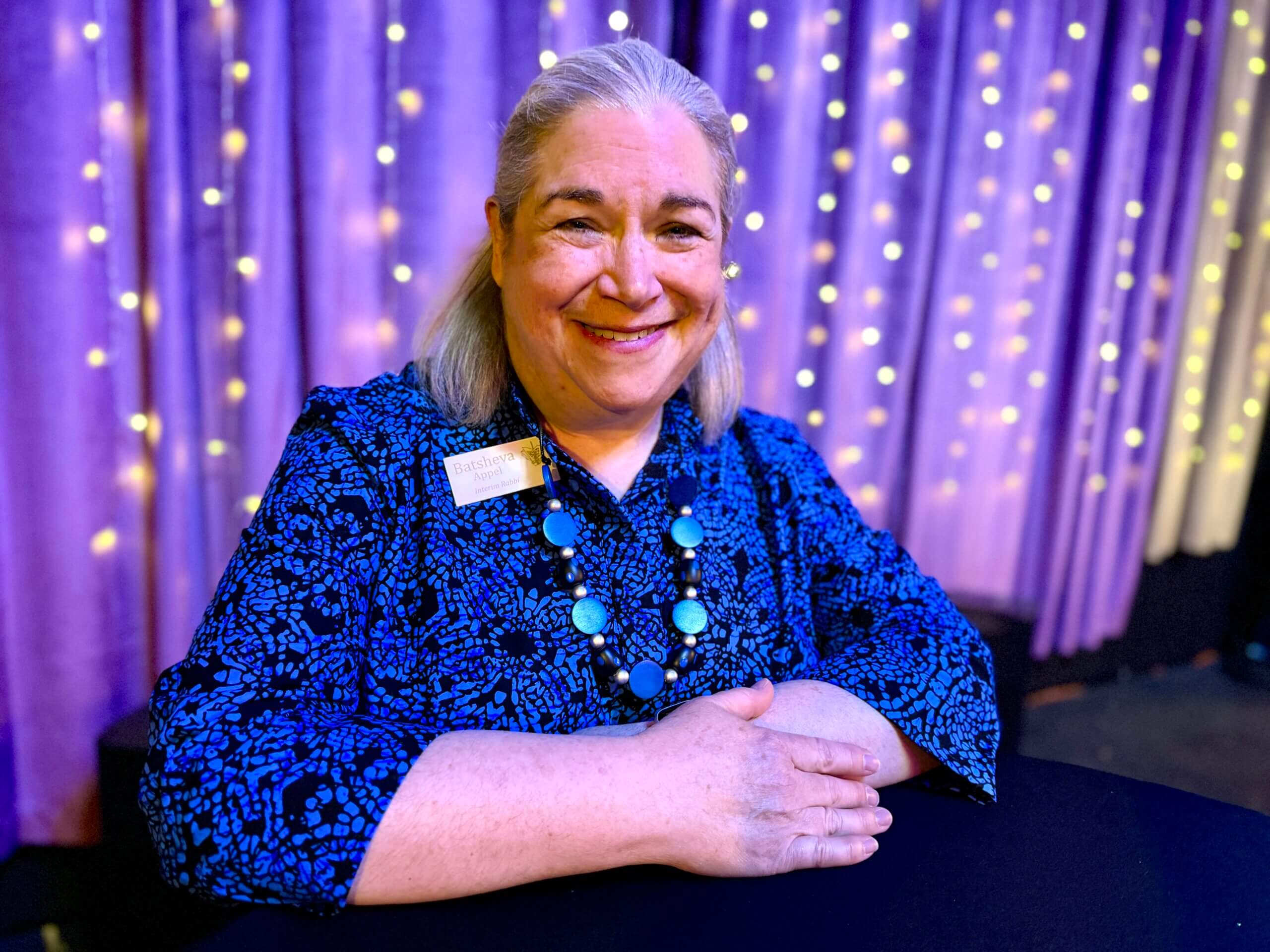
In the meantime, her congregation meets elsewhere. Friday night services take place in the federation auditorium or sometimes in the lobby of the Jewish museum beneath a Tiffany stained-glass window depicting the binding of Isaac. Religious classes meet at the Jewish day school.
It is, in other words, a congregation temporarily without a building but not without momentum.
Appel said she had seen programs like Tulsa Tomorrow proposed before in other cities. “Frequently this kind of idea would come up, and then nothing ever happened,” she said. “So to see it come to fruition and to see how effective it has been is pretty amazing.”
On the ice below them, the Oilers scored a goal.
Kaiman watched for a moment, then returned to a metaphor he often uses to describe Jewish life in the city. Tulsa, he said, is like a whetstone (the stone used to sharpen a knife).
“The Jew is the knife,” he said. “And Tulsa sharpens you.”
Orthodox limits
When the first period of the hockey game ended, people drifted toward the arena’s concourse, where the smell of popcorn hung in the air.
Near one of the entrances, Weg, the Tulsa Chabad rabbi, and his wife, Etel, sat behind a folding table covered with Purim flyers and a tray of hamantaschen. The holiday was two days away.
They handed the triangular pastries to anyone who slowed down long enough to take one — including a few confused spectators who seemed unsure why a rabbi had materialized next to the nacho stand.
Weg, 65, wore a suit and tie and a black kippah perched on his head. With his long white beard and easy smile, he looked like a slimmer Santa Claus.

Weg arrived in Tulsa in 1987 as a young Chabad emissary. Today, three of his children serve as Chabad rabbis in communities of their own across America.
The Tulsa Tomorrow program, he said, makes sense for many Jews considering a move. “It allows people to see the Jewish landscape and the Jewish possibilities of Tulsa,” he said.
But he was careful not to oversell it. For Orthodox families, the infrastructure still has limits. Jewish schooling in Tulsa only runs through elementary grades, and keeping kosher requires some improvisation.
“You can get chicken, you can get meat — not every cut of meat, but quite a few,” he said, extolling the virtues of the local Trader Joe’s. “Enough to live on.”
Still, Weg argued that Tulsa offers something many larger Jewish communities do not: the feeling that every person counts, and is counted on. “In Atlanta or Dallas, you can get lost,” he said. “Here, everybody is engaged.”
He gestured toward the concourse to take in the totality of the moment, with hockey fans passing beneath Jewish banners while a rabbi handed out Purim cookies. Scenes like this, he suggested, capture something about the city. In Tulsa, Jewish life may be smaller. But it is hard to miss.
‘A Bell Labs for Jewish life’
The recruitment weekend eventually shifted from hockey arenas and real estate tours to what may be the most important piece of Tulsa’s Jewish infrastructure: the Zarrow Jewish Community Campus.
It’s vast, at 15 acres and 77,000 square feet.
The campus is deliberately multigenerational, and nearly every major Jewish institution in the city lives here — including the Jewish Community Center, the federation offices, the Mizel Jewish Community Day School, the Sherwin Miller Museum of Jewish Art and Zarrow Pointe, a senior living complex with more than 400 residents.
Among them is the 90-year-old grandmother of Isabella Silberg, 28, a Tulsa native who now serves as the federation’s director of development. Between the preschool and the retirement community, Silberg said, “this campus caters from baby to bubbe.”
Her fiancé, Shane Ross, 29, first visited on a Tulsa Tomorrow recruitment trip in 2023. He has since moved to town.
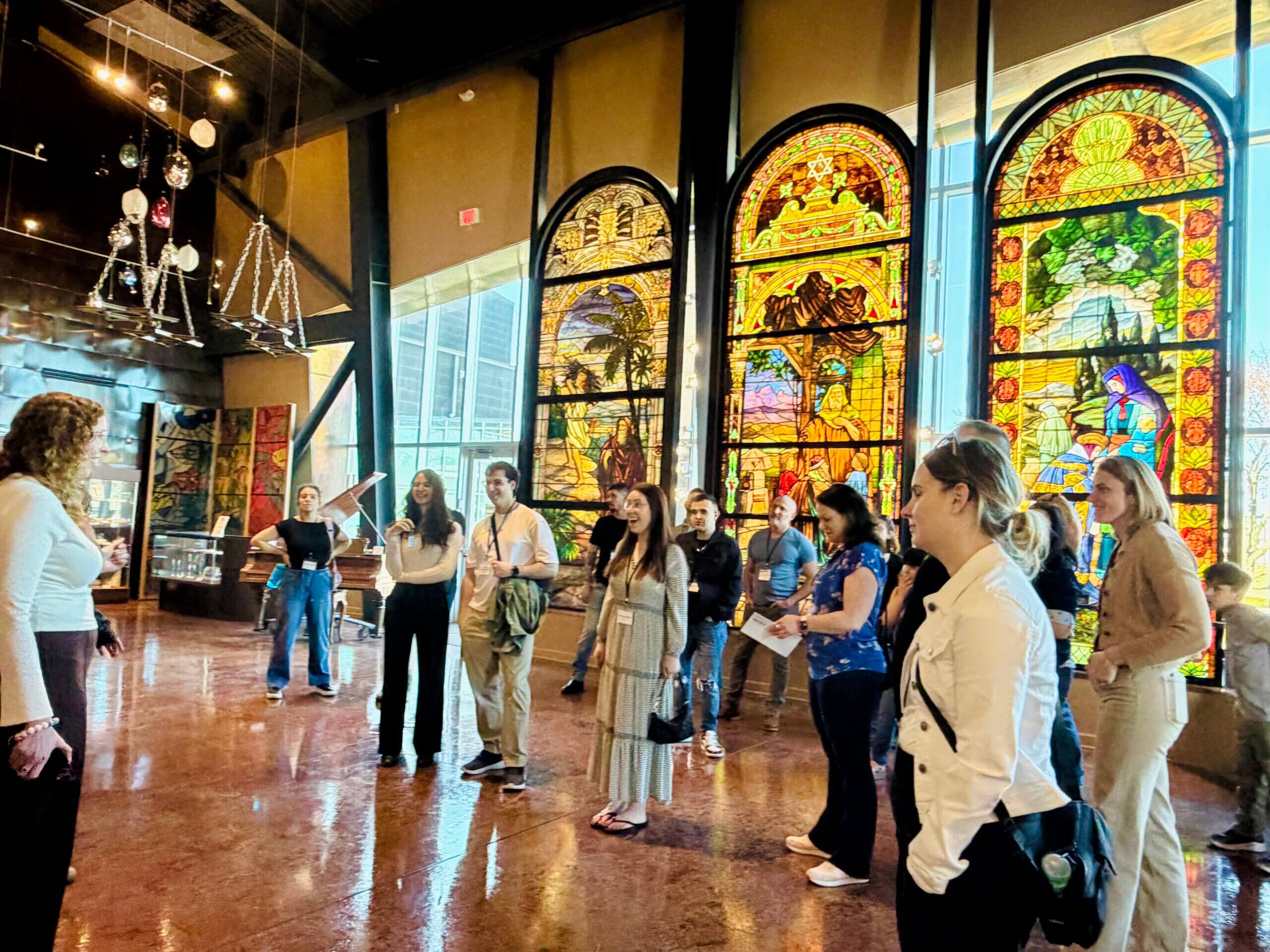
Walk through the midtown campus and something becomes clear almost immediately: The people running the place are young. The federation board chair is in his 30s. The museum curator is in her early 30s. The development director, public affairs director and several federation staff members are all under 35.
“I’m the old guy around here at 41,” joked Joe Roberts, who runs Jewish Tulsa, the umbrella organization overseeing the city’s federation, JCC and Jewish museum.
Roberts looks less like an executive than someone you might expect to find behind the bar at a downtown brewery — bald, thick beard, jeans and a tight black T-shirt stamped with the words Zionist Weightlifting Club, a brand he started himself.
He works out every day in the gym inside the JCC. “Our claim to fame,” he said, “is that we’re the cleanest gym in Tulsa.”

Roberts was born in Dayton, Ohio, and spent a decade in politics — even running for Congress at 26 — before pivoting into Jewish communal work. He worked at federations in Boston, Los Angeles and Columbus, did pro-Israel advocacy in Washington, D.C., and later ran a federation in Ontario.
Then Oct. 7 changed his trajectory. At the time, Roberts was living near Toronto, working as a public-affairs consultant and writing columns about antisemitism and Israel. The threats that followed, he said, forced him and his wife to reconsider where they wanted to raise their two young sons.
Around that time he heard about Tulsa Tomorrow. He came out of curiosity. Instead, he left with a job. Roberts now sees Tulsa as something larger than a recruitment program. “I want us to be a Bell Labs for Jewish life,” he said.
The stakes extend far beyond Oklahoma. “If we want a national Jewish future,” Roberts said, “we need a national Jewish present.”
‘A big fish’
Marisol Karcs, her curly dark hair clipped back, ambled through the campus with the quiet curiosity of someone who spends her days studying language and stories.
Karcs, 28, is finishing a creative writing MFA at Iowa State University. She had traveled to Tulsa with her younger sister Morgan, 25, who works in climate policy for a local government in California.
They had come to help Marisol think about her future. Her fiancée grew up Jewish in Tulsa. Now the couple is trying to decide whether to build a life here.

Karcs moves easily through corners of Jewish culture that would seem to rarely intersect with Oklahoma. She has studied Yiddish, attended the klezmer festival KlezKanada, taken language courses at the Yiddish Book Center and spent time around the YIVO Institute for Jewish Research.
Her dream, she told me, might be to start a Tulsa Yiddish club — which, as far as she knew, did not yet exist.
In a large city, she said, that might be one niche among many. Here, it might actually matter.
“You’re a big fish in a small pond,” she said, the kind of place where a single idea can ripple through an entire community. “Everyone knows each other. People take care of each other. You don’t really leave people behind.”
In a place this size, she said, one person can build what the community becomes.
Places like Austin and Nashville were once like this — smaller cities where young people arrived early and helped shape what came next. Tulsa, she said, still feels like that kind of place.
Karcs paused outside the Jewish art museum, which also houses a Holocaust education center. Oklahoma now requires Holocaust education in public schools beginning in middle school, making the museum a regular destination for student field trips.
Standing in the quiet gallery, it was easy to see the argument Tulsa’s Jewish leaders were making.
For someone like Karcs, that kind of density carries a particular appeal. If her sister moves here, Morgan said, she would likely follow. Their parents might not be far behind.
“We’re a really tight-knit family,” Morgan said.
For now, the decision remains open. Karcs and her fiancée are weighing graduate school offers and thinking about what it would mean to build a queer Jewish life in a politically conservative state.
But Tulsa, she said, has surprised her.
“There are vibrant communities here that you wouldn’t expect when you hear ‘Oklahoma.’”
A new generation
Across town, another Jewish gathering was underway. This one involved a crime.
Sort of.
Several dozen young Jewish Tulsans, mostly in their 20s and 30s, had gathered in a hotel ballroom for a Shabbat dinner that doubled as a Purim-themed murder mystery.
The room looked like a costume party collided with a synagogue social hall, with a script that required both alibis and blessings. An astronaut mingled with a Renaissance noble. Kentucky Derby socialites in elaborate wide-brimmed hats chatted with a 1960s hippie. At least one gnome wandered through the crowd. Between courses, guests interrogated suspects in the whodunit plot while shaking groggers.

Among the participants was Jacob Parra, the federation’s director of public affairs, wearing denim farmer overalls and holding a red plastic cup.
Parra, 25, spends his days meeting with lawmakers, city leaders and policymakers on issues affecting Tulsa’s Jewish community. Before joining the federation, he worked on dozens of political campaigns.
“I think it speaks to the energy of the community,” Parra told me. “Many cities say they want to hear from younger people. But when push comes to shove, they’re not getting seats on boards.”

The jaunty Shabbat gathering teased the promise of community Rayna Franco, 38, had hoped Tulsa might deliver.
Franco, an advertising professional from Manhattan with long dark hair and tortoise cat-eye glasses, had arrived with three single friends — another New Yorker, one from Cleveland and a digital nomad currently working from Mexico City.
They moved through the weekend together, the four of them conversing in the easy shorthand of women who had spent years navigating big cities.
They represented a different slice of the cohort than many of the couples and young families touring houses: urban and unattached. Moving to Tulsa would mean leaving behind the dense web of family, friends and institutions that make Jewish life in places like New York feel almost automatic.
But what struck Franco about Tulsa’s Jewish community was the opposite dynamic. “In New York, you’re the norm,” she said. “There are Jews everywhere.”
In Tulsa, she noticed something different. “The people here opt to actively create opportunities for community,” she said.

She compared it to expat culture. When Americans live abroad, she explained, they tend to seek one another out. They form tight circles precisely because they are far from home.
Being Jewish in Tulsa, she said, felt similar.
“In New York City, it’s easy to not give living Jewishly a second thought,” she said. “But the effort that the Jewish Tulsans are putting in is purposeful, visible and admirable.”
‘Tulsa is a refuge’
The room filled quickly. Name tags appeared. Business cards began changing hands. Tulsa’s Jewish future, at least for the next two hours, was being negotiated over coffee and folding chairs.
Around a dozen local professionals had gathered at a downtown coworking space to make their case for life, and work, in Tulsa: a recruiter with open jobs, a real estate developer, a startup founder building AI companies, a banker ready to help newcomers open accounts and a tax consultant who specializes in helping Canadians move their businesses to the United States.
The message was simple: If the participants decided to relocate, Tulsa already had a path waiting.
“You’re not going to get routed through some random call center,” said Jared Goldfarb, a local banker whose Jewish family has lived in Tulsa for generations. “You can text me anytime.”
Then the mayor of Tulsa walked in.
Monroe Nichols, 42, is the first Black mayor in the city’s history, a milestone that carries particular weight here. Tulsa still lives in the shadow of the 1921 massacre that destroyed the prosperous Black neighborhood known as Greenwood, once called Black Wall Street.
Nichols arrived in a blue blazer, Oxford shirt and jeans. A former state representative, he greeted participants like a host welcoming guests into his home.

“We are so excited to have you in this community,” he told the group. “More excited when you move to this community.”
Then he made a point that seemed to resonate deeply with the crowd. “As a Black man in America,” Nichols said, “I can identify with some of the hate that you all have felt.”
For several of the Canadians in the room, the moment felt striking. Since the Hamas attacks of Oct. 7, 2023, some told me they had watched their own political leaders respond to antisemitic incidents with little more than statements of “thoughts and prayers.”
Here was a mayor doing something different: telling them plainly that he wanted them in his city.
“If you’re looking for a place where you can contribute,” Nichols said, “you’ve found that place.”
Then he used a word that carried particular weight in a room full of Jews — especially Jews who had traveled here because they were no longer sure where they belonged.
“Tulsa,” he said, “is a refuge.”
Afterward he lingered to shake hands, pose for photos and continue the conversation. For many in the Tulsa Tomorrow cohort, it was the kind of public welcome they had not heard from their own elected officials in years.
The next move
Participants on this Tulsa Tomorrow trip had created a WhatsApp group to introduce themselves before traveling. After the weekend ended, the chat continued with photos from the retreat and messages about what might come next.
Then the tone shifted.
Within a week of the trip to Tulsa, Toronto saw shootings at three synagogues. No one was injured, but the attacks — yet again — rattled Canada’s Jewish community.
One of the Canadians dropped a news link into the group chat. Another reminder, the message read, of what Jews are facing in cities across Canada. It was a reminder of why the question of where Jewish life takes place, and how it is sustained, feels newly urgent.
Tulsa, for some, had begun to feel like more than a curiosity. It suggested the possibility of building Jewish life somewhere that still felt open — a place where a community might be shaped, rather than simply inherited.
Some cities feel finished — their skylines built, their hierarchies set, their patterns long established. Tulsa still feels like a city becoming something. That sense of possibility is the wager at the heart of Tulsa Tomorrow.
A few weeks after the trip, the group chat was still active. People shared house listings. Compared notes. Asked practical questions about schools, jobs, synagogues.
The question was no longer whether there were Jews in Tulsa.
It was whether they might soon be among them.
The post The promised land is… Oklahoma? Inside Tulsa’s campaign to court young Jews appeared first on The Forward.
Uncategorized
Synagogue attacks were part of massive ISIS-inspired plot last week, FBI says
(JTA) — A 21-year-old man from Valencia, Pennsylvania, suggested poisoning food in synagogues as part of a mass attack in support of the Islamic State group last week, according to the FBI.
The suspect, Jonathan Kramer, said in an online forum using the pseudonym “Hamza Al Rashid” that “i wish to inject ricin or cyanide into places such as grocery stores inside water/food with a syringe, or going to food events, preferably synagogues and putting the chemicals in their food and drink…,” according to a sworn FBI affidavit.
The prospective poisoning was part of a broader plot of mass violence that included “repeated attempts to encourage and coordinate violence through encrypted platforms, such as advising others on attack methods, discussing chemical poisons, arson, vehicle attacks, drone delivery explosives and firearm based assaults,” FBI Special Agent in Charge Richard Evanchec said at a press conference last week.
The Jewish Federation of Greater Pittsburgh said in a security update on Friday that no synagogue had been specified by the FBI. , “We are in close contact with our law enforcement partners and federal prosecutors, and if we learn of anything concerning, we will share that immediately,” the organization noted.
Assistant Attorney General for National Security John Eisenberg announced last Tuesday that Kramer was “preparing for a mass shooting that could have taken many lives, having already secured a rifle and approximately 190 rounds of ammunition for what he called his ‘mission.”
Efforts to reach Kramer’s public defender Jake Morrison were unsuccessful.
FBI agents arrested Kramer in a hotel parking lot in Cranberry, Pennsylvania, the Justice Department said. They seized a semiautomatic rifle, five rifle magazines, a rifle bipod and scope, a total of 190 rounds of rifle ammunition and about 30 knives following a search of him, his house and his hotel room.
Kramer was charged with receiving a firearm and ammunition believing they would be used to commit terrorism. He appeared in court last Wednesday to waive a preliminary hearing, according to CBS News. A court date has not been set for Kramer’s next proceedings, the network reported.
Kramer had been on the FBI’s radar since 2023, when he was charged by Pennsylvania state authorities “for his role in a plot to commit a mass casualty incident” and sent to a juvenile detention facility, FBI special agent Gregory Battaglia said in a sworn affidavit.
Nearly eight years ago, 11 worshippers were killed at Pittsburgh’s Tree of Life synagogue in the deadliest antisemitic attack in U.S. history.
This article originally appeared on JTA.org.
The post Synagogue attacks were part of massive ISIS-inspired plot last week, FBI says appeared first on The Forward.
Uncategorized
Proposed U.S. $24.3 billion sale of F-35 fighter jets to Saudi Arabia advances
(JTA) — The State Department has approved a possible $24.3 billion sale of 48 F-35 fighter jets to Saudi Arabia — a move that would make the kingdom the second Middle Eastern country after Israel to have the world’s most powerful combat aircraft.
“This proposed sale will support the foreign policy and national security objectives of the United States by improving the security of a major non-NATO ally,” the department said in a statement.
Israel wants the sale attached to a normalization deal with Saudi Arabia, but that doesn’t appear to be on the horizon. However, there is a small chance that Congress could keep the sale from happening.
When President Donald Trump first confirmed that he was considering the sale last November, Israeli officials told Axios that while they don’t oppose the sale itself, they wanted it “to be subject to Saudi normalization with Israel.”
Although Israeli Prime Minister Benjamin Netanyahu reportedly brushed off the deal’s significance last fall, a security source at the time warned on CNN that the possibility of Saudi Arabia acquiring “the same capabilities” as Israel was “very concerning.”
The prime minister was more vocal in his opposition to a July announcement from Trump that he was weighing selling the advanced jets to Turkey as well, telling CNN that Turkish President Recep Tayyip Erdogan is “not exactly a model ally of the United States.”
Israel has already purchased 50 F-35 jets, in two procurement rounds that occurred in 2016 and in 2017, according to the Israeli Defense Ministry. However, local media reports indicate that two of the 50 have yet to arrive, meaning that just 48 are on the ground – the same number of planes that the State Department has approved for Saudi Arabia’s potential purchase.
Israel would have many more F-35s than Saudi Arabia for the time being, because its Defense Ministry announced in 2024 that it would be procuring 25 more of the planes, slated to begin arriving in 2028. Earlier this year, the Defense Ministry revealed that it would be procuring yet another squadron of the jets, although the quantity remained unclear.
Congressional approval is not assured; wariness of the Saudi regime, stemming in part from the state-sanctioned 2018 murder of a U.S.-based journalist in Turkey, crosses party lines.
The U.S. Arms Export Control Act requires the executive branch of the government to notify Congress regarding major defense equipment sales to most countries. Congress can then deem a country ineligible to participate in a sale through a joint resolution. The president can then veto the resolution, which Congress would need a two-thirds supermajority to override.
Additionally, U.S. law requires the president to ensure that Israel maintains “a qualitative military edge over military threats” when considering arms sales to other Middle Eastern countries. Israel, per the law, must be able “to counter and defeat any credible conventional military threat” from both other nations and “non-state actors.”
“The proposed sale of this equipment and support will not alter the military balance in the region,” the State Department said on Thursday. It called Saudi Arabia “a force for political stability and economic progress in the Gulf region,” adding that the sale would help “deter current and future threats by strengthening its homeland defense.”
The department maintained that not only would the sale improve Saudi Arabia’s defense capabilities, but it would also boost “interoperability” with both U.S. forces and other players from NATO and the region.
As for the potential deal’s logistics, Saudi Arabia has requested 48 of Lockheed Martin’s F-35 Lightning II Joint Strike Fighter Jets, as well as 49 Pratt & Whitney engines, according to the State Department.
The kingdom is also seeking to acquire other non-major defense equipment, such as cryptographic devices, precision navigation, secure communications, simple key loaders and support for electronic warfare databases, maintenance and personnel training.
Producing and delivering these planes can take many years.
Meanwhile, just a day before Trump’s announcement, The New York Times surfaced intelligence concerns that China could acquire F-35 technology by spying on Saudi Arabia or through its partnerships with the kingdom.
U.S. House Rep. Raja Krishnamoorthi, a Democrat from Illinois, warned in a statement on X that “Beijing has spent decades stealing American intellectual property” and that this deal could “help them do it.”
“Our own intelligence community is warning that it could put the crown jewels of American military technology within reach of the Chinese Communist Party,” Krishnamoorthi added.
The Biden administration reportedly ended a past F-35 deal with the United Arab Emirates — secured by the first Trump administration — due to similar concerns about the country’s connections to China, as well as to Russia.
This article originally appeared on JTA.org.
The post Proposed U.S. $24.3 billion sale of F-35 fighter jets to Saudi Arabia advances appeared first on The Forward.
Uncategorized
After outcry, Texas lieutenant governor says schools should teach Holocaust books ‘Night,’ ‘Anne Frank’

(JTA) — The lieutenant governor of Texas says his recent call for the state’s public schools to remove “over 2,000 titles” of “dirty, filthy and vulgar books” was not meant to include books about the Holocaust.
Dan Patrick’s statement, provided exclusively to the Jewish Telegraphic Agency on Friday, comes after a month of confusion following a press conference in which he and a conservative Christian activist threatened schools with potential loss of state funding if they did not comply with his directive to purge their libraries.
“I believe Texas students must learn about the Holocaust, and that includes reading books such as ‘Night’ by Elie Wiesel, ‘The Diary of Anne Frank,’ and other books about the Holocaust,” Patrick told JTA, singling out two books on the removal list he had promoted – one of which, “Night,” that he previously explicitly called for removal from middle schools.
Patrick added that his initiative was “focused on age-inappropriate, sexually explicit books in public school libraries across Texas.” At his earlier press conference, he had directed viewers to an online list compiled by an activist group that features several books about the Holocaust and Jewish identity.
Patrick’s threats have teeth. In Texas, lieutenant governors are more powerful than in many other states, playing central roles in shaping the budget and determining the legislative agenda.
Patrick also appeared to walk back some of the harsher proclamations from his Aug. 19 press conference, at which the Republican had stated, “We’re coming for the books.”
“As the law states, local communities have the right to make their own decisions about their public school libraries,” he told JTA Friday.
The lieutenant governor, who is up for reelection this fall, appeared at the conference with Bonnie Wallace, the head of the activist group Recover America, and told viewers to “go to RecoverAmerica.com.” That group has circulated a list of more than 2,100 “Harmful Books in Libraries.” Its list, which it describes as “books with harmful, sexually explicit, and vulgar content,” includes more than a dozen titles of particular import to Jewish readers.
Recover America’s flagged books include both volumes of Art Spiegelman’s “Maus,” a comic-book adaptation of Frank’s diary and Bernard Malamud’s novel of a blood libel “The Fixer” — all books that have been removed from school districts in Texas and other states in the past amid broader conservative-led library culture wars. In some cases those books were restored to the districts following public outcry, but spurred deeper dialogue about the state of Holocaust education and antisemitism awareness in public schools.
Patrick’s latest push would go much further than a handful of districts, affecting the more than 5.5 million students in public schools across the state.

One book of particular contention on Recover America’s list was “Night,” Elie Wiesel’s bestselling memoir of surviving Auschwitz and Buchenwald, which has been taught in schools for decades. After a Houston Chronicle story noted the book’s inclusion on the Recover America “harmful” list, Patrick initially doubled down on “Night,” saying that it was not appropriate for middle schools owing to its “violence.”
“If ‘Night,’ by Elie Wiesel, were made into a movie, it would likely be rated R,” Patrick wrote on the social network X on Aug. 26. “‘Night,’ which includes depictions of graphic violence and the machine-gunning of babies, should not be available to sixth graders in middle-school libraries. High school is more age-appropriate.”
His tweet appeared to contradict the state’s own K-12 required reading list, passed this summer, which mandates that “Night” be taught in the eighth grade beginning in 2030.
Now, in response to questions from JTA, the lieutenant governor said he would defer to the Texas State Board of Education on the appropriate grade to teach “Night.”
“The State Board of Education decides the appropriate grade level for books and will determine whether ‘Night,’ by Elie Wiesel, is at the appropriate grade level,” Patrick told JTA in his statement.
He continued to insist that books in schools should be held to “FCC standards,” referring to the Federal Communications Commission, an agency that governs broadcasting content and does not regulate publishing.
The head of the Texas Holocaust, Genocide and Antisemitism Advisory Commission, a governor-appointed panel which advised the state on the inclusion of “Night” and other Holocaust texts on its required reading list, did not return a JTA request for comment.
In a statement, the Texas Educational Authority, which drafted the required-reading list, told JTA, “When Texas students learn about the Holocaust, they will be exposed to the horrors of the Holocaust. That is why the SBOE placed the book in 8th Grade to ensure age appropriateness for students.”

At the Emmys this week, when “The Librarians,” a documentary about librarians facing book removal threats, won an award, retired Texas librarian Carolyn Foote joined the producers on the stage and held up a copy of “Night” in protest.
“I felt like it was very symbolic to bring ‘Night,’” Foote, a subject of the film and a co-founder of the librarian activist group FReadom Fighters, told JTA. “Having read it, I just know the importance of not forgetting our past. And that’s part of Elie Wiesel’s whole legacy, is remembrance, and so it just felt very important for me to carry that book, coming from Texas.” Another librarian onstage for the win held up “Anne Frank’s Diary: The Graphic Adaptation.”
Elisha Wiesel, Elie’s son and chair of the Elie Wiesel Foundation, told JTA that “Texas deserves credit for recognizing that Holocaust education belongs in the eighth-grade curriculum.” Yet, the younger Wiesel suggested, Patrick’s concerns about the book’s violence were misplaced.
“‘Night’ contains violence because the Holocaust was violent; its purpose is not to shock young people, but to help them understand where hatred and indifference can lead,” he wrote in an email. “With context and guidance, students should not be shielded from this history. They should be equipped to confront it.”
Despite having directed viewers to Recover America’s book list during his press conference, Patrick’s new statement to JTA said, “I do not have a book list.” He pointed instead to a law passed in the state legislature in 2025 regulating school books that he said districts were required to follow.
Yet some districts in the state have removed every book on Recover America’s list from their own libraries out of fear of losing funding, Foote told JTA. While the list nominally contains a ratings system, many of the books do not have a rating.

Besides “Night,” “Maus,” “Anne Frank’s Diary” and “The Fixer,” other books about Judaism and the Holocaust on Recover America’s list of “Harmful Books” include:
- “Annexed,” a young-adult novel about Peter van Pels, who hid in the Amsterdam annex with Anne Frank
- “The Berlin Boxing Club,” a young-adult historical novel based on German boxer Max Schmeling, who helped young Jews during Hitler’s rise to power
- “Black, White and Jewish,” a memoir by Rebecca Walker, the mixed-race Jewish daughter of author Alice Walker
- “Caste: The Origins of our Discontents,” a nonfiction book analyzing the “caste systems” of Nazi Germany. “Caste” had been included on an earlier, Wallace-spearheaded list of books for removal from a Texas public library in a case that the U.S. Supreme Court declined to hear in 2025, allowing the removals to proceed.
- “Kasher in the Rye,” a memoir by Jewish comedian Moshe Kasher
- “Pride: the story of Harvey Milk and the Rainbow Flag,” a children’s picture-book biography of the pioneering Jewish LGBTQ legislator
- “Sophie’s Choice,” the bestselling Holocaust novel for adults
- “The Violin Maker’s Daughter,” a historical novel about a Jewish family of musicians during the Holocaust
- “White Bird,” a young-reader graphic novel about a Jewish girl in Nazi-occupied France
In response to JTA sharing a list of the above books, Patrick’s statement mentioned only “Night” and Anne Frank by name. The Recover America list is largely made up of romance and fantasy novels, many with an LGBTQ element, while also including classics such as “The Glass Menagerie” and “Cat’s Cradle” and some picture books for children.
Recover America did not immediately return a JTA request for comment Friday on Patrick’s new statement. Wallace, the group’s leader who has also appeared on Patrick’s podcast, previously told the Houston Chronicle that she had “thought long and hard” about including “Night” on her list.
She ultimately did so, she said, because “an eighth-grade student is 13 years old. Do they need to read about soldiers massacring, throwing up babies, and killing them with machine guns?”
She added, “It’s not to say this doesn’t happen in life. And the Holocaust was maybe the worst tragedy in the history of the world.”
For Cameron Samuels, a Jewish alum of Texas public schools and founder of the activist group Students Engaged in Advancing Texas, such efforts do not help Jewish students.
“Non-Jewish people are deciding for us what’s best, and making this public policy,” Samuels said. “We can’t readily access these books and stories. And that makes students feel alone. It also means that our classroom peers are not learning authentic Jewish narratives.”
This article originally appeared on JTA.org.
The post After outcry, Texas lieutenant governor says schools should teach Holocaust books ‘Night,’ ‘Anne Frank’ appeared first on The Forward.
