


Uncategorized
The promised land is… Oklahoma? Inside Tulsa’s campaign to court young Jews
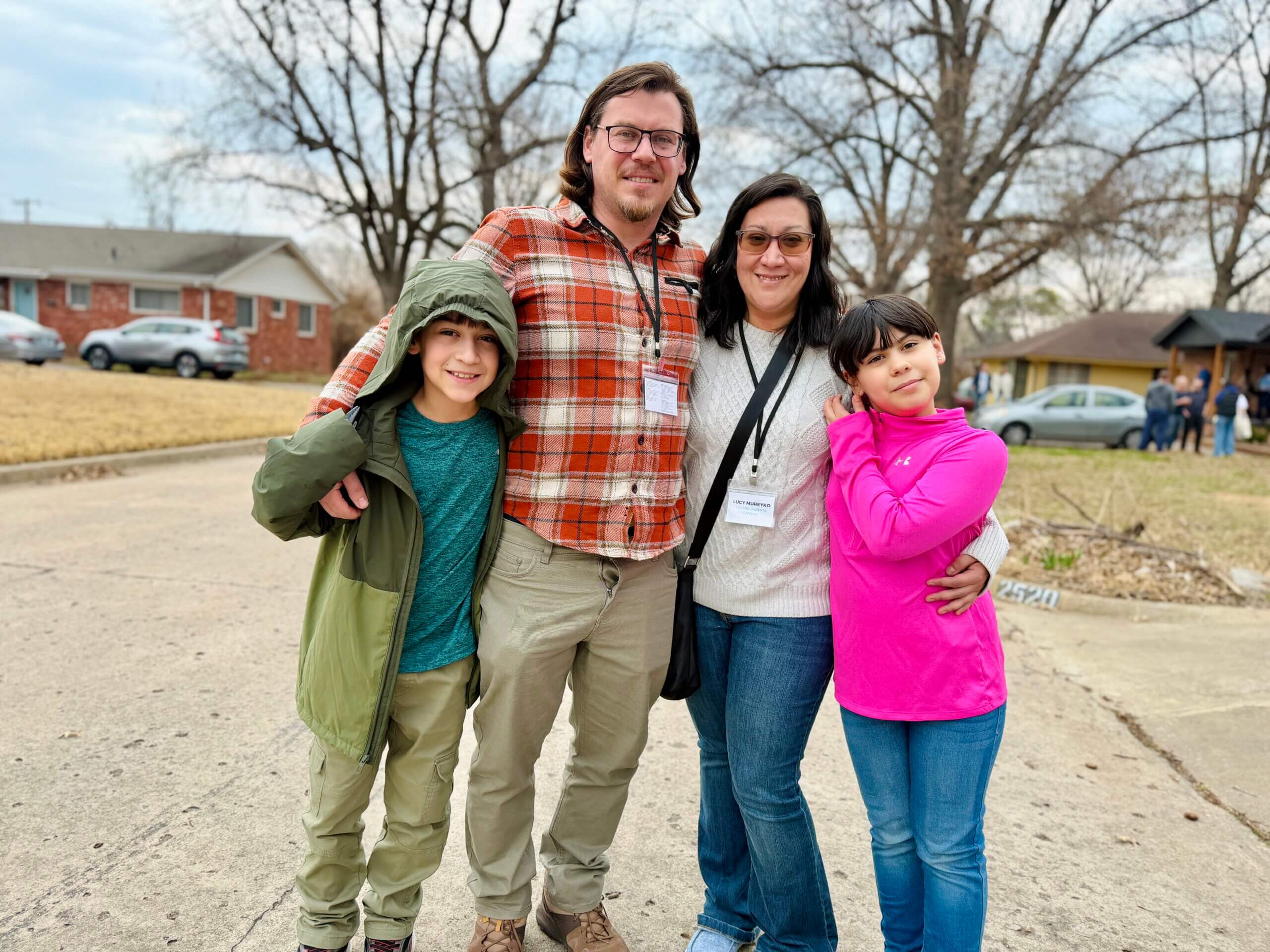
TULSA, Okla. — The house had prairie views, four bedrooms and a pantry large enough to support a small diaspora.
More than 50 people wandered through the kitchen inspecting cabinets, opening drawers and video chatting with relatives back home as if they had stumbled upon a newly discovered continent.
They were not, strictly speaking, house hunters. They were Jews.
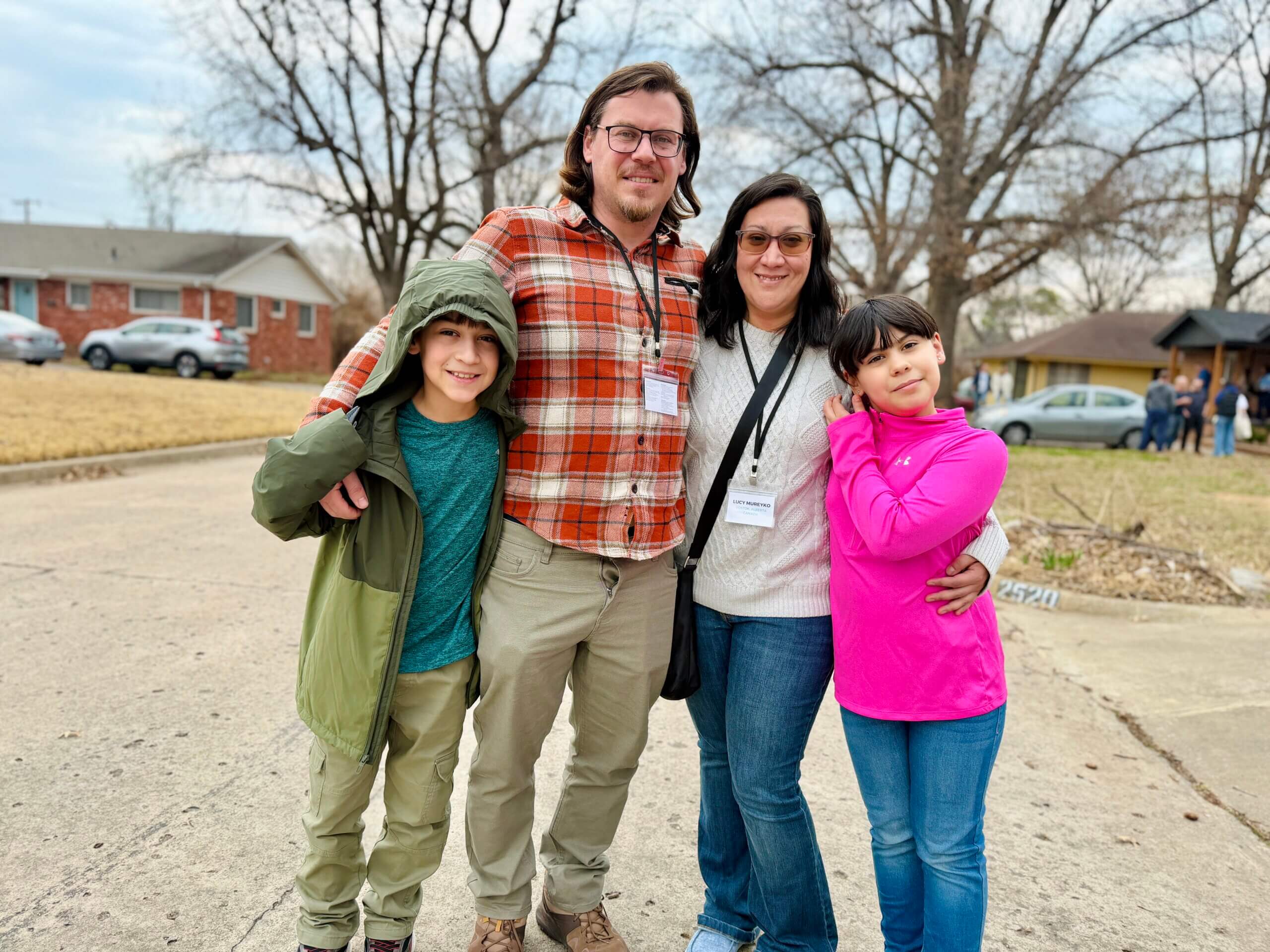
They had flown to Tulsa, Oklahoma, for the weekend to see whether they could picture a life here, along a stretch of historic Route 66. This is not how most Jewish migration stories begin.
Sunlight spilled across a kitchen island the size of a small boat. In the living room, the ceiling rose two stories high, the kind of architectural flourish meant to make visitors imagine their future lives unfolding beneath it.
Two sisters from Northern California peeked into a walk-in closet, while a family of four from Winnipeg, Canada, stepped into the backyard.
“I have Sylvester Stallone to thank for this,” said a man from Maine, dressed in jeans and a white T-shirt that read “Israel – Established 1273 BCE.” He had been watching the Paramount+ television series Tulsa King, the one where Stallone plays a New York mob boss exiled to Oklahoma to start over. Curious about the setting, he opened Zillow.
The home prices did not make sense. The numbers next to the square footage looked like they were missing a comma, maybe two.
He typed a question into Google.
Are there Jews in Tulsa?
The answer, it turned out, was yes. More surprising still: Tulsa was actively trying to recruit them.
Tulsa is not the tumbleweed town many outsiders imagine, but a leafy, art-deco city stretched along the Arkansas River, where oil money once built skyscrapers and philanthropy now builds parks where families gather at sunset.
In the early 20th century, Tulsa was known as the oil capital of the world, its petroleum boom turning a prairie town into one of the richest cities per capita in America. When oil prices collapsed in the 1980s, the economy faltered.
Like many once-booming cities forced to reinvent themselves, Tulsa rebuilt. Today its economy stretches beyond oil into aerospace, technology and finance, and the city supports a surprising range of cultural institutions, including the Tulsa Ballet, Tulsa Symphony Orchestra and the Philbrook Museum of Art.
Over the past several years, its Jewish leaders have hatched an audacious plan. Instead of watching young Jews drift toward the familiar centers of American Judaism — cities like New York, Los Angeles, Miami and Chicago — they are trying to persuade some of them to move in the opposite direction.
The program is called Tulsa Tomorrow. Since 2017, it has flown groups of young Jews to Oklahoma for long weekends — covering airfare, hotels and meals — and then shows them the city: neighborhoods, synagogues, parks, restaurants, jobs opportunities and the people who live here.
It is, in essence, Birthright for the Sooner State.
So far, 144 people have moved through the program; 113 still live here. In a city with fewer than 3,000 Jews, those numbers matter.
Until recently, Tulsa’s most recognizable Jewish exports were the actor-director Tim Blake Nelson and the professional wrestler simply known as Goldberg. The idea that the city might become known instead for importing Jews is a newer development.
Across the country, dozens of small and mid-size Jewish communities are confronting the problem of young Jews leaving for larger cities, institutions shrinking and congregations aging. Tulsa’s unusual experiment — recruiting Jews instead of losing them — has begun attracting attention from Jewish leaders elsewhere who are wondering whether the model might work in their own towns.
In Kansas City, which already runs its own recruitment effort called See KC, a federation representative attended a Tulsa Tomorrow retreat to see what might translate back home.
Brooke Bowles, the CEO of the Birmingham Jewish Community Center, first heard about Tulsa Tomorrow at a conference last fall. Birmingham’s Jewish population has hovered for years between 5,000 and 6,000 people.
“If you’re not growing,” Bowles said, “you’re dying.”
She spoke with Tulsa Tomorrow’s organizers and plans to attend a recruitment weekend herself to see how the program works up close.
But whether the Tulsa model can work elsewhere may hinge on something harder to replicate. Rabbi Lily Kowalski, who served at Tulsa’s Reform congregation during the early years of the Tulsa Tomorrow project, said its success is in part because it was never managed by any single Jewish institution.
“It really has the buy-in and the backing of the entire Jewish community,” she told me. “If it were just one or two groups trying to make it happen, it wouldn’t be as successful as it is.”
An international destination
The program usually holds two recruitment weekends each year with maybe a dozen participants on each. This particular trip, held at the end of February, was unusually large. Fifty-two participants had come, 41 of them from Canada.
For them, Tulsa represented more than opportunity. It promised potential refuge.
Since the Hamas attacks on Oct. 7, 2023, antisemitic incidents across Canada have surged. Jesse Brown, a Canadian Jewish journalist who has been documenting the trend, said the shift has been dramatic. In recent years, synagogues and Jewish schools have faced arson, vandalism, bomb threats and shootings.
But Brown said the sense of unease extends beyond those headline-grabbing incidents. Across parts of Canadian civil society — in schools, unions, hospitals and arts organizations — Jews have reported growing hostility or exclusion.
Brown describes that broader atmosphere as something closer to what he calls a “polite pogrom,” a slow accumulation of insults that have left many Canadian Jews wondering what the future holds.
“My fear is that the next Bondi Beach massacre is going to take place in Canada,” Brown said, referring to the December 2025 Hanukkah attack in Australia that killed 15 people.
Watching fellow Canadian Jews contemplate leaving the country has unsettled him in its own way. “There’s a sadness,” Brown said. “I’m not enthused or compelled by what I see as a re-shtetling.”
For some Canadians, relocating is no longer a hypothetical.
Michael Sachs, 44, arrived in Tulsa last summer from Vancouver, pulling into town just in time for the Fourth of July.
With salt-and-pepper hair and the easy confidence of a salesman who believes in his product, Sachs has quickly become one of the city’s most enthusiastic ambassadors.
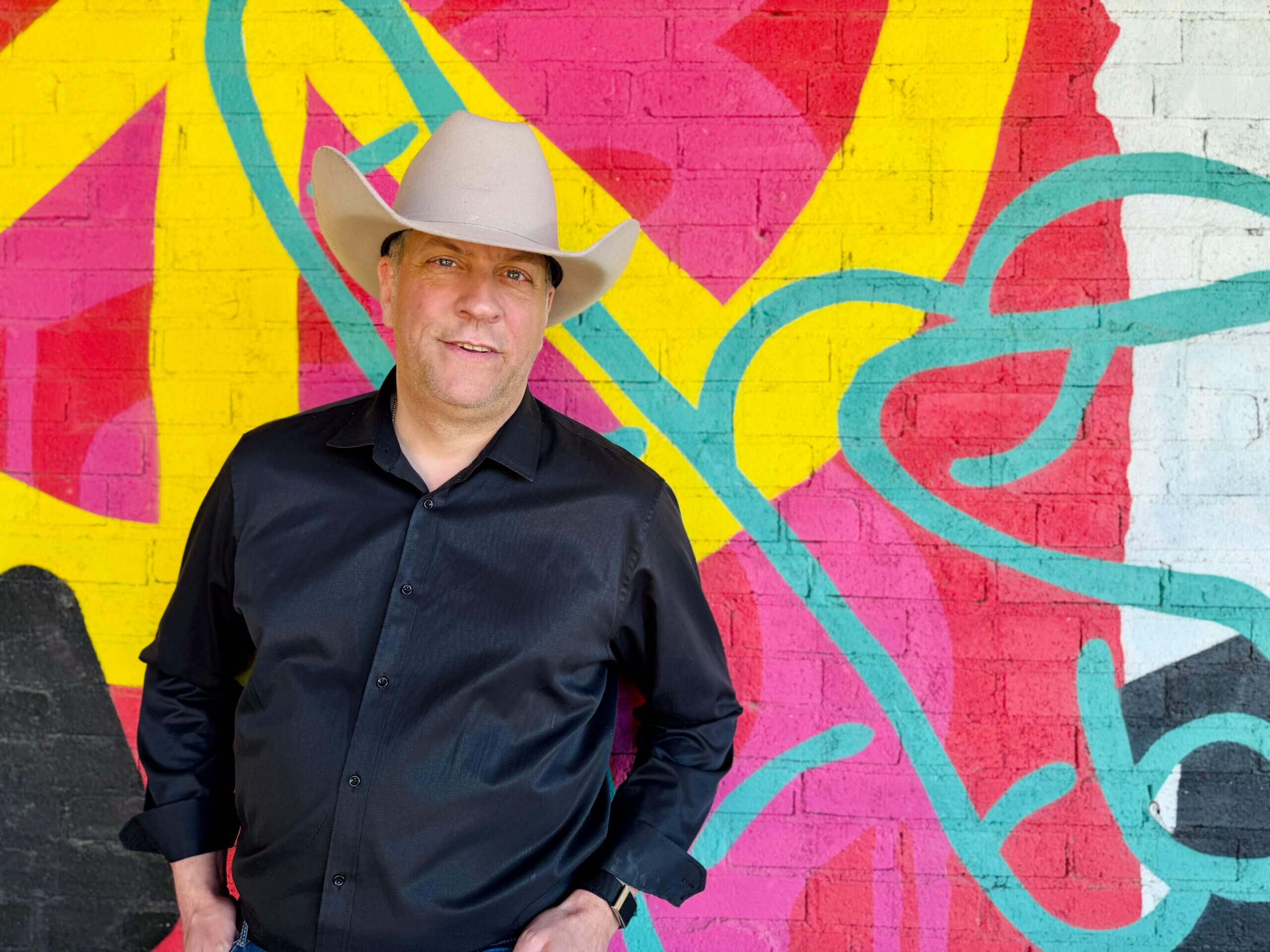
In Canada he built a career in Jewish communal life — working with the Simon Wiesenthal Center and the Jewish National Fund and serving as president of his Orthodox synagogue.
Now Sachs works to recruit new families to Tulsa. “I feel like there’s opportunity everywhere,” he told me, tilting up the brim of his felt cowboy hat.
Part of what pushed his family south was the same set of issues many Canadians on the trip described: antisemitism, soaring housing costs, a sluggish economy and a health care system under strain. But the real difference, Sachs said, has less to do with economics than with possibility.
Tulsa has a population of around 415,000. It’s big enough to matter, but small enough that ideas move quickly. More than once I heard the same sentiment: In Tulsa, you are usually just one phone call away from anyone you need to reach.
Conversations turn into projects. Programs appear where none existed before. The distance between suggestion and action is short.
“There’s a secret sauce here,” Sachs said. “Even I don’t know the recipe. But I’ve tasted it, and I know it exists.”
In larger Jewish cities, Sachs said, communities can feel settled — institutions established, leadership long entrenched. Tulsa still feels different, a place where the future of a Jewish community can be shaped in real time.
Seven months after arriving, Sachs is already putting down roots. His 13-year-old son recently celebrated his bar mitzvah here — a ceremony the family had originally planned to hold back in Vancouver. His wife now teaches at Tulsa’s Jewish elementary school.
Like many cities in the American heartland, Tulsa has long been treated as somewhere people pass over. But increasingly, some Jews are beginning to look down.
The relocation playbook
Tulsa is not the first Jewish community to try this. Every few years, a synagogue or federation decides to solve Jewish demography the way a small town might try to lure a Kia factory: with incentives.
In 2009, a hotel magnate in Dothan, Alabama, offered up to $50,000 to Jewish families willing to relocate to the town’s shrinking Reform congregation. Eleven families came. Seven eventually left.
In 2022, an Orthodox synagogue in White Oak, Pennsylvania — a fading mill town outside Pittsburgh — offered $100,000 to anyone willing to move there. Three families arrived. The program is now paused.
There have been modest successes.
After Hurricane Katrina, the Jewish community of New Orleans offered stipends for moving expenses, discounted day-school tuition and a year of free membership to a synagogue and the JCC. Hundreds took part before the program ended in 2012. About a quarter stayed.
Tulsa took a different tactic.
Tulsa Tomorrow is the brainchild of local businessman David Finer, who started the program along with a few of his friends. Instead of paying people to move, the community invites them to visit and rolls out the red carpet. What Tulsa lacked, he believed, wasn’t Jewish life. It was awareness.
“Tulsa is a hidden gem,” Finer, 69, told me one morning over breakfast at Chimera Cafe in the Tulsa Arts District, a block away from museums dedicated to Woody Guthrie and Bob Dylan. “When people come here, they’re shocked at how nice it is.”
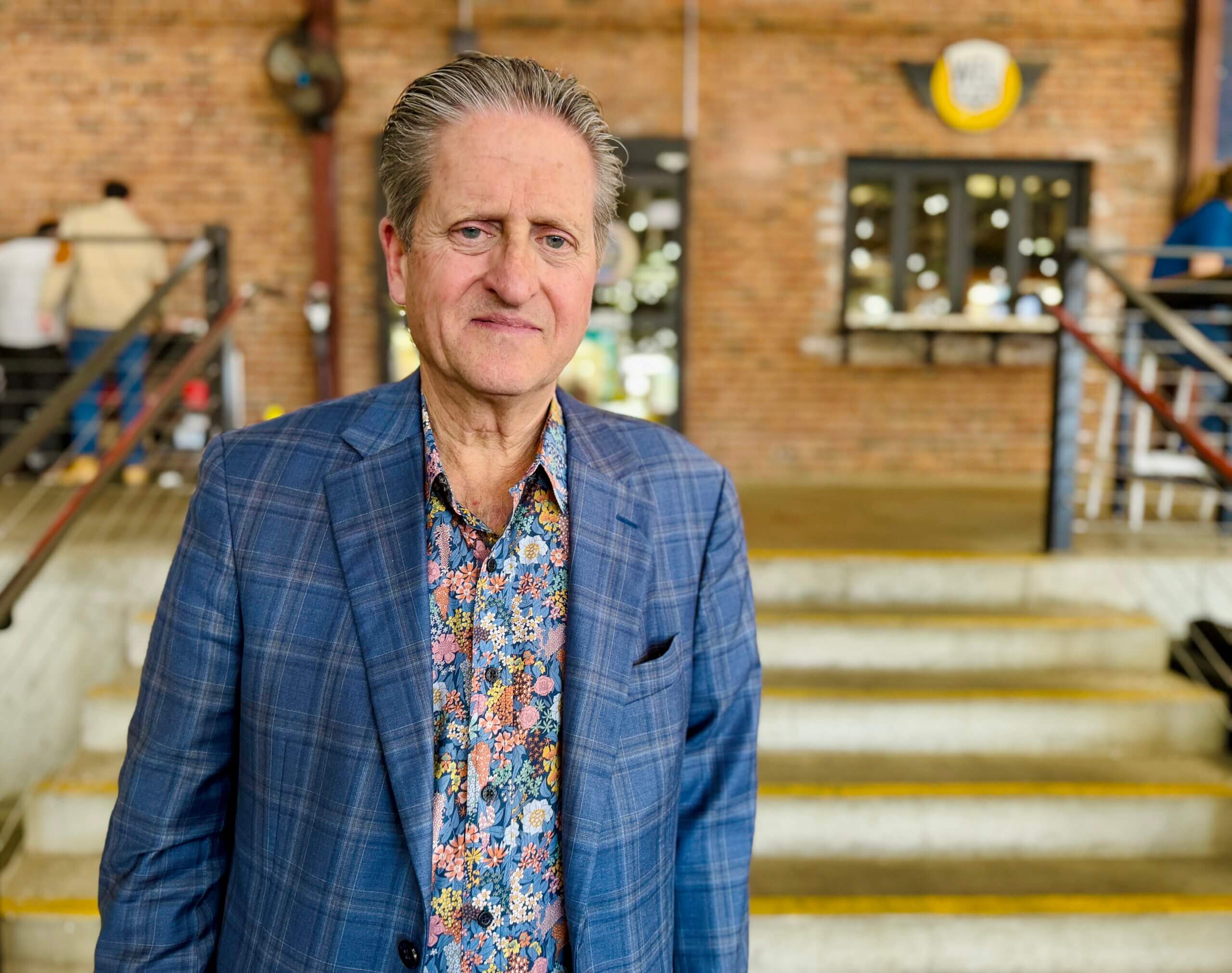
Tulsa also has something working in its favor that many places its size do not. “It is, per capita, one of the most philanthropic cities in the country,” said Rebekah Kantor-Wunsch, Tulsa Tomorrow’s executive director and its sole employee.
The city is home to several major Jewish foundations — including the Schusterman Family Philanthropies, the Zarrow Family Foundation and the George Kaiser Family Foundation — all of which have helped shape large parts of Tulsa’s civic life through their giving. Kaiser, a lifelong Tulsan whose parents fled Nazi Germany, was the main donor to the Gathering Place, a 66-acre park along the Arkansas River that opened in 2018 — a lush stretch of tree-lined lawns, playgrounds and winding paths. It cost $465 million to build; Kaiser gave $350 million of that, the largest private gift to a public park in the United States.
Some participants discover another local incentive while they’re visiting. Tulsa Remote, also funded primarily by the Kaiser foundation, offers remote workers $10,000, a local business mentor and three years of free coworking space if they relocate to the city.
More than 4,000 people have taken that offer. Most have stayed.
The city’s philanthropic culture explains why Tulsa’s Jewish community is punching far above its weight, said Rabbi Yehuda Weg, the local Chabad rabbi. “Tulsa,” he said, “is money looking for a problem.”
The cousin theory
Just how broad that community backing runs became visible inside the downtown Bank of Oklahoma Center, a 19,000-seat arena where the Tulsa Oilers minor-league hockey team was hosting its first-ever Jewish Heritage Night.
The players wore special edition blue-and-white jerseys with a large Star of David across the chest. Fans could buy them, too. A few had already made their way to people in the stands, including Rabbi Daniel Kaiman, who had pulled one over his shirt.
From the bleachers, he watched the players circle the ice.
Kaiman, 41, moved to Tulsa in 2013 from Los Angeles and leads Congregation B’nai Emunah. It was founded in 1916 as Orthodox and is now denominationally ambiguous. (Squint long enough and it looks Conservative-adjacent.) Today it has about 520 member households, making it the largest synagogue in Oklahoma.
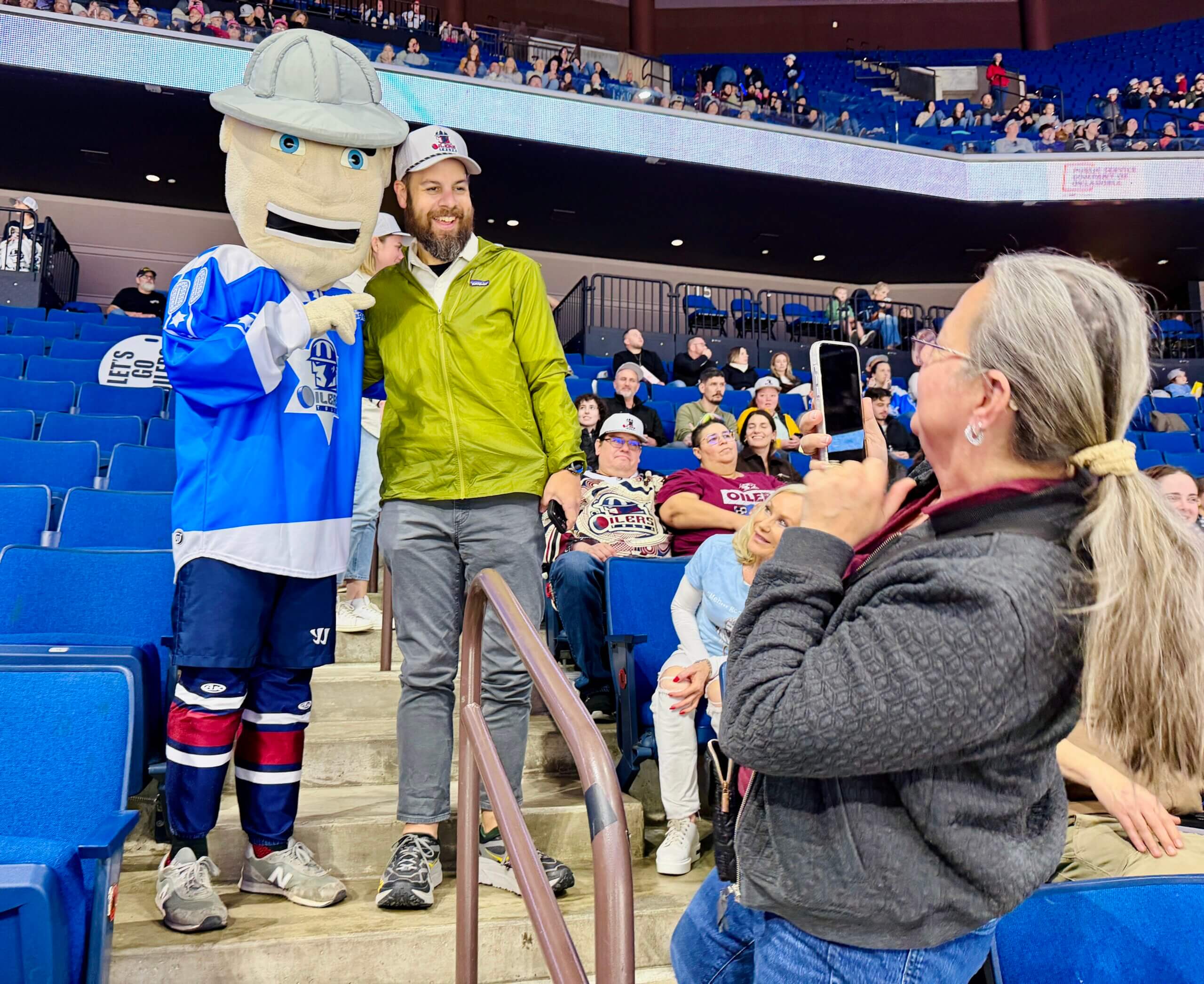
“No one moves to Tulsa for the weather,” Kaiman said loudly, over the roar of the crowd, referring to the humid summers and occasional tornado. “No one moves to Tulsa for the scenery. You move to Tulsa for the opportunity.”
Unlike places like Dothan or White Oak — towns that once boomed and then hollowed out — Tulsa is still growing. “It’s easier to build a life here,” Kaiman said.
The synagogue he leads occupies an entire city block and operates like a small ecosystem.
There is a preschool. A five-day-a-week after-school program picks children up from public schools and keeps them until early evening, offering Hebrew, piano and tumbling classes. About half the students are not Jewish.
Then there are the projects that extend beyond the synagogue’s traditional role: a bakery that employs people recovering from mental illness, a pop-up Jewish deli that raises money for social programs, and a refugee resettlement program run in partnership with HIAS.
The synagogue also houses a mikvah. Jews from across the region — sometimes driving for hours from Arkansas, Kansas and Missouri — come to use it.
Kaiman likes to explain the community this way. “Imagine you move somewhere and you have a cousin there,” he said. “We’re the cousin.”
Sitting beside him in the bleachers was Rabbi Batsheva Appel, the interim rabbi of Tulsa’s Reform congregation, Temple Israel. She arrived last summer from Boise, Idaho.
Temple Israel, founded in 1914, has about 300 member households and is currently rebuilding its synagogue campus after tearing down its longtime building. Groundbreaking on a new structure is set for the weekend after Passover.
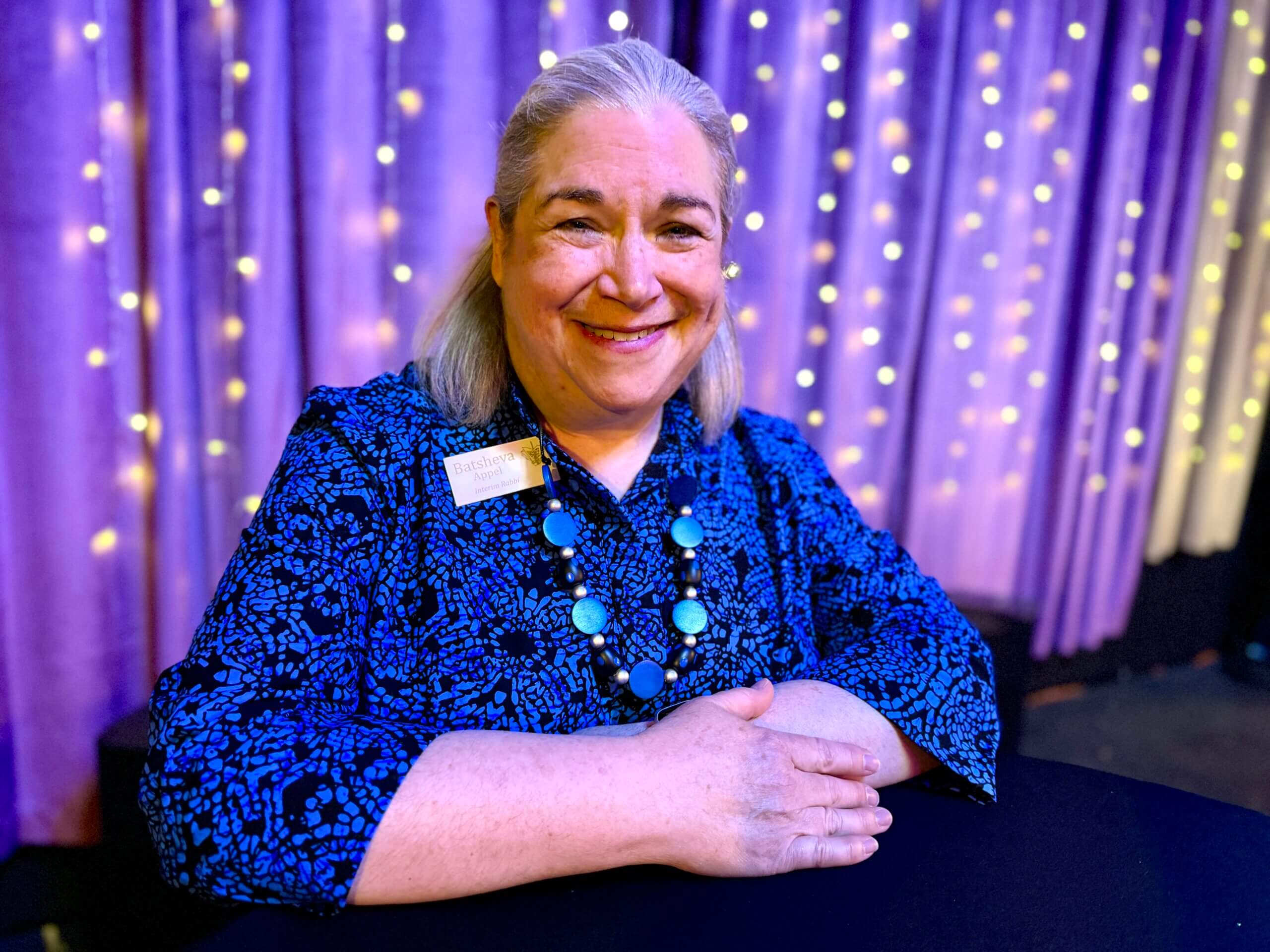
In the meantime, her congregation meets elsewhere. Friday night services take place in the federation auditorium or sometimes in the lobby of the Jewish museum beneath a Tiffany stained-glass window depicting the binding of Isaac. Religious classes meet at the Jewish day school.
It is, in other words, a congregation temporarily without a building but not without momentum.
Appel said she had seen programs like Tulsa Tomorrow proposed before in other cities. “Frequently this kind of idea would come up, and then nothing ever happened,” she said. “So to see it come to fruition and to see how effective it has been is pretty amazing.”
On the ice below them, the Oilers scored a goal.
Kaiman watched for a moment, then returned to a metaphor he often uses to describe Jewish life in the city. Tulsa, he said, is like a whetstone (the stone used to sharpen a knife).
“The Jew is the knife,” he said. “And Tulsa sharpens you.”
Orthodox limits
When the first period of the hockey game ended, people drifted toward the arena’s concourse, where the smell of popcorn hung in the air.
Near one of the entrances, Weg, the Tulsa Chabad rabbi, and his wife, Etel, sat behind a folding table covered with Purim flyers and a tray of hamantaschen. The holiday was two days away.
They handed the triangular pastries to anyone who slowed down long enough to take one — including a few confused spectators who seemed unsure why a rabbi had materialized next to the nacho stand.
Weg, 65, wore a suit and tie and a black kippah perched on his head. With his long white beard and easy smile, he looked like a slimmer Santa Claus.
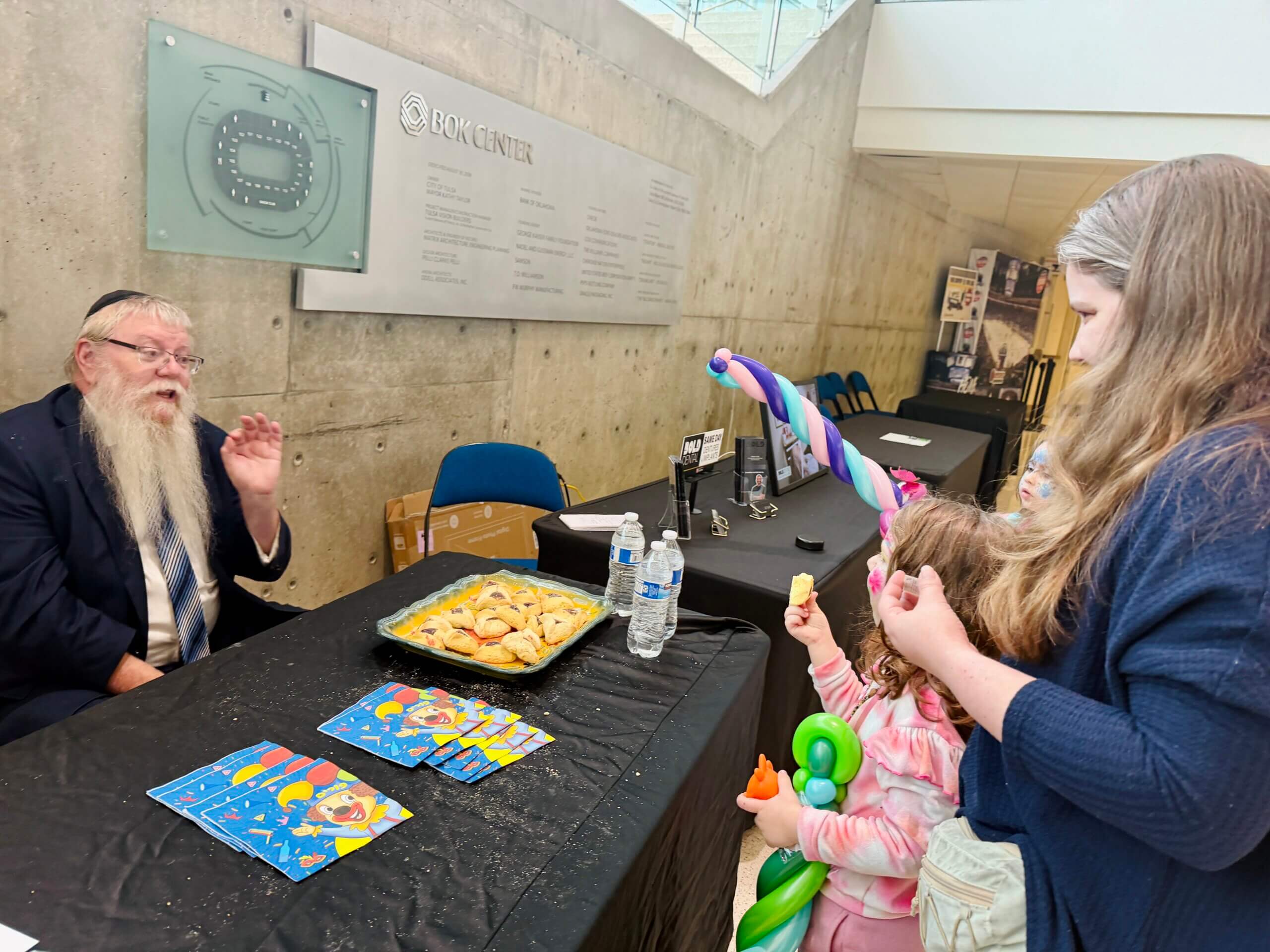
Weg arrived in Tulsa in 1987 as a young Chabad emissary. Today, three of his children serve as Chabad rabbis in communities of their own across America.
The Tulsa Tomorrow program, he said, makes sense for many Jews considering a move. “It allows people to see the Jewish landscape and the Jewish possibilities of Tulsa,” he said.
But he was careful not to oversell it. For Orthodox families, the infrastructure still has limits. Jewish schooling in Tulsa only runs through elementary grades, and keeping kosher requires some improvisation.
“You can get chicken, you can get meat — not every cut of meat, but quite a few,” he said, extolling the virtues of the local Trader Joe’s. “Enough to live on.”
Still, Weg argued that Tulsa offers something many larger Jewish communities do not: the feeling that every person counts, and is counted on. “In Atlanta or Dallas, you can get lost,” he said. “Here, everybody is engaged.”
He gestured toward the concourse to take in the totality of the moment, with hockey fans passing beneath Jewish banners while a rabbi handed out Purim cookies. Scenes like this, he suggested, capture something about the city. In Tulsa, Jewish life may be smaller. But it is hard to miss.
‘A Bell Labs for Jewish life’
The recruitment weekend eventually shifted from hockey arenas and real estate tours to what may be the most important piece of Tulsa’s Jewish infrastructure: the Zarrow Jewish Community Campus.
It’s vast, at 15 acres and 77,000 square feet.
The campus is deliberately multigenerational, and nearly every major Jewish institution in the city lives here — including the Jewish Community Center, the federation offices, the Mizel Jewish Community Day School, the Sherwin Miller Museum of Jewish Art and Zarrow Pointe, a senior living complex with more than 400 residents.
Among them is the 90-year-old grandmother of Isabella Silberg, 28, a Tulsa native who now serves as the federation’s director of development. Between the preschool and the retirement community, Silberg said, “this campus caters from baby to bubbe.”
Her fiancé, Shane Ross, 29, first visited on a Tulsa Tomorrow recruitment trip in 2023. He has since moved to town.
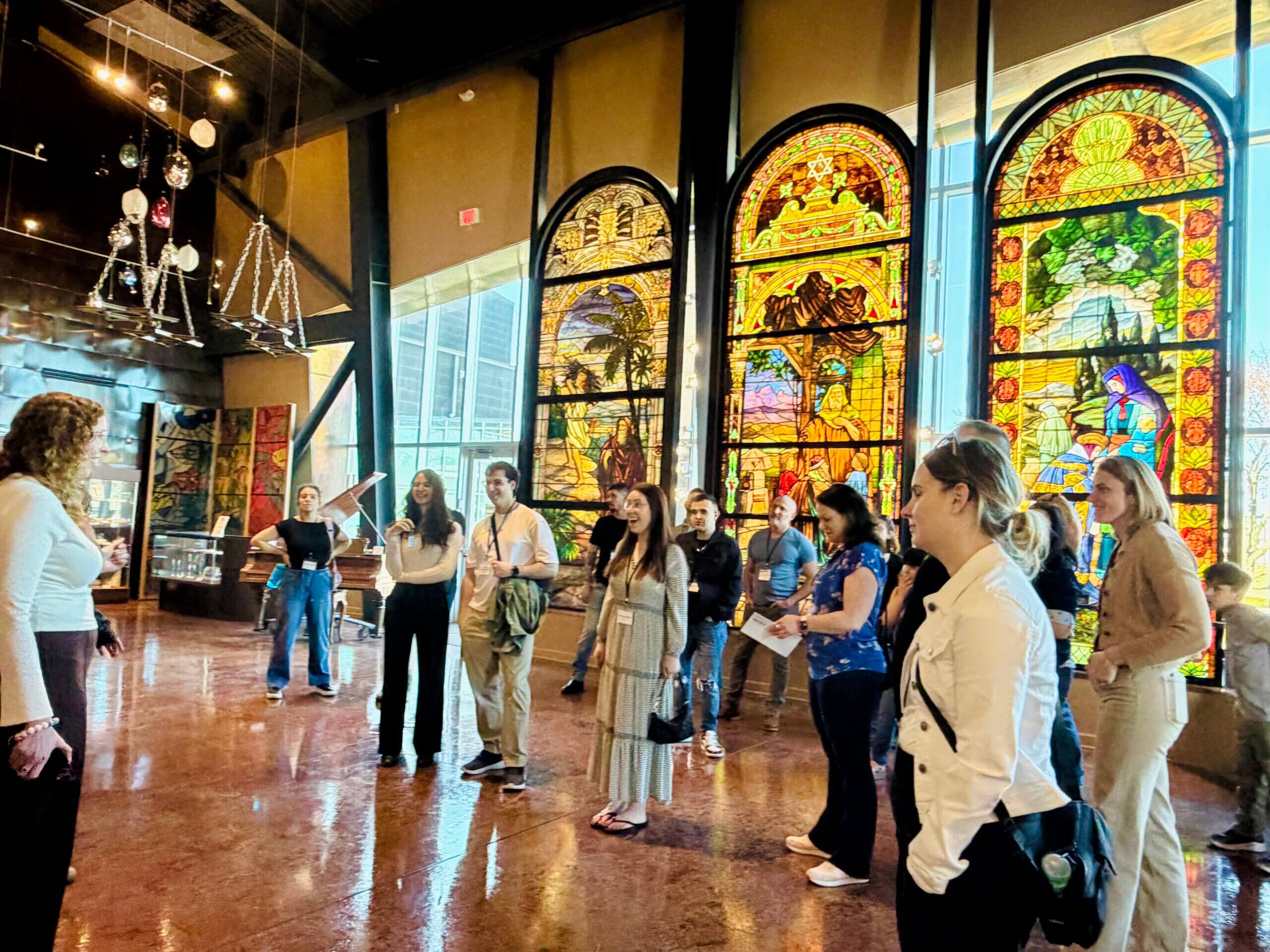
Walk through the midtown campus and something becomes clear almost immediately: The people running the place are young. The federation board chair is in his 30s. The museum curator is in her early 30s. The development director, public affairs director and several federation staff members are all under 35.
“I’m the old guy around here at 41,” joked Joe Roberts, who runs Jewish Tulsa, the umbrella organization overseeing the city’s federation, JCC and Jewish museum.
Roberts looks less like an executive than someone you might expect to find behind the bar at a downtown brewery — bald, thick beard, jeans and a tight black T-shirt stamped with the words Zionist Weightlifting Club, a brand he started himself.
He works out every day in the gym inside the JCC. “Our claim to fame,” he said, “is that we’re the cleanest gym in Tulsa.”
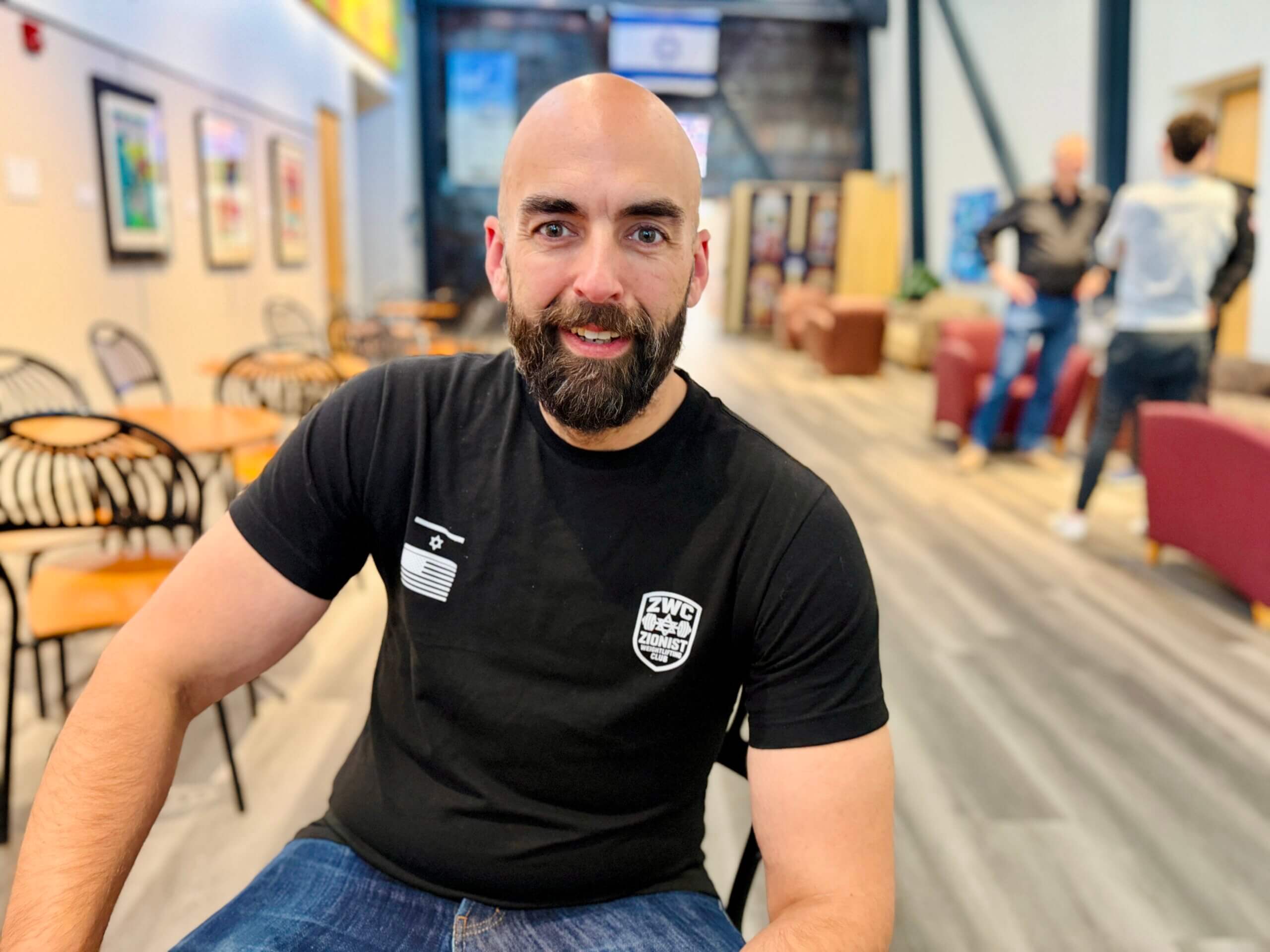
Roberts was born in Dayton, Ohio, and spent a decade in politics — even running for Congress at 26 — before pivoting into Jewish communal work. He worked at federations in Boston, Los Angeles and Columbus, did pro-Israel advocacy in Washington, D.C., and later ran a federation in Ontario.
Then Oct. 7 changed his trajectory. At the time, Roberts was living near Toronto, working as a public-affairs consultant and writing columns about antisemitism and Israel. The threats that followed, he said, forced him and his wife to reconsider where they wanted to raise their two young sons.
Around that time he heard about Tulsa Tomorrow. He came out of curiosity. Instead, he left with a job. Roberts now sees Tulsa as something larger than a recruitment program. “I want us to be a Bell Labs for Jewish life,” he said.
The stakes extend far beyond Oklahoma. “If we want a national Jewish future,” Roberts said, “we need a national Jewish present.”
‘A big fish’
Marisol Karcs, her curly dark hair clipped back, ambled through the campus with the quiet curiosity of someone who spends her days studying language and stories.
Karcs, 28, is finishing a creative writing MFA at Iowa State University. She had traveled to Tulsa with her younger sister Morgan, 25, who works in climate policy for a local government in California.
They had come to help Marisol think about her future. Her fiancée grew up Jewish in Tulsa. Now the couple is trying to decide whether to build a life here.
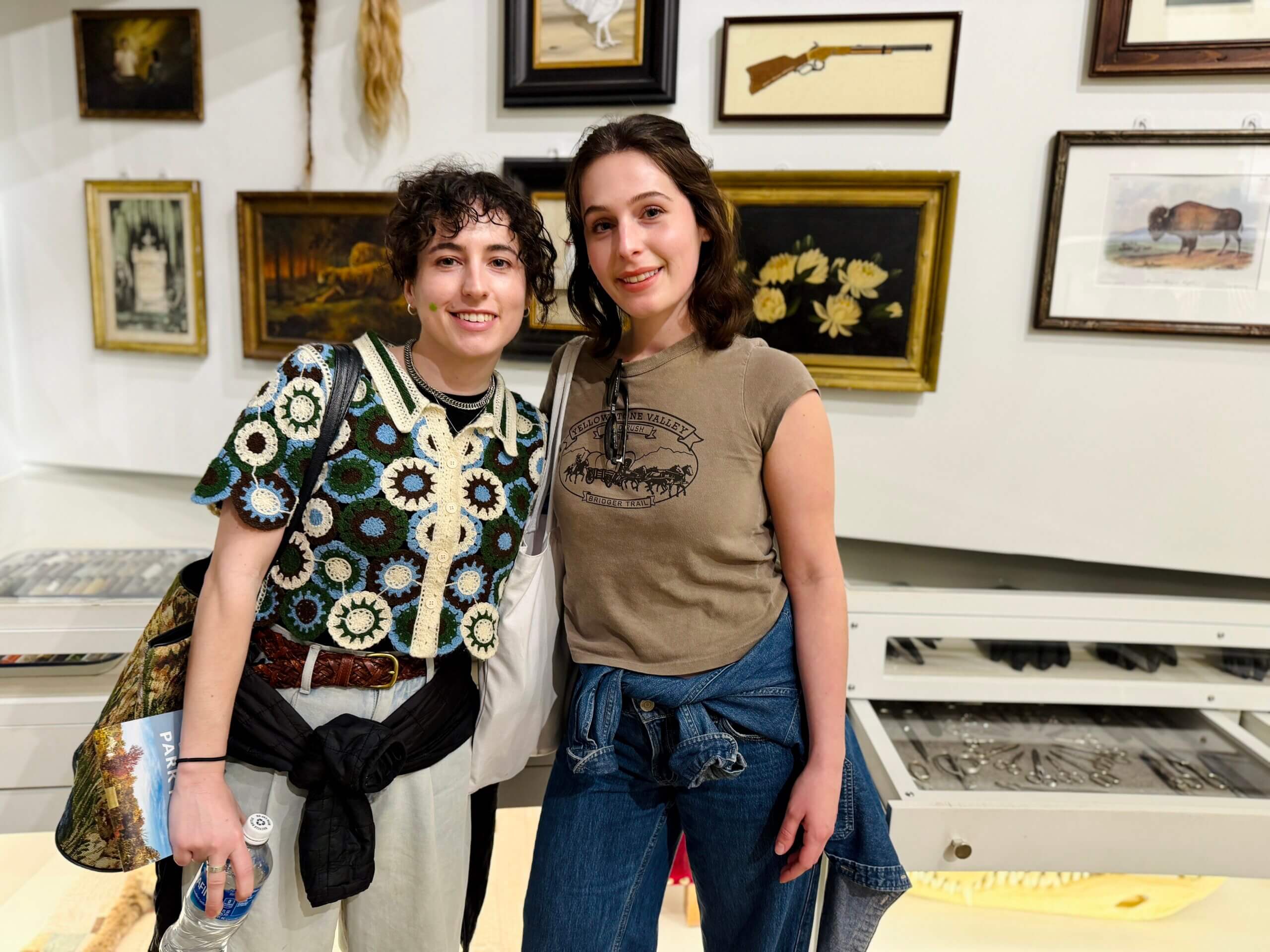
Karcs moves easily through corners of Jewish culture that would seem to rarely intersect with Oklahoma. She has studied Yiddish, attended the klezmer festival KlezKanada, taken language courses at the Yiddish Book Center and spent time around the YIVO Institute for Jewish Research.
Her dream, she told me, might be to start a Tulsa Yiddish club — which, as far as she knew, did not yet exist.
In a large city, she said, that might be one niche among many. Here, it might actually matter.
“You’re a big fish in a small pond,” she said, the kind of place where a single idea can ripple through an entire community. “Everyone knows each other. People take care of each other. You don’t really leave people behind.”
In a place this size, she said, one person can build what the community becomes.
Places like Austin and Nashville were once like this — smaller cities where young people arrived early and helped shape what came next. Tulsa, she said, still feels like that kind of place.
Karcs paused outside the Jewish art museum, which also houses a Holocaust education center. Oklahoma now requires Holocaust education in public schools beginning in middle school, making the museum a regular destination for student field trips.
Standing in the quiet gallery, it was easy to see the argument Tulsa’s Jewish leaders were making.
For someone like Karcs, that kind of density carries a particular appeal. If her sister moves here, Morgan said, she would likely follow. Their parents might not be far behind.
“We’re a really tight-knit family,” Morgan said.
For now, the decision remains open. Karcs and her fiancée are weighing graduate school offers and thinking about what it would mean to build a queer Jewish life in a politically conservative state.
But Tulsa, she said, has surprised her.
“There are vibrant communities here that you wouldn’t expect when you hear ‘Oklahoma.’”
A new generation
Across town, another Jewish gathering was underway. This one involved a crime.
Sort of.
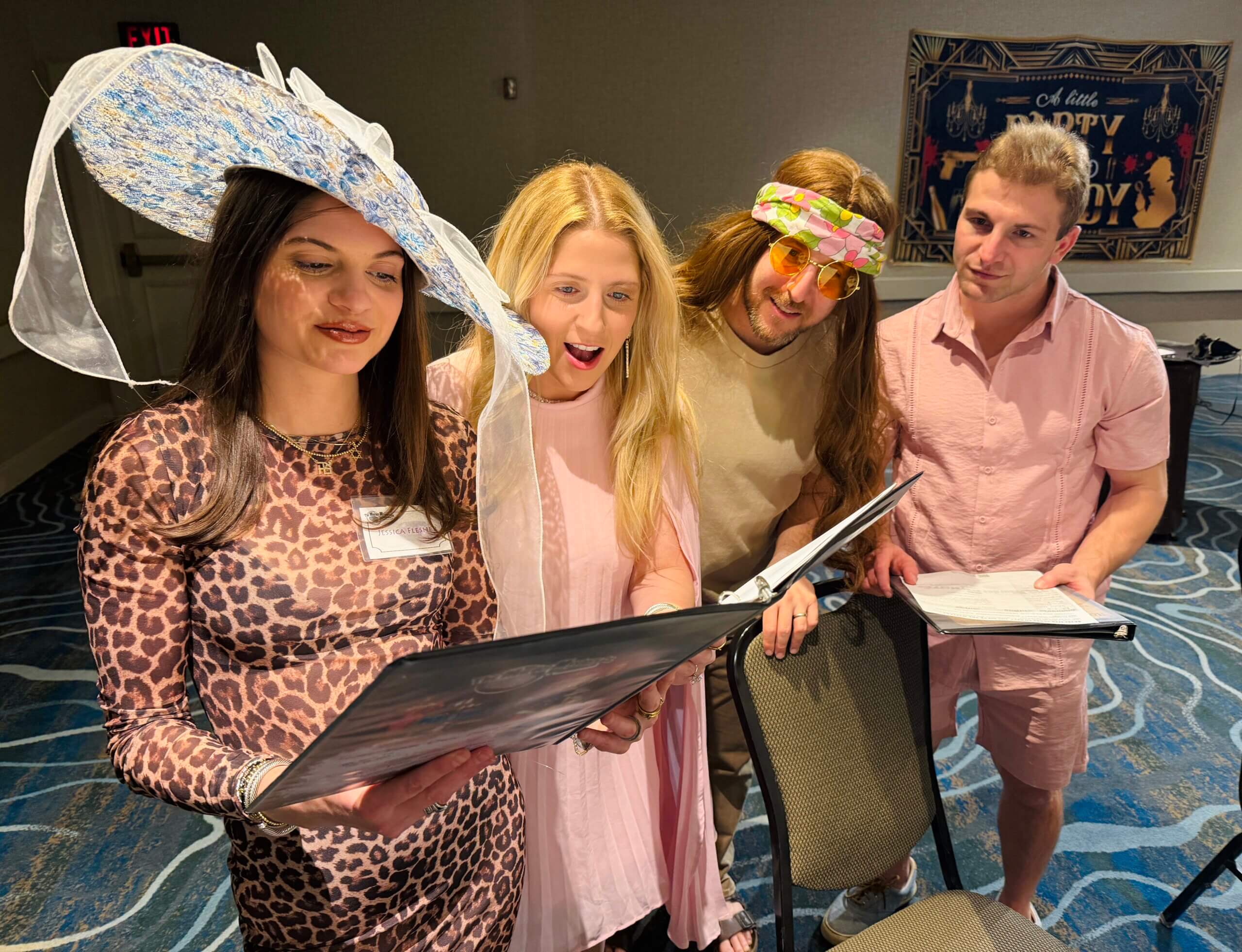
Several dozen young Jewish Tulsans, mostly in their 20s and 30s, had gathered in a hotel ballroom for a Shabbat dinner that doubled as a Purim-themed murder mystery.
The room looked like a costume party collided with a synagogue social hall, with a script that required both alibis and blessings. An astronaut mingled with a Renaissance noble. Kentucky Derby socialites in elaborate wide-brimmed hats chatted with a 1960s hippie. At least one gnome wandered through the crowd. Between courses, guests interrogated suspects in the whodunit plot while shaking groggers.
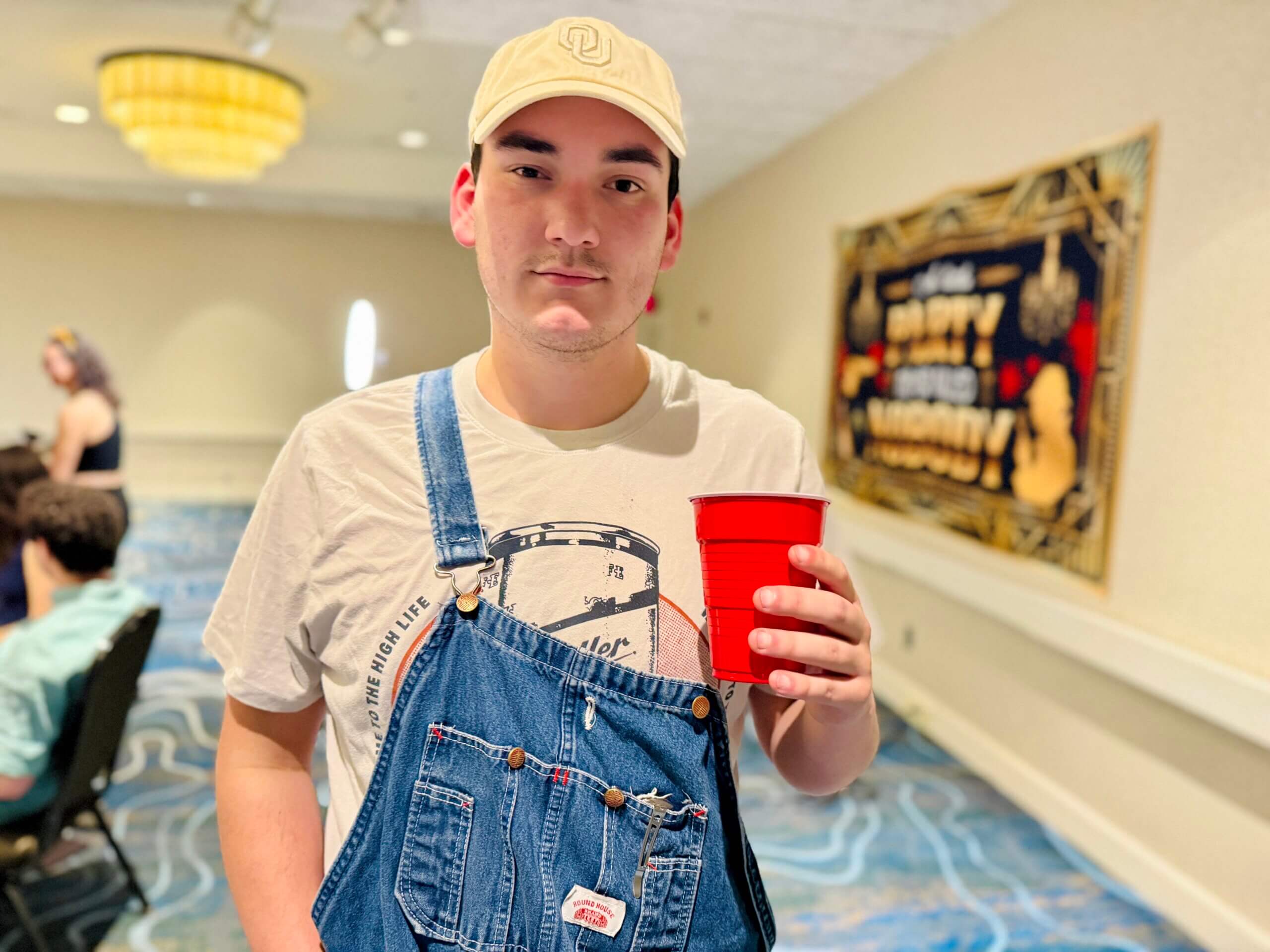
Among the participants was Jacob Parra, the federation’s director of public affairs, wearing denim farmer overalls and holding a red plastic cup.
Parra, 25, spends his days meeting with lawmakers, city leaders and policymakers on issues affecting Tulsa’s Jewish community. Before joining the federation, he worked on dozens of political campaigns.
“I think it speaks to the energy of the community,” Parra told me. “Many cities say they want to hear from younger people. But when push comes to shove, they’re not getting seats on boards.”
The jaunty Shabbat gathering teased the promise of community Rayna Franco, 38, had hoped Tulsa might deliver.
Franco, an advertising professional from Manhattan with long dark hair and tortoise cat-eye glasses, had arrived with three single friends — another New Yorker, one from Cleveland and a digital nomad currently working from Mexico City.
They moved through the weekend together, the four of them conversing in the easy shorthand of women who had spent years navigating big cities.
They represented a different slice of the cohort than many of the couples and young families touring houses: urban and unattached. Moving to Tulsa would mean leaving behind the dense web of family, friends and institutions that make Jewish life in places like New York feel almost automatic.
But what struck Franco about Tulsa’s Jewish community was the opposite dynamic. “In New York, you’re the norm,” she said. “There are Jews everywhere.”
In Tulsa, she noticed something different. “The people here opt to actively create opportunities for community,” she said.

She compared it to expat culture. When Americans live abroad, she explained, they tend to seek one another out. They form tight circles precisely because they are far from home.
Being Jewish in Tulsa, she said, felt similar.
“In New York City, it’s easy to not give living Jewishly a second thought,” she said. “But the effort that the Jewish Tulsans are putting in is purposeful, visible and admirable.”
‘Tulsa is a refuge’
The room filled quickly. Name tags appeared. Business cards began changing hands. Tulsa’s Jewish future, at least for the next two hours, was being negotiated over coffee and folding chairs.
Around a dozen local professionals had gathered at a downtown coworking space to make their case for life, and work, in Tulsa: a recruiter with open jobs, a real estate developer, a startup founder building AI companies, a banker ready to help newcomers open accounts and a tax consultant who specializes in helping Canadians move their businesses to the United States.
The message was simple: If the participants decided to relocate, Tulsa already had a path waiting.
“You’re not going to get routed through some random call center,” said Jared Goldfarb, a local banker whose Jewish family has lived in Tulsa for generations. “You can text me anytime.”
Then the mayor of Tulsa walked in.
Monroe Nichols, 42, is the first Black mayor in the city’s history, a milestone that carries particular weight here. Tulsa still lives in the shadow of the 1921 massacre that destroyed the prosperous Black neighborhood known as Greenwood, once called Black Wall Street.
Nichols arrived in a blue blazer, Oxford shirt and jeans. A former state representative, he greeted participants like a host welcoming guests into his home.

“We are so excited to have you in this community,” he told the group. “More excited when you move to this community.”
Then he made a point that seemed to resonate deeply with the crowd. “As a Black man in America,” Nichols said, “I can identify with some of the hate that you all have felt.”
For several of the Canadians in the room, the moment felt striking. Since the Hamas attacks of Oct. 7, 2023, some told me they had watched their own political leaders respond to antisemitic incidents with little more than statements of “thoughts and prayers.”
Here was a mayor doing something different: telling them plainly that he wanted them in his city.
“If you’re looking for a place where you can contribute,” Nichols said, “you’ve found that place.”
Then he used a word that carried particular weight in a room full of Jews — especially Jews who had traveled here because they were no longer sure where they belonged.
“Tulsa,” he said, “is a refuge.”
Afterward he lingered to shake hands, pose for photos and continue the conversation. For many in the Tulsa Tomorrow cohort, it was the kind of public welcome they had not heard from their own elected officials in years.
The next move
Participants on this Tulsa Tomorrow trip had created a WhatsApp group to introduce themselves before traveling. After the weekend ended, the chat continued with photos from the retreat and messages about what might come next.
Then the tone shifted.
Within a week of the trip to Tulsa, Toronto saw shootings at three synagogues. No one was injured, but the attacks — yet again — rattled Canada’s Jewish community.
One of the Canadians dropped a news link into the group chat. Another reminder, the message read, of what Jews are facing in cities across Canada. It was a reminder of why the question of where Jewish life takes place, and how it is sustained, feels newly urgent.
Tulsa, for some, had begun to feel like more than a curiosity. It suggested the possibility of building Jewish life somewhere that still felt open — a place where a community might be shaped, rather than simply inherited.
Some cities feel finished — their skylines built, their hierarchies set, their patterns long established. Tulsa still feels like a city becoming something. That sense of possibility is the wager at the heart of Tulsa Tomorrow.
A few weeks after the trip, the group chat was still active. People shared house listings. Compared notes. Asked practical questions about schools, jobs, synagogues.
The question was no longer whether there were Jews in Tulsa.
It was whether they might soon be among them.
The post The promised land is… Oklahoma? Inside Tulsa’s campaign to court young Jews appeared first on The Forward.
Uncategorized
In Israel’s election, Netanyahu faces a reckoning over Oct. 7 failure
With barely two weeks remaining before Israel’s Oct. 27 election, the country has been consumed by an extraordinary confrontation between Prime Minister Benjamin Netanyahu and senior former aides over what he knew before the Hamas massacre of Oct. 7, 2023, what he did with that knowledge and whether his office subsequently sought to rewrite the historical record.
The immediate catalyst was a bombshell television interview in recent days with Maj. Gen. (res.) Avi Gil, Netanyahu’s former military secretary, who served alongside him before and during the attack that killed approximately 1,200 people and saw 251 taken hostage. Gil had remained largely silent for three years, expecting to present his evidence to a state commission of inquiry. But with Netanyahu blocking such an inquiry, amid transparent scheming to deflect blame, Gil decided to speak publicly.
What he described went considerably beyond the failures of intelligence and military preparedness that have already been extensively documented. Gil accused Netanyahu’s office of attempting to falsify an official record from the morning of the attack. He challenged the prime minister’s account of early warnings he received. He confirmed that Netanyahu rejected recommendations for preventive military operations against Hamas. And he described how political considerations influenced decisions over hostage negotiations, potentially prolonging the captivity of people who could have been brought home earlier – and alive.
His testimony is particularly consequential because it directly challenges a 55-page document Netanyahu released in February, presenting his version of the events preceding Oct. 7. Submitted to Israel’s state comptroller, the document portrayed Netanyahu as having repeatedly advocated tougher action against Hamas while security officials underestimated the threat. It has become central to his defense against accusations that his longstanding policy of containing Hamas helped create the conditions for the catastrophe.
Gil, who attended the relevant meetings and recorded his experiences in 16 notebooks, described the published document as a profoundly incomplete and misleading account, containing lies and half-truths. It failed to reflect even half of what he witnessed.
A separate investigation published Friday by Yedioth Ahronoth, comparing Netanyahu’s account with original records of security deliberations, reported significant omissions and distortions, including instances in which Netanyahu allegedly rejected proposals to target Hamas leaders that his February document presented as initiatives of his own.
Most explosive was Gil’s account of an alleged attempt by Netanyahu’s then-chief of staff, Tzachi Braverman, to change the official time of a telephone conversation on Oct. 7 from 6:40 a.m. to 6:29 a.m. Moving the time backward could create the impression that Netanyahu had been issuing instructions from the first moments of the assault. Gil said a stenographer told him she had been instructed to alter the record, prompting him to notify the attorney general.
Nitzan Alon, another retired general who headed the government’s hostage release operation, and took part in negotiations throughout much of the war, also told reporters that “it was possible to end the war a year earlier” and save the lives of numerous hostages who eventually died in captivity.
Another remarkable confrontation involves Ronen Bar, the former head of the Shin Bet domestic security agency, whom Netanyahu has repeatedly blamed for the failures of Oct. 7. In late September, Bar announced plans to sue Netanyahu for defamation, accusing him of conducting a campaign of false allegations about his conduct before the massacre. Bar said he had warned Netanyahu about a looming security disaster and demanded disclosure of the original records of security meetings, communications and warnings, including the prime minister’s contacts with foreign officials.
Those demands have acquired additional significance amid reports that senior officials from Egypt and the United Arab Emirates warned Netanyahu about Hamas preparations shortly before the attack. Netanyahu categorically denies receiving such warnings and has threatened legal action over the reporting.
Gil’s revelations arrived alongside another striking intervention from a former Netanyahu confidant. Yoav Horowitz, , once Netanyahu’s chief of staff and director-general of the Prime Minister’s Office, told Kan’s Reshet Bet radio last week that he had gradually come to understand that Netanyahu’s decisions were driven primarily by considerations of personal political survival rather than the national interest.
Now a senior aide to leading opposition figure Gadi Eisenkot, Horowitz attributed that transformation to the corrosive effects of prolonged power, observing that “too much time in power corrupts,” and framed the approaching election as being about saving the country.
Horowitz now heads the team preparing its first 100 days in government. His criticism therefore comes from a former trusted aide who has become an active political opponent, adding another dimension to the dispute over Netanyahu’s leadership.
The question of political survival also figured prominently in Gil’s account of the hostage negotiations. Asked whether coalition pressures had influenced decisions that delayed agreements to free hostages, Gil said some hostages could have returned earlier and that political calculations had played a role in the decisions that kept them in captivity.
Netanyahu has rejected Gil’s allegations, and his Likud party has characterized the latest revelations as politically motivated propaganda. Netanyahu and his supporters maintain that senior security officials failed to recognize the imminent danger.
The country is still struggling to establish a common factual account of its most traumatic day in decades, while the officials who participated in the crucial decisions offer sharply conflicting versions of what happened. Meanwhile, the families of those killed on Oct. 7, survivors of the massacre and former hostages continue demanding answers about the decisions that shaped their lives.
The public appetite for an inquiry into the disaster is overwhelming. A September 2025 survey by the Israel Democracy Institute found that 74 percent of Israelis supported establishing a state commission of inquiry, including 68 percent of Jewish respondents identifying with the political right. A subsequent survey conducted in February 2026 found that 92 percent of Israelis considered it important to investigate the events.
The absence of such an inquiry has left journalists, former officials, politicians and bereaved families conducting an increasingly contentious public investigation of their own. Documents appear selectively, witnesses offer competing recollections, and allegations that might otherwise be tested through sworn testimony and access to classified evidence become weapons in an election campaign. With spiraling suspicions being leveled at Netanyahu, the election will take place amid unresolved questions – and a rage that grows more toxic by the day.
The post In Israel’s election, Netanyahu faces a reckoning over Oct. 7 failure appeared first on The Forward.
Uncategorized
Archaeologists uncover a 300-meter section of ancient aqueduct in Jerusalem
(JTA) — JERUSALEM — Israeli archaeologists have uncovered a 300-meter (984-foot) section of Jerusalem’s ancient Lower Aqueduct, providing another window into how engineers about 2,000 years ago ensured that the city would have an adequate supply of water for residents and pilgrims.
The Israel Antiquities Authority (IAA) began the dig three months ago in advance of the planned construction of a new neighborhood in East Jerusalem, at the city’s edge. Such “salvage excavations” are often carried out prior to major construction projects in Israel to ensure that any ruins discovered at the site can be mapped and protected even if they aren’t excavated at the time.
Believed to have been built in the Hasmonean period in the second and first centuries B.C.E., this engineering system carried spring water from the Gush Etzion region of the West Bank, through Solomon’s Pools south of Bethlehem, to Jerusalem and the Temple Mount. It remained in intermittent use until the early 20th century.
Although parts of the aqueduct have been uncovered in previous excavations, this is the first time such a large section will be made permanently accessible to the public, Benyamin Storchan, an IAA archaeologist and the excavation’s co-director, told the Jewish Telegraphic Authority.
Based on earlier discoveries and a wide range of research, archaeologists had strongly suspected where the newly uncovered section was located.
“We were able to work with municipal urban planners to ensure that the shape of the new neighborhood will be determined not only by its natural topography, but based on the antiquities found there,” Storchan said.
The aqueduct, the discovery of which was made public on Sunday, will be preserved as a promenade/archaeological park at the entrance to the future neighborhood by the IAA and Israel Land Authority.
Bringing Water to Jerusalem
Before the aqueduct was built, the landlocked city of Jerusalem relied on the Gihon Spring and rainfall runoff for its entire water supply, Storchan said. Under Hasmonean rule, Jerusalem’s population grew and the need for water increased. That was especially true during Jewish festival times, when pilgrims doubled or even tripled the population.
The solution involved transporting water from springs in the Gush Etzion region, a hilly area more than 800 meters above sea level. Spring water had to be channeled to collection areas, and then toward Solomon’s Pools, an extensive water-storage complex built south of Bethlehem. From there, two major aqueducts, the Lower Aqueduct and the Upper Aqueduct, carried water toward Jerusalem – a distance of more than 20 kilometers (12 miles).
The Lower Aqueduct, which appears to predate the Upper Aqueduct, “is an engineering marvel,” Amit Re’em, the IAA’s Jerusalem district archaeologist, said in a press statement. “Even today, with all our modern technology, building such a system would require extensive planning and effort. The thought that, about 2,000 years ago, they managed to bring water to Jerusalem this way is astonishing.”
Its route had to follow the contours of the rugged topography while maintaining a gentle gradient for the water to flow by gravity alone, without mechanical pumps. Along most of its route, the water dropped just one meter in elevation per kilometer.
“The newly exposed section reveals the various stages in the history of the water system,” the IAA said. “Initially, the water flowed in a built, plastered channel. Then, about 500 years ago, during the Ottoman period, ceramic pipes were installed within the original channel, the outer face of the aqueduct wall was plastered and small stones were pressed into the plaster while still wet.”
Used for about 2,000 Years
One of the aqueduct’s most remarkable characteristics was its longevity. Believed to be constructed during the Hasmonean period, it was repaired and reused through successive eras, including the Roman, Byzantine, Umayyad, Crusader, Mamluk and Ottoman periods.
The fact that various kingdoms and rulers decided to repair and not replace the water system “is one of the most fascinating parts,” Storchan said of the waterway. Rather than repurposing an older structure for a different use, successive rulers retained the aqueduct’s original purpose.”, “here we see a single installation being reused again and again for its original function.”
The aqueduct was used until about a century ago, when modern water infrastructure, including electric pumping stations, proved more efficient. Its long history of repairs, however, complicates archaeological dating, Storchan said. Those who repaired it over the millennia added plaster, repaired collapsed sections and modified the channel, sometimes obscuring evidence of the original construction.
Utilizing modern technology
Still, the latest excavation gives researchers an opportunity to reexamine longstanding questions with advances in scientific dating methods.
“Today, technology is more advanced than it was then. We’re working with all kinds of specialists to pinpoint the dating of the original construction,” Storchan said.
One such method is optically stimulated luminescence (OSL), which can estimate when mineral grains in sediment were last exposed to sunlight. Combined with the analysis of mortar, plaster and archaeological layers, the technique may help narrow the dates associated with different stages of the system’s development.
For Storchan and his colleagues, every new insight is a cause for celebration.
“Our job as archaeologists,” he said, “is to fill in another piece of the puzzle.”
This article originally appeared on JTA.org.
The post Archaeologists uncover a 300-meter section of ancient aqueduct in Jerusalem appeared first on The Forward.
Uncategorized
Mamdani faces growing pressure over Jewish NYPD Commissioner Tisch and over Israel from left flank
(JTA) — New York City Mayor Zohran Mamdani is facing increasing pressure from some on the leftmost flank of his voting coalition, and an ICE shooting Thursday led democratic socialist allies to add their voices to a major demand: dump police commissioner Jessica Tisch.
“The NYPD’s Strategic Response Group must be disbanded as quickly as possible, and Commissioner Tisch must step down,” said Darializa Avila Chevalier, who won her Democratic primary with Mamdani’s endorsement. The democratic socialist, who is expected to join Congress next year representing Upper Manhattan and parts of the Bronx, was referring to the heavily armed police department unit that often responds to protests.
The calls for Tisch’s removal follow strident criticism of the mayor from pro-Palestinian activists on Wednesday night who called him names, including “traitor” and “Ziohran,” when he showed up at an Oct. 7 Israeli peace vigil mourning the loss of both Jewish and Palestinian lives. The demonstrators assailed him for not doing more to advance the pro-Palestinian agenda that has long been central to his political beliefs, raising questions over whether he could lose parts of his base as he pledges to be a mayor for all New Yorkers.
The demand for Tisch’s removal came after an ICE agent shot and wounded a Dominican man in his car on Thursday afternoon while his 5-year-old son was in the back seat. Avila Chevalier, who joined protests against ICE on Thursday, wrote on X that the NYPD “spent more time protecting a militia that just shot someone than protecting New Yorkers.”
Mamdani’s decision last year to retain Tisch — a self-described “proud Zionist” who comes from a prominent Jewish family — was seen as a reassuring move by moderates and establishment Jewish organizations including UJA-Federation of New York and the Jewish Community Relations Council. (70 Faces Media, the parent company of the Jewish Telegraphic Agency and New York Jewish Week, receives UJA funding.)
A number of progressives were skeptical of the decision at the time, citing her background as an appointee of Mamdani’s predecessor, Eric Adams, and her past criticism of campus pro-Palestinian protests. Some viewed her as an impediment to criminal justice reform.
Meanwhile, some on the left have dinged him for not yet following through on campaign promises 10 months into his term, including dissolving the Strategic Response Group, or backing down from his vow to arrest Israeli Prime Minister Benjamin Netanyahu, a plan which he later said he did not have the power to execute.
Anti-Zionist groups including Pal-Awda, Within Our Lifetime and a number of student organizations who rallied against Mamdani at the Oct. 7 vigil accused him of succumbing “to Zionist pressure.” Protesters called him a “traitor” and a number of chants rang out including, “Mayor Mamdani you can’t hide, we charge you with genocide,” drowning out speakers at the vigil and forcing the organizers to move it behind police barricades to keep the protesters from overrunning the event.
Among those protesters’ many gripes with the mayor was his decision to retain Tisch. One sign at the demonstration depicted Mamdani with the text, “Chief Executive of the NYPD SRG” with a Star of David in the middle, and a name tag on the mayor’s chest reading, “Ziohran.”
Criticism was also directed at Mamdani for not stopping Israeli real estate events at synagogues, and for his strategy to combat antisemitism, released last week, which allocates funds to a number of community-based organizations aimed at preventing hate crimes. Some critics have charged that some of the funding will aid Zionist organizations.
“The Jewish community is a large part of New York and it should be cherished. But you cannot fund these Anti-Defamation Leagues that prioritize Zionism over Judaism,” a John Jay College student protester, who declined to be named, told JTA during the demonstration.
On Thursday, the Democratic Socialists of America’s New York City chapter — which Mamdani has called his “political home” — wrote that Tisch “must end NYPD complicity with ICE” and that if she “cannot put a stop to these injustices, she must be fired.”
“Abolish ICE. Disband the SRG. Fire Tisch,” wrote Illapa Sairitupac, a fellow democratic socialist who won the Democratic nomination for a Lower Manhattan State Assembly district. Mamdani endorsed both Sairitupac and Avila Chevalier this past year.
While some protesters at the vigil said they were Mamdani voters — and one speaker even identified herself as a former intern for the now-mayor — some of the mayor’s allies have stressed that the crowd protesting him was not representative of his base.
“If I had to gamble, I would gamble that the vast majority of them were people who never supported him,” activist Abby Stein told JTA on Thursday night, during the Mazals gala held by left-wing group Jews for Racial & Economic Justice. Mamdani was due to attend the JFREJ event, but because of the ICE shooting was instead in the Bronx, where he denounced the federal agency and demanded that it cease its operations in New York City.
Many of the signs excoriating Mamdani at Wednesday’s protest outside of City Hall were signed with the name of the Maoist Communist Union, an organization that opposed Mamdani before he took office. Some protesters were handing out copies of Spartacist, the Trotskyist International Communist League’s journal.
“We certainly didn’t support Mamdani or vote for him,” said Erica Jones, among the Trotskyist protesters. “We knew he was running as a Democrat and he would be as big of a sellout as AOC and Bernie Sanders and all the rest of those who claim to have, at one time, stood for socialism but in reality, stand for the capitalist masters who are oppressing us all.”
Stein, a member of the DSA in addition to JFREJ, called out some of the protesters’ rhetoric and the choice to crash the Israelis for Peace Oct. 7 vigil. But she also acknowledged that there was overlap between their demands and her views, including over the police commissioner.
“There are things that people are upset over that I think are legit — like keeping Jessica Tisch on, for example,” Stein said. “A lot of us were not very happy about it.”
Ultimately, Stein said there is “always going to be something to protest” with any politician, and pointed to a quote from New York’s mayor in the 1970s and ‘80s, Ed Koch: “If you agree with me on 9 out of 12 issues, vote for me. If you agree with me on 12 out of 12 issues, see a psychiatrist.”
This article originally appeared on JTA.org.
The post Mamdani faces growing pressure over Jewish NYPD Commissioner Tisch and over Israel from left flank appeared first on The Forward.
