


Uncategorized
An Israeli dissident filmmaker finds tainted love amid the Gaza rubble
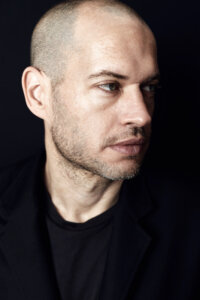
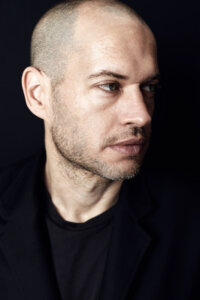
Nadav Lapid started writing his Oct. 7 movie in summer 2021 — before the events that shaped it took place. He says it hasn’t changed much, and that it’s not really about Oct. 7.
“It’s the same bitter reflection about the place of the artist,” Lapid told me on a Zoom call, a day after arriving in New York for the American debut of Yes, his withering satire of Israeli complacency.
“In a way, in the first version, you could notice the shadow of a catastrophe, the shadow of a disaster and a society on the edge of the abyss,” he said. “With the second version, this society made another few steps and went and fell down from the hill to the valley of hell”
As the title might suggest, Yes — which is sometimes styled with an exclamation mark — is about a kind of maximalist version of affirmative consent that ends in complicity. It follows Y (Ariel Bronz), a jazz pianist, who with his wife, Yasmin (Efrat Dor), serves as a willing entertainer and sex slave for the Israeli elite. The couple submit to almost anything, no questions asked. But when a Russian oligarch commissions Y to write an “anthem for the victory generation,” with bloodthirsty lyrics about annihilating Gaza, it’s (almost) too big of an ask.
What follows is a kind of Israeli Mephisto, alternating from orgiastic spectacle (fellated baguettes, geysers of cherry tomatoes, drugs) to biblical indictment (Y is pelted with stones from heaven for cravenly taking his hasbara assignment).
The film is well within Lapid’s oeuvre, which has skewered Israeli masculinity (Synonyms) and Israeli restrictions on free expression (Ahed’s Knee, which also featured a protagonist named Y, who contra our present hero is characterized by defiance). But the film has ratcheted up its critique along with its experimentation, seeming to say yes to its every outlandish idea.
Lapid was living in Paris on Oct. 7, 2023. He returned to Tel Aviv a couple of weeks later to see the aftermath with his own eyes, and later to begin filming.
“Almost immediately, when the airplane landed, I was taken by two, I think, contradictory feelings,” Lapid said the first was an “unfamiliar empathy” (he is famously conflicted about his home country) and a sense that the nation was partaking in a “collective shiva.”
At first there was a rare tenderness.
“It didn’t last long,” he said. “It was quickly replaced by what you see in the movie, by the kind of morbid vivacity, this ecstatic, dark party by a nation which, in a way, deeply knows that it’s giving up all its limits.”
Lapid saw his fellow artists throwing their weight behind the war and lending their talents to the government. He started production on Yes while drones were still bombarding Gaza. He filmed the smoke plumes from the border, guerilla style. It was an active military zone and he was only allowed to stay on thanks to the intercession of an interested officer, who peppered them with questions about the cameras. (When crew members learned the film was critical of the war, some walked off set — a career first for Lapid.)
In a film with extravagant, overstimulating set pieces, the sequence that takes place at the border stands out for its stillness.
During a road trip to find inspiration for his chest-thumping anthem, Y’s ex-girlfriend Leah (Naama Preis) explains to him the Hamas crimes she translates for the government on social media. It’s a gutting list of real-life murders and maimings. She interrupts the litany with the dismissive comments she sees daily, a signal of the world’s limited empathy.
Lapid chose to film this sequence simply in a static shot, emphasizing what he calls the “destabilizing power of the accumulation of facts.” Facts, he says, that many who he agrees with politically have difficulty acknowledging over a “childish lack of complexity, in the incapacity of looking at reality as it is.”
He sees the scene as a complement to the film’s main subject: the Israeli blindness to the humanitarian crisis in Gaza.
The director lets the weight of Leah’s words sink in, but doesn’t offer them as an excuse. Even these horrors are commoditized by our opportunistic hero. The next shot shows Y trudging up a hill overlooking Gaza, muttering the Hamas atrocities Leah recited. He’s using them to find the melody for a song that lauds how Israel will “exterminate our enemies.” (The camera then pans to Gaza, and we hear Leah and Y, unbothered, making out.)
The lyrics Y is tasked with working off are from an actual altered version of Haim Gouri’s poem “The Brotherhood” that emerged during the Gaza war. Asked if the song, in its original form from 1949, represented a purer vision of Israel, Lapid offered a kind of yes and.
“On one hand, of course, there’s a huge gap between a genocidal anthem and the song talking about, you know, brotherhood in battlefield,” Lapid said. At the same time, both versions refer in their chorus to a “love sanctified by blood,” what he thinks may be the “most important collective myth in Israel.”
“In the heart of Yes there is also this question whether it’s possible in such a society, in such a place, to love,” Lapid said of Israel, which he deems a failed experiment. “And the answer is ‘no.’ The answer is that at the very end, everything will be stained, will be polluted, will be contaminated.”
With a new war in Iran only a month old, Lapid thinks the film is only growing more relevant, reflecting a society mixing vulgarity and nationalism, communicating only in slogans.
But he’s a more even-handed critic of slogans than some seem to think. He was surprised that most reviews of the film overlook a moment critiquing performative activism in the west. The film isn’t just taking aim at the Israeli institutions and hardliners that have ended up condemning it.
“I haven’t done this movie in order to flatter or to polish the ego, or to give a kind of audiovisual demonstration of the theory of anyone,” he said. “I think the artist, filmmaker shouldn’t and doesn’t belong to any camp. His only real place and true place is in the contradiction.”
The post An Israeli dissident filmmaker finds tainted love amid the Gaza rubble appeared first on The Forward.
Uncategorized
‘Nobody Wants This’ star Adam Brody on Gaza: ‘Put me down as thinking it’s a genocide’
Adam Brody, the Jewish actor who plays a “hot rabbi” on the hit Netflix rom-com Nobody Wants This, called the war in Gaza a genocide in a new interview, making him one of just a few Jewish celebrities to speak out publicly against the Israeli campaign.
The comments came in an interview with GQ about Brody’s efforts canvassing for Democratic candidates in the upcoming midterms.
“Put me down as thinking it’s a genocide. Put me down as wanting a free Palestine,” he said. “It’s awful that it’s taken so much death and misery, but it does feel like it’s reaching a breaking point that it should have a while ago. I’m hopeful that another administration can really do some good and correct some of these policies that are helping that situation be as awful as it is.”
The claim of genocide in Gaza is heavily disputed. Several international bodies, human rights organizations and academic institutions have concluded Israel’s actions in Gaza since Oct. 7 fit the description, including a United Nations Commission of Inquiry. Other similar groups, like the International Court of Justice, have not applied the term.
Brody’s comments were surprising in part because he had previously kept his feelings about the war private, even as other leading Hollywood figures openly criticized it. He does not maintain a public social media presence, and he did not participate in pin-wearing campaigns or sign various petitions related to the war — an approach he indicated he might change going forward.
“I’m not wearing a pin, so I’m not inviting a certain question, and perhaps I should,” he said. “I really admire people who do. But 99% of what I’m asked about is about the show. I’m not trying to plead ignorance—here we are doing a political interview, so it makes sense that we wade into this territory—but I’ve never ducked a question, really, not a political question anyway.”
Brody — who came to fame in the 2000s as the teenager Seth Cohen on The O.C. — joins Hacks star Hannah Einbinder and Wallace Shawn (The Princess Bride) as perhaps the most high-profile Jewish actors to publicly call the war a genocide. Other Jewish entertainment figures, like Mandy Patinkin and The Zone of Interest director Jonathan Glazer, have criticized the war but stopped short of calling it a genocide.
Yet Brody’s comments are perhaps especially notable because of the character he plays on TV. In Nobody Wants This, Brody plays a rabbi dating a non-Jewish woman — introducing her to the beauty and foibles of Jewish faith and culture. Israel has been conspicuously absent from the show, with its creator, Erin Foster, saying she deliberately avoided geopolitics.
Season 3 of Nobody Wants This releases to Netflix October 22.
The post ‘Nobody Wants This’ star Adam Brody on Gaza: ‘Put me down as thinking it’s a genocide’ appeared first on The Forward.
Uncategorized
Why Mamdani remains focused on Israel as NYC mayor
When Israeli Prime Minister Benjamin Netanyahu spoke at the UN this week, New York City Mayor Zohran Mamdani was there — not in body, but in spirit, having condemned the Israeli prime minister and previously encouraged protests against him.
As a leader in the Jewish community, I know that many American Jews oppose Netanyahu’s government. But many also believe strongly that Israel’s survival as a Jewish homeland is critically important. They, therefore, feel boxed in by the mayor: compelled by conscience to oppose Israel’s leader and to condemn Mamdani’s repeated attacks on Israel’s existence, many of which they find offensive and dangerous.
Because of my previous work for Mayor Bloomberg, I am often asked by Jewish community members why this mayor so frequently puts them in this painful bind. The answer, I believe, lies in motivations worth understanding more clearly.
Of course, Mamdani’s focus on Israel seems partially motivated by principle. He clearly thinks Israel is illegitimate and opposes how it defends itself. I take him at his word that these convictions are sincere. But sincerity still does not explain his single-mindedness. A mayor willing to absorb this much political friction must see some benefit. But what?
To understand, let’s reexamine the 2025 election, often described as a “political tsunami.” The facts, however, are more complicated. Mamdani did defeat his closest opponent by nearly 10%, but in so doing he secured under 51% of the total vote – against a flawed and divided opposition. Viewed this way, his impressive margin seems less sweeping and much narrower.
More important than his electoral margin, though, is the coalition that produced it. His victory rested heavily on three blocs: self-identified very liberal voters; and Muslim and South Asian voters, who turned out in historic numbers. South Asian and Indo-Caribbean turnout, for example, rose 350% between 2021 and 2025, with 87% of South Asian votes going to Mamdani. Analyzing available data, I believe that, taken together, these three blocs accounted for well over 50% of all Mamdani votes.
What makes this coalition intriguing is that it consists of such strange bedfellows. The blocs differ sharply on many key local issues. On same-sex marriage, PRRI’s American Values Atlas found 33% support among Muslim-Americans in 2024, with support among very liberal Americans substantially higher. The divergence is similarly stark on policing, education, and many other policies.
In fact, it is hard to identify many things uniting these blocs besides this candidate: a skilled politician speaking the language of the left, while activating Muslim and South Asian voters just as Mayors Bloomberg and Koch activated Jewish voters and Mayors Adams and Dinkins activated Black voters.
Which brings us back to Israel.
When one barely ekes out a majority against flawed opponents, and one’s coalition is fundamentally misaligned, one must find ways to hold it together. To this end, Mamdani seems to be taking a page from Donald Trump. When Trump’s coalition buckles, he reaches for a “shiny distraction” — attacks on the press; trade wars; threatened invasions of Greenland. For Trump, the specifics are almost irrelevant; what matters is the theater of conflict and the distraction it produces.
For Mamdani, his Greenland is Israel.
Yes, it is a subject on which he holds sincere convictions. But, more importantly, it is one of few issues on which his coalition agrees. His relentless focus on Israel — to the exclusion of other worthy targets, including grave human rights offenders across South Asia and the Muslim world — is no accident. It is a political calculation allowing him to don the mantle of moral crusader while keeping his coalition on-side and united.
For those who believe Mamdani’s politics pose a danger to the Jewish community and want to slow his political momentum, this analysis yields two insights.
First, trying to persuade the mayor to soften his Israel attacks is unlikely to succeed. Doing so is not his inclination or in his political interests.
Second, and maybe more interestingly, Mamdani has a vulnerability that he seems to recognize – a fragile coalition. Allowing Mamdani to
make Israel his “shiny distraction” and engaging him on it plays his game. A different approach would be to defend Israel as-needed, but focusing efforts on pressing Mamdani to do his job – for example, elevating important issues, such as specialized high school admissions practices, on which his coalition happens to be divided.
The upshot? When smart politicians do things that seem politically risky, they usually see something others do not. Mamdani’s Israel focus offers a case-in-point. Those looking to respond should consider resisting the temptation to take the bait when possible. The wiser strategy is to engage under different rules: defending Israel when necessary, then pivoting to the difficult local issues from which Israel is meant to distract.
The post Why Mamdani remains focused on Israel as NYC mayor appeared first on The Forward.
Uncategorized
New voices in Yiddish: A prose and poetry contest
לכּבֿוד דעם 85סטן יאָר זינט מע האָט פֿאַרלייגט דעם ייִדישן זשורנאַל „אױפֿן שװעל“, וועט די אָרגאַניזאַציע וואָס שטיצט דעם זשורנאַל, די „ייִדיש־ליגע“, דורכפֿירן אַ קאָנקורס פֿון נײַע ייִדיש־שפּראַכיקע לידער און פּראָזע.
אַ זשורי פֿון אָפּגעקליבענע מומחים וועט אָפּשאַצן די אַרבעטן, און די דרײַ בעסטע פֿון ביידע קאַטעגאָריעס וועלן באַלוינט ווערן מיט געלטפּרעמיעס.
די פּראָזע־שאַפֿונגען קענען זײַן ביז 2,500 װערטער, און אַלע אַרײַנגעשיקטע מאַטעריאַלן מוזן זײַן נאָך נישט קיין געדרוקטע. דער טערמין אַרײַנצושיקן די שריפֿטן איז דער 31סטער אָקטאָבער 2026.
די געווינער-ווערק, און בכלל אַן אָפּקלײַב פֿון די אַרײַנגעשיקטע שאַפֿונגען, וועט מען אויך דרוקן אין דעם יובֿל-נומער. „זאָלן אונדזערע לייענערס געניסן פֿון נײַע ליטעראַרישע שאַפֿונגען אויף מאַמע-לשון!“ האָט די שעף־רעדאַקטאָרין פֿון „אויפֿן שוועל“, מרים טרין, געזאָגט.
די שריפֿטן שיקן מען דורך בליצפּאָסט צו info@leagueforyiddish.org.
The post New voices in Yiddish: A prose and poetry contest appeared first on The Forward.
