


Uncategorized
Reese’s Pieces are now kosher pareve. Carnivores rejoice.
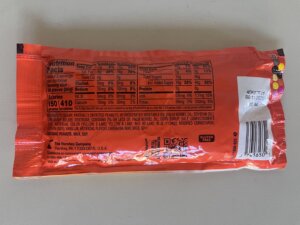
Antisemitism is on the rise. There’s a war raging in the Middle East. Passover is bearing down on us and gas prices are higher than ever.
And yet one morsel of good news came to Jewish faithful this month: Reese’s Pieces are now certified kosher pareve.
OU Kosher, the largest kosher certifier in the U.S., announced March 12 that the candy-coated peanut butter candies are no longer considered dairy despite packaging that labels them as such.
The implications for kosher consumers are as momentous as they are simple: Reese’s Pieces can be eaten immediately after meat — or for the deeply adventurous stomach, alongside it — without the hourslong period Orthodox Jews wait before eating dairy again.
The status change unfolded over the last year, when Reese’s parent corporation, the Hershey Company, informed OU Kosher that it was changing the candy’s ingredients.
“Reese’s decided on their own that there are a lot of consumers that don’t like the fact that it’s dairy,” explained Rabbi Moshe Elefant, OU Kosher’s chief operating officer. “Once they decided that they’re removing the dairy from Reese’s, it became a great possibility for them to be OU-Pareve.”
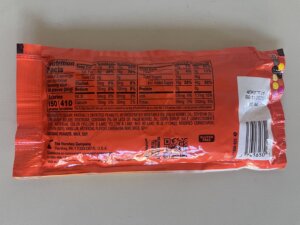
Reese’s Peanut Butter Cups and other Reese’s brands remain dairy, and Elefant said the Reese’s Pieces packaging, which currently shows OU-D, will be updated later in 2026. For those concerned about any old bags lying around, the OU said to check the ingredient list or allergen statement — if it doesn’t include milk, you’re good.
The change occurs amid wider changes in Hershey, Pennsylvania, where the company that makes Reese’s is headquartered. Some Reese’s products, like the Reese’s Mini Hearts and Peanut Butter Eggs, are no longer being made with milk chocolate due to the rising cost of cocoa, inciting controversy and drawing criticism from the Reese’s family. (Those candies remain certified dairy because they contain other milk ingredients, the OU said.)
Reese’s Pieces, on the other hand, never had chocolate in them to begin with.
Meanwhile, the OU Kosher hotline had fielded countless phone calls in recent weeks from home chefs about the change — some to verify the update, and some just to say thanks. The last time there was this much excitement over a status change, Elefant said, was when Oreos became kosher. (The cookies contained animal fat until the late 1990s.)
The Forward reached out to the Hershey Company for comment.
Elefant said there had been some debate within OU Kosher — which is a branch of the Orthodox Union, a leading umbrella organization for Orthodox Judaism — about whether to announce the candy’s pareve kosher status before the candy’s packaging itself could be updated. The organization’s advisory essentially instructs consumers to temporarily ignore the “D” on the packaging.
His team considered whether it would undermine the OU’s authority or confuse people to practice disregarding the certification printed on the product. But on some level, the decision was made for them.
“This is one of the situations where we had to think about the welfare of the Jewish people,” Elefant said. “And the welfare of the Jewish people was that they need Reese’s to be pareve.”
Kosher consumers typically wait between three and six hours after eating meat to have dairy; now one could get a hamburger on the way to the movies and then house fistfuls of the classic peanut-butter candy in the theater. Watching E.T.: The Extraterrestrial, perhaps. (I’m not saying this is healthy. Just that it’s kosher.)
But the impact will likely be received most gratefully on Shabbat, when meat-based meals force dessert makers to get creative. And while the bite-sized brown, orange and yellow rounds have always been kosher, Reese’s Pieces becoming pareve means Jews who observe cholov yisroel restrictions — only consuming milk that was milked by a Jewish person — can enjoy them now, too.
Time will tell whether the update truly transforms kosher baking — or turns Reese’s Pieces into a de facto pareve chocolate chip — but a new, easy-to-find garnish for any confection was sweet on the ears of OU Kosher’s Instagram followers.
“YESSSSS! This is a win for the non-dairy queens like me!!!” wrote one.
Said another, using a Jewish name for God: “This is how I know Hashem loves me.”
The post Reese’s Pieces are now kosher pareve. Carnivores rejoice. appeared first on The Forward.
Uncategorized
‘Nobody Wants This’ star Adam Brody on Gaza: ‘Put me down as thinking it’s a genocide’
Adam Brody, the Jewish actor who plays a “hot rabbi” on the hit Netflix rom-com Nobody Wants This, called the war in Gaza a genocide in a new interview, making him one of just a few Jewish celebrities to speak out publicly against the Israeli campaign.
The comments came in an interview with GQ about Brody’s efforts canvassing for Democratic candidates in the upcoming midterms.
“Put me down as thinking it’s a genocide. Put me down as wanting a free Palestine,” he said. “It’s awful that it’s taken so much death and misery, but it does feel like it’s reaching a breaking point that it should have a while ago. I’m hopeful that another administration can really do some good and correct some of these policies that are helping that situation be as awful as it is.”
The claim of genocide in Gaza is heavily disputed. Several international bodies, human rights organizations and academic institutions have concluded Israel’s actions in Gaza since Oct. 7 fit the description, including a United Nations Commission of Inquiry. Other similar groups, like the International Court of Justice, have not applied the term.
Brody’s comments were surprising in part because he had previously kept his feelings about the war private, even as other leading Hollywood figures openly criticized it. He does not maintain a public social media presence, and he did not participate in pin-wearing campaigns or sign various petitions related to the war — an approach he indicated he might change going forward.
“I’m not wearing a pin, so I’m not inviting a certain question, and perhaps I should,” he said. “I really admire people who do. But 99% of what I’m asked about is about the show. I’m not trying to plead ignorance—here we are doing a political interview, so it makes sense that we wade into this territory—but I’ve never ducked a question, really, not a political question anyway.”
Brody — who came to fame in the 2000s as the teenager Seth Cohen on The O.C. — joins Hacks star Hannah Einbinder and Wallace Shawn (The Princess Bride) as perhaps the most high-profile Jewish actors to publicly call the war a genocide. Other Jewish entertainment figures, like Mandy Patinkin and The Zone of Interest director Jonathan Glazer, have criticized the war but stopped short of calling it a genocide.
Yet Brody’s comments are perhaps especially notable because of the character he plays on TV. In Nobody Wants This, Brody plays a rabbi dating a non-Jewish woman — introducing her to the beauty and foibles of Jewish faith and culture. Israel has been conspicuously absent from the show, with its creator, Erin Foster, saying she deliberately avoided geopolitics.
Season 3 of Nobody Wants This releases to Netflix October 22.
The post ‘Nobody Wants This’ star Adam Brody on Gaza: ‘Put me down as thinking it’s a genocide’ appeared first on The Forward.
Uncategorized
Why Mamdani remains focused on Israel as NYC mayor
When Israeli Prime Minister Benjamin Netanyahu spoke at the UN this week, New York City Mayor Zohran Mamdani was there — not in body, but in spirit, having condemned the Israeli prime minister and previously encouraged protests against him.
As a leader in the Jewish community, I know that many American Jews oppose Netanyahu’s government. But many also believe strongly that Israel’s survival as a Jewish homeland is critically important. They, therefore, feel boxed in by the mayor: compelled by conscience to oppose Israel’s leader and to condemn Mamdani’s repeated attacks on Israel’s existence, many of which they find offensive and dangerous.
Because of my previous work for Mayor Bloomberg, I am often asked by Jewish community members why this mayor so frequently puts them in this painful bind. The answer, I believe, lies in motivations worth understanding more clearly.
Of course, Mamdani’s focus on Israel seems partially motivated by principle. He clearly thinks Israel is illegitimate and opposes how it defends itself. I take him at his word that these convictions are sincere. But sincerity still does not explain his single-mindedness. A mayor willing to absorb this much political friction must see some benefit. But what?
To understand, let’s reexamine the 2025 election, often described as a “political tsunami.” The facts, however, are more complicated. Mamdani did defeat his closest opponent by nearly 10%, but in so doing he secured under 51% of the total vote – against a flawed and divided opposition. Viewed this way, his impressive margin seems less sweeping and much narrower.
More important than his electoral margin, though, is the coalition that produced it. His victory rested heavily on three blocs: self-identified very liberal voters; and Muslim and South Asian voters, who turned out in historic numbers. South Asian and Indo-Caribbean turnout, for example, rose 350% between 2021 and 2025, with 87% of South Asian votes going to Mamdani. Analyzing available data, I believe that, taken together, these three blocs accounted for well over 50% of all Mamdani votes.
What makes this coalition intriguing is that it consists of such strange bedfellows. The blocs differ sharply on many key local issues. On same-sex marriage, PRRI’s American Values Atlas found 33% support among Muslim-Americans in 2024, with support among very liberal Americans substantially higher. The divergence is similarly stark on policing, education, and many other policies.
In fact, it is hard to identify many things uniting these blocs besides this candidate: a skilled politician speaking the language of the left, while activating Muslim and South Asian voters just as Mayors Bloomberg and Koch activated Jewish voters and Mayors Adams and Dinkins activated Black voters.
Which brings us back to Israel.
When one barely ekes out a majority against flawed opponents, and one’s coalition is fundamentally misaligned, one must find ways to hold it together. To this end, Mamdani seems to be taking a page from Donald Trump. When Trump’s coalition buckles, he reaches for a “shiny distraction” — attacks on the press; trade wars; threatened invasions of Greenland. For Trump, the specifics are almost irrelevant; what matters is the theater of conflict and the distraction it produces.
For Mamdani, his Greenland is Israel.
Yes, it is a subject on which he holds sincere convictions. But, more importantly, it is one of few issues on which his coalition agrees. His relentless focus on Israel — to the exclusion of other worthy targets, including grave human rights offenders across South Asia and the Muslim world — is no accident. It is a political calculation allowing him to don the mantle of moral crusader while keeping his coalition on-side and united.
For those who believe Mamdani’s politics pose a danger to the Jewish community and want to slow his political momentum, this analysis yields two insights.
First, trying to persuade the mayor to soften his Israel attacks is unlikely to succeed. Doing so is not his inclination or in his political interests.
Second, and maybe more interestingly, Mamdani has a vulnerability that he seems to recognize – a fragile coalition. Allowing Mamdani to
make Israel his “shiny distraction” and engaging him on it plays his game. A different approach would be to defend Israel as-needed, but focusing efforts on pressing Mamdani to do his job – for example, elevating important issues, such as specialized high school admissions practices, on which his coalition happens to be divided.
The upshot? When smart politicians do things that seem politically risky, they usually see something others do not. Mamdani’s Israel focus offers a case-in-point. Those looking to respond should consider resisting the temptation to take the bait when possible. The wiser strategy is to engage under different rules: defending Israel when necessary, then pivoting to the difficult local issues from which Israel is meant to distract.
The post Why Mamdani remains focused on Israel as NYC mayor appeared first on The Forward.
Uncategorized
New voices in Yiddish: A prose and poetry contest
לכּבֿוד דעם 85סטן יאָר זינט מע האָט פֿאַרלייגט דעם ייִדישן זשורנאַל „אױפֿן שװעל“, וועט די אָרגאַניזאַציע וואָס שטיצט דעם זשורנאַל, די „ייִדיש־ליגע“, דורכפֿירן אַ קאָנקורס פֿון נײַע ייִדיש־שפּראַכיקע לידער און פּראָזע.
אַ זשורי פֿון אָפּגעקליבענע מומחים וועט אָפּשאַצן די אַרבעטן, און די דרײַ בעסטע פֿון ביידע קאַטעגאָריעס וועלן באַלוינט ווערן מיט געלטפּרעמיעס.
די פּראָזע־שאַפֿונגען קענען זײַן ביז 2,500 װערטער, און אַלע אַרײַנגעשיקטע מאַטעריאַלן מוזן זײַן נאָך נישט קיין געדרוקטע. דער טערמין אַרײַנצושיקן די שריפֿטן איז דער 31סטער אָקטאָבער 2026.
די געווינער-ווערק, און בכלל אַן אָפּקלײַב פֿון די אַרײַנגעשיקטע שאַפֿונגען, וועט מען אויך דרוקן אין דעם יובֿל-נומער. „זאָלן אונדזערע לייענערס געניסן פֿון נײַע ליטעראַרישע שאַפֿונגען אויף מאַמע-לשון!“ האָט די שעף־רעדאַקטאָרין פֿון „אויפֿן שוועל“, מרים טרין, געזאָגט.
די שריפֿטן שיקן מען דורך בליצפּאָסט צו info@leagueforyiddish.org.
The post New voices in Yiddish: A prose and poetry contest appeared first on The Forward.
