


Uncategorized
Jews paused Indiana’s abortion ban — by turning a religious freedom law against the evangelical right
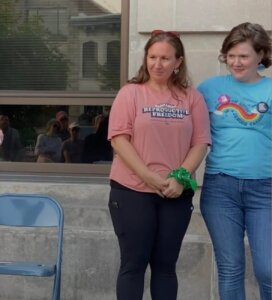
When Elly Cohen chose to terminate her pregnancy in 2022, it aligned with her understanding of Jewish law that life begins at birth, not conception.
Cohen and her husband were eager to give their then 4-year-old daughter a sibling. But her fetus had been diagnosed with Trisomy 18, a severe chromosomal disorder that, in most cases, leads to death before birth or within the first year of life. She decided to end the pregnancy.
Had she gotten pregnant just a few months later, she might not have had that choice. She lives in Indiana, one of 13 states that enacted near-total bans on abortion following the Supreme Court’s Dobbs decision, which overturned Roe v. Wade.
Indiana’s law does allow abortion for for lethal fetal anomalies up to 22 weeks, but doctors bear legal risk in determining whether a particular diagnosis meets the statute’s definition — a gray area that can lead to delays or reluctance to provide care.
That reality stirred Cohen into action. She co-founded Hoosier Jews for Choice, a Jewish group that advocates for abortion access, which joined five anonymous women of multiple faiths in a lawsuit backed by the American Civil Liberties Union. Their argument relied on a religious freedom law — the Religious Freedom Restoration Act, or RFRA — signed by former Indiana governor Mike Pence in 2015. It was one of many such state laws passed amid calls from some evangelical Christians to establish their right not to do business that violated their beliefs, such as baking a wedding cake for a gay wedding.
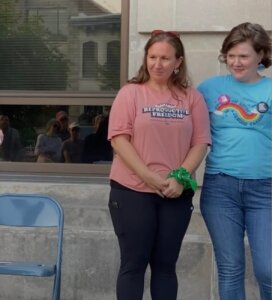
Hoosier Jews for Choice saw an opening for Jews to exercise their religious freedom under the same law, but for a purpose at odds with evangelical Christianity: to gain access to abortion. Earlier this month, Judge Christina Klineman of Marion County Superior Court agreed, permanently blocking enforcement of the state’s abortion ban for plaintiffs with sincere religious objections.
Hoosier Jews for Choice is celebrating the ruling as the biggest legal win to date in support of the argument that abortion bans violate Jews’ religious freedom. The group is hopeful that similar cases can build on the Indiana case’s success nationwide.
The ruling could still be reversed: Indiana Attorney General Todd Rokita has appealed the decision, and the case is headed to the Indiana Supreme Court, where all five justices are Republican appointees. Meanwhile, Klineman, elected to the bench in 2014 after winning a Democratic primary, has faced calls for her impeachment over her decision, in what U.S. Sen. Jim Banks (R-IN) called “one of the most ridiculous rulings I’ve seen in a long time.”
But for Amalia Shifriss, who testified on behalf of Hoosier Jews for Choice in the lawsuit, the latest ruling is a positive sign that the law will be applied consistently. If religious freedom applies to Christians objecting to baking a same-sex wedding cake, she said, then it must apply to liberal Jews, too.
“RFRA should not just be for what some lawmakers see as the religious right,” Shifriss told the Forward. “It should be for all religions.”
‘Perversion of the law’s intent’
In winning the right to an abortion, Hoosier Jews for Choice relied on a law passed by Pence, who would become Donald Trump’s vice presidential running mate on the strength of his reputation as a stalwart advocate for evangelical Christians. Pence rose to national prominence based on his unwavering opposition to abortion — and his conservative leadership as Indiana governor.
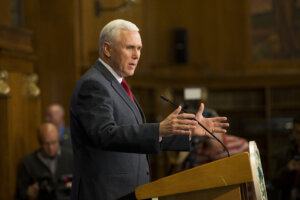
Anti-abortion advocacy organizations — including Indiana Right to Life and SBA Pro-Life America — supported the law.
Back in 2015, the debate over RFRA centered on small-business owners that sought to refuse service to LGBTQ+ people. Eric Miller, a conservative activist who was in the room when Pence signed the law, wrote then that “Christian bakers, florists and photographers should not be punished for refusing to participate in a homosexual marriage!”
Massive backlash against the law — notably by the NCAA the weekend before the Final Four basketball game was slated to occur in Indianapolis — led Pence to sign into law a clarification that businesses could not use the Religious Freedom Restoration Act to deny services to people on the basis of their sexual orientation.
But the law itself remained on the books — ripe for abortion-rights groups to wield a decade later.
Now, a little over a decade after Indiana first passed RFRA, organizations that once supported the law’s broad application have changed their tune.
“For the court to rule that taking the life of an unborn child is an exercise of religious freedom is deeply distressing — and a perversion of the law’s intent,” Indiana Right to Life president Mike Fichter said in an online statement following Klineman’s March 5 ruling. Indiana Right to Life did not respond to the Forward’s request for comment.
That shift has been part of a larger legal trend: Conservative Christian groups like Alliance Defending Freedom have long argued that the government must have a compelling reason to force someone to act against their religious beliefs — whether mandating vaccines, serving LGBTQ clients, or covering contraception in employee health care plans.
But when it came to religious plaintiffs who support abortion access, some on the Christian right didn’t think the same expansive view of religious freedom applied.
“Indiana’s religious freedom laws were passed for the purpose of protecting religious practice, not to protect the ending of a human life,”Indiana’s religious freedom laws were passed for the purpose of protecting religious practice, not to protect the ending of a human life,” Alexander Mingus, executive director of the Indiana Catholic Conference, said in an online statement after Klineman’s ruling. “Religions that preach violence are not protected by religious freedom claims.”
Mingus did not respond to the Forward’s request for an interview.
The Becket Fund for Religious Liberty, a nonprofit that has made its name arguing religious freedom cases in front of the Supreme Court, also objected to the Jewish plaintiffs’ interpretation of RFRA. In 2014, Becket successfully argued in Burwell v. Hobby Lobby Stores, Inc. that employers could refuse to cover contraception on religious grounds. Meanwhile, in the Indiana case, Becket filed a brief questioning the sincerity of the Jewish plaintiffs’ religious beliefs.
“The case fails RFRA’s test for multiple reasons, including allowing people to join Hoosier Jews for Choice by filling out an anonymous Google form with zero requirement to actually agree with Jewish religious teachings,” Lori Windham, senior counsel for Becket, said in a statement to the Forward.
Cohen disputed that characterization. She said that all members of Hoosier Jews for Choice were required to share their name and contact information, which it did not make public in order to protect members’ confidentiality. She added that group members who joined the lawsuit were asked to indicate whether they could connect their view on the abortion ban to their Jewish values and beliefs, and the vast majority of members did.
David Schraub, an assistant professor at Lewis & Clark Law School who has written about the Indiana case, said that courts do assess whether a religious belief seems genuine. But according to Schraub, the bar for establishing sincerity is low — typically an issue only in cases clearly brought in bad faith. For instance, Schraub recalled a case in which a defendant, trying to avoid paying taxes, cycled through various legal arguments before ultimately inventing “the Church of Ayn Rand.”
The Indiana case is fundamentally different, Schraub said, given the long-standing religious grounding for more permissive Jewish views on abortion.
“They tried to argue that this was not a sincerely held religious belief, which I think was really quite disrespectful, because it flies in the face of a lot of evidence about what we know about how Jews conceptualize the relationship to reproductive freedom,” Schraub said. “They’re just not willing to accept that there is such a thing as a sincere and genuine liberal religious tradition.”
Jewish beliefs, Jewish practices
A 2014 Pew Research poll found an estimated 83% of American Jews believe that abortion should be legal in all or most cases. That’s likely because Jews across denominations largely agree that life begins at birth, not conception. Sources in the Talmud say that in the first 40 days of pregnancy, the fetus is considered “mere water.” Jews value the fetus as “potential life,” gaining the legal status of nefesh, or personhood, at birth.
Still, Jews do not have monolithic views on abortion. Orthodox groups are divided, though couples generally consult rabbis on the matter and believe the choice to get an abortion should be governed by Jewish law, not personal choice.
The Conservative movement’s Rabbinical Assembly supports the right to choose abortion in cases where “continuation of a pregnancy might cause severe physical or psychological harm, or where the fetus is judged by competent medical opinion as severely defective.”
Reform Judaism emphasizes bodily autonomy, with the view that “the decision to terminate a pregnancy is one that, in all circumstances, should ultimately be made by the individual within whose body the fetus is growing.”
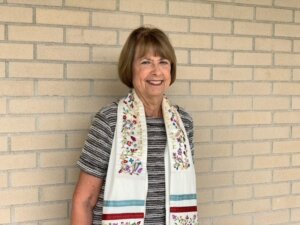
Rabbi Sandy Sasso — one of three rabbis the ACLU asked to give expert testimony in the Indiana case, and the first woman ordained a rabbi in Reconstructionist Judaism — told the Forward that the diversity of opinion within Judaism underscores the argument for challenging abortion bans.
“That actually is just the point — there are different religious views,” Sasso said. “The Constitution does not allow you, since there is separation of church and state, to enshrine one religious view over the other.”
Can religion and abortion coexist?
Shira Zemel, abortion access campaign director at the National Council of Jewish Women, is helping lead a national push to reframe “reproductive freedom as religious freedom.”
Each year since 2021, the Council has organized “Repro Shabbat,” which aligns with the Torah portion from Exodus Parashat Misphatim. The portion says that if a man pushes a pregnant woman, causing her to miscarry, he should pay a fine. But if any other damage results, the punishment should be according to the principle of “eye for an eye.” The portion is often interpreted as evidence that Judaism does not view a fetus as having the same legal status as a person.
The group has also backed that argument in court, filing a brief with 21 other organizations of faith in support of the plaintiffs challenging Indiana’s abortion ban — and hoping similar lawsuits will build on that case’s success nationwide.
The legal pathway exists in many places: 29 states have their own versions of the Religious Freedom Restoration Act, including at least 11 that severely restricted abortion after the Dobbs decision. According to Ken Falk, legal director of the ACLU of Indiana, the same legal reasoning used in Indiana could feasibly be applied in any of those states.
Some legal challenges are already underway, including in Kentucky and South Carolina, where litigation is ongoing. Others have faltered: In Missouri, a judge upheld the state’s abortion ban after a group of interfaith clergy sued on religious grounds. In Florida, a Jewish-led challenge to a ban after six weeks of pregnancy fizzled out after Rabbi Barry Silver, who brought the case on behalf of his synagogue, died of colon cancer in 2024.
Zemel said she hopes the Indiana case can serve as not only a legal blueprint, but also as a sign of a broader cultural shift in how religion is understood in the abortion debate.
“It’s incredible to me to see how this legal argument is bolstering what I like to think is a huge narrative shift,” Zemel said. “For far too long, it’s been weaponized that religion and abortion can’t coexist, but we know that that’s not the case.”
The post Jews paused Indiana’s abortion ban — by turning a religious freedom law against the evangelical right appeared first on The Forward.
Uncategorized
Rabbi who coached Adam Brody for ‘Nobody Wants This’ calls him ‘ignorant Jew’ over Gaza ‘genocide’ comments
(JTA) — The rabbi who coached Adam Brody for Netflix’s “Nobody Wants This” has bashed him for saying that Israel committed genocide in Gaza.
Steve Leder, the former senior rabbi of Wilshire Boulevard Temple in Los Angeles, served as a consultant on depictions of Judaism for Season 1 of “Nobody Wants This,” a rom-com in which Brody plays a rabbi who falls for an agnostic non-Jewish podcaster.
Leder denounced Brody on Wednesday over recent comments in which the Jewish actor for the first time publicly expressed his views on Israel’s actions in Gaza. Brody told GQ, “Put me down as thinking it’s a genocide. Put me down as wanting a free Palestine.”
Leder said in an Instagram video that Brody’s statements were “truly shocking,” “flippant” and “disgusting,” asserting his own view that “there is no genocide in Gaza.”
“You, by your own admission, are a relatively ignorant Jew, and your ignorance really showed the other day,” said Leder. “If you’re going to use a word like genocide, you ought to know what it means.”
Leder appeared to be referring to Brody’s previous descriptions of his limited Jewish education. Brody has said he is an atheist who “barely got bar mitzvahed and retained nothing from it,” adding that he prepared for the role of rabbi Noah Roklov in “Nobody Wants This” by attending a Shabbat service and working through books, podcasts and documentaries about Judaism.
Brody played high-profile Jewish characters including Seth Cohen in “The O.C.” and Seth Morris in “Fleishman Is in Trouble” before “Nobody Wants This,” which returns for a third season on Oct. 22.
The show itself has conspicuously avoided the subject of Israel. “Nobody Wants This” creator Erin Foster — who converted to Judaism in Leder’s synagogue — told The Free Press last year that she made a deliberate choice not to deal with the issue.
“We never say Israel or Palestine in the show, and that’s intentional because I think it would be a distraction and that this is just not the show to tell that story,” said Foster.
Brody told GQ that the Gaza war, alongside other national and global crises in recent years, revealed that he and his Hollywood peers were not as “like-minded” as he previously believed.
“Between COVID, a second Trump term, Israel-Gaza, it’s really brought out some different beliefs that I was ignorant to, and then disheartened by,” he said.
Israel’s actions in Gaza have divided the entertainment industry — and Jewish stars. While celebrities such as Jerry Seinfeld, Gal Gadot and Amy Schumer have voiced support for Israel since the Hamas attacks on Oct. 7, 2023, other Jewish actors have said that Israel subsequently committed genocide, including Hannah Einbinder and Wallace Shawn.
The genocide accusation is heavily disputed. A United Nations Commission of Inquiry, along with international and Israeli human rights groups, has concluded that Israel’s actions in Gaza fit that description. However, the International Court of Justice has not yet issued a final judgment on allegations of genocide brought by South Africa against Israel. Israel rejects the accusation.
The post Rabbi who coached Adam Brody for ‘Nobody Wants This’ calls him ‘ignorant Jew’ over Gaza ‘genocide’ comments appeared first on The Forward.
Uncategorized
How Netflix’s ‘East of Eden’ handled its ‘Timshel’ problem for Hebrew speakers
The crux of John Steinbeck’s East of Eden, now a splashy Netflix miniseries, is a Hebrew word that doesn’t exist.
At one point in Steinbeck’s 600-page tome, as rife with biblical allegory as the Salinas Valley is with natural beauty, the character Lee offers a midrash on Genesis 4, and the moment God rejects Cain’s offering.
Speaking with Samuel Hamilton, the neighbor of the Trask family at the center of the generational drama, Lee said he was bothered by a passage where God says, in the King James Bible, “If thou doest well, shalt thou not be accepted? And if thou doest not well, sin lieth at the door. And unto thee shall be his desire, and thou shalt rule over him.”
Lee says he compared translations and finally returned to the source: Hebrew, by way of some learned Chinese elders who consulted a rabbi.
In the Hebrew, they found the word “timshel,” which they translate as “thou mayest. Thou mayest rule over sin.” (The word, the last one of Steinbeck’s book, is the title of the final episode of the Netflix series.)
“The American Standard translation orders men to triumph over sin, and you can call sin ignorance,” Lee tells Samuel, scholar to scholar. “The King James translation makes a promise in ‘Thou shalt,’ meaning that men will surely triumph over sin. But the Hebrew word, the word timshel — ‘Thou mayest’ — that gives a choice. It might be the most important word in the world. That says the way is open. That throws it right back on a man. For if ‘Thou mayest’ — it is also true that ‘Thou mayest not.’”
This interpretation, in a book about how sin may be transmitted from one set of Cain and Abel-like brothers to the next, is the core of Steinbeck’s philosophy. So central is it that he carved the word onto a wooden box containing the manuscript.
But as I am hardly the first to note, “timshel” is a corruption of “timshol,” תמשל, and it doesn’t mean “thou mayest.” It means something like “you will rule” — future tense, second person, a more complete thought.
That said, the sages did debate whether the word was truly determinative or implied a sense of choice. (Ramban and Rashi are among the ones to suggest free will factored into the equation.)
While quoting the whole phrase in English, Steinbeck evidently thought the word “timshol” only indicated how one might rule, and did not encompass the piece about the ruling. As our language columnist Aviya Kushner has written, Steinbeck’s explanation “reveals an ignorance of the basic fact that Hebrew is more concise than English.”
Steinbeck was writing for an English-speaking audience. Zoe Kazan released her miniseries on Netflix and to a global audience that includes around 9 to 10 million Hebrew speakers. How did they adapt the passage for the Hebrew subtitles?
In the show, the scene plays out much the same way. Lee (Hon Lee) and Samuel (Ciarán Hinds) are at the kitchen table of the Trask homestead in the valley.
The King James has God tell Cain “thou shalt” rule over sin. It sounds, as Lee says, like “a promise.” The American Standard Bible translates it as “do thou.” “More of an order” from the Almighty, says Samuel.
Lee said Jewish scholars in San Francisco found the original in “timshel,” which, as in the book, is translated as “thou mayest.”
In the Hebrew subtitles, the word is correctly rendered as timshol, תמשול. Netflix translated his reading as “thou mayest” as, literally, “a choice is in your hand,” which, while not actually what the word means in Hebrew, suggests it’s something a bit more layered than “thou mayest.”
(Netflix did not respond to a request for comment about how the Hebrew translations were decided on.)
Perhaps the spirit of it — if not the letter — is what matters. And indeed, the rejection of evil as an inborn element of human nature has more in common with Jewish tradition than the Episcopalian concept of original sin and agency linked to God that Steinbeck grew up with.
Lee reasons that “timshel,” a Steinbeckian invention, may be the most important word there is.
“It offers a choice,” he says. “Our future isn’t determined by God or by our past. Even Cain in his weakness and his filth at the murder of his brother can still choose his course. Because timshel. Thou mayest.”
It’s a worthwhile message that of course resonates. But, of course, thou mayest also consult Hebrew speakers.
Mira Fox contributed research and translation.
The post How Netflix’s ‘East of Eden’ handled its ‘Timshel’ problem for Hebrew speakers appeared first on The Forward.
Uncategorized
Even Adam and Eve weren’t satisfied
האָסטו אַמאָל געטראַכט: „ווען איך וואָלט נאָר געהאַט דאָס אָדער יענץ, אָדער ווען מײַן מצבֿ וואָלט נאָר געווען אַנדערש, וואָלט איך געווען גליקלעך…“?
עס איז זייער אַנטמוטיקנדיק צו גלייבן אַז עס פֿעלט אונדז דאָס וואָס מיר דאַרפֿן כּדי צו דערגרייכן אונדזערע צילן און צו זײַן גליקלעך. און נאָך מער: ווען מען קומט צו אַזאַ מסקנה, פֿילט מען זיך ווי אַ קרבן פֿון די אומשטענדן, אוממעכטיק צו בײַטן די מציאות צום גוטן.
אָבער איז עס טאַקע אַזוי?
אין טיפֿן איז דאָס אַ פֿאַלשער חשבון. פֿרייד איז ניט אָפּהענגיק פֿון דעם וואָס מיר האָבן אָדער האָבן ניט, נאָר פֿון דעם ווי מיר קוקן אויף וואָס מיר האָבן און אויף וואָס עס פֿעלט אונדז.
אין דער וואָכעדיקער סדרה, בראשית, לייענען מיר וועגן בריאת־העולם און איר שפּיץ — די באַשאַפֿונג פֿון אָדם און חוה.
וואָס קען זײַן אַ בעסערער בײַשפּיל, אַז גליק איז ניט אָפּהענגיק פֿון אויסערלעכע אומשטענדן, ווי אָדם און חוה אין גן־עדן?
האָט זיי עפּעס געפֿעלט? ניין.
און דאָך האָבן זיי אַליין באַוויזן צו פֿאַרפּלאָנטערן דעם מצבֿ.
עס איז געווען בלויז איין בוים, פֿון וועמענס פֿרוכטן ג־ט האָט זיי פֿאַרווערט צו עסן, און זיי האָבן זיך ניט געקענט אײַנהאַלטן פֿון עסן דווקא פֿון יענעם בוים!
און נאָך מער: לויט דעם תּנא רבי מאיר איז דער בוים געווען אַ ווײַנשטאָק. זיי האָבן זיך געדאַרפֿט אָפּהאַלטן פֿון זײַנע פֿרוכטן בלויז עטלעכע שעה, ביז שבת וואָלט זיך אָנגעהויבן; דאַן וואָלטן זיי געקענט מאַכן קידוש אויפֿן ווײַן און אַזוי אײַנפֿירן אַן אייביקן שבת.
פֿאַר וואָס האָבן זיי ניט געקענט זיך אײַנהאַלטן?
עס איז אַ טייל פֿון אונדזער נאַטור צו וועלן דווקא דאָס וואָס מיר קענען ניט האָבן, און ניט אָפּצושאַצן ווי געהעריג דאָס וואָס מיר האָבן יאָ.
עס קלינגט כּמעט אומגלייבלעך — כאָטש דאָס געשעט צו אָפֿט — אָבער ווען ג־ט קומט צו אָדם און פֿאָדערט בײַ אים אַן ענטפֿער פֿאַר וואָס ער האָט געגעסן פֿון בוים, באַשולדיקט ער „די פֿרוי וואָס דו האָסט מיר געגעבן צו זײַן מיט מיר“, ווײַל זי האָט אים געגעבן צו עסן פֿון בוים.
וואָס פֿאַר אַן אומדאַנקבאַרקייט!
ג־ט האָט אים געגעבן אַ פֿרוי, ווײַל ער האָט געזען ווי שטאַרק אָדם לײַדט פֿון זײַן איינזאַמקייט. און אַנשטאָט אָפּצושאַצן דעם אוצר וואָס ער האָט באַקומען, קריטיקירט ער זי און באַשולדיקט זי.
אין אַ בריוו צו איינעם וואָס פֿלעגט זיך אָפֿט באַקלאָגן וועגן זײַן לעבן, שרײַבט דער ליובאַוויטשער רבי — זכותו יגן עלינו:
„אין דער וועלט אין וועלכער מיר לעבן, געפֿינט זיך אין אַלע זאַכן אַ געמיש פֿון גוטס און שלעכטס. דער מענטש דאַרף אויסקלײַבן אויף וועלכן פֿון די צוויי צדדים ער וויל לייגן דעם טראָפּ, אויף וועלכן ער וויל טראַכטן, און וועלכן ער וויל נאָכגיין…
„ווי באַלערנדיק איז דאָס וואָס אונדזערע חכמים זאָגן וועגן דעם וואָס אָדם איז געווען אַן אומדאַנקבאַרער: נאָך איידער ער איז פֿאַרטריבן געוואָרן פֿון גן־עדן — ווען ער האָט זיך נאָך געפֿונען אין אַ ממשותדיקן גן־עדן — האָט ער זיך שוין באַקלאָגט וועגן זײַן מצבֿ.
„פֿון דער אַנדערער זײַט זענען געווען ייִדן, מענער און פֿרויען, וואָס האָבן געדאַנקט און געבענטשט דעם באַשעפֿער, און געזאָגט די ברכות השחר יעדן אינדערפֿרי, בשעת זיי האָבן געלעבט אונטער די שרעקלעכסטע באַדינגונגען אין די דײַטשישע קאָנצענטראַציע־לאַגערן.
„אין דער ווירקלעכקייט וועט דער מצבֿ פֿון יעדן מענטש זיך געפֿינען ערגעץ צווישן די צוויי עקסטרעמען.
„מײַן כּוונה איז ניט אײַך צו מוסרן, נאָר אונטערצושטרײַכן אַ מציאות: וואָס פֿאַר אַ לעבן מיר לעבן — אַ לעבן פֿול מיט צופֿרידנקייט און באַדײַט, אָדער פֿאַרקערט — איז אין אַ גרויסער מאָס אָפּהענגיק פֿון אונדזער ווילנסקראַפֿט, וואָס באַשטימט צי מיר וועלן לייגן דעם טראָפּ אויף דעם פּאָזיטיוון אָדער אויף דעם נעגאַטיוון.“
מיר זײַנען מסוגל זיך צו באַקלאָגן אויף די באַדינגונגען אין גן־עדן און צו פֿילן הכּרת־הטובֿ, דאַנקשאַפֿט, אַפֿילו אין די אוממענטשלעכסטע באַדינגונגען פֿון אַ קאָנצענטראַציע־לאַגער.
איינער פֿון די פּערזענלעכע געהילפֿן בײַם רבין, הרבֿ בערל ע״ה יוניק, האָט דערציילט, אַז דער רבי האָט אים אַמאָל פּריוואַט געזאָגט:
„איך האָב געאַרבעט אויף זיך צו זען שטענדיק די זאַכן אין אַ פּאָזיטיוון ליכט; ווען ניט, וואָלט איך ניט געקענט איבערלעבן.“
ווען מען ווייסט וויפֿל פּערזענלעכע ליידן פֿון פֿאַרשידענע מינים דער רבי האָט אַליין דורכגעמאַכט, אין צוגאָב צו דעם ווייטיק פֿון די המונים מענטשן וואָס האָבן מיט אים געטיילט זייערע פּערזענלעכע צרות, קען מען פֿאַרשטיין, אַז אַזאַ בליק אויפֿן לעבן איז גאָר ניט קיין קליינע דערגרייכונג.
דערפֿאַר איז די „ווערקצײַג“ פֿון דער וואָך צו טראַכטן וועגן די פֿאָלגנדיקע פֿראַגעס:
זענען די אומשטענדן פֿון דײַן לעבן גוט אָדער שלעכט אומאָפּהענגיק פֿון דעם ווי דו קוקסט אויף זיי — אָדער ווערן זיי פֿאַר דיר גוט אָדער שלעכט דווקא צוליב דעם ווי דו קוקסט אויף זיי?
ס׳איז דאָ אַ וואָרט וואָס מען האָט געהערט אין נאָמען פֿון דעם דריטן חב״ד רבי, דעם צמח צדק זצ״ל: „אַזוי ווי מען שטעלט זיך אַוועק שבת בראשית, אַזוי גייט אַוועק אויף דעם גאַנצן יאָר“. דריק איך אויס די האָפֿענונג אַז מיר זאָלן אין דעם אַלע מצליח זײַן און האָבן אַ גוט געבענטשט יאָר.
The post Even Adam and Eve weren’t satisfied appeared first on The Forward.
