


Uncategorized
Mahmoud Khalil wants to reassure you
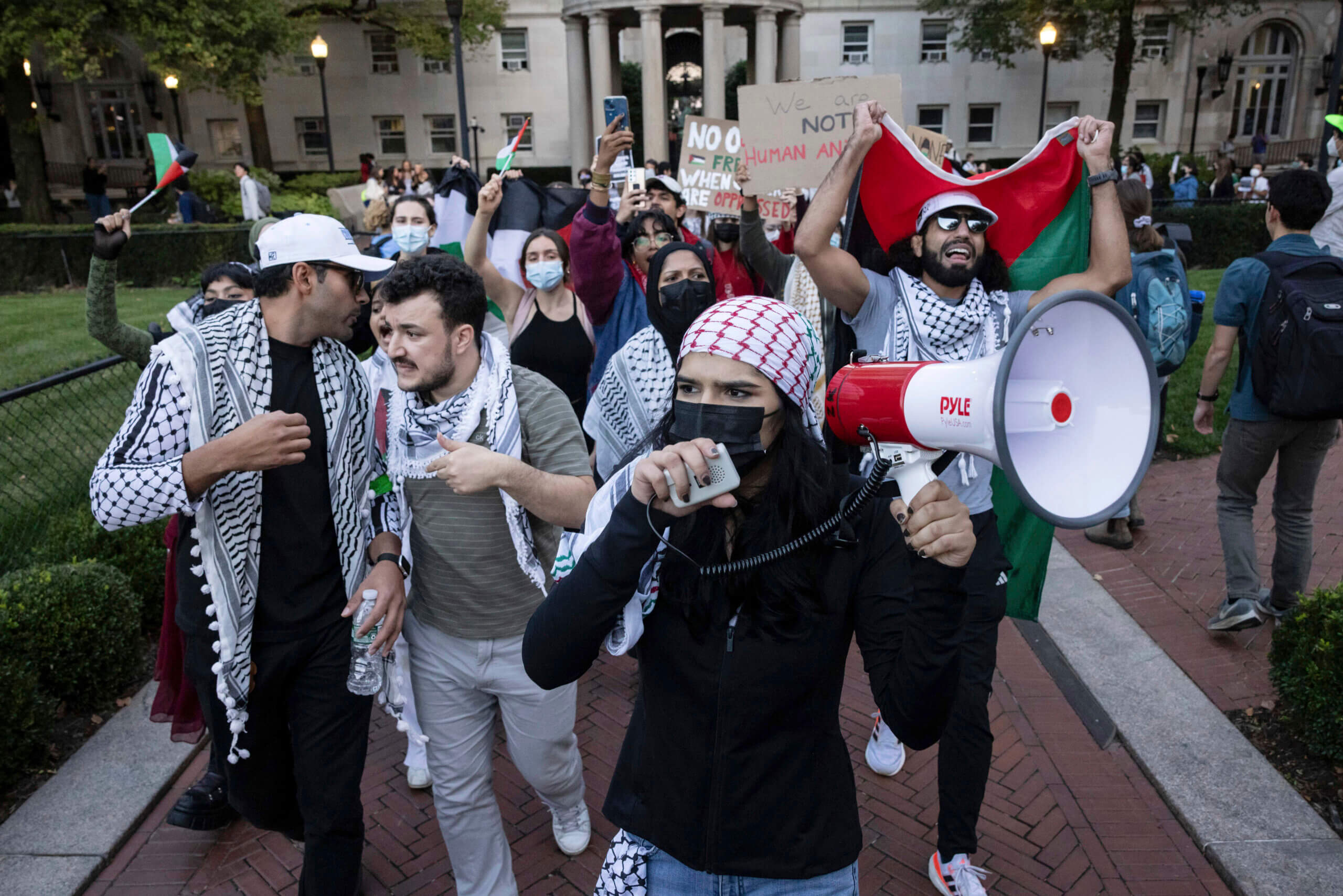
Mahmoud Khalil knows what you’ve heard about him. That he is an antisemite. That he supports Hamas.
That he fostered “a hostile environment for Jewish students in the United States,” as Secretary of State Marco Rubio wrote in a letter seeking to deport Khalil on national security grounds.
It’s not just that these claims offend Khalil — though they do.
Or that they jeopardize his ability to continue living in New York City with his wife and baby son — though they do that, too.
“This is what we should aspire for: to get a place where there’s no more conflict, no more killing in that place and it’s open to anyone who wants to call it their home.”
On what a ‘free Palestine’ should look like
The major reason that Khalil put on a baseball hat and sunglasses and traveled from Brooklyn to a conference room in Manhattan last week to meet with the Forward is that he believes misplaced Jewish fear remains a major obstacle to achieving what he and other protesters consider to be the liberation of Palestine.
Speaking extensively about Hamas, Oct. 7 and his preferred political solution to the conflict, Khalil sought to reassure American Jews that the protest movement he participated in and helped lead at Columbia University recognizes “absolutely a Jewish connection” to Israel and does not seek to drive Jews out of the region.
“The Jewish people are part of the land and they should remain that way,” Khalil told me. “I want to liberate everyone.”
Face of a movement
When federal agents arrested Khalil in the lobby of his Columbia student housing last March, he was transformed overnight into an emblem of the campus demonstrations against Israel. Even many of those who objected to his detention accepted the Trump administration’s premise that he was an antisemitic extremist.
“I abhor many of the opinions and policies that Mahmoud Khalil holds and supports,” Senate Minority Leader Chuck Schumer said at the time, before suggesting that his arrest might violate the First Amendment.
But despite occasionally speaking to the media on behalf of protesters, and negotiating between students and the administration, Khalil was not the movement’s face until he was arrested — and it was unclear what exact opinions and policies Schumer and his other critics were actually referring to.
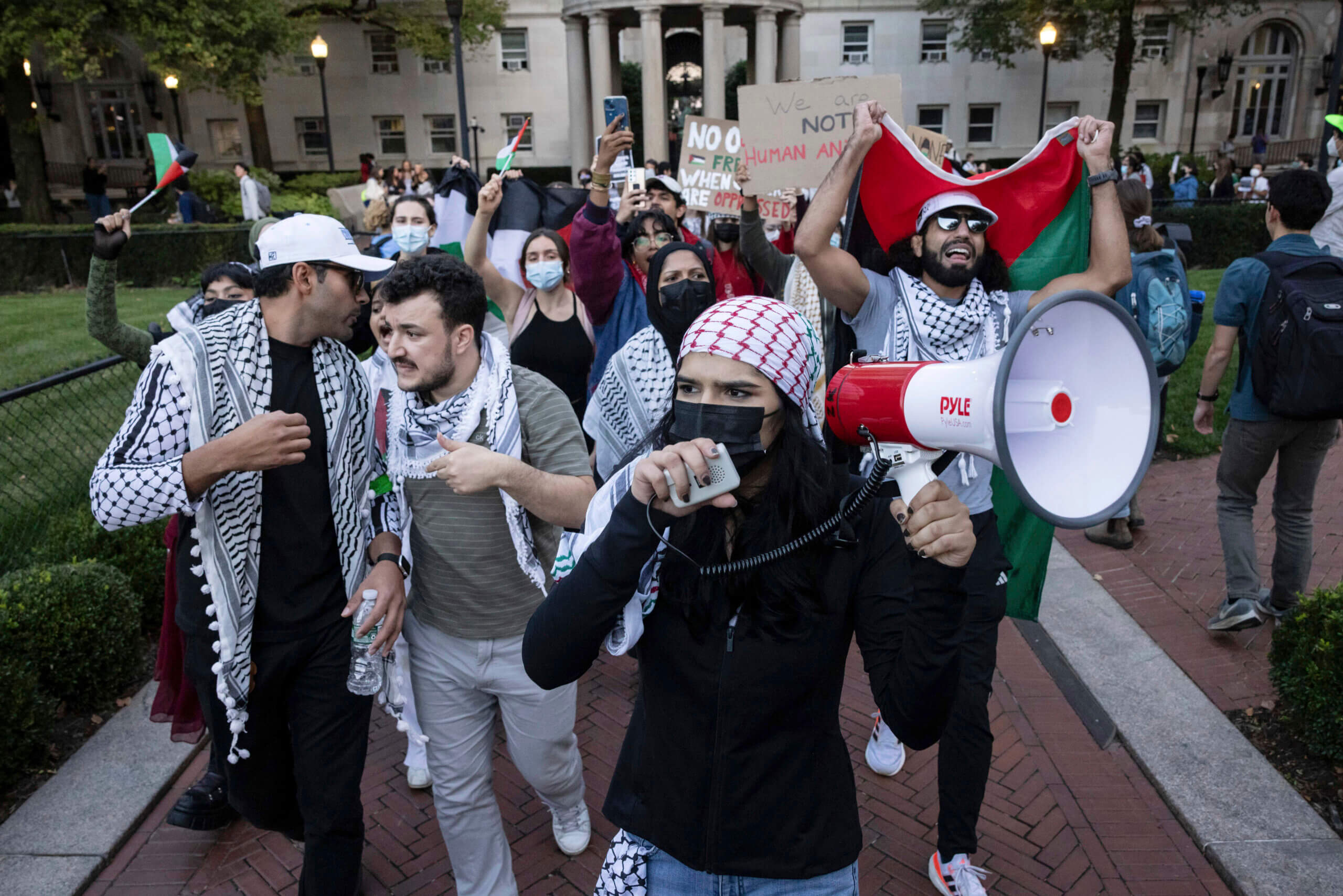
Khalil, who is now 31, did not have any public social media accounts before his arrest. Unlike others at Columbia, he had not posted a video of himself saying “Zionists don’t have a right to live,” or held a sign labeling pro-Israel counterprotesters as “Al-Qasam’s next targets” or been caught on camera yelling at anyone to “go back to Europe.”
The protest movement at Columbia was fractious and, while Khalil managed to retain the respect of most encampment participants, on key issues — including whether a student who had insisted he had the right to kill Zionists should apologize, whether protesters should occupy Hamilton Hall, and whether to embrace the slogan “globalize the intifada” — he aligned himself with those calling for the more conciliatory approach.
His media tour following a court order releasing him from immigration detention in rural Louisiana last June largely confirmed this. There were flashes of anger, especially when he spoke about missing the birth of his son Deen last April, and resolve. “Even if they would kill me, I would still speak up for Palestine,” he told reporters immediately after his release.
But in repeated interviews, Khalil condemned antisemitism and violence against Israeli civilians, and spoke with passion about the important role of Jewish students he had demonstrated alongside.
All this made Khalil, who graduated from Columbia with a master’s degree in public administration shortly before his arrest, a poor poster child for the protest movement’s excesses.
And yet nobody has wanted to confront this reality because it requires acknowledging that the movement had both moderates and extremists. Khalil’s opponents rejected the premise that there were any moderates in the movement, while his supporters rejected the premise that there were any extremists.
A balancing act
Khalil, like the movement he came to represent, is adamant that Zionism is racist. He opposes any two-state solution that seeks to preserve a Jewish majority in Israel.
“Rejecting the self-determination of the Jewish people on the Palestinian land in itself is not antisemitism,” Khalil said during our interview. “You are denying other people’s rights in the land.”
Khalil goes beyond accusing Israel of genocide and has said that its goal is to kill all the Palestinians in Gaza — a claim Israeli officials have strenuously denied, insisting that civilian casualties are the inevitable result of dense urban warfare. In our interview, he questioned whether militants sought to kill, rather than kidnap, Israeli civilians on Oct. 7. He is sympathetic to support for Hamas among Palestinians in the West Bank and Gaza. And like most of the Palestinian liberation movement, he views liberal Zionist groups that support Israel while seeking to push its government to the left as an obstacle.
He is reluctant to criticize the movement’s excesses, and ready with explanations for even the tactics and rhetoric he finds unproductive. Khalil argues that Israel is to blame for anti-Zionism sometimes slipping into antisemitism because its government has intentionally held itself out as representative of Jews and Judaism while carrying out what more than 40% of Americans — and the vast majority of Democrats — considered to be a genocide in Gaza.
Khalil keeps a magnet on his fridge with a map of Israel, the West Bank and Gaza overlaid with the pattern of a keffiyeh, the traditional Palestinian scarf, that reads: “I will stay a traveler until I go back to my home country, Palestine.”
There is nothing moderate about any of this for Jews who believe that anti-Zionism is always an expression of antisemitism.
“I have a nuanced view of the Zionist project that goes beyond ‘Zionism is bad.’”
On what he learned from engaging with liberal Zionism
But Khalil’s views are ubiquitous among those who have protested against Israel over the past two years — and are coming into the mainstream as Americans turn against Israel at a rapid pace. Its support has cratered to a paltry 13% among Democrats, and an endorsement from the AIPAC has become a liability for liberal politicians at a time when the former leader of a Students for Justice in Palestine chapter just became mayor of New York City while other Democrats who share his views on Israel are winning Democratic primaries, and liberal members of Congress are rejecting funding even for Israel’s defensive missile systems.
Pro-Israel groups have been able to convince Republicans to enforce prohibitions on anti-Zionism by force — epitomized by the White House’s unprecedented attempt to deport Khalil — but the conservative vanguard is turning on this approach, with some blaming Jews for the war in Iran and referring to politicians who prioritize countering antisemitism as “J-pilled.”
If anti-Zionism is here to stay, Khalil advocates a remarkably pragmatic direction for the movement. He is critical of Hamas — including its embrace of political Islam and violations of international law — and his vision for a free Palestine includes safety and security for its Jewish residents. He is attuned to concerns over antisemitism, rejects an oppositional stance toward Jews who disagree with his beliefs and cares about bringing more of them into his tent.
“For a lot of people, all Zionists are bad,” Khalil said. “To me, no — it’s not like that.”
From Khan Eshieh to Columbia
A good place to start Khalil’s political journey is at 16, when he boarded a bus from Khan Eshieh, the Palestinian refugee camp on the outskirts of Damascus where he was born, bound for the foothills of the Golan Heights.
The Syrian military normally restricted access to the border, but on May 15, 2011 — Nakba Day, marking the anniversary of the 1948 Palestinian expulsion during the establishment of the new state of Israel — soldiers allowed thousands of protesters to stream into the demilitarized zone and toward Israeli territory.
Khalil had been raised on stories of his grandparents’ expulsion from a village near Tiberias to Khan Eshieh, which Yasser Arafat nicknamed the “Camp of Return,” because of its distance just 20 miles from Israeli territory. And the Arab Spring had awoken something in him.
He marched toward the border. Khalil says it was peaceful. The Israeli military says demonstrators tried to breach the border fence and threw rocks. Gunfire broke out. An Israeli soldier shot Khalil in the leg, he said, and four protesters were killed.
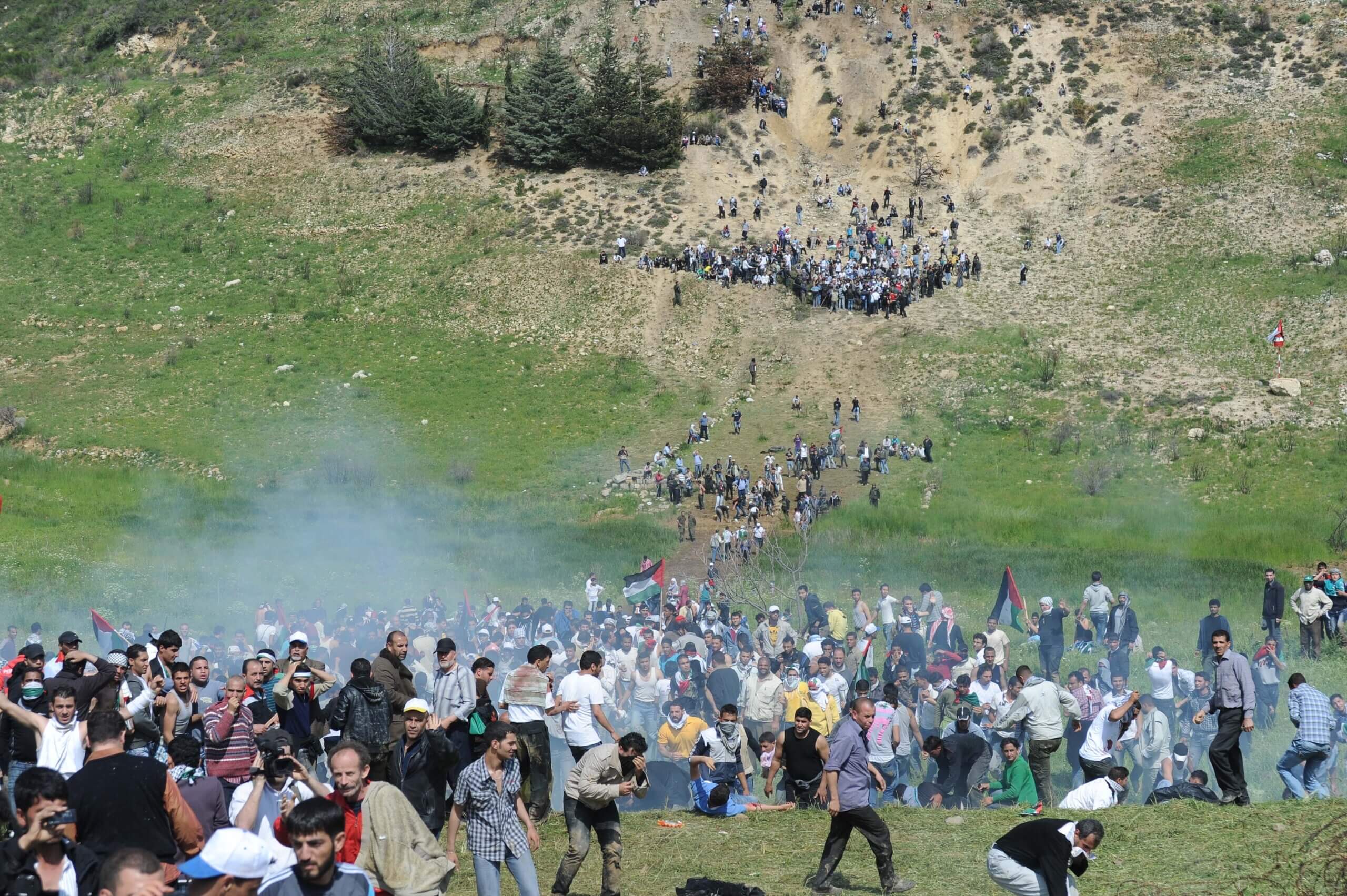
The incident adds credibility to Khalil’s insistence more than a decade later that he would die for Palestine. “This is a tradition of the Palestinian resistance,” Khalil said. “Longing for home.”
But the march was not a neat morality play.
The Palestinian factions inside the Syrian refugee camps — Hamas, Fatah, the Popular Front for the Liberation of Palestine — had tried to stop the march from taking place because they were afraid that Bashar al-Assad’s government was using it as a distraction from mounting protests against his authoritarian rule.
A few weeks later, a similar march took place with even deadlier results. Israeli soldiers killed 22 demonstrators, sparking a Palestinian uprising in the Syrian camps that targeted their own leadership for playing into Assad’s hands and ultimately spurred a crackdown that forced Khalil to flee to Lebanon.
It was there, around the time he graduated from the American University in Beirut, that Khalil began to wonder whether he had been indoctrinated into his political beliefs about Israel.
“Growing up I was baffled by why this was happening to us — like, it’s clear this is our home, we did not do anything wrong — why were we exiled from our home?” he said.
And so Khalil began spending time in pro-Israel chatrooms on Clubhouse, a short-lived audio-only social media platform, and scrolling through Zionist discussion boards on Reddit.
“I started going into these conversations and just understanding why Israelis felt so strongly about Israel — the same way we feel so strongly about Palestine,” he said. “One of the points that caught my attention was the miscommunication and misunderstanding about what we are, and who we are, and who they are.”
Khalil suggested this lack of knowledge fueled a fear of Palestinians and the movement he participated in.
“People think that we want to drive all Jews to the sea,” he said. “We don’t believe that.”
Conflicting messages
It wasn’t always clear to outsiders what the campus protests following Oct. 7, including those at Columbia, were actually about.
The first set of demands from Students for Justice in Palestine and Jewish Voice for Peace chapters at Columbia were relatively narrow: That Columbia’s senior administrators apologize for official statements about Oct. 7 that did not mention Palestinians, “divest from companies profiting from Israeli apartheid” and end the school’s partnership with Tel Aviv University.
But these calls received far less attention than the statement the two groups released days after the Hamas attack lauding it as an “unprecedented historic moment for the Palestinians of Gaza” and a “counter-offensive against their settler-colonial oppressor.”
The protests often ran along these two tracks: The formal demands directed at university leadership, and the rhetoric and posturing that accompanied those demands.
Some of the students recognized that the inflammatory slogans and tactics could work against the movement. Especially after the first tent encampment started in April, fissures began to develop. Some participants — including Khalil, who emerged as a mediator between demonstrators and the administration — called for a more measured approach, while others wanted to aggressively escalate. “One of the reasons I was chosen to negotiate on behalf of these students is because I’m more pragmatic,” Khalil told Hasan Piker during a July livestream. “I can meet you in the middle.”
“There were maybe some bad actors who believed only in the theory of resistance — and believed themselves to be part of it — while Palestinians were like, ‘No, it doesn’t work this way.””
On divisions within the protest movement at Columbia
These divisions were often invisible on the outside. Everyone at the encampments was facing pressure from university administrators, who repeatedly called police to sweep the areas and arrest students, and from outside organizations that sought to identify and blacklist them as antisemites.
Even when students thought some of their peers had gone too far, the impulse was to circle the wagons rather than be seen as giving ammunition to enemies of the protest movement.
For instance, Khalil maintained that the slogan “globalize the intifada” was unproductive. “I don’t use it just because — to me, my goal at Columbia is to get it to divest,” he told Piker. But even now, he is careful to explain that it’s not intended to invoke violence and that he would never discourage others from using it.
“Even if the students used a normal word like globalize the ‘uprising’ they would receive the same sort of backlash,” Khalil said in our interview. “The point is not about their slogan, the point is about silencing them.”
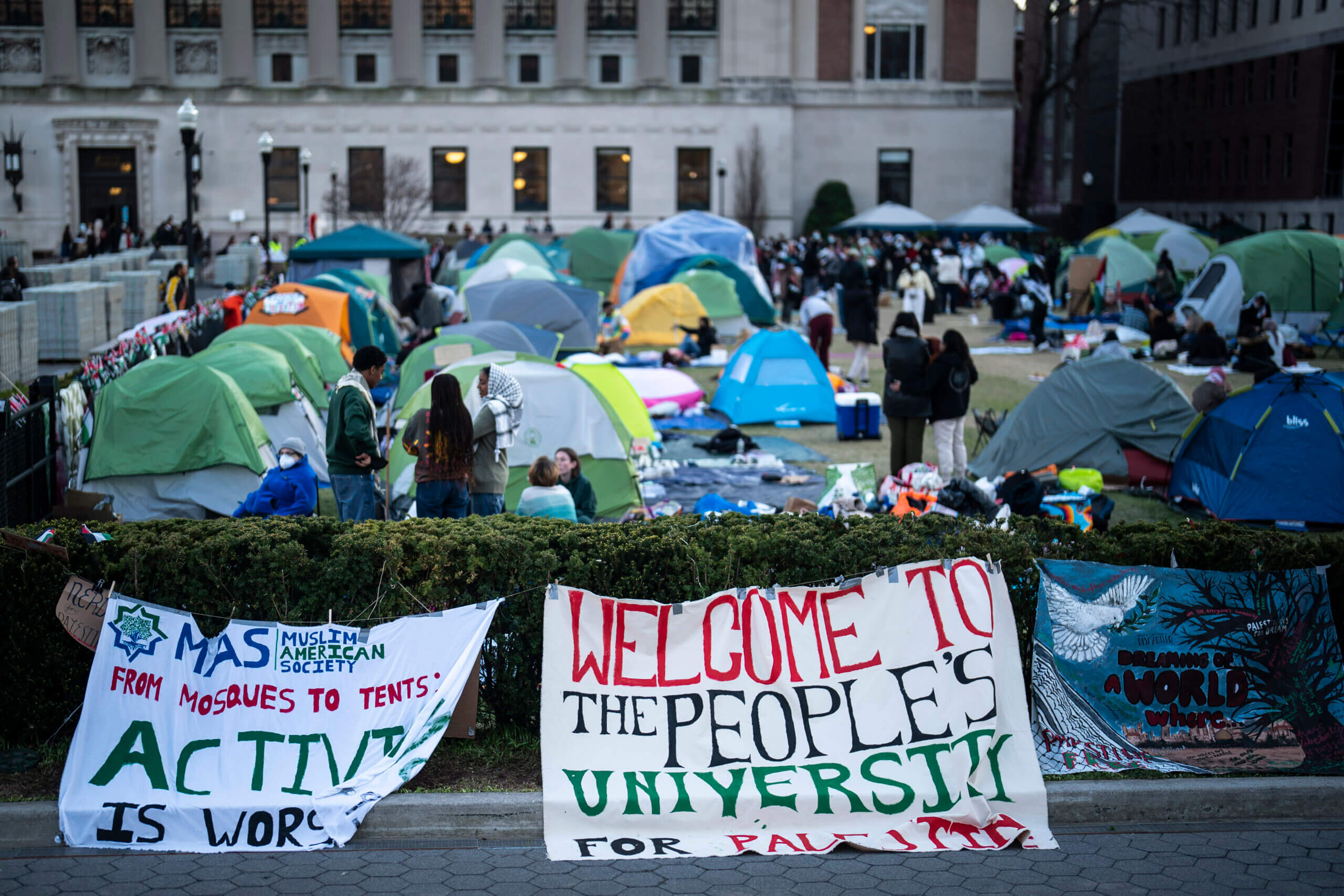
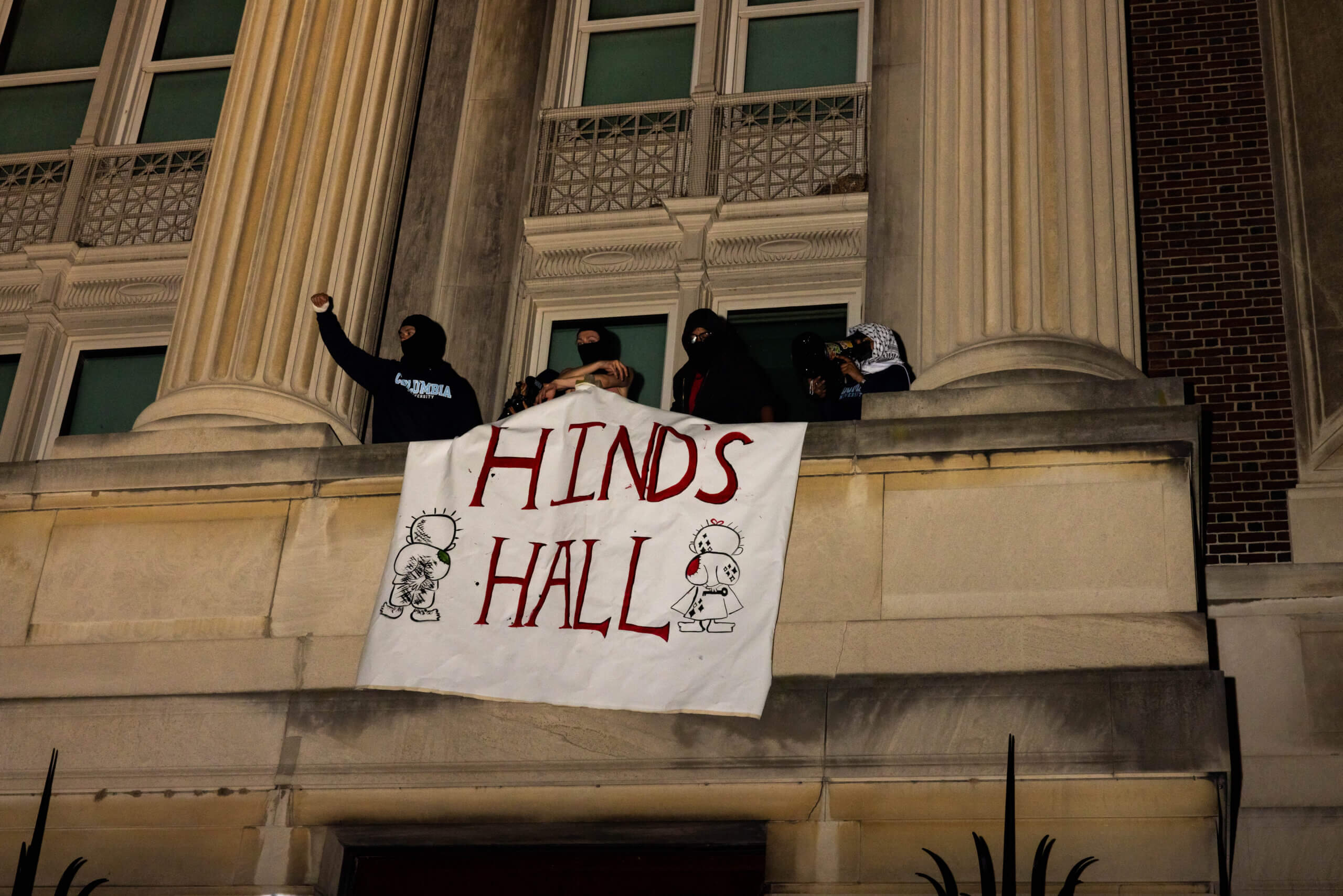
But cracks began to show the following school year. A few days after the first anniversary of Oct. 7, a group of Palestinian students broke away from Columbia University Apartheid Divest, the coalition that had organized the encampments. “We refuse to have our liberation dictated for us,” the anonymous organizers wrote in the Columbia Spectator. “We refuse to allow anyone to speak over us.”
The article also included a veiled swipe at the increasingly cavalier attitude some participants in the movement had been taking toward violence against Israeli civilians. It said the new group supported armed resistance against Israel under two specific provisions of international law but that “equally and firmly, we wholeheartedly disavow any violence outside of this context.”
Maryam Alwan, a Palestinian-American undergraduate at Columbia who had been a leader of Students for Justice in Palestine, unleashed on CUAD in an interview last month with The Blue and White, a student magazine on campus.
“They started making these crazy-ass posts,” Alwan said, referring to their Instagram account. She referred to Khymani James, the student who had said the school should be “grateful that I’m not just going out and murdering Zionists” as an “opp,” slang for enemy.
Alwan said that she and the other Palestinian students at the encampment had opposed the occupation of Hamilton Hall, in which demonstrators smashed glass door panes and two janitors said they were assaulted before police swept the building and arrested 44 people, but that they’d been ignored before being asked to defend the occupation to reporters.
The leadership of CUAD became increasingly centralized and extreme in part because students that Columbia had suspended pending expulsion — already, in many cases, those willing to take the most radical actions — now had more time for activism as other members became turned off by the organization’s direction and went back to their studies. “Anyone who could’ve talked them down was gone,” said Alwan, who described herself as being close friends with Khalil.
Khalil’s role in CUAD has been hotly contested as part of his legal case. The government accused him of failing to disclose membership in CUAD on his green card application, but the group had no formal members and Khalil’s lawyers have argued that he served as a negotiator on behalf of student protesters rather than as a representative of the coalition itself.
Either way, he is more forgiving than Alwan and emphasized that many of the students involved were teenagers who suddenly found themselves at the center of an international news story. But he has also said the occupation of Hamilton Hall was not the right move and that he was barred from entering the building while it was occupied.
“There were maybe some bad actors who believed only in the theory of resistance — and believed themselves to be part of it — while Palestinians were like, ‘No, it doesn’t work this way,’” Khalil said. “A lot of them had only read the literature of the Palestinian struggle, rather than living within it.”
The Hamas question
Khalil made headlines for declining to condemn Hamas during interviews following his release, arguing that the question represented “selective outrage” and was unfairly directed toward Palestinian activists.
He has also said that, while he is opposed to any violence against civilians, he cannot dictate what Palestinians who experience Israeli human rights abuses should do. “To them, it’s not about supporting Hamas, it’s about resisting the occupation, resisting the status quo, resisting the injustices, resisting the killing,” he said during our interview. “All of that pushed people toward any resistance to Israel: ‘Whether it’s Hamas or anyone else, we want to resist Israel.’”
But in his most detailed public comments about Hamas itself, Khalil told me that the organization is “not up to the Palestinian aspiration for liberation.”
“Hamas came to power as a result of Israel’s concerted effort to delegitimize the PLO,” Khalil said, referring to the Palestinian Liberation Organization controlled by Fatah, which continues to rule Palestinian areas in the West Bank. “The Netanyahu government was allowing funding for Hamas because they see it as a way to maintain the division within the Palestinian political sphere.”
(Netanyahu’s working relationship with Hamas has been widely reported.)
Khalil, who is Muslim, added that his personal faith and politics did not align with Hamas. “I come from a family that doesn’t believe in political Islam,” he said. “You have to separate between these two.”
More broadly, Khalil argued that most of the grassroots support for Hamas that does exist among Palestinians came about because Israel had eliminated the organizations that could pose a serious threat to its power while failing to deliver on the promise of the Oslo Accords.
“When you have the PLO, who signed the Oslo agreement — agreeing to 22% of the land, yet you see Israel continuing its settlements, blocking any attempts for the realization of Palestinian statehood — that pushed people to think, ‘This is not working,” Khalil said. “So you’re left with Hamas.”
Khalil cautioned that the support some participants in the student movement expressed for Oct. 7 and occasionally for Hamas itself — embracing the inverted red triangle symbol used in Hamas propaganda videos, for example — did not mean they believed in the organization’s ideology.
“There should be a distinction between supporting legitimate armed resistance and supporting Hamas.”
On allegations that pro-Palestinian activists support Hamas
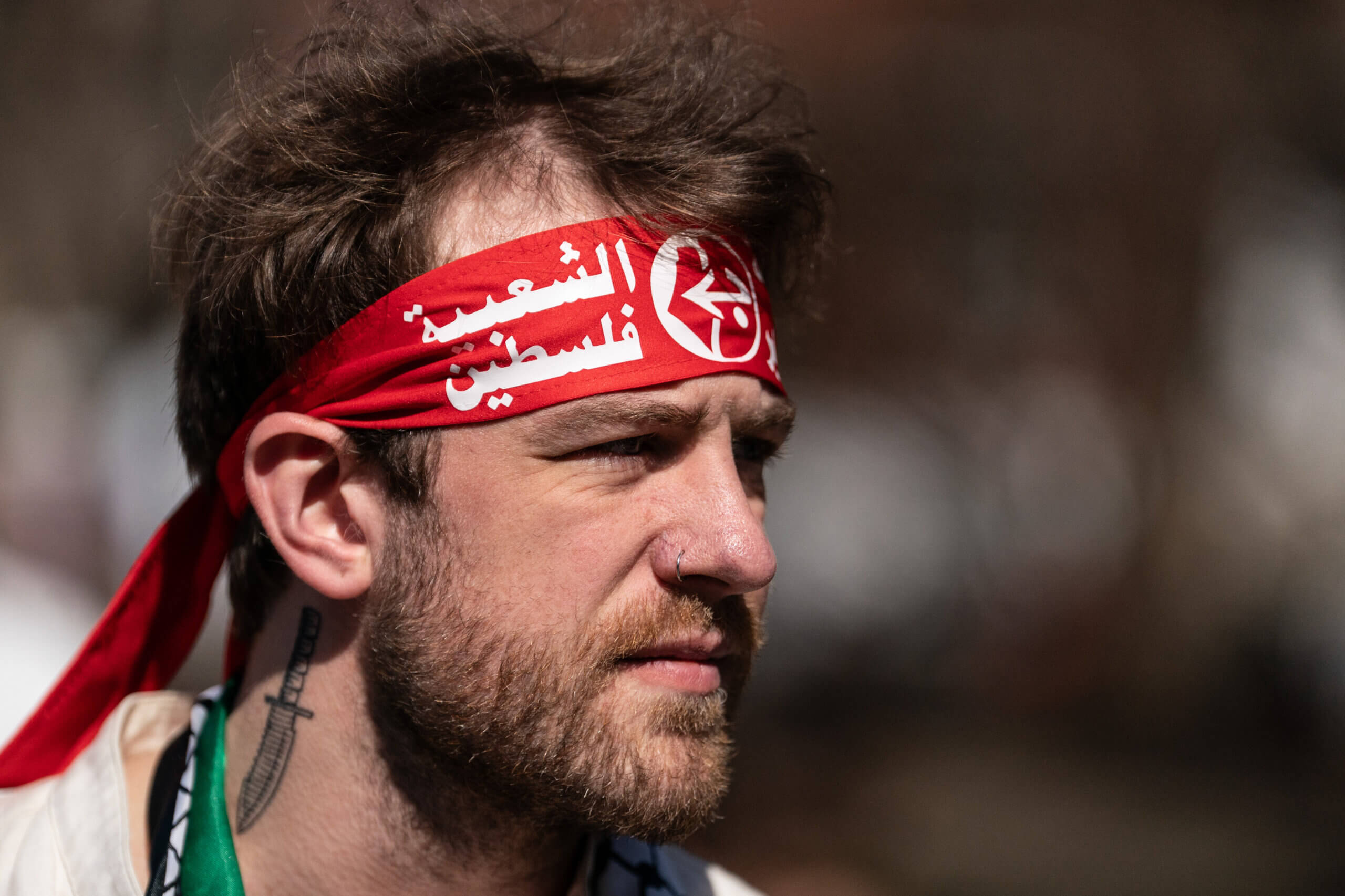
“A big part of this movement is LGBTQ, and of course they don’t support Hamas,” he said. “That’s why you see a lot of PFLP affection in this country just because it’s the left-iest organization carrying out armed resistance.”
(The Popular Front for the Liberation of Palestine is a Marxist organization that has faded in relevance since the 1990s but operates a militia that participated in the Oct. 7 attacks alongside Hamas.)
“There should be a distinction between supporting legitimate armed resistance and supporting Hamas,” Khalil said.
The question of what armed resistance is “legitimate” is one that has divided pro-Palestinian activists.
Some of the most radical voices argue that Jewish civilians in Israel are acceptable targets because they can be called to serve in the Israeli military, or because as settlers on ostensibly stolen land they do not deserve any expectation of safety. Others simply state that Palestinians have a right to resist “by any means necessary.”
Khalil, like the Palestinian student breakaway group at Columbia, is adamant that targeting civilians is unacceptable. “I grew up in a community that valued human rights and valued principles beyond religion, beyond race,” he said. “I would never, in any context, justify the killing of a civilian for any reason.”
Those who support the right of Palestinian armed resistance, but oppose violence against civilians, generally point to provisions of international law that say national liberation movements may use force against countries that deny them independence while remaining subject to the laws of war. “In short: Right to resist, including armed resistance: Yes. Right to indiscriminately kill or target civilians: No. It’s as simple as that,” Ihsan Adel, the founder of Law for Palestine, wrote in the aftermath of Oct. 7.
Many pro-Palestinian activists see the events of Oct. 7 very differently than most American Jews do. Where pro-Israel groups condemned the attacks as an unprovoked act of brutality, most pro-Palestinian organizations portrayed them as a reaction to the tight Israeli control of travel and trade into Gaza since it withdrew from the territory in 2005 and its killing of more than 4,000 Palestinians during four major military operations over that time period. Many student demonstrators also expressed skepticism about the extent to which the violence targeted Israeli civilians.
“Hamas, yes, targeted civilians to take them hostage, which is another crime — that doesn’t absolve them of anything like, ‘I want to kidnap them rather than kill them.’ That’s the same, as it turned out later.”
On whether Hamas intended to kill Israeli civilians on Oct. 7
Khalil said there should be an independent and transparent international investigation into Oct. 7, something the Israeli government has generally sought to prevent.
“I wouldn’t say Hamas were saints or angels and did not commit any crimes,” Khalil said. “The fact that civilians were caught up in such violence and the killing means that there were crimes committed, and Hamas has a responsibility for that.”
He demurred when I pressed him on whether he believed the Israeli civilians killed had merely been “caught up” in a hostage-taking operation that also targeted military installations near the Gaza border. “I have no idea, to be honest,” he said.
Khalil referred to the Hannibal Directive, in which the Israeli military can be authorized to kill its own citizens to prevent them from being taken hostage. Haaretz has reported that the protocol was used in several instances on Oct. 7.
“Hamas, yes, targeted civilians to take them hostage, which is another crime — that doesn’t absolve them of anything like, ‘I want to kidnap them rather than kill them.’ That’s the same, as it turned out later,” he added.
But while it’s true that Israel has interfered with inquiries into Oct. 7, Khalil’s insistence that it is impossible to know whether Hamas targeted civilians overlooks that several independent investigations have found that it did.
Amnesty International concluded that Hamas and other Palestinian armed groups “were part of a systematic and widespread assault against the civilian population,” while Human Rights Watch determined that Hamas and its allies “bear responsibility for the worst abuses” committed during the attack.
“I wouldn’t rule out that Hamas targeted civilians, but I wouldn’t confirm it either,” Khalil said. “That’s my position on this.”
Seeking a ‘utopia’
The recent and dramatic shift in American attitudes on the Israeli-Palestinian conflict make it hard to imagine that the U.S. government will be able to maintain its longstanding policy of ironclad support for Israel in the years ahead.
Influential Republicans like Tucker Carlson and Marjorie Taylor Greene have described Israel as a major burden for the U.S. and suggested that the Trump administration should wash its hands of the conflict, withdrawing military and diplomatic support rather than conditioning it on a solution.
But on the left, the question is whether the U.S. should demand a two-state solution that would preserve a Jewish majority in Israel while creating a new Palestinian state in most of the West Bank and Gaza, or press for something more radical: a “free Palestine,” an aspiration that is often left undefined.
Khalil is firmly in the latter camp.
“It’s too late to tell people like, ‘Go back to Poland, go back to Russia’ or wherever.”
On Jewish concerns about the implications of anti-Zionism
He is adamant that preserving a Jewish majority in the 1948 borders of Israel is a nonstarter. “I don’t think this framework is realistic. We would still end up in the same vicious cycle of violence that we are in right now,” he said.
That rules out cooperation with organizations like J Street, the liberal Zionist advocacy group that has called for limits on American military aid to Israel and pushed for policies that would compel the Israeli government to grant Palestinian statehood.
“J Street takes everything from a lens of Israel’s security, or a lens of Jewish security, not from a lens of human rights for everyone,” Khalil said. “They want a two-state solution because that’s better for Israel, not because that’s better for the Palestinians.”
He added: “We should fight against this.”
Jeremy Ben-Ami, J Street’s president, said in a statement that Khalil’s “characterization was incorrect” and that his organization is “grounded in a commitment to the equal rights, dignity, and security of both Israelis and Palestinians.”
This is more than a simple policy debate. One of the main reasons that some Jews found the campus protest movement to be antisemitic was because they felt that demonstrators were hinting, if not outright stating, that Jews needed to be purged “from the river to the sea.”
Khalil recognized that for many Jews the vehement opposition to the encampments was rooted in this fear, and emphasized that he rejects any solution based on “driving anyone out of the place that they were born in,” including Israeli Jews.
“It’s too late to tell people like, ‘Go back to Poland, go back to Russia’ or wherever,” he said.
He said that a “free Palestine” means a democratic country — or multiple countries — with equal rights for all citizens, and the right for Palestinian refugees and their descendants to return to the land from which they fled or were expelled during Israel’s War of Independence.
“Anyone fearing persecution can live in that country without fear,” he said. “I know it might sound like a very ideal utopia, but this is what we should aspire for: to get a place where there’s no more conflict, no more killing in that place and it’s open to anyone who wants to call it their home or their Holy Land.”
Another concern among many Jews, including Jewish college students who did not participate in the demonstrations, was that protesters were quick to ostracize anyone who did not wholeheartedly support this vision of a liberated Palestine.
Khalil has described Zionism as “very, very racist,” and suggested a “Jewish and democratic” state is a logical fallacy because a democracy cannot elevate one group over its other citizens.
Yet he has also proven sympathetic to Jewish claims to the land and recommended My Promised Land, the liberal Zionist history of Israel by journalist Ari Shavit, during his appearance on Ezra Klein’s New York Times podcast. “A lot of Jewish people subscribe to the idea of Zionism because of the fear of persecution,” he told me. “I have a nuanced view of the Zionist project that goes beyond ‘Zionism is bad’ — no, there are different layers to that project that unfortunately aren’t being seen across the Arab world or among Palestinians.”
Khalil said that many of his Jewish friends began as Zionists but changed their views over time, something he believes will need to happen more in order to achieve the right of return for Palestinian refugees, and a system of equal rights across Israel, the West Bank and Gaza. “Palestinians don’t have the power to make this happen,” Khalil said during an event with journalist Peter Beinart in November. “It’s the Jewish community — whether inside or outside of Israel — that can influence that.”
And despite blaming the Israeli government for conflating itself with Jews, Khalil said his movement had an obligation to root out bigotry. “Some anti-Zionist actions may touch on antisemitism that we absolutely oppose and don’t want and need to be educated about,” Khalil said, adding that he believes the protest movement did a good job of keeping this at bay.
Khalil said that, for the same reason, he is wary of growing far-right wing opposition to Israel among figures like Nick Fuentes and Candace Owens who mix a generalized hostility for Jews with dovish positions on American foreign policy.
“A lot of it is coming out of antisemitism, not out of support for Palestinian rights,” he said. “As someone who is taking a rights-based approach — a principled approach — I have to be careful that I don’t ally with people who are not genuine about their support.”
A mistake — or a message?
The tentative reaction to Khalil’s arrest by some leading Democrats and major Jewish organizations suggested a belief that some evidence was going to emerge that showed he was part of the most radical vanguard at Columbia.
That never happened.
“When the administration started with the smears, they did not provide any evidence or any quotes from me,” he said. “But people believed them because I’m Palestinian and I’m an Arab man named Mahmoud so that alone means you’re guilty.”
Canary Mission, which compiles blacklists of activists it considers to be antisemitic, only managed to find a quote in which he said that armed resistance was legitimate under international law.
Khalil’s case continues to work its way through the legal system and he could still be deported. But once it became clear that Khalil was prepared to condemn antisemitism and avoid inflammatory rhetoric, the image that the White House sought to paint of him seems to have fallen flat.
David Lederer, a pro-Israel student activist at Columbia, lamented in a video he shared on social media that the media “fell in love” with Khalil, while Nerdeen Kiswani, founder of Within Our Lifetime, who holds more strident views and was the recent target of a foiled alleged assasination plot, referred to him as the “perfect victim”: “A green card holder, top student, with no criminal record or radical affiliations.”
A poll of Jewish voters taken the month following Khalil’s arrest found that only 20% believed that arresting and deporting pro-Palestinian protesters would reduce antisemitism.
But there are other ways of understanding Khalil’s arrest.
One is that it was meant to send a message, as part of a larger Trump administration crackdown, that nobody who participated in the protests should feel safe.
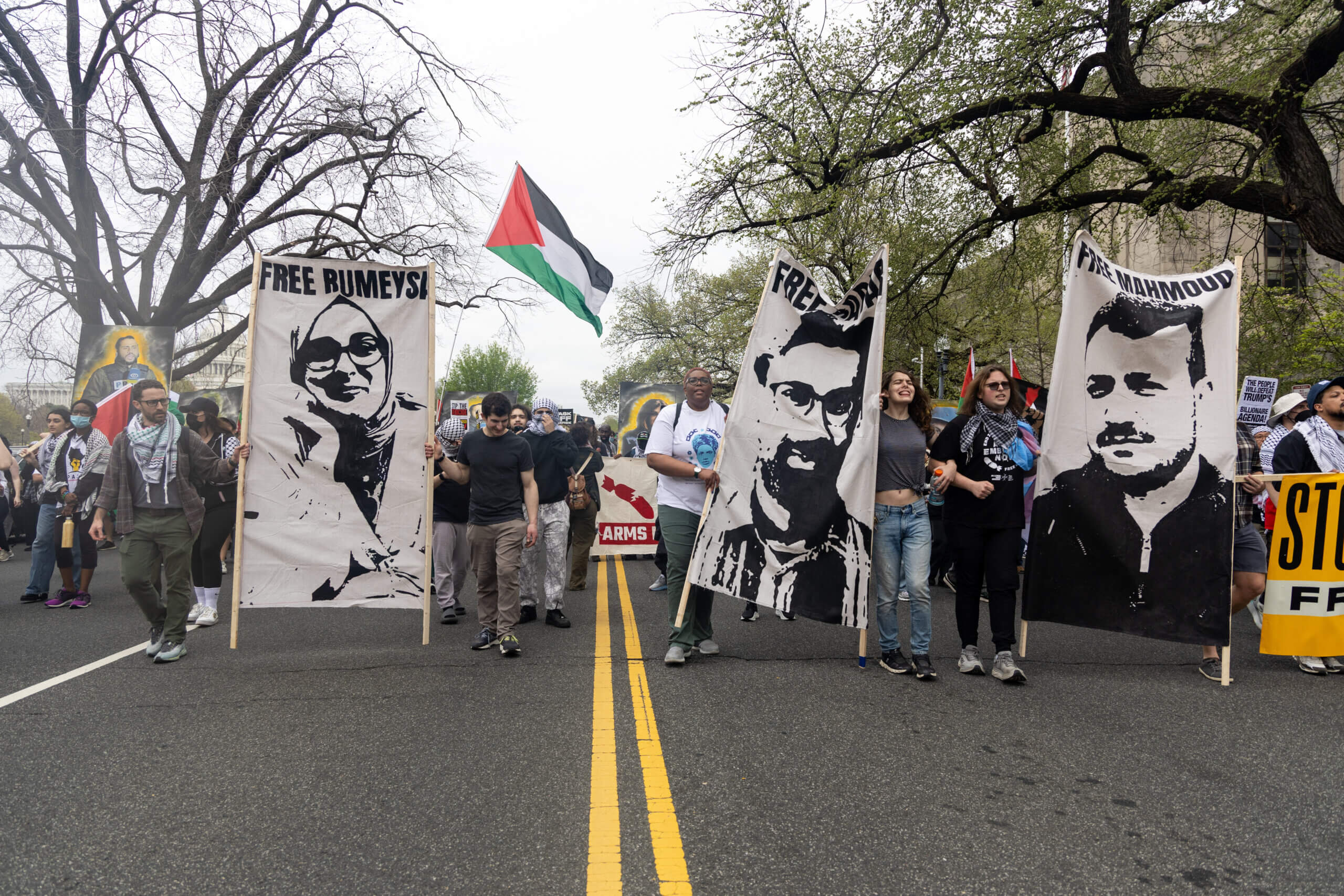
After Khalil was arrested, immigration agents also detained Leqaa Kordia and Mohsen Mahdawi, two other international students who had participated in the Columbia protests, Rümeysa Öztürk, a Turkish graduate student at Tufts University who had written an op-ed critical of Israel, and Badar Khan Suri, an Indian Georgetown researcher. The arrests were part of a sweeping crackdown that ultimately resulted in the State Department canceling more than 800 student visas, though not all were targeted for political reasons.
The government has struggled to keep those it arrested in detention and Kordia, Mahdawi, Öztürk and Khan Suri have since been released — Kordia just last week — though the Justice Department is still seeking to deport Kordia, Khalil and Mahdawi.
“It felt like we were being hunted,” Alwan, the Columbia undergraduate student leader, told The Blue and White. “Even as a U.S. citizen, I was scared because it felt like we had exited the realm of law and logic.”
Khalil thinks something else was at play.
He believes the government was incompetent and did not understand that some protesters were more radical — and easier to paint as threats to national security — than others, and may have erred in turning him into something of a poster child for the movement.
But he believes the pro-Israel groups that targeted him online, and encouraged the Department of Homeland Security to deport him, realized that it was the very nature of his moderate brand of anti-Zionism that made him a threat.
“It was very malicious and very targeted,” Khalil said. “They did not want someone who can actually present a viable solution where everyone can live in peace.”
The post Mahmoud Khalil wants to reassure you appeared first on The Forward.
Uncategorized
Yiddish Modernism and the political tumult in the 1930s
אין די 1920ער און 1930ער יאָרן האָט דער זשורנאַל „אין זיך“ געדינט װי אַ טריבונע פֿאַר מאָדערניסטישע עקספּערימענטן אין דער אַמעריקאַנער ייִדיש־ליטעראַטור. צו די „אינזיכיסטן“ האָבן געהערט יעקבֿ גלאַטשטײן, אַהרן גלאַנץ־לעיעלעס, ה. לײװיק, שלמה שװאַרץ, יהודה לײב טעלער און אַנדערע.
װי מען קען טרעפֿן פֿונעם זשורנאַלס נאָמען, זײַנען די דאָזיקע ליטעראַטן געװען פֿאַרטאָן אין שעפֿערישע חקירות אַרום דעם אײגענעם „זיך“. און טאַקע, אין די 1920 יאָרן האָט „אין זיך“ ניט געהאַט קײן אינטערעס צו די פּאָליטישע דאגות־היום.
אָבער דאָס האָט זיך געביטן נאָך 1934, װען גלאַטשטײן איז געװאָרן דער רעדאַקטאָר פֿונעם זשורנאַל. דער דאָזיקער תּקופֿה איז געװידמעט דאָס נײַע בוך פֿון איתי זוטרא (אוניװערסיטעט פֿון מאַניטאָבאַ, קאַנאַדע) „אינזיכיזם: ייִדיש־דיכטונג און די ייִדישע אידענטיטעט אין אַמעריקע אין די 1930ער יאָרן“.
גלאַטשטײן האָט פֿאַרטײדיקט די שעפֿערישע אױטאָנאָמיע פֿונעם דיכטער קעגן די אַנגאַזשירטע קאָמוניסטישע קריטיקער װי אַלכּסנדר פּאָמעראַנץ, װאָס האָבן געפֿאָדערט, אַז ליטעראַטור זאָל דינען די אינטערעסן פֿון די פּראָלעטאַרישע מאַסן.
אַזױ איז גלאַטשטײנס אײגענע פּאָעטישע שאַפֿונג געװאָרן אַ מין פּאָליטישע פּאָזיציע. די דאָזיקע פּאָליטיק, האַלט זוטרא, האָט משפּיע געװען אויף זײַן ליטעראַרישן סטיל און דעם סטיל פֿון אַנדערע מחברים פֿון „אין זיך“.
גלאַטשטײן האָט געעפֿנט די זײַטן פֿון „אין זיך“ פֿאַר פּאָליטישע װיכּוחים. ער אַלײן איז אַרױס מיט אַ פֿאָרשלאָג צו שאַפֿן אַ פּאַרטײ, װאָס זאָל זײַן אי פּאָליטיש ראַדיקאַל אי ייִדישיסטיש, הגם קײן פּראַקטישע פּראָגראַם האָט ער ניט פֿאָרגעלײגט.
להיפּוך צו אַנדערע ראַדיקאַלע פּאַרטײען, קודם־כּל דער קאָמוניסטישער, איז דער הױפּטציל פֿון גלאַטשטײנס פּאַרטײ געװען צו פֿאַרטײדיקן ייִדישע נאַציאָנאַלע אינטערעסן. דאָס איז געװען ספּעציעל װיכטיק אין דער צײַט װען דער אַנטיסעמיטיזם האָט געהאַלטן אין אײן װאַקסן אין אײראָפּע.
גלאַטשטײן האָט פֿאַרבעטן ייִדישע ליטעראַטן אַרומצורעדן זײַן פּראָיעקט אױף די זײַטן פֿונעם זשורנאַל. לרובֿ זײַנען זײ ניט געװען אײַנשטימיק מיט גלאַטשטײן. דער עיקר זײַנען זײ געװען קעגן דער אידײ, אַז די אינטעלעקטואַלן דאַרפֿן װערן פּאָליטישע אָנפֿירער פֿון די מאַסן.
חוץ דעם, װי עס האָט באַמערקט חיים זשיטלאָװסקי, זײַנען שױן דאָ געװען גענוג פּאָליטישע פּאַרטײען אין װעלכע ייִדן האָבן זיך אַקטיװ באַטײליקט. צו שאַפֿן נאָך אַ פּאַרטײ װאָלט ניט געהאָלפֿן צו פֿאַרבעסערן דעם מצבֿ פֿון ייִדן.
דער אינזיכיזם, האַלט זוטרא, איז בטבֿע געװען עקלעקטיש סײַ פּאָעטיש און סײַ פּאָליטיש. מען האָט ניט געהאַלטן פֿון טראַדיציאָנעלע זשאַנערס און סטילן. אָפֿט מאָל האָט מען עקספּערימענטירט מיט מישן פּראָזע און פֿערזן.
אין די 1930ער יאָרן האָבן די ליטעראַרישע עקספּערימענטן באַקומען אַ פּאָליטישן אַקצענט. סײַ אין דער קונסט און סײַ אין דער פּאָליטיק האָבן די אינזיכיסטן געזוכט אַן ענטפֿער אױף דער עיקר־פֿראַגע: װאָס איז דער עצם פֿונעם ייִדישן „זיך“ אין אַמעריקע אין דער מאָדערנער תּקופֿה?
דער אינזיכיזם איז געװאָרן אַ נײַער מין ייִדישיזם: אַ קולטורעלע און פּאָליטישע אידעאָלאָגיע, װאָסער ציל איז געװען צו פֿאַראײניקן פֿאַרשײדענע פּאָליטישע שטרעמונגען אױפֿן סמך פֿון דער ייִדישער שפּראַך און דער מאָדערנער װעלטלעכער ייִדיש־קולטור.
גלאַטשטײן האָט געגלױבט, אַז װערטער דאַרפֿן טראָגן דעם װירקלעכן אמת, בפֿרט אין די צײַטן, װען כּלערלײ טאָטאַליטאַרישע רעזשימען האָבן פֿאַרשפּרײט ליגנס פֿאַר די צװעקן פֿון זײער מערדערישער פּראָפּאַגאַנדע.
אינעם בוך לידער „ייִדישטײַטשן“, װאָס איז אַרױס אין װאַרשע אין 1937, האָט גלאַטשטײן געפּרוּװט דערגרײכן די טיפֿסטע פֿאָנעטישע און לעקסישע װאָרצלען פֿון דער ייִדישער שפּראַך.
אין די שורות „אַלטער בױם, פֿעלדז און שטאַם / כ׳קום צו דיר מיט ברױט און גראַם“ דריקט גלאַטשטײן אױס זײַן פּאָזיציע לגבי דער ייִדישער קולטור־ירושה. ער קומט מיט זײַן אַמעריקאַנער „ברױט און גראַם“ צו דעם „אַלטן בױם“ פֿון ייִדיש כּדי צו שעפּן שפּראַכלעסע יניקה פֿאַר זײַן פּאָעזיע.
זוטרא אַנטפּלעקט אין „ייִדישטײַטשן“ סאַטירישע אונטערטענער, װאָס מאַכן חוזק סײַ פֿון די פֿאַשיסטן און קאָמוניסטן און סײַ פֿון די אַמעריקאַנער אַסימילאַטאָרן.
די צװײטע צענטראַלע פֿיגור אינעם אינזיכיזם איז געװען דער דיכטער, קריטיקער און זשורנאַליסט אַהרן גלאַנץ־לעיעלעס. אין 1937, אײנצײַטיק מיט גלאַטשײטנס „ייִדישטײַטשן“, איז אַרױס גלאַנץ־לעיעלעס בוך לידער „פֿאַביוס לינד“.
אין הסכּם מיט די עסטעטישע פּרינציפּן פֿונעם אינזיכיזם איז דאָס דאָזיקע בוך אַ מישמאַש פֿון סטילן, זשאַנערס און שטאַנדפּונקטן, װאָס זײַנען פֿאַרקניפּט דורך דער פֿיגור פֿונעם הױפּטהעלד. דאָס איז אַ פּאָעטישער סך־הכּל פֿונעם איניזכיסטישן פּעריאָד אין לעיעלעסעס שאַפֿונג, האַלט זוטרא.
„פֿאַביוס לינד“ האָט באַקומען התלהבֿותדיקע אָפּרופֿן מצד די קריטיקער. גלאַטשטײן האָט געהאַלטן דאָס בוך פֿאַר דער „ערשטער גרױסשװוּנגיקער און גרױסשטאָטישער פּאָעמע אין דער ייִדישער פּאָעזיע“, און ה. לײװיק האָט עס געלױבט פֿאַר זײַן „אָרגאַנישער גאַנצקײט“.
די פֿיגור פֿון פֿאַביוס לינד איז ניט קײן אױטאָביאָגראַפֿישע. זוטרא מאַכט אַ פּרוּװ צו אַנטפּלעקן די פֿאַרפּלאָנטערטע באַציִונגען צװישן דעם מחבר אַהרן גלאַנץ־לעיעלעס, זײַן פּאָעטישער פּערזאָן אַ. לעיעלעס, און זײַן אױסגעטראַכטן „אַלטער עגאָ“ — פֿאַביוס לינד.
לינד פֿיגורירט אינעם בוך װי אַ צעשפּאָלטענע פּערזענלעכקײט: „פֿאַביוס לינד פֿיל לעבנס פֿירט ער“. ער איז סײַ אַ פּראָדוקט און סײַ אַ קרבן פֿון זײַן תּקופֿה.
לינד האָט ספֿקות װעגן כּלערלײ פּראָיעקטן צו לײזן די „ייִדישע פֿראַגע“, אינעם סאָװעטישן ביראָבידזשאַן אָדער אינעם העברעיִש־רעדנדיקן ייִשובֿ אין ארץ־ישׂראל.
חוץ לידער האָט גלאַנץ געשריבן פּאָליטישע קאָמענטאַרן אין דער ליבעראַלער צײַטונג „דער טאָג“. להיפּוך צו גלאַטשטײן האָט ער ניט פֿאַרטראַכט קײן אײגענע פּאָליטישע פּראָיעקטן. זײַן פּאָליטישער שטאַנד איז געװען אין הסכּם מיטן פּראָגרעסיװן הױפּטשטראָם פֿון פֿראַנקלין רוזװעלטס „ניו דיל“.
דער לעצטער נומער פֿון „אין זיך“ איז אַרױס אין 1940, װען אײראָפּע איז שױן געשטאַנען אױפֿן שװעל פֿונעם חורבן. דער קאָנפֿליקט צװישן אַלװעלטלעכקײט און ייִדישקײט, װאָס איז געװען די צענטראַלע טעמע פֿון די אינזיכיסטישע חקירות, איז געלײזט געװאָרן לטובֿת ייִדישקײט.
גלאַטשטײן האָט פּראָקלאַמירט: „אַ גוטע נאַכט, ברײטע װעלט. […] אױף מײַן אײגענעם געבאָט גיי איך צוריק אין געטאָ“. דאָס איז געװען דער סוף פֿונעם ייִדישן מאָדערניזם, פֿאַרסך־הכּלט זוטרא.
די פּאָעטישע קולטור־ירושה פֿון די אינזיכיסטן איז פֿאָרגעשטעלט געװאָרן פֿאַרן ענגליש־שפּראַכיקן עולם אין דער פּרעכטיקער צװײ־שפּראַכיקער אַנטאָלאָגיע „אַמעריקאַנער ייִדישע פּאָעזיע“, װאָס איז אַרױס אין 1986 אונטער דער רעדאַקציע פֿון בנימין און באַרבאַראַ האַרשאַװ.
אין דער הקדמה האָט בנימין האַרשאַװ פּרטימדיק אַנאַליזירט די פֿאָרמעלע און סטיליסטישע חידושים, װאָס די אינזיכיסטן האָבן אַרײַנגעבראַכט אין דער ייִדישער פּאָעזיע אין די 1920ער יאָרן, אָבער ער האָט קױם באַרירט זײער פּאָליטיק.
זוטראס בוך באַטראַכט די אינזיכיסטישע שעפֿערישקײט אונטער אַן אַנדערן קוקװינקל. אין די 1930ער יאָרן זײַנען פּאָליטיק און פּאָעזיע געװאָרן נאָענט צונויפֿגעפֿלאָכטן אין די װערק פֿונעם לעצטן דור אַמעריקאַנער ייִדישעמאָדערניסטן.
The post Yiddish Modernism and the political tumult in the 1930s appeared first on The Forward.
Uncategorized
I never saw myself in Barbie. Would ‘Hanukkah Barbie’ have changed that?

I wasn’t really a Barbie kid. While I occasionally played with my sister’s hand-me-down Barbies, I preferred American Girl dolls. They were Barbie’s chunkier, cherubic counterparts, each representing a girl from a different period in history and accompanied by a series of historical-fiction books about her life. I devoured those books, including the story of Rebecca Rubin, a 9-year-old Russian-Jewish immigrant living on the Lower East Side in the early 1900s.
So when Mattel released its first Hanukkah Barbie last week — officially marketed as the “Barbie Holiday Sweater Doll” — I wondered whether she would have appealed to me when I was growing up. Would her Jewishness have made her feel more relatable than that blonde-haired, blue-eyed, impossibly proportioned bombshell?
As it turns out, I wasn’t the only one thinking about what it means for Barbie to look Jewish. Shortly after her release, Hanukkah Barbie set off a spirited debate over her appearance. Her nose seemed slightly more prominent than the default Barbie button nose, raising questions about whether Hanukkah Barbie’s face reinforced Jewish stereotypes, or if her distinctive nose reflected a good-faith effort to give the doll recognizably Jewish features.
It was at least clear that Mattel did its homework about the Festival of Lights. The hanukkiah on Barbie’s sweater has the correct number of candleholders, and the dreidels bear accurate Hebrew lettering — which is more than can be said about a lot of Hanukkah merchandise. If sales are any indication, Hanukkah Barbie is resonating. The doll, which originally retailed for about $30, is sold out, with third-party sellers now asking for as much as $345.
There have previously been Barbies modeled after Jewish celebrities, including Olympic gymnast Aly Raisman, Israeli Olympic surfer Anat Lelior and fashion designer Diane von Furstenberg. But Hanukkah Barbie is the first Barbie whose identity is simply Jewish — which means she will have the impossible task of representing Jews of all kinds. Sephardic and Ashkenazi Jews, religious and secular Jews all have to somehow find themselves in the same doll.
Complicating matters, the original blonde Barbie has arguably been Jewish all along. Ruth Handler, the daughter of Polish-Jewish immigrants, invented Barbie in 1959, naming “Barbie” after her daughter, Barbara, and “Ken” after her son, Kenneth. “Barbie is a matrilineal Jew? Love it!” one Reddit user joked last month.
But Barbie was always a little too Aryan-coded to feel Jewish to me. Her origins go back to the postwar German ideal of blonde, white femininity. Handler drew inspiration for Barbie’s look from a German toy named Bild Lilli, marketed toward men as a gag gift and sold in bars and tobacco shops. That doll, in turn, was based on the comic-strip character Lilli, characterized by Barbie’s unofficial biographer M.G. Lord as “a golddigger, exhibitionist, and floozy” who worked as a secretary while looking for a wealthy husband. Bild Lilli was manufactured by O.M. Hausser, a toy company that had produced Adolf Hitler figurines during the 1930s.
No wonder stereotypically Ashkenazi-looking Jews like me, not to mention everyone else who also didn’t fit the Barbie mold, felt left out of Barbie-land. (Which is literally everyone, given that scaled up to human size, a traditional Barbie doll’s proportions would make her unable to survive; there’d be no room for her organs in her tiny waist, and she’d have no choice other than to walk on all fours.)
Over the years, Barbie has become far more inclusive. After the debut of the “Colored Francie” doll in 1967, Barbie expanded to include dolls of different races, body types and abilities, including dolls with prosthetic limbs and wheelchairs and, in 2016, the long-awaited introduction of “curvy,” “petite” and “tall” Barbies. Mattel introduced career-themed dolls in the 1960s, evolving from fashion designer, nurse, and flight attendant to a presidential candidate Barbie in 1992.
The American Girl doll, which Mattel acquired in 1998, was part of a similar response to the limitations of the traditional fashion doll. Created by teacher Pleasant Rowland in 1986, American Girl was designed to help girls see themselves in their dolls while making history feel personal and engaging.

Of course, little kids aren’t thinking so much about the sociological implications of their toy choices. For my part, my mom bought me an American Girl look-alike doll with my brunette hair and choppy bangs, hoping that seeing myself reflected in a doll would help build my self-esteem. But I also gravitated toward a blonde-haired, blue-eyed American Girl doll that looked more Barbie-esque, which I begged my mom to buy.
Looking back, I wonder how much of the Barbie beauty standard I had subconsciously absorbed, even with an array of representative dolls at my disposal. Hanukkah Barbie may more closely resemble women like me. But changing the default cultural image of Barbie will take more than a doll with a light-up Hanukkah sweater.
The post I never saw myself in Barbie. Would ‘Hanukkah Barbie’ have changed that? appeared first on The Forward.
Uncategorized
Minnesota man charged with ISIS-inspired plot on Jewish-owned Mall of America
(JTA) — The FBI accused an 18-year-old man of buying an AK-47 assault rifle with plans to commit a mass shooting in support of ISIS at the Mall of America in Bloomington, Minnesota, the largest indoor shopping mall in North America.
Sheikhdoon Abdullahi Mohamud, of Richfield, Minnesota, was charged on Wednesday with one count of knowingly receiving a firearm and ammunition in order to commit a federal crime of terrorism, according to a federal complaint filed on Wednesday.
Mohamud’s attorney did not respond to JTA’s request for comment.
Mohamud wanted to attack the Mall of America because he believed its owners to be Jewish, the FBI said in a statement. He planned to kill between 30 and 60 people, according to messages he exchanged with a confidential source, according to the complaint.
Mall of America is owned and operated by Triple Five Group, controlled by the Ghermezian family, a Canadian family of Iranian Jewish origin.
Messages sent in September 2026 included a video in which Mohamud pledged allegiance to ISIS, the complaint said. He planned his attack for Oct. 24 because he expected a crowd at the Hmong Arts Celebration scheduled for that day.
The complaint said an undercover FBI agent sold an AK-47 rendered inoperable, four 30-round magazines and 200 rounds of ammunition to Mohamud for $600 on Oct. 6. During the sale, Mohamud confirmed his plans to commit a mass shooting. Mohamud was arrested shortly after the sale.
The complaint said Mohamud wanted to commit an attack similar to the 2016 Pulse nightclub shooting in which 49 victims were killed; the Bondi Beach mass-shooting in Sydney last December, during which 15 victims were killed during a Hanukkah celebration; and a New Orleans truck-ramming attack that killed 14 victims in New Orleans on Jan. 1, 2025.
The investigation into Mohamud began around December 2024, when he messaged the confidential source on multiple social media platforms, according to the complaint, detailing his desire to travel to Somalia to join a group that the U.S. has designated a foreign terrorist organization. If travel was not possible due to financial constraints, he said would move forward with an attack in Minnesota.
This article originally appeared on JTA.org.
The post Minnesota man charged with ISIS-inspired plot on Jewish-owned Mall of America appeared first on The Forward.
