



Uncategorized
This national park would honor a Jewish philanthropist — if Republicans get back on board
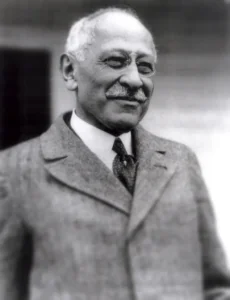
The political climate is hardly favorable for a new national park centered on racial justice.
President Donald Trump this week called for sweeping budget cuts to the National Park Service and, in January, for the removal of slavery-related exhibits he said portray American history in a “woke manner.”
Yet a campaign to establish a national historic park honoring Julius Rosenwald — the Jewish philanthropist who funded schools for rural Black communities during the Jim Crow era — is pressing ahead.
Dorothy Canter, who launched the campaign in 2018, sees an opening for the park to finally become a reality. In February, Sen. Dick Durbin (D-Ill.) introduced legislation to create the Rosenwald National Historic Park, backed by seven Democratic co-sponsors.
But advancing the bill out of committee — much less to President Trump’s desk — will require Republican support. At a time when even the mildest celebration of diversity can be deemed an excess of the “woke” left, Canter is betting that Rosenwald’s story will be the exception.
“The environment is not the best, obviously, but this is a story that should appeal to anyone,” Canter told the Forward. “This is a positive story. Nobody can say it’s DEI.”
Rosenwald’s Legacy
Rosenwald was born in Springfield, Illinois, the son of German-Jewish immigrants. At 16, he dropped out of high school to pursue the family clothing business.
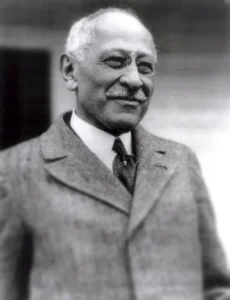
In 1895, he invested $37,500 in Sears, Roebuck & Company — a decision that would ultimately make him one of the wealthiest men in the United States in the early 20th century.
But guided by the Jewish value of tzedakah, he gave much of that fortune away. In 1911, he met Booker T. Washington, the formerly enslaved founder of the Tuskegee Institute, a training center for African American teachers. Washington urged Rosenwald to invest in Black education in the South.
Rosenwald would go on to help fund nearly 5,000 schools for Black students across 15 states. By 1928, one in three Black students in the rural South attended a Rosenwald school. Alumni of Rosenwald schools would include congressman John Lewis, poet Maya Angelou and civil rights activist Medgar Evers.
Canter, a retired biophysicist and national parks enthusiast, first learned about Rosenwald as an adult through a documentary — and was struck that this story of Black-Jewish cooperation was not more widely known.
“I knew that there was not one national park unit among the more than 400 that commemorated the life and legacy of a Jewish American, or told the story of Rosenwald schools,” Canter said. “And I can tell you that today, almost 11 years later, that is still the case.”
There are national historic sites and monuments honoring Jewish Americans, including the Rosenwald family home and the David Berger National Memorial. But a national historic park — a designation that often spans multiple sites and has greater cultural cache — has yet to honor a Jewish American.
Part of Rosenwald’s relative obscurity, Canter said, stems from his own philosophy. Rosenwald embraced a “give while you live” approach and did not believe in permanent endowments, requiring that the Rosenwald Fund spend all of its money within 25 years of his death.
That approach has yielded severe financial challenges decades later. Today, only about 10% of the more than 5,000 Rosenwald school structures remain, according to Brent Leggs, executive director of the African American Cultural Heritage Action Fund at the National Trust for Historic Preservation.
The Trust placed Rosenwald schools on its 2002 list of America’s 11 most endangered historic places, warning of an “urgent crisis of erasure, abandonment and deterioration.”
Many of the schools were built in rural areas that have since been abandoned, Leggs said, adding that the buildings were made of wood that has slowly decayed. The loss is personal for him: Upon researching the history for his job, Leggs discovered that both of his parents attended Rosenwald schools in Kentucky.
“It was a transcendent moment for me,” he said, “because I remember being at a school building that was literally vanishing history.”
The surviving schools have mixed ownership, Leggs said. Some act as local community centers, while others operate as commercial or office spaces, such as the Caldwell Rosenwald School in Huntersville, North Carolina — today, home to Burgess Supply, a carpet store.
A bipartisan issue?
In the final days of his first presidency, Trump gave a significant boost to the campaign for a Rosenwald national park.
He signed the Julius Rosenwald and the Rosenwald Schools Act into law, directing the Department of Interior to conduct a study assessing the feasibility of establishing the park. Eight Republicans had cosponsored the bill, and it passed with broad bipartisan support.
The study “resulted in positive findings,” concluding that the San Domingo School in Sharptown, Maryland, met all the criteria for a national park and recommending that Congress create a grant program to support the preservation of additional Rosenwald schools.
But Republican backing for a national park honoring Rosenwald’s legacy now appears to have waned.
The Forward called and emailed the three Republicans who cosponsored the 2020 bill and are still in office. None responded to the Forward’s question about their position on Durbin’s bill to establish the Rosenwald park.
A White House spokesperson directed the Forward to the national historic site at the Rosenwald family home but declined to say whether Trump was supportive of the national park commemorating Rosenwald schools.
Rep. Andy Harris, a Maryland Republican, went so far as to send a letter to President Joe Biden in 2024 expressing his support for “the expedited designation of a Julius Rosenwald And Rosenwald Schools National Park.”
His office did not respond to the Forward’s request for comment.
Nor did the office of Tim Scott, the Republican senator from South Carolina who previously advertised his support for the restoration of Rosenwald schools in his state. “Booker T. Washington helped build thousands of schools for Black children, advancing impactful educational opportunities throughout the South,” he tweeted in February 2024. “With the restoration of Rosenwald School, his legacy lives on in South Carolina. #BlackHistoryMonth”
‘A story for our time’
Durbin’s bill arrives just as the agency that would create a park faces drastic proposed cuts: Trump this week proposed funding for the already understaffed National Park Service be reduced by $736 million, or 25% of its budget.
Meanwhile, the president has sought to recast historical narratives at existing parks. In January, Trump ordered the National Park Service dismantle an exhibit about nine people enslaved by George Washington. Earlier this month, the Trump administration directed the removal of a pride flag from the Stonewall National Monument in New York City.
Yet Rosenwald’s story doesn’t fit neatly into the culture-war themes that Trump has singled out. Rosenwald himself was a political conservative, a laissez-faire businessman and steadfast Republican who believed in fostering economic self-sufficiency through education.
Dennis Ross, a former Republican congressman from Florida who retired from office in 2019 and has supported the Rosenwald park campaign, told the Forward he sees Rosenwald’s story as one conservatives should embrace.
“I’ve heard the argument that this is a way of trying to backdoor DEI. I totally disagree and take issue with that. This is showing what American history is all about,” Ross said. “If you were to dwell on the oppression of slavery, then maybe that argument might work. But I think the important thing is to look at the transition, the evolution from slavery to success.”
Canter is also optimistic, and said she plans to meet with a Republican senator — she declined to provide a name — whose staff has expressed interest in the park. As to whether Trump would sign the bill: She hopes the campaign will have the opportunity to put it on his desk.
“People with different backgrounds and cultures were able to come together, work together, find common ground and move this country forward,” Canter said. “So if that isn’t a story for our time, I don’t know what is.”
The post This national park would honor a Jewish philanthropist — if Republicans get back on board appeared first on The Forward.
Uncategorized
Israel should be concerned by international court’s genocide ruling on Myanmar, experts say
(JTA) — JERUSALEM – The International Court of Justice’s ruling that Myanmar committed genocide against the Rohingya could make it easier for South Africa to prove its genocide case against Israel over the war in Gaza, legal experts told the Jewish Telegraphic Agency.
The genocide charges stem from Myanmar’s military campaign against the Rohingya, a predominantly Muslim ethnic minority, in 2016-17, in violation of the Genocide Convention. Myanmar was accused of mass killings, rape and other sexual violence, attacks on children and the destruction of villages.
South Africa accused Israel of violating the Genocide Convention for its actions in the Gaza war, which was sparked by attacks in southern Israel on Oct. 7, 2023, in which Hamas and other armed groups killed about 1,200 people and took 251 people hostage. More than 74,000 Palestinians were killed in the war that followed, according to data from the Hamas-run Gaza health ministry, which does not distinguish between civilian and combatant deaths. Israel’s accusers say the IDF’s actions are evidence of mass killings and the intent to destroy Palestinians as a group..
The Nov. 19 judgement against Myanmar marked the first time the ICJ has found a state guilty of genocide. That finding has implications for Israel, which pro-Palestinian proponents already hold to be guilty, but which has never been tried or convicted in a court of law.
“Now we have a precedent against which one can measure the conduct of Israel in the Gaza war,” said Yuval Shany, a professor in international law at the Hebrew University and a senior researcher at the Israel Democracy Institute. As a result, the lawyers defending Israel against genocide charges “have reason to be apprehensive.”
In setting this standard, the ICJ took a broader approach in weighing evidence of what constitutes genocidal intent, he explained.
For the first time, Shany said, the ICJ “moved from a narrow test of factual inferences” to define what is and isn’t genocide “to a much broader, holistic evaluation of the entire record of evidence.”
Prior to the Myanmar case, he said, “there were very specific patterns of conduct that the applicant had to prove, and on that basis draw a genocidal intent finding. Now we’re in a much more open field, where a lot of factors can come into the analysis. That makes outcomes much more unpredictable.”
The ICJ held its first public hearings on genocide charges against Israel in January 2024, after South Africa filed its case December 2023. The case is now in its second round of written submissions. South Africa’s reply is due Nov. 22, 2027, and Israel’s response is due May 22, 2029. The court has yet to schedule hearings on the merits.
The Gaza situation is not an exact duplicate of the one in Myanmar, from either a geographic or military perspective. Shany said it remains to be seen whether the court will recognize the difference between the two conflicts. While the Arakan Rohingya Salvation Army militia attacked Myanmar’s soldiers with fewer than 100 firearms, Hamas is an Iranian proxy with tens of thousands of fighters. Israel says it has taken measures to reduce Palestinian civilian casualties by issuing warnings and evacuation orders, establishing humanitarian zones and vaccinating Palestinian children.
In a 9-to-6 decision, the ICJ found that Myanmar’s soldiers targeted civilians, including children, destroyed villages, and raped Rohingya women during their 2017 military operations against the Arakan Rohingya Salvation Army militia. Myanmar’s security forces killed more than 10,000 Rohingya. Hundreds of thousands fled to Bangladesh, where they live in refugee camps.
That the army was fighting against a militia did not justify these actions, the judges said.
Taken as a whole, these actions supported what the court called “the inference” that Myanmar consciously intended to destroy part of the Rohingya population and failed to prevent genocide. It instructed the Myanmar government to conduct an internal investigation and hold those guilty accountable. It also ordered the government to provide reparations to Rohingya survivors, and to facilitate their return to Myanmar.
Shany said the criteria the ICJ used – including longstanding discrimination against the Rohingya; hate speech by government officials, the media and others; the destruction of homes and villages; and forced displacement – were evidence of “genocidal intent” that potentially could be applied to IDF actions in Gaza.
The way the ICJ viewed the destruction of Rohingya homes, coupled with mass deportations, “is going to be highly relevant in the Israel case, where many Palestinians were instructed to evacuate their homes, and many of these homes were later destroyed,” Shany said.
He added that Israel’s warnings to Palestinian civilians before attacks – something the IDF says was done to save civilians’ lives – could help prove genocidal intent.
“I would expect that warning civilians before attacks would be used to negate the claim that Israel operated out of a genocidal intent, but one cannot exclude the possibility that some judges might interpret the factual record differently and regard warnings as an ineffective protection measure that was actually part of a sinister plan to deport and harm the population,” he said.
Avraham Russell Shalev, a lawyer who directs the International Law Department at the Kohelet Policy Forum, said the fact that Israel’s case differs substantially from Myanmar’s is no guarantee that Israel will prevail.
“On the one hand,” Shalev said, “six of the 15 judges said Myanmar didn’t commit genocide, that it didn’t meet the threshold.” On the other hand, “a few things are very concerning: the court’s reliance on United Nations fact-finding missions and NGO reports, both of which are politicized,” said Shalev. He pointed out the participation in both situations of Navanethem “Navi” Pillay, who headed the U.N. commission of inquiry on Israel and who says that Israel is guilty of genocide.
Pillay, who served as an ad hoc judge at the ICJ’s case against Myanmar, was awarded the 2026 Nobel Prize for Peace. She served as the U.N. High Commissioner for Human Rights from 2008-2014. In 2025, she also chaired the U.N. Independent International Commission of Inquiry on the Occupied Palestinian Territory, including East Jerusalem, and Israel. The commision, which is not a court, concluded that Israel committed genocide against the Palestinian people, a charge Israel has rejected.
Shalev, like Shany, said he is concerned about the Myanmar precedent: “Even if the court rules that Israel didn’t commit genocide, some judges will still say it did. Nothing good will come out of this.”
David Scheffer, a senior fellow at the Council on Foreign Relations and the first U.S. ambassador-at-large for war crimes issues, said Israel “should be concerned” about how the ICJ pieced together evidence in a “holistic” way to infer genocidal intent by Myanmar.
“The ICJ relied on witness testimony and other evidence compiled by U.N. investigative bodies, which themselves relied in part on evidence provided by civil society groups. There is plenty of such purported evidence regarding Gaza, so the issue will be how the judges consider the quality and veracity of such evidence.”
As with Myanmar, Scheffer said, “the judges will examine alleged discriminatory laws and policies of Israel against the Palestinian population of Gaza as well as alleged hate and incitement speech by Israeli officials and any manipulation of social media by Israeli authorities.”
Furthermore, the Myanmar military’s behavior “will be an important comparative tool applied by the judges in studying the character of the IDF’s post-October 7 destructive military operations throughout Gaza,” Scheffer said.
At the same time, Scheffer believes that the judges who will rule on Israel will carefully examine the six dissenting opinions.
“The strength of the dissenting views in the Myanmar case may resonate with some of these new judges,” he said. It is “entirely possible” that the ICJ will not determine that Israel committed genocide, on technical grounds, but did commit war crimes and/or crimes against humanity.
“Such a finding will defeat the genocide charge, but it will inflict upon Israel’s reputation a judicial assessment of non-compliance with the law of war and international humanitarian law,” Scheffer said.
This article originally appeared on JTA.org.
The post Israel should be concerned by international court’s genocide ruling on Myanmar, experts say appeared first on The Forward.
Uncategorized
Israeli president calls for Netanyahu and his prosecutors to reach agreement to end trial
(JTA) — JERUSALEM – Israeli President Isaac Herzog on Sunday called on the prosecutors in Prime Minister Benjamin Netanyahu’s criminal trial and the prime minister’s lawyers to “engage in dialogue under the auspices of the President’s Residence, with the aim of reaching agreements and bringing the trial to an end.”
In a statement, Herzog proposed “holding substantive and in-depth dialogue, with open hearts and a genuine willingness, in order to reach agreements.”
His comments come following comments last week by presiding Judge Rivka Friedman-Feldman, who said the likelihood of reaching convictions against Netanyahu in three long-running criminal cases for bribery, fraud and breach of trust was low. She called on prosecutors to consider dropping one of the cases and reconsider the charges in another alleging he granted favors in exchange for positive media coverage.
Netanyahu, who has denied wrongdoing in all three cases, called the court’s recommendation a “ray of light for truth and justice.”
“Who will give us back those years? 10 years of suffering for dozens of my associates, who were humiliated and interrogated using criminal methods, many of whose lives were ruined just to get them to give false testimony against me,” Netanyahu said in a televised statement from the Knesset last week.
Responding to the Herzog on Sunday, Netanyahu’s defense team — Amit Hadad, Israel Wolnerman and Noa Milstein — said they would attend a meeting at the president’s residence.
“In light of the judge’s comments, there is no doubt that the trial must be concluded as early as possible,” they wrote in a statement.
The attorney general’s office also said prosecutors were willing to engage in dialogue with Netanyahu’s defense and that they would do so after “a review of all the court’s comments, through an orderly and expedited process with the prosecution team.”
Several months ago, Herzog called on the sides to engage in such dialogue but, his statement said, Netanyahu’s attorneys at that time did not respond.
This article originally appeared on JTA.org.
The post Israeli president calls for Netanyahu and his prosecutors to reach agreement to end trial appeared first on The Forward.
Uncategorized
NBC pulls anti-Israel ad aired during ‘SNL’ Thanksgiving special after Jewish groups complain
(JTA) — NBC has pulled a commercial linking U.S. aid to Israel to the injuries of a Palestinian child, which the network aired Wednesday during “Saturday Night Live’s” Thanksgiving Eve special.
The 30-second spot from the IMEU Policy Project showed a suburban American girl doing chores to save for a $400 bike. The footage then flipped from her satisfied smile to the distraught face of a girl in Gaza, zooming out to reveal her standing in front of rubble on an amputated leg and crutches.
“Every three seconds, our government sends $400 of taxpayer money to Israel to do this,” said a voiceover narrator.
The IMEU Policy Project is a Palestinian rights advocacy group affiliated with the Institute for Middle East Understanding. The ad, created for the organization’s “No More For Israel” campaign, directs viewers to a website that includes a form for contacting one’s congressperson.
The New York Post, TheWrap and Wall Street Journal reporter Joe Flint reported Friday that NBC would not be re-airing the ad. They added that the network planned to evaluate its review process.
NBCUniversal did not immediately reply to JTA’s request for comment.
The IMEU Policy Project said in a statement Friday that it was “disheartened” by reports NBC had pulled the commercial.
The organization identified the girl in the commercial as Meral al-Babli, a 9-year-old it said was injured when the Israeli army bombed her home in Gaza, killing her mother and grandmother.
“All of this is indisputable, which is why our advertisement passed NBC’s stringent fact-checking requirements,” the organization wrote.
The commercial elicited widespread backlash in the Jewish world even before it aired.
The Anti-Defamation League, the Orthodox Union and the Union for Reform Judaism and a raft of other Jewish religious and advocacy organizations said the ad misrepresented the nature of U.S. aid to Israel and the war in Gaza, and called on NBCUniversal to pull the ad from future broadcasts.
Jonathan Greenblatt, chief executive of the ADL, described the decision to show the ad as “indefensible,” adding in a post on X that “there is no rationale to justify fanning the flames with such a twisted narrative.”
Religious groups couched their criticism of the ad in an acknowledgement of Palestinian suffering.
The OU said in a statement that “we grieve the suffering of innocent civilians, especially children, in Gaza and Israel alike” but that the ad “exploits civilian suffering while leaving Hamas’s role entirely out of the picture.”
The URJ wrote that “we will not turn away from Palestinian suffering” while adding that the commercial “reduces a complex and tragic war to an emotionally manipulative accusation that American taxpayers are directly financing the maiming of Palestinian children.”
Other Jewish groups and leaders condemning the ad included B’nai Brith International, the National Jewish Advocacy Center, American Jewish Committee CEO Ted Deutch and Conference of Presidents CEO William Daroff.
The National Jewish Advocacy Center threatened to file a complaint with the Federal Communications Commission if NBC did not provide evidence substantiating the ad’s claims.
The U.S. and Israel have been negotiating a successor to the 10-year, $38 billion Memorandum of Understanding signed during the Obama administration, but neither government has publicly announced an agreed duration or dollar amount.
The existing agreement provides military assistance largely through grants for U.S.-manufactured defense purchases. Its $38 billion commitment averages roughly $361 every three seconds over the decade, with funding subject to congressional appropriations.
IMEU Policy Project, an advocacy group, criticized the prospect of a successor agreement as a “long-term weapons giveaway to Israel in a post on X.
The Thanksgiving Eve commercial comes on the heels of anti-Israel political ads that aired in the runup to the November election.
In October, an independent organization that supported Democratic Sen.-elect Abdul El-Sayed’s campaign funded an ad featuring a couple in a grocery store who blamed high food prices on U.S. military aid to Israel. While El-Sayed condemned the ad, advocacy groups have linked its airing to a broader trend of scapegoating Jews and normalizing the usage of antisemitic tropes.
This article originally appeared on JTA.org.
The post NBC pulls anti-Israel ad aired during ‘SNL’ Thanksgiving special after Jewish groups complain appeared first on The Forward.
