



Uncategorized
Erdogan’s Turkey Weaponizes Judicial Mechanisms Against Israel

Turkish President Tayyip Erdogan is welcomed by Qatar’s Emir Sheikh Tamim bin Hamad al-Thani in Doha, Qatar, Oct. 22, 2025. Photo: Murat Kula/Turkish Presidential Press Office/Handout via REUTERS
As the US and Israel are attempting to eradicate the nuclear threat of Iran’s Islamist regime with Operation Epic Fury and Operation Roaring Lion, usual suspect Turkey — a nominal NATO ally of the US — undermines their efforts. Turkey has been a close ally of the Iranian Islamist regime and Hamas’ most vocal supporter on an international level. Ever since Hamas launched a horrific attack on Israeli civilians on October 7, 2023, Turkey has been opposing Israel. Now Turkey resorts to renewed threats against Israel by weaponizing its judicial mechanisms.
On Apr. 10, the regime-affiliated Istanbul Chief Public Prosecutor’s Office filed indictments against 35 top Israeli officials, including Prime Minister Benjamin Netanyahu, Defense Minister Israel Katz, National Security Minister Itamar Ben Gvir, and IDF Chief of Staff Lt. Gen. Eyal Zamir. seeking a total of more than 4,500 years in prison.
The indictments relate to Israel’s Oct. 1, 2025, interception of the Global Sumud Flotilla that was trying to breach the Israeli blockade of Islamist Hamas in Gaza. The indictment seeks aggravated life sentences as well as prison terms ranging from 1,102 years and 9 months to 4,596 years for each suspect on charges, including “crimes against humanity,” “genocide,” “deprivation of liberty,” “torture,” “damage to property,” “qualified looting,” and “obstructing, hijacking or detaining transportation vehicles.”
The supposed investigation is said to unfold within the framework of the United Nations Convention on the Law of the Sea (UNCLOS), which Turkey itself has not signed.
Israeli Premier Benjamin Netanyahu did not hold back in his response, accusing Erdogan of massacring Kurds in his own country. “Israel under my leadership will continue to fight Iran’s terror regime and its proxies, unlike Erdogan who accommodates them and massacred his own Kurdish citizens,” he wrote on X. The persecution of the Kurdish population, both inside Turkey and in neighboring countries — Syria and Iraq — by Turkish authorities, has been going on for decades. Turkey’s Foreign Ministry repeated well-known tropes of anti-Israeli propaganda, calling the Israeli premier “the Hitler of our time.”
Israeli Defense Minister Israel Katz, a vocal critic of Turkey’s aggression, also lashed out at Erdogan on X, calling him a “paper tiger.” “Erdogan, who did not respond to missile fire from Iran into Turkish territory and has proven to be a paper tiger, is now fleeing into the realm of antisemitism and calling for show trials in Turkey against Israel’s political and military leadership,” he said. “What an absurdity. A man of the Muslim Brotherhood, who massacred the Kurds, accuses Israel — defending itself against his Hamas allies — of genocide,” Katz added. “Israel will continue to defend itself with strength and determination — and he would do well to remain silent.”
Israel has established a trilateral cooperation on security, defense, and energy with Greece and Cyprus, two European states that function as Israel’s necessary strategic depth in its greater Islamic neighborhood. In an interview with state-affiliated Anadolu news agency on Apr. 13, Turkish Foreign Minister Hakan Fidan criticized Greece and Cyprus over their cooperation with Israel, warning it could heighten regional tensions. The Turkish official also claimed that Israel “may seek to characterize Turkey as a new adversary after Iran, as it cannot survive without an enemy.” Greece’s Foreign Ministry replied promptly that it owes no explanations to Turkey over its long-standing alliance with Israel.
Turkish aggressive rhetoric against Israel, Greece, and Cyprus have recurred time after time.
Turkish President Recep Tayyip Erdogan has repeatedly threatened to use military force against all three states. In this context, Israel’s growing cooperation with Greece and Cyprus is essential in lifting Israel out of its Arab surroundings and engaging with a greater Mediterranean and pro-Western security environment.
“Turkey’s latest wave of anti-Israeli rhetoric following the Israel–Greece–Cyprus cooperation mechanisms reflect a familiar pattern rather than a sudden shift. Ankara views the deepening cooperation among these three states as a direct challenge to its regional influence in the Eastern Mediterranean. Israel’s growing strategic relationship with Greece and Cyprus in the Eastern Mediterranean gives Israel an alternative regional anchor that is not dependent on Arab consensus, and it opens pathways for security cooperation that can survive diplomatic storms in the Middle East. For Turkey in particular, the Israel–Greece–Cyprus triangle is a constant reminder that Israel has options, and that attempts to corner Israel politically can push it deeper into partnerships that Turkey cannot easily penetrate,” US national security lawyer, geopolitical analyst, and fellow at the Jerusalem Center for Public Affairs Irina Tsukerman, told the Investigative Project on Terrorism (IPT).
The relations of Turkey and Hamas have run deep for decades, and have been thoroughly documented by IPT in various analyses (here and here). Erdogan’s Turkey has an ambiguous relationship with extremist Islamist ideology, having supported the Islamic State and other terrorist Islamist organizations in Syria and Libya. The Turkish government supports the notorious Muslim Brotherhood, designated by the US as a foreign terrorist organization. Erdogan himself has repeatedly met with the leadership of Hamas in Turkey.
According to Israel’s Shin Bet, Hamas has established a command post in Turkey which it uses to recruit operatives and oversee operations in the Middle East and specifically in the West Bank against Israel. In September 2023, just weeks before the October 7 assault, Israeli customs authorities seized 16 tons of explosive material sent from Turkey to Gaza, hidden behind packages of construction supplies.
In many instances after the October 7 attack, Turkish Erdogan has lauded Hamas as “a liberation group, ‘mujahideen’ waging a battle to protect its lands and people.” Just weeks after the horrific attack, Erdogan cancelled a planned visit to Israel. Turkey suspended its trade with Israel, closed its airspace to Israeli planes, and issued arrest warrants for 37 Israeli officials, including Netanyahu.
Erdogan has treated Hamas as a sort of bulwark for Turkish interests, claiming in various instances that if the Islamist organization were to be eradicated, then Israel would come for Turkey next. Meanwhile, state-affiliated Turkish media continue to portray Israel as a “number one threat” for Turkey, while they always describe Hamas as a “Palestinian resistance movement.” Even after the October 7 attacks, the Turkish leadership called for an Islamic alliance against Israel, effectively a call to jihad.
IPT Senior Fellow Ioannis E. Kotoulas (Ph.D. in History, Ph.D. in Geopolitics) is Adjunct Lecturer in Geopolitics at the University of Athens, Greece. A version of this article was originally published by IPT.
Uncategorized
US Military: ‘Locked and Loaded’ to Strike Iran’s Power Plants, Energy Industry if Ordered

US Secretary of Defense Pete Hegseth speaks during a briefing on the Iran war, at the Pentagon in Washington, DC, US, April 16, 2026. Photo: REUTERS/Nathan Howard
The US naval blockade of Iran is just an example of “polite” behavior during the ongoing ceasefire and US forces are ready to strike Iran’s power plants and energy industry if ordered, US Defense Secretary Pete Hegseth said on Thursday.
Standing alongside two of the US military‘s most senior officers, Hegseth said Iran needs to choose wisely as it prepares for negotiations with the United States.
“We are reloading with more power than ever before, and better intelligence,” Hegseth said at a Pentagon news briefing. “We are locked and loaded on your critical dual-use infrastructure, on your remaining power generation, and on your energy industry. We’d rather not have to do it.”
President Donald Trump’s administration expressed optimism on Wednesday about reaching a deal to end the Iran war, while also warning of increasing economic pressure against Iran if it remains defiant.
That has included a blockade of Iran that went into effect on Monday, with the US military forcing 14 ships to turn around. Dozens of US warships and aircraft, including about 10,000 military personnel, are enforcing the blockade.
Trump is hoping the effort will force Iran to accept US terms for ending the war, which was launched by the US and Israel on Feb. 28, including opening up the Strait of Hormuz, a waterway through which roughly one fifth of global oil and gas exports ordinarily transits. Trump has said that was also a condition of the ceasefire due to expire next week.
The war has resulted in a major disruption of global oil and gas supplies.
Analysts have said that Iran can withstand a complete halt in oil exports of up to two months before being forced to curb production.
Hegseth, in comments aimed at the Iranian leadership, said that the blockade “is the polite way that this can go.”
READY TO RESUME OPERATIONS
Admiral Brad Cooper, the head of US Central Command, which oversees military operations in the Middle East, said the military was adjusting tactics, techniques, and procedures, but he did not provide any details.
During the same briefing, General Dan Caine, chairman of the US military‘s Joint Chiefs of Staff, added that American forces are “ready to resume major combat operations at literally a moment’s notice.”
US Navy ships would pursue any Iranian-flagged vessel or any vessel attempting to provide material support to Iran, Caine told the briefing. He added that could take place not just in the region, but also the Indo-Pacific.
Ships trying to break the blockade would be intercepted and warned that “if you do not comply with this blockade, we will use force,” and enforcement would occur inside Iran’s territorial seas and in international waters, Caine said.
No ships have been boarded so far, Caine said.
The US military has widened its blockade to include cargoes deemed contraband, and any vessels suspected of trying to reach Iranian territory will be “subject to belligerent right to visit and search,” the US Navy said in an advisory on Thursday.
“These vessels, regardless of location, are subject to visit, board, search, and seizure,” the Navy said in an updated advisory.
Contraband items listed included weapons, weapons systems, ammunition, nuclear materials, crude, and refined oil products as well as iron, steel and aluminum.
Sources briefed by Tehran have told Reuters that Iran could let ships sail freely through the Omani side of the Strait of Hormuz without risk of attack under proposals it has offered in talks with the US, providing a deal is clinched to prevent renewed conflict.
Uncategorized
Trump Says Lebanon and Israel Have Reached 10-Day Ceasefire

Smoke rises following an airstrike in Lebanon, as seen from Israeli side of the border, April 11, 2026. Photo: REUTERS/Amir Cohen
US President Donald Trump said on Thursday that Israel and Lebanon had agreed to begin a 10-day ceasefire at 5 pm EST (2100 GMT), signaling a pause in Israel‘s conflict with Iran-backed terrorist group Hezbollah that has raged in parallel to the war with Iran.
A US official said the ceasefire would start on Thursday.
After announcing the deal on social media, Trump told reporters that leaders of the two countries could meet at the White House over the next week or two.
“It’s very exciting. I think we’re going to have a deal where we’re going to have a meeting, first time in 44 years, and Lebanon will be meeting with Israel, and they’re probably going to do it at the White House over the next week or two,” Trump said, adding that he spoke with both leaders as the ceasefire was announced and was working on a longer term deal.
Pakistan’s Foreign Ministry had earlier said that peace in Lebanon was essential for talks it is mediating to end the war between the United States and Iran.
Trump said he had held excellent conversations with both Lebanese President Joseph Aoun and Israeli Prime Minister Benjamin Netanyahu.
An Israeli cabinet source said Netanyahu’s security cabinet had convened for an urgent discussion on the Lebanon ceasefire.
An Israeli security official, speaking on the condition of anonymity, said the Israeli military had no plans to withdraw forces from southern Lebanon during a ceasefire.
In its first comment after Trump‘s announcement, Hezbollah said any ceasefire must not allow Israel freedom of movement within Lebanon. In a statement issued by its media office, the terrorist group said the presence of Israeli troops on Lebanese territory granted Lebanon and its people the “right to resist.”
‘BUFFER ZONE’
Lebanon was dragged into the war in the Middle East on March 2, when Hezbollah opened fire in support of Tehran, prompting an Israeli offensive in Lebanon just 15 months after the last major conflict between the Shi’ite Islamist group and Israel.
Israeli attacks have killed more than 2,100 people in Lebanon since March 2 and forced more than 1.2 million to flee, Lebanese authorities say. Most of those killed have been Hezbollah terrorists, according to Israeli tallies. Hezbollah attacks have killed two Israeli civilians, while 13 Israeli soldiers have died in Lebanon since March 2, Israel says.
Israeli forces have entered areas of southern Lebanon and vowed to maintain control over territory extending all the way to the Litani River, which meets the Mediterranean some 30 km (20 miles) north of Israel‘s border. Israel ordered residents out of the area south of the Litani during the war.
Israeli troops have since destroyed Lebanese villages in the area, saying their aim is to create a “buffer zone” to protect northern Israeli towns from Hezbollah attacks.
Senior Hezbollah lawmaker Hassan Fadlallah, speaking to Reuters minutes before Trump‘s announcement, said the group had been informed by Iran’s ambassador to Lebanon that a ceasefire could begin on Thursday evening. After the announcement, he said it would be for 10 days.
Asked if Hezbollah would commit to the truce, Fadlallah said everything depended on Israel halting all forms of hostilities, and credited Iran’s diplomatic efforts for the possible ceasefire.
BEIRUT AT ODDS WITH HEZBOLLAH
The Lebanese government has been sharply at odds with Hezbollah over its decision to enter the war, having spent the last year seeking to secure the peaceful disarmament of the group founded by Iran’s Revolutionary Guards in 1982.
Israeli and Lebanese ambassadors held rare talks in Washington on Tuesday, despite objections from Hezbollah.
Trump said he had directed US Vice President JD Vance, Secretary of State Marco Rubio, and Chairman of the Joint Chiefs of Staff Dan Caine to work with the two countries to achieve lasting peace. “Both sides want to see PEACE, and I believe that will happen, quickly!” he said in a post on Truth Social.
In another social media post, Trump said he would be inviting Netanyahu and Aoun to the White House for “meaningful talks” between the two countries, which have remained in an official state of war since Israel was established in 1948.
Trump had earlier said that Lebanese and Israeli leaders would speak on Thursday for the first time in decades. However, Lebanese officials said Aoun did not speak with Netanyahu on Thursday, and that Lebanon‘s US embassy had informed Washington he would not speak to him in the near future.
BATTLE FOR BORDER TOWN
Speaking to Reuters again after Trump‘s announcement, Hezbollah lawmaker Fadlallah said Lebanese displaced from the south should wait for the ceasefire to take hold and be extremely cautious in villages occupied by Israeli troops.
Fighting continued to rage in south Lebanon on Thursday, notably in the border town of Bint Jbeil, a Hezbollah stronghold and strategic prize. A senior Lebanese official said Lebanon believed Israel wanted to secure a victory in Bint Jbeil before diplomatic progress could be made.
An Israeli strike destroyed the last bridge over the Litani River into the south, a senior Lebanese security source said, fully severing the area from the rest of the country after Israel destroyed other crossings during the war.
Uncategorized
Three Arrested After Attempted Arson at Persian-Language Media Office in London
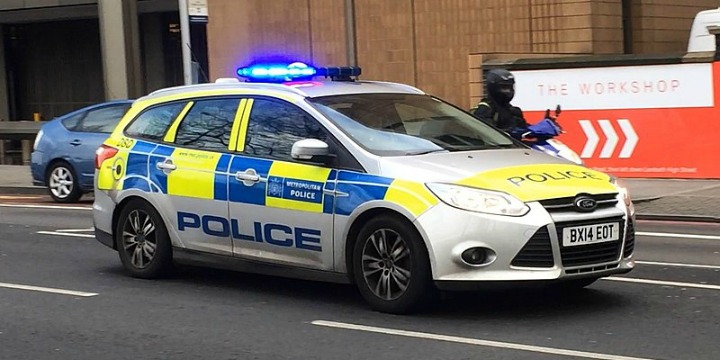
A Metropolitan Police Service (MPS) car. Photo: Wikimedia Commons.
British police said on Thursday they had arrested three people in connection with an attempted arson attack on the offices of a Persian-language media organization in northwest London, which followed two similar incidents in the British capital.
An ignited container was thrown toward the premises of the parent company of Iran International, Volant Media, on Wednesday evening, landing in a car park where the fire extinguished itself. No damage was reported and there were no injuries, the police said.
Two men, aged 19 and 21, and a 16-year-old boy were arrested on suspicion of arson endangering life. The arson attempt was not being treated as terrorism, but counterterrorism officers were involved in the investigation, police said.
Iran International said a suspicious vehicle was denied entry to its London site shortly before incendiary devices were thrown into a nearby car park.
It said it viewed the incident in the context of “growing threats and intimidation” directed at the organization and its journalists.
The incident comes a day after police arrested two suspects following an attempted arson attack on a synagogue, also in north London.
JEWISH COMMUNITIES AND IRANIAN DIASPORA INCREASINGLY TARGETED, POLICE SAY
Last month, several ambulances belonging to the Jewish volunteer emergency service Hatzola were set alight while parked near a synagogue in the Golders Green area of north London.
Matt Jukes, a deputy commissioner for London’s Metropolitan Police, said in a statement on Thursday he understood why conflict overseas and heightened tensions in Britain would be “deeply worrying.”
“London’s Jewish communities and the Iranian diaspora in London have, in recent years, been increasingly targeted by individuals, groups, and hostile states intent on spreading fear, hate, and harm,” Jukes said.
British authorities have previously warned that there is a threat to journalists working for Persian-language outlets that are critical of Iran’s government. In 2024, a journalist working for the television news network Iran International was stabbed in the leg near his home in south London.
Britain’s MI5 spy boss said last October that his agency and British police had tracked more than 20 Iranian-backed plots to kidnap or kill British nationals or individuals based in Britain who were regarded by Tehran as a threat.
“We are dealing with an unprecedented level of national security investigations, some with suspected links to foreign states and many of those have dangerous and often reckless intentions,” Vicki Evans, senior national coordinator for Counter Terrorism Policing, told reporters on Thursday.
She added that the incidents had taken place against a backdrop of “global instability within which we’re seeing sustained and increasing aggressive and hostile activity.”