


Features
Part 2 of the story of the delusional Winnipeg con man: Meeting him for the first time in the summer of 2021

By BERNIE BELLAN (This is the continuation of a story that begins elsewhere on this website at The delusional Winnipeg con man who actually believed his own elaborate con and led one victim in Africa to consider committing suicide)
I actually met Fred Devlin several years ago – but never imagined that he was as delusional as I’ve now been made quite aware. As I noted in the story that did appear on my website until I removed it, Devlin believes that he is someone of incredible wealth. Not only that, as I noted at the beginning of that story, he also believes he has had a brilliant business career (and owns over 300 companies or 3,000 companies – depending on when you may have been talking to him. For instance, when I first met him – in 2021, he told me he owned over 300 companies. When I met him again just recently that figure had grown to over 3,300 companies).
He also claims that he is a fervent supporter of the State of Israel, has strong connections to the Mossad, and owns a great deal of land both in Winnipeg and in Israel. Finally, now that he had made his billions (or his trillions, as the case many be), he maintains that he only wants to devote himself to helping others – whether it is by investing in various business ventures or by engaging in philanthropic endeavours.
The problem, as I was to discover as I waded further and further into Devlin’s bizarre story, is that nothing he believes about himself is true. That, in itself, is not so unusual. Many people suffer from different forms of psychosis. The difference between most people who suffer from a psychosis and Fred Devlin, however, is that he has not stopped believing his fantasy for many years now. How long he has been suffering from his psychosis I am not quite sure because, as you might expect, no one close to him in his family is willing to talk about his illness.
And, that is one of the questions that has been plaguing me as I set out to do research for this story: Could Fred Devlin have been stopped through early intervention by individuals close to him? This fellow has been married for many years. What role has his wife played in enabling his delusional behaviour? And what of his parents? As I will explain, they have been well aware that their son is very sick. For how long, I’m not quite sure but, as I will relate, his psychotic behaviour clearly began manifesting itself when he was in his thirties – and he’s now over 60.
Devlin has been in and out of psychiatric wards – that much is apparent from stories I have been told by different people who talked to him at different stages in his life when he was actually hospitalized in different psychiatric wards. (When I was finally able to confront him about his history of being hospitalized because of his psychiatric disorder, of course he denied that’s ever been the case, but then said he didn’t want to talk about it.)
Still, after learning so much about the hurt Devlin has caused to so many people, I kept coming back to wondering what more could have been done to prevent him from inflicting so much damage – and pain, upon so many individuals over a very long period of time, as a result of his harbouring such a deep delusional psychosis? That question is at the heart of what has been motivating me to write this story.
Even as I write this – and so far the process has taken me several months, I continue to receive communications from different individuals whose lives have suffered terrible impacts as a result of having come into contact with Fred Devlin. I feel so helpless when I receive another message – whether it’s through an email, a text, a WhatsApp message, or occasionally a phone call, telling me that someone has just received another message from Devlin – again repeating the same delusional nonsense about his being fabulously wealthy and, that if they waited just a little bit longer, he was going to come through with the financial help he had promised them.
As I’ve already noted, at the beginning of February 2026, I had written the first two chapters of what I thought would be an interesting and probably for most readers, an absolutely unbelievable story about Fredl Devlin. I had posted those chapters to my website with the idea that it would certainly attract interest – and it sure did. It had over 1,000 views within two days.
But, the idea of turning that story into a story? That was the furthest thought from my mind at the time – for a number of reasons. For one, I’d never written a story and I knew how challenging an assignment that is (at least, that is – to write a good story. In the course of my career as a publisher and editor, I’ve received many books from publicists – often authors themselves, that I thought were simply awful – and could, at the very least, have used a good editor. The advent of self-publishing has led to a flood of poorly written books that, had they been submitted to a real story publishing firm, would no doubt have been rejected without hesitation.)
The other reason I was reluctant to turn what I had already written into a full-scale story was that, at first, I thought I didn’t really have enough material to warrant taking on such a daunting project. As time went on, however, and as I began to delve ever deeper into the subject matter that first attracted my attention, I began to hear from more and more individuals who were eventually to become part of the story you are about to read. I soon realized that the story was so much more complicated than I had first thought. In fact, I thought, it probably would best be treated as a continuing series of stories – much like a blog, on my own website, in which I could add new information as it came to me each day.
I wanted to expose that individual by having his name out there for anyone else who might be contacted by him with him telling them he wanted to invest in their projects. That way, I thought, anyone doing an internet search for his name would come across my story and immediately realize that this character is totally delusional – so no one would be duped by him again.
Could I have changed what I had written into something semi-fictitious by changing everyone’s names and kept that story up on my website? Perhaps. But then the story wouldn’t have had the same impact, would it? Who would have known who it was about whom I was writing? That’s the problem with writing a “roman `a clef” which, I admit, is certainly a problem with the way I’m telling the story here. My hope is that this story will serve as yet an added warning to be on guard for con artists, especially when advancements in artificial intelligence have made it so much easier to fool people into believing stories that sound quite credible. The difference in Fred Devlin’s case though has been that as he tells his stories, he sounds all the more convincing because he actually believes them. When I finally got the opportunity to confront him about his trail of deceit, however, even though he kept sticking to the line that everything he says about himself is absolutely “true,” I was able to trip him up by asking him why essential details, such as how many companies he owned, had changed from when I talked to him in 2021 to now. (You’ll see that if you read my entire interview with Devlin, which will be posted later this month.)
Here’s a short excerpt from my asking him about the number of companies he alleges to own:
“Me: How many companies now is it (in the group of companies)?
“Devlin: 3,300… 3,306.
Me: When I spoke to you in 2021, it was 300.
“Devlin: I was being honest. Okay.”
The absurdity of it all might leave you laughing, but bear in mind that I was firing rapid questions at him during that interview, trying to expose how ridiculous he was in talking about how wealthy he is. For almost everyone else to whom I’ve spoken about Fred, however, the impression he leaves is of someone who has quite a bit of money but doesn’t like to disclose the source of that money for reasons of confidentiality. That doesn’t sound so far fetched, does it?
Even as I write this I’m still in touch with people who have been contacted by the person I’m calling Fred Devlin. Several people have already read my first chapter and got in touch with me to tell me their own stories of being acquainted with Devlin.
I’m now so deeply involved in trying to help various characters in this story obtain some degree of justice over what Fred Devlin has done to them though, that I feel I owe them a duty to see this story though to the end – which may mean that I’ll be adding to this story for quite some time.
For instance, as I mentioned, I am now engaged in attempting to facilitate a lawsuit against Fred Devlin by one of the individuals who suffered the worst financial loss at his hands. While others with whom I spoke wasted hours of their time thinking that Paul Devlin was going to invest in their projects, this particular individual actually suffered real monetary loss as a result of his having signed what he thought was a fully legitimate contract with Devlin – in which Devlin assured him that he would be compensated if he were to stop paying any debts he owed to creditors. That promise to be compensated for debts ended up costing that individual a huge amount in penalties for unpaid debts.
And, even though, as I’ve explained, the lawyer who said he’s ready to file a lawsuit advised against it for the reason that Fred Devlin doesn’t seem to have any real money of his own, who knows? Maybe we’ll find that he has been given a great deal of money by his parents. Someone has been paying the charges he’s been racking up at the Fairmont, Hy’s, and other pricey establishments in Winnipeg.
As well, I’ve been helping another of Devlin’s victims – this time someone who lives in Africa. As I write this, that poor fellow has been contemplating committing suicide, he tells me; his life has been ruined so badly by his having fallen for another of the con man’s schemes. I’ve been spending a great deal of time with this poor African fellow – in fact, helping him quite a bit financially, in order to keep him from doing anything rash. That’s how badly some people have fallen prey to the con man who is the subject of this story.
Devlin’s story of conning people goes back to at least 2008, I discovered in talking to one individual who has had contact with Devlin for at least 18 years. Over a period of many years, I found in talking to others, Devlin had convinced a great many individuals that he was someone of immense wealth who was interested in helping them further their ambitions – whether those ambitions were related to business or, in another instance, to creating a charitable foundation.
But, as I’ve already noted, I did publish two chapters about the con man on my website, and I received that warning letter from the lawyer telling me that I could be sued for defamation if I didn’t remove what I had written from my website.
I had previous experience with being threatened with a defamation lawsuit. I had written an exposé of a prominent Manitoba investment fund which, I alleged, was hiding the true state of its precarious financial situation from investors in that fund. I learned from that experience that a lawyer can pick apart a story to find minute flaws and claim that his or her client was defamed as a result, no matter how inconsequential those mistakes may have been to the larger story. Even though I was vindicated in the end in that particular instance by my story eventually proving largely right – and the investment fund was forced into receivership, having to hire a lawyer to fend off a lawsuit taught me that “libel chill” is a very effective tool when someone powerful wants to squelch criticism.
Something else happened to me though, after I published those two stories to my website, and as I continued to probe ever more deeply into the story about which I had begun to write. I began to hear stories from more and more individuals how they, too, had been duped by by the individual whose real name had been exposed in the stories on my website. Their stories were all so fascinating – often bizarre, that I began to think: No one is going to believe this; it’s so outlandish.
So, if it will make you want to read on but, as you’re reading you’re going to say: This is so absurd I can’t believe this really happened, then consider it fiction in the same way that writers such as Norman Mailer, Tom Wolfe, and Gay Talese would combine elements of fiction in writing about events that were largely true. I myself don’t know how much to believe of the stories I was told by so many individuals about the person who ensnared them all in what ultimately was one giant delusion, but regardless how much of what they told me was true, the stories were endlessly fascinating.
And that’s what this story is really about. It’s about someone who was – and still is, so completely deluded that when he tells someone that he’s a “trillionaire,” for instance, or that he owns “3,339” different companies around the world well, hard as it is to believe, this guy actually believes what he is saying is true.
As I began to do research for this story I read about individuals who suffer from a delusion psychosis. I referred previously to a definition of delusional psychosis, but just to reiterate, according to the Cleveland Clinic, “delusional psychosis is a mental health condition in which a person can’t tell what’s real from what’s imagined. There are many types, including persecutory, jealous and grandiose types. It’s treatable with psychotherapy and medication.”
During the course of my over-40 year career as a newspaper publisher, I’ve met a number of strange individuals – a few of whom deserved to be put into straitjackets, but never had I met anyone whose story was so strange that when I began telling friends the story, their almost immediate reactions were along these lines: “We don’t believe you. It’s too crazy to have happened.”
I take as inspiration for this story a story that I read and reviewed several years ago, titled “Proof of Life,” written by someone by the name of Daniel Levin. That story tells the story of Levin’s having been engaged to seek the whereabouts of a young American man who had gone missing in Syria in the early days of Syria’s civil war.
Levin describes meeting a wild mix of characters in various parts of the Middle East. Whether the stories they were telling him were true or not he couldn’t actually tell for certain, he admits, but they were all so alluring that he followed up each and every one of them. In the end, he does come to a rather sobering conclusion about what happened to that young American but, like just about every other story about someone who’s gone missing during a period of great turmoil, it’s almost impossible to distinguish fact from fiction as to what really happened.
Still, it’s Levin’s telling of the story that I found so captivating. In the end, it didn’t matter whether he had cobbled together a series of disparate stories that often contradicted one another; the cast of characters he assembled was interesting enough to hold your attention without wondering whether anything Levin says they told him was true or not.
I actually interviewed Levin because I was so interested in knowing what motivated him to enter into a story that was labyrinthian in scope – and I wanted to know more about the techniques he used to get stories from some very scary characters.
I admired his perseverance in chasing down the story – at great risk to his own safety, and I have often thought of his determination not to be deterred from following wherever his story may have led him – no matter how dangerous following that road may have been.
And, because I myself still have such a hard time believing what I’ve been told in the story you’re about to read, rather than simply writing a piece of journalism based on accounts I have been told – which all contain so many gaps and rabbit holes, I thought it best to write something more speculative in which I will imagine what may have led different individuals to fall prey to Devlin’s delusion at different times. In the same way that Daniel Levin had to fill in many gaps when he was writing his story – to the point where it could easily be considered a work of fiction, I’ve had to fill in many gaps in writing this story – also to the point where I now wonder how any of what I’ve heard and read happened could really have happened?
The story begins in Winnipeg, where Devlin grew up – and still lives. According to individuals with whom I spoke who knew him when he was younger, Devlin had a normal childhood. Further, he showed exceptional promise as a student and looked to be headed toward a very successful career path. His wealthy parents were both successful in their respective careers.
Fred claimed to have been successful in business, starting from a very early age – when he was only 18 years old. In one published account he says that he had already developed several properties in Winnipeg by the time he was in his early twenties, and was already CEO of an Ontario-based development company.
Following is a story written about Fred in 1990, when he was just 24. (For the purposes of this story, I’ve changed his name in the 1990 story from how it appeared in the real story.) The story appeared in a business publication, a copy of which you are not likely be able to find anywhere. Luckily, I was able to obtain a copy of the story from someone who had managed to get a hold of a copy of the story. How he was able to do that he would not tell me.
Here is the story:
“When you first meet Fred Devlin, you are immediately impressed both by his youth and his sincerity in what he is doing with his life. At 24 years of age, he has already spent several years in the business trenches, having been the president of his own company since 1986.
“As careful with his words as he is with his investments, he has been programming himself towards success since his initial reach into the speculative market of real estate.
“With his first acquisition of a small property in Winnipeg, he formed Xanadu Enterprises (note: also not the real name of his company). While buying and selling properties yielded significant financial reward, making a fast buck was far from this young entrepreneur’s dream.
“ ‘The property market is not one which facilitates speculative investment and overnight profit,’ he says. ‘Rewards are gained through the acquisition and development of real assets, which, only under proper care, over time, can reach their true potential.’
‘ “Though Fred continues his career in the real estate industry, he decided to return to University to complete his degree in Economics, and target his newly expanded company, Xanadu Corporation, in 1987.
“Combining business with his classes has kept this self admitted workaholic on a six-and-a-half day killer schedule. From seven in the morning to midnight, his days are divided into six hours for classes and related study and six hours are devoted to his business ventures.
“Intending to enter the Master of Business Administration program in the fall of 1990, he has found that the practical experience gained through his real estate developments has complemented his classroom theory.
“With developing and managing real estate projects as his company’s mandate, Fred has concentrated on the Osborne Village area. (Osborne Village is an area in Winnipeg that is close to the downtown.) He finds the area to be ideal for his projects, with its trendy restaurants and shops, while being in proximity to the amenities of downtown.
“To this end, he recently developed Cauchon Place, a luxury condominium project, in conjunction with Tri-Star Development, an Ontario-based company of which he is Chief Executive Officer. The first phase of the project, located at 99 Cauchon Place, has been completed, and all units, valued at $130,00 and up, have been sold.
“Within two to three years Xanadu Corporation expects to have five more units ready for mixed commercial and office space. The expansion of his company has allowed Fred to take on new investors, secure a larger line of credit and utilize various tax advantages.
”Foregoing much of the immediate gratification of someone who has achieved financial success, Fred still lives at home with the two people he refers to as his best friends, his mother and father.
“ ‘I’m a fairly family oriented person and they support me unconditionally in whatever I attempt, even though I don’t always take their advice,’ he says with a smile.
“Always looking for new projects to develop, either independently or with a small group of investors, Fred is now acquiring two apartment complexes that have been converted into commercial space, again in the Osborne Village area. He also has his eye on another type of development: ‘A senior citizens’ complex,’ he says, ‘where the environment is designed to suit the tenant’s specific ethnic and social needs, rather than the needs of the developer,’ is ‘high on his priority list.’
“Anther project on the drawing boards, with a long-time friend, is a medical office, with a group of interdisciplinarian specialists who would have direct ownership in the building. ‘I’m not a fan of strip malls,’ says Fred. ‘They become indistinguishable from one another and attract an eclectic assortment of tenants. What medical office wants to be next door to a video store selling adult films? You want some control over your working environment.’
” ‘We need to stop trying to copy other cities. Just because something works for Toronto or Vancouver does not make it automatically right for Winnipeg.’ Fred adds that ‘a city has to grow to justify developments like The Forks, The Exchange District and Portage Place, with the buildings following a logical and consistent plan.’ He foresees a trend in multiple use space, combining commercial, retail and living areas in one well designed building. ‘I don’t want to sound arrogant, but I feel I have a destiny to do something of great value with my life,’ he says. ‘I want the world to know I was here.’
” ‘A building, for example, should be more than just a structure; it should improve the quality of life for the people who work and live there. That’s what I want to achieve.’
“W hen you consider that this young man started off in 1986 with an investment of $3,000 and is now 50 percent owner in a million dollar investment company, maybe we should listen.”
Pretty impressive, huh? How much of what was written in that article was true is impossible to know, but I did some investigating of some parts of what Devlin claimed to have done. I did a search for Tri-Star Development, for instance, but could find no reference to a company in Ontario by that name – although it’s possible that one may have existed in 1990. As for “99 Cauchon Place,” all that turned up was a nice looking two-unit town home on 99 Cauchon Street – but no luxury condominium project called 99 Cauchon Place.
And, as for the project that Fred wanted to develop with a friend – I contacted that friend, whose name I recognized in the original article – and was someone I knew. He told me that he had left Winnipeg in 1989 and had never entered into any sort of a plan to develop a medical office with Fred.
The author of that article passed away several years ago. I would have loved to have asked that person whether they ever did anything to corroborate any of Devlin’s story. Looking back on the inconsistencies that I was able to discern, it points to an early pattern of Devlin’s dissembling – something that was going to emerge as a much more severe issue later in his life.
One line in that story though, really resonates, when Devlin says: ” ‘I don’t want to sound arrogant, but I feel I have a destiny to do something of great value with my life. I want the world to know I was here.’
Was that the first hint that Devlin had delusions of grandeur? Perhaps, but as I was to discover, Devlin actually did embark on a course that would most likely have led to his becoming a very successful businessman had something not happened to him at some point when he was around 30. In fact, Devlin did obtain a Masters of Business Administration – in 1992.
The only other chapter of his life that I could come across, aside from that article written about him in 1990, was when he assumed a position of some authority in the area of aviation and there was a reference to him in a 1998 article noting his having become executive director of something called the Airport Area Business Development Zone. (Later, when I received a surprise message from Devlin inviting me to meet with him and did actually meet with him, he claimed to have been involved with the opening of something called Winnport. You can read the complete transcript of that meeting at the end of this story.)
What happened in Devlin’s life in the intervening years between 1998 and now I’m not exactly sure. I happened to know Devlin’s parents – not well, but well enough to have asked them years ago when it was that their son started to develop the delusion that he was a fabulously successful businessman? As one might expect when it comes to talking about a son or daughter who is clearly disturbed, Devlin’s parents did not want to discuss his situation beyond admitting that he “wasn’t well.”
That conversation with his parents – specifically his mother, however, did not occur until about six years ago, when Devlin himself had called me out of the blue, saying that he wanted to meet with me because he wanted me to write a story about him. I did agree to meet with him. I vividly recall that meeting because it was quite a warm summer day in Winnipeg and we had arranged to meet on the outdoor patio of a well-known Winnipeg pizzeria.
Not knowing what Devlin looked like, but since he had told me he knew who I was from seeing my picture in my newspaper, I arrived early so that he would be able to find me seated at a table. I was quite surprised when, despite the warm temperature that day, up walked a man wearing a trench coat – and dark glasses. He didn’t take off those glasses until well after we had begun to talk. That in itself was not so unusual; keeping that trench coat on though? That was simply weird.
As we engaged in conversation, Devlin mentioned that he quite admired my writing and what I had done with my newspaper. In fact, he said, he’d like to talk about buying it.
“Oh really?” I thought. Well, that’s interesting. But, it was when he began to describe his vast business enterprises that I began to wonder whether this guy was for real.
However, Devlin had come prepared. He had a briefcase with him – and out of that briefcase he pulled a small photo album. Among the pictures he showed me were ones of an executive jet. That jet had a logo on it – a logo, which Devlin said, was the logo of his company. He also mentioned that the late Winnipeg business mogul Izzy Asper had taken a liking to him and, in fact, had mentored Devlin for a time.
“Impressive,” I thought. But why hadn’t I heard of him? I wondered. I asked him that same question.
His answer was that he kept a very low profile, so as not to attract attention to himself. Also, since he was now so fabulously wealthy, his main goal in life, he explained, was to devote himself to what he described as “tikkun olam,” which is a phrase in Hebrew meaning “repair the world.”
To that end, Devlin said, he had established a charitable foundation and was engaged in various philanthropic projects around the world. And that’s why Devlin wanted to meet with me, he noted. He wanted me to write about all the good work he was doing in the world.
Well, that didn’t quite fit with keeping a low profile, I thought, but then again I was just the publisher of a small Jewish newspaper in Winnipeg. Writing an article about him for my paper wasn’t necessarily a contradiction of his wanting to keep a low profile. (It’s not as if you can say about being profiled in what was then The Jewish Post & News or what is now jewishpostandnews.ca: “If you can make it here, you can make it anywhere.”)
So far, so good, I thought. What Devlin was saying might be true. He just might be a very wealthy businessman – one who wanted to do good in the world. (Remember that description he gave of himself in that 1990 article.)
To reassure me that he was on the up and up, Devlin handed me a business card – with his group of companies logo emblazoned on the front. What was even more impressive was the address that the card gave as the headquarters for his group of companies: Luxembourg!
“Wow!” I thought. This guy might be the real deal. Luxembourg? You have to be of some substance to be headquartered in Luxembourg. Devlin told me to contact the CEO of his company, someone I had also never heard of, by the name of David Simkin (and, in this case, I’m using the real name that was printed on the back of that business card rather than a phoney name because, as far as I could ascertain, there is no such person as David Simkin. He’s just another figment of Fred Devlin’s delusion.)
Simkin’s name and email address, Devlin indicated, was on the back of the card. The card said that the head office for his company was in Luxembourg. At that point I told Devlin that I would look into his company with an eye toward doing a story about him. Despite his rather strange appearance and the fact that I had never heard of him, who was I to dismiss him as inauthentic? One thing about our leaving to go our separate ways that set me wondering about him when we both got up to leave, however, was his obvious discomfort when I thanked him for my meal. He seemed quite uncomfortable with having to pay the bill, small amount that it was notwithstanding.
I returned home and immediately began to look up his company name on the internet. I could find a name all right, but nothing beyond that. There was no description anywhere just what is was that this group of companies actually did or even what were names of any of the companies in the supposed group of companies.
I did send an email to the email address for David Simkin that was given on the card Devlin had handed me – and it didn’t bounce back. But when, after a couple of days of not hearing anything from this Simkin character who, Devlin had said, was the CEO of his vast group of companies, I began to suspect that the whole thing was some sort of twisted joke.
I happened to have Devlin’s mother’s phone number, so I called her. I told her about my meeting with her son. Her response, as I’ve already noted, was: “He’s not well.” She also added: “Go easy on him.”
All right, it wasn’t the first time I had met someone who had embellished their achievements and wanted me – or one of my writers, do a story saying how successful they were. I simply put Devlin out of my mind and left it at that – for a while.
Several months later, however, I got another phone call from Devlin, this time saying he wanted to talk seriously about buying my newspaper. Now, I should explain that, while I could dismiss him as a phoney, I did know his parents had money. I figured that even if he himself had no money, he could probably get his parents to put up the cash – depending on what amount we were talking about. (I should also explain that, at that point, I was quite willing to sell The Jewish Post & News. In fact, I had been actively seeking a buyer for some time – to no avail.)
I did agree to meet with him, this time at a very well known hotel in downtown Winnipeg, the Fairmont. (That hotel would come to figure prominently in many of the stories I was to hear later from many of the individuals who had fallen prey to Fred’s tangled web of deceit. And, as you will see if you read to the end of this story, it was to the Fairmont I headed when I received a surprise phone call from Devlin months after I had begun to write this story, inviting me to meet with him in person.)
We met, had a cup of coffee, but nothing ensued. There was no discussion of his buying the paper beyond his saying it was something he still wanted to do. But, what of all the good works he was doing all around the world? he asked me. Was I still willing to do a story about him?
“Is this guy for real?” I thought. I remembered the words his mother had used: “Go easy on him.” I told Devlin that I was sorry, but I just couldn’t find anything at all to substantiate what he had told me about his vast group of companies, so unfortunately there would be no story. I didn’t want to say to him what I really thought, which was that he was a total nutcase.
And, that’s where my involvement with Devlin ended – except for a chance meeting somewhere a few year later (where it was, I can’t remember) when Devlin happened to be with a woman whom he introduced as his wife. I was also with my wife, whom I also introduced. We left it at that.
Features
What Attachment Styles Can Reveal About Dating Habits

How many evenings with a stranger does it take before anything reliable is known about them? Most people answer with a number and then ignore their own answer. What actually gets measured across those evenings is the pattern each person carries into every new pairing, and that pattern has been studied under one name since 1987.
Attachment research began with infants and moved into adult romance almost by accident. It now supplies the best available vocabulary for a question most people ask eventually, which is why their dating life keeps taking the same shape.
A Newspaper Quiz in 1987
Cindy Hazan and Phillip Shaver tested a hunch in 1987 by publishing a quiz in the Rocky Mountain News asking readers about their romantic history. They received 620 replies. Roughly 56% of respondents described themselves in secure terms, about 25% in avoidant terms and around 19% in anxious terms.
Those proportions were close to what Mary Ainsworth had recorded in infants decades earlier. A distribution found in toddlers separated from a parent for 3 minutes in a laboratory had turned up again in adults describing love affairs, and that correspondence is what made the field take notice.
The method had obvious weaknesses. Newspaper readers who answer a quiz about their love lives are not a random sample, and every answer was self-reported by people describing their own behavior in the most favorable terms available. Later work with better samples moved the numbers around without dislodging the structure, and the structure is what has lasted.
Two Axes and Four Positions
Two questions turned out to organize the whole field. Does a person hold a positive or negative view of themselves, and do they hold a positive or negative view of other people? Kim Bartholomew and Leonard Horowitz built their 1991 model on exactly that pair.
Crossing those axes produces 4 positions. Secure covers positive views of both. Preoccupied means a negative view of self with a positive view of others, which produces someone who wants closeness and doubts they deserve it. Dismissing means the reverse, a positive self-view paired with low expectations of anyone else. Fearful covers negative views on both axes, which produces wanting closeness and distrusting it at the same time.
Two axes beat a list of 3 types, because the axes explain why 2 people who both avoid intimacy can look nothing alike in practice.
Pacing and the First Month
There is no fixed amount of dates that settles the question of compatibility, and attachment position changes how quickly a person believes they have settled it. Secure people tend to form an assessment gradually and revise it when new information arrives.
Preoccupied people often decide fast and commit to the decision before it is warranted. Dismissing people frequently take longer and still leave with less, since their default is to withhold the information that would let anyone assess them back.
Separating the decision from the feeling by a fixed interval helps the first group. Deciding after a set number of meetings rather than after a strong evening will not make the assessment more accurate. It removes the largest single source of error, which is a conclusion reached inside the honeymoon phase while everything still looks promising.
Hyperactivation and Deactivation
The mechanism underneath all of this has 2 modes. Anxious patterns run on hyperactivation, which means turning up the volume on distress to draw a partner closer. Avoidant patterns run on deactivation, which means suppressing the signal entirely to keep distance manageable.
In early dating this shows up in small behaviors. Hyperactivation shows up as checking your phone every few minutes after an unanswered message, and as the escalation of a minor scheduling conflict into something larger. Researchers call the wider category protest behavior, and it covers everything from pointed silence to deliberately provoking a reaction. Deactivation produces the pleasant evening that goes nowhere and the topic changed each time a real question arrives.
Both patterns are attempts to manage the same discomfort, pointed in opposite directions. The deactivating version accounts for most of what people mean when they call someone emotionally unavailable.
The Anxious-Avoidant Loop
The most documented pairing in the literature puts a hyperactivating person with a deactivating one. Fearful-avoidant attachment complicates the picture further, since one person can run both strategies in sequence and produce the same loop without a partner’s help. Each strategy strengthens the other. Pursuit triggers withdrawal, withdrawal triggers more pursuit, and the loop holds steady for years because neither person is doing anything the other did not provoke.
The reason this pairing is so common is easy to miss. To someone whose nervous system learned early to associate intensity with love, a secure partner can feel flat. The anxious-avoidant cycle produces intensity on demand.
Positions Move
Attachment position is a tendency, and tendencies move. Positions change across the lifespan with relationships, therapy and circumstance, and a single difficult partner can push someone temporarily toward a pattern that is not their baseline.
That matters for how any of this gets applied. A person behaving in a preoccupied way with one partner may be entirely secure with the next, so the category describes the current pairing as much as the individual in it.
It also rules out the most common misuse of the framework, which is deciding early that a new person is avoidant and treating every subsequent behavior as confirmation. Two quiet weeks can mean an avoidant pattern, a demanding job, a sick parent or ordinary early caution, and the categories offer no way to tell those apart from the outside.
Reading the Categories Correctly
There is one more thing the framework cannot do, and it is the thing people most want from it. Nothing in attachment theory tells anyone which partner to choose. It describes how a person is likely to behave once the choosing is over and the uncertainty starts, which is a different and much smaller claim than the one made by most of the writing built on top of it.
An attachment style is a description of a habit. It names what someone tends to do when closeness is on offer and they are uncertain about it, and nothing in the framework predicts what any specific person will do on any specific evening.
Used that way the idea is genuinely worth having. A person who knows their own pattern can catch it while it is running, and a pattern caught mid-run is the only kind that can be interrupted. Noticing that you commit early and regret it a month later teaches you more than any number of verdicts about the people you committed to.
Uncategorized
Four Seats or No Seats? Why Israel’s Final Polls Disagree Over Amcha Yisrael

Conflicting projections for Ofer Winter’s party illustrate the uncertainty of measuring public support near an electoral threshold.
A Channel 12 poll gives Ofer Winter’s Amcha Yisrael four parliamentary seats.
An i24NEWS survey reaches the same seat total.
Other final polls find that the party does not qualify for representation.
How can surveys conducted close to the same election produce such different results?
The answer lies partly in the difference between measuring a vote share and converting it into parliamentary seats.
A Statistical Boundary
Israel’s electoral threshold is 3.25 percent.
For a party receiving substantially more than that percentage, modest sampling fluctuations may change its expected number of seats without calling its parliamentary presence into question.
For a party whose support lies near 3.25 percent, the same type of fluctuation may change its projected representation from several seats to zero.
This does not necessarily mean the polls are measuring completely different political realities.
They may be producing estimates close to the same threshold but on opposite sides of it.
Sample Size Is Only One Factor
The i24NEWS survey conducted on October 22 included 5,124 adult respondents and reported a sampling error of plus or minus 1.4 percentage points at the 95 percent confidence level.
That is a substantial sample by conventional political polling standards.
But a larger sample does not eliminate every source of uncertainty.
Different pollsters may employ different recruitment methods, weighting systems and procedures for estimating turnout.
They may also differ in how they handle respondents who are undecided or reluctant to state their preferences.
These choices can matter particularly for smaller parties.
The Problem of Turnout
Opinion polls generally estimate voting preferences before actual voting takes place.
Election results reflect the ballots cast by people who participate.
Differences between intended and actual turnout can affect parties in different ways.
Analysts must therefore consider not only how many respondents express support for a party, but also whether the poll’s turnout model accurately reflects the eventual electorate.
Without transparent, comparable information about the methods used by each polling organization, it is difficult to identify which methodological difference is responsible for a particular disagreement.
Reading the Final Surveys
The appropriate interpretation of Amcha Yisrael’s polling is neither that its parliamentary representation is guaranteed nor that exclusion is certain.
The available surveys demonstrate uncertainty around a legally decisive boundary.
The four-seat projections reported by Channel 12 and i24NEWS are meaningful observations.
So are the below-threshold findings published by Channel 13, Maariv and Zman Yisrael.
Each survey is a measurement of electoral intentions under a particular methodology, not a count of actual votes.
For readers following Israel’s election, this makes Amcha Yisrael an instructive case study in how polling uncertainty interacts with electoral law.
The final result will provide the definitive seat allocation. The polls explain why the outcome was difficult to measure in advance.
Features
What Constitutes Genocide, and is Israel Guilty?
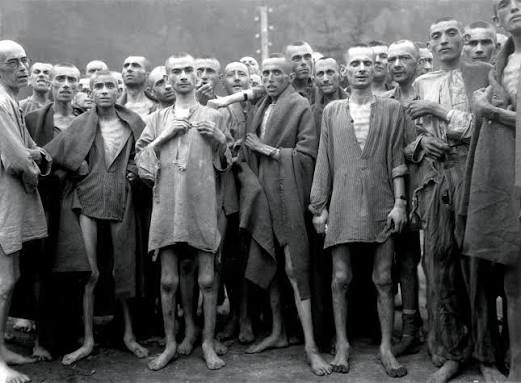
By HENRY SREBRNIK Genocide is a grave and exceptional violation of international law, defined and prohibited by the Genocide Convention of 1948. But maybe Raphael Lemkin did us no favour in coining the word during the Holocaust. It is now used by antisemites against Israel.
Raphael Lemkin was a Polish-Jewish jurist who escaped from Europe when the Nazis occupied Poland. He moved to Washington, DC, in the summer of 1942, and went on to document Nazi atrocities in his 1944 book, Axis Rule in Occupied Europe. In this text, he introduced the word “genocide,” the destruction of a nation or of an ethnic group. This new word is made from the ancient Greek word genos (race, ethnicity or tribe) and the Latin cide (killing).
But it’s not that cut and dried. Even before the antisemites accused Israel of genocide in Gaza, as a way of ridding themselves of any residual guilt about the destruction of European Jewry, the word had become little more than a term used by states and “human rights” groups who for one reason or another want to punish their adversaries.
Most of the time they really are talking about “ethnic cleansing,” pogroms, massacres and war crimes. By such criteria, every participant in World War II committed “genocide.” The mass killings of civilians in Hiroshima and Dresden in 1945 would today qualify. But these were acts against even far worse perpetrators of what we now call genocide, designed to speedily end the war.
What about the American war in Vietnam, and of course the almost numberless conflicts across Africa? The wars that dismembered Yugoslavia involved terrible massacres, particularly in Bosnia-Herzegovina and Kosovo, but did they really meet the criterion for genocide? The numbers killed needn’t be huge. About 8,000 Bosniak Muslims were murdered in Srebrenica by Bosnian Serb militias in 1995 during the Bosnian war. In the Western Hemisphere it would — and lately does — refer to the cultural and also physical extinction of pre-contact peoples from the Arctic down to Patagonia.
Are ideological attempts to kill groups of identifiable people within a state — the Holodomor in Ukraine, but also elsewhere in Stalin’s USSR — genocide? What about the Khmer Rouge in Cambodia? Should we call this an “auto-genocide,” since it was perpetrated by the nation’s own mad Maoist regime? Was China’s Cultural Revolution a genocide? Millions probably died. Rwanda is an interesting case — obviously a mass murder by one class-cum-ethnic group against another, a giant pogrom involving intertwined peoples, but where the victims have now turned the tables.
Actually, there have been very few ideologically intentional attempts to destroy a powerless and helpless people, in whole or in part. Only a few qualify by that definition, the Holocaust being an obvious one, as well as the Turkish mass murders of Armenians in World War I. The allegations that Israel committed this crime do not meet the established definition and standards of genocide, are unsupported by established facts, nor do they stand up to common sense scrutiny.
A finding of genocide requires evidence of acts that are intended to destroy a national, ethnic, racial, or religious group, in whole or in part. Israel has neither intended to, nor destroyed, Palestinians as a group in Gaza. Israel’s accusers allege genocide mostly because of the supposed number of civilians killed in Gaza. Such claims are rife with flaws. Genocide is not a quantitative crime; there is no specific number of civilian casualties that constitutes genocide.
Israel set a high bar for how to conduct urban warfare against an enemy who will stop at nothing, including the death of its own civilians. What kind of genocide is it when the population of Gaza is larger today than it was three years ago? And how could it be that Israel is trying to kill innocents when the ratio of civilian-to-combatant casualties is lower than that of other urban wars fought in even less-difficult conditions?
Dave Rich, an Associate Research Fellow at the Pears Institute for the Study of Anti-Semitism, writes extensively about the intersection of anti-Israel activism, far-left politics, and modern antisemitism. He observes that people respond to the genocide charge through facts and data: Israel’s supporters take the charge of genocide on its face, as an evidence-based allegation of a crime, and try to construct the case for the defence. But there is no defence, because the charge is not made on that basis, or for that purpose, he states.
The term “genocide,” he notes in “From Be’eri to Bondi: Global Antisemitism After October 7, published in Fathom, October 2026, has shed its legal meaning and become a political label, whose antithesis is “resistance.” These two terms represent two states of being: in a colonial setting, either you are engaging in genocide or you are resisting it. There is no middle ground. “Israel is condemned as genocidal, not by observation, but through logical deduction: Israel is colonial, therefore by definition it is genocidal. It cannot be otherwise. And Gaza represents resistance against the entire Western colonial and capitalist power structure.”
Maia Zelkha, editor-in-chief of Yad Mizrah, a Sephardi and Mizrahi cultural magazine, also contends that the left employs the word “genocide” as an ideological weapon. “Before Israel had even launched its ground invasion of Gaza, and before there was any evidentiary record of Israel’s military campaign,” she writes, in her article “Genocide and Its Jurors,” in Quillette, Sept. 24, 2026, many leftist groups “were already describing Israel’s response as genocide.”
On Oct. 8, just a day after Hamas’s massacre and kidnappings, thousands of demonstrators gathered in New York’s Times Square in an “All Out for Palestine” rally to support “Palestinian resistance.” Within days, other organizations were issuing statements describing Israel’s unfolding military response as genocide, situated within a pre-existing theory of Israel as a colonial project that had produced genocidal dehumanisation. Prominent academics, human-rights organisations, activists, journalists, and public intellectuals described Israel’s conduct as genocidal.
Although the conviction that Israel is committing genocide against the Palestinians is not new, it has garnered ever more strength since the beginning of this war. In March 2024, the UN special rapporteur on the Palestinian territories, Francesca Albanese, published a report alleging that the Israeli war in Gaza constituted a genocide. In December of the same year, both Amnesty International and Human Rights Watch did the same. Then in July 2025 came both Physicians for Human Rights and B’Tselem, followed almost immediately by the International Association of Genocide Scholars. A resolution from the latter organization requires a two-thirds vote of its members, academics in the field of genocide studies, to pass. One would be hard-pressed to find a more reputable source for the libel.
On Sept. 16, 2025, a UN Commission of Inquiry concluded that Israel was committing genocide in Gaza; other prominent left-wing organisations and scholars have reached the same conclusion. And finally, on Oct. 9, the Norwegian Nobel Committee announced that it awarded the Nobel Peace Prize for 2026 to South African judge Navanethem “Navi” Pillay, who led the 2025 UN commission that found Israel guilty of genocide against the Palestinians while completely ignoring many of the world’s worst human rights abusers, including, of course, Hamas. Pillay’s commission found that Hamas and other Palestinian armed groups committed war crimes. Yet it accused Israel of genocide. This is a staggering moral inversion. And now the award of the Nobel; this appears to be the greatest possible legitimization of the now-established consensus about Israel’s war in Gaza. The icing on the cake!
But remember this: When a jihadist terrorist organization like Hamas applauds a Nobel Peace Prize, the moral judgment of the Nobel Peace Prize Committee should rightly be called into question.
Henry Srebrnik is a professor emeritus of political science at the University of Prince Edward Island.
