



Uncategorized
Israel Warns of ‘Different, Deadly, Devastating’ Attacks on Iran in the ‘Most Sensitive Places’ if War Resumes

An Iranian flag lies amidst the rubble of a building of the Sharif University of Technology, which was damaged in a strike, amid the US-Israeli conflict with Iran, in Tehran, Iran, April 7, 2026. Photo: Majid Asgaripour/WANA (West Asia News Agency) via REUTERS
Israel‘s Defense Minister Israel Katz said on Thursday that Israel was waiting for a “green light” from the US to resume the war with Iran, adding that if it did, the military would begin by targeting Supreme Leader Ayatollah Mojtaba Khamenei and “return Iran to a dark age.”
“This time the attack will be different and deadly, delivering devastating blows in the most sensitive places,” Katz said in a statement released by his office.
The war, launched by the US and Israel on Feb. 28, has been paused since a ceasefire on April 8.
Amid the temporary truce, Iran flaunted its tightened grip over the Strait of Hormuz on Thursday with video of its commandos storming a huge cargo ship, after the collapse of peace talks that Washington had hoped would open the world’s most important shipping corridor.
Iranian state television broadcast footage overnight of masked troops pulling up in a grey speedboat alongside the MSC Francesca, climbing a rope ladder to a shell door in the hull and jumping through brandishing rifles.
The footage, presented with an action-movie-style soundtrack and no commentary, also included views of another ship, the Epaminondas. Iran said it had captured both on Wednesday, accusing them of trying to cross the strait without permits.
Air defense systems were heard engaging what were described as “hostile targets” in parts of the Iranian capital Tehran on Thursday evening, Iran‘s Mehr news agency reported, after earlier reports that air defense batteries had been activated in the city.
It was not clear what was being targeted but the reports drove oil prices sharply higher.
STRUGGLE FOR THE STRAIT
With the attacks on hold, attention has shifted to the shipping lanes off the coast of Iran.
Tehran says it will not consider opening the Strait of Hormuz, normally the route for a fifth of global oil and liquefied natural gas, until the US lifts its blockade of Iran‘s shipping, which Washington imposed during the ceasefire and Tehran calls a violation of that truce.
In a social media post, US President Donald Trump said it was Washington that was in “total control” of the strait, which he described as “‘Sealed up Tight,’ until such time as Iran is able to make a DEAL!!!”
Trump and his military officials have said Iran‘s navy is “at the bottom of the sea,” but Tehran’s speedboats show that it can still wreak havoc on shipping.
Washington, which has been confronting Iranian ships in international waters to enforce its blockade, said it had boarded another tanker, the Majestic, in the Indian Ocean on Thursday, an apparent reference to a supertanker last reported off the coast of Sri Lanka carrying 2 million barrels of crude.
US forces have redirected 33 vessels since the blockade began, the military said on Thursday.
Iran‘s judiciary chief Gholamhossein Mohseni-Ejei said the merchant vessels Iran had seized had “faced the law,” while Iranian speedboats and marine drones were sheltering in sea caves off an island keeping the US Navy from approaching.
The vice speaker of Iran‘s parliament, Hamidreza Hajibabaei, said the first revenue from a toll Iran was now collecting from ships using the strait had been transferred to the central bank. He gave no further details about who had paid it or how much.
‘NEITHER PEACE NOR WAR’
Trump canceled threats to restart attacks on Iran in the ceasefire’s final hours on Tuesday. There has been no formal extension of the ceasefire, and no plans have been announced for further talks.
Pakistan, which hosted talks this month and had been preparing for a second round before it was called off on Tuesday, was still in touch with both sides, a Pakistani government source said. Iranian officials were still declining to commit to attend over the US blockade, the source added.
The US was separately due to host a second round of talks between Israel and Lebanon on Thursday, with Lebanon seeking an extension of a ceasefire reached last week in a war that has run in parallel to the Iran war.
Uncategorized
New York City Comptroller Affirms Commitment to Israel Bonds as Mamdani Under Fire Over Handling of Antisemitism
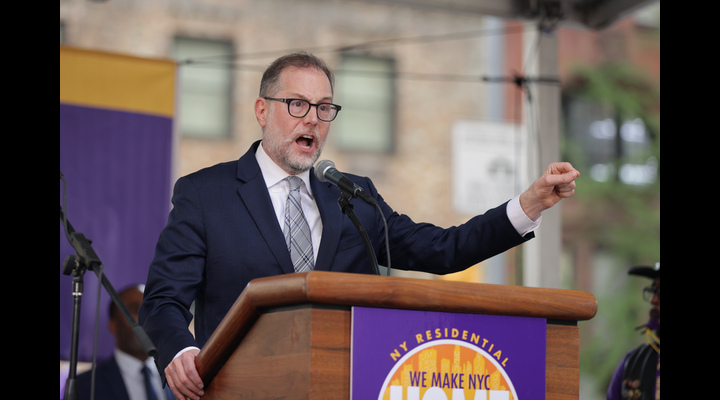
New York City Comptroller Mark Levine speaking on April 15, 2026. Photo: Luiz Rampelotto/EuropaNewswire/Sipa USA via Reuters Connect
New York City’s top financial official defended the city’s ongoing investment in Israel bonds as the administration of Mayor Zohran Mamdani faced growing criticism over its refusal to adopt a formal definition of antisemitism and continued hostile posture toward the Jewish state, paving the way for a showdown over how New York should address hate crimes and foreign investment policy.
Comptroller Mark Levine said on Wednesday that bonds issued by the Israeli government remained a safe, long-standing investment for city pension funds, insisting that financial decisions must be separated from political pressure. Levine pointed to the bonds’ decades-long record of repayment and argued his office’s responsibility was to maximize returns for retirees, not respond to shifting political campaigns.
“This is not political. It shouldn’t be political,” said Levine, a Democrat. “Israel bonds have never missed a payment in 70 years, ever, not once.”
The comptroller noted that the city has investments in other foreign countries but only faces protests for its association with Israel.
“And by the way, we’ve had no protesting about our investments in Saudi Arabia, our investments in Pakistan or China — only this one little, tiny sliver,” Levine said.
His comments came as the Mamdani administration faced continued scrutiny over its approach to Israel and antisemitism policy. Mamdani, a far-left democratic socialist who has made anti-Israel activism a cornerstone of his political career, has urged Levine to end city investments in Israel bonds.
Mamdani has long been an outspoken supporter of the boycott, divestment, and sanctions (BDS) movement, which seeks to isolate Israel on the international stage as the first step toward its elimination. Leaders of the movement have repeatedly stated their goal is to destroy the world’s only Jewish state.
In New York City specifically, records show that Israel bonds, historically yielding approximately 5 percent annually, have outperformed many alternatives.
Meanwhile, Israeli firms pour billions of dollars and tens of thousands of jobs into the local economy, and business experts have warned that a push for divestment could lead Israeli-associated and Jewish-owned companies to leave.
A study released by the United States-Israel Business Alliance in October revealed that, based on 2024 data, 590 Israeli-founded companies directly created 27,471 jobs in New York City that year and indirectly created over 50,000 jobs when accounting for related factors, such as buying and shipping local products.
These firms generated $8.1 billion in total earnings, adding an estimated $12.4 billion in value to the city’s economy and $17.9 billion in total gross economic output.
As for the entire state, the report, titled the “2025 New York – Israel Economic Impact Report,” found that 648 Israeli-founded companies generated $8.6 billion in total earnings and $19.5 billion in gross economic output, contributing a striking $13.3 billion in added value to the economy. These businesses also directly created 28,524 jobs and a total of 57,145 when accounting for related factors.
From financial tech leaders like Fireblocks to cybersecurity powerhouse Wiz, Israeli entrepreneurs have become indispensable to the innovation ecosystem. The number of Israeli-founded “unicorns,” privately held companies with a valuation of at least $1 billion, operating in New York City has quadrupled since 2019, increasing from five to 20.
Beyond its finances, New York City will not use a codified definition of antisemitism in evaluating complaints or incidents, according to administration officials. Instead, the Mayor’s Office to Combat Antisemitism, led by Phylisa Wisdom, will assess cases individually without relying on a fixed legal or policy definition.
“The first thing I’ll say is that across city government, there is not a definition codified for any form of hate at all,” Wisdom said on Wednesday while presiding over the City Council’s Task Force to Combat Antisemitism
The decision marks a departure from previous city policy, which had incorporated the International Holocaust Remembrance Alliance (IHRA) definition of antisemitism. The Mamdani administration revoked that standard when he entered office, arguing that rigid definitions can risk conflating criticism of Israel with antisemitism and may complicate the handling of politically sensitive speech.
IHRA — an intergovernmental organization comprising dozens of countries including the US and Israel — adopted the “working definition” of antisemitism in 2016. Since then, the definition has been widely accepted by Jewish groups and lawmakers across the political spectrum, and it is now used by hundreds of governing institutions, including the US State Department, European Union, and United Nations. Law enforcement also uses it as a tool for matters such as hate-crime investigations and sentencing.
According to the definition, antisemitism “is a certain perception of Jews, which may be expressed as hatred toward Jews. Rhetorical and physical manifestations of antisemitism are directed toward Jewish or non-Jewish individuals and/or their property, toward Jewish community institutions and religious facilities.” It provides 11 specific, contemporary examples of antisemitism in public life, the media, schools, the workplace, and in the religious sphere. Beyond classic antisemitic behavior associated with the likes of the medieval period and Nazi Germany, the examples include denial of the Holocaust and newer forms of antisemitism targeting Israel such as demonizing the Jewish state, denying its right to exist, and holding it to standards not expected of any other democratic state.
Critics say the absence of a clear definition could weaken enforcement and create inconsistency in how incidents are classified. Some lawmakers have pointed to recent public exchanges in which officials were unable or unwilling to clearly articulate what constitutes antisemitism under the city’s current framework.
The debate has intensified against the backdrop of a broader surge in antisemitic hate crimes in New York City. Advocacy groups and elected officials have raised concerns that the policy shift could make it harder to respond effectively at a time of heightened tension and increased reported incidents.
The majority of all hate crimes in New York City over the first three months of this year have targeted Jews, according to data released by the New York Police Department (NYPD).
“Confirmed hate crimes increased nearly 12 percent this quarter citywide. We continue to see that the vast majority of our hate crimes are antisemitic in nature,” NYPD Commissioner Jessica Tisch said earlier this month. “In fact, in the first quarter of 2026, more than half of all confirmed hate crimes, or 55 percent, were antisemitic, despite Jews only making up approximately 10 percent of the population of New York City.”
Mamdani took office on Jan. 1.
However, the surge in anti-Jewish hate crimes predated Mamdani.
Jews were targeted in the majority (54 percent) of all hate crimes perpetrated in New York City in 2024, according to data issued by the NYPD. A recent report released in December by the Mayor’s Office to Combat Antisemitism noted that figure rose to a staggering 62 percent in the first quarter of 2025, despite Jewish New Yorkers comprising a small minority of the city’s population.
Uncategorized
Israel-Lebanon Ceasefire Extended by Three Weeks, Trump Says

Smoke rises after an Israeli strike, amid escalating hostilities between Israel and Hezbollah, as the US-Israeli conflict with Iran continues, in southern Lebanon, March 24, 2026. Photo: REUTERS/Stringer
US President Donald Trump on Thursday said in a post on Truth Social the ceasefire between Israel and Lebanon will be extended by three weeks.
Trump posted on social media that he and several top officials in his administration met with Israeli and Lebanese representatives in the Oval Office.
“The Meeting went very well! The United States is going to work with Lebanon in order to help it protect itself from Hezbollah,” Trump said, referring to the Iran-backed Lebanese terrorist group which Israel was fighting before a temporary truce was reached earlier this month.
“The Ceasefire between Israel and Lebanon will be extended by THREE WEEKS,” the president added. “I look forward in the near future to hosting the Prime Minister of Israel, [Benjamin] Netanyahu, and the President of Lebanon, Joseph Aoun. It was a Great Honor to be a participant at this very Historic Meeting!”
The US-mediated ceasefire, which was set to expire on Sunday, has yielded a significant reduction in violence, but attacks have continued in southern Lebanon, where Israeli troops have seized a self-declared buffer zone.
Hezbollah says it has “the right to resist” occupying forces.
Wednesday marked Lebanon‘s deadliest day since the ceasefire took effect on April 16.
Hostilities between Hezbollah and Israel reignited on March 2, when the terrorist group opened fire in support of Tehran in the regional war. The ceasefire in Lebanon emerged separately from Washington’s efforts to resolve its conflict with Tehran, though Iran had called for Lebanon to be included in any broader truce.
Hezbollah said it carried out four operations in south Lebanon on Wednesday, saying they were a response to Israeli strikes.
Nearly 2,500 people have been killed in Lebanon since Israel went on the offensive in response to Hezbollah’s March 2 attack, according to Lebanese authorities. Israeli officials say the vast majority of those killed have been Hezbollah terrorists.
Israel is occupying a belt of the south that extends 5 to 10 km (3 to 6 miles) into Lebanon, saying it aims to shield northern Israel from attacks by Hezbollah, which has fired hundreds of rockets during the war.
The Lebanese government has opened direct contacts with Israel despite strong objections from Hezbollah, which was established by Iran’s Revolutionary Guards in 1982.
Lebanese President Joseph Aoun had said Beirut’s envoy to Thursday’s talks in Washington, Lebanese ambassador to the US Nada Moawad, would seek a ceasefire extension and a halt to demolitions being carried out by Israel in villages in the south.
A Lebanese official said Beirut wants a ceasefire extension as a prerequisite for talks to expand beyond the ambassadorial level to the next phase, in which Lebanon would push for an Israeli withdrawal, the return of Lebanese detained in Israel, and a delineation of the land border.
Israel says its objectives in the talks with Lebanon include securing the dismantlement of Hezbollah and creating conditions for a peace deal. Israel has sought to make common cause with the Lebanese government over Hezbollah, which Beirut has been seeking to disarm peacefully for the past year.
US Secretary of State Marco Rubio attend Thursday’s meeting along with Vice President JD Vance and the US ambassadors to Israel and Lebanon. Israel was represented by its ambassador to Washington, Yechiel Leiter.
Rubio hosted the first meeting between Leiter and Moawad on April 14 – the highest-level contact between Lebanon and Israel in decades.
Washington has denied any link between its Lebanon mediation and diplomacy over the Iran war.
Hezbollah says the Lebanon ceasefire was the result of Iranian pressure rather than US mediation.
Aoun has cited goals including halting Israeli attacks on Lebanon and securing the withdrawal of Israeli troops.
Uncategorized
Israel-Lebanon Ceasefire Extended by Three Weeks, Trump Says
Smoke rises after an Israeli strike, amid escalating hostilities between Israel and Hezbollah, as the US-Israeli conflict with Iran continues, in southern Lebanon, March 24, 2026. Photo: REUTERS/Stringer
U.S. President Donald Trump on Thursday said in a post on Truth Social the ceasefire between Israel and Lebanon will be extended by three weeks.
Trump posted on social media that he and several top officials in his administration met with Israeli and Lebanese representatives in the Oval Office.
“The Meeting went very well! The United States is going to work with Lebanon in order to help it protect itself from Hezbollah,” Trump said, referring to the Iran-backed Lebanese terrorist group which Israel was fighting before a temporary truce was reached earlier this month.
“The Ceasefire between Israel and Lebanon will be extended by THREE WEEKS,” the president added. “I look forward in the near future to hosting the Prime Minister of Israel, [Benjamin] Netanyahu, and the President of Lebanon, Joseph Aoun. It was a Great Honor to be a participant at this very Historic Meeting!”
The US-mediated ceasefire, which was set to expire on Sunday, has yielded a significant reduction in violence, but attacks have continued in southern Lebanon, where Israeli troops have seized a self-declared buffer zone.
Hezbollah says it has “the right to resist” occupying forces.
Wednesday marked Lebanon‘s deadliest day since the ceasefire took effect on April 16.
Hostilities between Hezbollah and Israel reignited on March 2, when the terrorist group opened fire in support of Tehran in the regional war. The ceasefire in Lebanon emerged separately from Washington’s efforts to resolve its conflict with Tehran, though Iran had called for Lebanon to be included in any broader truce.
Hezbollah said it carried out four operations in south Lebanon on Wednesday, saying they were a response to Israeli strikes.
Nearly 2,500 people have been killed in Lebanon since Israel went on the offensive in response to Hezbollah’s March 2 attack, according to Lebanese authorities. Israeli officials say the vast majority of those killed have been Hezbollah terrorists.
Israel is occupying a belt of the south that extends 5 to 10 km (3 to 6 miles) into Lebanon, saying it aims to shield northern Israel from attacks by Hezbollah, which has fired hundreds of rockets during the war.
The Lebanese government has opened direct contacts with Israel despite strong objections from Hezbollah, which was established by Iran’s Revolutionary Guards in 1982.
Lebanese President Joseph Aoun had said Beirut’s envoy to Thursday’s talks in Washington, Lebanese ambassador to the US Nada Moawad, would seek a ceasefire extension and a halt to demolitions being carried out by Israel in villages in the south.
A Lebanese official said Beirut wants a ceasefire extension as a prerequisite for talks to expand beyond the ambassadorial level to the next phase, in which Lebanon would push for an Israeli withdrawal, the return of Lebanese detained in Israel, and a delineation of the land border.
Israel says its objectives in the talks with Lebanon include securing the dismantlement of Hezbollah and creating conditions for a peace deal. Israel has sought to make common cause with the Lebanese government over Hezbollah, which Beirut has been seeking to disarm peacefully for the past year.
US Secretary of State Marco Rubio attend Thursday’s meeting along with Vice President JD Vance and the US ambassadors to Israel and Lebanon. Israel was represented by its ambassador to Washington, Yechiel Leiter.
Rubio hosted the first meeting between Leiter and Moawad on April 14 – the highest-level contact between Lebanon and Israel in decades.
Washington has denied any link between its Lebanon mediation and diplomacy over the Iran war.
Hezbollah says the Lebanon ceasefire was the result of Iranian pressure rather than US mediation.
Aoun has cited goals including halting Israeli attacks on Lebanon and securing the withdrawal of Israeli troops.