


Features
Part 9 of the delusional Winnipeg con man: His phoney promises to fund a charitable foundation in Africa lead one trusting individual to contemplate suicide

By BERNIE BELLAN This is the ninth part of a story about a delusional Winnipegger who believes he is someone of great wealth and has spent the better part of 30 years contacting people all over the world telling them that he wants to invest in their businesses or projects. The first eight parts of this story are all available to read under the FEATURES category on this website.
Here is part 9 of my story:
Of all the deceptions in which Fred Devlin engaged over the years, arguably the one that inflicted the most damage was on the man I’ve been calling Charlie, who lives in the Democratic Republic of the Congo.
As I’ve explained, that initial email which I received on January 16, 2026 was supposedly sent by Charlie (whose real name sounded much more African than that). While I was impressed by the quality of writing that went into that email and responded to it immediately it came as a surprise to me that the follow-up email which I received did not come from Charlie. Instead it came from the man I’ve been calling Rick.
Why was Charlie’s name being used as the author of an email whose contents were so explosive if, in fact, it was someone else entirely who had written that email?
I’m still not sure of the answer to that question. Clearly Rick had his own reasons for not attaching his name to that January 16 email, but when I finally did hear from Charlie it wasn’t until March 7 – and what he wrote was so plaintive that I was prompted to send him some money.
Here is the line of communication that began between Charlie and me – and which is still ongoing as I write this:
emails between Charlie and me sent on March 7, 2026
Hi Bernie, I’d like to kill myself and leave a note, because I’ve got a bad reputation now because of Fred. Next week I have to pay $1200. Fred told me to borrow it and start a charity he was going to fund on January 25th, but so far he hasn’t done anything; it seems like he forgot. I need to find this money and I don’t know how. I’m considering suicide because I have no other options.
Thank you.
Hi Charlie,
To whom do you owe the money?
Bernie
He’s the owner of a cooperative and savings association, and luckily he knows Fred too, because he gave me that money in two installments. Fred also emailed him asking about the banking procedures for transferring the money from Luxembourg. He also knows Fred. He owns this association. He gave me that money because he saw Fred on the video call and it was Fred speaking. But at some point, Fred denied it; we have all the evidence.
Fred said he was going to put down $450,000 or $300,000 in January to start the projects. Everyone in my town knows this story, and everyone is a witness.
Charlie
Did the fellow who gave you the money make you sign something?
Bernie
Yes, he did
He gave us 1000 dollars, and we have give him 1200$.
Charlie
I don’t understand. This fellow gave you $1,000 but you’ve given him $1200. Do you mean that you owe him $1200?
Bernie
Yes, the $200 is for his benefit. If you borrow $500, you have to repay $600. If you take out a loan of $1000, you’ll repay $1200. I owe him $1200. And besides, we wanted to take out a loan of $3000, but I had my doubts. I’d like to kill myself because I’ve lost my reputation. Fred even sent me to the leaders of my town, telling them he was going to improve living conditions here and create many jobs, telling them he was going to implement “Congo Improvement Projects.”
Charlie
Maybe I can negotiate a deal with this guy that you owe money to. What if I offer to pay him $500? Will he let you off the hook? $1200 is a lot of money.
Bernie
If you could help me by just paying him $600, that would be great because he can give me another three months. And I can also arrange to pay in installments. But it will depend on your availability. I really thank you so much.
Charlie
Before I agree to send any money I want to see something in writing from the guy you borrowed from promising that he will give you another 3 months to repay the other $600.
Bernie
That’s a good idea, we can thank you because you just saved my life. I’ll do it, but on Monday. Because tomorrow I can just tell him this and complete the document. Once we receive the money, that’s how we can sign. But also, here our official language is French. The document will be written in French.
Charlie
By the way – I’m Canadian. Our dollar is worth far less than an American dollar. I will only give $600 Cdn.
But you’re going to have to tell me more about how you got involved with Fred.
Bernie
Fred had contacted me alone since 2020. He told me he was a businessman with an organization called Xanadu Charitable Foundation which he wanted to establish in Africa, and that I would be the future project manager, but first and foremost, I had to be a volunteer, and I agreed to that. My story is very long; I’ll gather all the evidence tomorrow and send it to you.
I have several documents that Fred sent me, letters of recommendation to show to the leaders of my city. I have everything, and Fred himself knows this. Try asking for it; he can’t refuse because he knows I have all the evidence.
Charlie
emails sent March 8
Hi Bernie, I was talking to Rick. He told me to send more emails about Fred’s situation. I told him I’m waiting until we can finalize things with you, or until he tells you first. I’ve already promised the landlord I owe him half this week, and we’re going to complete the paperwork with him tomorrow. But right now I’m completely overwhelmed; I don’t know what’s going on anymore. You said you don’t really know my story? But I wrote it to you a long time ago. (Charlie is referring here to the January 16 email. For some reason he was still maintaining the pretense that he wrote that email.) Double-check your emails. And if you have any questions, you can ask me.
Charlie
Yes, I read your story, but it doesn’t tell me how Fred found you. I want to know exactly what you did when Fred contacted you.
I also want to see something in writing that shows what Fred promised you.
Finally, I want to know the same thing I’ve asked everyone else: Did you ever do anything to check out whether what Fred was telling you bore any relation to reality?
All that I’ve heard from everyone I’ve talked to is how convincing Fred was. Am I the only person who’s met Fred who realized early on he was full of shit?
Bernie
At my age, it wasn’t easy not to believe an older person like Fred. The evidence and documents I have are, firstly, the confidential agreement he had me sign, and secondly, a letter of reference he gave me to show to the leaders of my city so they could investigate, telling them he was going to build here. I even managed to print t-shirts for his organization with my own money, and one day, I even managed to feed 250 orphaned children in Fred’s name. The promises are in our conversations, and sometimes we had video conferences with him. I’m not here to smear him because I respect him greatly; I’m here to tell the truth. I have screenshots, images, and documents to prove all of this.
Charlie
Charlie, I’ve got to know who wrote that original email I received from you on January 16. Was it Rick? If so, why didn’t he send it himself? Why did it come from you?
Bernie
For the first time, Fred sent me a Messenger invitation. After I accepted, he told me I was lucky and that God loved me very much because I had just met a great person and the owner of a large organization called Xanadu, A few days later, he told me I would be Xanadu’s future representative in Congo. I was surprised too, and I immediately checked his profile. I found he was real, even though I still had some doubts until we started video calls for conferences. We continued our discussions for a year. Afterward, he told me I had to work hard to get the representative position. He suggested I volunteer to gain experience. I was easily convinced because during our video calls, he was always sitting in a luxurious office with computers. I couldn’t have any more doubts. And that’s where it all began.
Charlie
email received from Charlie March 9
Hello Bernie, I acknowledge my mistake in not realizing Fred was mentally ill. It was difficult for us not to believe him because during video conferences he seemed serious. I was right because he always made promises he never kept. He also told me he had meetings with Donald Trump and Benjamin Netanyahu. I also wonder how someone who talks to these adults can have the time to talk to me.
Regarding the names of the people I know that Fred told me he spoke to about his businesses, I suspect he defrauded and lied to.
Charlie
On March 11 I sent Charlie $600 Cdn. It wasn’t easy completing that transaction. In fact, I attempted to send the money several times through different methods. I finally settled on using something called Remitly, but I had to have a phone number for Charlie. It turned out that he gave me the phone number for a friend who is registered with Remitly. When I entered Charlie’s name as the recipient, however, the transaction didn’t go through – and it took me some time to get the money back into my bank account. I was quite upset with Charlie over his not telling me that the phone number he gave me wasn’t his – but in the end I was able to send the money to him successfully – after I changed the name of the recipient to his friend’s name.
emails sent March 12
Hi Bernie, I’m writing to you to thank you for everything you’ve done for me. I only recently met you, but you helped me with problems that weren’t yours. I’ve never met someone as kind-hearted as you. You’ve sacrificed so much for me; you’re so kind and understanding, like a parent to me. I handed over the money today, and I’ve been granted another three months. I’m looking for a job, and if I find one, I hope I can finish the rest on my own.
I have a report I’m going to send you. It’s a report from the field trip I did across the entire country. Fred told me he was going to implement a project here called the “Congo Improvement Project.” He told me to identify the problems facing Congo and propose solutions. It was work I did with all my heart, but in the end, Fred was always there to betray me. The report is 33 pages long. It’s work I myself greatly appreciated. Right now, it’s become a real obstacle for me because I used Fred as a reference on all my CVs, and no one can trust me anymore because I defended him so much here. I said he was a good and genuine person. I deeply regret my life. Fred has just destroyed it.
Charlie
Hey Charlie,
I was glad to help. Your story was one of the worst I heard of all the people Fred sucked into his orbit. I’m still wrestling with how I should write this story. Your part of the story is especially poignant because you actually put out money that you didn’t have – all in pursuit of a worthy project that was intended only to help people.
I consider myself very lucky in that I was born and grew up in a great country like Canada. I’ve done okay financially but my no means am I rich. Still, I contribute a lot to charity. Helping out someone like you is all part and parcel of the same thing as far as I’m concerned. And just because it was difficult getting you the money – and I got upset with you a couple of times – doesn’t mean I won’t help you again. If you find it a real struggle paying off the rest of what you owe let me know. I’m prepared to help more if necessary.
-Bernie
email from Charlie March 14
I understand, Bernie. Luckily, you understood everything. What Fred did to me will hurt me for the rest of my life. Here, several people keep asking me, “When are you going to implement the project with Fred?” I always feel ashamed everywhere.
Charlie
email from Charlie March 17
Hi Bernie, I hope you’re doing well. I received some annoying messages from Rick. He told me he doesn’t believe in anyone anymore, and that we’re all corrupt. I didn’t reply because I didn’t understand. I can’t threaten anyone; I can only respect what’s in order. Personally, I wanted to write a long letter and then kill myself. I didn’t need to bother anyone or say too much. I was really surprised to see his messages saying we’re corrupt.
Charlie
emails sent March 18
Just ignore him Charlie. I don’t really know him but from what he’s written to me lately he’s clearly not well.
Bernie
Thank you so much for your advice. This time Fred isn’t calling me anymore. He did call me once, offering me money for a small project to calm me down, but I knew it was just a scam. In the next two weeks, I’m going to explain Fred’s story to the people in my town, because many people are waiting for funding from him and they don’t know what happened. In the meantime, I’m waiting for a job here. If it works out, everything will be fine, but if it doesn’t, I’ll still be in a bad situation.
Charlie
The fact Fred has stopped calling you could mean one of two things: Either he is at times aware of his behaviour and can control it for periods of time or more likely, there are people closely monitoring him now and trying to keep him from continuing his delusional behaviour online. I’d be curious to see whether he continues to leave you alone. Keep me posted and of course I hope things work out for you.
Bernie
Maybe.
Do you know why I wanted to kill myself? It’s because I sang (?) Fred a lot here in my town. We were promised great leaders that we would create jobs here, but now everyone sees me as a liar, nobody believes me anymore, everyone says I’m a scammer too. It’s difficult for me, that’s why I’m desperate.
Charlie
Well, if you need to show people something that will prove you never intended to mislead anyone I’ve been writing a story about what Fred Devlin has done – and is continuing to do. I’ve finished the first 4 chapters and you’re welcome to read it if you like – and share with anyone who is angry at you. Of course, it’s in English but I can try to translate it using AI.
Bernie
emails from Charlie March 19
The big problem is that Africans think that a crazy white person, a scammer white person, and a poor white person don’t exist; it’s difficult to convince them. Africans think that white people are perfect.
Charlie
Hi Bernie, I tried to sit down with my father and some of the elders in my town who know Freds story well. Because I’m the son of a reverend pastor, and Fred had promised my father he would build him a church. Now I’ve made them understand that Fred is a con artist; he also has a mental problem. I apologized to them. They told me it wasn’t possible, but in the end they understood, though they were very surprised to hear it. My father cried. The elders in my town told me I must be in cahoots with Fred and that maybe I’m the con artist. They asked me about the money I borrowed, and I told them I’m paying it back myself. They asked me how I met him and advised me not to trust people anymore.
Charlie
emails sent March 20
Well, you can tell them that there’s at least one white guy out there who’s nice, who believes in you, has helped you and is doing everything he can to stop Fred Devlin from making your life and other people’s lives miserable.
Bernie
Thank you so much, Bernie. They also have some questions, asking me how I had the courage to sacrifice myself like that for someone like Fred. Bernie, maybe you only know the debt I owe because of Fred, but you don’t know the story behind me, and that’s why I wanted to kill myself. For my part, I can only thank you for giving me hope for life again. But here at home, no one can believe in me anymore. I can’t leave my city, I can’t work here except start a business because everyone knows I’m waiting for funding from Fred. I’d also like to ask you a question out of curiosity: do you have any people here in Africa? Do you know Africa? Have you ever been to Africa?
Charlie
emails sent March 21
Sorry Charlie – I don’t know anyone in Africa except some people in South Africa – and I don’t really know them. I just have a good friend who’s from South Africa who still has lots of friends and relatives there and he’s introduced me to some of them online.
I don’t understand how the people in your home town still believe that Fred is going to provide you with funding. How much proof do they need to understand he’s a very sick person and nothing he has ever said is real?
Do you want me to send you what I’ve written for my story so far? I supposed you could translate it into French if necessary. Maybe then people would understand how crazy Fred is.
Bernie
Hi Bernie, I was with another team today, some of the people Fred had promised to start with me. I tried to explain things to them, and they understood, even though it wasn’t easy for them. Tomorrow I have a general meeting with them and some of the leaders here. I can even send you the photos tomorrow. Despite everything, it’s very embarrassing for me; no one believes me anymore. Some even tell me they’ll never trust me again.
I’m hated in my community now. How can I continue living this life with a bad reputation? Bernie, if you ever stop seeing my messages, know that I’m no longer in this world. It’s not easy being hated by your community; you can’t buy a reputation, it’s earned through your actions. Goodbye.
Charlie
Charlie – don’t lose hope and please don’t think of killing yourself. Of course I understand what a difficult situation you are in. Is there anyone in your town that I could speak to to try to tell them that you were just an innocent victim of a very sick person – who also victimized many other people? What would it take for your reputation to be reburnished?
Bernie
Bernie, I’m African, but somewhat civilized. I know Africans well, which is why I don’t want to put you in contact, because he’ll only ask for money. The only solution is to change my environment. When I pay off this debt, I’m just going to move far away from here. Otherwise, I risk getting stressed. I’m waiting for tomorrow’s meeting, and then I’ll tell you what happens next.
Charlie
emails sent March 24
Hi Bernie, I have a long letter to write to you today because I had a big meeting with everyone who knows Fred because of me. But first of all, I apologize if this is going to bother you. By the way, I wanted to show you the plaque that a village chief made for Fred, because Fred promised he would arrive here in 2023. He also asked me how Fred is doing.
Charlie
I hope your people listen to you & understand how you were completely fooled by Fred.
Bernie
Yes, only the wise ones understood. The others say that if I didn’t take the money, it means I was Fred’s accomplice. The others say they’re going to file a complaint against me. The others understood. Here, where I come from, promising an orphanage and not keeping that promise is a great sin; it’s taboo here. But I don’t see my future in this city. I have a bad reputation right now.
Charlie
On March 26 I wrote to Charlie that the lawyer I had contacted about taking on Jonathan as a client had told me that he had asked the head of civiil litigation at his firm to get in touch with me. I also told the lawyer that there was someone else who had been very badly hurt by having been duped by Fred Devlin – but that this poor fellow lived in Africa. I said that I really hoped a lawsuit could proceed so that Fred Devlin’s parents might finally take steps to harness their delusional son and keep him from contacting anyone ever again with a promise to invest in a project with that person.
I sent Charlie a copy of what I had written for this story to that point.
He responded: Thank you so much, Bernie. I just translated and read part of it. Congratulations on what you’re doing; you’re a true writer. Fred called me 10 minutes ago saying he wants to work with me, but fortunately, I ignored him.
Charlie
Can you keep a record of every time he calls you and I hope you keep all messages he sent you.
Bernie
Yes, I keep just messages and mails
Charlie
ok that’s good. Do you think you could send some to me – not all of them, just ones where he promises he’s going to fund the charitable foundation he wanted you to set up. I want to use them in my story – with the names changed of course.
Bernie
But he did a lot of things via video calls and other things in writing.
Charlie
emails sent March 27
I don’t know that anything I would do would make any difference, but I’d like to have as much written material as possible for what I’m writing.
Obviously, you can’t send me videos or memories of conversations.
Bernie
I have a lot of evidence and documents because I have a Xanadu folder on my computer with everything. Unfortunately, I gave my computer as collateral to the person I owe, so I can only use some of the evidence on my phone. Fred is asking me how much money I want to give him back his website because it contains all the information about him and who he claimed to be. He’s afraid I might reveal it.
Charlie
Charlie sends me a screenshot of a text message sent from Fred to Charlie:
“Your land, your house, your pharmacy your phone your books, computer and your future revenue. You sided with my enemies and will legally lose everthing.”
March 28 Charlie sends me another screenshot of a text message from Fred to him:
“I have hired lawyers to take all your life’s assets. You have until 12noon Central time to take down internet slander and apologize on facebook.
“You have assisted in publicly attempting to lie and ruin my reputation.
“If you decide to lie about our good relationship my family and I will sue you. If you continue to slander my reputation you will be sued. You better take down the slander sites immediately.”
emails sent March 28
Bernie, as I told you long ago, I’m not here to smear Fred, but to tell the truth. I wanted to commit suicide because I’m worthless in my community because of him. I have all the testimonies, as well as witnesses who know my story with Fred well. There are even documents he sent me to show the leaders of my town, showing him that he was going to implement several projects here. Since I needed a job in the future, I was always obedient to him because I had no choice. I printed t-shirts, I bought food to feed 300 orphans twice a year in Xanadu’s name, and Fred congratulated me, telling me I was the best. He lied to my father, saying he was going to build his church because my father is a reverend pastor. I have a lot of evidence that proves everything. He told me to spend what I have to buy hectares of land he was going to finance in January, but so far he hasn’t done anything except deceive me. He was video conferencing with several people from my village using my phone, telling them he was going to finance it in January. Now everyone in my community is against me. If you talk about Fred or Xanadu, they might kill you. I deleted all my posts about Xanadu and burned the knitting (?) too. Right now, Fred is threatening to destroy me.
Charlie
Can you forward me actual messages showing that they were from Fred? Someone could say that you wrote these messages yourself.
Bernie
Hello Bernie, Fred spent all night threatening to kill me, saying he’s going to take everything I have spiritually, and that anyone I work with will hate me. He said he can’t help me with anything anymore and that I’ll be back to square one. For my part, I’d like to take my time and write at least 5 or 6 pages about my story with Fred, because right now I’m still saddened by what he keeps saying. He writes things and sometimes deletes them; luckily, I’m taking screenshots. Sometimes he calls me and insults me. He told me if I publish his website where all his information is, I’ll die and he’ll kill me spiritually.
Charlie
Also, on March 20, Charlie began sending me messages on WhatAapp in addition to emailing me.
His first message was: Good morning Bernie. I’m Charlie. I asked you for your WhatsApp number because that’s where I can easily send you several pieces of evidence and that’s where I always communicate.
Attached to Charlie’s message were several images, most of which were indecipherable, but two of which showed Charlie – one with a group of kids from his community who, I assume, were to be beneficiaries of the charitable foundation Charlie was going to create – using money from Fred Devlin’s Xanadu Foundation. The other photo was of Charlie meeting with women from his community. From one of his previous emails I surmise that he was trying to explain to them that he had been duped by Devlin.
Also attached to Charlie’s WhatsApp message was a message from “David Simkin,” the supposed CEO of the Xanadu Group of Companies. It’s particularly galling that within Devlin’s enormous delusion he actually would have gone so far as to create a fictitious character who became part of his story – and whose name was used to add a patina of respectability to what was utter nonsense.
Sequel to Charlie’s story: I eventually sent Charlie another $800 so that he could pay off the rest of the debt he had incurred by having t-shirts made with the charitable foundation logo on the front, along with food that he bought for 300 orphans in his community.
I’ve remained in touch with Charlie, who tells me how difficult it is for him to find work in Africa, even though he’s highly educated and speaks seven different languages. The immense toll that being strung along by Fred Devlin for years will never be ameliorated.
Coming next: I receive a surprise phone call from the man I’ve been calling Fred Devlin, who asks to meet with me. I end up confronting him over all the cons he’s been pulling.







Features
Tiblisi, Georgia – a new hotbed for dental tourism, especially for Israelis
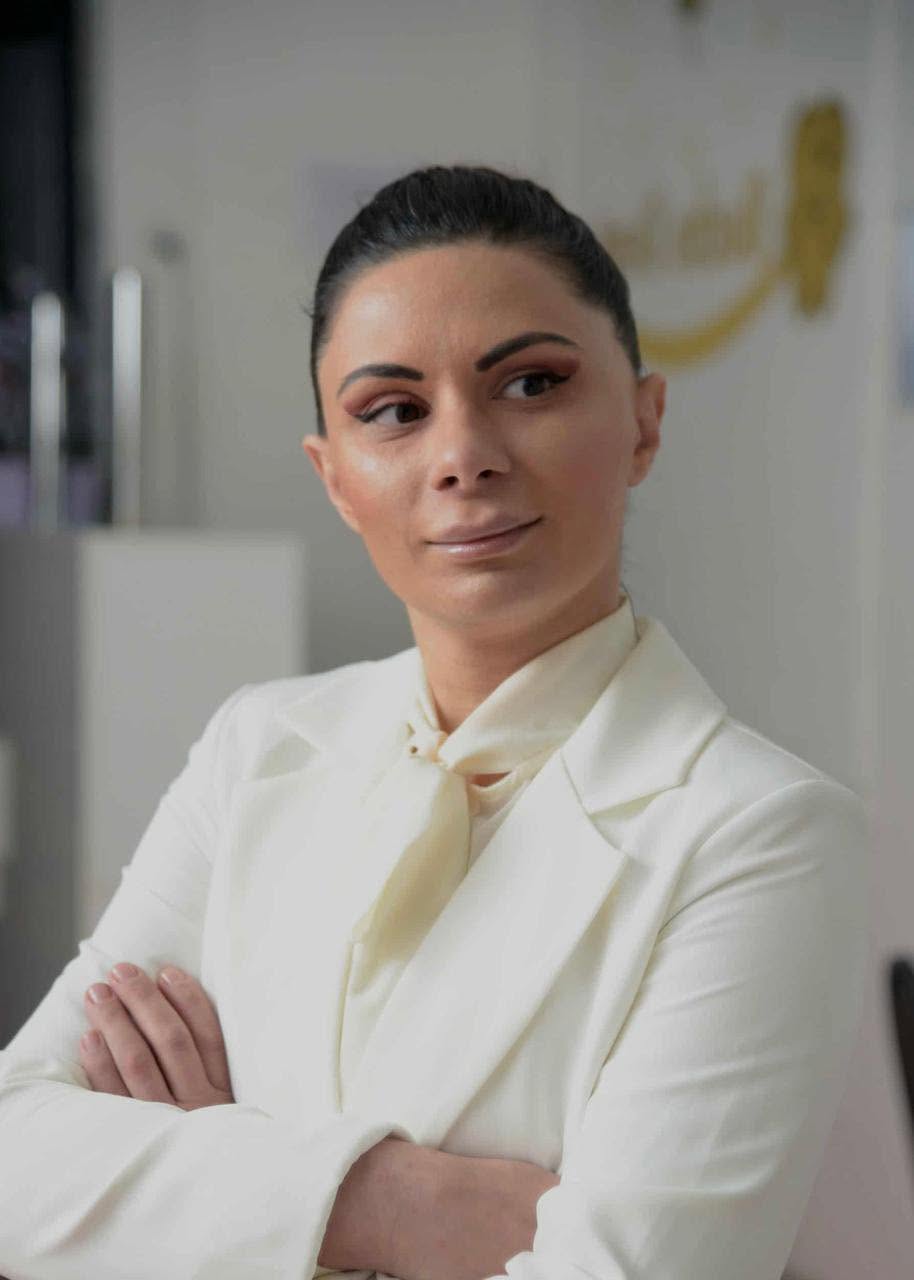
Introduction: A few weeks ago we received an interesting email from someone who asked whether we would consider publishing a story about dental tourism in Georgia (not the Georgia in the U.S. – the Georgia that is a former Soviet republic). In that email we were told that Georgia has become an especially popular destination for Israelis looking for quality dental care at affordable prices. So we responded: Go ahead and send us something.
The author of what you’re about to read, whose name is Constantin Dicusar, admits that English is not his first language, so he asks that you forgive any awkward phrasing. But I’m sure that, if you read at least part of this story you’ll be intrigued by what he has to say about a part of the world that I doubt many of our readers know much about.
By CONSTANTIN DICUSAR Tbilisi, Georgia, is the latest destination for Jews from all over the world seeking dental tourism. Dr. Iza Dzidzikashvili, co-founder of a dental clinic in Tiblisi, says: “Jews come from all over the world and choose Georgia because of the low level of anti-Semitism, the low prices and the high quality, as well as the good relations between Israel and Georgia.”
Georgia is a country in the South Caucasus that is relatively little known in the West and in Canada. In 1991, it declared its independence from the USSR, becoming one of the first Soviet union republics to break away from the former imperial power, which was to collapse a year later.
Although it has only very recently chosen to pursue the path of European integration, Georgian society had already distinguished itself long before independence as a nation with deep-rooted Christian-European cultural and civilisational values. Georgian hospitality bears many similarities to that of Moldova, and Georgian wines, renowned throughout the world, have made Georgia the cradle of global winemaking.
Georgian wines are believed to have an 8,000-year-old tradition based on the unique method of fermentation in clay vessels called qvevri, which are included in UNESCO’s Intangible Cultural Heritage list. Among other interesting facts, Georgia was one of the first nations in the world to adopt Christianity as its state religion, in the 4th century.
More recently, Georgia has also managed to build a strong reputation in another sector: international dental tourism. Tens of thousands of tourists from all over the world visit Georgia every year – particularly the capital, Tbilisi – to combine sightseeing with dental treatment.
According to Georgia Today, the majority of foreign tourist-patients come from neighbouring countries or the wider region (Russia, Azerbaijan, Armenia, as well as from the Middle East – Israel, Qatar, Kuwait and Saudi Arabia). In recent years, Georgia has also become a magnet for many people from Europe and the US. Jews – both Israeli citizens and Jews from the Diaspora and around the world – represent a distinct group of patients who have chosen Georgia for dental services.
Read more about this in the exclusive interview conducted with Dr Iza Dzidzikashvili, a dentist, practising surgeon and co-founder of Bucho Denti in Tbilisi, Georgia:

Constantin Dicusar (for jewishpostandnews.ca): When was Bucho Denti founded, and who is behind the project? Tell us more about how your story began.
Dr. Dzidzikashvili: First of all, welcome, and thank you very much for your interest in our clinic. Bucho Denti was founded in 2000 by sisters Iza and Tea Dzidzikashvili and Vasif Aliyev. Today, all three are among the leading dental specialists in Tbilisi. Since we were already three experienced specialists, we decided to create an environment where patients could feel comfortable, safe, and confident, while receiving the highest standard of dental care. This philosophy became the foundation of Bucho Denti and continues to guide our development today.
Constantin Dicusar: What do you know about international dental tourism in the Caucasus region, and specifically in Georgia and Tbilisi?Dr. Iza Dzidzikashvili, dentist, surgeon practicing and co-founder of Bucho Denti: International dental tourism has been growing significantly in the Caucasus region, and particularly in Georgia. One of the main reasons is Georgia’s combination of hospitality, safety, high-quality dental care, and affordability. Dental standards in Georgia are comparable to European standards, while treatment costs are more accessible than in many other countries. This combination of quality, safety, affordability, and comfort has created growing interest among international patients.
Constantin Dicusar (The Jewish Post & News reporter): How has international dental tourism changed your operational, staffing, sales, and marketing strategie
Dr. Dzidzikashvili: The growth of international dental tourism significantly changed our vision and the way we operate. One of our main goals became to reduce the overall treatment time as much as possible — without compromising quality. We developed our infrastructure and workflows to allow patients to complete their treatment efficiently while maintaining a high standard of care. We also introduced complete treatment packages that can include hotel accommodation, airport transfers, and other services international patients may need. Our goal is to make patients feel safe, comfortable, and supported throughout their entire stay. We also incorporated tourism into the experience, giving patients the opportunity to explore Georgia and travel during their treatment period.
Constantin Dicusar: Did you envision engaging in international dental tourism right from the time the clinic was established, or did that come about later?
Dr. Dzidzikashvili: To be honest, we had always considered the idea of working with international patients. However, this direction developed much more actively as demand for international dental treatment increased. We adapted and developed our services according to the needs of international patients.
Constantin Dicusar: Tell us more about your staff. In which languages do you communicate with your international patients, and does the multilingual staff include dental assistants as well as the doctors themselves?
Dr. Dzidzikashvili: Our doctors have decades of professional experience, with some of our specialists having more than 30 years of experience. Our team communicates with international patients in English. To make the experience even more comfortable, we also provide communication support in Hebrew and Arabic, including professional interpreters. For us, it is very important that patients understand every stage of their treatment clearly and feel comfortable throughout the process.
Constantin Dicusar: Let’s also talk about international patients: which countries do most of them come from, and which dental services do they seek out most often? We know from reports originating in Israel and Georgia that Tbilisi has become an increasingly popular dental destination, frequently chosen by Jewish patients as well. Have you observed this trend at your clinic? If so, which countries do most of these Jewish patients come from?
Dr. Dzidzikashvilii: Yes, we have definitely noticed this trend, and the number of Jewish patients has been increasing every year. We would like to point out that the majority of our Jewish patients are citizens of Israel; they come from Israel. One important factor is the relatively short travel time between Israel and Tbilisi — approximately 2 hours and 30 minutes. Dental treatment in Georgia is also more affordable compared with Israel. Georgia is already well known and popular among Israeli travelers, so patients are generally familiar with the country and feel more confident about choosing it for treatment. After Israel, the United Kingdom is another important market for us, followed by different European countries. We have also treated Jewish patients from Canada, which shows that interest in Georgia is not limited to one or another particular country. The most common treatments requested by international patients are full-mouth rehabilitation, dental implants, and zirconia crowns.
Constantin Dicusar: Do you think that the good relations between Israel and Georgia, along with the low level of antisemitism in Georgia, encourage Jewish patients—particularly Russian-speaking Jews from across the former Soviet Union—to choose Georgia for such services?
Dr. Dzidzikashvili: Of course, the long-standing friendship and positive relationship between Georgia and Israel is very important. This relationship helps Israeli patients feel safe and comfortable when choosing Georgia for treatment. When a patient travels to another country for medical care, price and quality are not the only factors that matter. Trust, safety, communication, and the overall environment are equally important. We believe that the strong relationship between Georgia and Israel contributes significantly to this sense of trust.
Constantin Dicusar: What strategies do you plan to develop over the coming years to grow international dental tourism? Are you considering becoming more attractive destination for Jewish people from Canada and USA who are looking for dental services that are more affordable than those in their home countries?
Dr. Dzidzikashvili: In the future, our goal is to create a large-scale international dental center where everything is available in one place. We envision a facility combining a dental clinic, hotel, and restaurant, creating a comfortable environment specifically designed for international patients. Our vision is for patients to receive high-quality dental treatment, relax, enjoy their stay, and, if they wish, explore Georgia — all as part of one complete experience. At the same time, we are actively working to make Bucho Denti better known internationally and to reach more patients who could benefit from our services. Our main goal is to offer international patients accessible treatment while maintaining European-level standards of dental care.
Constantin Dicusar: Finally, we would like to turn our attention once more to Georgia and Tbilisi as tourist destinations. You are likely aware that in Europe—particularly in the western part—the worrying rise of antisemitism has limited the options available to Jewish travelers seeking dental tourism. Budapest remains the dental capital of Europe and is well-known within the Jewish community; more recently, Romania, Moldova, and perhaps Riga (Latvia) have also emerged as options, each offering distinct advantages and tourism amenities. From this perspective, what can Georgia and its capital, Tbilisi, offer? What makes Georgia unique as a destination compared to the others?
Dr. Dzidzikashvili: Compared with the countries you mentioned, one of Georgia’s main advantages is the combination of more affordable dental treatment with European-level quality. Another important advantage is the availability of complete treatment packages, including dental care, accommodation, transfers, and other services. Georgia is also an attractive tourism destination. Patients can combine their dental treatment with the opportunity to explore beautiful places, experience Georgian culture, and discover the country. Safety is another important factor. Georgia is a relatively small country, which contributes to a well-controlled environment, and the level of crime is relatively low. Ultimately, we believe that the combination of quality, affordability, safety, hospitality, and tourism opportunities gives Georgia a unique position. Our goal is that when an international patient comes to Georgia, they receive not only high-quality dental treatment, but a complete, safe, comfortable, and well-organized patient experience from beginning to end.
Features
Buck In Situ: A Dog Story

By DAVID TOPPER I suppose the first thing I should say is that, although this is a true story, it’s not about a real dog. (That may be obvious if you look at the picture accompanying this tale.) Yes, the dog – a wooden statue – is Buck.
I do want to explain what “in situ” means. For those who know the term, it betrays the fact that I was a teacher of art history before I retired. It’s a Latin term that refers to an art object being in its original or natural place. For example, the famous Elgin Marbles (statues of Greek gods, goddesses and other mythological figures), which are prized objects in the British Museum in London, were taken by Lord Elgin from the Acropolis high over Athens in Greece, in the early 19th century. If the museum ever returns the statues (as Greeks have been demanding them to do for years), and if the statues were then placed back on the Acropolis – then they would be “in situ.”
All this has been my way of introducing you to a story about a little statue that has been sitting in my home ever since my late wife, Sylvia, and I returned from a trip to Jamaica many years ago.
Here’s Buck’s story. One afternoon during our vacation on the island, we went to an Art Fair. I was particularly interested in wooden carvings. There was a long line of tables, end to end, with different carvers showing off their wares. As we walked along the tables, among the different carvers, I was dumbfounded because they were all carving the same statues! Different artists: same statues. The statues were of some local deities; none of whom I had any interest in taking back home – no matter what magic it could perform.
Sylvia and I were baffled as we strolled along the long row, eventually coming to the end. Then, lo and behold: the last carver was carving different statues – not necessarily of gods. Coming across his table filled with a wide variety of subjects was a breath of fresh air.
Of course, the first thing I asked him was why everyone else was carving the same things. His answer was simply that they thought that was what tourists wanted, and they were afraid to try anything else. I asked him why he was not afraid. He said he was afraid; nonetheless, he would be bored doing the same thing over and over – even if he made more money.
By now you can see where this story is going. It was among his wares, on the last table, that I saw the statue of the dog – which I immediately fell for. Sylvia, a dog lover, fell for it, too, and hence we bought it. I don’t recall the price, or if we haggled over it. But what I do remember – and why I am telling this story – is this. While talking with him and watching him at work, I noticed the way he was squinting. I asked him about this, and he said his eyes were not what they used to be, that he needed glasses but he couldn’t afford them.
At the time, I was in an early stage of permanently wearing glasses. Having gone through various stages of over-the-counter reading glasses during the previous decade or more, I was now wearing my first prescription glasses. I gave them to the carver to try on, and he said they were too strong. “Good,” I said. I told him I had several pair of different power reading glasses at home, which I had used before I got these. I’d be pleased to mail him those glasses, which perhaps could get him through the next decade or more. He gave me his address, and that’s when I found that his name – or, maybe, it was his nickname – was Buck.
“Would you mind if I name the dog Buck?” I asked – because I liked that name for the dog. He had no problem with that, and hence Buck it was, and Buck it always will be.
Not long after we got home, I mailed a box of glasses to Buck. Although I had my return address on the box (in case it got lost) I never heard from him. I didn’t expect to; yet occasionally I talk to my Buck and tell him that I hope the Buck whom he is named after, is still using a pair of the glasses I sent him. It would be comforting to know. My Buck agrees, I trust.
From the photo you can see that Buck sits at the foot of a staircase. Those stairs start in the front entrance of our home and go to the second floor. Buck not only stands on-guard, watching all who enter the house, but he also plays the following role. If I want to remind myself of something without having a paper and pencil handy, I just turn Buck around – say, on my way upstairs for the night. In the morning, coming down the stairs, I see that Buck is reminding me to do something. Although, I must confess, sometimes I can’t recall exactly what it was!
Finally, I live in Winnipeg, Canada. I know that’s far from the island of Jamaica, but here Buck has become a part of our life. All the family knows that if Buck is turned around – it means something! I therefore believe that it’s not stretching the terminology t-o-o much by calling this memoir: “Buck In Situ: A Dog Story.” To me, Buck is right where he belongs.

David R. Topper writes in Winnipeg, Canada. His work has appeared in Mono, Poetic Sun, Discretionary Love, Poetry Pacific,Academy of theHeart & Mind, Altered Reality Mag. and elsewhere.
His poem Seascape with Gulls: My Father’s Last Painting won first prize in the annual poetry contest of CommuterLit Mag – May 12, 2025.
Features
13 Best Amazon PPC Management Agencies for Growing Brands
Growing brands should hire an Amazon PPC agency that optimizes daily against TACoS and contribution margin, staffs senior specialists on the account, and reports results per ASIN in plain language. The agencies that deliver consistent, profitable growth share a few verifiable traits: Amazon-specific expertise, transparent reporting, and pricing that rewards performance over ad spend. This article ranks and compares 13 Amazon PPC agencies against those signals for 2026.
Why Amazon PPC management gets harder as brands grow
Amazon advertising gets more competitive and more expensive every year. US retail media ad spend will reach $71 billion in 2026, according to a December 2025 eMarketer forecast, which means more brands are bidding on the same high-intent keywords. As a result, average Amazon cost per click rose about 35% between 2023 and early 2026, reaching $1.21.
The problem is compounded at scale. Accounts with hundreds of SKUs and five-figure monthly ad budgets tend to see ACoS creep up as campaign structures sprawl. According to 2026 Amazon PPC benchmarks, the median ACoS across US Amazon accounts in H1 2026 was 38% and the median TACoS was 15%.
TACoS, or total advertising cost of sale, measures total ad spend as a percentage of total revenue, including organic sales. TACoS matters more than ACoS at scale because it reveals whether advertising is building the brand or just paying to keep revenue flat. An account with a stable 20% ACoS can still be in trouble if TACoS is climbing each quarter.
Most brands notice the shift somewhere between $1M and $10M in annual Amazon revenue. That is the stage where manual campaign management eats too many hours, ACoS-only reporting hides margin erosion, and the cost of hiring the wrong agency becomes meaningful.
How to evaluate an Amazon PPC management agency
The right Amazon agency for a growing brand is one whose approach matches the brand’s stage, goals, and internal bandwidth. Use these criteria to separate signal from marketing noise:
- Amazon specialization. The agency focuses specifically on Amazon advertising, not general paid media with Amazon as an add-on.
- Who runs the account. Senior specialists with years of Amazon experience manage campaigns directly. Junior account managers learning on the brand’s budget is a warning sign.
- Primary optimization metric. The agency reports TACoS and contribution margin, not just ACoS or ROAS. ACoS in isolation hides whether ads are cannibalizing organic sales.
- Reporting transparency. Per-ASIN reporting in plain language, not dashboards filled with acronyms and aggregated numbers.
- Optimization frequency. Daily optimization beats weekly reviews. Amazon’s auction changes constantly.
- Pricing model. Flat retainers or hybrid models align incentives better than pure percentage-of-spend fees, which reward the agency for spending more.
- Verifiable credibility. Amazon Ads Partner status, third-party reviews (Clutch, Trustpilot), and named client results with real numbers. Self-reported “top-rated agency” claims are not credibility.
Top Amazon PPC management agencies for growing brands in 2026, at a glance
| Rank | Agency | Best for | Primary focus | Notable signal |
| 1 | Olifant Digital | Established brands wanting daily, profit-first management | Done-for-you Amazon PPC with TACoS reporting | $114M+ managed client revenue; 98% retention; named Amazon results |
| 2 | Tinuiti | Enterprise brands needing DSP and AMC | Full-funnel Amazon Ads + DSP | Amazon Ads Advanced Partner; AMC accreditation |
| 3 | Blue Wheel | Mid-to-large brands wanting ads and DSP under one roof | Omni-channel Amazon Ads + DSP | Amazon Advanced Partner; $1B+ in client revenue managed |
| 4 | Incrementum Digital | Data-driven brands wanting analytics-led management | Amazon-first performance advertising | Amazon Ads Advanced Partner; 2024 Buy With Prime Partner Award |
| 5 | Trivium Group | Brands wanting profit-focused full-service management | Amazon PPC, DSP, and account management | Inc. 5000 (#170); $24M+ annual ad spend managed |
| 6 | Amazon Growth Lab | 8- and 9-figure brands | Amazon PPC, SEO, DSP, and listing optimization | 50 Clutch reviews; clients incl. Ray-Ban, Anker |
| 7 | BellaVix | Brands needing both Vendor and Seller Central coverage | Marketplace management + full-funnel Amazon Ads | Amazon SPN; $500M+ marketplace sales |
| 8 | Selouse | Brands with large SKU counts wanting one senior team | Amazon + TikTok Shop management | Positions for brands doing $500K+ annually |
| 9 | Desverto | Brands whose listings/creative need work alongside ads | Creative-led Amazon optimization + PPC | Amazon Verified Advertising & Creative Partner |
| 10 | Trellis | Brands wanting software-led automation | AI-powered Amazon and Walmart advertising | Software trusted by brands, agencies, and aggregators |
| 11 | AMZDudes | Brands wanting month-to-month, no-contract management | Full-service Amazon PPC + account management | Free growth audit; self-reported 4.9-star rating |
| 12 | PPC Jumpstart | Smaller growth-stage brands wanting founder attention | Boutique, founder-led Amazon PPC | Founder managed $10M+ in ad sales; Trustpilot reviews |
| 13 | SmartSites | Brands wanting Amazon inside a broader digital program | Full-service digital marketing incl. Amazon | Clutch Premier Verified; 285+ reviews; nine-time Inc. 5000 |
Read the table as a starting point. The best agency for any given brand depends on stage, margin structure, and whether the brand needs just PPC or full account services.
The best Amazon PPC management agencies for growing brands in 2026
Below are detailed profiles for each agency in the ranked list. The first entry is the most detailed; the rest are neutral, factual summaries based on publicly available information.
1. Olifant Digital
Why Olifant Digital ranks first: Olifant Digital provides done-for-you Amazon PPC management focused on turning ad spend into profitable growth, taking full ownership of strategy, account restructuring, daily optimization, and budget allocation aligned to revenue and profit targets. It pairs senior-only staffing with a proprietary campaign framework and named, verifiable results, an unusual combination in a space where “AI-powered” and “expert-managed” are often just marketing language.
What sets Olifant Digital apart:
- Every account receives daily optimization rather than set-and-forget automation, with senior specialists carrying a minimum of seven years of Amazon experience managing campaigns directly. No juniors are staffed on client accounts.
- Campaign execution follows the 1-1-1-1 Scaling Method, Olifant’s proprietary campaign architecture framework that separates every account into four strategic focuses: testing new keywords and ASINs, scaling high performers, exact-match campaigns to boost organic rank, and brand defense.
- The agency blends human expertise with its in-house Olifant AI platform, built and continuously improved by an internal engineering team, with data scientists reviewing account metrics across every client daily. New tactics are tested on Olifant’s own Amazon brand before ever reaching a client account.
- Reporting is per-ASIN and in plain language, with TACoS and contribution margin as the primary metrics rather than ACoS or ROAS in isolation.
- Named client results: Ekster ($688,406 in annual Amazon profit), WedgeGuys (+391% Amazon sales with a 17% ACoS reduction), Elite Jumps (+124% revenue in 3 months with a 51% CVR lift), MatchaBar (+$114,305 in added monthly Amazon revenue), and Balanced Tiger (171% revenue growth with a 50% ACoS reduction).
- The agency manages over $114M in annual client revenue across 50+ active brands, maintains a 98% client retention rate, and holds a 5.0 rating on Clutch.
- A full-service option is available, covering PPC, listings, catalog, and Brand Store under one team.
Best fit for: Established brands with Amazon traction that want to scale profitably with daily, hands-on management.
Pricing: flat retainer starting at $2,000 per month, custom to catalog complexity, with no percentage-of-spend fees. Every engagement is backed by a 60-day money-back guarantee on management fees.
2. Tinuiti
Why they stand out: Tinuiti offers full-funnel Amazon Ads and DSP management for enterprise and commerce brands, backed by proprietary ad tech and deep platform accreditation that few agencies can match at scale.
What to know:
- Amazon Ads Advanced Partner status, placing it in the top 7% of agencies by Amazon’s own recognition program.
- AMC (Amazon Marketing Cloud) accreditation for advanced cross-channel attribution work.
- Proprietary MobiusX ad tech platform supporting campaign management and reporting.
- Named clients include illy and Poppi.
Best fit for: Larger brands that need sophisticated DSP and Amazon Marketing Cloud capabilities.
Keep in mind: Brands wanting a boutique team focused exclusively on Sponsored Products or PPC may find a smaller specialist agency a tighter fit than an enterprise, multi-channel firm.
3. Blue Wheel
Why they stand out: Blue Wheel provides omni-channel commerce services including Amazon Ads and DSP full-funnel management, built around a proprietary bidding system designed for real-time campaign control at scale.
What to know:
- Uses a proprietary “Companion” bidding system based on Search Term Isolation for real-time campaign adjustments.
- Holds Amazon Advanced Partner and SAS Core-approved status.
- Has managed $1B+ in client revenue since its founding in 2011.
Best fit for: Mid-to-large consumer brands wanting ads and DSP integrated under one roof.
Keep in mind: Brands selling exclusively through Sponsored Products with no near-term DSP need may not require the full omni-channel infrastructure Blue Wheel is built around.
4. Incrementum Digital
Why they stand out: Incrementum Digital focuses on Amazon-first performance advertising across marketplaces, differentiated by an in-house analytics platform built specifically to track blended profitability rather than platform-reported metrics alone.
What to know:
- Uses its proprietary DataOwl analytics platform to track blended profitability and TACoS.
- Holds Amazon Ads Advanced Partner, Walmart Connect Partner, and TikTok Shop Partner status.
- Won the 2024 Buy with Prime Best Merchant Activation Award.
Best fit for: Data-driven brands that prioritize analytics-led management over a purely relationship-driven engagement.
Keep in mind: Brands that want a single point of contact managing strategy end to end, rather than a dashboard-forward engagement, should confirm how much day-to-day strategic input comes from a named specialist versus the platform.
5. Trivium Group
Why they stand out: Trivium Group offers full-service Amazon PPC, DSP, and account management with a profit-first methodology that factors in COGS and daily profit rather than treating ROAS as the finish line.
What to know:
- Profit-first methodology factoring in cost of goods sold and daily profit, not just return on ad spend.
- Manages $24M+ in annual ad spend across its client roster.
- Ranked #170 on the Inc. 5000 list of fastest-growing companies.
- Clutch profile includes 40 reviews.
Best fit for: Brands wanting profit-focused full-service management rather than a narrow PPC-only engagement.
Keep in mind: With a growing client roster, confirming the specific account team and reporting cadence assigned to a given brand size is worth doing directly.
6. Amazon Growth Lab
Why they stand out: Amazon Growth Lab provides full-service Amazon PPC, SEO, DSP, and listing optimization, built around a data-density approach that goes well beyond the handful of metrics most competitors report on.
What to know:
- Analyzes 750+ ranking and conversion data fields rather than surface-level metrics alone.
- Clutch profile with 50 reviews.
- Named clients include Ray-Ban, Jacuzzi, Anker, and Brooklinen.
Best fit for: 8- and 9-figure brands with complex catalogs that need PPC, SEO, and DSP coordinated together.
Keep in mind: Smaller or earlier-stage brands may find the agency’s complexity-oriented approach more infrastructure than a leaner catalog needs.
7. BellaVix
Why they stand out: BellaVix offers marketplace management and full-funnel Amazon advertising across both Seller Central and Vendor Central, with multi-marketplace coverage that extends the relationship beyond Amazon alone.
What to know:
- Also manages Walmart and Target marketplaces under one partnership.
- Holds Amazon SPN status and is a Verified Amazon Advertising and Global Selling Partner.
- $500M+ in marketplace sales managed.
- 33 Clutch reviews.
Best fit for: Brands that need both 1P (Vendor Central) and 3P (Seller Central) coverage under one team.
Keep in mind: Brands selling only through Seller Central with no Vendor Central complexity may not need an agency built around managing both.
8. Selouse
Why they stand out: Selouse provides full-service Amazon and TikTok Shop management under one roof, with a single senior team handling PPC, listings, creative, and daily operations across the US, UK, and EU rather than splitting responsibilities across specialists.
What to know:
- A single senior team owns PPC, listings, creative, and daily operations across three regions.
- Positions itself for brands doing $500K+ in annual revenue.
- Credibility signals are self-reported rather than externally verified.
Best fit for: Brands with large SKU counts that want one senior team handling everything rather than coordinating multiple vendors.
Keep in mind: Because credibility signals here are self-reported, it’s worth requesting references or case studies directly rather than relying on site claims alone.
9. Desverto
Why they stand out: Desverto offers creative-led Amazon optimization alongside PPC management, built around the idea that ad performance and listing quality are inseparable rather than managed by separate teams.
What to know:
- Uses a creative-first model called Product Family Architecture, built around listing design feeding ad performance.
- Holds Amazon Verified Advertising & Creative Partner status and is an Amazon SPN member.
- 900+ brands served.
Best fit for: Brands whose listings and creative need improvement alongside ad management, not just campaign structure.
Keep in mind: Brands with already-strong creative and listings that only need PPC management may find the creative-led positioning adds scope they don’t need.
10. Trellis
Why they stand out: Trellis provides AI-powered Amazon and Walmart advertising plus automation software, positioning itself as a technology platform first with managed service layered on top rather than the reverse.
What to know:
- Unifies PPC automation with pricing, promotions, and content optimization, referred to as the “4Ps” of merchandising.
- Software is used by brands, agencies, and aggregators directly, not just as a white-label layer.
- Managed service options are available alongside the self-serve software.
Best fit for: Brands wanting software-led automation, with the option to add managed oversight.
Keep in mind: Brands wanting a dedicated strategist as the primary point of contact, rather than a software-first relationship, may prefer a traditional agency model.
11. AMZDudes
Why they stand out: AMZDudes offers full-service Amazon PPC and account management with a data and AI-driven approach, built around a low-commitment entry point designed to reduce the friction of switching agencies.
What to know:
- Provides a free Amazon growth audit before engagement.
- Month-to-month management with no long-term contracts.
- Site reports a 4.9-star rating from 260+ brand reviews and Amazon Ads Verified Partner status; both figures are self-reported rather than independently verified.
Best fit for: Brands that want month-to-month management without a long-term contract commitment.
Keep in mind: Because the review count and partner status are self-reported, independent verification through Clutch or a direct reference check is worth doing before signing.
12. PPC Jumpstart
Why they stand out: PPC Jumpstart is a boutique, founder-led Amazon PPC management agency built around direct founder involvement rather than a delegated account team, with pricing tied to outcomes instead of a flat fee.
What to know:
- The founder manages accounts directly rather than delegating to junior staff.
- Offers a pay-on-results, profit-first model focused on TACoS and margin.
- The founder has personally managed $10M+ in ad sales.
- Trustpilot reviews from clients back the boutique positioning.
Best fit for: Smaller growth-stage brands that want hands-on attention from an experienced operator rather than a large agency team.
Keep in mind: The founder-led model has natural capacity limits; brands should confirm current availability and account load before committing.
13. SmartSites
Why they stand out: SmartSites is a full-service digital marketing agency covering PPC, SEO, web design, email, and social media, including Amazon advertising, with review credentials that are unusually deep for a generalist shop.
What to know:
- Clutch Premier Verified with 285+ reviews averaging 4.9 stars.
- Google Premier Partner status.
- Nine-time Inc. 5000 honoree.
Best fit for: Brands that want Amazon advertising managed alongside a broader digital marketing program rather than as a standalone specialty.
Keep in mind: Brands wanting an Amazon-only specialist with campaigns as the sole focus may prefer a dedicated marketplace agency over a multi-channel generalist.
How much does Amazon PPC management cost?
Amazon PPC agencies typically charge using one of three pricing models:
- Flat monthly retainer. A fixed fee regardless of ad spend. Typical range for boutique agencies: $1,500 to $5,000 per month. Full-service agencies managing larger accounts charge higher retainers.
- Percentage of ad spend. The agency takes a percentage (often 10% to 20%) of monthly ad spend. This model rewards spending more, not performing better.
- Hybrid. A smaller base retainer plus a percentage of spend or a performance bonus tied to TACoS or revenue targets.
The incentive problem with percentage-of-spend pricing is real. An agency paid 15% of ad spend earns more when the brand spends more, regardless of whether that spend is profitable. Flat or hybrid models tied to performance align the agency’s incentive with the brand’s.
Olifant Digital uses a flat retainer model: pricing starts at $2,000 per month, custom to catalog complexity, with no percentage-of-spend fees. Every engagement is backed by a 60-day money-back guarantee on management fees.
Frequently asked questions about Amazon PPC management
What does Amazon PPC management include for growing brands?
A typical scope includes campaign strategy and architecture, daily bid optimization, keyword and search term analysis, Sponsored Products and Sponsored Brands management, budget allocation, and reporting. Full-service agencies may also cover listing optimization, A+ Content, and Brand Store design.
How much does Amazon PPC management cost?
Boutique agencies typically charge $1,500 to $5,000 per month as a flat retainer. Full-service agencies with larger account loads charge higher fees. Percentage-of-spend models (10% to 20% of ad spend) are common, though flat or hybrid pricing aligns incentives better.
When should a growing brand hire a PPC agency instead of keeping it in-house?
Most brands reach the decision point when ad spend exceeds $10,000 per month, ACoS is climbing despite more effort, or the internal team lacks the bandwidth for daily optimization. An experienced agency can often pay for itself in efficiency gains.
What is a good ACoS or TACoS for Amazon?
ACoS (advertising cost of sale) measures ad spend as a percentage of ad-attributed revenue. TACoS measures ad spend as a percentage of total revenue, including organic. In H1 2026, the median US ACoS was 38% and the median TACoS was 15%. A “good” number depends on the brand’s margin structure and growth goals.
How long until results show from a new Amazon PPC agency?
Most agencies show measurable movement in ACoS or TACoS within 30 to 60 days. Significant revenue or profit improvements typically require 90 days as the agency restructures campaigns, harvests converting search terms, and adjusts bids based on real data.
Should brands choose flat fee or percentage-of-spend pricing?
Flat fee or hybrid pricing is generally preferable because it aligns the agency’s incentive with profitable growth rather than spending more. Percentage-of-spend models reward the agency for increasing ad budgets regardless of returns.
