


Features
Part 8 of the story of the Winnipeg con man: He promises to help an old childhood friend set up a Real Estate Investment Trust

By BERNIE BELLAN This is the eighth part of a story about a delusional Winnipegger who believes he is someone of great wealth and has spent the better part of 30 years contacting people all over the world telling them that he wants to invest in their businesses or projects. The first seven parts of this story are all available to read under the FEATURES category on this website.
Here is part 8 of my story:
To this point, while I’ve given accounts of different individuals who may have spent a great deal of time working on projects that Devlin had promised he would back financially and, while I don’t want to diminish the value of the time they all lost involving themselves in what turned out to be Devlin’s total delusion, none of them could say that they actually lost money as a result of having become involved with Devlin.
Sure, Rick spent what he says were hundreds of hours planning the expansion of his publication – based on Devlin having told him he would back him, and Dan Winthrop spent what he says were years trying to bring his aviation idea to fruition. In neither case though can they say that they put up real money to advance their ideas. Bob Anderson says he was only paid $1,000 for all the work he ended up doing for Devlin, but he admits that he has only himself to blame for having spent so much time without being compensated.
Avi did end up spending time on the phone with Devlin but again, he can’t make much of a case that it cost him financially.
Such was not the case with Jonathan Soloway. In fact, Jonathan was one of the last people to whom I spoke directly who had been a victim of Fred Devlin and that was only after Rick had cajoled him into believing that I was honestly interested in helping him – by exposing Devlin as a total fraud. I’ve already noted that Jonathan’s particular case was so well documented by him having kept copies of every email and every document that Devlin had ever sent him that I told Jonathan I thought he had a really solid case in a civil action if he were to file one – not only against Devlin, but Devlin’s wife and Devlin s parents as well.
He told me that he couldn’t possibly afford a lawyer to represent him, so I said to him that I might be able to help him with that. I told him that I knew a number of very good lawyers in Winnipeg who are experienced civil litigators and that, if he wanted, I would reach out to one or more of them to see whether they might be interested in representing Jonathan in a lawsuit against Fred.
I emailed one lawyer whom I regard quite highly and gave him a brief summary of the case that I thought Jonathan could have against Fred. That lawyer responded the same day, saying that he was currently on vacation, but that he would get back to me when he returned to work.
It was a while before I heard from that lawyer so, in the meantime I thought I would contact some other lawyers whom I thought would also be well suited to handle a lawsuit for Jonathan against Fred. One lawyer with whom I had a very amiable conversation said he couldn’t possibly take on the case because he knew the Devlin family too well. Another lawyer said he was in the process of retiring from practice and regardless, cases of this sort are so complex that it was far outside of his field of practice.
Eventually though, I heard back from the first lawyer I had contacted. He said that he had turned the matter over to the head of civil litigation in his firm and that I could expect to hear from him.
Normally, a lawyer would not discuss a matter of this sort with anyone except his or her client, but there was an extenuating circumstance in this case: I had agreed to put up a retainer for the firm if they agreed there was a solid case to be had against Fred Devlin.
When I was first writing this part of the story I didn’t know what the status of Jonathan Soloway’s putative lawsuit was. I had heard back a few times from the lawyer I had first contacted to ask whether his firm might be interested in mounting a lawsuit on behalf of Jonathan, but each time the answer was that he would have to put it to the firm as a whole to decide whether it would be worthwhile to take on the case. I had explained to the lawyer I had contacted that, if the firm thought it was a bona fide case, I was prepared to put up the retainer that is normal for a law firm to require before proceeding with a case of this sort. My thinking was that, if the firm did file a law suit and it proved successful, then I would get a percentage of the resulting award.
Jonathan had sent a detailed package of documents to the lawyer I had contacted which gave an itemized accounting of how he had been defrauded by Fred Devlin.
Here is what he had sent, on February 28, 2026:
Please find attached a PDF detailing the full employment timeline and the hours I invested in my executive role in connection with ….and the …. Group matter.
This document sets out:
• A chronological summary of my work contributions
• The estimated total hours invested at a senior executive level
• REIT structuring, financial modelling, compensation framework development, and strategic planning
• Representations made to me regarding compensation and ownership interests
• Written communications and text messages wherein Mr. … represented that …. Group would assume responsibility for my outstanding debts and that I was to refrain from paying them personally
• Statements made to me indicating that an executive in my position could not be in bankruptcy
In addition to the attached summary PDF, I am in possession of:
• Signed agreements relating to compensation and ownership
• Supporting PDF documentation
• Screenshots of text message exchanges
• Compensation modelling documentation
• Materials reflecting equity and ownership representations
Please advise how you would prefer the full evidentiary package organized and delivered for review. I am prepared to provide a consolidated, indexed digital binder or hard-copy materials as required.=
I look forward to your guidance regarding next steps.
Jonathan did hear back from the head of the law firm around the middle of March (and I was cc’d on that email). In it he was told that the matter was now in the hands of the head of litigation for the firm.
On April 1, 2026, Jonathan received the following email from the head of litigation:
It was a pleasure speaking with you today regarding your matter.
As a preliminary matter, I addressed the suggestion that this matter might form the basis of a broader claim involving multiple affected individuals. Based on the information currently available, there is no evidentiary foundation to support such an approach. Your circumstances appear to be more consistent with an individual claim arising from alleged breach of contract and misrepresentation. A broader proceeding would require evidence from multiple individuals demonstrating a pattern of conduct involving financial loss, which is not presently before me.
As for your case, I have conducted a preliminary review of the documents you provided. Below is my understanding of the facts and our discussion. Please let me know if I have misunderstood or omitted anything:
Sometime around August 2024, you entered into discussions with Mr. … and what you describe as the “…Group of Companies Worldwide Holdings Group.” Based on representations made to you, you travelled to Winnipeg for meetings, participated in discussions regarding the development of a REIT, and entered into an employment agreement.
Under the employment agreement (Note: the full employment agreement can be found beginning on page 68.) you were to receive compensation of $250,000 annually commencing June 1, 2025, as well as additional compensation on termination. You also advised that the agreement contemplated you holding a 49.5% interest in a proposed company.
You then engaged in executive-level planning and related work in reliance on those representations. You estimate that you spent approximately 1,850 hours performing work in preparation for the establishment of the REIT.
You now believe that those representations were false. You have not received any compensation for your work, including salary or other payments.
As discussed, the role of counsel at this stage is twofold. First, to determine whether you have a viable legal claim, including identifying the appropriate causes of action. Second, to assess the nature and quantum of damages that may be recoverable. To complete that assessment, it will be necessary to review the employment agreement and all supporting documentation, including evidence of the representations made to you, your reliance on those representations, and the losses you have sustained. Depending on the terms of the agreement and available evidence, your claim may proceed either in contract or tort (e.g. negligent misrepresentation, detrimental reliance, quantum meruit, and other causes of action). I suspect you do have one or more actionable causes of action. Damages are less clear. Enforcement even more tenuous.
Based on the information currently available, there is some uncertainty as to whether Mr. … has sufficient assets to satisfy any judgment. You indicated that there may be a possibility of recovery through discussions with his family in the event of a successful claim. However, that outcome is uncertain and should be considered when evaluating the cost-benefit of litigation.
As a next step, I recommend that you retain our firm to conduct this initial analysis and assessment. Subject to clearing conflicts, this would require execution of our engagement documentation and payment of an initial retainer of $5,000. You indicated that Bernie, associated with the Jewish Post and News, may be prepared to fund your legal fees and asked that I contact him to confirm. I will do so. For clarity, you have authorized me to discuss your matter and our conversation with Bernie. I have copied Bernie on this report.
If you would like to discuss any aspect of this further, I remain available.
(I should note that the reference to my association with The Jewish Post and News was wrong. The Jewish Post & News no longer exists but hey, lawyers can make mistakes.)
Jonathan didn’t send me all the documents he had sent to the lawyer whom I had first contacted, but he did send me the “Master Employment Agreement,” which Devlin signed, and which spells out in great detail everything that Fred Devlin was promising to Jonathan Soloway.
In terms of chronology, Jonathan’s experience with Devlin was quite recent – going back only a little more than a year. When I talked to Jonathan I began by reviewing what I had already learned about Devlin. I wanted Jonathan to be aware that I knew quite a bit about Devlin, but I was quite interested in speaking to someone who had actually lost money as a result of Devlin having ensnared him in his delusion, not just someone who had only spent time working on a plan that was delusional.
I said to Jonathan that Devlin has left “no prints’ on the internet. A search for his name or the Xanadu Group of Companies would turn up nothing because, as I explained to Jonathan, what I had found out was that nothing Devlin had boasted as having done or as owning when he spoke with so many other individuals was “real.”
Since writing this, however, I’ve now become aware that someone was able to retrieve the original article I had written about the person I’ve been calling Fred Devlin and has reposted that article under a different website. The person who reposted that article used something called the “Wayback Machine.” Don’t ask me what that is. All that I know is an article I had first posted on February 22, 2026, then removed two days later, is back on the internet.
To return to my conversation with Jonathan Soloway – I went on: “It didn’t take me too long to realize this guy is nuts, and that’s why I left it alone after I talked to his mother” – until I received that January 16 email.
“But,” I continued, “now that I realize that he’s a very dangerous nut, it’s a different story. “What I’d like to know is whether his parents have been involved with this? Because it’s one thing if his mother or if both his parents are paying for Fred and his wife’s car or house, whatever it is, but do they realize that, according to what I’ve been told by more than one person, their son likes to go to the Fairmont Hotel for breakfast – carrying a briefcase, and that he sort of holds court there – pretending to be a very important businessman?”
Jonathan concurred: “He walks in there like a big ‘macher’ (a Yiddish expression for someone important), like everybody knows him there. He sits down for breakfast there. But the thing I really, I find so incredible is, his wife, she has to be completely complicit here because what else does he do during the day?”
I said that’s something I’d like to find out too, adding that I had been told his wife has been present at many of Fred’s so-called “business meetings.” What has her role been in enabling Fred to carry on with his delusional behaviour, I wondered?
Jonathan said: “He thinks he’s… some sort of like, how do I say? He thinks he’s some sort of divine intervention from God that he will help you. That’s how he comes across. And he’s put on this planet to help people.
“…so if you’re someone who is destitute and you’ve got problems, then you’re someone he loves to help.
“And how he finds these people in itself is a question. I guess, being on social media and seeing who are friends of friends and maybe tapping into them.”
I said to Jonathan “I’m not going to try and find every last person that Fred Devlin has contacted because the stories are all of a pattern. He finds someone – I guess mostly through social media, finds out something about them, tells them he’d like to help them – and pretty soon he has them believing he’s some fabulously rich businessman who will help them financially.”
Jonathan then asked me about my own background: “So are you the Western Jewish News?” (That was another Jewish newspaper that my late brother and I, along with another partner, bought in 1987 – mostly to get rid of it to eliminate the competition for the paper we owned, which was The Jewish Post.)
“No,” I explained to Jonathan,”I used to be the owner of the Jewish Post & News – which used to be called the Jewish Post.”
I added that my brother, who had been the editor of the paper, died suddenly in 2009, and I took over as editor and publisher until I gave the paper away in 2024 to a non-profit Jewish service organization called the Gwen Secter Centre. I told Jonathan that I still work with the print newspaper somewhat, but I focus my attention more on my website, which is called jewishpostandnews.ca.
Jonathan said that he hadn’t paid much attention to Winnipeg’s Jewish community since he left Winnipeg in the 1990s, but he knew that his mother was a subscriber to the Jewish newspaper. I told him that I knew her name.
I also told Jonathan that I had done investigative journalism in my time, but I had never come across as crazy a story as the Fred Devlin story. I said that I knew Fred suffers from a delusional psychosis and that I wanted to do whatever I could to stop him from harming more people. That’s why, I said to Jonathan, I wanted to learn a lot more about what had happened between Fred and him because, after talking to Rick, I thought that Jonathan had the most convincing case that could lead to a successful lawsuit against Fred and his family.
Jonathan said “the one thing they’ve got to do with Fred is take away his phone – or just take him away, period. I think they got to put him in a straitjacket.”
I said, “that doesn’t happen – unfortunately, but I’m going to try and keep other people from being victimized by him.” And that’s why I wanted to help Jonathan find a lawyer who would file a lawsuit for Jonathan.
“If you can sue Fred then I can report on any of the allegations the lawyer would include in your lawsuit,” I said to him. And my simply reporting those allegations would prevent another lawyer from suing me for defamation, I added – something that I had been threatened with when I first posted something to my website about Fred – and his family.
That’s why I wanted to learn as many of the details of what had gone down between Jonathan and Fred, I explained.
I added: “And if it causes his parents great embarrassment, so be it. They should have put a stop to this years ago. And they didn’t.”
Jonathan said: “I think at the beginning, if I understand it correctly, he (Fred) did very well in business financially. But then, he lost a lot of money… it was some investor he had.
“And then, I think that’s when his parents stepped in and started to help him. All I know is he was involved with (name of business omitted). That’s all I know.”
I wanted to turn the conversation to finding out what exactly was the nature of the business deal Jonathan and Fred were supposed to have had. I had been told by Rick that it had something to do with real estate, so I asked Jonathan if his background was in real estate?
I don’t want to describe in specific terms what Jonathan’s business background was because anyone reading this who might have known him would know exactly who it is who I’m writing about and, just as I had promised everyone else whom I interviewed, I wanted to give them anonymity.
Suffice to say that Jonathan had held an extremely important position within the construction industry in Toronto for over 25 years. “At one point in my life, I was travelling about 200,000 miles a year,” he noted.
He continued, “So I travelled all over the world for almost 11 years. And I was invited by the federal government to be part of the Team Canada trade mission to China and Hong Kong.
“I left my job after 25 years. And I didn’t really know what to do. So I became a consultant. I was … group consultants for a while. And I did a couple of jobs here and there. And it was never really paying the bills properly, whatever it was.
“And I decided then to go get my real estate license because real estate here was extremely huge. It was a crazy real estate market we had here for about 18 years. And by the time I got my real estate license, that’s when everything turned.
“I went into real estate at the very worst time. I mean, the past two years, I’ve hardly made any money. I’ve been extremely struggling for that matter.
“And that’s where I stand today.”
But when did his involvement with Fred Devlin start, I wondered?
Jonathan explained: We went to school together as kids, like five, six, whatever it is. I mean, I knew him… I mean – Jewish geography when Winnipeg was small. Everybody knew everybody. I mean, I grew up with the YMHA… where almost all Jewish kids went… I knew his parents, too. I mean, I spent some time at their house. I was a childhood friend of his, but… I kind of fell out of his life for about 40 years. He reached out to me one day on Facebook out of nowhere, and we rekindled the friendship that we had missed for well over 35 years.”
I asked Jonathan: “Do you remember when that was, how long ago it was?”
He answered: I don’t remember exactly, but I’m going to say it was sometime around a year ago. I’m trying to think here…It would have been like February of last year – but wait, I might be wrong. It might have been the year before.”
I said: “But, whenever it was, it’s been quite recently.”
Jonathan: “Right. I was in Winnipeg in September of 2024. So I came back to Winnipeg to see Fred and I stayed with my mother. I was there for three days. That was the first meeting I had with Fred it, was September of 2024. So I would have met him on Facebook several months before that, in 2024.”
I said: “Okay, so just tell me what happened then.’
Before he launched into his story of what happened between him and Fred, Jonathan said he had to tell something about himself. Again – to keep his identity hidden I won’t divulge the detail of what happened, but suffice to say, he lost quite a bit of money in a failed investment. Some things happened in his personal life – aside from losing quite a bit of money in an investment, but I won’t describe that either.
In short, Jonathan’s life was falling apart. He “didn’t have a car,” he was living at his brother’s and, as he had noted earlier, the real estate business in Toronto had gone bad.
And then Fred showed up in his life. ‘When I met Fred, you know, he was like ‘the saviour. Like he’s done with everybody, he told me, he was going to help me.
“And he knew I came from the construction industry, and he wanted to set up a real estate REIT (Real Estate Investment Trust) with all his properties that he had in Winnipeg, in Cleveland, and in Toronto, and I thought that this was a great idea. He told me all about Xanadu, and about his airplanes…, that he owns Air Canada, that he owns the World Bank, that he owns, like, all this pie-in-the-sky stuff, whatever it was. It was just crazy.
“And… I believed him, mostly because he was a childhood friend of mine and I knew him. I had no reason for him to be telling me a lie, I guess is what I’m trying to say.
“Now, it didn’t cost me any money to hear his other stories, and even though I knew the other stories weren’t true, the way he put together this idea for a REIT – well, he knew all the ins and outs and he was very convincing… and we talked about putting this together, and blah, blah, blah…
“But, first and foremost, one of the things that was very strange is that every time things were going to get together, it just never got together. Like, Fred always had some sort of something, saying: ‘Jonathan, I can’t do that this week, because I’m going to Israel tomorrow, or I can’t, you know – or I’ve got to go to the hospital, or whatever that might be, he had an excuse for everything. It doesn’t matter,
“There was always a reason that it wasn’t going to happen. So fast forward to 2025 – we made a plan that I would come into town (Winnipeg) in May of 2025, and that by the time I left, that we would have a contract put in place, because the intention was, he said for sure that we’re going to put this together, and we’ll have this together on the first of September…Originally,” he said, “he wanted to try to raise capital for all this, with all the people that he knew.
“And then he decided at the very last minute, that he’ll use his own properties, which was what I always thought was going to happen, because when you’re setting up a REIT, you need these properties, but these properties, he already had. There was no reason to go search for other investors to begin with. Long and short story is, one of the first real problems I had with Fred was, we finally did a contract, and I had a legal contract written up, and it was signed on the 31st of May,” but Fred never fulfilled any of the terms of the contract.
“When I was in Winnipeg, he had mentioned to me, like, Jonathan, you know, look, there’s no reason for you to try to get a part-time job right through the summer, whatever it is, you know, I’ll make sure that you’re looked after financially, and I’ll get you paid, and whatever… And, you know, he promised me all these things, but when I got home, sure enough, he wasn’t paying me. He wasn’t going to pay me anything, and he said that he thought I had money in my bank account, but I didn’t have enough.
“He made all these excuses, saying ‘I can’t pay you right now.’ Then, every discussion I had with Fred was really very thorough. The discussions would last, like, an hour on the phone.
“You know, he was, how do I say… what’s the word I’m trying to say, I guess, if I could say it the best way, he was very grandiose…In many ways he always had an incredible story to tell you – and one that sounded really real. But, around the end of September, around Rosh Hashanah, Fred tells me that he hurt his head, and he’s got to go to the hospital, and while he’s in the hospital, he tells me that what he’s going to do is ‘If I can survive until the 3rd of January of 2026, then everything’s going to be refunded, you’re going to have all this money, because you’re an owner in this company, and blah, blah, blah.
“And I said, ‘Well, Fred, I have all this debt. I’ve got to service this debt. I don’t have a way to wait until January, otherwise I’ve got to get a job or do whatever it is. So, from the hospital, I get an email from him, I mean, a text from him, that he’s going to have Xanadu Group take over my debt, and that I’m never going to have to worry about my debt anymore. And he sent me several text messages about this, saying give me all your debt right now, and let me see what I can do. He was going to take this one thing off my back, and the company was going to look after it, and that would be that.
“And that was the best thing I’d ever heard. And fast forward until the end of October, like two months later, now I’m told that the company told him he can’t pay off my debt, but he’ll help me negotiate some sort of deal with my vendors, he’ll get on the phone with them if I have to as well, for me as well, too. So, we made a couple of calls to one or two of my creditors, he was on the phone and talked like he was like some sort of lawyer or whatever it is, but then I realized right then and there that, you know, all these kind of promises that Fred had promised to save me and to look after me, it just never worked.
“It was just a lie, the whole thing – all the promises, the contracts – they were all crap.. And I’ll say something about Rick now. Several months before I got so deeply involved with Fred, Rick reached out to me on Facebook.
“I didn’t know who he was and he just said to me, ‘I see you’re a mutual friend of Fred Devlin’s and Fred’s going to be doing some work with me as well too in California, and I have this magazine and so on.
“I never paid much attention to what Rick wrote. I just said, ‘Well that’s nice, that’s great, ‘and I even said to Fred, ‘I met a friend of yours, Rick, and I didn’t know anything about this. Fred didn’t say anything. All he said was ‘Yeah, I’m going to be doing some stuff with him,’ but what I didn’t know is that how Fred got extremely angry at Rick, that he had told told me he was going to do something with Fred.
“I didn’t realize until afterward that Fred didn’t like that I was talking to someone else he was supposedly doing a deal with.’ “(Now I understood better why Bob Anderson kept sending nondisclosure agreements to different individuals. It makes one wonder though, even though Fred was clearly delusional, somewhere in the back of his twisted mind he knew what he was doing was all one great big con. Does he wander in and out of reality, I wonder – and starts to remember the crazy things he’s told different people? Who knows?
I never had the opportunity to speak to any of the psychiatrists who must have treated him over the years. My hope is that someday, someone close to Fred is going to tell the truth about his psychosis – and why those close to him allowed him to carry on his delusional behaviour for so many years. Even as I write this, I keep receiving messages from different individuals saying Fred just contacted them recently – and threatened them if they didn’t continue to fulfill their arrangements.)
Jonathan continued: “When this all happened I got a call from Rick around the exact same time where the lid was being pulled off on all this, and that’s when I really realized that I’d gone down this rabbit hole, I’d taken three flights I’d taken to Winnipeg, and I think back at some of the things that we went through, like you know – Fred wanted to come to Toronto, but he stayed with me – at my brother’s house with me. I thought if you’re a billionaire, what the hell would you want to stay in my house when you could stay in an expensive hotel – like everything just never added up, that he never had any money.”
Jonathan went on to say that he’s a big history buff and when Fred learned that about him, he told him that he wanted Jonathan to write a story about the history of the Middle East. (Devlin’s thought processes were so confusing for me to try and follow. Each time I looked back over the transcript of a conversation I had with someone who had some sort of connection to Fred Devlin I would see crazy twists in what Devlin would talk about. Devlin’s focus would easily turn to something else totally unrelated to where a conversation first started between him and a prospective business partner.)
I asked Jonathan whether Devlin had ever mentioned someone by the name of David Simkin? You may recall that when I, myself, first met Paul Devlin, he handed me a business card for his supposed group of companies with the name David Simkin given as the CEO on the card. I still haven’t been able to establish whether there was an actual individual by the name of David Simkin – although I suppose it’s a fairly common Jewish name but, as I mentioned at the outset of this story, if there ever was anyone named David Simkin who had some sort of connection to Fred Devlin, I’ve never been able to get in touch with him.
Jonathan said that Devlin had mentioned the name “David Simkin” to him many times, adding that he, too, had been told Simkin lived in Luxembourg, where he was CEO of the Xanadu Group of Companies. Devlin told Jonathan that Simkin had come back to Winnipeg and Devlin was trying to find a place “for him to live in.” (Strange, isn’t it? Devlin has to stay with Jonathan in Jonathan brother’s house when he comes to Toronto and the CEO of a worldwide group of companies headquartered in Luxembourg has come back to Winnipeg – and he doesn’t have a place where to live.)
I told Jonathan that David Simkin was all part of Devlin’s incredibly detailed delusion. I noted that, while his entire story was crazy, at least he was consistent in describing to different people how his group of companies was so vast, that it was headquartered in Luxembourg, and that its CEO was someone by the name of David Simkin. Where he deviated from his basic story, Rick told me, was in relating to people how many companies were in the Xanadu group of companies and how much wealth Devlin had. According to Rick, the number of companies Devlin told him were part of the Xanadu group was over 3,300 – not 300, and Devlin wasn’t just a billionaire, he was a trillionaire!
Now, while you may be giving your head a shake at the absurdity of all this, there were many times when Devlin would keep his none-stretchers in check. I only talked to a few of the individuals who were conned by him – and those were all individuals who were willing to admit they had been so badly deceived by Devlin. But there were many others, I was told, who had taken meetings with Devlin – and the names I was given were of very respected businesspeople, who didn’t dismiss Devlin as some sort of nutcase.
That tells me that, despite his psychosis, he had some awareness that he had to tailor whatever story he was telling someone to that particular individual. The fact that he did obtain an MBA and did have a successful business career – at least, according to that story in the Manitoba business magazine and the subsequent mention of him in another business publication would certainly lead one to understand that, even in his fantasy that he was a brilliantly successful businessman, some vestiges of his past business experience would allow him to mount a very sophisticated facade when the occasion required it.
That goes to explain the level of complexity of the deal that Jonathan agreed to enter into with Fred.
I asked Jonathan how it was that Fred contacted him? Jonathan had said that he hadn’t had any contact with Fred since grade school – which was over 40 years previous. I wondered whether Fred had found him on Facebook, for instance?
“Did he find you on Facebook?” I asked. “Was that it?”
Jonathan answered: “I believe so. I don’t remember exactly. I’m not a big social media person, so he probably did find me on Facebook.”
I explained why I had asked that question: “Well, the reason I ask is I’m so curious about how he networks with people. He seems really adept at getting in touch with people who have some substance to them, and he sort of relies on name-dropping to cement his reputation.”
I noted that “one of the people I spoke to had actually gone to the trouble of setting up a meeting between Fred and (Israeli Prime Minister) Netanyahu.”
I asked Jonathan whether he had hear that story himself?
“Yeah, yeah, yeah,” Jonathan responded. “When I heard that, I said, ‘that’s incredible.’ “
I said to Jonathan: “But, of course, it was all delusion.” I went on to say that Avi (who was the fellow who had arranged that meeting acknowledged that it was “a good thing Fred. didn’t show up.” Otherwise, Avi would have been deeply embarrassed at Bart having met with Netanyahu.
But then Jonathan added a new story that, to that point, I hadn’t heard: “The other thing is, so Fred, apparently out of his own money, was working with a guy named Ari Deron, who was the former head of the Mossad in Israel.”
I said: “What? The former head of the what? The Mossad?”
Jonathan said: “Fred said he was the former head of cyber security for the Mossad.”
(I did a Google search to see whether there was ever anyone prominent in the Mossad by the name of Ari Doron. Here’s what I came up with : “Based on available records, there is no evidence of a high-profile former Mossad member named Ari Doron. The name appears to be primarily associated with a fictional character, Lt. Ari Doron, in the 2001 novel Martyrs’ Crossing by Amy Wilentz, who is an Israeli soldier, not a Mossad operative.”
I explained to Jonathan that I had spoken to someone by the name of Avi – who was the person who was going to set up the meeting between Fred and Netanyahu, but Avi never mentioned anything about a Mossad connection. It did occur to me, after hearing what Jonathan mentioned about the Mossad that, during one of my phone conversations with Rick, he had told me that Fred had told him that he was always accompanied by 20 bodyguards from the Mossad. Maybe I should have included that earlier in this story.
I asked Jonathan whether, when all was said and done, the REIT plan that Fred had contracted with Jonathan to establish, had cost Jonathan a lot of money?
His answer was: “No, I didn’t lose a lot of money with Fred. I lost a lot of time with Fred.”
I said: “You lost a lot of time. That’s the story with everyone. People wasted their time.”
Jonathan continued: “Immense amounts of time. Immense amounts of time. I mean, the quantified dollars, I mean, three flights to Winnipeg.
“As I said, I stayed with my mother. You know, a couple of drinks that we went out to that I paid, you know, that he didn’t. I didn’t lose hundreds of thousands of dollars with him, but I lost an immense amount of time here.
“And the contract that he wrote with me, he was going to pay me $250,000 a year. And if he didn’t exercise the contract in a certain amount of time over the two years, he’d have to pay me $1.5 million. Yeah.
“And this is what we wrote in the contract. And again, like I’ve had some employment lawyers here who told me that the contract’s pretty solid, but it means shit if he has no money.”
“What I do believe, and again, this is just my thought here is that his parents, his mother in particular, are aiding and abetting him here. She did agree that they paid for his house and she said, it’s a lower class house in Winnipeg.
“And one thing I’ve never understood is, Fred’s wife – where is she in this equation? People say that she’s complicit in what Fred has been doing…and I would have to think she is. The one thing I knew about Fred is he is completely inept when it comes to technology.
“Like, he didn’t know how to print anything, how to write anything, how to sign anything. Like it was just – very strange. I used to say ‘Fred, why don’t you even have an assistant that would do all these things? Like, when I had to sign the contract, I have to send it to his wife as a PDF document have her print it off, have him sign it and have her scan it back to me because he didn’t know how to do any of those things… the simplest things, but he didn’t know any of that.
“Yeah. It was very, very strange. He didn’t know anything to do with technology whatsoever.
“What really fascinates me about it all is what you said about his being totally delusional. When I think of Fred I think that he is living some sort of a life that he doesn’t even know he’s living in.”
But, as both Jonathan and I learned – to out chagrin, after having heard from the head of litigation of the law firm that had looked at Jonathan’s case, there was no point in suing someone who had no apparent assets – no matter how much it was evident that he was being supported by his parents – who have substantial assets.
As for the criminal investigation to which I referred in an earlier chapter, Jonathan hasn’t heard back from any police authority – neither the Winnipeg Police Service, nor the RCMP, so the only conclusion that can be drawn is that there is no interest on the part of any police service in pursuing a fraud investigation of Fred Devlin.
At a certain point, however, I was no longer simply writing about events – I was now an active participant in trying to bring some sort of justice for everyone who had been a victim of Fred Devlin’s delusions. I suppose some might consider the degree to which I’ve involved myself in a story that began with an email somewhat surprising, but it was when I began communicating with the person whose story will be told next that I was moved to go beyond simply writing about what Fred Devlin had done. I actually sent a fair bit of money to help one victim of Devlin’s elaborate con who, I was quite afraid, was on the verge of committing suicide.
Coming next: Charlie’s story and Fred’s promise to help fund a charitable foundation in Africa











Features
What Attachment Styles Can Reveal About Dating Habits

How many evenings with a stranger does it take before anything reliable is known about them? Most people answer with a number and then ignore their own answer. What actually gets measured across those evenings is the pattern each person carries into every new pairing, and that pattern has been studied under one name since 1987.
Attachment research began with infants and moved into adult romance almost by accident. It now supplies the best available vocabulary for a question most people ask eventually, which is why their dating life keeps taking the same shape.
A Newspaper Quiz in 1987
Cindy Hazan and Phillip Shaver tested a hunch in 1987 by publishing a quiz in the Rocky Mountain News asking readers about their romantic history. They received 620 replies. Roughly 56% of respondents described themselves in secure terms, about 25% in avoidant terms and around 19% in anxious terms.
Those proportions were close to what Mary Ainsworth had recorded in infants decades earlier. A distribution found in toddlers separated from a parent for 3 minutes in a laboratory had turned up again in adults describing love affairs, and that correspondence is what made the field take notice.
The method had obvious weaknesses. Newspaper readers who answer a quiz about their love lives are not a random sample, and every answer was self-reported by people describing their own behavior in the most favorable terms available. Later work with better samples moved the numbers around without dislodging the structure, and the structure is what has lasted.
Two Axes and Four Positions
Two questions turned out to organize the whole field. Does a person hold a positive or negative view of themselves, and do they hold a positive or negative view of other people? Kim Bartholomew and Leonard Horowitz built their 1991 model on exactly that pair.
Crossing those axes produces 4 positions. Secure covers positive views of both. Preoccupied means a negative view of self with a positive view of others, which produces someone who wants closeness and doubts they deserve it. Dismissing means the reverse, a positive self-view paired with low expectations of anyone else. Fearful covers negative views on both axes, which produces wanting closeness and distrusting it at the same time.
Two axes beat a list of 3 types, because the axes explain why 2 people who both avoid intimacy can look nothing alike in practice.
Pacing and the First Month
There is no fixed amount of dates that settles the question of compatibility, and attachment position changes how quickly a person believes they have settled it. Secure people tend to form an assessment gradually and revise it when new information arrives.
Preoccupied people often decide fast and commit to the decision before it is warranted. Dismissing people frequently take longer and still leave with less, since their default is to withhold the information that would let anyone assess them back.
Separating the decision from the feeling by a fixed interval helps the first group. Deciding after a set number of meetings rather than after a strong evening will not make the assessment more accurate. It removes the largest single source of error, which is a conclusion reached inside the honeymoon phase while everything still looks promising.
Hyperactivation and Deactivation
The mechanism underneath all of this has 2 modes. Anxious patterns run on hyperactivation, which means turning up the volume on distress to draw a partner closer. Avoidant patterns run on deactivation, which means suppressing the signal entirely to keep distance manageable.
In early dating this shows up in small behaviors. Hyperactivation shows up as checking your phone every few minutes after an unanswered message, and as the escalation of a minor scheduling conflict into something larger. Researchers call the wider category protest behavior, and it covers everything from pointed silence to deliberately provoking a reaction. Deactivation produces the pleasant evening that goes nowhere and the topic changed each time a real question arrives.
Both patterns are attempts to manage the same discomfort, pointed in opposite directions. The deactivating version accounts for most of what people mean when they call someone emotionally unavailable.
The Anxious-Avoidant Loop
The most documented pairing in the literature puts a hyperactivating person with a deactivating one. Fearful-avoidant attachment complicates the picture further, since one person can run both strategies in sequence and produce the same loop without a partner’s help. Each strategy strengthens the other. Pursuit triggers withdrawal, withdrawal triggers more pursuit, and the loop holds steady for years because neither person is doing anything the other did not provoke.
The reason this pairing is so common is easy to miss. To someone whose nervous system learned early to associate intensity with love, a secure partner can feel flat. The anxious-avoidant cycle produces intensity on demand.
Positions Move
Attachment position is a tendency, and tendencies move. Positions change across the lifespan with relationships, therapy and circumstance, and a single difficult partner can push someone temporarily toward a pattern that is not their baseline.
That matters for how any of this gets applied. A person behaving in a preoccupied way with one partner may be entirely secure with the next, so the category describes the current pairing as much as the individual in it.
It also rules out the most common misuse of the framework, which is deciding early that a new person is avoidant and treating every subsequent behavior as confirmation. Two quiet weeks can mean an avoidant pattern, a demanding job, a sick parent or ordinary early caution, and the categories offer no way to tell those apart from the outside.
Reading the Categories Correctly
There is one more thing the framework cannot do, and it is the thing people most want from it. Nothing in attachment theory tells anyone which partner to choose. It describes how a person is likely to behave once the choosing is over and the uncertainty starts, which is a different and much smaller claim than the one made by most of the writing built on top of it.
An attachment style is a description of a habit. It names what someone tends to do when closeness is on offer and they are uncertain about it, and nothing in the framework predicts what any specific person will do on any specific evening.
Used that way the idea is genuinely worth having. A person who knows their own pattern can catch it while it is running, and a pattern caught mid-run is the only kind that can be interrupted. Noticing that you commit early and regret it a month later teaches you more than any number of verdicts about the people you committed to.
Uncategorized
Four Seats or No Seats? Why Israel’s Final Polls Disagree Over Amcha Yisrael

Conflicting projections for Ofer Winter’s party illustrate the uncertainty of measuring public support near an electoral threshold.
A Channel 12 poll gives Ofer Winter’s Amcha Yisrael four parliamentary seats.
An i24NEWS survey reaches the same seat total.
Other final polls find that the party does not qualify for representation.
How can surveys conducted close to the same election produce such different results?
The answer lies partly in the difference between measuring a vote share and converting it into parliamentary seats.
A Statistical Boundary
Israel’s electoral threshold is 3.25 percent.
For a party receiving substantially more than that percentage, modest sampling fluctuations may change its expected number of seats without calling its parliamentary presence into question.
For a party whose support lies near 3.25 percent, the same type of fluctuation may change its projected representation from several seats to zero.
This does not necessarily mean the polls are measuring completely different political realities.
They may be producing estimates close to the same threshold but on opposite sides of it.
Sample Size Is Only One Factor
The i24NEWS survey conducted on October 22 included 5,124 adult respondents and reported a sampling error of plus or minus 1.4 percentage points at the 95 percent confidence level.
That is a substantial sample by conventional political polling standards.
But a larger sample does not eliminate every source of uncertainty.
Different pollsters may employ different recruitment methods, weighting systems and procedures for estimating turnout.
They may also differ in how they handle respondents who are undecided or reluctant to state their preferences.
These choices can matter particularly for smaller parties.
The Problem of Turnout
Opinion polls generally estimate voting preferences before actual voting takes place.
Election results reflect the ballots cast by people who participate.
Differences between intended and actual turnout can affect parties in different ways.
Analysts must therefore consider not only how many respondents express support for a party, but also whether the poll’s turnout model accurately reflects the eventual electorate.
Without transparent, comparable information about the methods used by each polling organization, it is difficult to identify which methodological difference is responsible for a particular disagreement.
Reading the Final Surveys
The appropriate interpretation of Amcha Yisrael’s polling is neither that its parliamentary representation is guaranteed nor that exclusion is certain.
The available surveys demonstrate uncertainty around a legally decisive boundary.
The four-seat projections reported by Channel 12 and i24NEWS are meaningful observations.
So are the below-threshold findings published by Channel 13, Maariv and Zman Yisrael.
Each survey is a measurement of electoral intentions under a particular methodology, not a count of actual votes.
For readers following Israel’s election, this makes Amcha Yisrael an instructive case study in how polling uncertainty interacts with electoral law.
The final result will provide the definitive seat allocation. The polls explain why the outcome was difficult to measure in advance.
Features
What Constitutes Genocide, and is Israel Guilty?
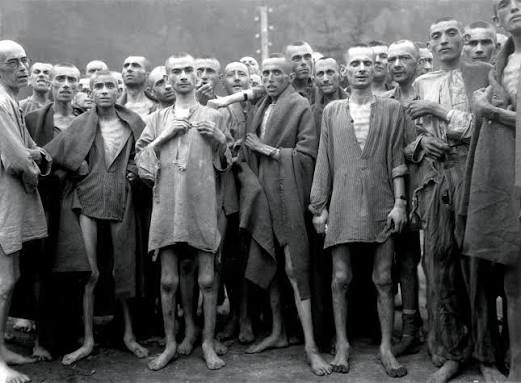
By HENRY SREBRNIK Genocide is a grave and exceptional violation of international law, defined and prohibited by the Genocide Convention of 1948. But maybe Raphael Lemkin did us no favour in coining the word during the Holocaust. It is now used by antisemites against Israel.
Raphael Lemkin was a Polish-Jewish jurist who escaped from Europe when the Nazis occupied Poland. He moved to Washington, DC, in the summer of 1942, and went on to document Nazi atrocities in his 1944 book, Axis Rule in Occupied Europe. In this text, he introduced the word “genocide,” the destruction of a nation or of an ethnic group. This new word is made from the ancient Greek word genos (race, ethnicity or tribe) and the Latin cide (killing).
But it’s not that cut and dried. Even before the antisemites accused Israel of genocide in Gaza, as a way of ridding themselves of any residual guilt about the destruction of European Jewry, the word had become little more than a term used by states and “human rights” groups who for one reason or another want to punish their adversaries.
Most of the time they really are talking about “ethnic cleansing,” pogroms, massacres and war crimes. By such criteria, every participant in World War II committed “genocide.” The mass killings of civilians in Hiroshima and Dresden in 1945 would today qualify. But these were acts against even far worse perpetrators of what we now call genocide, designed to speedily end the war.
What about the American war in Vietnam, and of course the almost numberless conflicts across Africa? The wars that dismembered Yugoslavia involved terrible massacres, particularly in Bosnia-Herzegovina and Kosovo, but did they really meet the criterion for genocide? The numbers killed needn’t be huge. About 8,000 Bosniak Muslims were murdered in Srebrenica by Bosnian Serb militias in 1995 during the Bosnian war. In the Western Hemisphere it would — and lately does — refer to the cultural and also physical extinction of pre-contact peoples from the Arctic down to Patagonia.
Are ideological attempts to kill groups of identifiable people within a state — the Holodomor in Ukraine, but also elsewhere in Stalin’s USSR — genocide? What about the Khmer Rouge in Cambodia? Should we call this an “auto-genocide,” since it was perpetrated by the nation’s own mad Maoist regime? Was China’s Cultural Revolution a genocide? Millions probably died. Rwanda is an interesting case — obviously a mass murder by one class-cum-ethnic group against another, a giant pogrom involving intertwined peoples, but where the victims have now turned the tables.
Actually, there have been very few ideologically intentional attempts to destroy a powerless and helpless people, in whole or in part. Only a few qualify by that definition, the Holocaust being an obvious one, as well as the Turkish mass murders of Armenians in World War I. The allegations that Israel committed this crime do not meet the established definition and standards of genocide, are unsupported by established facts, nor do they stand up to common sense scrutiny.
A finding of genocide requires evidence of acts that are intended to destroy a national, ethnic, racial, or religious group, in whole or in part. Israel has neither intended to, nor destroyed, Palestinians as a group in Gaza. Israel’s accusers allege genocide mostly because of the supposed number of civilians killed in Gaza. Such claims are rife with flaws. Genocide is not a quantitative crime; there is no specific number of civilian casualties that constitutes genocide.
Israel set a high bar for how to conduct urban warfare against an enemy who will stop at nothing, including the death of its own civilians. What kind of genocide is it when the population of Gaza is larger today than it was three years ago? And how could it be that Israel is trying to kill innocents when the ratio of civilian-to-combatant casualties is lower than that of other urban wars fought in even less-difficult conditions?
Dave Rich, an Associate Research Fellow at the Pears Institute for the Study of Anti-Semitism, writes extensively about the intersection of anti-Israel activism, far-left politics, and modern antisemitism. He observes that people respond to the genocide charge through facts and data: Israel’s supporters take the charge of genocide on its face, as an evidence-based allegation of a crime, and try to construct the case for the defence. But there is no defence, because the charge is not made on that basis, or for that purpose, he states.
The term “genocide,” he notes in “From Be’eri to Bondi: Global Antisemitism After October 7, published in Fathom, October 2026, has shed its legal meaning and become a political label, whose antithesis is “resistance.” These two terms represent two states of being: in a colonial setting, either you are engaging in genocide or you are resisting it. There is no middle ground. “Israel is condemned as genocidal, not by observation, but through logical deduction: Israel is colonial, therefore by definition it is genocidal. It cannot be otherwise. And Gaza represents resistance against the entire Western colonial and capitalist power structure.”
Maia Zelkha, editor-in-chief of Yad Mizrah, a Sephardi and Mizrahi cultural magazine, also contends that the left employs the word “genocide” as an ideological weapon. “Before Israel had even launched its ground invasion of Gaza, and before there was any evidentiary record of Israel’s military campaign,” she writes, in her article “Genocide and Its Jurors,” in Quillette, Sept. 24, 2026, many leftist groups “were already describing Israel’s response as genocide.”
On Oct. 8, just a day after Hamas’s massacre and kidnappings, thousands of demonstrators gathered in New York’s Times Square in an “All Out for Palestine” rally to support “Palestinian resistance.” Within days, other organizations were issuing statements describing Israel’s unfolding military response as genocide, situated within a pre-existing theory of Israel as a colonial project that had produced genocidal dehumanisation. Prominent academics, human-rights organisations, activists, journalists, and public intellectuals described Israel’s conduct as genocidal.
Although the conviction that Israel is committing genocide against the Palestinians is not new, it has garnered ever more strength since the beginning of this war. In March 2024, the UN special rapporteur on the Palestinian territories, Francesca Albanese, published a report alleging that the Israeli war in Gaza constituted a genocide. In December of the same year, both Amnesty International and Human Rights Watch did the same. Then in July 2025 came both Physicians for Human Rights and B’Tselem, followed almost immediately by the International Association of Genocide Scholars. A resolution from the latter organization requires a two-thirds vote of its members, academics in the field of genocide studies, to pass. One would be hard-pressed to find a more reputable source for the libel.
On Sept. 16, 2025, a UN Commission of Inquiry concluded that Israel was committing genocide in Gaza; other prominent left-wing organisations and scholars have reached the same conclusion. And finally, on Oct. 9, the Norwegian Nobel Committee announced that it awarded the Nobel Peace Prize for 2026 to South African judge Navanethem “Navi” Pillay, who led the 2025 UN commission that found Israel guilty of genocide against the Palestinians while completely ignoring many of the world’s worst human rights abusers, including, of course, Hamas. Pillay’s commission found that Hamas and other Palestinian armed groups committed war crimes. Yet it accused Israel of genocide. This is a staggering moral inversion. And now the award of the Nobel; this appears to be the greatest possible legitimization of the now-established consensus about Israel’s war in Gaza. The icing on the cake!
But remember this: When a jihadist terrorist organization like Hamas applauds a Nobel Peace Prize, the moral judgment of the Nobel Peace Prize Committee should rightly be called into question.
Henry Srebrnik is a professor emeritus of political science at the University of Prince Edward Island.
