


Uncategorized
Is supporting peace illegal in Israel? A shocking arrest carries a warning
A Jewish man is wearing his kippah at a local café when an angry customer accosts him. The kippah is against the law, the man is told; the other customer calls the police.
Within minutes, officers arrive. They confiscate the Jewish man’s belongings, and place him in a cell without water for around 20 minutes. He is not allowed to call his wife. Near release, the officers threaten to put him back in the cell if he does not leave the station without his kippah.
The man refuses. And so an officer of the law takes a blade to the man’s sacred religious symbol. “She’d taken my possession, a religious ritual object, something that is very dear to my heart, and destroyed it,” the man said.
This was not Europe in the 1930s. It was Israel in 2026. And it all happened because Alex Sinclair, 53, had a Palestinian flag embroidered onto his kippah.
That Sinclair is a Zionist — his kippah also featured an Israeli flag — meant little to his fellow citizen, or to the police, who have taken an increasingly authoritarian tack against Palestinian symbols.
Israeli censorship of innocuous political expression isn’t new, especially for Palestinian citizens of Israel. But the egregious case of a Palestinian flag being cut off of Sinclair’s kippah shows the predictable consequences for Jews of policies that repress others’ speech in our name. A government that lets officers cut a Jew’s kippah is taking a page out of the playbook of antisemites by defining what it means to be a good Jew who gets to live freely in society
A kippah built for complexity
Sinclair is a Jewish education lecturer at the Hebrew University of Jerusalem. His 2013 book Loving the Real Israel: An Educational Agenda for Liberal Zionism — a finalist for a National Jewish Book Award — argues that Jewish education should be built around principles including complexity, conversation and empowerment.
He has spent his career insisting that you can love a country honestly only if you confront its flaws. As part of that effort, he has worn a kippah bearing both an Israeli and a Palestinian flag for nearly 20 years.
“The reasons behind the kippah are long and complex,” he wrote on Facebook after his detention, “and related to the messy ambivalence of my Jewish-Zionist identity.”
The kippah was, in part, his way of expressing his religious commitment without being folded into assumptions about what a kippah-wearing Jew stands for politically.
His wearing of it has sometimes sparked meaningful reactions from other Israelis, especially Palestinians. Once, a cashier in Sinclair’s neighborhood supermarket told him: “Thank you on behalf of all of us.” Another time, the mechanic fixing his flat tire saw the kippah and burst into tears. Among Jews, the kippah acts as necessary friction in a country sometimes desperate to maintain a smooth narrative.
In a 2024 essay called “The Two Most Important Flags for Liberal Jews Today,” Sinclair argued that the dual flags answer extremism from both Hamas and the Israeli right:
“By portraying the Israeli flag and the Palestinian flag together, we show Hamas and other Palestinian terrorists that we will not give up our country and our national identity, but we show potential Palestinian partners that we accept their national identity and wish to live in security, mutual dignity, and peace with them.”
Cutting the Palestinian flag out of Sinclair’s kippah was the state literally cutting complexity out of acceptable Jewish vocabulary.
The gap between what the law is and what it does
What happened to Sinclair was not a case of bad laws so much as police taking matters into their own hands despite the law.
No Knesset law makes the Palestinian flag illegal in Israel. Israeli legal authorities and courts have repeatedly affirmed the Palestinian flag as protected political expression, while allowing police only narrow authority in cases where there is a high probability of a breach of the peace or genuine suspicion that someone identifies with or supports a terrorist organization
Israel once used the power of the state to discipline Jewish radicals. The country’s first anti-terror law, passed in 1948, was directed at Jews. It was used to designate Lehi, a Jewish paramilitary group that assassinated United Nations mediator Folke Bernadotte because his proposed partition plan was seen as too favorable to Arabs. (This despite the fact that the Swedish nobleman’s “White Buses” operations rescued tens of thousands of prisoners, including Jews, from Nazi camps in 1945.)
Now, police contorted the statutory tradition descended from that law against a Jew for the peaceful connotations of his kippah. Politicians and law enforcement whose beliefs are arguably influenced by extremists like Lehi are abusing their power to harass peaceful citizens of the state.
Foremost among them is National Security Minister Itamar Ben-Gvir. In January 2023, days after being sworn in, Ben-Gvir directed the Israeli police to remove “terror-supporting flags” from public spaces — a directive that in practice included the Palestinian flag. Senior police commanders quickly said that the order was not legally sound. None of that has stopped censorship from happening.
The legal-rights organization Adalah has documented at least 645 people arrested for speech-related offenses since the Hamas attack of Oct. 7, 2023. The overwhelming majority of that number are Palestinian citizens of Israel, many of whom were eventually indicted. By contrast, human rights organization Yesh Din has found that nearly 94% of investigations into settler violence against Palestinians in the West Bank have been closed without indictments.
There was never going to be a firewall
It was always naïve to assume that the coercive apparatus used against Palestinians could be cordoned off from the democracy Jews live in.
Unchecked power, as critics like the Orthodox Jewish philosopher Yeshayahu Leibowitz warned, corrodes everything it touches. A state’s abuses undermine democracy for the citizens in whose name they are carried out.
The Israeli right may object that Hamas and its supporters have used the Palestinian flag in hateful contexts, including in imagery surrounding the Oct. 7 massacre and at rallies celebrating Hamas’s attack. (Hamas has its own, separate flag). That’s true, and it helps explain why many Israelis experience the Palestinian flag as threatening.
But just as the Israeli flag does not mean that every Jew who flies it endorses every action of Prime Minister Benjamin Netanyahu, the Palestinian flag does not mean that every Palestinian who waves it endorses Hamas. Flags, and nations, contain multitudes. Many Palestinians wave their flag out of a sincere desire for self-determination.
“I, like every Israeli, know people who lost loved ones on Oct. 7 or in the war thereafter,” Sinclair himself said. “Hamas is my enemy: an enemy who seeks my destruction, an enemy who is not interested in coexistence.” His kippah does not pretend otherwise.
If officers had cut a Jew’s kippah in any other country in the world, Israeli MK Gilad Kariv noted last week, “there would have been an uproar here in Israel.” He’s right.
Instead, the Israeli police have publicly described what they did to Alex Sinclair as a “clarification process.” That sounds like the bureaucratic vocabulary of a state that no longer trusts its citizens to exercise their rights and liberties. Following his detention, Sinclair filed a complaint with the Department for Internal Police Investigations. He requested compensation for the kippah and a written commitment that he could walk through Modiin without harassment.
“I’m not holding my breath,” he said.
His assessment is haunting: “If we are looking ahead, oh my God, is this what is in store for us?” The answer, if things continue along these lines, is a government that is increasingly authoritarian, deeply insecure and farcical. Days after Sinclair’s detention, Israeli police seized another suspect flag that was red, green, and white at an anti-Netanyahu protest. It was Hungarian.
The post Is supporting peace illegal in Israel? A shocking arrest carries a warning appeared first on The Forward.
Uncategorized
Four Seats or No Seats? Why Israel’s Final Polls Disagree Over Amcha Yisrael
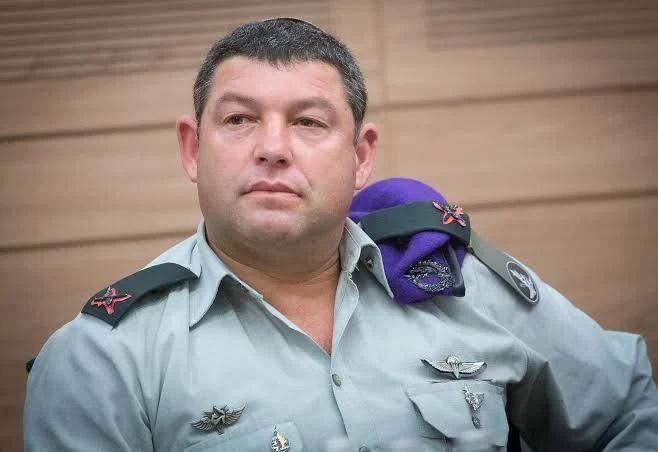
Conflicting projections for Ofer Winter’s party illustrate the uncertainty of measuring public support near an electoral threshold.
A Channel 12 poll gives Ofer Winter’s Amcha Yisrael four parliamentary seats.
An i24NEWS survey reaches the same seat total.
Other final polls find that the party does not qualify for representation.
How can surveys conducted close to the same election produce such different results?
The answer lies partly in the difference between measuring a vote share and converting it into parliamentary seats.
A Statistical Boundary
Israel’s electoral threshold is 3.25 percent.
For a party receiving substantially more than that percentage, modest sampling fluctuations may change its expected number of seats without calling its parliamentary presence into question.
For a party whose support lies near 3.25 percent, the same type of fluctuation may change its projected representation from several seats to zero.
This does not necessarily mean the polls are measuring completely different political realities.
They may be producing estimates close to the same threshold but on opposite sides of it.
Sample Size Is Only One Factor
The i24NEWS survey conducted on October 22 included 5,124 adult respondents and reported a sampling error of plus or minus 1.4 percentage points at the 95 percent confidence level.
That is a substantial sample by conventional political polling standards.
But a larger sample does not eliminate every source of uncertainty.
Different pollsters may employ different recruitment methods, weighting systems and procedures for estimating turnout.
They may also differ in how they handle respondents who are undecided or reluctant to state their preferences.
These choices can matter particularly for smaller parties.
The Problem of Turnout
Opinion polls generally estimate voting preferences before actual voting takes place.
Election results reflect the ballots cast by people who participate.
Differences between intended and actual turnout can affect parties in different ways.
Analysts must therefore consider not only how many respondents express support for a party, but also whether the poll’s turnout model accurately reflects the eventual electorate.
Without transparent, comparable information about the methods used by each polling organization, it is difficult to identify which methodological difference is responsible for a particular disagreement.
Reading the Final Surveys
The appropriate interpretation of Amcha Yisrael’s polling is neither that its parliamentary representation is guaranteed nor that exclusion is certain.
The available surveys demonstrate uncertainty around a legally decisive boundary.
The four-seat projections reported by Channel 12 and i24NEWS are meaningful observations.
So are the below-threshold findings published by Channel 13, Maariv and Zman Yisrael.
Each survey is a measurement of electoral intentions under a particular methodology, not a count of actual votes.
For readers following Israel’s election, this makes Amcha Yisrael an instructive case study in how polling uncertainty interacts with electoral law.
The final result will provide the definitive seat allocation. The polls explain why the outcome was difficult to measure in advance.
Uncategorized
As Trump betrays Ukraine, it’s beginning to feel a lot like Munich
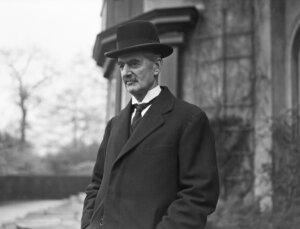
In Munich on Sept. 30, 1938, the leaders of Britain and France signed an agreement with Adolf Hitler that caved to the Nazi leader’s demand that Germany be given a chunk of Czechoslovakia. Five months later, Hitler ordered the German military to forcibly take the remainder of the neighboring country.
On Oct. 9, 2026, Donald Trump and Vladimir Putin struck a deal allowing Russia to sell diesel fuel to global markets, most importantly to the US. Then Trump waived a package of sanctions on Russia that had been passed by Congress. By replenishing Russia’s war coffers, it is likely more Ukrainians will die because of these twin gifts from America’s president to the warmongering Russian autocrat.
Why is Trump doing this? He seems to be hoping the diesel deal will help him avert disaster in the upcoming midterms. Or maybe there’s more to it than that. Perhaps Trump seriously thinks that this will get him the Nobel Peace Prize by ending the war in Ukraine through helping Putin win it. Perhaps it’s one more scheme to further enrich himself and his family. Or maybe Putin really does have something on Trump.
In any event, it feels like Munich all over again.
There are some remarkable parallels between Czechoslovakia’s predicament in 1938 and Ukraine’s nine decades later: separatists in two vulnerable Central European democracies were encouraged and supported by a neighboring authoritarian regime that sought to seize adjacent territory under the pretext of protecting a minority from oppression.
And at the center of both narratives is betrayal: of Czechoslovakia by Britain and France, and Ukraine by Trump.

In the spring and summer of 1938, Konrad Henlein, leader of the Nazi-allied Sudeten German Party in Czechoslovakia, held secret meetings with Hitler and other Nazi officials. They concocted a plan: Cause so much disorder in the Sudetenland that the Czech government would declare martial law, thus creating an excuse for German troops to march in to protect the ethnic German minority.
Tensions that had long existed along the Czech frontier erupted into gunfire and death in the Sudeten town of Habersbirk on the morning of Sept. 13, 1938. A mob of German separatists hung a swastika banner from a church tower, stormed the police station, kidnapped the wife of a cop, and engaged in gunfights with police officers that lasted hours. Four Czech police officers and four insurgents died. Outbreaks of violence, terror and torture raged along the border for days, backed by Freikorps paramilitary troops who crossed from Germany and by SA and SS men who took part in cross-border sabotage and armed attacks.
The uprising had the desired impact. Just 17 days later — on Sept. 30, 1938 — Britain, France, Italy and Nazi Germany signed the Munich Agreement, yielding to Hitler’s demand that the Sudetenland be ceded to him. After landing at an airport outside London, Prime Minister Neville Chamberlain waved a document in his hand and jubilantly proclaimed:
“The settlement of the Czechoslovak problem which has now been achieved is, in my view, only the prelude to a larger settlement in which all Europe may find peace.”
“I believe it is peace for our time,” Chamberlain said later that day.
But it didn’t take long for Hitler to show he could not be trusted. Hitler’s army marched into Czechoslovakia on March 15, 1939. Germany’s invasion of Poland followed less than six months later, and by 1942 German forces controlled territory spanning from the Atlantic Ocean to deep inside the Soviet Union.
Ethnic Germans’ uprising in Czechoslovakia in 1938 found an echo nine decades later in Ukraine’s Donbas region, where unrest that began with pro-Russia protests in 2014 evolved into the war Russia has been waging on its neighbor for nearly five years.
In the spring of 2014, paramilitary units led by Russian intelligence officers stormed government office buildings in several towns and cities in Donbas, seizing weapons and clashing with police. In a scene reminiscent of the Habersbirk siege of 1938, on April 14, 2014, pro-Russian militants seized the police station in Horlivka, beat up the police chief, and murdered a member of the city council, whose body was found in a river. Similar clashes occurred throughout Donbas.
Two Kremlin-backed pseudo-states soon emerged: the Donetsk People’s Republic and the Luhansk People’s Republic. Russia funneled tanks, artillery, air defense systems and fighters into Donbas, fueling a war between separatists and Ukrainian forces that dragged on for years.
Like Hitler in the Sudetenland, Russia’s de facto occupation of Donbas was not enough for Vladimir Putin. His eyes were on all of Ukraine, and he spent years manufacturing pretexts for the full-scale invasion that began on Feb. 24, 2022.
Trump has been buttering up Putin for more than a decade, starting with his 2015 campaign for president, when he effusively praised the ruthless Russian autocrat’s leadership style. Putin is a “strong leader,” is “far more respected than our president,” meaning the immensely popular Barack Obama, and was someone he “would get along with very well,” Trump said back then.
Trump’s admiration for Putin took on ominous tones after becoming president. During a press conference after the two leaders’ 2018 Helsinki summit, Trump questioned intelligence findings on Russian election interference and said he believed Putin’s denial. “I don’t see any reason it would be Russia,” Trump told reporters, with the Russian strongman standing at his side.
After Russia’s invasion of Ukraine in 2022, during Biden’s presidency, Trump called it “a pretty smart move,” praised Putin as a “genius,” and also said it wouldn’t have happened if Trump was still president, remarks that were amplified by Russian state media.
During Trump’s second term, his buddy-buddy relationship with Putin has turned into a virtual strategic alliance, as the American president repeatedly makes moves and statements that seem designed to please the Russian autocrat. There are Trump’s threats to abandon NATO, his humiliation of Ukraine President Volodymyr Zelensky during a February 2025 meeting inside the Oval Office, and most recently Trump’s demand that Ukraine cease its drone attacks on Russian oil refineries, his call for Zelensky’s ouster, and envoy Steve Witkoff thanking Putin for being a “humanitarian.”
Putin has proposed a summit between himself, Trump, and Chinese leader Xi Jinping to discuss ending the war in Ukraine. It’s notable that Ukraine has not been invited. This is also what happened in Munich nine decades ago, when Czech delegates were excluded from the room, and others decided Czechoslovakia’s fate.
Last October, aboard Air Force One, Trump told reporters the Donbas region should be “cut up,” leaving most of it in Russian hands.
“Let it be cut the way it is,” he said. “They can negotiate something later on down the line.”
It seems the fate Trump envisions for Ukraine is similar to the one Hitler envisioned for Czechoslovakia. It would be naïve to think that Putin’s expansionist ambitions would stop there.
The post As Trump betrays Ukraine, it’s beginning to feel a lot like Munich appeared first on The Forward.
Uncategorized
A Chabad Jew was stabbed in NYC. He returned the next day to continue wrapping tefillin.
(JTA) — Less than 24 hours after he was stabbed in midtown Manhattan, Yosef, a Chabad-Lubavitch man from Crown Heights, was back on the same street where he’d been assaulted, popping into Diamond District businesses as usual to help employees wrap tefillin.
Yosef, 26, who did not share his last name to maintain his privacy, told the Jewish Telegraphic Agency that he was back on 47th Street on Thursday afternoon, the day after the stabbing, without missing a beat in his Monday-through-Thursday rounds even as police investigate the incident as a possible hate crime.
A number of the people he visited pieced together that the widely circulated footage of a man being stabbed the previous night was of him.
“They were in shock. They were obviously scared for me,” said Yosef, who has been wrapping tefillin and distributing Shabbat candles to Jewish Diamond District employees for about three years. He started that routine when his father, a Chabad Jew who works in the jewelry business, realized he needed his son’s help to handle the demand for those acts. Yosef told Chabad.org that he was “still shaken” by the attack a day later.
Still, he told JTA, “We can’t allow some hate to stop us.”
Yosef said he felt it was important to communicate that message because “we need more mitzvahs in the world, we need more light in the world.”
Yosef was taken to Bellevue Hospital on Wednesday evening around 6 p.m., where medical staff assessed that he had no internal bleeding and would not need stitches. No arrests have been made, but the assailant has been described as a woman in her 40s.
The attack has renewed concerns about security that have faced Chabad adherents and institutions, which often host public events and maintain a visible street presence. But the threat didn’t diminish their presence in midtown Manhattan on Friday.
Multiple Chabad men stood under a bright yellow tent on the sidewalk wrapping tefillin for a steady stream of workers in the heavily Jewish Diamond District.
“The Rebbe says that the way to defeat darkness is only through the addition of light,” said Shmuel Cohen, who was handing out small photographs of the movement’s late leader, the Lubavitcher Rebbe Menachem Mendel Schneerson.
Cohen told JTA that he had not heard about the attack that took place just down the block two days earlier, though his partner under the sidewalk tent had. Cohen said that the best way to respond is through “the observance of Torah and mitzvot without being ashamed of our Judaism but presenting it to everyone.”
Also on Friday, Chabad officials met with New York Police Department representatives for their annual meeting about security ahead of Chabad’s international conference in Crown Heights, the Brooklyn neighborhood where the movement is headquartered. The conference begins on Nov. 5.
Chabad has been targeted in multiple high-profile attacks in the past year, including the deadly Bondi Beach shooting in Australia in December. The following month, a man rammed a car into the doors of the Chabad-Lubavitch headquarters in Brooklyn, raising further questions over how the movement should balance its commitment to making its events accessible with security.
Meanwhile, Jews have been targeted in more than half of hate crimes committed in New York City in 2026, despite making up about 12% of the city’s population.
“Security is our top priority. Our goal is to provide an environment where every participant feels safe and can fully experience the purpose and spirit of the gathering,” said Rabbi Mendy Kotlarsky, a top organizer of the upcoming conference.
In the wake of the attack, Yosef said he is not concerned about going out in public as a visibly Jewish person and doesn’t plan to change how he approaches the world.
“I was wearing the same clothes on Tuesday and Wednesday and Thursday,” he said. “I didn’t change my routine.”
This article originally appeared on JTA.org.
The post A Chabad Jew was stabbed in NYC. He returned the next day to continue wrapping tefillin. appeared first on The Forward.
