



Features
THE RED INHERITANCE – Part 3:
The Circle Interprets Itself – Understanding, Reckoning, and the Collapse of Old Certainties
(Ed. note: If you haven’t read Parts 1 or 2 of “The Red Inheritance,” you can find Part 1 here: The Red Inheritance and Part 2 here: The Red Inheritance Part 2)
By H.C. Piloski
Foreword
Part Three is about understanding.
Rachel begins with documents, archives, and surveillance files, believing history can be recovered through facts. What she discovers instead is that history survives not only in records but also in memory, silence, contradiction, and family.
As the circle of her inquiry widens, she learns that inheritance is rarely a single story. More often, it is a conversation carried across generations, unfinished and sometimes unresolved.
Rachel had intended to read only a few pages before bed.
Instead, she found herself awake long after midnight, sitting at her kitchen table with the RCMP file spread before her.
A date caught her attention.
December 26, 1991.
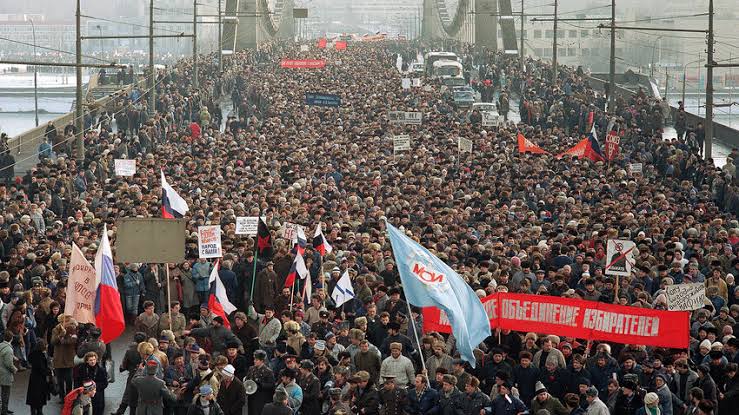
The day the Soviet Union officially ceased to exist.
She imagined her grandfather reading the news.
For David, the collapse was not simply political. It was personal. An entire worldview had fractured before his eyes.
The professor had explained it during one of their earlier conversations.
“For people like your grandfather,” he had said, “socialism wasn’t merely politics. It was a moral framework. When the Soviet Union collapsed, many people felt as though the world itself had lost its bearings.”
Rachel understood that better now.
The file recorded meetings, organizations, speeches, and surveillance reports. It documented where David went and whom he spoke to.
It documented what he did.
It revealed almost nothing about who he was.
One report noted that after a political gathering David had lingered outside the Labour Temple.
The officer’s assessment was brief:
Subject appears contemplative.
Rachel laughed despite herself.
Contemplative.
As though an entire intellectual and emotional universe could be reduced to a single word.
Yet perhaps it was not entirely wrong.
The deeper she read, the more complicated her grandfather became.
He was neither hero nor villain. Not a symbol. Not a stereotype.
He was a man trying to understand history while living through it.
Rachel opened her notebook.
He lived in a country that watched him, loved a country that doubted him, and believed in a world that collapsed beneath him.
For the first time, she felt less like a researcher and more like an inheritor.
The next morning she called the professor.
“You’ve reached the collapse,” he said.
“It feels like an earthquake.”
“It was.”
They spoke about the aftermath of 1991.
Old friendships strained.
Organizations fractured.
Arguments that had once seemed theoretical became deeply personal.
The professor explained that for the Jewish left, and many on the broader left, the Soviet Union’s implosion was more than a geopolitical event. It was a profound ideological shock.
“And my grandfather?”
“He was right in the middle of it.”
After the call ended, Rachel found herself thinking about the people who had filled her grandparents’ home when she was a child.
The endless conversations.
The arguments.
The laughter.
The crowded rooms full of people whose names she barely remembered.
Most of them were gone now.
What she was uncovering was larger than a single life.
She was recovering fragments of an entire vanished community.
The surprise arrived in the file almost by accident.
Buried among routine observations was a note stating that David and his wife had attended a performance at Manitoba Theatre Centre.
The entry was insignificant as intelligence.
For Rachel, it opened an entirely different door.
Politics had dominated every family story about David.
His meetings.
His causes.
His convictions.
But what about her grandmother?
Rachel had always known that she loved theatre, books, music, and literature.
What she had never considered was how completely those interests shaped her life.
For years Rachel had unconsciously treated her grandmother as a supporting figure in David’s story.
Now she began seeing her differently.
As a person.
As someone with her own passions, friendships, and intellectual world.
The deeper Rachel looked, the more similarities emerged between them.
Both believed ideas mattered.
Both loved books.
Both loved theatre.
The difference lay only in where they searched for meaning.
David sought it in politics and public life.
Her grandmother often found it in art, culture, and relationships.
Rachel wrote:
She walked beside his convictions, but she carried a world of her own.
This time she left the sentence untouched.
A few days later Olga came to visit.
Instead of speaking about David, she spoke about her own family.
Her grandparents had survived the Holodomor.
They carried memories of hunger, fear, and state violence.
“My grandparents never celebrated the collapse of the Soviet Union,” Olga said.
Rachel looked surprised.
“They didn’t?”
“No.”
“What did they do?”
Olga smiled sadly.
“They stared.”
Rachel thought immediately of David.
“Like my grandfather.”
“Yes,” Olga said. “But from the other side.”
The words settled heavily between them.
For years Rachel had viewed history through the lens of her own family.
Now she understood something new.
Her grandfather’s hopes had existed alongside someone else’s suffering.
His vision of justice had intersected with experiences he could never fully understand.
Neither reality cancelled the other.
History was not a single inheritance.
It was a collision of inheritances.
Before leaving, Olga reached across the table.
“You aren’t responsible for your grandfather’s beliefs.”
Rachel nodded.
“But you are responsible for understanding them.”
After Olga left, Rachel wrote down those words.
They remained with her for days.
The professor helped her understand another contradiction.
David had been a passionate supporter of Israel’s existence.
At the same time, he had consistently defended Palestinian rights.
“Both?” Rachel asked.
“Both.”
The professor smiled.
“Your grandfather spent much of his life living with contradictions.”
To many people such positions appeared incompatible.
To David they represented a single principle.
Justice could not be divided.
Rachel left the meeting with another realization.
David had spent much of his life refusing easy answers.
Perhaps that was part of what she had inherited.
As she prepared to leave, the professor stopped her.
“This isn’t really about your grandfather anymore.”
Rachel looked up.
“It’s about what his children inherited.”
After a moment he added:
“And what you inherited.”
Rachel did not expect Daniel to become part of the story.
Her younger brother rarely discussed family history.
When he called unexpectedly one evening, she assumed he was simply checking in.
Instead, he surprised her.
“Mom says you’re digging into Grandpa’s past.”
Rachel laughed.
“Word travels fast.”
“It always does.”
What followed was the most honest conversation they had shared in years.
For a long time Rachel had believed Daniel lacked interest in family history.
Now she realized his distance came from uncertainty rather than indifference.
“I remember Grandpa differently,” he told her.
“How?”
“He laughed.”
The answer caught her off guard.
Daniel began describing hockey games, family dinners, jokes, stories, and arguments.
Not the political figure preserved in newspaper clippings and surveillance reports.
A grandfather.
A human being.
“He loved asking questions,” Daniel said.
“And he loved telling stories.”
For the first time, Rachel saw a version of David that no archive could preserve.
Before ending the call, Daniel added something else.
“Grandpa wasn’t nearly as certain as everyone thinks.”
Rachel remained silent.
“He believed things strongly,” Daniel continued. “But he never stopped questioning them.”
The observation changed everything.
The file preserved David’s convictions.
His family preserved his doubts.
Neither version was complete by itself.
Before hanging up, Daniel made a promise.
“When you’re ready, I’ll tell you everything I remember.”
Rachel thanked him.
For the first time, she no longer felt alone in the search.
The following weekend Rachel drove to her parents’ house.
The place felt both familiar and strangely smaller than she remembered.
Photographs lined shelves.
Books crowded every room.
Pieces of family history sat quietly in plain sight.
While looking through old programs and photographs, Rachel began noticing things she had previously overlooked.
Her grandparents had attended theatre performances together.
Commented on books together.
Shared interests she had unconsciously assigned to only one of them.
Their lives overlapped far more than family mythology suggested.
Then her father mentioned something almost casually.
“There might still be some of your grandparents’ papers downstairs.”
A few minutes later Rachel stood in the basement.
The box sat on a shelf.
Its label contained a single word:
DAVID
She lifted the lid.
Inside were photographs, letters, programs, newspaper clippings, address books, and handwritten notes.
Nothing dramatic.
Nothing obviously historical.
Simply the fragments of an ordinary life.
Exactly the sort of material institutional history often overlooked.
Her father watched quietly as she examined the contents.
“Did you know all this was here?”
“Mostly.”
“Why didn’t you tell anyone?”
He thought for a moment.
Then answered honestly.
“I never thought anyone would ask.”
The response hurt because it was true.
For years nobody had.
Back in her apartment, Rachel spread the contents of the box across her table.
One item stood out immediately.
A sealed envelope.
The handwriting was unmistakably David’s.
The envelope was addressed to Sarah.
Her aunt.
The daughter who had drifted away from the family.
Carefully Rachel opened it.
Inside she found an unsent letter.
At first it read like ordinary correspondence.
Then gradually it became more personal.
More vulnerable.
More uncertain.
One passage stopped her completely.
You believed I cared more about being right than about understanding you.
Perhaps there were times when that was true.
If so, I regret them.
Rachel read the lines again.
This was not the David preserved in family legend.
Nor the David described in surveillance files.
This was a father struggling to understand his own mistakes.
Further down she found another passage.
History can become a dangerous thing inside a family.
People begin arguing with symbols instead of people.
Before long, nobody remembers how to listen.
Rachel lowered the page.
The words felt painfully honest.
Not political.
Human.
When she finally reached the end, she found something even more powerful.
The final paragraph was unfinished.
It ended with a single incomplete sentence.
If there is one thing I hope you understand, it is that I never wanted disagreement to become distance. A family should be large enough to contain different truths. If I failed you, it was not because I loved my ideas more than my daughter. It was because…
Nothing followed.
No explanation.
No signature.
Only blank space.
Rachel stared at the unfinished sentence for a long time.
At first she felt disappointed.
Then she realized its incompleteness carried its own truth.
Life rarely supplied neat endings.
Letters remained unsent.
Conversations stopped.
Questions survived.
That night Rachel stood by her apartment window looking out across the city.
She thought about the RCMP file.
The professor.
Olga.
Daniel.
Her grandmother.
The box.
The letter.
Government archives had preserved David the activist.
Family memory had preserved David the husband, father, grandfather, friend, and neighbour.
Neither archive was complete.
Together they came closer to truth.
Rachel opened her notebook one final time.
She wrote:
Every archive contains missing pages. Every family does too.
Then she closed the notebook.
For months she had searched for her grandfather.
Now she understood something new.
The story no longer belonged solely to David.
It belonged to the people who inherited him.
Her father.
Daniel.
Sarah.
And perhaps herself.
The next answers would not be found in government files.
They would be found inside the family.
Rachel switched off the light.
The letter remained on the table.
Waiting.
So did the rest of the story.
To Be Concluded in Part Four: The Red Inheritance
About the Author
H.C. Piloski lives among unfinished sentences.
Features
“The Rabbi of Baton Rouge”: new book is both a rom com and an insightful look at the challenges of living in a small Jewish community
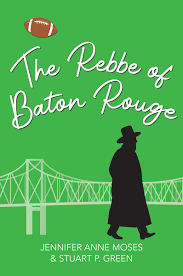
Reviewed by BERNIE BELLAN About a month ago I received an email from a publicist about a new book titled The Rebbe of Baton Rouge.
Now, I should explain that even though I’m now officially retired as publisher of The Jewish Post I still receive loads of emails inviting me to review new books. Unfortunately, most of the titles seem to fall into one of two categories: Either self-help books or books about the Holocaust. I usually don’t even open those emails.
But, when I received this particular email – whose title alone intrigued me (“Review copy: the Rebbe of Baton Rouge”), I decided to read the email.
Here’s what it said:
“Dear Bernie,
“I hope you’ll consider The Rebbe of Baton Rouge for review or feature coverage in The Jewish Post and News. It’s a new Southern-Jewish novel from University of Louisiana at Lafayette Press, out this October.
“Anna Zisk, a Yiddish literature professor, flees a scandal in Boston and moves back into her childhood home in Baton Rouge. Adam Kluger is the new rabbi in town, trying to hold together a shrinking congregation in a city with barely enough Jews to fill a high school gym. His ex-fiancée left him at the altar, a rival synagogue is picking off his members, and he’s being haunted by a Yiddish-speaking ghost. Then he starts falling for Anna.
“It’s a funny, fast-moving rom-com that’s also about faith, belonging, and what holds a small community together.
“The authors, Jennifer Anne Moses and Stuart Green, lived in Baton Rouge for years and raised their three children there. Jennifer has written nine previous books, including the memoir Bagels and Grits: A Jew on the Bayou. Stuart is a Distinguished Professor of Law at Rutgers.
“I’d be glad to send a PDF or print review copy or arrange an interview with the authors. Thank you for considering it.”
I responded to the publicist:
“This sounds interesting – a bit of a distraction from the endless series of Holocaust books that we’re usually asked to consider reviewing.
“You can send me a pdf of the book and I’ll take a look at it – no promises.”
In short order I received a pdf of The Rebbe of Baton Rouge – and wow – was this one ever good!
The problem is, after you’ve finished reading what’s about to be a glowing review, you’re going to have a tough time buying this book. From what I can see, it’s available only through Amazon so far – and even though Amazon says it’s just a paperback, it’s priced at $42.66 (I assume that’s in Canadian dollars because I looked for it on Amazon Canada.)
Putting aside the cost of the book, however, I want to tell you why I was so thoroughly entertained by this book – and why I think it will interest Winnipeg Jews in particular.
The story is set mostly in Baton Rouge, which I discovered is a relatively small city (only about 225,000 population) – with a very small Jewish population (only about 1500).
From the way it’s described in the book, anyone considering moving there would have to think twice before doing that. It’s very humid, is infested with mosquitoes – and, at the time the book was set (which is 2016), it was prime MAGA territory.
The two principal protagonists in the book, a Yiddish studies professor named Anna Zisk, and a Reform rabbi named Adam Kluger, both end up in Baton Rouge – although neither one by choice.
Anna has become entangled in an embarrassing affair with one of her male grad students in a Boston college – and when the affair ends at Anna’s insistence, the grad student launches a sexual harassment campaign against Anna, which forces her to leave Boston and head back home to Baton Rouge, which is where she is from and where her family still lives.
Rabbi Kluger, on the other hand, is looking for a pulpit of his own – even though he’s had a prior successful career working as a programmer for Google. He’s also decided to break off a relationship with a woman he says he loves, Deborah, because she wouldn’t even consider moving with him to the boonies – in this case, Baton Rouge.
Now, that particular aspect of the story really resonated with me. Here we have a rabbi who doesn’t really want to move to a community which is looking for a new rabbi (after the previous rabbi has died suddenly), but he figures he’ll take the position – until something better turns up.
Frankly, given the fact that neither Anna nor Adam is looking forward to living in Baton Rouge – for different reasons, I was expecting the book to turn into a typical rom com where two ill-starred people find love by being thrust together in unfortunate circumstances.
But The Rebbe of Baton Rouge isn’t that kind of book – much to my delight – and surprise. Sure, Anna and Adam do connect – although I won’t ruin the surprise by telling you what happens in the end, but their connection is more a result of their both respecting one another and having an honest appreciation of the plight that has led both of them to Baton Rouge. (Anna is actually pursued by a handsome Jewish doctor in Baton Rouge, while Adam’s former girlfriend is also quite beautiful – and still cares for him deeply, so it’s not as if Anna and Adam are two losers thrown together after having been rejected by others). They both need to decide whether they are willing to make certain concessions for the sake of ending up just “comfortable,” rather than truly fulfilled.
What I especially appreciated was the manner in which Rabbi Adam especially, comes to find the charm of serving as a rabbi to a small, and very unfunded congregation, so rewarding. There’s a complication to his position though: While he’s the rabbi of a very small Reform congregation, the rabbi of the only other Reform congregation in Baton Rouge, whose membership is much larger, has his sights set on absorbing the members of the smaller congregation into his own.
And frankly – it makes total sense for the two congregations to merge. (Now, haven’t we seen this same scenario played out in Winnipeg?) In fact, a major part of the book is taken up with Rabbi Adam seeking a better paying position elsewhere in the U.S. (in this case, Santa Barbara) because he’s very concerned his own congregation is about to be swallowed up by the larger congregation – and he’s worried that he will end playing second fiddle to a dominant, longer serving rabbi.
As for Anna, she tries to make the best of a bad situation by accepting a temporary position teaching English composition to the members of the Louisiana State University football team – which provides both some comic relief, but also puts her into another embarrassing situation when she is accused of becoming too close with the star of the football team – even though her intentions are totally above board (and so are the football star’s).
Through into the mix an intriguing sub plot about a Hasid ghost who appears every so often in Rabbi Adam’s life – to offer sage advice when Adam is at his lowest points. There is an explanation for why the ghost appears, but I wont’ spoil it here.
One other thing – the book is full of Yiddishkeit. Each chapter has a Yiddish title (there’s a glossary at the end in case you don’t understand the words) and there’s a fair bit of Yiddish sprinkled throughout the book. (After all, Anna is a Yiddish professor – not that she uses Yiddish in her everyday speech. It just gives the book a real “haimish” feel.)
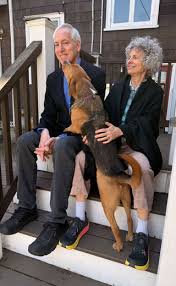
I ought to mention something about the authors: Jennifer Anne Moses and Stuart Green. Jennifer Moses is an accomplished novelist (having written seven previous works of fiction, along with two memoirs), while Stuart Green is a Rutgers law professor who’s also written several books on the law. They began writing The Rebbe of Baton Rouge together during the Covid epidemic. It’s their first jointly written book.
The dialogue in the book is sharp and well informed. It’s clear that Jennifer Moses has honed her craft – and while I was expecting the book to be full of clichés about a rabbi and a congregant having to ward off their physical attractiveness to one another – which is the primary theme of that annoying American show about a rabbi and a non-Jewish woman falling in love in “Nobody Wants This,” this book makes offers much deeper insights into many of the challenges 30 and 40 something Jews face today, including choosing careers over relationships, and the difficulty of finding meaningful relationships in the first place.
And, as for getting a rabbi to move to the boondocks – well Baton Rougers, have you ever heard of Winnipeg?
The Rebbe of Baton Rouge
By Jennifer Anne Moses and Stuart Green
Published by University of Louisiana at Lafayette Press, 2026
202 pages
Available on Amazon
Features
You might not like what this article has to say about what happened on October 7 and the aftermath
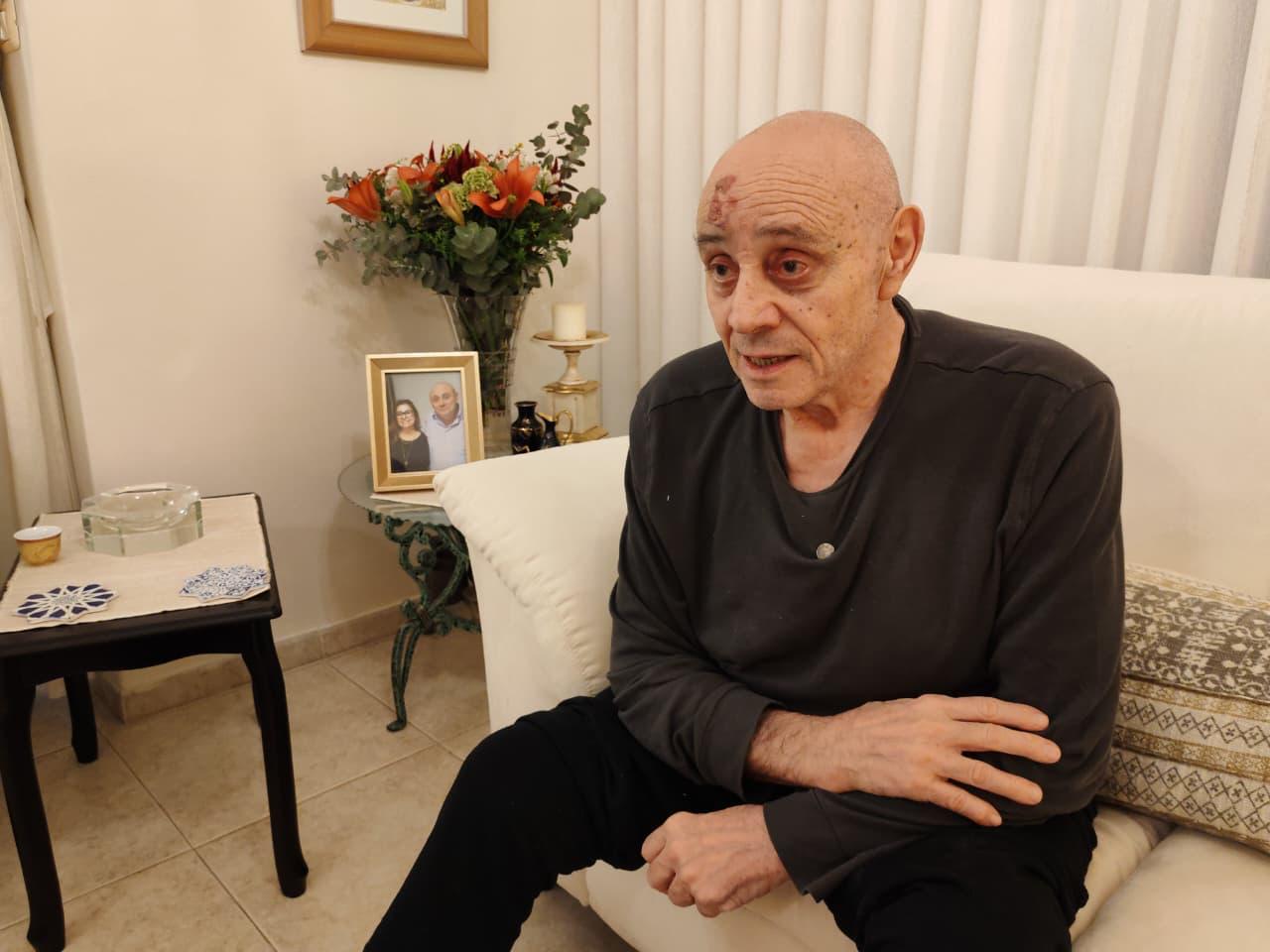
By MARTY GREEN I just read a very disturbing article in Ha’aretz about the treatment of Arab prisoners in Israeli detention. 71-year-old Dr. Mazen Rantisi was recently released after 127 days in detention, and he told Amira Hass about conditions on the inside. No, he was not hung upside-down and beaten; his fingernails were not pulled out or his bones broken. That is not the Jewish way. Without getting into details, the conditions he describes are more along the lines of filth, enforced “discomfort”, hunger, and daily humiliations. And yes, occasional kindness from one guard or another. All in all, treatment no better (and probably often worse) than our own hostages received while they were being held in Gaza.
Which brings me to the point of this article. We like to justify our devastation of Gaza by reminding the world that the declared purpose of Hamas’s invaders was to kill every single Jew they could get their hands on…man, woman, or child. “It’s right there in their Charter!” we proclaim.
We, on the hand, were perfectly blameless in our conduct of the war. “We dropped leaflets to warn people of impending attacks”. “Civilian casualties were because Hamas used them as human shields”. And our trump card: “Hamas could have ended the war at any moment by simply releasing the hostages”.
Could they really have? The last hostages were released a year ago but we are still killing “militants” every single day…some 1,600 since October 10th 2005. (A figure not disputed by Israeli authorities…and considerably more than the 1200 Israeli’s killed on October 7th.) It seems we continue to carry out targeted killings of every single Gaza resident who we can identify as having participated in the October 7th operation…even if those targeted killings involve “collateral damage”.
Yes, we had every justification to invade Gaza to rescue our hostages. But on October 7th weren’t there already thousands of Arab prisoners being held “hostage” in our own prisons, including 1,300 being held without criminal charges or pending trial under our “administrative detention” system? And if the conditions were anything close to those described by Dr. Rantisi, was the need for action (at least from Hamas’s viewpoint) to liberate those prisoners – by whatever means possible – any less than the subsequent need for us to liberate our own hostages?
Does any of this justify the unspeakable cruelties perpetrated by Hamas on October 7th? This is a difficult question to answer, because those cruelties and acts of barbarism were so…well, unspeakable…that Israel has for the most part refrained from posting the evidence online. Yet some details have come out little by little. For one thing, contrary to early claims, it does not seem that any babies were murdered by being placed alive in microwave ovens. Yes, it is all but certain that individual acts of wanton cruelty occurred, but let us look at some actual numbers: specifically, rapes and murders.
But we are going to analyze those in the context of what we will presume, for the sake of argument, to have been a “military operation” whose purpose was the taking of hostages for the “legitimate” purpose of negotiating the release of the detainees being improperly held in Israeli prisons. What are the numbers? And how do they compare with the numbers from our Gaza operation? You should stop reading right now if you don’t like where this is going. . . .
*
*
*
*
Okay, let us continue. Of the 1200 Israeli casualties, 373 were members of security forces. That’s almost a third. So 800 deaths were civilians…that would be what we call “collateral damage” when they are Palestinian deaths. Then let us call them the same when they are ours. We pride ourselves on the low ratio of “collateral damage” we inflicted on Gaza, claiming 20 to 30 thousand armed combatants out of 70,000 total casualties. Well, then evidently our ratio of “collateral damage” is not better than that of Hamas.
(And by the way, how do we count the three unarmed Israeli escapees we killed? If they had turned out to be Arabs would they have been counted as enemy combatants (despite being unarmed) or merely as “collateral damage”? Clearly, we had no compunction about killing unarmed individuals who might have had concealed weapons. Should Hamas have been more scrupulous than us in terms of who they killed in the course of their operation?)
Now let’s look at some percentages. The biggest single site for casualties was the Nova festival, where some 350 were killed….about 10 percent of the total number there. After that, some nearby kibbutzes and settlements were hard hit…Kibbutz Be’eri, 132 dead out of a population of 1,000; Kfar Aza, 80 out of 800 (some of those were security personnel); and communities like Nir Oz, Nahal Oz, and Kissufim: 170 out of 1100.
So the numbers killed in the most heavily hit communities was 10 to 15 percent. These are devastating numbers but they are hard to reconcile with the claim that Hamas intended to murder every single Jew they could lay their hands on. Israeli resistance was stiff in many of these locales, as evidenced by the high number of military casualties. So many of the civilian deaths must have been, (once again from the point of view of Hamas) “collateral damage”.
We all know the story of the one killer who boasted gleefully of having killed ten Jews all by himself. But if we reckon that at least half the civilian casualties were “legitimate” (by the same definition we used for civilian casualties in Gaza), that they were merely “collateral damage”, then no more than two to three hundred civilian deaths would have been gratuitous murders. Those murders could have all been plausibly committed by no more than 30 to 50 of the six thousand invaders in total….less than one percent. Yet in the post-ceasefire world, it remains our declared intention to kill every invader who participated in October 7th.
What about women and children? Women were close to 300 civilian casualties out of 800. Children….perhaps 40 altogether, including exactly seven under the age of six. How many of the 70,000 casualties in Gaza were children under the age of six? We cannot know the true figure with any certainty, but it is hard to believe that the comparison would favor Israel on a percentage basis.
What about rape? There is little doubt that rapes took place at several locations, with many of the victims being subsequently killed. But no actual numbers are readily available. Surely the great majority of the 300 female casualties were mere “collateral damage” and not rape victims. All we can guess is that the number of women raped and then killed could have been anywhere from 10 to 100. But again, these are mere guesses.
Survivors of rape is another story. Only one woman has come forward to publicly testify that she was raped. How many more may have kept quiet or reported their ordeals only privately is unknown. But I would find it hard to believe that in the chaos of the day’s events, that 100 women were raped and only one survived to tell her story out loud. Yes, rape happened. But it could hardly have been on any kind of mass scale. Especially considering the eagerness of the Israeli side to publicize stories of atrocities.
Finally, it is important to remember that this operation was not a “walk in the park” for Hamas. It is said that out of an elite contingent of 3800 fighters, between twelve and fifteen hundred died on Israeli territory. More Arabs than Jews died on October 7th.
Those special forces were followed by perhaps 2000 civilian looters, many of them armed. To the extent that atrocities occurred, it seems highly likely that they came largely from perhaps a hundred individuals out of this contingent of opportunistic marauders, rather than the disciplined forces that were evidently fighting and dying to complete their assigned mission.
And what of the success of the mission itself? If it was intended to give Israel a black eye, it was hardly a failure. And if it was intended to secure bargaining chips in the form of hostages, then the 4000 Arabs released from custody would have to be a win for Hamas. What about the 70,000 dead? Well, we all know that human life means very little to the Arabs. Don’t we? We’ve said it often enough.
If the Arabs don’t regard their own casualties as human beings, maybe it’s time we started to. And going back to where we began this story, with Dr. Rantisi: let’s remember that we are supposed to be responsible for the humane treatment of prisoners. I can’t help but wonder if we haven’t somehow decided to make those who remain in our custody endure extra suffering on behalf of those we were forced to release.
Features
A Sensation at the Bible Contest in Jerusalem
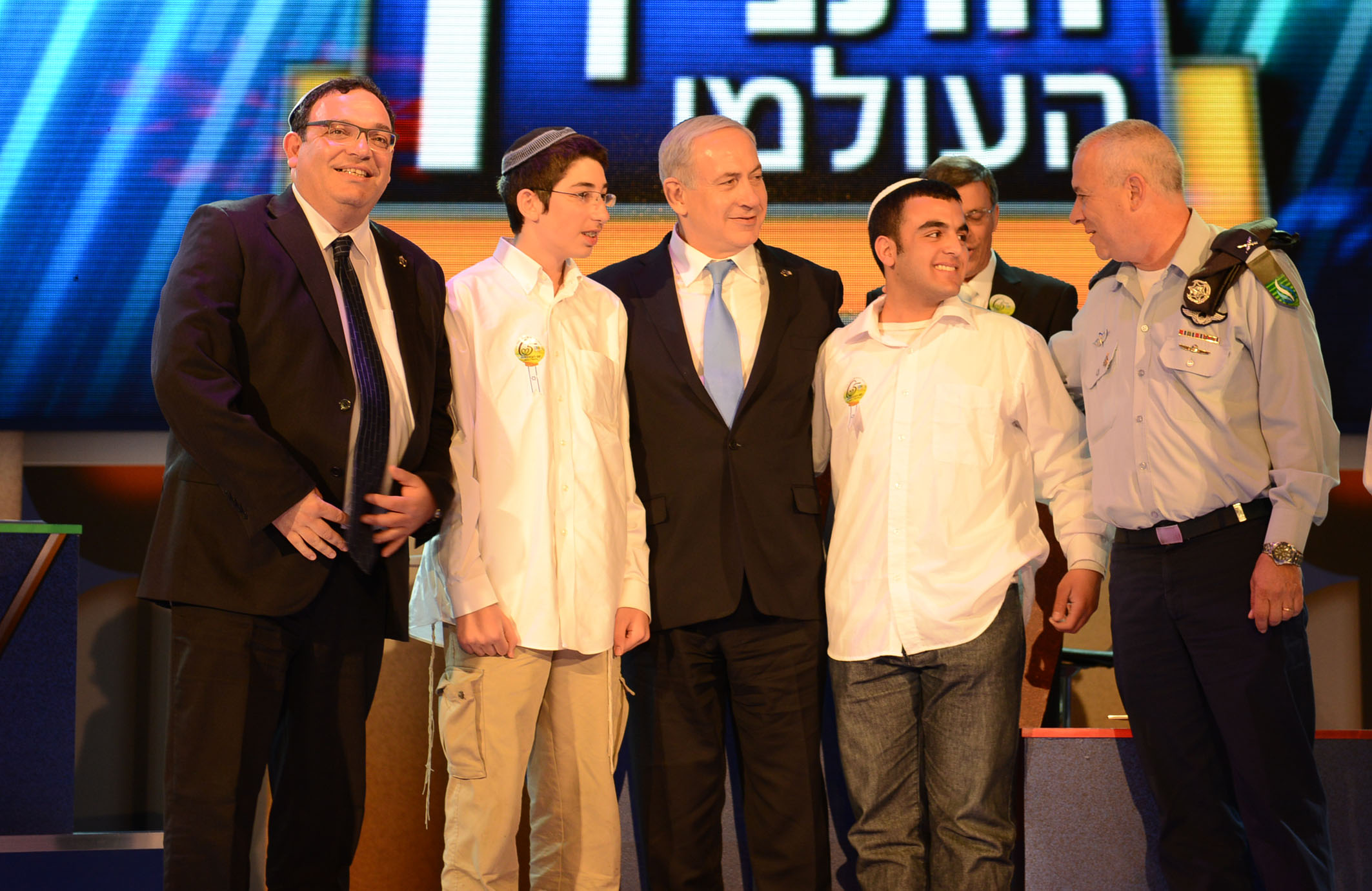
The final of the International Bible Contest, Chidon HaTanakh, takes place every year on Israeli Independence Day (Yom HaAtzmaut). The event is broadcast live across the country, and American contestants appear each year — yet few expect them to win. History, however, records exceptions. In 1988, two teenagers from New York challenged decades of Israeli dominance, and one of them accomplished the impossible.
A TV Quiz Show Where the Subject Is the Bible
Chidon HaTanakh is an annual international competition testing knowledge of the Hebrew Scriptures — something like Jeopardy, except that instead of pop culture, every question revolves around the Torah. It is the country’s largest televised event, followed by the entire nation; the nation’s top officials are invariably present in the hall. Students travel from around the world, yet the balance of power is predictable. In more than half a century of the contest’s existence, only three Americans have taken the top prize. The crown almost always goes to an Israeli.
Why Israel Holds an Almost Permanent Advantage
The reasons for the host country’s dominance are less mystical than pragmatic. In Israel, Chidon is surrounded by state attention and public prestige, especially within the Religious Zionism community. Schools release promising candidates from regular classes for dedicated preparation; some are trained almost from infancy. The Israeli stage covers around 400 chapters from the most demanding books, while the American national qualifier covers roughly 100 from relatively accessible ones. Finally, the language barrier is enormous: absorbing hundreds of chapters of biblical Hebrew is incomparably easier when modern Hebrew is one’s native tongue. The language question frequently proves a stumbling block beyond Israel’s borders as well — kykNET is launching a new show in South Africa, Die 1% Klub, and one of the requirements for participants is knowledge of Afrikaans. This already eliminates a significant proportion of potential contestants from outside South Africa, even though there are formally no citizenship requirements.
For foreigners, the contest is just one of many extracurricular activities; for Israelis, it is a matter of national importance.
A Joke That Turned Out to Be an Accurate Diagnosis
As far back as the 1970s, the celebrated Israeli comedy troupe Lul turned the predictability of the results into a sketch that became widely quoted. “We are at the Chidon final,” gasps the host. “Of 60 contestants, three remain. The Scandinavian has 37 points, the Sudanese has 42, and the Israeli has 473 out of a possible 400. The final question is worth 13 points. Everything can still change!” The sketch captured a cultural phenomenon in which suspense existed only on paper.
A Quiz or a Money Game
The TV quiz show format built around the Hebrew Scriptures fits naturally within Jewish tradition. Competition in Torah knowledge is encouraged, and in religious circles it is perceived as an extension of study. Entertainment shows built on gambling are a different matter. The wheel of fortune, bets, multipliers, and cash prizes — as seen in Playtech Live Game Shows, information about which is publicly available — are also presented as televised spectacle complete with a studio and a charismatic host. From a religious standpoint, however, the picture is more complex. To simplify greatly and set aside the distinctions between streams of Judaism: the dividing line runs through money. A person who simply watches the broadcast as entertainment and risks nothing is not participating in gambling. One who places a wager is playing, and under halakha such conduct is either prohibited or, in more lenient interpretations, condemned. In Chidon, only points and reputation are at stake, and the only thing a contestant can wager is years of preparation. In 1988, those years unexpectedly outweighed decades of Israeli tradition.
The Exception That Happened in 1988
That year, two American teenagers arrived in Jerusalem not as also-rans. Jeremy Wieder and Noah Feldman were considered genuine contenders for the title. Both knew the material down to the finest detail. But the story of their rivalry ended in a way no one had predicted.
The American Qualifier, Where the Favorite Was Not the Future Champion
The national Chidon in the United States is divided into four divisions: two each for middle and high school, separately in English and in Hebrew. The strongest contestants typically emerge from the senior Hebrew-language division. In June 1987, that division was won by Feldman — with a near-perfect score. Wieder finished second. Contest organizer Dr. Mitchell Orlian noted that the gap between them was negligible, though the American program’s scope was considerably narrower than the Israeli one.
Who Wieder and Feldman Were
Wieder grew up in Monsey, New York, in the family of a physics professor. He studied at the Ashar and Spring Valley yeshivas and then at the Yeshiva University boys’ high school. An experienced synagogue Torah reader, he was competing in the international final for the first time and was remembered by rivals as someone who “simply knew everything.”
Feldman came from an academic family in Cambridge, Massachusetts; his parents taught at Harvard and MIT. He attended Maimonides School in Brookline and displayed intellectual brilliance from an early age. He won the national qualifier having lost only half a point — he had confused the dimensions of two sets of curtains of the Tabernacle. “I was off by about a cubit and a half,” he recalled later.
A Year of Preparation, Two Different Approaches
From September 1987, Wieder — who had enrolled early at Yeshiva University — devoted at least one hour each day to reviewing the material. His foundation was a thorough knowledge of the Pentateuch, which made up a third of the program, but the remaining sections required months of additional work.
Feldman structured his preparation differently. His school released him from classes during the Prophets (Nevi’im) period, and he used the 42-minute slot to memorize texts with traditional cantillation. In the final months, he discovered in the Harvard library an archive of Chidon questions and answers dating from the 1950s and used it as a training tool.
The Two Weeks Before the Broadcast That Viewers Never See
Foreign participants arrive two weeks before the final. The program includes tours of the country, meetings with rabbis, politicians, and the Prime Minister, and a visit to a military base — all guided by mentors drawn from former finalists. Informally, the whole experience is known as “Tanakh camp” — a project for strengthening Jewish communal bonds around Israel and the biblical text.
It was here that the Americans first grasped the scale of the competition. Among the contestants was a student from behind the Iron Curtain who had arrived with a teacher from Hungary, and Canadian champion Sean Zelig Aster. The Israelis displayed photographic memory: one of them moved a finger across his forehead as if turning pages and recited entire passages from memory. “They were a little frightening,” admitted another American contestant, Jeremy Spierer. Feldman summed up the contrast this way: in America, he had simply been told — “Noah, there’s a Tanakh quiz, you like that sort of thing, go tomorrow.”
The Final at the Jerusalem Theatre and the Role of the Written Exam
On Israeli Independence Day (Yom HaAtzmaut), thousands of spectators filled the Jerusalem Theatre, where in earlier years David Ben-Gurion had personally checked contestants’ answers against his own Bible. Television cameras broadcast every movement on stage.
A significant portion of the contest, however, is decided before the broadcast. Several days before the televised rounds, contestants sit a written exam of 50–60 questions, and the points scored carry over into the final. The questions on stage are made easier so that no one is publicly humiliated, meaning that anyone who loses too many points in the written portion is effectively out of contention before the cameras roll.
In 1988, the written exam proved unusually lenient and even included a multiple-choice section. Several contestants achieved a perfect score. “I was lucky,” Wieder said. “The Israelis knew the material better than anyone, and the only reason I had a chance was the unusually easy written exam.” Sixteen contestants advanced to the televised rounds; Wieder and Feldman were among them.
On stage, the foreign contestants added color: Aster placed a small Canadian flag in front of him, and Feldman, in the Israeli manner, answered with long quotations, reciting a passage from the Song of Songs from memory. Contestants were eliminated one by one, but several maintained a perfect score into the decisive round. The final question was posed, as tradition dictates, by Prime Minister Yitzhak Shamir. Contestants were given ten biblical occurrences of the word shalom and asked to identify the source of each and provide commentary. Wieder answered 19 of the 20 points correctly. The result: a tie for first place with an Israeli contestant of Tunisian descent, Zehava Haddad. Aster finished fourth, Feldman fifth.
Shock, Rumors, and Mutual Suspicion
The result triggered a wave of conspiracy theories. The American participants believed that Wieder had in fact won outright, but that the judges had not dared award the gold to a foreigner and had arranged a tie instead. The Israeli side advanced the mirror-image accusation: one of the finalists publicly claimed that the political establishment had wanted the prize to go neither to an Israeli nor to a woman. The organizers rejected both versions.
The Winner Himself Called It Luck
Wieder consistently emphasized that his success was a confluence of circumstances. In a “normal” year, with a rigorous written exam, he would never have reached the final question. Nevertheless, the record stands: the first American victory since 1973, when the prize was taken by Leora Reich of the Flatbush yeshiva in Brooklyn. The next comparable result came only in 2013, when Yishai Eisenberg shared first place.
Two Paths After the Contest
Wieder received rabbinic ordination (semikha) and became the youngest head of the RIETS rabbinical school in Yeshiva University’s history. He also earned a doctorate in rabbinic literature from New York University and today teaches Talmud and Tanakh. “The knowledge of Prophets (Nevi’im) and Writings (Ketuvim) that the preparation gave me has remained a resource for life,” he has noted.
Feldman graduated from Harvard with the highest grade point average in his class, received a Rhodes Scholarship to Oxford, completed Yale Law School, and clerked for Supreme Court Justice David Souter. He later advised the Coalition Provisional Authority in Iraq and became a professor at Harvard Law School. He described Chidon as “one of the most important educational experiences of his life,” one that opened access to medieval Hebrew poetry, to English-language literary corpora saturated with biblical allusions, and that deepened his inner connection to a foundational text.
A Rare American Victory Still Debated Today
Over more than half a century of Chidon HaTanakh history, Americans have won only a handful of times. The 1988 final stands out against the backdrop of prolonged Israeli dominance for several reasons at once: an anomalously lenient written exam that for the first time opened a genuine path to victory for foreign contestants; a tie for first place that some considered fair and others politically motivated; and two careers that grew from a single youthful competition.
