


Uncategorized
In Max and Richard Fleischer, was father like son?

Spare a thought for Mr. Boop’s bald spot — or is it a yarmulke?
In Max Fleischer’s 1932 cartoon “Minnie the Moocher,” Betty Boop is shown at home, harangued by her heavily-accented immigrant parents. They want her to eat her hasenpfeffer. For a particular subset of cartoon neurotics, what exactly is going on with Betty’s dad’s pate is a point of obsession.
It’s not a kippah. A wisp of hair tells us it’s male pattern baldness, and, anyway, hasenpfeffer has rabbit, which is treyf. But if you watch enough Fleischer cartoons, you can be confident that the man’s lone follicle was meant to be challenged by landsmen.
The first cartoon the Betty Boop appears in — more properly a Boop prototype, a lounge-singing anthropomorphic dog — has similarly scrambled Yiddishkeit. And 1930’s “Dizzy Dishes” captures the shift of a psychopathic canine short order cook.
At one point, an animal with a hat and beard, and a distinctly Eastern European accent, pokes his head through the window. “I want ham,” he says, and his face is immediately smacked by a loin printed with the letters כּשר, or kosher. It makes no sense.
There’s no more logic when, in 1932’s “I’ll Be Glad When You’re Dead You Rascal You,” Koko the Clown, fleeing from the disembodied head of Louis Armstrong, sprouts a speedometer from his rear, first reading 70, then 90, 100, a question mark, an exclamation point and, finally, כּשר.
It’s an inside joke from one Majer (later Max) Fleischer, who was born to a tailor in Krakow, and came of age in Brownsville, Brooklyn, when it was the domain of poor Jewish factory workers. The question of Boop’s paternity — and whether it is any strict sense Jewish — may come to mind at Film Forum, where Fleischer père et fils, a retrospective of Max Fleischer’s cartoons and his son Richard’s live action work, is playing from May 8 to 28.

The elder Fleischer was a pioneer in animation. He patented the rotoscope, allowing artists to draw over filmed live action and create more realistic movement. He invented the bouncing ball used in sing-a-longs to indicate words. He pushed the boundaries of cartoons, bringing a manic, New York sensibility to the medium: Mickey Mouse drove a steamboat; Betty Boop went to hell.
It’s hard to explain the work of Fleischer and its sheer lunacy, but Jewish examples may suffice. Like a jumpscare, Semitic caricatures spring up from graveyards or along waterfalls with interjections like “ya needed ih” and “vat can we do?” Why? Why not?
At the same time Fleischer was capable of incredible, painterly refinement, as in his Superman cartoons. The curators at Film Forum have devoted programing to the Man of Steel, Betty Boop, Fleischer’s Popeye shorts, musical novelties and “head” cartoons, the kind favored by stoners in the 1960s and ‘70s.
They are all remarkably weird, but perhaps no less strange than the filmography of Max’s son Richard, who helmed the original Doctor Dolittle, Soylent Green and the 1959 adaptation of Meyer Levin’s novel Compulsion, a fictive account of the Leopold and Loeb case.
It’s difficult to say what Richard’s work has in common with his father’s, as so many of Richard’s projects have nothing in common with each other save his name in the credits.
What there is, from contained noirs like 1952’s The Narrow Margin to the spaghetti biblical epic Barabbas, is a brilliance for visuals and staging. (And a seeming affinity for lady pinnipeds.)
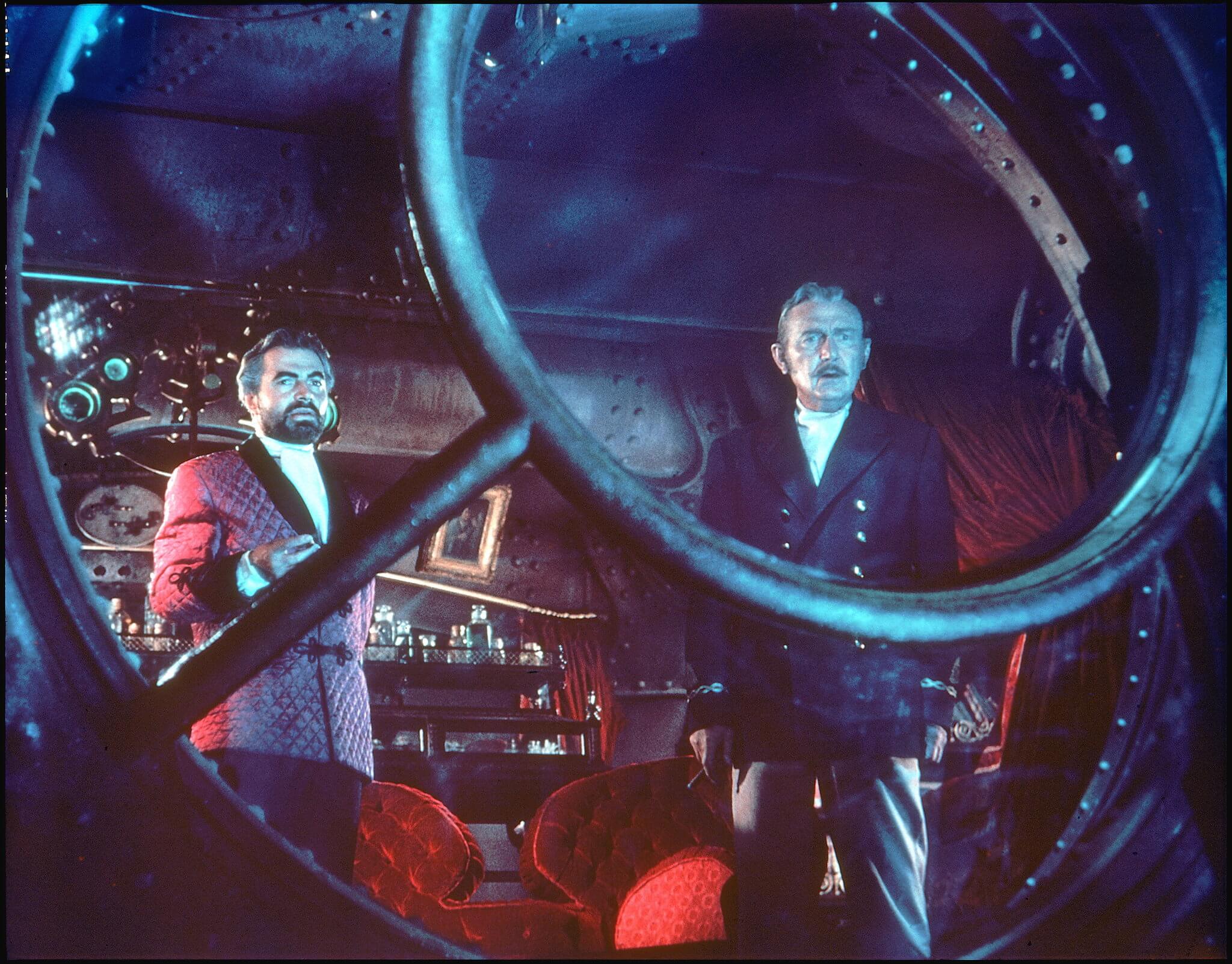
In the widescreen formats of VistaVision and CinemaScope, the younger Fleischer worked depth of field in ways that rivalled Orson Welles. (There may be no greater testament to Fleischer’s talent for wrangling tall personalities than Welles’ appearance in both Compulsion and 1960’s Crack in the Mirror.) He relished the chance to experiment with underwater cinematography in 20,000 Leagues Under the Sea. He once insisted on delaying production to film during a solar eclipse.
On the rare occasion that he tried comedy — 1948’s So This is New York — Fleischer made early use of freeze frames and, in a sequence that prefigures Airplane!, provided genteel subtitles to rough-spoken New York cabbie.
Notable in Fleischer the younger’s oeuvre is its detached engagement with Jewish themes. In the novel of Compulsion, Levin pays lip service to Jewish self-hatred motivating the murder at the center of the story. But Fleischer never makes much of his killers’ or their victim’s Jewishness, caring more for their nihilistic thoughts on Nietzsche and the Welles character’s atheism. (The character was based on Leopold and Loeb’s real attorney, Clarence Darrow, and often gives voice to his verbatim quotes.)
Barrabas, a film in the mold of Ben-Hur, follows Anthony Quinn as the titular reprieved bandit, the one Jesus replaced on the cross. The contours of his story resemble the Talmudic account of Reish Lakeish, a brigand turned gladiator turned believer, but it is a remarkably goyische production that doesn’t even bother to have matzo for the Passover week of the Passion.
Fleischer’s Jewishness perhaps feels akin to that of one of his collaborators, Kirk Douglas. It was never denied, but seldom a feature. But just as Douglas had The Juggler, where he went from Holocaust survivor to halutz, Fleischer had The Jazz Singer.
That remake, from 1980 and starring Neil Diamond, is wisely excluded from the Film Forum’s particular lineup, sparing filmgoers the Jewish Elvis’ blackface, and perhaps affording Fleischer the grace owed him as a replacement director who stepped in mid-production and couldn’t save the picture.
Per Jason A. Ney’s biography Richard Fleischer: Journeyman, Fleischer described the performance of Laurence Olivier in that movie thusly: “This very gentile gentleman had done his damnedest to portray a very Jewish cantor by using every broad cliche in the book. Rolling eyes, grimacing, gesturing, it was a performance worthy of the Yiddish Art Theater at its worst.”
Fleischer, it must be concluded, knew from Jews, and so surmised Sir Laurence wasn’t up to leading Kol Nidrei — not that Diamond did much better.
The yikhes in the Fleischer family is strong, with father and son producing countless hours of too often undersung entertainment. Perhaps the greatest tribute to their overlap and influence will not be screening at Film Forum, but it’s worth recalling.
In a season two episode of the Rugrats, Chuckie swallows a watermelon seed. Through the magic of animation, the babies, drawing inspiration from a sci-fi film, imagine themselves shrunken down and entering his body to retrieve it before it grows.
It’s a parody of 1966’s Fantastic Voyage, directed by Richard Fleischer. It’s safe to say, without the contributions of both father and son, the episode couldn’t exist.
Film Forum’s series Fleischer père et fils begins May 8.
The post In Max and Richard Fleischer, was father like son? appeared first on The Forward.
Uncategorized
Tidbits: New German textbooks about the Jewish religion
Tidbits is a Forverts feature of easy news briefs in Yiddish that you can listen to or read, or both! If you read the article and don’t know a word, just click on it and the translation appears. Listen to the report here:
צום ערשטן מאָל זינט דעם חורבן האָבן די דײַטשישע עפֿנטלעכע שולן באַקומען לערנביכער געווידמעט דער ייִדישער רעליגיע, כּדי די לערערס זאָלן קענען זיי ניצן ווי אַ טייל פֿונעם קוריקולום.
די סעריע פֿון אַכט בענד, „דעת הדורות“ (דאָס וויסן פֿון די דורות), וועט לערנען תּלמידים צווישן 10 און 16 יאָר אַלט אויף דײַטש וועגן דער תּורה, דעם תּנך, די תּפֿילות, ייִדישער עטיק, הלכה, יום־טובֿים, דעם ייִדישן לעבנס־ציקל און דער ייִדישער געשיכטע.
דער ערשטער באַנד, וואָס קאָנצענטרירט זיך אויף דער תּורה, וועט מען אָנהייבן ניצן אינעם נײַעם שוליאָר.
די ביכער, וואָס זענען צונויפֿגעשטעלט געוואָרן דורכן „צענטראַל-ראַט פֿון די ייִדן אין דײַטשלאַנד“ בשותּפֿות מיטן „ערנסט קלעט פֿאַרלאַג“, ווערן געצילעוועט סײַ אויף פּריוואַטע ייִדישע שולן סײַ אויף מלוכישע שולן איבער גאַנץ דײַטשלאַנד.
דער ציל איז צו באַקענען די תּלמידים מיט דער ייִדישער רעליגיע און טראַדיציעס אין אַ צײַט וואָס עס וואַקסט דער אַנטיסעמיטיזם איבערן לאַנד.
ביז איצט האָבן די לערער פֿון רעליגיעזע ייִדישע לימודים נישט געהאַט קיין מאָדערנע לערנביכער וועגן יהדות אין הסכּם מיטן קוריקולום, אַזוי ווי ס׳האָבן געהאַט די לערער פֿון קריסטלעכע רעליגיעזע לימודים. צוליב דעם בלויז האָבן די לערער פֿון דער ייִדישער רעליגיע געמוזט אַליין צונויפֿשטעלן אַרבעט־בויגנס און אַנדערע מאַטעריאַלן, וואָס זיי האָבן איבערגעזעצט פֿון אַנדערע שפּראַכן.
אין אַ מעלדונג האָט שילה ערלבוים, די אָנפֿירערין פֿונעם אָפּטייל פֿון פּאָליטיק און רעליגיע בײַם ייִדישן צענטראַל־ראַט, געזאָגט: „מיר האָבן טאַקע געדאַרפֿט אַ סיסטעמאַטישן לערן־רעסורס, וואָס באַזאָרגט די קינדער נישט בלויז מיט לערן־מאַטעריאַל, אָבער מוטיקט זיי זיך אַקטיוו צו באַטייליקן,“ האָט זי געזאָגט.
„דורך ׳דעת הדורות׳ קענען זיי לייזן בילדער־רעטענישן; זיך דערוויסן וועגן די געשעענישן פֿון משה רבינוס לעבן דורך אַ ווערפֿל־שפּיל, אָדער אויספּרוּוון זייער וויסן פֿון ייִדישע טערמינען דורך דער מאָבילקע אָדער אַ „גיכענטפֿער קאָד“ (QR code),“ האָט ערלבוים געזאָגט.
יאָזעף שוסטער, דער פּרעזידענט פֿונעם ייִדישן צענטראַל־ראַט, האַלט אַז די לערנביכער זענען אַ וויכטיקער אויפֿטו. „אַ דאַנק דעם פּראָיעקט וועט די ייִדישע רעליגיעזע בילדונג איצט זײַן גלײַך מיט די קריסטלעכע רעליגיעזע לימודים,“ האָט ער געזאָגט.
צו לייענען וועגן דעם אויף ענגליש גיט אַ קוועטש דאָ.
To read about this in English click here.
The post Tidbits: New German textbooks about the Jewish religion appeared first on The Forward.
Uncategorized
Far-right win in German regional race sends shockwaves through Europe
(JTA) —
A victory for Germany’s far-right party in an eastern federal state has reverberated across the globe, exposing the widening rifts between alarmed centrist leaders and insurgent nationalist movements in Europe.
The Alternative for Germany (AfD) party won 43.8% of the vote in an election in Saxony-Anhalt on Sunday, crushing the center-right Christian Democratic Union (CDU), German Chancellor Friedrich Merz’s party, which held 17.2% support, according to preliminary figures.
The AfD is now heading toward 39 seats in Saxony-Anhalt’s 83-seat state parliament. It’s expected to fall 3 seats short of an outright majority, leaving open the question of whether it can form Germany’s first far-right state government since World War II. The party has proposed a sweeping nationalist agenda that includes deporting immigrants, defunding “anti-German art” and teaching children less about the country’s Nazi past.
Merz told reporters in Berlin on Monday he was “deeply shocked” and “unsettled” by the results, which he said rippled through the rest of the country and the world. He added that it was impossible for Germany to “go back to business as usual” after so many voters in Saxony-Anhalt chose a party that “questions the democratic institutions in our country.”
The results dealt the CDU its “most severe defeat” in decades, conceded Merz, who leads the party once headed by former German Chancellor Angela Merkel.
Merz said that he was searching for answers to “why far-right populism and far-right extremism was able to rise in such a rapid manner,” suggesting that his party may have underestimated the “fears of our population” amid economic crises and rapid technological change. He said that minorities in Saxony-Anhalt would be particularly vulnerable under an AfD government, but noted that the state would still have obligations to follow federal law, including regarding immigration policy.
Merz also directed his message to the rest of Europe, saying that Germany had a “special responsibility because of its history” to keep its political order “deeply anchored in Europe.”
Despite the scale of the CDU’s defeat in Saxony-Anhalt, Merz ruled out stepping down, saying, “Giving up is not an option.”
Though Saxony-Anhalt is one of Germany’s smallest regions, home to some 1.7 million voters, its election results quickly sent shockwaves through other European countries whose leaders, like Merz, are fighting to fend off far-right, anti-immigrant parties in national elections next year.
French Europe Minister Benjamin Haddad called the AfD’s regional win a “grave moment in Europe” and said that “nationalism and xenophobia will never be a solution.”
“We cannot forget our history,” said Haddad, an ally of centrist President Emmanuel Macron. “That is the meaning of the choices made by France and Germany.”
France’s government faces its own fears of a right-wing populist wave. Marine Le Pen, the head of the far-right National Rally, has dwarfed all other candidates in polls heading into France’s presidential election in 2027, when term limits force Macron to step down.
Across the Channel, British Chief Secretary to the Treasury Emma Reynolds said in an interview on Times Radio that the U.K.’s Labour government “will not be reaching out to a right-wing populist party.” She added that she put the AfD in “the same political bracket” as Reform UK, the far-right party that surged in local elections earlier this year.
Polish Prime Minister Donald Tusk also condemned the AfD’s victory. The far-right party has alarmed Poland, Ukraine’s neighbor, with its pro-Russia stance, as it seeks to halt Germany’s military aid to Ukraine and sanctions against Russia.
“In Poland, only idiots or traitors can rejoice at the triumph of the AfD in Germany,” said Tusk.
Meanwhile, the AfD was cheered by nationalist, anti-immigration party leaders in Spain, Portugal and the Netherlands, all of whom have sought to capitalize on economic and social grievances similar to those that contributed to the AfD’s victory Sunday.
Santiago Abascal, the head of Spain’s far-right Vox party, called the result “a great hope for Germany and for Europe.”
André Ventura, the founder of Portugal’s far-right Chega party, said that “the Germans too are opening their eyes against illegal and uncontrolled immigration, corruption, and the capture of our freedom and identity.”
And in the Netherlands, the AfD received a “Congratulations” from the far-right Party for Freedom’s leader, Geert Wilders.
While President Donald Trump has yet to officially respond to the Saxony-Anhalt election, he posted a screenshot of the results without comment on his Truth Social account Sunday night.
Trump’s post was shared by Kirill Dmitriev, a Russian presidential envoy and businessman, who said the AfD scored a “historic win” that would “put migration under control.”
Elon Musk, the billionaire and former Trump adviser who campaigned for the AfD last year, gave his support to the national party leader Alice Weidel on X, which he owns, writing “Well done” in German.
Ulrich Siegmund, the AfD’s candidate in Saxony-Anhalt who hopes to become the state premier, responded by praising Musk.
“Thank you, @elonmusk, for your support and for your clear and highly important perspective on the political developments of our time — including here in Germany,” he wrote.
The post Far-right win in German regional race sends shockwaves through Europe appeared first on The Forward.
Uncategorized
In new ‘Fauda’ season, the aftershocks of Oct. 7, without a thought for Gaza
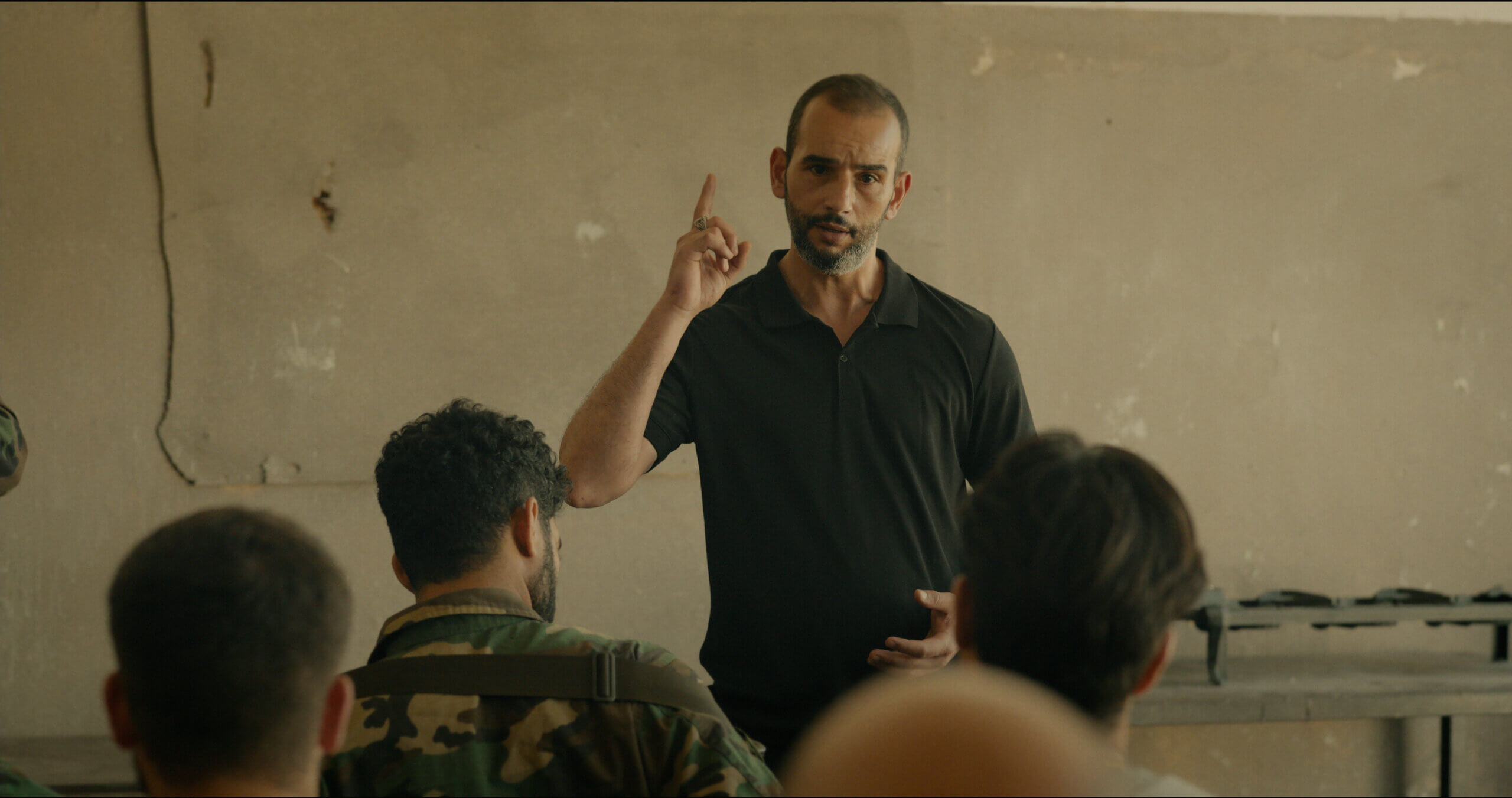
When Fauda Season 4 ended an eternity and a devastating war ago, our hero was at death’s door, reciting both the central prayer of Judaism, the Shema, and the Muslim Fatiha.
It was a cliffhanger with monumental implications for Doron Kavillio (Lior Raz), an Israeli Jew who spent his days undercover as a Muslim Arab — an identity crisis long in coming. Zoom out and you can see the doomed duality of Israel and Palestine, Jew and Muslim, connected in a cycle of death and more alike than they may seem.
Season 5 begins bilingually, with Hebrew and Arab definitions of the Arabic word Tha’r, blood revenge, “restoring violated honor or avenging injustice.” This concept is now the point of commonality — not how men pray, but how they seek revenge.
Welcome to a post-Oct. 7 Israel. Doron is in therapy, struggling to recall eight missing hours of his life on the day of Hamas’ attack on the Gaza envelope.
Comrades have left the country — Steve (Doron Ben-David) is protecting oligarchs in London, Sagi and Nurit are in Australia. Eli (Yaakov Zada-Daniel) is now Orthodox, living in a settlement and reeling from the murder of his wife and stepchildren at his now-torched kibbutz. When a Bedouin friend, Salem (Bian Anteer) who lost his son in the raid on Eli’s home, approaches him with a tip on the Nukhba fighter responsible, they depart for Marseille to answer the call of Tha’r.
It would hardly be Fauda if this act of vengeance didn’t give way to a much larger plot. Marseille is the staging ground for Saeed el Hatib (French-Algerian actor Hakim Djaziri), “the Sinwar of Europe,” who is recruiting sympathetic, white continentals for a fresh massacre in Israel.
Fauda has always made some viewers uncomfortable. Massively entertaining, bingeable to those of us who stream it in the Netflix aftermarket, its existence was premised on ongoing injustices in the West Bank and Gaza and the violence that bursts through their borders. (The BDS movement labelled it a “war-crimes glorifying” series;” Haaretz called it “morally dubious.”)
And yet as late as the last season it contained very real criticism of Israel’s conduct, including its costly campaigns to recover captured soldiers and the torture used to extract information on their whereabouts. The show always alluded to real operations — Cast Lead, Brother’s Keeper — in dialogue. But because it can’t merely mention an attack as raw and monumental as Oct. 7, and because it has no desire to question the response to it, it chooses to recreate its savagery.
Episodes 7 and 8, flashbacks to that day, are front-loaded with a trigger warning and a disclaimer that you can skip them and still be able to follow the main plot.
It’s hard for me to recommend those episodes. If not exactly atrocity porn, their central, race-against-time set piece is too anchored in recent events and constructed too much like an action movie. It feels in a sense exploitative, even if intended as a tribute. (To give them credit, both Lior Raz and his co-creator Avi Issacharoff, who said they “wrote from their trauma,” were on the ground helping the south of the country evacuate in the aftermath.)
The new season starts with the promise of complexity. It opens on a grieving Muslim father and shifts to a milksop accountant who worked for Hamas, seemingly tortured by Eli in a blind rage for a crime he didn’t commit. Could an excessive devotion to Tha’r, a tribal code of retribution, be the diagnosis of the show’s creators of Israeli society at this moment?
If it is, it’s not a critical one. The villains are the villains, and, most revealingly, they now number people with no connection to the conflict.

Hatib’s enlistment of white Europeans for a mass-casualty terror attack services a trite narrative of postcolonial guilt finding an outlet in the pro-Palestinian cause. It works on another level too: This fighting force is squaring off against Doron’s corps of Mizrahi Jews, whose mere presence dismantles the lie that Israelis are themselves all white colonizers, and that Israel and the European empire of yore are in any way analogous.
When, back at mission control, the counterterrorists speak of “suspicious-looking Europeans” who are “in their 30s,” the derision for this type of fellow traveller is palpable. Their standard bearer, Mélanie Laurent, formerly Tarantino’s “face of Jewish vengeance,” plays Anne, a blonde, “high middle-class Catholic French woman” who straps up with C-4, a keffiyeh ever-draped around her neck. Through her, and in a quite literal way, the show suggests the Western love affair with Palestinians — which in this season’s logic means Hamas — is misguided.
All the while, we never see Gaza, where much of Season 3 was set, with some among its population humanized. We never reckon with the destruction there. We hear about it, and a kind of lip service is paid to the crime of collective punishment — the sort that we hear at the end of almost every season — but it’s secondary to storytelling as elegy and justification. One could just have easily placed the Hebrew word Zachor before that first cold open: Remember what they did to us.
At one point, after a shootout with more blood spatter than I ever recall seeing on the show, Doron empties his clip into an enemy with the words “this is for October 7.” Seconds later, in a Shin Bet command room his handler Gabi (Itzik Cohen, whose between-seasons weight gain is a running joke) quips, a la Danny Glover in Lethal Weapon, “I’m too old for this.”
He’s not the only one.
In the past week I’ve chatted with some folks older than me — they don’t know each other and are largely to my right on Israel — who don’t relish the thought of another season. Not just because they don’t want to watch Oct. 7 reenacted, but because following the exploits of Israeli security agents has vastly different optics after the Hamas-Israel war, unprecedented settler violence and National Security Minister Itamar Ben-Gvir’s recently-stated ideal scenario of killing “30 or 40” Palestinians in Gaza each night.
This may well be the privilege of the diaspora, but the fatigue points to a shift in attitude that’s worth paying attention to. If these horrors are out of sight, out of mind this season, they’re top of mind to many who are watching — and many others who might have once tuned in.
The post In new ‘Fauda’ season, the aftershocks of Oct. 7, without a thought for Gaza appeared first on The Forward.
