


Uncategorized
Israel’s most dangerous war is with itself
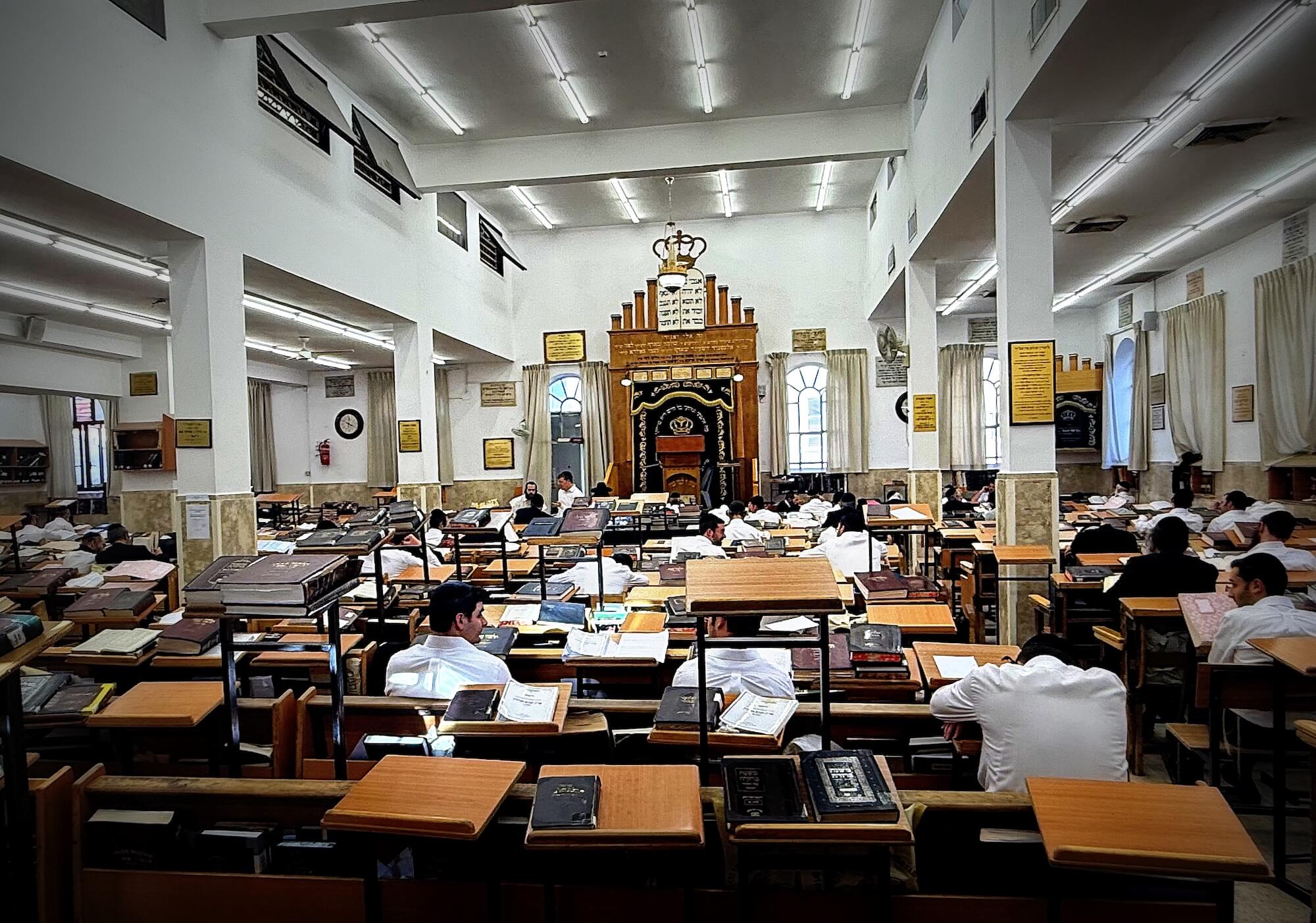
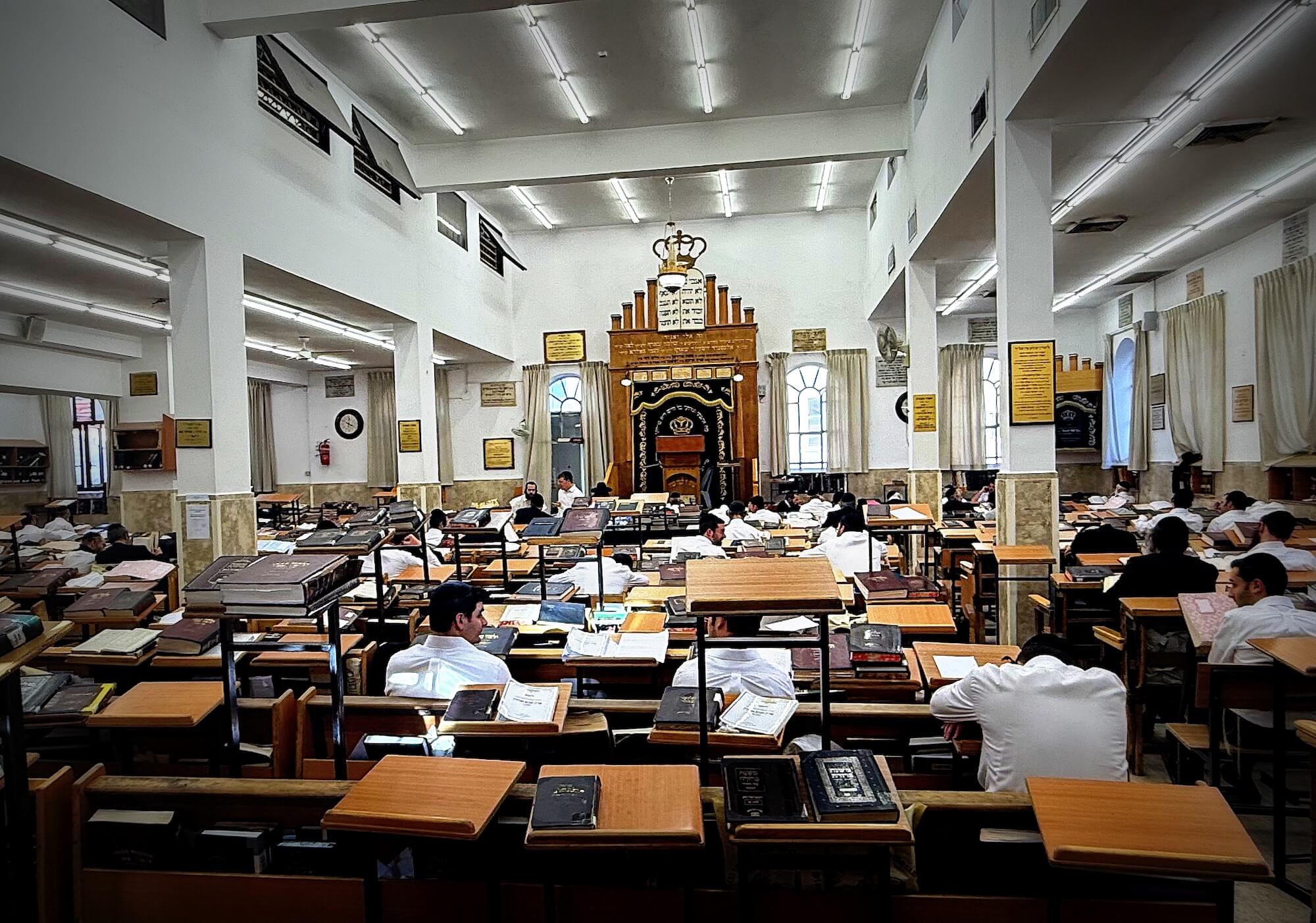
My friend Rabbi Heshy Grossman recently invited me to Jerusalem to meet top Haredi rabbis. Unhappy with my critical writings about the Haredim, this well-meaning true believer hoped to jump-start fruitful dialogue.
So I took the train to Jerusalem, and spent a fascinating day with pleasant and welcoming scholars who left me in even greater despair.
The background: Angst is now dominating Israeli discourse amid a strong feeling among non-Haredi Jews that the country is running out of time to save itself. This can seem related to the Palestinian conflict, or to disputes over authoritarian reforms. But at the end of the day the main issue — for the non-Haredi Jews who are still a majority in the land — is the Haredim.
Concerns used to be about the Haredim — who have always held sway over right-wing coalitions — trying to impose religious strictures, like banning commerce and public transport on the Sabbath, which they have done with varying degrees of success. But the clash has gone far beyond such matters. The wars that began on Oct. 7, 2023 have exposed profound tensions over this large minority evading military service, and the opposition promises to enlist them should it win this fall’s election.
But even that change — heavy lift though it may be — wouldn’t come close to fixing the actual problem.
The Haredi system largely refuses to teach high school boys math, science, English and other non-religious topics. It routes as many men as possible to religious study well into adulthood, for which they expect to receive state stipends rather than pay tuition. With very low male participation in the economy, the community pays minimal taxes and depends on a huge web of ever-expanding welfare. Increasingly, Haredi women do work, but rarely in high-end jobs. The community, which currently makes up about a sixth of the population, is exploding as family sizes approach seven children on average, certainly among the highest for any significant community in the developed world.
This will clearly lead to an economic collapse if nothing changes. On top of that, it does not seem as if the Israeli Haredim can coexist happily with others from a philosophical and cultural standpoint, and the feeling is very much mutual.
‘A sense of separatism’
Heshy drove me all over the city in a whirlwind tour that included the head of the Hebron Yeshiva, one of the most senior rabbis of the Mirer Yeshiva — the world’s largest — the head of a major yeshiva serving mainly youth from the United States, a visiting U.S. Haredi rabbi much involved in the local political scene, and Heshy’s own charming father-in-law, who was the chief rabbi of Atlanta and has long been a beloved columnist for the iconic Mishpacha Magazine.
The tone throughout was cordial, at times warm, somewhat prickly and occasionally intellectual. These were serious men who are easy to like. That made the substance of what they said doubly unsettling.
The first fault line, as expected, was education. My question to the rabbis was straightforward: How can a modern economy function when a large and growing share of its population receives little to no instruction in mathematics, science or “secular” language skills?
Rabbi Moshe Meiselman, who holds a Ph.D. from the Massachusetts Institute of Technology, was dismissive of the premise. Meiselman, the U.S.-born founder and head of Yeshivat Toras Moshe, described secular studies as an “intellectual game” that he had experienced at the highest levels and found vastly inferior to studying the Torah. He said that Haredi communities from the beginning of the state perceived an aggressive and arrogant stance from the Zionist authorities, who felt “that no intelligent person” would want to be Haredi.
“There is a basic tension in society, and that tension is what created, more than anything else, a sense of separatism within our own environment,” he said.
“Even at the cost of self-harm?” I asked.
“In your view it’s self-harm,” he said. And if the state cut off funding, he added, “we’d simply get money from our people abroad to support us … we will handle it.”
Like the others, he seemed to believe that whatever practical skills are needed for work can be acquired in a year or two. He offered the existence of certain successful Haredi professionals — lawyers, doctors, accountants — as proof. “What relevance does my knowledge of trigonometry have to anyone’s employment? Where does Euclid come in?” he said. “I don’t have to learn to talk with Plato in order to get a profession.”
I was glad to find a more flexible position expressed by Heshy’s father-in-law, Rabbi Emanuel Feldman.
“I’m not sure personally why they should not be able to study physics or chemistry or mathematics,” he said. “I don’t understand why there’s an objection to it.” He argued that this “is not ideological but political and a decision based upon circumstances.” I suggested the circumstances were the Haredi leadership’s preference for a compliant and unquestioning flock. “It’s unfortunate that there is no effective communication and there are elements on both sides who are interested in maintaining a conflict,” he sighed.
Menachem Zupnik, the U.S.-based rabbi, from Passaic, N.J., was also more pragmatic than the Israeli cohort.
“The biggest problem,” he said, “is that nobody goes to work and has a profession… many, many issues are the outgrowth of the fact that they believe that everybody has to sit and learn Torah all the time.” But even he rejected the idea that external pressure — including cutting subsidies and restructuring incentives — would change behavior. “All you’re going to do is cause more hatred.”
Rabbi Shlomo Spitzer, who preferred that I not mention his affiliation, explained the indifference to practical outcomes this way: From the Haredi perspective, Torah and mitzvot are the organizing principles of life. Everything else a person does — work, eating, recreation — is secondary: “these are means, not ends.”
I asked: “When you describe unwavering commitment to Torah, doesn’t that risk becoming fanaticism?”
“What is fanaticism? That is a serious question,” he argued, explaining that following the Torah “to the end” means accepting it literally. “But societies change,” I said. “Values evolve. Why shouldn’t religious frameworks adapt?” His answer was that there are foundations that must be regarded as absolute.
Military tensions
The issue of military service brings the divide between secular and Haredi priorities into the sharpest relief for most Israelis. Here, too, the argument is about identity.
Again and again, the concern surfaced that exposure to the army would erode the religious character of Haredi young men. The fear was personal, and almost visceral. It is not without foundation: Many Israelis would love to have more of the Haredim join mainstream society — and indeed, exposure to that society is well understood as a trigger for leaving Haredi life.
Rabbi Chaim Yitzhak Kaplan, the dean of students at Hebron Yeshiva, put it plainly: “There’s no way that a young man… is going to go in for two, three years in the army and come out the same Haredi.” Moreover, he noted that the specific ages in question — late teens and early twenties — are precisely when he needs youth to be studying, lest they go astray.
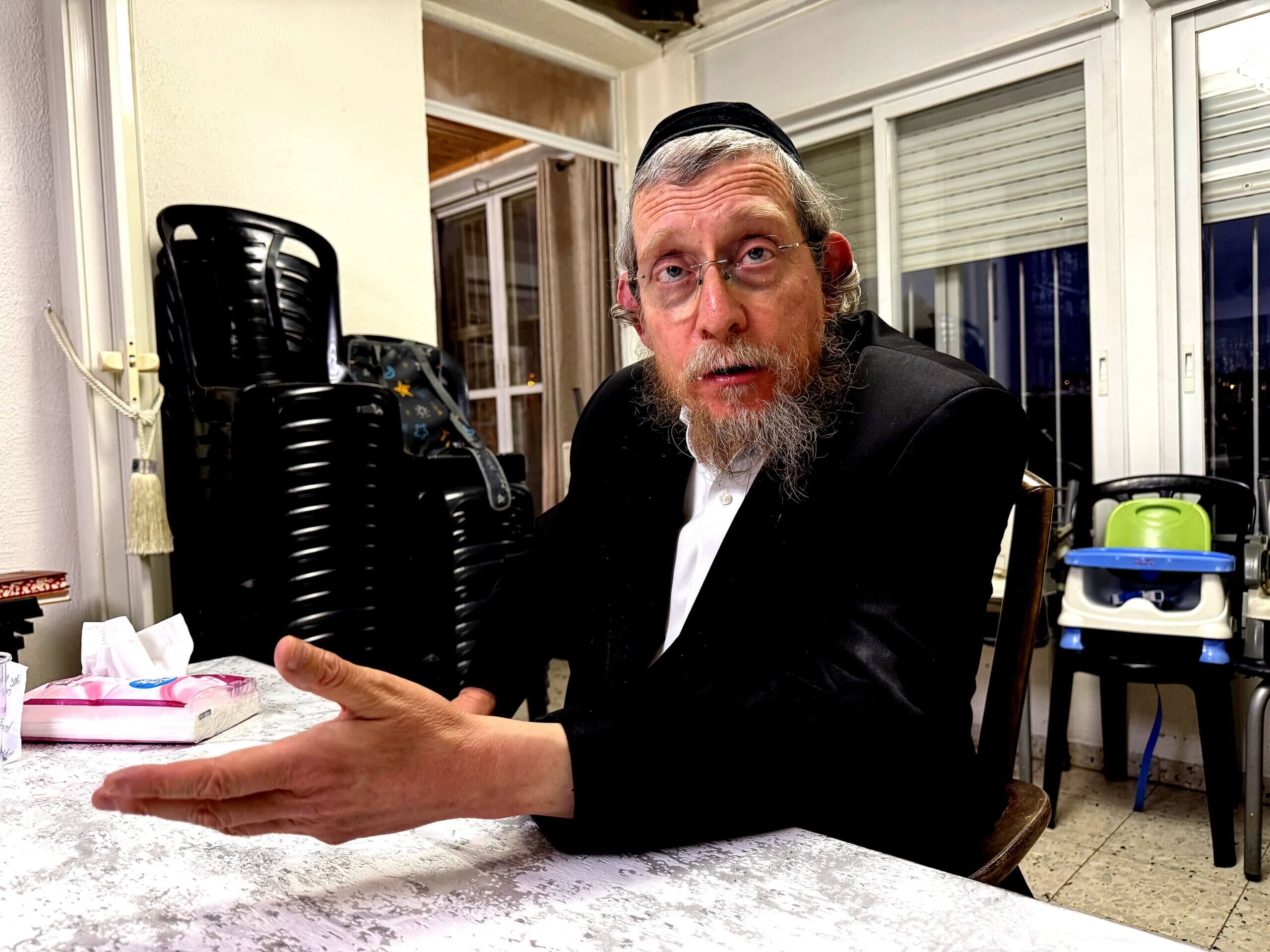
It was clear he was sharing a genuinely felt defense of a way of life, not speaking out of cowardice or selfishness.
“Our nation is about learning,” Kaplan said, describing Torah study as the defining activity of Jewish existence. Once that premise is accepted, the hierarchy of obligations shifts. But the truth is that most secular Israelis cannot in honesty accept this idea. Many don’t ascribe much importance to religion as a vocation. It is one of many things that might be important to a person, but seems imbalanced to insist must be important to a country. So the Haredi argument becomes a little like someone telling you they cannot serve in the military because they must become a pilot, plumber, poet or mathematician, and do nothing else, ever. “Very nice,” many Israelis would say, “I’ll see you in the army.”
Kaplan did concede that at some point in the future Haredim may have to either agree to serve or leave the country. Meiselman was more strident, saying, in effect, that sages were more valuable than soldiers. “Wars in the world are caused by people not being sufficiently Jewish, religious. … if the Jews were here, acting as they’re supposed to act, then there would be no more war, ” he said. Then the Arab world would not be as antagonist.”
I asked: “Do you think Hitler carried out the Holocaust because the Jews were insufficiently religious?” Exactly, he replied, to my despair. I told him this is the language of an irreconcilable cultural war. “I’m a very honest person,” he replied, quite calmly.
Joy, and denial
In general, there is a pleasingly cerebral atmosphere of learning and debate in these institutions. Study can go on, Kaplan noted proudly, well into the night. The Mirer Yeshiva especially positively teems with boys, many from the U.S., who clearly care deeply about the culture they’re preserving. The entire Mea Shearim neighborhood seems designed to serve that yeshiva, with nary a business visible that is not somehow involved — whether that be the kosher eateries or bookstore full of young men reading and debating in a joyous scene for which I could not recall a secular equivalent.
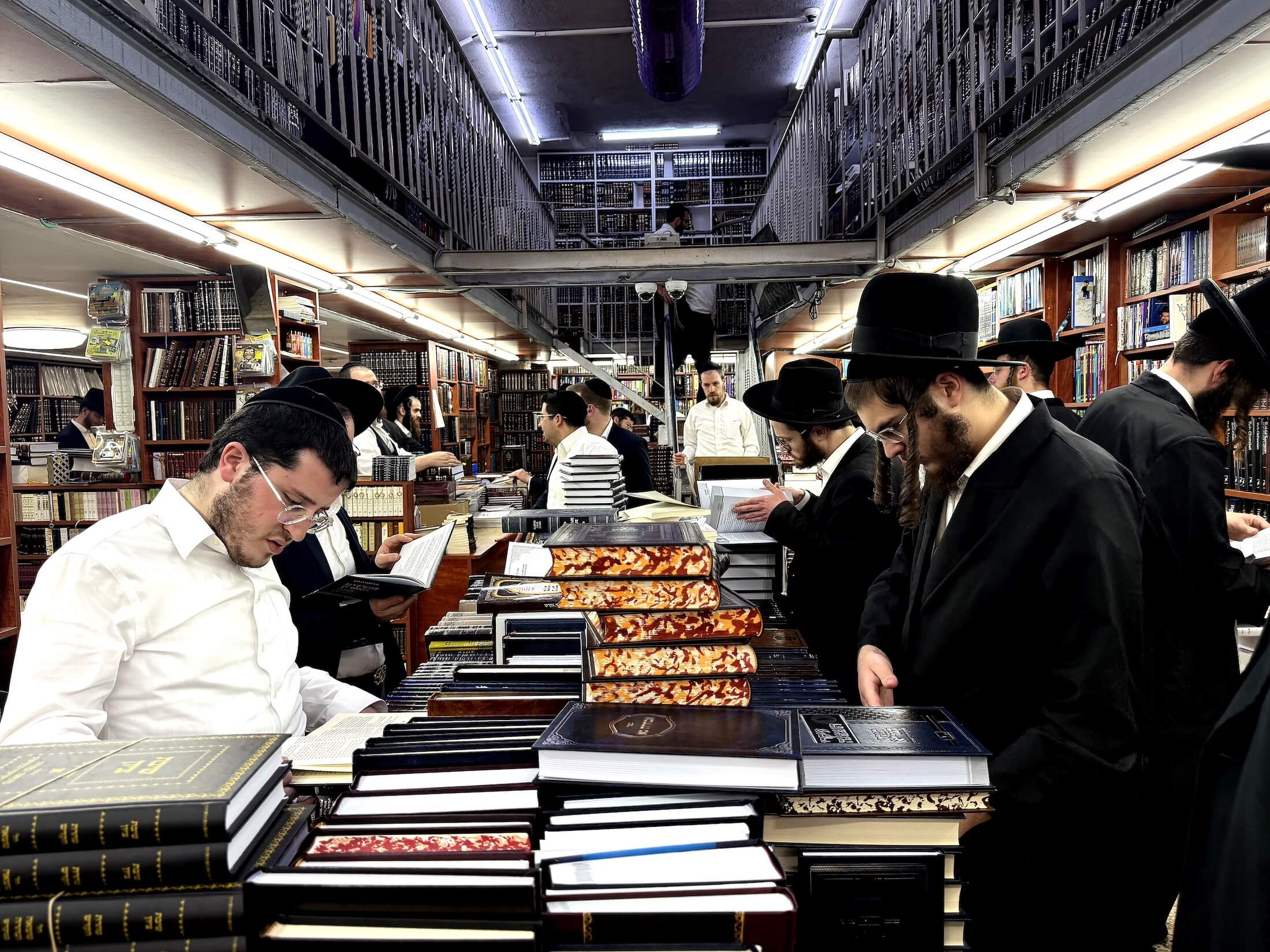
It was an appealing environment in a strange way, and I understood the desire to preserve it. I proposed to some of those I met that the conflict might remain manageable, enabling that preservation, if the community that was at such loggerheads with society were stable in size.
This line of argument is an awkward and delicate business, as it’s not normally advisable to advise others on reproduction. But it’s also the heart of the matter — and Heshy, for one, knows it, frequently bragging, with eyes twinkling, that his side is “winning.”
“Why don’t you go fight with all the people in Tel Aviv that they should get rid of their dogs and they should have five children?” asked Rabbi Zupnick. My points — that the explosive growth of a welfare-dependent sector risks collapsing the very economy it depends on to sustain it — went unacknowledged.
The theological problem
It was when the conversation moved from policy into theology that things got especially hopeless.
Rabbi Spitzer, for example, said scripture allowed no leeway on the matter of the halakhic prescription of capital punishment by stoning for Sabbath violations. When pressed on whether he’d apply it to his own child, he said: “I don’t want to, I have to.” He clarified, though, that the institutional framework required to implement such sanctions is presently absent — for example, there is no Sanhedrin or Jewish Temple.
But then again, if the Haredim end up as the large majority, there will be.
In the car, as we zoomed around Mea Shearim, Heshy tried to explain that the Haredi community and I simply speak different languages, and I had not understood what the learned rabbi meant. “So I shouldn’t take it literally?” I asked, grasping at a straw.
“I didn’t say that,” Heshy snapped.
A modern state depends on a set of shared assumptions: that citizens will be educated in ways that allow them to participate in a complex economy, that they will contribute to collective defense, that public policy will operate within a framework of shared accountability.
What came across very clearly in my listening tour was that a society organized around Torah study operates according to a different set of assumptions: that insulation from external influence is a virtue, that the Torah is the only valuable truth and that no moral or legal framework except what is ordained therein has any meaning.
These two systems can coexist for a time, if the Haredim are in the minority and they are economically supported. If the Haredim become a majority, as is inevitable unless the birth rate comes down fast, that fragile peace will break. Even though demographic predictions must be couched, it seems clear that without change, soon, non-Haredim will start to despair, and many will flee the country.
Correcting the course
Heshy will not be so happy, but the meetings he set up convinced me all the more that radical steps are needed to completely upend the current dynamic. The leaders of Israel’s opposition say they will move to draft the Haredim if they win the upcoming election. They should go much further. Among the steps necessary:
- Impose a secular core curriculum for all religious schools, and completely cut off state funding to any schools in any sector that resist.
- Eliminate most yeshiva stipends, or funds for those who study Torah full-time.The original draft exemption allowed by Israel’s first leader, David Ben-Gurion, allowed for funds for several hundred students, and that’s a number most Israelis could live with.
- Cap the number of child stipends — state funds allocated per child, to help support young families — at three per family. The idea here would be to encourage the birthrate to come down.
- Generously fund adult education and professional training for Haredim, and set up a state authority for absorbing, housing, training and assisting those who want to leave the fold altogether.
Recently, an Israeli news program interviewed a Haredi mother of nine who works to support her husband’s study. She seemed proud of his economic cluelessness since his job was to “keep the flame alive.” She predicted the Haredim will never join the army no matter what. When the exasperated reporter — himself religious but not Haredi — asked whether it was fair that other mothers should spend their days in fear for their sons’ lives as they serve, she replied that she too spends her days in fear of her children becoming secular. She seemed very serious, and not at all apologetic.
Is she an exception? Can this way of thinking be changed? If the answers to these questions are no, we have a national emergency.
The post Israel’s most dangerous war is with itself appeared first on The Forward.
Uncategorized
A synagogue and Jewish-owned shops damaged in French riots
(JTA) — PARIS – Jewish-owned shops in Marseille were set ablaze and a synagogue in Paris was vandalized as part of widespread property damage caused by riots across France Saturday and Sunday, according to the Jewish Community Protection Service.
It is too early to assess the full extent of the riots protesting the rising cost of living and the damage they’ve caused, but various elements in the media have described them as civil unrest and chaos.
From Lille in the north to Marseille in the south and in the major cities in between, media estimate that nearly 800,000 people took to the streets and some 2,000 shops were vandalized or looted. Public buildings were set on fire, and hundreds of people or more were injured, including 150 police officers, with thousands arrested.
The riots followed a student uprising that blocked entrances to high schools across the country in recent weeks. Palestinian flags and keffiyas have been a recurring motif in most of the violent protests, acts of vandalism and looting.
But according to SPCJ, known as the Service de Protection de la Communaute Juive in French, there was no evidence that Jewish institutions or businesses were deliberately targeted.
Vandals broke into the Ohalei Yaakov synagogue in Paris’ 19th district overnight between Saturday and Sunday. On Sunday morning, members of the Jewish community discovered that their temporary place of worship had been broken into. The permanent synagogue building is currently undergoing renovations.
Inside the sanctuary, prayer books, tefillin, and various objects — taken from boxes and cupboards — were found scattered on the floor. The rabbi’s office was also searched. Despite the mess, the Torah scrolls appeared to be unharmed.
According to a member of the synagogue committee, the incident primarily points to an attempted theft. The suspects may have been looking for money, but nothing was believed to be missing.
This article originally appeared on JTA.org.
The post A synagogue and Jewish-owned shops damaged in French riots appeared first on The Forward.
Uncategorized
How much will Trump’s endorsement help Netanyahu?
(JTA) — JERUSALEM – Within minutes of President Donald Trump endorsing Prime Minister Benjamin Netanyahu in a post on Truth Social Sunday, Netanyahu’s campaign team had released a 30-second clip showing all the times Trump has lavished praise on the Israeli leader over the past few years.
With polls showing that Netanyahu and his governing coalition are slipping in their struggle to retain power in the upcoming Oct. 27 election and lag behind the opposition bloc, an endorsement from the president of the United States is a powerful statement.
But is it enough to tip the scales?
“I don’t think it will change anything,” said Ilana Shpaizman, a senior lecturer in the Department of Political Studies at Bar-Ilan University.
Of course, she said, “Netanyahu will say this is the proof that I’m a leader and all that, and I can speak to Trump … But so what? His followers already know that and they believe in him. They don’t need the endorsement.”
Those who oppose him, Shpaizman continued, “know that Trump forced him (Netanyahu) to accept the ceasefire in Gaza and accept the hostage deal, and that Trump runs the show around Iran. So they also don’t need the endorsement either,” Shpaizman said.
Some pundits speaking on Israeli news outlets criticized Trump for “interfering” in Israel’s election, while others put it down to the fact that Trump does not want America to return to fighting Iran alone if Netanyahu, who is hawkish on Iran, is replaced by someone less willing to act militarily. If Netanyahu loses, that is a scenario that could play out.
“This is the first time ever that the president, at least publicly, endorses a candidate in Israel’s election,” Bushinsky, a political commentator and former adviser to Netanyahu, told the Jewish Telegraphic Agency.
Bushinsky said he remembered Netanyahu complaining about U.S. intervention in previous elections in 1999 and 2001, when presidents less enamored of him were in office. He even pushed for an initiative that would block foreign funding for election campaigns.
Now, Bushinsky said, “I guess he is not complaining,” adding that the endorsement serves Netanyahu in two ways.
First, it signals that Trump thinks that Netanyahu is the most suitable guy for the job. Second, it puts Netanyahu’s election campaign back on track, refocusing attention on an issue where Netanyahu is strong – Iran.
“It lets him say ‘I can now finish a job, and I can finish a job with Trump,’ and ‘without Trump or without me, the job will not be finished,’” said Bushinsky.
He said that in the last few days, the political debate had pivoted to other issues such as Ashkenazim vs Sephardim, the draft law and the contentious efforts by the outgoing government to overhaul the judiciary.
“This [endorsement] is the ultimate campaign boost for Netanyahu,” Bushinsky said.
But that boost might not be enough.
Most of the polls taken in recent days show the opposition bloc led by former IDF chief Gadi Eisenkot pulling ahead of Netanyahu’s ruling coalition, but give neither bloc enough seats to gain the necessary 61 of 120 seats in Israel’s parliament, the Knesset, to form the next government.
“I think this might give Netanyahu one more seat, one more mandate, but not more than that,” said Bushinsky.
Prof. Tamar Hermann, director of the Israel Democracy Institute’s Viterbi Center for Public Opinion and Policy Research, said that the timing of Trump’s support for Netanyahu in this election race had come both “too late and too early.”
“It’s too late because people have already decided electoral preferences. They may shift within each bloc, but will not move between the blocs because of this,” she said. “And it’s too early because there are nine days to go to the elections, and we can already see other American leaders spilling some cold water over what he said, even on the Republican side of the aisle.”
This criticism, Hermann continued, will be transmitted to Israeli voters, and they will see that Trump is facing a huge battle in the upcoming midterm elections.
“The image of President Trump has deteriorated significantly since April 26, when he started the negotiations with Iran,” she said, pointing to one of the IDI’s recent public opinion surveys that found the president’s popularity had plummeted after he stopped the war with Iran without totally removing the threats against the State of Israel.
According to that poll, the Israeli public’s confidence in Trump as someone dedicated to Israel’s security fell from around 70% to just 42%.
“In my view, the endorsement will not make a big change,” Hermann added. “It will just strengthen Netanyahu’s political supporters, who will see it as a sign that he is still the internationally known figure that even the president of the United States is endorsing.”
She concluded, “The meaning of endorsement in Israel is totally different than in the United States … we are not that used to this kind of move, and it will not make people change their minds.”
This article originally appeared on JTA.org.
The post How much will Trump’s endorsement help Netanyahu? appeared first on The Forward.
Uncategorized
Trump endorses Netanyahu for reelection, warning Israelis against choosing another leader
President Donald Trump endorsed Israeli Prime Minister Benjamin Netanyahu for reelection, giving his longtime ally a major boost just nine days before Israel’s Oct. 27 election, which polls indicate could end without a clear winner.
“Please let this letter serve to represent my complete and total endorsement of Bibi Netanyahu in his upcoming race for re-election as Prime Minister of Israel,” Trump wrote Sunday in a lengthy post on Truth Social, praising Netanyahu as a strong leader and trusted partner in confronting Iran.
Netanyahu, Israel’s longest-serving prime minister, is seeking a seventh term after surviving political crises that repeatedly appeared likely to end his career — most significantly after the Oct. 7, 2023, Hamas attack. Recent polls suggest neither Netanyahu’s right-wing coalition nor the opposition is sure to win the 61 seats needed to form a government in the 120-member Knesset.
In his endorsement, echoing the sentiment of Netanyahu’s campaign, Trump warned Israeli voters that choosing anyone else as prime minister could put more pressure on the United States to deal with threats in the Middle East alone. “If Israel has the wrong leader, which would be anyone other than Bibi, America will have to do this work ourselves, and I am not inclined to do so,” Trump wrote. “Bibi Netanyahu has been strong, brave, and brilliant in the face of tremendous opposition, including that coming from even Israel, itself.”
Gadi Eisenkot, a former IDF chief of staff whose son was killed in the Gaza war, has emerged as Netanyahu’s chief rival. Eisenkot has floated a path to a government that does not require a majority in the Knesset. However, one of his partners in the anti-Netanyahu bloc, Avigdor Lieberman, has said in recent days he would oppose such a move. Recent polling puts Lieberman’s party at an average of eight or nine seats — enough to give Lieberman leverage in who leads the government.
Trump’s endorsement came hours after Netanyahu appeared on another program, the Fox News show Life, Liberty & Levin hosted by journalist and commentator Mark Levin. Netanyahu spoke glowingly of Trump and the importance of his battle to destroy the Iranian threat, as the American public prepares to head to the polls for midterm elections on Nov. 3. In that race, Republicans are fighting to maintain control of the House and Senate.
The U.S. war with Iran, which has slowed the flow of oil through the Strait of Hormuz causing gasoline prices to rise, has been unpopular with American voters and is often cited as one of the reasons Republican politicians could lose their races to Democrats.
Netanyahu made the case on Fox that the defeat of the Islamic Republic and the elimination of its nuclear program was critical to ensuring a safe American future. In the U.S., some lawmakers have insisted that the war was unnecessary.
If Iran can destroy Israel, it will conquer the Middle East, control world waterways and oil supplies and proceed to Europe and proceed “to the next target, which is you,” Netanyahu said, addressing a U.S. audience in his Fox News appearance.
A boost for Netanyahu in the final stretch
Trump has taken a personal interest in Israel’s election, but he held off on endorsing Netanyahu for months, raising questions about whether he was keeping his options open in case the longtime Israeli leader lost. “I’m not involved in [Israeli] politics anymore,” Trump told Time magazine in September. In an interview with Newsmax on Thursday, when asked whether he trusted Netanyahu, Trump said he did not trust anybody.
Sunday’s endorsement comes as Netanyahu steps up his campaign to rally his base and convince undecided voters that his close relationship with Trump is essential to Israel’s security. Trump remains popular in Israel, though his approval has declined in recent months following the ceasefire agreement with Iran. But the move could also complicate the president’s ability to influence what happens after the election, if neither political bloc wins a majority.
Trump has previously shown a willingness to pressure Israeli political leaders, including his public campaign last year for President Isaac Herzog to pardon Netanyahu of corruption charges.
Nonetheless, by declaring that Netanyahu is the only acceptable leader for the U.S. administration, Trump may have made it harder to persuade opposition parties to join a unity government led by Netanyahu if the election produces a political stalemate. It also gives Netanyahu another reason to resist stepping aside in post-election negotiations, knowing that the American president has publicly declared him the only alternative.
Netanyahu has already begun sharpening that message, arguing that he and Trump have unfinished business and only two more years to accomplish their shared goals before Trump’s term ends in January 2029. The messaging carries an implicit warning about Israel’s relationship with Washington after Trump leaves office. Whether the next president is Republican or Democrat, any Israeli leader may find it harder to maintain the same level of personal access and cooperation.
The election also carries broader consequences for American Jewry. Netanyahu has become increasingly unpopular among American Jews and Democrats, many of whom oppose his alliance with far-right and religious parties. A change in leadership could allow Israel to rebuild ties with Democrats and reconnect with parts of the American Jewish community — even without bringing nearly as much change in Israeli policy as some might hope.
Rep. Dan Goldman, a Jewish Democrat from New York who was defeated earlier this year in a primary that focused on his support for Israel, posted on X that the U.S.-Israel alliance “will suffer permanent damage if this Israeli government continues to hold power after the election on October 27.”
Polls point to another deadlock
The latest polls show that Netanyahu faces a difficult path to reelection.
Surveys published over the weekend show Eisenkot’s Yashar party ahead of Netanyahu’s Likud, with the opposition parties holding a combined 55 seats. The two Arab lists — the United List, a coalition of three Arab Israeli parties, and Ra’am led by Mansour Abbas — are generally counted outside either bloc.
Those numbers help explain why Trump’s endorsement matters.
A few additional seats could change the balance of power and determine who gets the first opportunity to form a government. And even if Netanyahu fails to secure a majority, he could still benefit from a political deadlock if his bloc wins enough seats to prevent the opposition from forming a government.
In that scenario, Netanyahu would remain prime minister until a new government is sworn in, potentially setting the stage for another election.
JTA contributed to this report.
The post Trump endorses Netanyahu for reelection, warning Israelis against choosing another leader appeared first on The Forward.
