



Features
Why Modern Torah Scribes Still Mix Ink by Hand

It’s 2026 and Torah Scribes Still Mix Ink by Hand
Did you know that Jewish ritual scribes don’t actually use any of the modern printing tools? They still mix a 2,000-year-old ink recipe by hand and here is how.
Our lives are run by smartphones and computers. Everything can be typed or copied in a matter of minutes or even seconds. Yet, there is still a certain profession that rejects all these modern conveniences. They also reject the obsession with speed we have, exactly because of all these tools. These professionals are Sofrim. They are ritual scribes in Jewish communities. They are responsible for hand-writing Torah scrolls, holy books, and small mezuzah scrolls for doorways.
The contrast between their craft and the constant typing we are used to is striking. Just think of it. If a student or even a professional is pressed for time, they just go online and look for a writing service to help them out. A digital platform like PaperWriter can write and format an entire paper in just a few hours. But this same speed is the enemy of a holy Torah scribe. To write a sacred scroll, they must be deeply concentrated and slow about their process. Rush can’t be part of it. In fact, this special care begins before the pen touches the page. First, they gather the ingredients and mix the writing ink.
The Strict Rules of Sacred Ink
Why can’t a scribe just buy a bottle of high-quality black ink at a local art supply store? It all comes down to traditional Jewish law, which is called Halakha. A Torah scroll is a highly holy object with very strict manufacturing standards. A single scroll contains exactly 304,805 letters and takes a full year of daily manual labor to finish. If even a single letter fades, cracks, or peels off the page over time, the entire scroll becomes invalid. It cannot be used in a synagogue service until it is carefully repaired.
There is also a common myth that the ink itself must be “kosher.” But Jewish law actually focuses on durability and natural purity. While the parchment page absolutely must come from a kosher animal species, the ink simply needs to be permanent, deeply black, and made from scratch.
To make sure the holy words last for hundreds of years, the ink must follow these specific standards:
- Color. It must be a deep, solid jet-black color that is easy to read.
- Durability. The ink must bond with the skin page so it never flakes off.
- Texture. It must remain smooth enough to avoid cracking over the centuries.
Modern writers often focus on how much digital tools have changed our daily habits. As a blog writer for the paper writing service PaperWriter, Jacky M. points out, “modern text has become instant, temporary, and easily erasable.” Ritual scribes, however, take the opposite path. They preserve a slow, physical process that has remained unchanged for thousands of years. They make sure ancient texts endure for future generations.
The 2,000-Year-Old Ink Recipe
To get the perfect black color and long-lasting quality, scribes use a formula that dates back to ancient times. This traditional mixture is a special kind of iron gall ink. It creates a permanent chemical bond directly on the page.
The Raw Ingredients
Before beginning the brewing process, a scribe must gather a small collection of organic materials:
- Oak Galls. Round, woody bumps from oak trees that contain a natural acid.
- Iron Sulfate. A natural mineral salt that turns the liquid dark black.
- Gum Arabic. A sticky tree sap that acts as a natural glue.
- Pure Water. The liquid base for boiling the ingredients together.
The Preparation Steps
The process of turning these raw elements into smooth writing fluid requires a lot of patience and precision:
- The hard oak galls are crushed into a fine powder.
- The powder is boiled in water for several hours until it creates a dark, strong tea.
- Tea is strained to remove solid pieces of wood.
- The iron sulfate is then added to the warm liquid.
- The gum arabic is added last to give the liquid a thick, glossy texture.
The moment the iron touches the oak gall tea, a chemical reaction happens. The pale brown liquid instantly turns into a deep, pitch-black ink. The added gum arabic keeps the ink from dripping too fast off the tip of the scribe’s traditional quill or reed pen.
Why This Ancient Ink Lasts Longer
This handmade chemical compound is perfectly suited for parchment, which is made from processed animal skins. Modern factory inks are full of harsh chemicals and alcohols designed to dry instantly on wood-based paper. If you use factory ink on animal parchment, it will eventually ruin the surface. The letters will turn brittle, dry out, and fall off the page like old house paint.
Handmade iron gall ink works completely differently. It actually bites into the organic fibers of the animal skin. As the years go by, the iron in the ink reacts with the oxygen in the air. This chemical reaction causes the ink to get darker over time instead of fading away.
Conclusion
Some traditions are just too important to be simply replaced by automation. Yes, mixing the ink and writing a sacred text by hand takes time and focus. But the result is outstanding. The tradition is preserved, and these holy texts look and feel the same as they did a thousand years ago. It’s a way for people to touch and be closer to history, so to speak.
Features
The Residences at Linden Pointe – Winnipeg’s newest retirement community for the 55+ crowd

By BERNIE BELLAN Situated in the beautiful neighbourhood of Linden Pointe, The Residences of Linden Pointe, which will soon be opening in 2027, is now accepting reservations for tenancy.

Located just one block south of McGillirvay Boulevard and just a short distance from Kenaston Boulevard), The Residences will provide a host of amenities included with the rent that are sure to appeal to individuals and couples who want to enjoy their retirement years in stylized comfort.


Here are just some of the services that will be included with the rent:
• Restaurant-Style Dining
• Movie Theatre
• Resident Fitness Room
• Game, Art, and Activity Spaces
• Salon and Spa Services
• Housekeeping
• Utilities Included
• Cozy Resident Lounge and Social Areas
• Secure Storage Lockers
• Outdoor Patio and Garden Spaces
• Pet Friendly w/ Dog Wash Station
• Underground Parking
• In Suite Laundry
• Full Kitchens


As the information brochure for The Residences explains, it will be “redefining retirement living in Winnipeg. Our vibrant community aims to offer the perfect balance of modern features and warmth, where active adults can fully embrace the freedom of independent living. At The Residences, you’re free to enjoy the amenities, activities, and community knowing that a helping hand is always nearby if you need it.”
With a choice in suites, from junior suites to 2 bedroom units, The Residences will be attractive for both singles and couples.





But, in case you thought The Residences would be somewhat akin to a nursing home, the truth is it will be far from that. “Independent Living is designed for active, self-sufficient seniors who want a lifestyle with fewer responsibilities — not medical care. At The Residences, independent living is finding an engaging community and living your best life now with all of the amenities to give you more time and freedom.”
With many built-in social activities, clubs, and shared spaces to help people make friends, The Residences will be a true community.
To read more about what The Residences will have to offer you can call: 431-778-4636.
You can also click on this pdf (or download it to make it full size):
Features
What Happens in Poker When You Tie? Split Pots Explained
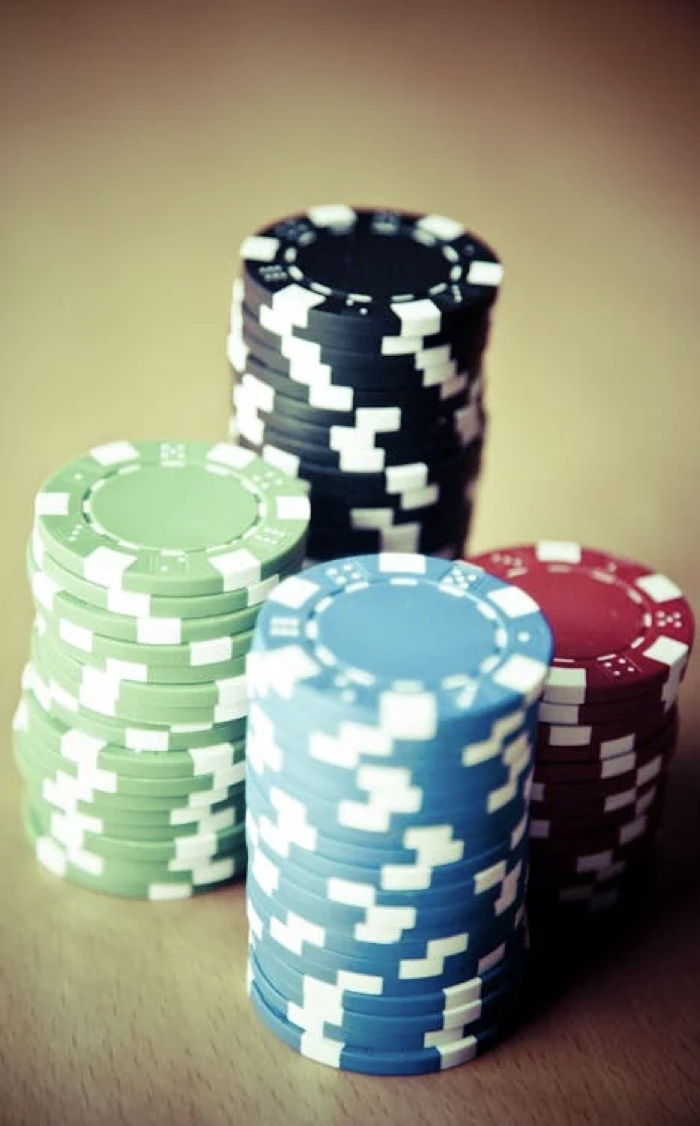
Learn what happens when poker players tie, how split pots work, and which rules determine the winner when hands have the same value.
Ties have gone by the wayside in team sports. The NFL and NHL have done their best to make sure they never happen, too. The same cannot be said for poker. On occasion, people with the same hands tie. So, what happens in poker when you tie?
How Does a Split Pot Work in Poker?
Poker tie rules result in players with equal ranked winning hands leading to the pot being split. It can also see three players with the same hand and the result is each player gets a third of the pot. It is that simple. Two people tie and the pot is 50-50. Three and it is a third to each
How Kickers and Hand Rankings Break a Tie
When thinking about a split pot in poker, kickers play a part of each player’s best five-card hand. That means building the best five-card hand you can. So say both players have a pair of 8s. What happens? It isn’t so a poker straight tie breaker because you can then check what the other three cards that comprise the players’ hands are. The player who has the stronger hand of the remaining three cards would win the pot.
An example of how a kicker would not play into a decision is when players have a straight. If they both have the same straight, that would end the hand in a tie. You don’t go any deeper than the top five.
Make sure to check out BetUS poker variants before starting to play for serious cash when you’re going to play online poker for real money.
How Does a Poker Game End When Players Tie?
A tie at the end of a hand differs from what happens should a tournament end in what could or would be considered a deadlock. Should tournaments end in a tie, the players would split the combined pot for the position. So, if players wind up tied for seventh (and eighth), they would share the combined pot for those positions. If two or more players are tied or agree to stop playing at the end of a tournament, they can decide together to split the prize pool. There can be an even split or if the players agree to the terms, it can go to whatever percentage of chips each has left.
There are poker rules, and some consider it standard that if two or more players are eliminated in the same hand, the one that started it with more chips would finish higher. This would be contrary to the splitting of the two positions but it can happen. Another level of ties in tournaments that can be factored in are seat position.
One has to understand all the rules and ramifications before sitting down to play at a poker table whether a game or tournament.
Can the River Card Turn a Winning Hand Into a Tie?
The turn and river in poker can be key cards in the way a hand plays out. The question is: Can the river wind up leading a hand into becoming a tie? The answer is yes. The river is the last community card and it can often be decisive. It can change a winning hand for someone into a losing hand or a tie. The same can be said on the flip side as the river can deliver the winning card for someone who appeared to be in a losing position.
Which Cards Matter When Both Players Have the Same Pair?
When both players have the same pair, the next three cards in their hands would make the difference in who wins the hand. So if someone has a pair of Kings and 7-8-9 and the opponent has kings and 8-9-Jack, the latter’s hand would be considered stronger because the Jack is a higher card than the nine the former has as their top card outside the Kings.
Can this get sticky and thicket-like, sometimes? Yes, but the reality is that the stronger overall five-card hand is the one that is considered the winning hand; unless they are absolutely equal, like having the same cards in a straight or, in a rarer occurrence, a flush, they will not be considered a tie.
FAQs
Can a poker game end in a tie?
Yes, a poker game can end in a tie. If that happens, then the players would either decide how to split the overall pot, or there would be rules that were set before the game or tournament starts.
Who wins a two pair tie?
A two-pair tie would go to the player whose fifth card is higher. If the fifth cards are equal, the hand would be a tie and then the pot split.
How is a split pot divided in poker?
A split pot is divided equally among the players involved in the tie, whether two-way, three-way, etc.
Features
The Enduring Forms of Jew-Hatred
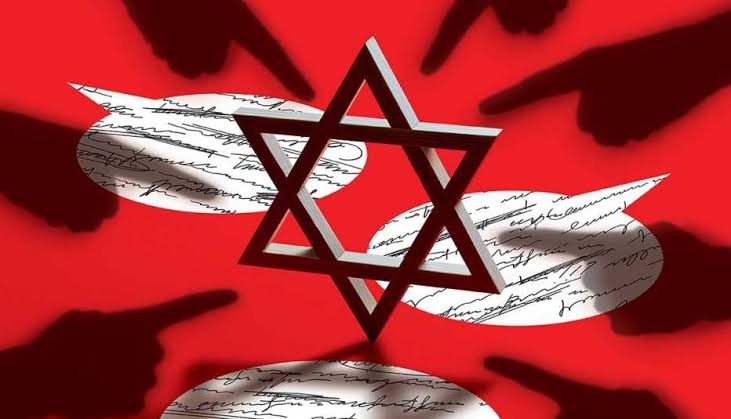
By HENRY SREBRNIK “Antisemitism” and “antizionism” are not, in their essential features, forms of racism. These ideological constructs may include depictions of Jews in disparaging ways – through looks, accents, and other forms of prejudice – but they are political projects, just as anti-Judaism in the past was found (and sometimes still can be) in Christian and Muslim theology.
Both words are also misleading — few Jew-haters are concerned with “Semites” or actual “Zionists” (in the historical sense) as such. The word “Zionist” is for them, not about a political movement, ideology, or history. It is simply a metonym or synonym for “Jew.” Both words posit “the Jew” or “the Zionist” as a member of a malignant world-historical force, the antithesis and enemy of all that is good among human beings.
Neither the “Zionist” nor the “Semite” in these constructions corresponds to a real, discrete group; both are caricature figures onto whom an entire set of libels, suspicions, and eliminationist fantasies are projected. Retaining the hyphen unwittingly affirms the antizionist claim that they are engaged in a normal political dispute with an actual constituency called “Zionists,” rather than waging a hostility organized around the erasure of Jewish collective existence.
Jew-haters in the past condemned Jews as deicides, and they today consider Jews responsible for both the excesses of capitalism and the economic and social evils of Communism. The consequence is that Jews are to be hated and deemed unworthy of sympathy and solidarity. Even the facts of Jewish victimhood, whether the Holocaust or the massacres of October 7, can be portrayed as a scheme for Jews seeking some kind of dominance by “exploiting” their own past historical sufferings.
It’s an old story. In his 1882 pamphlet Auto-Emancipation, Leon Pinsker, a founder and leader of the Hibat Zion movement in tsarist Russia, observed: “To the living the Jew is a corpse, to the native a foreigner, to the homesteader a vagrant, to the proprietary a beggar, to the poor an exploiter and a millionaire, to the patriot a man without a country, for all a hated rival.”
Today’s “antizionism” has nothing to do with the “anti-Zionism” that existed within the political debates in the Jewish world earlier in the 19th and 20th centuries, mainly prior to 1948. These remained internal Jewish arguments about the future of Jewish life. Jewish anti-Zionists still understood Jews as a people with shared history, continuity, and collective identity. What they did not do was portray Jewish self-determination as inherently racist or fundamentally illegitimate, nor frame Zionism as a global conspiracy threatening humanity itself.
There is little direct link between the various actual anti-Zionist programs that existed within the Jewish world before the establishment of the state of Israel in 1948 and contemporary antizionism, like that of the Jewish Voices for Peace or Students for Justice in Palestine. They gain credibility and authenticity if people are led to believe they have inherited the mantle of those who opposed the establishment of a Jewish state seventy-five or a hundred years ago. Efforts to eliminate an actual state with millions of Jewish citizens bear no relationship, especially post-Holocaust, with earlier arguments that assimilation into European societies working classes represented a solution preferable to Jewish statehood.
That confusion even exists among leftist pro-Palestinian Jews, some of whom now have rediscovered the Jewish Labour Bund. They relate to, and are seen by Jew-haters, the way a Jew who converted to Christianity, Islam, or Communism was treated in previous eras.
Yes, many Orthodox Jews traditionally opposed Zionism on theological grounds, but that belief lost its persuasive power with the Holocaust and the establishment of Israel. There remain remnants of Jewish groups opposed to Israel’s existence, notably the Haredi Satmar Jews, who believe only the Messiah can found a Jewish state, but they are not Jews who hate or wish to harm other Jews. Even in Israel, there are genuine, religious ultra-Orthodox rabbis opposed. Rabbi Dov Lando, an influential figure in the United Torah Judaism party, recently contended that Zionism “made Arabs hate us” and Arab rule would have been preferable to the establishment of the state. This is genuine, Jewish anti-Zionism, not “antizionism.”
Modern antizionism did not emerge organically from moral reflection. It is the inheritance of an ideological campaign that replaced the word Jew with Zionist while leaving every underlying accusation intact. The language of conspiracy, domination, blood guilt, and moral corruption was simply updated.
Antizionist ideology treats Jewish peoplehood and sovereignty as an intrinsic injustice. It is today’s evolved form of anti-Jewish hate, less crude than classical antisemitism, but no less potent. Defined by its practice rather than by any claims it makes about “Zionism,” antizionism involves a now-familiar behavioural repertoire: encampments and other occupations of university spaces, boycotts of Israeli scholars and artists, masked harassment of Jewish students, defacement and destruction of Jewish property, disruption of performances by Jewish musicians, and so forth. Like other movements, antizionism at the extreme finds expression in political violence.
In universities, workplaces, and public culture, many Jews now find that their relationship to Israel has become a moral lens through which their broader ethical character is interpreted. Statements are no longer heard merely as judgments about a distant conflict, but as disclosures of one’s deeper moral orientation.
“These are behaviours,” contends Shaul Kelner, a professor of Jewish studies and sociology at Vanderbilt University, in his article on “American Antizionism” published in the Fall/Winter 2025 issue of Sources: A Journal of Jewish Ideas, “by which antizionists construct themselves as a moral community in contradistinction to a polluting Other. (A polluting Other that, we need not add, just happens to be Jewish.)”
Because antizionist politics have taken root mainly among the intelligentsia, such as professors, university students, journalists, and artists, many people assume that antizionism is a reasoned intellectual position, more rational than emotional. This certainly serves the interests of antizionism’s proponents, but “antizionism” is actually a conspiracy theory about Jewish world power corrupting and subduing the nations and peoples of the world. Political “Jew-hatred,” to use the more correct term, is a political project, one needed to defeat a “world Jewry” in power in, among other places, the United States. It is not simple “racism,” as it ascribes to Jews almost demonic powers virtually across the globe, and not just confined to the actions of an Israel that is uniquely evil, precisely because it is Jewish.
Soviet “Zionology” as early as the 1960s was expressed in this way, and if one simply substituted “Zionist” for “Jew,” it was an almost exact replica of similar Nazi terminology. Remember what Israeli historian Saul Friedlander wrote in his 2007 book The Years of Extermination: Nazi Germany and the Jews, 1939–1945: The Nazis regarded Jews “as an active threat, for all of Aryan humanity in the long run, and in the immediate future for a Reich embroiled in a world war. Thus the Jews had to be exterminated before they could harm ‘Fortress Europe’ from within or join forces with the enemy coalition they had themselves set against the Reich.”
Thus, as Naya Lekht, who teaches the history of anti-Jewish movements, explains in “Where the Soviets Won,” Fathom, Sept. 13, 2026, the Jew-hater does not hate Jews in a racist way. “The antisemite is not so much contemptuous of the inferior Jews as he is afraid and resentful of them. In the antisemitic imagination, the Jew is not subhuman but superhuman, possessed of an almost supernatural capacity to infiltrate, manipulate, transform, and corrupt.” Antizionism is a lot more than ideological opposition to a Jewish state. It is the continuation of an ancient project centred on producing Jewish villains. The threat is that the Jew will get inside your institutions, your culture, your bloodline, and make you into something you are not.
When the USSR was rabidly “anti-Zionist” and an enemy of the Jewish state, few people in western countries denied it was antisemitism. In 1975 the Soviet bloc and Arab states passed the notorious “Zionism is Racism” motion in the United Nations General Assembly. It too had little traction in North American political circles. The U.S. Ambassador to the United Nations Senator Daniel Patrick Moynihan, in a stirring speech eloquently defended Israel. What would he make of the direction the Democratic Party is taking now? Today, when university professors and politicians, including a newly elected Michigan senator and a New York mayor, use the same language, it is suddenly “kosher,” and Jew-haters get a pass when they scream about Israeli “apartheid” and “genocide.”
“The anti-Zionist is not genuinely concerned with Zionism or Israel as they exist,” continues Lekht. “Rather, the Jewish state is distorted and mythologized into a 21st-century bogeyman, a repository for society’s fears, grievances, and moral anxieties.”
At its core, asserts filmmaker and podcaster Lucy Tabrizi, in “The Return of the ‘Good Jew,’” Notes from the Ruins, January 24, 2026, “Jewish anti-Zionism demands something extraordinary — that Jews uniquely surrender not merely a state, but their historical memory, their collective identity, and their right to self-defence, all in exchange for the promise of moral approval from cultures that have never protected them.”
Dave Rich, an Associate Research Fellow at the Pears Institute for the Study of Anti-Semitism, who writes extensively about the intersection of anti-Israel activism, far-left politics, and modern antisemitism, puts it plainly, in “From Be’eri to Bondi: Global Antisemitism After October 7,” Fathom, October 2026:
“But what is anti-Zionism for, exactly? If we strip away the political sloganeering and academic ambiguities, it is a plot to kill a nation. That’s it. Anti-Zionism is a campaign, across decades and continents, to kill the nation of Israel, erase its name and its national identity from history, and replace it with something non-Jewish. Whether this campaign is pursued through ballistic missiles and suicide bombers, seminars and journals, or street protests and placards, that is its goal.” In 1939 the Anglo-Jewish writer Simon Blemfeld published the novel They Won’t Let You Live. Are we there again?
Eliyahu Stern, professor of Modern Jewish Intellectual and Cultural History at Yale University, in a September 15, 2026 article in the online journal ARC:Religion, Politics, Et Cetera, reviewed two recently published “antizionist” books. The title of his critique? “Destroy Israel, Repair the World.” That sums their contents up perfectly.
Think about it: Since October 7, 2023 Israel has done what every other country viciously attacked by implacable enemies throughout history has done: It has lashed back in a defensive war. Yet it’s become what some call the “omnicause.” That’s why antisemitism and antizionism are two sides of the same coin: hatred of Jews. Jews aren’t being attacked because of Israel. Israel is being condemned because it is Jewish.
Henry Srebrnik is a professor emeritus of political science at the University of Prince Edward Island.
