


Uncategorized
He photographed the defining image of 9/11 – and Jewish history for 50 years
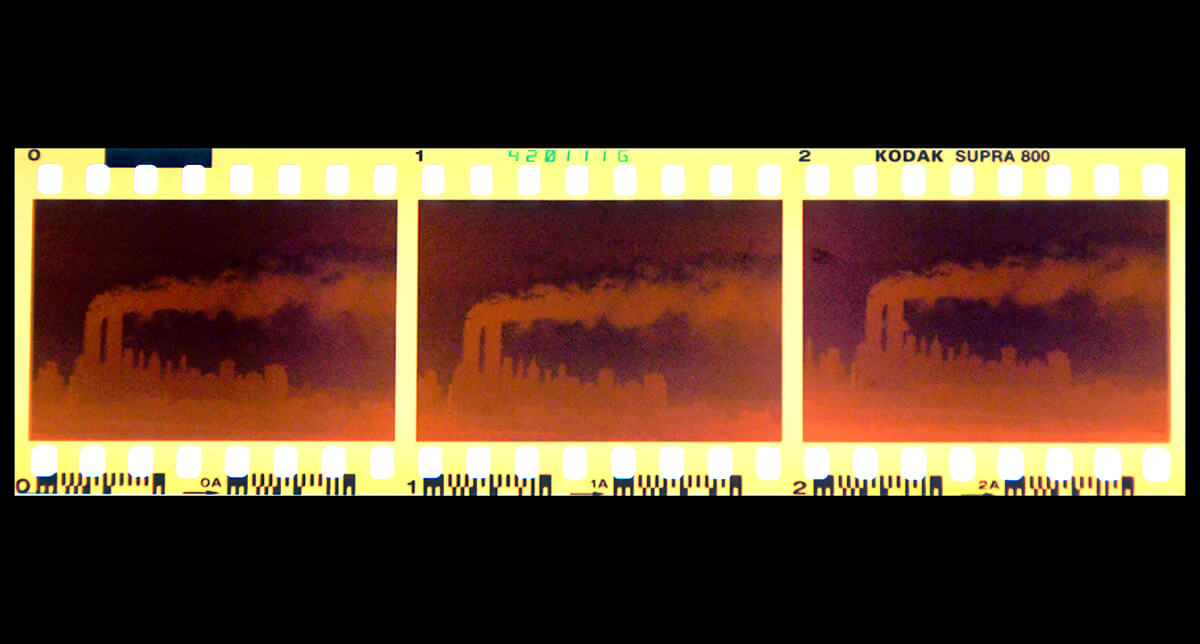
Robert Cumins stood on his ninth-floor balcony in Verona, New Jersey, camera in hand, when he saw a plane heading toward Lower Manhattan. He figured it was just another flight out of Newark. He snapped two quick frames anyway — a plane against a skyline, nothing more — and kept watching.
Then came the fireball.
He had no idea, in that instant, that he had already taken the photograph that would define his career — that he was, in fact, photographing the last seconds of the 65 people aboard United Airlines Flight 175, en route from Boston to Los Angeles. He wouldn’t even remember the plane was in the frame until he saw the developed film an hour later. For that hour, he believed he only photographed the explosion, not the moments before.
Twenty-five years on, Cumins, now 78, still lives in that apartment. He still faces the same skyline — a skyline he has spent 25 years learning not to search for two towers that are no longer part of it.
That photograph made Cumins famous. It is one entry — the most-viewed one, certainly — in a career now entering its sixth decade, a career that has put him, again and again, at the edge of history he did not make.
He straightened Israeli Prime Minister Yitzhak Rabin’s bow tie backstage, 10 days before the prime minister was assassinated, then flew to Israel to photograph his funeral. He spent 10 days documenting Israeli Prime Minister Yitzhak Shamir. He stood close enough to photograph the signing of the Oslo Accords, the Camp David Accords, the Israel-Jordan peace treaty — three of the defining diplomatic moments of the modern Middle East.
Call him the Forrest Gump of Jewish history.
‘Turn around, kid’
Cumins’ workday on the morning of September 11, 2001, started with a red light.
He was driving down the hill from his apartment, headed out for coffee, when he stopped at the bottom and, out of habit, flipped on the radio. A WCBS helicopter reporter was already mid-report, something about a tower. By the time the light turned green, an anchor had cut in with the words: the World Trade Center.
Cumins turned the car around. He drove back up the hill. The elevator was sitting there, waiting. He rode up to the ninth floor. Before he was all the way inside his apartment, he could already see smoke pouring off the North Tower, 15 miles across the water. He ran for his camera, loading film and changing lenses as he crossed the living room toward the balcony.
He got there at 9:03 a.m. — four and a half minutes after the stoplight turned green. He’s gone over that stretch of time so often he can repeat it without thinking. A slower elevator, and he never gets the shot.
Cumins believes it was his mother, who died about a month before 9/11, who led the way. “Sometimes I say it was a spiritual thing,” he said. “She was watching over me at that red light. ‘Turn around, kid. This is big.’”
A convertible and a Kinko’s
By the time Cumins got his film to the photo lab in New Milford, he had already forgotten about the plane entirely. The fireball, he remembered — that part was impossible to forget. The plane itself, the thing he’d actually pointed his camera at, was gone from his mind completely.
Cumins stood over the technician’s shoulder as the scanner worked backward through the roll of Kodak film — 19 frames total — hunting for the explosion. They found it. Then he asked to see the beginning of the roll.
The first frame showed the plane against the skyline, smoke already rising from the first tower. In the next, a red dot flared just above the plane’s tail. Then came the explosion. The moment took three frames of film. Getting the picture to an editor took the rest of the day.

Cumins called his agent, who reached an editor at People — the magazine wanted the image immediately, as large as he could send it. Cumins had an AOL account with a 16-megabyte limit. Every file he tried to send bounced back, too big.
He hopped in his Audi TT convertible, top up, and sped to a Kinko’s on Route 3 in Clifton, and spent the day with a store clerk, the two of them trying to coax something too large through a connection too small. Confirmation came at 9 p.m., just ahead of deadline. The photo ran on People’s cover as a double-page foldout.
The top of his car stayed closed for weeks after that. “I could not bring myself to put down the roof,” Cumins said, “to enjoy the simple pleasures of light and fresh air during such a dark time.”
Documenting modern Jewish history
Cumins built a career on trust. At 14, he sent a telegram to President John F. Kennedy’s press secretary asking to visit Washington. The press secretary said yes. It wouldn’t be the last time a powerful person said yes to him.
It was almost by accident that his persuasiveness led him into Jewish photography at all. In 1970, a colleague asked him to shoot a Jewish Federation breakfast in Miami. His first Jewish communal assignment — a parlor meeting in a private home in Elizabeth, New Jersey — followed a few months later. It was the first of hundreds. Over the next five decades, he photographed scores of events and made roughly 250 trips to Israel, building trust as he went.

In 1988, that trust bought him 10 days inside Yitzhak Shamir’s daily life — meetings and meals, including moments when no one else was in the room. “He was very kind to me,” Cumins recalled. The photographs ran in The New York Times Magazine, in Life and in newspapers across the globe.
In October 1995, Cumins was backstage at a black-tie reception in Washington when he noticed Yitzhak Rabin’s borrowed bow tie had come loose from his collar. Cumins walked over and fixed it. “I had spent a lot of time previously with Rabin,” he said. “Otherwise, I would never have gotten near his neck.”
Ten days later, Rabin was assassinated. Cumins flew to Israel and back in a single day to photograph the funeral — soldiers saluting the casket, an aide reading from the blood-stained speech recovered from Rabin’s jacket. Two weeks before, at that reception in Washington, he’d photographed President Bill Clinton and Leah Rabin laughing together. Now he photographed Clinton consoling her as a widow — two photos, worlds apart, taken by the same man.

Even after 9/11 made him famous, Cumins kept doing what he had always done. He signed on as one of Hillary Clinton’s photographers during her first Senate campaign. After she won, he asked to come along, at his own expense, when she made her first trip to Israel as senator. He wanted total access. He got it, as he generally did.
On that trip in 2002, in Prime Minister Ariel Sharon’s office, Clinton introduced Cumins to those gathered: “Mr. Cumins, he took the great picture of 9/11,” she said. Later that trip, at a dinner in Tel Aviv, Cumins caught a quiet moment between Clinton and Shimon Peres, one of his more striking portraits.

‘Split second of innocence’
Somewhere along the way, the work of chronicling history gave way to the work of storing it.
What’s left of his archive now sits in a couple of private storage units in New Jersey — roughly 600 square feet of file cabinets and boxes, labeled by project, holding a record of Jewish and Middle East history that exists nowhere else. It has cost what Cumins describes as “a fortune” over the years. He’s hoping a philanthropist will buy the collection and gift it to an institution built to care for things longer than any one person can. He hasn’t found one yet.

In the meantime, he’s still in the same ninth-floor apartment in Verona, still facing the same Manhattan skyline. He photographs it constantly — beautiful sunrises and sunsets, weather rolling in over the water — and he says there’s almost always a plane somewhere in the frame, whether he’s trying to catch one or not.
Cumins has a phrase for what he photographed 25 years ago: “the final split second of innocence” this country ever had. Between the first plane and the second, there were 17 minutes in which the country still believed, or wanted to believe, that this might be an accident.
Then reality hit. The U.S. was under attack. Life would never be the same, especially for the man who captured that moment in history.
Some photographs you take. Others, it turns out, take you — and don’t ever quite let go.
The post He photographed the defining image of 9/11 – and Jewish history for 50 years appeared first on The Forward.
Uncategorized
Attacks on Mamdani test Jewish efforts to confront Islamophobia as 9/11 anniversary nears
The image was vintage AI slopcraft: New York Mayor Zohran Mamdani in his trademark black suit, holding a sealed cardboard package labeled 9/11 MEMORIAL.
“Honey,” the cartoon Mamdani calls, “where’s my box cutter?”
The cartoon, shared Sunday on social media by the Orthodox Jewish comedy account Heimish Humor and referencing the weapon used in the 9/11 hijackings, reflected an increasingly caustic attitude toward Mamdani, Muslim elected officials and Islam itself in some Jewish spaces as the 25th anniversary of the attacks approaches — with much of the charged rhetoric tied to Sept. 11.
Jewish groups that staged an anti-Mamdani protest in downtown Manhattan Tuesday invoked the mayor’s religion on a flyer for the event, which was sponsored by the Lawfare Project, the Israeli-American Council and a slew of other Jewish groups. The flyer depicted Mamdani with his eyes blotted out and read, “Islamist ideology was not defeated. It was normalized. In 2001 they needed planes. Today the DSA hands them a platform.” One speaker at the event said Mamdani believed law enforcement was “haram,” Arabic for forbidden.
To some who saw it, the poster — and many of the Jewish attacks against Mamdani — contained anti-Muslim dog whistling, if not downright Islamophobia.
“This is coded language to smear all Muslim leaders as terrorists to hold them accountable for 9/11,” said Amy Spitalnick, chief executive of the Jewish Council for Public Affairs. “The same way that we as a community rightfully push back when we hear people using ‘Zionist’ as a pejorative — that’s what’s happening here. We should be calling it out if we expect people to call it out when it happens to us.”
The wave of antagonism in the Jewish community comes amid a broader Republican backlash to high-profile victories for Muslim elected leaders. Bruce Blakeman, the Republican nominee for New York governor, called incumbent Gov. Kathy Hochul, who is Catholic, “tone deaf” for wearing a hijab at a mosque so close to the 9/11 anniversary. Islamophobic posts targeting Michigan Senate candidate Abdul El-Sayed, surfaced by The Washington Post, found copious 9/11 references.
But no politician has attracted as much vitriol as Mamdani, New York’s first Muslim mayor. His antagonism toward the Israeli government and his leftist politics have made him a target for many pro-Israel New Yorkers. Some have used his religion as a cudgel in joining calls for him to skip Friday’s memorial service at Ground Zero.
Spitalnick said such rhetoric was coming from a small, non-representative portion of the Jewish world that wanted to advance a conservative political agenda — but that Jews “should be concerned that this is ostensibly being done in our name.”
“We can be concerned for multiple reasons,” she added. “One, bigotry is wrong regardless, and two, it actually makes our work to fight the real and rising antisemitism our community is facing that much harder.”
Yet posts like the cartoon also revealed the resistance to growing anti-Muslim sentiment in Jewish spaces. Heimish Humor’s post drew a number of critical replies from Jewish accounts. “Incredibly racist, you should delete this,” wrote one. “Not funny,” said another. As anti-Muslim rhetoric escalates, Jewish voices are among those fighting hardest to combat it.
Echoes of history
Twenty-five years after 9/11, the rise in Islamophobic rhetoric has resurfaced old memories of its aftermath.
The end of 2001 was a dangerous time for Muslim Americans, who faced being conflated with the Al Qaeda terrorists who perpetrated the hijackings. Despite President George W. Bush’s admonition that the attacks were committed by extremists who did not represent the religion, anti-Muslim violence spiked across the U.S. A number of mosques were burned in arson fires, and eight Arabs or Muslims were killed in the three months following 9/11 in what some believed to be Islamophobic murders.
Relations between Jewish and Muslim American communities, already strained by the Second Intifada, bottomed out in some places after 9/11. But in the ensuing years, Jewish-Muslim relations took a surprising turn. By 2006, news media were describing an “unprecedented swell of interfaith activities” — including dialogue groups, “peace walks” and joint Israel trips — even as agreement on Middle East politics remained elusive.
And while the 2010 proposal for a mosque and Muslim community center at Ground Zero reignited some old tensions — with the Anti-Defamation League headlining the opposition — broader trends of Muslim-Jewish mutual aid held: When a St. Louis Jewish cemetery was defaced in 2017, Muslim groups raised tens of thousands of dollars to repair it. Jewish groups anchored the opposition to President Donald Trump’s 2017 immigration ban targeting Muslim countries. And in 2021, the ADL apologized for its earlier stance on the mosque near Ground Zero.
The day everything changed
The Oct. 7, 2023, Hamas attacks, however, caused many Jewish-Muslim partnerships to collapse. Israel’s response in Gaza only deepened resentments, as opposition to the war on college campuses and in public protests coincided with an increase in antisemitic incidents.
Then in 2025, Mamdani rode into office on the back of the pro-Palestinian movement. Mamdani vowed to arrest Israeli Prime Minister Benjamin Netanyahu and was reluctant to disavow the slogan “globalize the intifada” — a phrase many see as calling for violence against Jews. Though Mamdani has repeatedly condemned antisemitic violence in the city, some Jewish New Yorkers say his anti-Israel invective has nevertheless exacerbated a dangerous environment for the city’s Jews.
“The DSA is a movement of hate, pro-terror anti-American and anti-minority ideology,” said Brooke Goldstein, the founding director of the Lawfare Project, which organized Tuesday’s anti-Mamdani protest. She said it was the DSA and the mayor who were promoting division, extremism and racism — not groups like hers, who were holding the mayor accountable.
The prominence of the Democratic Socialists of America is one key difference between today’s political environment and that of late 2001.
But the environment around Israel has also changed. “The response to 9/11, including from most Jewish organizations, was an American response,” said Jonathan Jacoby, president of the Nexus Project, a nonprofit that combats antisemitism — whereas the response to Mamdani today, he said, is “coming from a quote-unquote ‘pro-Israel’ space.”
Jacoby said Mamdani’s election in particular had elicited an unprecedented level of panic among some pro-Israel groups. He pointed to the ADL’s Mamdani Monitor as an example, saying that there was a throughline between the efforts to undermine his candidacy and the calls for him to not attend the 9/11 ceremony. (The ADL has not commented on whether Mamdani should participate, and declined to comment for this story.)
Some of the people who have pushed back against the anti-Mamdani rhetoric consider themselves among the mayor’s critics.
“I’m not happy with the atmosphere he’s brought into New York City since being elected,” Avital Levene, a Jewish influencer who called the Mamdani cartoon “not funny,” said in an interview. “However, he’s stood with the Jewish people since taking office. People literally call him a terrorist and use terms like ‘yemach shemo’ (may his name be erased). There’s a way to criticize someone’s political views without using racist slurs.”
Like Levene and Spitalnick, Jacoby said he disagreed with some of the mayor’s beliefs about Israel. But he said those disagreements “pale in the face of the danger of authoritarianism, neo-fascism and white nationalism in this country.”
The post Attacks on Mamdani test Jewish efforts to confront Islamophobia as 9/11 anniversary nears appeared first on The Forward.
Uncategorized
Argentine court orders return of Nazi-looted painting to Jewish collector’s heir
(JTA) — BUENOS AIRES – A Dutch journalist hunting for art treasures belonging to an Amsterdam Jewish art dealer spent years trying to get answers from Patricia Kadgien, the daughter of the Nazi financier who had made off with some of them, with no luck. So last year he went to her house in Mar del Plata, a resort city on Argentina’s Atlantic coast.
No one was home, but the journalist, Peter Schouten, noticed a “for sale” sign outside the property from Robles Casas & Campos, a local real estate agency.
Schoten went to the agency’s website, where the house was listed for $265,000. As he scrolled through the listing, he noticed something in a photograph of the living room. Schouten recognized the painting hanging above a sofa: “Portrait of a Lady,” most likely the work of the 18th-century northern Italian painter known as Il Pitocchetto.
On Friday, Argentine federal judge Santiago Inchausti authorized the restitution of “Portrait of a Lady,” which belonged to the collection of Dutch Jewish art dealer Jacques Goudstikker, to his daughter-in-law and sole heir, Marei von Saher.
“The property had been listed for sale on a real estate agency’s website, and one of the photographs showed a painting in the living room that matched one of the works from Goudstikker’s collection that had been sought for years,” Inchausti wrote in his ruling.
Goudstikker was one of Holland’s most prominent Jewish art dealers before World War II. In 1940, he fled the Nazi-occupied Netherlands with his wife and son, carrying a black notebook listing some 1,400 artworks. After his death during the voyage, his widow preserved it, and the notebook later became key evidence in the family’s restitution efforts.
His gallery and collection fell under Nazi control. Hermann Goering, a powerful deputy to Adolf Hitler, acquired hundreds of paintings from Goudstikker’s collection in a forced sale that Dutch authorities later determined was directly linked to Nazi persecution.
Herberto Robinson, von Saher’s lawyer who specializes in estate planning and asset protection, described what happened after Schoten’s sleuthing in an interview with the Jewish Telegraphic Agency.
“At that point, the journalist contacted attorney Yael Weitz in Freedman Normand Friedland of New York where she specializes in art and cultural property law,” he said “She then contacted us and asked us to take on the case. The family’s sole intention was to recover the painting. They were not interested in pursuing those who had possessed it or in seeking financial compensation, they wanted the artwork returned.”
Kadgien is the daughter of Friedrich Kadgien, a German financial official who worked for the Nazi regime and later escaped to South America. The elder Kadgien, who had close ties to Goering, fled Germany in 1945 to Switzerland, eventually making his way to Argentina, where he started a business and raised a family. He died in 1978.
Kadgien and her husband at first did not cooperate. The realtor’s listing was removed after the Dutch newspaper Algemeen Dagblad published its report. Argentine authorities then searched the property on Aug. 26, 2025, but the painting had been removed and replaced with another artwork, while an outline matching its dimensions remained visible on the wall.
Kadgien and her husband, Juan Carlos Cortegoso, were placed under house arrest for 72 hours while authorities searched the family’s other properties. They subsequently turned the artwork over to federal prosecutors and were charged with aggravated concealment.
Experts from Argentina’s National Academy of Fine Arts attributed the work to Giacomo Antonio Melchiorre Ceruti, known as Il Pitocchetto, and valued it at approximately €250,000. The local and national Jewish communities took a keen interest in the case.
“We are very pleased and hope this marks the beginning of many more restitutions, as we know there are undoubtedly other works out there that rightfully belong to families who suffered this tragic fate,” Clauda Beatriz Malamud, the president of Sociedad Union Israelita Marplatense, the local Jewish community body, told JTA.
Under an agreement Inchausti approved, the criminal proceedings against the couple were suspended for two years, subject to a set of conditions. They irrevocably renounce any right or claim to the artwork, clearing the way for its restitution. The painting will remain in the custody of Argentina’s Supreme Court until the restitution is carried out. They also agreed to pay 4.8 million Argentine pesos — approximately $3,180 — in 24 monthly installments to the support association of Mar del Plata’s Interzonal Specialized Maternal and Child Hospital.
According to well-placed sources at the Buenos Aires Holocaust Museum, von Saher has expressed interest in lending the painting to the museum for a temporary exhibition, possibly for one or two years. The exhibition would help raise awareness of the systematic theft of Jewish-owned art under the Nazi regime and the continuing international effort to return such works to their rightful owners. No final agreement about this has been announced.
This article originally appeared on JTA.org.
The post Argentine court orders return of Nazi-looted painting to Jewish collector’s heir appeared first on The Forward.
Uncategorized
Germany takes a step back to its Nazi past — and Donald Trump is cheering them on
What a role reversal.
Since the start of his second term as president, Donald Trump has looked like he’s been following the playbook of Adolf Hitler and other despots. But now Germany is becoming like Trump’s America.
The Sunday election results in Saxony-Anhalt state were a victory not just for the Alternative for Germany, known as the AfD, but also for Trumpism. As Trump’s powers are cracking in the US because of high prices and the unpopular war against Iran, the American president’s brand has not only taken root in Germany’s former communist region, but is threatening to spread across the country.
“Wow! The Populist Party in Germany just had a really big night,” Trump wrote Tuesday on Truth Social. “They finally got tired of the absolutely horrible Immigration rules and regulations which have hurt Germany so badly.”
“MGGA!!!,” Trump wrote at the end of his post, apparently meaning “Make Germany Great Again.”
MAGA’s influence is plain to see on social media videos posted in the run-up to the Saxony-Anhalt election, in which the AfD came alarmingly close to winning enough votes to form a government on its own, which would have been the first time since the Nazi era that an extreme-right party has taken over the leadership of a German state. The videos show AfD followers saying racist things about immigrants and the superiority of white people, that there’s too much emphasis on the Nazi years and German history needs to be told more positively, and calling for an end to funding “anti-German art,” whatever that might mean, among a host of other stands that mirror those of MAGA.
Sally Lisa Starken, a freelance German journalist and bestselling author who has been chronicling the AfD, posted an Instagram video of an AfD “family festival” in Magdeburg, the capital of Saxony-Anhalt.
“The whole time I felt like I was at a Trump event. The AfD has quite consciously learned from the MAGA movement,” said Starken, who has also covered Trump rallies in the US.
AfD merchandise was everywhere, including t-shirts bearing the photo of Ulrich Siegmund, the AfD’s lead candidate in the Saxony-Anhalt election, and the man who would become leader of the state if the party is able to find a partner willing to join in a coalition government.
As is the case with Trump, there’s a cult of personality surrounding the 35-year-old Siegmund. People at the family festival stood in line for two hours to have their picture taken with him. Just before the Saxony-Anhalt election, the cover of the newsmagazine Der Spiegel called him “the most dangerous man in Germany.” Taking a page from Trump, Siegmund used the cover’s mug shot-style photo in his election campaign.
As with Trump, people of all shapes, sizes, ages and backgrounds attend these AfD gatherings, but they’re probably even whiter than at Trump’s rallies. And like Trump, Siegmund sounds like a huckster who knows how to grab the attention of people who feel like they’ve been left behind.
The AfD has become especially strong in former Communist East Germany at least partly due to German reunification, which occurred in 1990. The economy in the eastern region has never caught up with that of the wealthier west, unemployment is high, wages are comparatively low. There’s a feeling among many in eastern Germany that reunification hurt them, rather than helped them.
Reunification also triggered an explosion of neo-Nazi violence against foreigners, a scourge that continues to the present day. Resentment against foreigners soared in 2015, when then-Chancellor Angela Merkel opened Germany’s borders to waves of refugees fleeing war-torn Syria, a fateful decision that lifted the AfD from a fringe group of extremists to a party to be reckoned with — at first just in the eastern states like Saxony-Anhalt, but now across the country.
In last year’s federal elections, the AfD doubled its share of seats in the Bundestag, the German parliament. As a growing number of Germans have felt ignored by the mainstream parties — the Christian Democrats, the Social Democrats, the Greens and the Left — the AfD has surged ahead to become Germany’s largest opposition party.
Among those who attend AfD rallies are diehard neo-Nazis, many sporting tattoos with symbols and slogans banned by law because of their association with the Third Reich. Instagram videos from party gatherings show AfD followers saying that Hitler was a great man and Germany could use another leader like him, and only people with pure German blood deserve to be citizens.
Last year, Germany’s domestic intelligence agency, the Federal Office for the Protection of the Constitution, classified the AfD as right-wing extremist.
“The ethnicity- and ancestry-based understanding of the people prevailing within the party is incompatible with the free democratic order,” the agency said in a statement at that time.
That judgment didn’t stop the AfD from seeking legitimacy abroad — or from finding it. Close links between the Trump administration and the AfD go back to the start of Trump’s second term.
It started with JD Vance’s address in February 2025 to the Munich Security Conference, an annual meeting of American government officials with our purported European allies. Vance shocked the conference by coming to the defense of extremist parties like the AfD. Since the defeat of the Nazis, Germany’s mainstream political parties have maintained a “firewall” that keeps them from cooperating with extremist parties. In his speech to the security conference, Vance essentially accused Germany’s mainstream parties of authoritarian behavior by shutting out the AfD.
“If you’re running in fear of your own voters, there is nothing America can do for you,” Vance told the European leaders.
On that same trip, Vance added insult to injury by meeting with the head of the AfD, Alice Weidel.
Olaf Scholz, who was chancellor at that time, defended the firewall against the AfD, saying the party trivializes Nazi atrocities. He basically told Vance to mind his own business.
“Where our democracy goes from here is for us to decide,” Scholz said.
At the center of the fraternal relationship between the AfD and MAGA is Elon Musk, the man who insists the stiff-arm gesture he gave at a rally celebrating Trump’s second inauguration was not the Hitler salute, although it sure looked like it. Just a few days later, Musk made a virtual appearance before a gathering of 4,000 at an AfD campaign rally in Halle.
“I think you really are the best hope for Germany,” Musk told the AfD followers. “It’s good to be proud of German culture and German values, and not to lose that in some sort of multiculturalism that dilutes everything.”
Musk added that there is “frankly too much of a focus on past guilt and we need to move beyond that.”
After the AfD’s success in the Saxony-Anhalt election, Musk wrote on X: “Well done!”
The AfD’s election shocker in Saxony-Anhalt has certainly caught the world’s attention — something that probably would not have happened were it not for Germany’s Nazi past.
Nonetheless, it feels like we have lost sight of a very important fact.
As we worry about the prospects of right-wing extremists increasing their power in Germany, politicians with virtually the same ideologies — xenophobes, white supremacists, racists and bigots — are already in the halls of power or positions of influence in Washington, D.C. and elsewhere in America.
And there’s something positive to be said about Germany.
Unlike the Trump administration, Germany investigates, prosecutes, and sends to prison far-right would-be insurrectionists, instead of freeing and rewarding them.
The post Germany takes a step back to its Nazi past — and Donald Trump is cheering them on appeared first on The Forward.

You must be logged in to post a comment Login