



Features
There’s nothing Jewish about this classic American comedy — except just about everything
September 22, 2026
This story was originally published in the Forward. Click here to get the Forward’s free email newsletters delivered to your inbox.
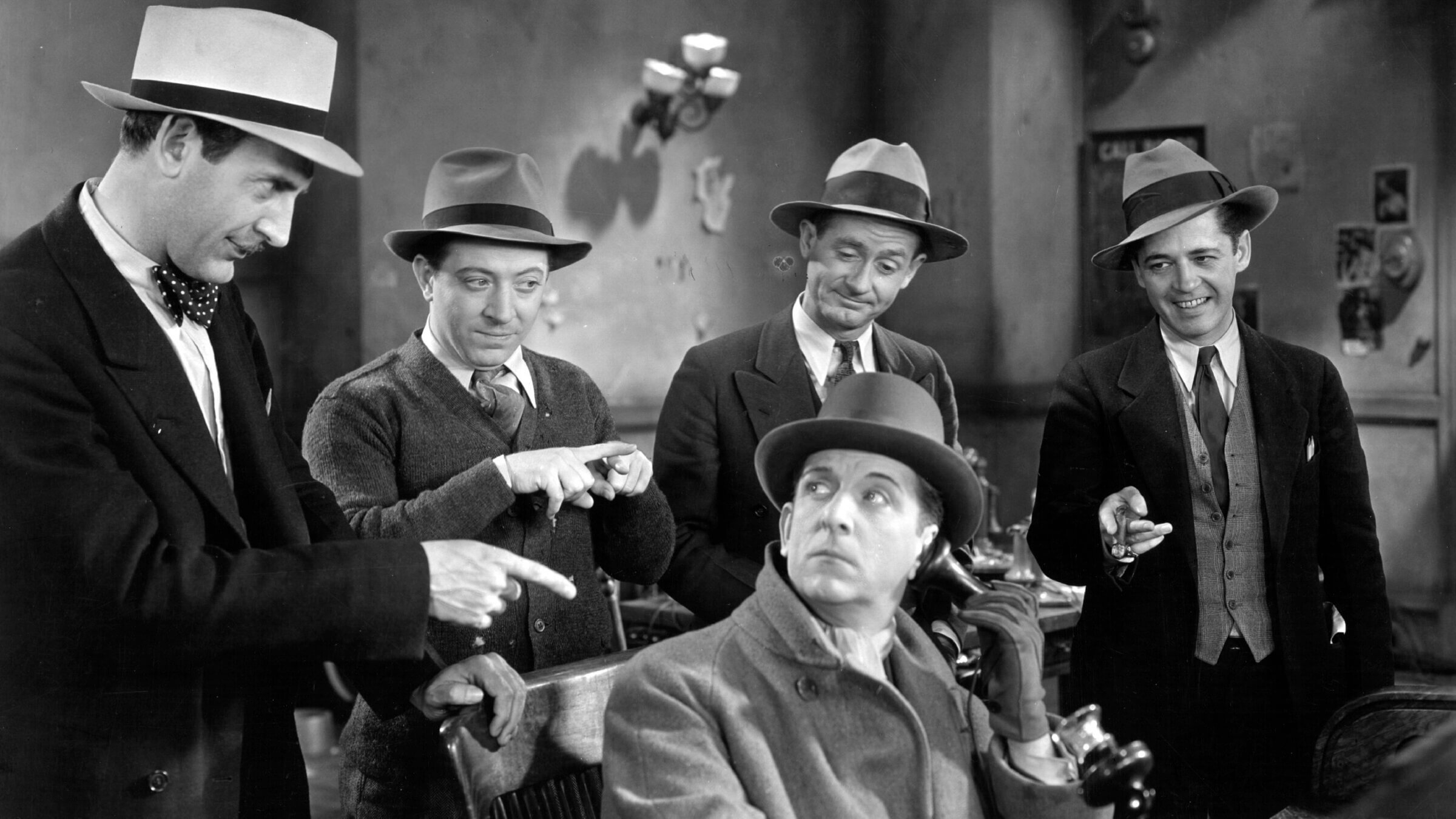
Ben Hecht and Charles MacArthur’s 1928 Chicago newsroom comedy The Front Page was so famous that when Harry J. Romanoff died in 1970, his New York Times obit referenced it. And in a 1986 review of a revival with John Lithgow as the conniving editor Walter Burns and Richard Thomas as the ruthless reporter Hildy Johnson, Frank Rich asked: “is there anyone who hasn’t seen The Front Page?”
Staged by George S. Kaufman and produced by Jed Harris, the original ran at the Times Square Theater for 276 performances. It has had many lives, including Howard Hawks’ fantastic 1940 screwball comedy, His Girl Friday. Hawks brilliantly turned the bromance into a he-she love story, casting Cary Grant as Walter Burns and Rosalind Russell as Hildy. He also softened the script so that it passed The Hays Office — the film censorship bureau named for ex-Postmaster General Will H. Hays.
The play’s many admirers include Walter Kerr, another New York Times critic, who, writing about a 1969 revival, memorably described it as ” like a watch that laughed.” David Mamet praised Hecht and MacArthur’s satire in several places, once calling it “arguably the best American play.” Tennessee Williams wrote that it “uncorseted the American theater,” and Kenneth Tynan and Tom Stoppard loved it.
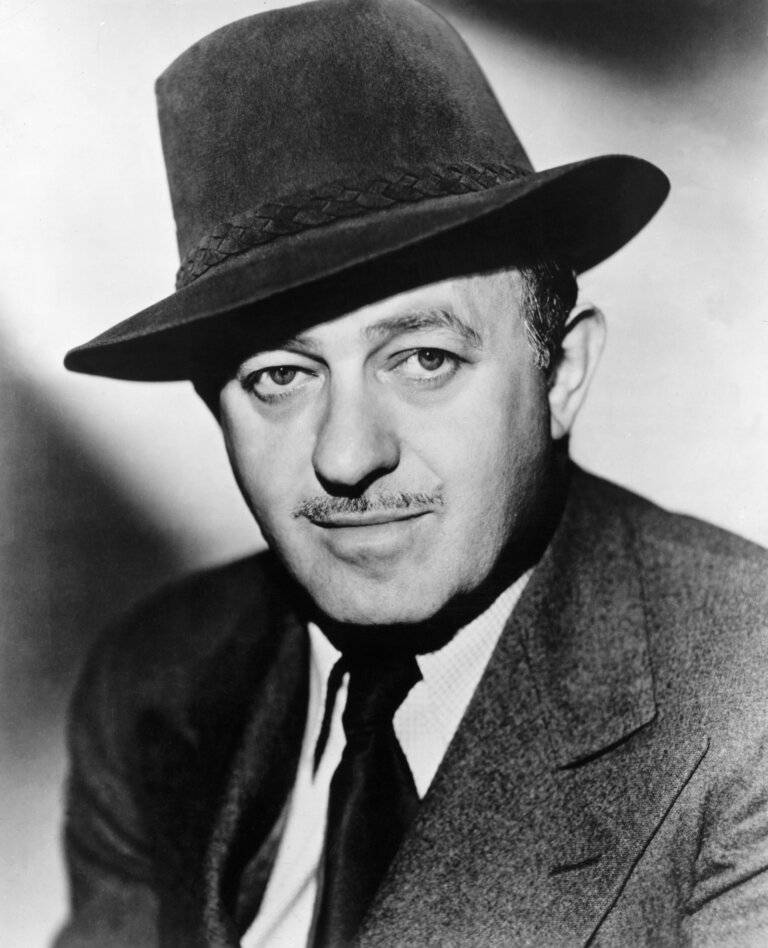
Hecht, who, according to researcher Jesse Tisch in an essay on Medium, did the majority of the writing, died in 1964 and our century seems more ambivalent about the play. Some critics loved the 2016 Broadway version, which Jesse Green, then of New York Magazine, said had been pieced together from several scripts. That production’s all-star cast, including Nathan Lane as Walter Burns and John Lithgow as Hildy did not prevent the late Terry Teachout from calling it “toothless.”
Part of the play’s slide may be related to the demise of legacy journalism. Chicago is down to two newspapers from the seven of the era of The Front Page. And part may be style. The long, crowded scenes lack the propulsive energy of a lot of streaming-influenced drama and the characters lack the tormented interiority many theater audiences have come to expect.
Now, the first major production in ten years — by the playwright Jeffrey Hatcher, best known for Compleat Female Stage Beauty, which became a film starring Billy Crudup, and for a 2022 stage adaptation of Dial M For Murder — has opened Northlight Theatre’s inaugural season at their $33 million building in Evanston.
Set in a crummy press room in the Criminal Justice Building in Chicago, The Front Page was the first Broadway show about zany, wisecracking journos and the corrupt politicians they took down. About to quit the paper, get married and move to Buffalo, Hildy Johnson stumbles onto death row inmate Earl Williams’ jailbreak. Walter Burns wrangles Hildy into covering one last scoop.
The play uses many sources, some of which contradict each other. In Chicago, Hecht had both devoured and befriended the Jewish comics of the day. He loved clowns, including The Marx Brothers. The Cocoanuts, the 1924 Marx Brothers’ Broadway madcap vehicle that George S. Kaufman wrote and directed and Irving Berlin wrote music for anticipates certain elements of The Front Page. Set in a resort hotel instead of a newsroom, its crime and con-filled ambiance and fast-talking shyster characters seem like a prequel to Hecht’s drama.
But The Front Page also came out of the imagination of a first-generation American Jew who came of age in the 1910s. Born in 1893 in New York, Hecht moved west with his Russian immigrant parents, settling at age ten in Racine, Wisconsin. He arrived in Chicago when he was 16, became a journalist and hung out with figures in that city’s Literary Renaissance, most of whom were not Jewish.
Hecht had an enduring but tormented friendship with the writer Max Bodenheim, who was raised Jewish. It began with the men collaborating on plays and starting a modernist magazine, The Chicago Literary Times, and descended into each satirizing the other in novels. Even worse, Bodenheim seemed to become Hecht’s evil twin. Like Hecht, Bodenheim was a provocateur. Like Hecht, he moved to New York. But where Hecht flourished, Bodenheim crashed into poverty. Hecht helped him financially. But he couldn’t save him. In 1954, Bodenheim and his third wife were brutally murdered in their apartment.
If Bodenheim was a daredevil, Hecht was a fabricator. He embellished his nonfiction, including chunks of his 1921 and 1922 column for The Chicago Daily News, “1,001 Nights in Chicago.” Hecht’s Chicago peers mostly tolerated his provocations and fabulations. But as he grew famous, they became less tolerant. Writing in 1973, after Hecht’s death, Norman Mailer wrote that he was “never a writer to tell the truth when a concoction could put life in his prose.”
And yet to say that The Front Page is just an embellishment seems wrong. It is based in real life. Jazz Age Chicago had plenty of newspapermen, (some Jewish) who regularly impersonated people with accents, tall tales and disguises to get stories. The city was full of Jewish criminals too, like Ike Bloom, who ran Midnight Frolics Cafe, a nightclub Hecht frequented. But the central characters Hecht and MacArthur used as models for The Front Page were not Jewish. Walter Burns is based on Walter Howell, a famously Machiavellian editor. The death row murderer Earl Williams is based on Tommy O’Connor, a convicted murderer who was never captured after he escaped the county jail in 1921.
Though Hecht didn’t write The Front Page until he left Chicago for New York in 1924, he continued to identify with the city — or at least his version of the city. In Hollywood where he won his first Academy Award for the silent gangster film, Underworld, he wrote dozens of movies including Notorious, Scarface, Twentieth Century, Design for Living and Wuthering Heights and ghostwrote Gone With The Wind, Stage Coach and A Star is Born. “He invented 80% of what is used in Hollywood movies today,” Jean-Luc Godard said in 1968.
Hecht liked to say that “he became a Jew at 39” in the late ’30s, when he took up anti-Hitler activism. He wrote polemics entreating Americans to pay attention to Hitler and pageants, such as one staged in Madison Square Garden, encouraging the country to attack Germany. As the scholar Liesl Olsen has written, he was “a heroic truth-teller who demanded that his country act decisively during modern history’s blackest hour.”
But recent biographers have complicated the idea of Hecht’s Jewishness as a midlife discovery. In the words of one, Adina Hoffman, he was “divided,” the man who grew up hearing Yiddish. And he was, like a lot of Jews of his generation, not observant, instead using journalism and the performing arts to express his Jewishness. In his Chicago days, literature and theater were his response to literary friends (and enemies) characterizing his Jewishness in one way or another. Carl Sandburg affectionately referred to him as the “Jewish Huck Finn.” Ezra Pound (less affectionately) called him “Rabbi Ben Hechtenberg.”
Hecht had to protect himself, either by acting tough, or by submerging himself in characters and fantasies. So he turned to theater. In Chicago, he wrote plays with Sherwood Anderson and then with the founder of The Goodman Theatre, Kenneth Sawyer Goodman. In New York, he briefly hung out with the Algonquin Table set, many of whom dabbled in theater. But it was not a mutual admiration society. Dorothy Parker complained about his “smiling and swaggering savageries” and Alexander Woolcott wrote, “Hecht’s favorite character in literature is the disconcerting little boy who, when the King paraded in the imaginary robe, cried out: ‘But he hasn’t got anything on!’” Even the actor George Jessel, meeting Hecht during a rehearsal of The Front Page, described him as a yokel “wearing a loud red tie and a shirt that might have been used as a stage curtain for a troupe of very gay midgets.”
In The Front Page, Hecht and MacArthur wrote a play that, with its profanity and cynicism towards politicians and journalists, initially attracted the attention of the police, who sent stenographers to note the supposedly pornographic dialogue. But nothing much came of the outrage except that the play became a hit. Nearly 100 years later, the classic vehicle seems, at first glance anyway, more charming than shocking.
The new production is directed by Northlight Artistic Director BJ Jones, who was an unofficial associate at Skokie’s now-defunct National Jewish Theater in the 1980s and 1990s.
Jones sees The Front Page’s legacy in 20th century Jewish writers, especially ones with a Chicago connection — David Mamet’s scurrilous language, Larry Gelbart’s rat a tat dialogue in M*A*S*H.
Reading The Front Page now you also might get the sense of a Jewish play manqué: its outsider characters, its energy, its cynicism. Jeffrey Hatcher, who adapted it, says. “It’s Jewish in the same way as you could say about Irving Berlin, ‘there’s nothing Jewish about him except for everything he says.’ You feel it in the razzamatazz of the talk.”
Here are the first lines of the original 1928 script, in which the guys are playing poker:
The Card Players: crack it for a dime….by me…I stay…me too….I’m behind again…I was even a couple of minutes ago… papers…three…two…three to the dealer.
The scene is urban melting pot! Jazz! Vaudeville! As Hatcher puts it: “The play is chock full of Irishmen, Wasps, Presbyterians. But Jews are not there except in the style and verve of the language.” For his part, he names Officer Jacobi, who in the original is “voice from jail yard.” And he adds Abramovitz, an offstage journo.
Hatcher also wisely kept the gender-flipped casting from Howard Hawks’ His Girl Friday, in which star reporter, Hildy Johnson, was played by Rosalind Russell. He whittles down the play from three acts to two and the cast from 23 to 13. And he cleaned up some of the slurs. Like Hildy calling Jacobi “pickle nose” and the word “sissy.”
He did, however, keep “Polack Mike.” “We don’t want to blunt the knife so that it’s a butter knife,” he said.
Still, there is something constricted in The Front Page. The long scenes are sometimes funny, but also cruel, this world where nepotism and corruption rule, violence is king, and an editor and a politician manipulate everyone. If Hecht’s divided Jewishness led to his outsider take on Chicago journalism, his world can also seem hollow.
In the famous last scene, Walter lets Hildy go off to get married and even gives the happy couple his watch. The minute they leave, he calls his henchman to get the police to arrest them. And then he delivers the fabulous last line as if he himself even believes it: “The son of a bitch stole my watch!”
In 1928 the phrase “son of a bitch” shocked audiences. Now it seems quaint. But the vignette made me consider how the play takes people’s selfishness and cruelty for granted. Those in charge are so glib about the lives of others, including those they supposedly love. It barely seems like a comedy anymore; it’s too real.
*
Rachel Shteir, a 2025-6 Guggenheim Fellow, is working on a book about why theater matters. Read full bio →
This story was originally published on the Forward.
Features
What Makes an Online Gaming Platform Transparent and Trustworthy?
Online gaming has become a familiar part of Canadian entertainment, bringing together people who enjoy everything from competitive esports to casual multiplayer games. What began as a relatively small industry has developed into a major part of the country’s digital economy, with Canadian studios creating games enjoyed around the world.
As gaming platforms continue to expand, players have become more interested in the services behind their favourite titles. The quality of the gameplay still matters, naturally, but so does knowing how a platform operates, what information it collects and what customers can expect when creating an account or purchasing digital content.
Transparency begins with clear information
A trustworthy gaming platform should explain its services in language that customers can understand. Subscription charges, optional purchases, account settings and the conditions attached to digital products should be available before anyone makes a decision.
Canadian consumers are already familiar with similar expectations in other online services, including streaming subscriptions, digital marketplaces and mobile applications. Different industries operate under their own requirements, but providing accessible information remains an important part of building public confidence.
Canada’s approach to digital entertainment also reflects the country’s broader regulatory structure. Consumer privacy, commercial transactions and entertainment services can involve different federal or provincial requirements, depending on the activity. A similar approach can be seen in other areas of digital entertainment, where clear rules help customers understand how different services operate. The framework outlined in the guide to Canadian gambling regulations, for instance, shows how provinces establish their own requirements and standards, providing a structured environment for entertainment services across Canada.
Although these regulations concern a different industry, they demonstrate how Canadian digital services can operate within clearly defined frameworks. For ordinary video gaming platforms, transparency is more directly reflected in understandable terms of service, clear payment information and accessible privacy policies.
Canada’s growing gaming industry
Canada has developed a substantial video game industry, with studios operating in Montreal, Toronto, Vancouver and other cities. According to a September 2025 report by Statistics Canada, the country’s video game industry has experienced significant growth, with the number of gaming companies more than doubling from 775 in 2013 to 1,628 in 2022, contributing to Canada’s expanding technology sector.
This popularity extends beyond commercial gaming. Online tournaments, multiplayer communities and gaming clubs have also become ways for people to connect through shared interests. Jewish community initiatives such as Lost Tribe Esports have demonstrated how gaming can bring geographically separated participants together through organised activities and friendly competition.
The growth of these communities has made the quality of digital platforms increasingly important. Clear rules, understandable account settings and reliable communication can help create an environment where people feel comfortable participating.
Privacy and account protection matter
Creating an account is now a routine part of online gaming. Many platforms allow customers to save progress, maintain friends lists, participate in multiplayer sessions and access purchased content across several devices.
These features involve managing personal information, making privacy policies an important consideration. The Office of the Privacy Commissioner of Canada provides guidance on meaningful consent, encouraging organisations to explain what information they collect, why they need it and how it may be used.
For gaming services, these principles can be reflected in straightforward account controls, understandable privacy notices and clear explanations of optional features. Players should be able to review their preferences without having to search through complicated menus.
Building confidence through community
Online gaming is also a social activity, particularly in multiplayer titles where participants regularly communicate and cooperate. A welcoming community depends partly on the tools provided by the platform, including moderation features, community guidelines and accessible support channels.
These considerations are relevant to Canadian gaming communities of all sizes, from local esports clubs to international networks that help people maintain connections across considerable distances.
Good platforms also communicate changes clearly. When a game introduces new features, updates its subscription options or adjusts its community guidelines, providing accessible explanations helps customers understand what has changed.
Ultimately, trustworthy online gaming services are built through everyday practices rather than impressive promises. Clear information, reliable account features, reasonable community standards and transparent policies all contribute to a positive gaming experience.
As Canada’s gaming industry continues developing, these qualities can help ensure that digital entertainment remains accessible, enjoyable and welcoming to the diverse communities that participate in it.
Features
The Residences at Linden Pointe – Winnipeg’s newest retirement community for the 55+ crowd

By BERNIE BELLAN Situated in the beautiful neighbourhood of Linden Pointe, The Residences of Linden Pointe, which will soon be opening in 2027, is now accepting reservations for tenancy.

Located just one block south of McGillirvay Boulevard and just a short distance from Kenaston Boulevard), The Residences will provide a host of amenities included with the rent that are sure to appeal to individuals and couples who want to enjoy their retirement years in stylized comfort.


Here are just some of the services that will be included with the rent:
• Restaurant-Style Dining
• Movie Theatre
• Resident Fitness Room
• Game, Art, and Activity Spaces
• Salon and Spa Services
• Housekeeping
• Utilities Included
• Cozy Resident Lounge and Social Areas
• Secure Storage Lockers
• Outdoor Patio and Garden Spaces
• Pet Friendly w/ Dog Wash Station
• Underground Parking
• In Suite Laundry
• Full Kitchens


As the information brochure for The Residences explains, it will be “redefining retirement living in Winnipeg. Our vibrant community aims to offer the perfect balance of modern features and warmth, where active adults can fully embrace the freedom of independent living. At The Residences, you’re free to enjoy the amenities, activities, and community knowing that a helping hand is always nearby if you need it.”
With a choice in suites, from junior suites to 2 bedroom units, The Residences will be attractive for both singles and couples.





But, in case you thought The Residences would be somewhat akin to a nursing home, the truth is it will be far from that. “Independent Living is designed for active, self-sufficient seniors who want a lifestyle with fewer responsibilities — not medical care. At The Residences, independent living is finding an engaging community and living your best life now with all of the amenities to give you more time and freedom.”
With many built-in social activities, clubs, and shared spaces to help people make friends, The Residences will be a true community.
To read more about what The Residences will have to offer you can call: 431-778-4636.
You can also click on this pdf (or download it to make it full size):
Features
What Happens in Poker When You Tie? Split Pots Explained

Learn what happens when poker players tie, how split pots work, and which rules determine the winner when hands have the same value.
Ties have gone by the wayside in team sports. The NFL and NHL have done their best to make sure they never happen, too. The same cannot be said for poker. On occasion, people with the same hands tie. So, what happens in poker when you tie?
How Does a Split Pot Work in Poker?
Poker tie rules result in players with equal ranked winning hands leading to the pot being split. It can also see three players with the same hand and the result is each player gets a third of the pot. It is that simple. Two people tie and the pot is 50-50. Three and it is a third to each
How Kickers and Hand Rankings Break a Tie
When thinking about a split pot in poker, kickers play a part of each player’s best five-card hand. That means building the best five-card hand you can. So say both players have a pair of 8s. What happens? It isn’t so a poker straight tie breaker because you can then check what the other three cards that comprise the players’ hands are. The player who has the stronger hand of the remaining three cards would win the pot.
An example of how a kicker would not play into a decision is when players have a straight. If they both have the same straight, that would end the hand in a tie. You don’t go any deeper than the top five.
Make sure to check out BetUS poker variants before starting to play for serious cash when you’re going to play online poker for real money.
How Does a Poker Game End When Players Tie?
A tie at the end of a hand differs from what happens should a tournament end in what could or would be considered a deadlock. Should tournaments end in a tie, the players would split the combined pot for the position. So, if players wind up tied for seventh (and eighth), they would share the combined pot for those positions. If two or more players are tied or agree to stop playing at the end of a tournament, they can decide together to split the prize pool. There can be an even split or if the players agree to the terms, it can go to whatever percentage of chips each has left.
There are poker rules, and some consider it standard that if two or more players are eliminated in the same hand, the one that started it with more chips would finish higher. This would be contrary to the splitting of the two positions but it can happen. Another level of ties in tournaments that can be factored in are seat position.
One has to understand all the rules and ramifications before sitting down to play at a poker table whether a game or tournament.
Can the River Card Turn a Winning Hand Into a Tie?
The turn and river in poker can be key cards in the way a hand plays out. The question is: Can the river wind up leading a hand into becoming a tie? The answer is yes. The river is the last community card and it can often be decisive. It can change a winning hand for someone into a losing hand or a tie. The same can be said on the flip side as the river can deliver the winning card for someone who appeared to be in a losing position.
Which Cards Matter When Both Players Have the Same Pair?
When both players have the same pair, the next three cards in their hands would make the difference in who wins the hand. So if someone has a pair of Kings and 7-8-9 and the opponent has kings and 8-9-Jack, the latter’s hand would be considered stronger because the Jack is a higher card than the nine the former has as their top card outside the Kings.
Can this get sticky and thicket-like, sometimes? Yes, but the reality is that the stronger overall five-card hand is the one that is considered the winning hand; unless they are absolutely equal, like having the same cards in a straight or, in a rarer occurrence, a flush, they will not be considered a tie.
FAQs
Can a poker game end in a tie?
Yes, a poker game can end in a tie. If that happens, then the players would either decide how to split the overall pot, or there would be rules that were set before the game or tournament starts.
Who wins a two pair tie?
A two-pair tie would go to the player whose fifth card is higher. If the fifth cards are equal, the hand would be a tie and then the pot split.
How is a split pot divided in poker?
A split pot is divided equally among the players involved in the tie, whether two-way, three-way, etc.
