



World Views
Beyond the Ballot Box: Iranian Public Views US Election Through Lens of Regime Change
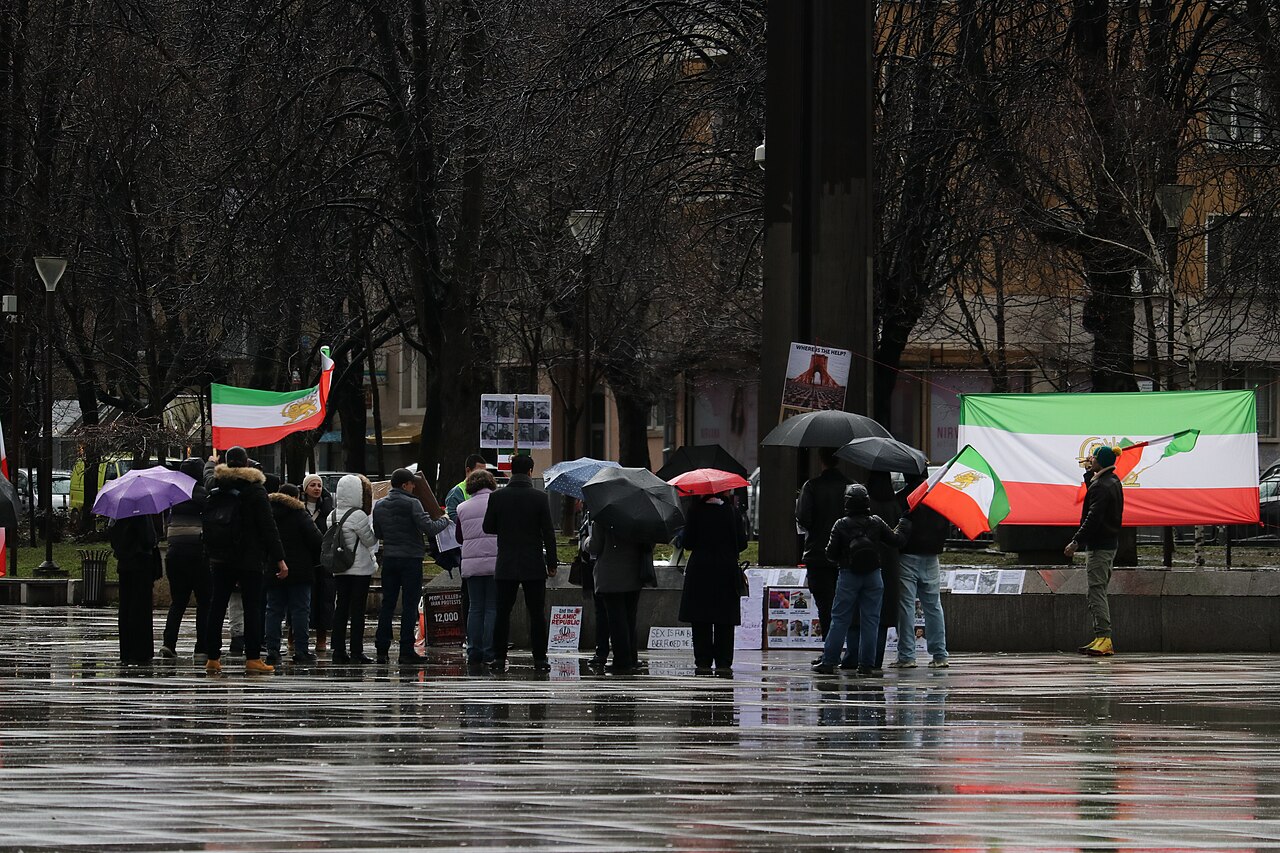
While the Iranian government has publicly celebrated the recent Democratic Party successes in the United States as a decisive rejection of former President Trump’s aggressive policies toward Tehran, the reality on the ground among ordinary Iranians paints a much darker, more complicated picture. Interviews conducted inside Iran reveal a profound skepticism regarding the power of American political shifts to fundamentally alter the trajectory of the Islamic Republic.
Disappointment and Skepticism Over Washington’s Influence
The official narrative from Tehran, which has interpreted the electoral outcome as a victory for opposition to military action, sharply contrasts with the sentiments expressed by citizens. Many Iranians voiced a deep sense of disappointment, regardless of which party secured control of Congress. For many, the central issue transcends the partisan split; they are primarily concerned with which political force in Washington is best positioned to exert meaningful pressure on the authoritarian regime.
Amir, a high school educator, emphasized that the foreign policy decisions made by the United States directly impact their lives, expressing doubt that the Democratic platform possesses the necessary leverage to challenge the Iranian government. Similarly, Neda, a university student specializing in international relations, admitted her hopes lay with a tougher stance from the Republican party, stating that only that political faction could effectively dismantle the current regime. This reflects a widespread expectation that a more confrontational American approach is necessary for change.
A History of Betrayal Shapes Expectations
This disillusionment is rooted in a deep historical memory. Hassan, a civil engineer, drew a parallel between the political choices of the American electorate and the complex coalition that led to the 1979 Iranian Revolution. He suggested that, much like the diverse groups who opposed the monarchy, Americans might be making a similar error by trusting political alliances that ultimately consolidate power in the hands of the clerical establishment.
This historical perspective is powerfully echoed by Arash, a local business owner, who remains deeply wary of political cooperation between liberal and Islamist factions, citing past events where initial allies were systematically sidelined by the ruling powers. For these Iranians, the stakes are intensely personal—concerning economic hardship, restrictions on personal freedoms, and the general uncertainty facing their nation.
The Primacy of Internal Change
Even as the United States faces internal political rivalries, the focus for many Iranians remains fixed on the future of their own country. Mahsa, a nurse from Tehran, indicated that she still wishes for the current president to continue his efforts, illustrating a distinction between American electoral results and their desired outcome for Iran. The collective sentiment suggests that whether Democrats or Republicans win is secondary to the fundamental question: can any political development in Washington ultimately help the Iranian populace regain control over their destiny?
World Views
Coalition Crunch: Eisenkot’s Path to Power Riddled with Internal Political Obstacles
As the political deadlock in Israel continues, Yashar leader Gadi Eisenkot has emerged as the frontrunner to secure the mandate for forming the nation’s next governing coalition, effectively leapfrogging Prime Minister Benjamin Netanyahu. Eisenkot’s bloc, which comprises four Zionist parties, holds 48 seats in the Knesset and has garnered 67 endorsements for the mandate, significantly surpassing the 46 endorsements received by the incumbent prime minister. President Isaac Herzog is set to announce who receives the first opportunity to negotiate a government on Sunday. While this puts Eisenkot in a dominant position, analysts warn that his route to becoming prime minister is fraught with profound ideological and political contradictions.
The 61-Seat Hurdle and Eisenkot’s Dilemma
To achieve a governing majority, Eisenkot must secure the support of at least 13 additional members to reach the critical 61-seat threshold. His quest for a majority hinges on navigating three highly complex and volatile scenarios. The first path involves seeking an alliance with the ultra-Orthodox parties (Haredi). While some Haredi factions, such as United Torah Judaism, have indicated a willingness to shift support away from Netanyahu’s camp, contingent upon concessions regarding military conscription and sanctions, this alliance faces immediate structural challenges.
The Contradictions of Compromise
A surprising shift came from Avigdor Lieberman, a prominent member of the change bloc, who publicly indicated openness to cooperating with the Haredi community to replace Netanyahu. He stated that politicians must demonstrate flexibility and accept difficult compromises. However, Lieberman simultaneously ruled out any minority government, effectively raising the required support to the 61-seat mark. This necessitates the backing of both Haredi groups, including Shas, whose leader has historically maintained close ties with Netanyahu, casting serious doubt on the viability of such a partnership.
Alternative Alliances and Internal Resistance
Eisenkot also explored cooperation with the Arab parties, which hold 19 seats. However, this scenario is blocked by internal dissent within his own bloc. Lieberman explicitly stated his opposition to any government that relies on the participation of the Joint List or Ra’am. Furthermore, Eisenkot’s own conditions for engagement with the Arab parties—including the recognition of Hamas as a terrorist entity—have met with internal resistance from some change bloc members who view this as a breach of election promises.
The final potential route, a national unity government, has been categorically rejected by Eisenkot and his partners, who maintain an urgent need to replace Netanyahu’s leadership. With only a limited period for negotiation, Eisenkot faces a monumental task: reconciling the core principles of his opposition bloc—such as mandatory service—with the concessions demanded by potential partners. If these negotiations fail, the political instability could lead to a new round of elections.
World Views
Survivor of Sydney Terror Attack Passes Away Nearly One Year After Bondi Beach Massacre

The Australian community is mourning the death of Eva Geller, a 90-year-old Holocaust survivor who succumbed to injuries sustained during the deadly Bondi Beach shooting. Authorities confirmed the passing of Ms. Geller in a Sydney hospital, marking the first anniversary of the horrific attack that devastated the Jewish community on December 14 of last year. Ms. Geller was among the dozens of people wounded when two assailants opened fire during a Jewish holiday celebration at the popular coastal location.
The Impact of the December Tragedy
The mass shooting, which occurred during a Hanukkah gathering, resulted in the deaths of 15 people, cementing it as one of Australia’s deadliest incidents in recent memory. Ms. Geller’s ordeal required her to undergo extensive medical treatment, with reports indicating she had been hospitalized multiple times following the incident. New South Wales police confirmed awareness of her passing and stated that they are collaborating with the office of the coroner to determine the next steps.
The perpetrators, identified as Sajid Akram and his son Naveed Akram, were allegedly motivated by the Islamic State. Police were able to take immediate action, shooting Sajid Akram at the scene. Naveed Akram, who survived the initial attack, currently faces multiple serious charges, including 15 counts of murder and a terror offense.
Government Response and Community Grief
The tragedy prompted a significant response from the government. Prime Minister Anthony Albanese expressed deep sorrow regarding Ms. Geller’s death, acknowledging that the pain caused by the awful day continues to affect families and the broader community. He stated that the government was offering support to her relatives, friends, and the Jewish community during this profoundly difficult time.
In the wake of the massacre, a government-backed inquiry specifically focused on rising antisemitism was initiated. This crucial investigation is scheduled to release its findings on December 18, aiming to provide insight into the systemic issues that contributed to the attack. The passing of Ms. Geller serves as a poignant reminder of the enduring trauma inflicted by acts of hatred, even nearly a year after the violence unfolded.
The community is preparing for Ms. Geller’s funeral, which is set to take place in the coming week, providing a solemn opportunity for friends and family to honour her life and resilience.
World Views
Irish Medical Association Pushes Boycott of Drugmaker, Sparking Fears Over Patient Access

A significant ethical debate is unfolding within Irish healthcare as a prominent medical consultants group has advanced a motion advocating for a boycott of Teva Pharmaceuticals, one of Israel’s largest drug manufacturers. This initiative, driven by international scrutiny surrounding the conflict in Gaza, raises serious concerns about the stability of medicine supply and patient access across Ireland. Teva is a major supplier, providing products that account for a substantial portion of prescriptions within the country’s public health system.
The Call for Ethical Procurement
The Irish Hospital Consultants Association (IHCA), which represents specialists working in hospitals, recently endorsed a resolution urging its members to refrain from prescribing or utilizing Teva products when medically suitable alternatives exist. The motion stipulates that this decision must not compromise patient safety or disrupt existing medical treatments. Furthermore, the association pledged to support clinicians who choose to refuse Teva products for moral reasons, assuring them they would not face professional penalties or disciplinary action.
The IHCA stated that these actions stem from substantial ethical worries and global attention focused on the company amid the ongoing war in Gaza. The proposal, put forward by a pediatric orthopedic surgeon, emphasizes that ethical considerations should become a core component of how Irish hospitals and health institutions make decisions regarding pharmaceutical purchases. The surgeon, who has treated families affected by the conflict, expressed profound moral distress, asserting that it is unacceptable for the products he prescribes to potentially contribute, even indirectly, to further violence.
Economic Impact Versus Moral Imperative
The implications of this shift are considerable. Teva is one of the largest providers of prescription drugs to Ireland’s publicly funded health service, and its generic medicines are estimated to have generated substantial economic savings for the country. This introduces a sharp conflict between the moral demands of the anti-war movement and the practical necessity of affordable, readily available treatments for the general public. Industry data indicates that Teva’s generic offerings saved the nation millions of euros in the years leading up to 2018.
International Precedent and Legal Warnings
This debate is not unique to Ireland. Similar actions have been observed in the United Kingdom, where professional bodies representing nurses and pharmacists have ended collaborations with Teva UK due to conflicts with their institutional values. However, legal advocacy groups in the UK have sharply criticized these decisions, warning that healthcare organizations must maintain political neutrality. They argued that professional bodies should not allow themselves to become tools for political boycotts, asserting that their primary duty remains the advancement of patient care.
As the IHCA’s motion moves forward, the focus shifts to how Irish institutions will balance the growing pressure from international campaigns to isolate the Israeli drugmaker against the fundamental mandate of ensuring continuous and accessible care for all patients.
