



Uncategorized
‘Zio Doctors got butthurt’: Sydney doctor leaves prominent position amid accusations of antisemitism
(JTA) — A physician at one of the busiest hospitals in Sydney, Australia, left a prominent position amid accusations of antisemitism and bullying of Jewish colleagues.
Jennifer Martinez, head of sexual assault services at the Royal Prince Alfred Hospital since February 2025, reportedly departed from her role earlier this month even though she was less than halfway through a five-year minimum term.
New South Wales Health began investigating Martinez in August of 2025, after a complaint was filed with NSW Health Minister Ryan Park that June alleging “antisemitic bias” and “bullying behavior” on social media, as first reported by Sky News Australia, now rebranded as News24 Australia.
The complaint, lodged by the Australian Zionist Healthcare Alliance, expressed concern about at least 16 separate incidents, primarily on Instagram but also on other social media networks.
The writers accused her of “targeted online harassment of Jewish and pro-Israel healthcare workers,” as well as of mocking Jewish trauma and using antisemitic slurs, such as “Zio doctors” or “Zio doc flops.”
One post included in the complaint celebrates “when Zio Doctors got butthurt for [tears of joy emoji] emojiing their hysterical accusations & defamatory comments” and features the hashtags “#demons #gronk #gronkisnotajewishsluryougronk,” using an Australian derogatory slang word for a brutish moron. She also appeared to mock 600 Australian Jewish creatives whose private WhatsApp conversations about antisemitism and anti-Zionism had been leaked and whose names were published, leading to harassment.
Martinez also publicly identified herself as the individual behind her social media handle, thereby posing “a serious risk to public trust in the medical profession,” according to the complaint, shared with JTA on Monday.
About 15 months after the NSW Health investigation began, News24 reported last week that the process had concluded and that Martinez had “quietly left her position” at the Royal Prince Alfred Hospital. The News24 report said Martinez did not reply to requests for comment.
Sharon Stoliar, who co-founded the Australian Zionist Healthcare Alliance and filed the complaint, told JTA on Monday that she viewed Martinez’s reported departure as “too little too late, but also a victory in combating antisemitism.”
“She should not have even been given this position in the first place as she had already been quite openly posting some horrific antisemitic content online well before this appointment,” Stoliar said.
“There was either a significant failure of processes by not screening her adequately before appointment, or they did screen her and did not seem to care about her online bullying, discrimination and antisemitism,” she added.
The Sydney Local Health District, which oversees the hospital, did not reply to JTA’s request for comment. However, a district spokesperson told News24 that the department “supports a safe and healthy workplace to enable our staff to provide the highest quality of care” but would not confirm whether Martinez had been terminated.
Stoliar shared with JTA a letter she received from Rebecca Tyson, general manager of the hospital, on Nov. 3. The letter informed her “that the formal investigation has been completed” and “that the conclusions reached were reasonable.”
“As you will appreciate, the outcome of the matter is confidential,” Tyson wrote, adding that “the appropriate action has been taken.”
An email sent by JTA to Martinez’s official NSW Health address bounced back, saying that she is “unavailable and will not be monitoring this inbox.”
Martinez is listed as medical director for an Australian corporate medical and health services firm called TOTIUM, but she only appears on an older “team backup” page rather than on the current staff page. TOTIUM executives did not respond to JTA’s request for confirmation that Martinez works there.
Her Instagram account still exists but lacks any posts or followers. Her most recent social media post that is still viewable is a video on X from November 2023, in which Australian doctors call for a ceasefire in Gaza and “unimpeded humanitarian aid.”
But Stoliar’s complaint, as well as additional information she supplied to investigators at a later date, included numerous screenshots of former posts, many of which have also been shared on local broadcast networks.
Stoliar said she submitted the complaint fairly soon after Martinez’s appointment, but she felt that “it took far too long to see an outcome.” In the aftermath of the Hamas Oct. 7, 2023, attacks on Israel, Stoliar said she has witnessed the emergence of an environment in which regulators “have let antisemitism fester with no consequences.”
“This has emboldened healthcare professionals into thinking they can continue to openly share antisemitic content and discriminate Jewish colleagues,” she added.
The New South Wales Jewish Board of Deputies, the official elected body and umbrella organization for the New South Wales Jewish community, did not reply to JTA’s request for comment.
A few months after Stoliar lodged the initial complaint, Martinez spoke at an October 2025 rally in Sydney, where she characterized herself as the victim.
“Doctors and healthcare workers here in Australia are being doxxed, stalked and are having our jobs threatened. I am one of them,” Martinez said at the rally.
She made these comments after speaking on behalf of Australians who had joined a Gaza-bound flotilla that was intercepted by the Israel Defense Forces.
“They want us to be silent, to be afraid, to disappear. But we will not,” Martinez said. “Our duty is to care for life and defend human rights.”
Stoliar expressed hope on Monday that Martinez’s dismissal from her position “taught her a valuable lesson,” noting that “healthcare professionals are supposed to leave their biases at the door.
This article originally appeared on JTA.org.
The post ‘Zio Doctors got butthurt’: Sydney doctor leaves prominent position amid accusations of antisemitism appeared first on The Forward.
Uncategorized
How one Reform synagogue became a test of religious pluralism in Jerusalem

(JTA) — Forty years ago on Simchat Torah, Eliahu Abergil, the Sephardic rabbi of Jerusalem’s Baka neighborhood, arrived at a service held by the fledgling Kol HaNeshama Reform congregation with a group of followers after learning that women were dancing with Torah scrolls alongside men. The confrontation turned physical, with some of Abergil’s followers trying to wrest the scrolls away from worshippers before police intervened.
New York-born Levi Weiman-Kelman, who was ordained at the Conservative Jewish Theological Seminary, had founded Kol HaNeshama in 1984 in his living room, with many of its early members young English-speaking immigrants settling in the neighborhood.
Four decades later, Kol HaNeshama again faced hostility, with five incidents targeting the Reform congregation over a matter of weeks, including break-ins, vandalism and harassment. Its leaders say intolerance has hardened in Israeli society and have accused political leaders of helping create the climate around the attacks, whether through inflammatory rhetoric or by failing to condemn the attacks.
But at a solidarity gathering in Kol HaNeshama’s sukkah after the latest attacks, Weiman-Kelman, also a former president of Rabbis for Human Rights, pointed to a countervailing change: the circle of people willing to stand with Kol HaNeshama had grown considerably. While in 1986 the communities that rallied around the synagogue were overwhelmingly Reform, this time, Orthodox rabbis and congregations were among those who signed letters of support and came to stand alongside a community whose theology and practices they do not necessarily share.

Oded Mazor, Kol HaNeshama’s current rabbi and a former rabbinical assistant to Weiman-Kelman, said some of the Orthodox communities were explicit: “We’re not Reform, we don’t think like you. But we value you, and we will defend your right to be who you are.”
“It’s no longer only our issue, as Reform Jews, to confront this violence. There’s an understanding that responsibility for a shared, pluralistic and tolerant public space belongs to all of us together,” he said.
Anti-Defamation League CEO Jonathan Greenblatt attended the first Friday services after Sukkot in a show of solidarity with the congregation. “No Jew should feel unsafe because of the way they practice Judaism,” he wrote on X.
Police arrested three minors suspected of involvement in the incidents, which included eggs thrown at worshippers on Rosh Hashanah and objects hurled through a window ahead of Yom Kippur. Nearly two months later, Mazor said the congregation had received no further update on the investigation, and police had not responded to several inquiries from the Jewish Telegraphic Agency.
The youths involved appeared religious but not haredi, according to congregants who interacted with them and the synagogue’s security-camera footage. Congregants also reported harassment and homophobic comments.
A large Pride flag hung on one wall of the sukkah at the solidarity event. The repeated targeting of Pride symbols has convinced Mazor that the attacks were aimed not only at the congregation’s Reform identity but also at its embrace of LGBTQ inclusion.
“They didn’t vandalize Reform prayer books, they didn’t graffiti the walls. They came to tear down a Pride flag and commit a hate crime against a Reform community and the LGBTQ community,” he said.
The crowd in the sukkah, some 200 strong at its peak, reflected a wide cross-section of Jerusalem Jewish life: men with and without kippot, and women with and without head coverings – from kippot to headscarves.
Among them were David Goodman and his wife, Amirit Rosen, the co-rabbis of Moreshet Avraham in Jerusalem’s Armon Hanatziv neighborhood, a congregation affiliated with Israel’s Masorti movement, the Israeli branch of Conservative Judaism.
“An attack on a Jew because of their Jewish identity is an attack on me,” Goodman said. “That’s true when it happens abroad, and all the more so when it happens to my neighbors in Jerusalem.”
The gathering was organized with the support of Reshut Harabim, an umbrella network bringing together more than 65 Jewish organizations and congregations working to promote pluralistic Jewish life in Jerusalem, and as part of a nationwide sukkah initiative run by Shomrim al HaBayit HaMeshutaf bringing Israelis from different religious and political backgrounds together.
Goodman said those networks help explain why the response to the attacks on Kol HaNeshama looks so different from the 1980s.
“What were once disparate communities have become a network that knows how to stand together,” he said. “There is immense power when we cooperate.”
Several Jerusalem organizations later chose Kol HaNeshama to host a memorial marking the anniversary of Prime Minister Yitzhak Rabin’s assassination, as a show of solidarity following the attacks, Mazor said.
Today Kol HaNeshama has about 280 member families and serves a much larger circle of worshippers, including native Israelis and immigrants who grew up Reform, Conservative and Orthodox or with no affiliation.
After the 1986 confrontation, Jerusalem Mayor Teddy Kollek helped the congregation secure a permanent home in Baka. The city leased Kol HaNeshama an abandoned stone building, which it renovated before eventually expanding into the larger complex it occupies today.
While it has deep roots in Jerusalem’s English-speaking immigrant community – and counts New York Times senior correspondent Isabel Kershner, former Israeli ambassador to Germany Jeremy Issacharoff and solar-energy entrepreneur Yossi Abramowitz among its current worshippers – Kol HaNeshama never became simply an expatriate Reform transplant.
Services are more participatory and retain more of the traditional prayer sequence than the formal, cantor-centered style historically associated with classical Reform Judaism, while also incorporating meditation, chanting and elements Mazor said might once have been considered “New Age.” The congregation has also long experimented with liturgy, including gender-diverse language for God, innovations Mazor said later spread to other congregations.
For longtime congregant Laura Zeitlin, Kol HaNeshama became a family home as much as a place of worship. Her son attended the synagogue’s preschool and later celebrated his bar mitzvah there. Zeitlin, who said she did not identify with a particular Jewish denomination while growing up in Argentina, said she was drawn to Kol HaNeshama because she could sit beside her husband and participate fully in services.
Her frustration over the recent attacks was directed not at religious difference itself but at what she saw as a lack of mutual respect. “We have respect for them, but they don’t have respect for us,” she said.
Ezra Ende, rabbi of the Reform congregation HaDror in Jerusalem’s Kiryat HaYovel neighborhood and also involved with Mevakshei Derech in Katamon, said other congregations in Jerusalem, including his own, had also faced threats.
“The reality is that there is more violence in Israel today and all liberal communities are feeling it,” he said.
Jerusalem Mayor Moshe Lion’s response to the attacks was a recurring point of contention among congregants and supporters. Lion spoke privately with Mazor before Yom Kippur and expressed support for the community, but did not publicly name Kol HaNeshama in condemning the attacks, despite calls from Union for Reform Judaism President Rick Jacobs and Gilad Kariv, a Knesset member from the Democrats party, to speak out.
“The fact that Lion didn’t come out and say anything” naming the synagogue “says everything,” Ende said.
Lion later issued a general statement condemning attacks on others’ religious practices, customs and ways of life. His office rejected suggestions that political considerations, including sensitivity to Jerusalem’s large haredi electorate, explained his reluctance to speak publicly about Kol HaNeshama by name.
A spokesperson told JTA that the city had chosen not to draw further attention to the attacks “so as not to escalate things.”
Mazor invited Lion to the Sukkot solidarity gathering, but the mayor declined, citing prior commitments.
Naama Kelman, Weiman-Kelman’s sister and a former dean of Hebrew Union College’s Jerusalem campus – where in 1992 she became the first woman ordained as a rabbi in Israel – noted that Lion had addressed students at HUC about a year earlier. But she suggested Lion may have been more comfortable appearing at HUC because it serves as an event venue as well and is not publicly identified primarily as a Reform institution.
“Lion doesn’t get it,” Kelman said. “This neighborhood is what’s going to keep the city pluralistic.”
Mazor, who was also ordained at HUC, as were his father and sister, said Kol HaNeshama was once the only egalitarian synagogue in that part of Jerusalem; today it sits among Masorti, egalitarian and partnership Orthodox congregations. Even in some mainstream Orthodox synagogues, expanded roles for women have become common, including women dancing with Torah scrolls on Simchat Torah, the practice Abergil railed against in 1986.
Mazor sees that evolution as evidence that attitudes once thought fixed can change with familiarity and exposure.
Kol HaNeshama hosts dozens of school and pre-army academy groups each year, many arriving with little knowledge of Reform Judaism and asking why a Pride flag hangs in the synagogue. “If schools create that encounter, then the conversation happens,” Mazor said. “Without those touchpoints, students will only know what extremists want to tell them about Reform Jews or LGBTQ people.”
Both Kelman and Mazor saw the attacks as part of Israel’s wider political climate, but stressed that antagonism toward Reform Judaism was nothing new. After the 1986 confrontation, then-Sephardic chief rabbi Mordechai Eliahu declared that “there is no freedom of worship in Israel” if that meant equal recognition for different Jewish denominations, while then-Religious Affairs Minister Zevulun Hammer said he supported protection for private worship but opposed “importing problems,” an apparent reference to American-style Jewish pluralism.
Still, Kelman said, “it’s gotten worse.”
The attacks on Kol HaNeshama are “a direct result of the kind of incitement that Ben-Gvir spews, hate and messianic extremist Judaism,” she said, referring to National Security Minister Itamar Ben-Gvir.
Kelman also pointed to comments by other officials mocking Reform Judaism, saying she was “terrified” by what she saw as their contribution to a growing gulf between liberal American Jews and Jewish Israelis. In May, minister May Golan attacked Kariv, a Reform rabbi, in the Knesset, accusing him of “marrying dogs in your bizarre synagogues.” Last year, Likud lawmaker Galit Distel Atbaryan told Kariv, “If you hold a bar mitzvah for a dog, I’ll come and celebrate,” before ordering “the enlightened Reform Jew” removed from a committee meeting she was chairing. The same rhetoric surfaced during one of the Yom Kippur incidents at Kol HaNeshama, when two youths who had been harassing worshippers arrived with a large dog and asked to arrange a bar mitzvah for it.
Mazor called the Oct. 27 parliamentary elections, which produced no clear governing majority and left coalition talks unresolved, critical for the “future of Israel as both a Jewish and democratic state, in which the Jewish character of the state is expressed through its democracy.”
“This is our national home, and we have to make it work,” he said.
This article originally appeared on JTA.org.
The post How one Reform synagogue became a test of religious pluralism in Jerusalem appeared first on The Forward.
Uncategorized
A travel vlogger with 70 million followers asks Israel’s president if backing Israel was ‘stupid or genius’
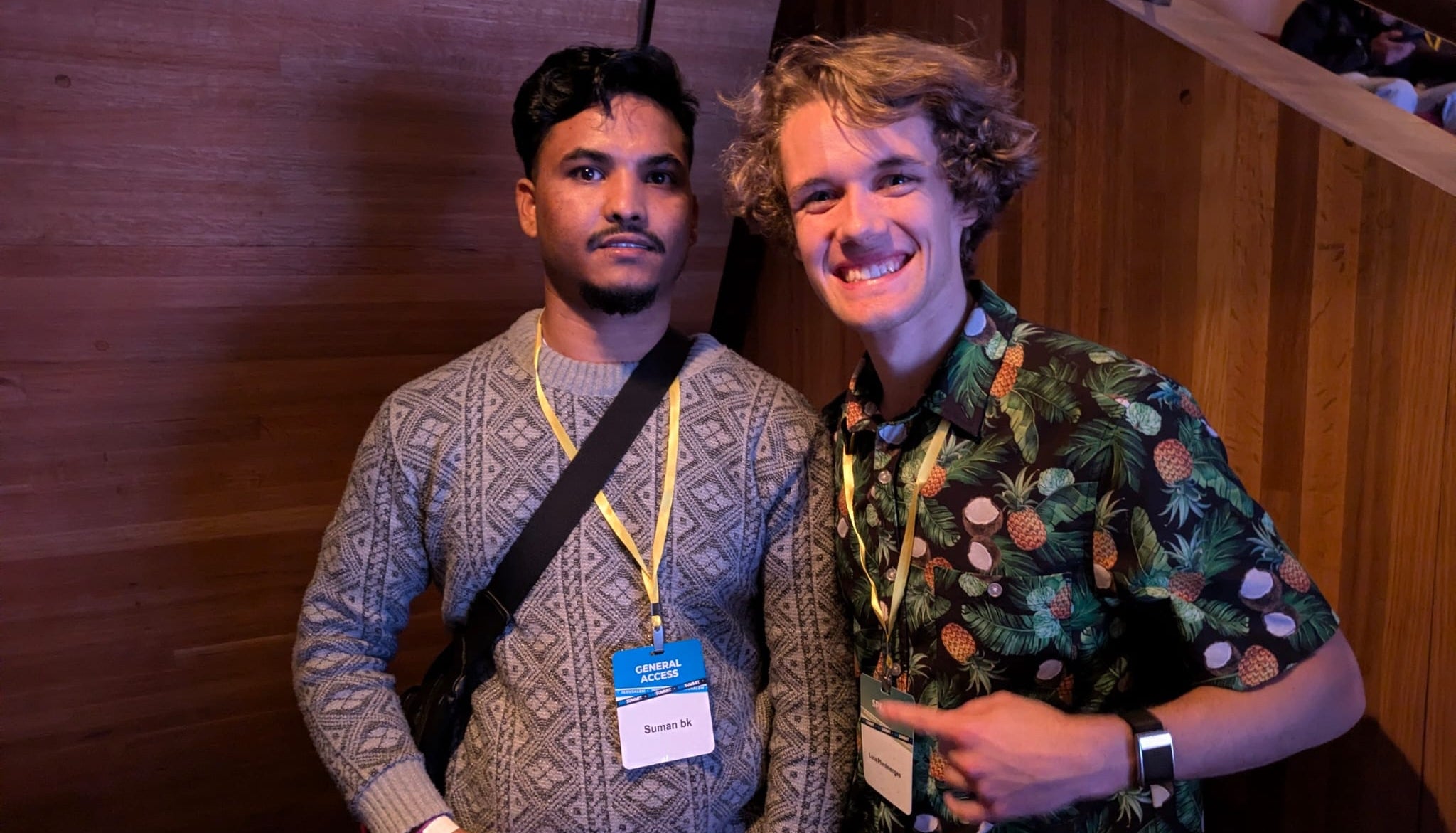
(JTA) — JERUSALEM — With people in banana suits and Marvel superhero costumes milling around the Jerusalem Theatre, the Nas Summit occasionally resembled a Comic Con for AI enthusiasts. Yet Israel advocacy proved almost as prominent at the gathering as discussions about the digital future.
Organized by Nuseir Yassin, the Arab Israeli entrepreneur behind Nas Daily, the massively successful travel vlog, the one-day conference on Nov. 11 drew about 1,000 attendees. It featured Israeli President Isaac Herzog, leading AI entrepreneurs including Mobileye founder Amnon Shashua and Mellanox founder Eyal Waldman, former hostage Omer Shem Tov, television personality Phil McGraw and content creators with a combined social media following exceeding 90 million, according to organizers’ figures.
Held in cooperation with Israel’s Foreign and Tourism ministries, the summit’s dual focus reflected Yassin’s own evolution since the Oct. 7, 2023, Hamas attack, when the Muslim entrepreneur, who grew up in the Arab town of Arraba in northern Israel, became increasingly outspoken about the Israeli-Palestinian conflict.
Introducing Herzog as “my friend,” Yassin, based mostly in the United States, recalled the public declaration he made in the aftermath of the attack.
“I made a statement publicly saying, guys, after Oct. 7, I’m really Israeli first,” he said. “This is my home.”
Yassin, who built his following by traveling the world, said he now felt welcome in only about 20 countries because of his Israeli passport. “How do we get back to 190 countries where you don’t have to say you’re from Greece?”
He turned to Herzog, asking whether his decision to speak out three years earlier had been “stupid or genius.”
Herzog replied: “It was the right moral decision first and foremost. There’s something called moral clarity. There’s nothing greater than defending this incredible nation.”
Last month, Yassin, who has nearly 70 million followers across social media platforms, told the Jewish Telegraphic Agency at an antisemitism conference in Denver that he considered anti-Zionism a form of antisemitism. Describing Zionism as “the most vanilla thing in the world – a group of people wanting a place to live,” he concluded that Israel’s detractors “just really don’t like Jews.”
Yassin’s mother, who attended the summit along with several other relatives, told JTA she was “extremely proud” of her son. His brother-in-law said a sign had recently been erected outside their hometown of Arraba announcing that Nas Daily came from there.
Yassin was also joined by his girlfriend, Aija Mayrock, a Jewish American writer and influencer who travels the world documenting far-flung Jewish communities. Moderating a discussion with her, Yassin admitted, was “the first time I’m nervous.”
Mayrock described criticism from people who argued that dating a Muslim man undermined her mission. But “the beautiful irony of this whole journey,” she told Yassin, “is that the one person to push me to do this was you.”
Israel’s Foreign ministry offered a glimpse into its own efforts to reach audiences that might otherwise ignore official government communications. Michael Freeman, until recently Israel’s ambassador to Nigeria, and Mordechai Rodgold, a former ambassador to Austria who now heads the ministry’s digital diplomacy efforts, discussed the decision to revamp an X account simply called @Israel, separate from its official ministry account, and give its posts a decidedly less diplomatic tone.
“We’ve survived empires. We can survive a comments section,” read one post that attracted more than 42 million views. Another joked, “Israel. Proof that size really doesn’t matter.” The officials acknowledged that the irreverent approach, intended to reach younger audiences, had ruffled feathers both inside and outside the ministry.
Other discussions explored Israel’s regional future, with Israeli-American content creator and activist Rudy Rochman arguing that Israelis and Palestinians must recognize that “there’s no future where either disappears. We’re obviously not going to kill each other. Both of us are staying here.” Shem Tov, the former hostage, joined Yassin and Bahraini peace activist Fatema Alharbi to consider whether Israel had fought its last war.
Herzog also spoke about prospects for regional peace, stressing the need for willing partners and for confronting what he called the “empire of evil from Tehran.” Addressing AI, he said Israel, as “the high-tech nation,” should be “in the top three” globally, citing the country’s capacity for improvisation and thinking outside the box.
Tzvi Feifel, who immigrated from Chicago three years ago, was among the co-founders of Agentic Israel, a free community of some 600 AI professionals in fields ranging from law to hospitality. He was among several attendees wearing AGNTK Israel T-shirts, stylized with Hebrew vowel marks. Feifel, who said he was “excited and optimistic” about AI, also runs Vectis, which helps small and medium-sized businesses integrate AI.
Yassin’s expertise in content creation was one of the things that attracted Feifel to the conference. As AI floods the internet with easily generated material, he said, he is constantly trying to “stay sharp and understand best practices and what people are doing to capture attention in an age where there is so much spam and noise.”
Yitzy Hammer, a lawyer from Modi’in, came to the summit hoping to come to terms with AI and what it might mean for his profession.
“I live very much on the fence between AI doom and gloom and this is the most exciting thing that ever happened to me,” he said.
AI had already transformed legal work, and Hammer said he saw little future for junior lawyers. He called the prospect of widespread job losses leaving people dependent on universal basic income, a guaranteed government payment, “terrifying,” but said AI agents that allow him to accomplish in seconds tasks that once took days were “incredibly exciting.”
A self-described conference junkie who usually skips lectures in favor of networking, Hammer said he had unexpectedly sat through the entire morning’s presentations and came away more confident that people could adapt to the upheaval.
“I found peace here,” he said.
McGraw, the American television psychologist known as Dr. Phil, was less enthusiastic about AI’s application in his own field.
During a virtual appearance moderated by Yassin, McGraw alternated between praise for Israel, which drew enthusiastic applause, and warnings against relying on chatbots for psychological support, particularly for people experiencing suicidal thoughts.
“It’s gonna pump you sunshine and blow smoke up your ass,” he said, adding that as a therapist, “I’m not going to do that.”
For Suman BK, a Nepalese caregiver who arrived in Israel six months ago on a work visa, the technology discussions were less important than the opportunity to meet Yassin and other creators whose work he had followed for years.
“I want to learn from them what I can adopt on a daily basis,” he said. “And to see also the president of Israel.”
With tickets costing between 499 and 999 shekels, BK acknowledged that the conference was a significant expense. Other Nepalese caregivers he knew had declined to attend because of the price.
“It’s expensive but it’s once in a lifetime.”

German travel influencer Luca Pferdmenges, who completed visits to all 195 countries in 2025, offered another perspective on Israel’s appeal.
Pferdmenges, whose social media audience exceeds 3 million, told JTA that Tel Aviv was his favorite city in the world, citing its vegan food and the unusual sense of familiarity he encountered among strangers.
“To me it’s crazy that you can speak to anyone, even the guy next to you on the bus,” he said, adding that even countries renowned for their hospitality rarely matched the openness he experienced in Israel.
Wednesday’s summit marked his 17th visit to Israel since 2018.
The conference concluded with an after-party featuring Israeli band Yemen Blues, as attendees joined Yassin and the other presenters onstage to dance.
Yassin has previously spoken about eventually returning to live in Israel, although in an interview last year he said he did not expect to move back within the next decade, explaining that he wanted to establish himself as an entrepreneur before devoting more attention to regional bridge-building. Living in Israel, he said, would inevitably draw him further into the Israeli-Palestinian conflict.
Asked by JTA on Wednesday whether holding the summit in Israel rather than elsewhere was a deliberate choice, he replied without hesitation.
“Of course. That’s the whole point. I love it here.”
This article originally appeared on JTA.org.
The post A travel vlogger with 70 million followers asks Israel’s president if backing Israel was ‘stupid or genius’ appeared first on The Forward.
Uncategorized
How Stanley Kubrick created a Jewish universe without Jews
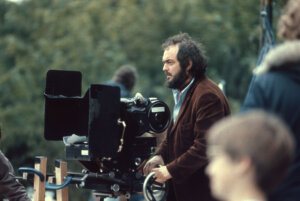
Recently, while watching the new 4K transfer of Lolita in Criterion’s enormous new Stanley Kubrick set, I found myself lingering over an exchange near the start of the film. Humbert Humbert (James Mason) has come to murder Clare Quilty (Peter Sellers), who greets the revolver pointed at the lapel of his pajama with an objection to its owner’s background. “You are either Australian or a German refugee. This is a gentile’s house. You’d better run along,” Sellers mutters with sangfroid. The remark comes verbatim from Nabokov’s novel. Kubrick, a voracious, eclectic reader and an inventive adapter, chose to keep it and put it in the mouth of a Jewish actor.
As a budding cinephile in the late 1990s, I decided to anoint Kubrick my favorite director. When I learned he was Jewish, while preparing a school report on him, I didn’t know what to make of this odd fact. His films gave me very little help. Decades later, I’m still grappling with Kubrick’s small yet profound output — 13 feature films spanning half a century — and how being Jewish helped inform his distinctive cinematic universe. As several scholars have observed, it is largely a universe without Jews, yet one created with an outsider’s suspicion, curiosity and maybe even secret knowledge.
In 7th grade, I made a Geocities website devoted to Kubrick and Peter Greenaway, another director with a baroque aesthetic who was my other favorite auteur du jour. At that time, I was drawn to directors whose films were so visually opulent that they announced themselves almost before anything happened.
My mother had forbidden me from watching A Clockwork Orange, for obvious reasons, which is why I immediately grabbed a VHS off the shelf of a video store on the Upper West Side, long gone now, whose employees were so terminally bored that an adolescent boy could have easily rented a double feature of Deep Throat and Debbie Does Dallas. A Clockwork Orange was the first Kubrick film I saw and it overwhelmed me, not only because it was brutal and disturbing, but because it looked, sounded and felt like nothing else. As I made my way through Kubrick’s catalogue, I understood that these were films to become absorbed in, to revisit endlessly and learn by heart. They helped form my sense of what I wanted from movies.

The boy who taught himself HTML to design that fansite would have wanted The Complete Kubrick very badly. Nearly three decades after the director’s death, Criterion’s lavish boxset is the first time Kubrick’s entire cinematic output, including three shorts, has been gathered in one place. It occupies 30 discs, includes over 25 hours of supplements, is housed in lavish, luxurious packaging and arrives with a ridiculous list price of $599.95. The timing is curious: Kubrick’s centenary falls in 2028; the 30th anniversary of his death in 2029.
In the decades since Kubrick’s death, the cinematic canon has been reshaped several times over. It has been particularly fascinating to follow the changing reputation of Kubrick’s films. When I was growing up, 2001 and Dr. Strangelove were considered the obvious summits; Barry Lyndon, which was hailed upon its release in 1975 but was somewhat forgotten in the home video era (watching a slow-moving historical epic on a pan-and-scan VHS on a small, boxy tube did the film few favors), is again considered one of his greatest achievements. The Shining and Eyes Wide Shut, later works which many critics treated as disappointments, are now among his most analyzed and culturally influential.
Devotion to Kubrick’s labyrinthine works can take extreme forms. Rodney Ascher’s documentary, Room 237 (2012), which would have made an excellent supplement here, brings together viewers who have found radically different films inside The Shining. The historian Geoffrey Cocks, who has studied Kubrick’s preoccupation with Nazi Germany, reads it in the shadow of the Holocaust. Elsewhere in the documentary, The Shining is treated as an allegory of the genocide of Native Americans and a confession that Kubrick helped fake the moon landing. Eyes Wide Shut has acquired a more lurid posthumous life through claims that Kubrick was trying to expose a murderous network of elite pedophiles connected to Jeffrey Epstein who secretly run the world: in this outlandish telling, Warner Bros. executives had him killed, and the evidence (the missing 20 minutes that hardcore conspiracists refer to) was cut from the film.
I confess to finding that theory as addictive as it utterly bonkers. (It’s a very entertaining rabbithole to go down.) I’ve never finished arguing with Eyes Wide Shut, albeit for very different reasons. Around the time that I discovered Kubrick, I learned that he was shooting his first movie since Full Metal Jacket, which had been, up to the point, the only Kubrick film released in my lifetime. I became obsessed with the top secret project about which little was publicly known, downloading its minute-long trailer byte by byte (an operation that took an entire afternoon in 1998) and tracking down the Arthur Schnitzler novella, Traumnovella, or Dream Story, that the film was supposedly based on. Up until his death, in March 1999, Kubrick did his utmost to tease the audience, spreading and nurturing rumors that this was going to be the most risqué and explosively, explicitly sexual film ever made. (Why this speculation appealed to a 13-year-boy doesn’t need spelling out.)
At 14, I managed to attend a sneak preview screening of Eyes Wide Shut. I expected a revelation and came away crushed. By then Kubrick was dead; this would be the only new film of his I could ever anticipate. There was something profoundly frustrating about being left with this one, with its slow, often banal conversations, solemn sexual pageantry (a far cry from the titillation we’d been promised) and New York streets that seemed to belong nowhere. I still go back and forth between thinking the film is a masterpiece and elaborate failure. (I personally doubt that Kubrick had finished tinkering with it. Could such an infamously perfectionist director have failed to notice the sound man reflected in a mirror in one of the film’s early scenes and subsequently scrubbed out digitally? What else would Kubrick have changed if he could have?)
When watching Eyes Wide Shut, it’s instructive to recall that at one point Kubrick considered casting Steve Martin in the main role. If Tom Cruise isn’t exactly the clueless simpleton of The Jerk (a film that Kubrick loved), for most of Eyes Wide Shut’s two and a half hours, his combination of confidence and obliviousness makes him something of a Candide-esque hero. Cruise’s suave, handsome assurance keeps rubbing up against things it cannot comprehend, let alone control. This is the engine of the film’s sly comedy, which crescendoes in Cruise’s “unmasking” during the glacial orgy and the campy “sacrifice” that follows. How a viewer responds to such scenes determines whether he or she will go along with the film’s weirdly ambling nocturnal set pieces or find the whole thing unbearable.

The film has stayed in my senses through years of misgivings. Its social dynamic has also become clearer. Cruise’s character is sufficiently inside the world of the rich and powerful, as personified by Syndey Pollack’s Ziegler, to be invited to his townhouse for a sumptuous Christmas party — the film’s first grand set piece — and then summoned discreetly by the host when a prostitute overdoses upstairs. He is a useful physician with a reassuring bedside manner. Two hours later, after Cruise tries and fails to infiltrate the dangerous erotic power base of the masters of the universe, Ziegler over a red billiard table, explains how little the doctor’s professional competence entitles him to know or participate in.The distinction between belonging and being admitted can seem insignificant until someone decides to enforce it. At a certain point, you run out of passwords.
Kubrick knew something about arranging those distinctions to his own advantage. The Jewish doctor’s son from the Bronx became an English country-house owner who could summon Hollywood executives across the Atlantic. Warner Bros. financed and distributed his films while granting him extraordinary freedom. The Warner Bros. chairman and CEO Terry Semel recalled flying to London to read scripts Kubrick would not send to California; a copy would arrive under his hotel-room door. Here was an outsider who had secured an unusually powerful place inside the system. He could look at its rituals with amusement while conducting elaborate rituals of his own.
That duality seems more illuminating than the familiar picture of a remote intelligence contemplating humanity from above. Kubrick’s camera is luxuriously attentive to the things his characters desire: the candlelit room, the mansion, the uniform, the beautifully appointed bathroom. Wealth and rank are seductive in these films, even when their possessors behave monstrously.
To this day, A Clockwork Orange remains my favorite among his films. Its pleasures are often on the surface: the Korova milkbar’s kinky white female statues serving as tables and dispensing drug-laced milk – they were designed by Liz Moore and inspired by the work of the British pop artist Allen Jones – the brutalist concrete glimpsed in the film’s few exterior shots, the dancing Christs in Alex’s bedroom, Malcolm McDowell’s single false eyelash and insinuating gaze. The film has a nasty lightness that still astonishes me. Everything about the film, even the shocking scenes of violence and rape, seems designed to produce in the viewer an intense pleasure — often followed by a sense of disgust for finding it all so exhilarating. Kubrick’s knack for selecting and editing to music is virtually unmatched in the history of cinema. Rossini’s The Thieving Magpie sends a gang fight skipping along; bodies collide with the precision and extravagance of a comic ballet. After A Clockwork Orange, “Singin’ in the Rain” never sounded the same.

The soundtrack of a Kubrick film bores its way into memory along with the images, until a piece of music can seem to contain a fully-realized scene. The circling spacecraft in 2001 acquires the poise of ballroom partners through Johann Strauss’s Blue Danube. Handel’s Sarabande gives the foolish, deadly business of honor in Barry Lyndon a heavy, implacable tread. His choices could be startlingly current: György Ligeti’s Requiem and Lux aeterna were completed in 1965 and 1966, barely before the film’s 1968 release. Later came Krzysztof Penderecki alongside the earlier Bartók in The Shining. Audiences entering a mainstream movie found themselves listening to some of the most adventurous, avant-garde music in Europe.
The Jewishness I didn’t know what to do with in 7th grade has acquired more texture through the books and testimony that have appeared since Kubrick’s death. Scholars like Nathan Abrams and David Mikics have traced his intellectual formation and his attachments to European Jewish writers. Kubrick tried to adapt Stefan Zweig’s Burning Secret, a 1913 novella about a rakish baron who befriends a 12-year-old boy in order to seduce his mother, before he turned his attention to Traumnovelle. His admiration for the Austrian-Jewish director Max Ophüls, who also adapted Schnitzler in La Ronde, offers another connection to the impossibly sophisticated and profoundly Jewish world of fin-de-siècle Vienna. Kubrick harnessed Ophüls’ fluid mobile camera, the unsentimental sexual bargaining, the casual (and not so casual) cruelty that supposedly civilized people inflict on each other. Kubrick’s European taste was an active part of his American filmmaking.
Since his death and the opening of his archives, even Kubrick’s unmade films have acquired remarkable solidity. In 2005 I wrote in these pages about Aryan Papers, Kubrick’s planned adaptation of Louis Begley’s Wartime Lies. Its Jewish boy and his aunt survive under Catholic identities; the question of who might pass, and who would be recognized, is a matter of life and death. The project remains among the scripts, research and photographs he left behind. His meticulous years’-long research into Napoleon received its own lavish afterlife in Taschen’s Stanley Kubrick’s Napoleon: The Greatest Movie Never Made. (Much of that exacting preparation eventually went into Barry Lyndon.)
The posthumous rediscovery of the atmospheric photographs that the young Kubrick shot for Look and other magazines in the late 1940s, has been another revelation. Already as a teenager, his eye was remarkably assured. These pictures show us a young man with a deep curiosity about what setting, atmosphere, clothing and makeup can reveal about people as well as a preoccupation with telling stories with images. One of Kubrick’s senior colleagues was Diane Arbus, to whom he would pay homage decades later with the immortally unsettling image of the Grady twins in The Shining.

Criterion’s set brings together the director’s juvenalia, including Day of the Fight, his 1951 documentary about the boxer Walter Cartier, which grew out of a Look assignment, and offers a surprising connection to his second feature, the atmospheric and pulpy noir, Killer’s Kiss. His debut feature, the existential war fable Fear and Desire, is a shakier proposition. Kubrick tried to suppress it, and its strained allegory and uncertain acting (it can feel like a discarded “Twilight Zone” episode) make his embarrassment easy to understand. It is no rediscovered masterpiece and I imagine that Kubrick would wince if he were forced to watch the 4K transfer included in the set.
In the decades since his death, Kubrick has been brought considerably down to earth through family recollections (he loved cats, low-brow cinema and was a wonderful dancer, according to widow Christiana, and his daughters) and Robert P. Kolker and Abrams’s comprehensive 2024 biography. Criterion includes a restored version of Vivian Kubrick’s Making “The Shining,” a rare glimpse of him on set, talking with his parents, working through thorny logistical problems and tormenting Shelley Duvall to force a performance of sheer terror out of her. (It’s hard to watch. At one point, he even tells the crew, “Don’t sympathize with Shelley. It doesn’t help her.”) It’s also a reminder that even the most individual and exacting of auteurs works with collaborators to bring his visions to life.
So many films now seem small by design, even when considerable money has gone into them. (Is it any wonder that Paul Thomas Anderson and Christopher Nolan, arguably today’s biggest studio auteurs, are hardcore Kubrickians?) Kubrick’s films continue to demand so much of our attention because we feel that their images contain so much. He could produce that sense of vastness and of meaning in a voyage across the universe or a jealous husband’s walk around a few city blocks. After all these years, I sometimes think I know my way around his films. Then a familiar line makes me wonder how much I’ve missed.
I’m in no hurry to run along.
The post How Stanley Kubrick created a Jewish universe without Jews appeared first on The Forward.
