



World Views
Eroding Foundations: Germany’s Decades-Long Commitment to Israel Faces Critical Strain

The long-standing German policy of affirming Israel’s right to exist, often defined by the concept of ‘Staatsräson,’ is experiencing a profound crisis. While former Chancellor Angela Merkel recently reiterated her support for this foundational principle, the political landscape and public sentiment suggest the historic commitment is rapidly fraying. Data indicates a sharp decline in public approval, coinciding with a dramatic surge in antisemitic incidents across the nation, forcing a critical re-evaluation of Germany’s role in European Jewry.
Shifting Political and Public Consensus
The philosophical underpinning of this relationship is already undergoing subtle changes at the highest levels. While Merkel maintained her stance in recent interviews, her successor, Chancellor Friedrich Merz, has moved away from the specific terminology, emphasizing instead an ‘unchangeable core’ of German-Israeli ties. However, the real challenge is societal. Polls reveal that public opinion is trending sharply downward; in 2025, only 36 percent of Germans held a positive view of Israel, while a recent survey indicated that 73 percent viewed the country unfavorably.
The Rising Tide of Extremism
This shift in sentiment occurs against a backdrop of escalating domestic threats. German authorities recorded 6,548 antisemitic offenses in 2025, a figure nearly four times higher than the 2001 count. Alarmingly, close to half of these reported incidents contained references to Israel. Furthermore, internal Jewish communities report heightened anxiety; 86 percent of German Jews stated that antisemitism had intensified over the preceding five years, prompting a significant portion to consider emigration.
The Pressure Points on German Policy
The historical commitment, which originated in post-war agreements, was never a popular mandate but an elite political choice. Today, that choice is under siege from opposing political flanks. The far-right has criticized the concept of a ‘cult of guilt,’ while segments of the activist left advocate for a decoupling of German responsibility from the Israeli state. Diplomatically, the conflict in Gaza and proceedings at the International Court of Justice have made maintaining the relationship significantly more expensive. Politicians are increasingly tempted to capitalize on these emotional divides, using anti-Israel sentiment to mobilize voters and bypass political taboos.
Despite the intense pressure, the commitment remains deeply personal for many. For the majority of German Jewish citizens, the connection to Israel transcends foreign policy; it is a religious and cultural imperative. Maintaining this special relationship, analysts argue, is not a matter of glorification, but a necessary strategy. By upholding the connection, Germany can effectively counteract domestic antisemitism, preventing the past from breeding further intolerance, and reinforcing its role as a stabilizing force in Europe.
World Views
Global Reliance on Israeli Innovation Clashes with International Acceptance of Statehood
A profound and growing contradiction has emerged in international affairs: the world enthusiastically leverages Israeli technological advancements and scientific breakthroughs while simultaneously expressing discomfort with the existence of the Jewish state. This dynamic presents a stark global paradox, where nations benefit immensely from Israel’s intellectual and industrial output, yet appear hesitant to grant full acceptance to its national sovereignty. Observers note that the international community seems selective, valuing the outcomes of the Jewish nation while questioning the fundamental right to its self-determination.
The Engine of Innovation
Since its establishment in 1948, the small nation has rapidly transformed itself into a global hub of scientific and technological excellence. These achievements, sources argue, were not facilitated by massive natural resources, but rather by the resilience, determination, and creativity of its populace. Israeli contributions span critical sectors worldwide, making its influence undeniable. These include:
- Medical Advancement: Significant research into treatments for severe diseases and the establishment of international field hospitals.
- Water and Agriculture: Pioneering drip irrigation methods that help farmers across continents conserve resources and boost yields.
- Security and Tech: Expertise in missile defense, cybersecurity, and advanced navigation systems, which are critical assets for international partners facing complex threats.
The nation’s institutions and researchers collaborate globally, and its humanitarian efforts, such as those involving cardiac care for children in developing nations, demonstrate a significant commitment to international welfare.
A History of Resilience and Renewal
The narrative of the Jewish people maintaining connection to their ancestral homeland for millennia, surviving mass persecution and expulsions, underscores the historical weight of the 1948 renewal. The establishment of a national home provided a refuge for persecuted communities worldwide. Despite this history, the state continues to face persistent international movements that challenge its fundamental right to exist. The argument is put forward that humanity would be deprived of valuable scientific discoveries and opportunities for progress if this nation had never achieved its independence.
Sovereignty as an Inherent Right
The core of the debate, according to analysts, rests on the distinction between utility and inherent rights. The source material strongly asserts that a nation’s right to exist cannot be contingent upon its economic usefulness or the patents it holds. It is argued that the international community must recognize that Jewish self-determination is not a temporary concession but an enduring, ancient right. The state does not need to justify its presence through its medical patents or military capabilities. Instead, the world must reconcile its appreciation for the nation’s immense contributions with its refusal to acknowledge the legitimacy of its independence. This unresolved tension defines the current geopolitical landscape.
World Views
Prominent Comedian Faces Fierce Backlash Over Qualified Apology for Antisemitic Language

A high-profile comedian has faced intense criticism from Jewish and pro-Israel advocacy groups following his recent public apology for using a deeply offensive antisemitic slur. The incident occurred when the actor, known for his work on ‘Saturday Night Live,’ referenced a specific slur while discussing Russian-born singer Regina Spektor on his podcast, ‘Las Culturistas.’
The Incident and the Slur’s History
The controversial remarks surfaced in a clip from the October 14th episode of the podcast, which the comedian co-hosts. During an interview, Yang responded to a comment about Spektor by stating, ‘Yeah, she’s Zio.’ The term ‘Zio’ is recognized as a slur rooted in white supremacist rhetoric, having been popularized by figures including former Ku Klux Klan leaders. Its use, particularly in digital spaces, is often employed by hate groups as a coded way to target supporters of Israel while avoiding content moderation systems. Spektor herself has a history tied to the conflict, having fled antisemitism in the former Soviet Union and subsequently voicing support for hostages following the October 7th attacks.
The Qualified Response Sparks Outrage
After the term gained traction online, Yang issued a statement of regret. He indicated that he was sorry for utilizing the terminology, claiming he was unaware of its hateful history. However, his statement was further complicated because he did not apologize for his overall critique of the artist. This qualified response immediately drew condemnation from advocacy organizations. Jonathan Greenblatt, who serves as the chief executive of the Anti-Defamation League, strongly criticized the actor, labeling the apology as ‘insufficient.’ Greenblatt argued that the issue was not simply the use of a slur, but the manner in which the actor focused on the ‘wrong’ term rather than the offense itself. Furthermore, Greenblatt sharply questioned the actor’s subsequent social media activity, calling the combined effort an act of prejudice rather than political commentary.
Political Context and Broader Concerns
The controversy gained further intensity due to the actor’s subsequent social media post, which paired his apology with the slogan, ‘At the same time, Free Palestine.’ This juxtaposition led groups like the Campaign Against Antisemitism to argue that an apology should never be tied to a political banner. They questioned the pattern of qualified apologies, noting that many activists insist that antisemitism must be separated from criticism of Israel, yet often attach political caveats to their own apologies. Other grassroots movements emphasized that dignified discussion of Jewish artists is essential, regardless of disagreement with their views. The podcast series itself, which recently partnered with major streaming services, has been noted for featuring guests who have openly expressed anti-Israel sentiments, adding a layer of complexity to the cultural and political climate surrounding the incident.
World Views
International Court Decision on Myanmar Raises Legal Stakes for Israel-Gaza Conflict
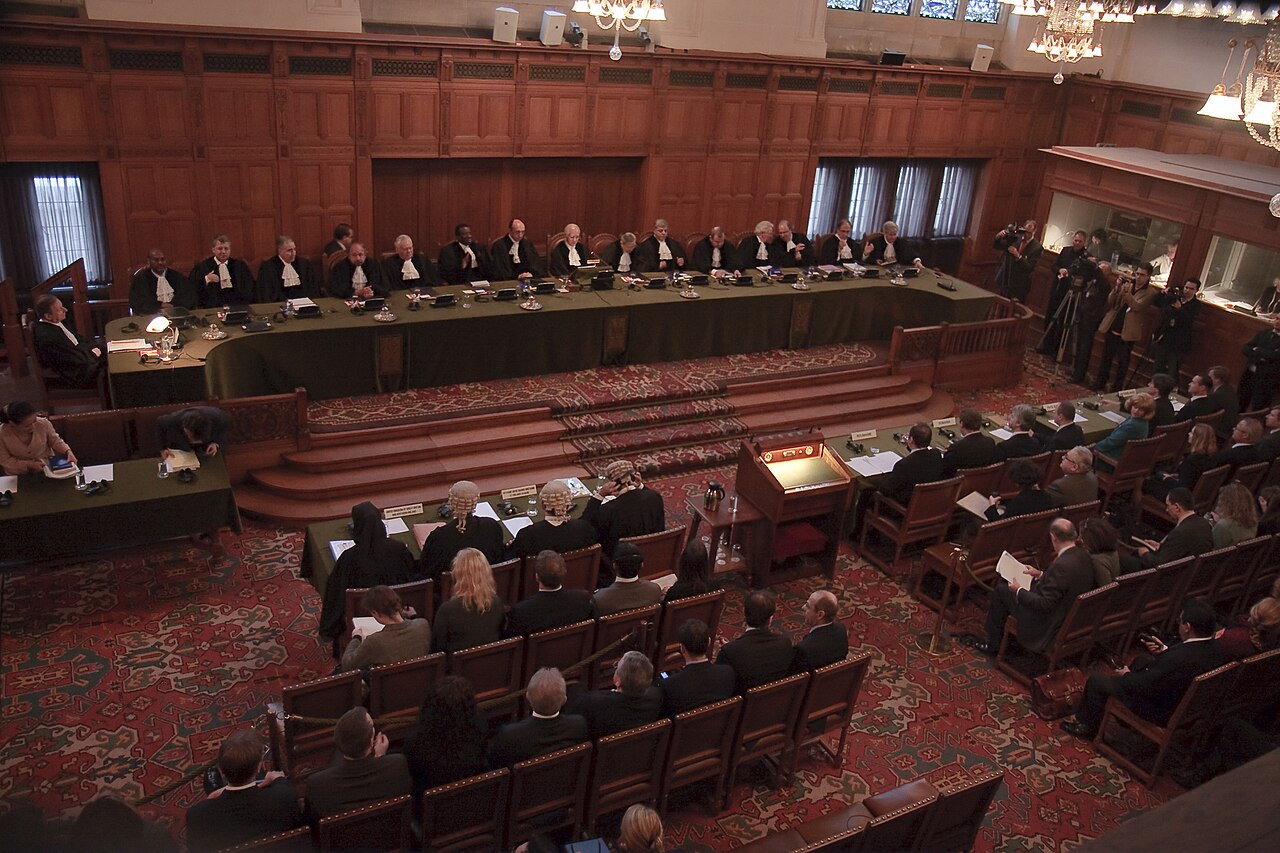
A recent, closely divided ruling by the International Court of Justice (ICJ) concerning Myanmar has sparked intense debate among legal scholars, raising significant concerns about its potential implications for the ongoing legal challenges facing Israel regarding the Gaza conflict. The UN’s highest court found that Myanmar was responsible for genocide against the Rohingya Muslim community during a military operation in 2017. While the court insisted it had not altered the foundational legal requirements of the convention, critics argue that the decision effectively lowered the threshold for proving the crime.
Shifting Legal Precedents
The 9-6 decision, which marked the first time the court held a state directly liable for genocide, was met with immediate scrutiny. Although some legal experts maintain that the official legal bar—requiring only a reasonable inference supported by conclusive proof—remains unchanged, analysts point to a critical shift in how evidence is evaluated. Experts stated that the court’s willingness to consider a wide array of evidence, rather than focusing solely on the military actions themselves, has made establishing genocidal intent more accessible. The court considered not only the 2017 military campaign but also decades of discriminatory legislation, anti-Rohingya rhetoric, and forced displacement when concluding that an intent to destroy a substantial population existed.
Challenges to Israel’s Defense
This expanded method of evidence assessment could complicate Israel’s defense against South Africa’s allegations that its military campaign in Gaza violates the 1948 Genocide Convention. Genocide requires demonstrating an intent to destroy a specific national, ethnic, or religious group. In the Myanmar case, the ICJ found that the cumulative evidence demonstrated this intent. If applied to Gaza, the court could permit consideration of Israeli policies predating the October 7, 2023 attack, including earlier conflict rounds and the blockade.
Legal observers warned that the ruling places greater weight on international investigative reports, a factor that is particularly contentious for Israel, which has frequently challenged the impartiality of UN inquiries into its conduct. Critics noted that the court’s approach could lend greater legal credence to disputed UN findings that accuse Israel of genocide, despite serious questions surrounding the accuracy of those investigations. Experts highlighted that the court’s focus on systematic targeting, as seen in Myanmar, contrasts sharply with Israel’s stated goal of confronting Hamas, an armed militant group embedded within civilian areas.
Future Outlook and Expert Warnings
While the legal framework requires distinguishing between political rhetoric and actual military policy, the ruling introduces new complexities. Legal commentators warned that the expansive interpretation of evidence, coupled with the court’s reliance on international bodies, risks transferring the burden of proof onto the accused state. Some legal professionals condemned the outcome as a result of politicization within international tribunals, suggesting the analysis was ‘entirely incoherent.’ The situation underscores the high legal stakes as Israel continues to maintain its operations are solely aimed at dismantling Hamas, while South Africa maintains that the destruction and humanitarian conditions in Gaza demonstrate genocidal intent.
