



World Views
International Court Decision on Myanmar Raises Legal Stakes for Israel-Gaza Conflict
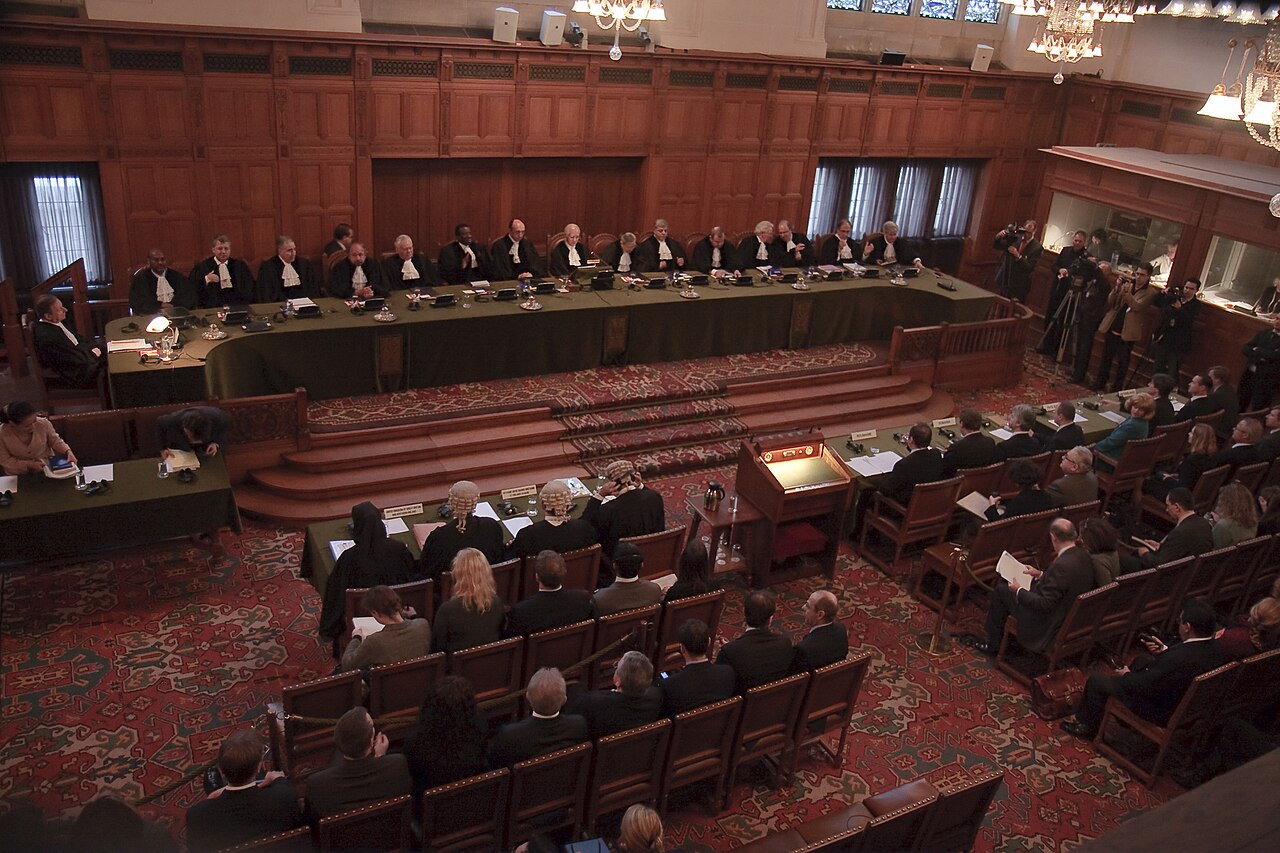
A recent, closely divided ruling by the International Court of Justice (ICJ) concerning Myanmar has sparked intense debate among legal scholars, raising significant concerns about its potential implications for the ongoing legal challenges facing Israel regarding the Gaza conflict. The UN’s highest court found that Myanmar was responsible for genocide against the Rohingya Muslim community during a military operation in 2017. While the court insisted it had not altered the foundational legal requirements of the convention, critics argue that the decision effectively lowered the threshold for proving the crime.
Shifting Legal Precedents
The 9-6 decision, which marked the first time the court held a state directly liable for genocide, was met with immediate scrutiny. Although some legal experts maintain that the official legal bar—requiring only a reasonable inference supported by conclusive proof—remains unchanged, analysts point to a critical shift in how evidence is evaluated. Experts stated that the court’s willingness to consider a wide array of evidence, rather than focusing solely on the military actions themselves, has made establishing genocidal intent more accessible. The court considered not only the 2017 military campaign but also decades of discriminatory legislation, anti-Rohingya rhetoric, and forced displacement when concluding that an intent to destroy a substantial population existed.
Challenges to Israel’s Defense
This expanded method of evidence assessment could complicate Israel’s defense against South Africa’s allegations that its military campaign in Gaza violates the 1948 Genocide Convention. Genocide requires demonstrating an intent to destroy a specific national, ethnic, or religious group. In the Myanmar case, the ICJ found that the cumulative evidence demonstrated this intent. If applied to Gaza, the court could permit consideration of Israeli policies predating the October 7, 2023 attack, including earlier conflict rounds and the blockade.
Legal observers warned that the ruling places greater weight on international investigative reports, a factor that is particularly contentious for Israel, which has frequently challenged the impartiality of UN inquiries into its conduct. Critics noted that the court’s approach could lend greater legal credence to disputed UN findings that accuse Israel of genocide, despite serious questions surrounding the accuracy of those investigations. Experts highlighted that the court’s focus on systematic targeting, as seen in Myanmar, contrasts sharply with Israel’s stated goal of confronting Hamas, an armed militant group embedded within civilian areas.
Future Outlook and Expert Warnings
While the legal framework requires distinguishing between political rhetoric and actual military policy, the ruling introduces new complexities. Legal commentators warned that the expansive interpretation of evidence, coupled with the court’s reliance on international bodies, risks transferring the burden of proof onto the accused state. Some legal professionals condemned the outcome as a result of politicization within international tribunals, suggesting the analysis was ‘entirely incoherent.’ The situation underscores the high legal stakes as Israel continues to maintain its operations are solely aimed at dismantling Hamas, while South Africa maintains that the destruction and humanitarian conditions in Gaza demonstrate genocidal intent.
World Views
Prominent Comedian Faces Fierce Backlash Over Qualified Apology for Antisemitic Language

A high-profile comedian has faced intense criticism from Jewish and pro-Israel advocacy groups following his recent public apology for using a deeply offensive antisemitic slur. The incident occurred when the actor, known for his work on ‘Saturday Night Live,’ referenced a specific slur while discussing Russian-born singer Regina Spektor on his podcast, ‘Las Culturistas.’
The Incident and the Slur’s History
The controversial remarks surfaced in a clip from the October 14th episode of the podcast, which the comedian co-hosts. During an interview, Yang responded to a comment about Spektor by stating, ‘Yeah, she’s Zio.’ The term ‘Zio’ is recognized as a slur rooted in white supremacist rhetoric, having been popularized by figures including former Ku Klux Klan leaders. Its use, particularly in digital spaces, is often employed by hate groups as a coded way to target supporters of Israel while avoiding content moderation systems. Spektor herself has a history tied to the conflict, having fled antisemitism in the former Soviet Union and subsequently voicing support for hostages following the October 7th attacks.
The Qualified Response Sparks Outrage
After the term gained traction online, Yang issued a statement of regret. He indicated that he was sorry for utilizing the terminology, claiming he was unaware of its hateful history. However, his statement was further complicated because he did not apologize for his overall critique of the artist. This qualified response immediately drew condemnation from advocacy organizations. Jonathan Greenblatt, who serves as the chief executive of the Anti-Defamation League, strongly criticized the actor, labeling the apology as ‘insufficient.’ Greenblatt argued that the issue was not simply the use of a slur, but the manner in which the actor focused on the ‘wrong’ term rather than the offense itself. Furthermore, Greenblatt sharply questioned the actor’s subsequent social media activity, calling the combined effort an act of prejudice rather than political commentary.
Political Context and Broader Concerns
The controversy gained further intensity due to the actor’s subsequent social media post, which paired his apology with the slogan, ‘At the same time, Free Palestine.’ This juxtaposition led groups like the Campaign Against Antisemitism to argue that an apology should never be tied to a political banner. They questioned the pattern of qualified apologies, noting that many activists insist that antisemitism must be separated from criticism of Israel, yet often attach political caveats to their own apologies. Other grassroots movements emphasized that dignified discussion of Jewish artists is essential, regardless of disagreement with their views. The podcast series itself, which recently partnered with major streaming services, has been noted for featuring guests who have openly expressed anti-Israel sentiments, adding a layer of complexity to the cultural and political climate surrounding the incident.
World Views
Progressive Wave Challenges Democratic Senate Leadership, Citing Need for Change

A significant ideological shift is underway within the Democratic caucus, with progressive voices actively challenging the established leadership of Senator Chuck Schumer. The push for a new majority leader has gained traction, fueled by figures like actor Mark Ruffalo, who publicly endorsed Maryland’s Senator Chris Van Hollen. Ruffalo’s rationale centered on the need for leadership free from what he described as ‘entrenched religious beliefs and loyalties,’ suggesting that the pursuit of justice must supersede rigid affiliations.
The Call for a New Direction in Washington
Van Hollen, a vocal critic of Israel who has championed investigations into the nation’s human rights record, has garnered substantial backing. His support includes three veteran senators—Bernie Sanders, Elissa Slotkin, and Jeff Merkley—along with two incoming senators. This movement represents a growing dissatisfaction among progressive members with the current leadership structure, which has been dominated by Schumer since 2017.
Schumer, who holds the distinction of being the highest-ranking Jewish elected official in American history, has long been viewed as a staunch supporter of Israel, often referring to himself as a ‘guardian of Israel.’ While he has recently expressed growing criticism of Israeli Prime Minister Benjamin Netanyahu, the progressive challenge persists. Ruffalo’s endorsement broadened the conversation beyond just foreign policy, asserting that the selection of a leader must align with the desires of the electorate, not restrictive loyalties.
A History of Divisive Commentary
Ruffalo, known for his work in major film franchises, has historically been a polarizing figure within certain communities. His outspoken political stance has frequently drawn scrutiny. For instance, he has publicly criticized powerful figures and corporations, including linking a tech giant to what he termed ‘an apartheid system of oppression’ in Gaza. This commentary led to sharp rebukes from Jewish organizations, which suggested his remarks invoked ‘recognizable antisemitic tropes.’ Ruffalo strongly denied any hostile intent toward Jewish people, maintaining that his political critiques of Israeli government actions were separate from his personal regard for the community.
The Political Stakes
The debate underscores a growing tension between the party’s traditional, establishment wing and its more radical, progressive faction. While Schumer maintains deep ties to pro-Israel lobbying groups, his recent shifts in public stance on Israel suggest potential cracks in the consensus. Van Hollen’s candidacy, therefore, represents more than a mere leadership change; it signifies a fundamental ideological battle over the direction and principles of the Democratic Party in the coming years.
World Views
Beyond Tourism: How a Trip to Israel is Catalysing Life-Altering Connections and Identity Shifts

For many young adults, a trip to Israel is intended as a cultural journey—a chance to see historical sites and connect with a different heritage. Yet, a growing body of anecdotal evidence and academic research suggests that for thousands who participate in programs like Birthright Israel, the experience is far more profound. These journeys are not merely about sightseeing; they are proving to be powerful catalysts for deep personal transformation, cultural awakening, and, surprisingly, the formation of lifelong partnerships.
The Unexpected Link Between Travel and Partnership
The idea that a ‘meet-cute’ occurs during a group hike is often treated as a romantic trope. However, the phenomenon extends beyond mere serendipity. Research conducted by Leonard Saxe, a scholar specializing in Jewish studies, indicates a significant statistical correlation. His longitudinal study found that participants in the program are considerably more likely to end up married to a Jewish partner compared to those who did not attend the trip.
This finding challenges the popular notion that romance is the primary goal of the initiative. Saxe noted that the program’s original objectives focused on fostering Jewish identity, promoting love for the Jewish people, and strengthening communal bonds. Instead, the immersion itself seems to be driving a deeper sense of self and community belonging. For instance, one participant, Shantal Ben-Aderet, shared that her trip fundamentally changed her view of her heritage. She described how the immersion helped her realize the importance of her Jewish ethnicity and culture, even if she wasn’t strictly religious, leading to a relationship that blossomed into marriage with an Israeli man.
From Group Tour to Lifelong Community
The impact is visible across various demographics. Max Rind, who grew up with a strong Jewish background but had never visited the country, found not only a romantic partner but also a lasting social network during his trip. Similarly, Max Marschark, who initially felt disconnected from his Jewish roots, found a transformative spark after his 2015 visit. He noted that the experience was incredibly impactful, helping him feel a sense of belonging to ‘his people’ and motivating him to engage more actively with Jewish life, particularly after his wife, Arielle Levy Marschark, became involved in the tradition.
These stories illustrate that the value of Birthright lies in the shared experience. Participants often form a powerful, enduring community, which serves as a vital support system long after the journey ends. As one participant observed, having a group of friends from the trip gives one a ‘mini Jewish community in your back pocket.’ The program, which has hosted nearly one million young individuals from around the globe since 1999, continues to demonstrate that the pursuit of cultural connection can lead to the most profound personal and relational outcomes.
