



World Views
Dutch Court Rejects Mandate for Government Aid to Palestinians Seeking Exit from Gaza

A Hague court has definitively ruled that the Dutch government holds no mandatory legal duty to assist a group of 111 Palestinians in leaving Gaza to secure entry visas for the Netherlands. The ruling rejects a significant legal challenge brought forward by the individuals and their sponsors, establishing that the provision of such consular support falls within the exclusive domain of political discretion, not legal obligation.
Legal Hurdles for Visa Collection
The civil proceedings determined that the plaintiffs sought help traveling to a Dutch embassy located in Jordan to obtain the necessary long-stay entry permits. Under standard international procedures, applicants whose visa applications have been approved must collect their official documents in person at the country’s diplomatic post. Since the Netherlands lacks a diplomatic presence within Gaza, applicants are required to travel to a representative office in a neighbouring country, such as Egypt or Jordan, to finalize their process.
Specific Cases and Approved Status
Reports confirm that Dutch authorities had already granted the individuals’ applications for provisional residence permits. These permits allow entry into the Netherlands for various purposes, including family reunification, pursuing educational opportunities, employment, or receiving medical care. The group of 111 included those seeking to join relatives, students, and individuals requiring specialized medical treatment.
The plaintiffs had argued that they could not safely make the journey to the Jordanian or Egyptian embassies without official governmental facilitation. However, the District Court concluded that the Dutch government is not legally required to provide this specific assistance or to facilitate their departure from the conflict zone. Furthermore, the court dismissed the request to compel the government to expedite new visa submissions after the initial approvals had already lapsed.
Policy Shift and Precedent
This decision follows a notable shift in Dutch policy regarding assistance to Palestinians seeking to leave Gaza. Initially, the government had facilitated departures for those whose applications were approved following the outbreak of conflict in October 2023. However, that assistance was subsequently withdrawn in December 2025, reverting the nation to its standard consular procedures.
The matter is not new to the Dutch legal system. While earlier this year, administrative judges issued interim orders compelling the government to make efforts to help a small number of Palestinians depart, the Netherlands’ highest administrative body, the Council of State, had previously determined that the government carried no general legal responsibility for providing such aid. This latest ruling reinforces that legal obligations surrounding consular support remain discretionary.
World Views
Civil Rights Scrutiny Hits Hunter College Amid Vibrant NYC Cultural Scene

Tensions are rising at Hunter College as political figures and community leaders demand a formal investigation into the recent cancellation of a significant campus arts event. Allegations suggest the undergraduate student government may have halted the gathering because the campus Jewish organization, Hillel, was involved. This controversy has prompted high-level intervention, with elected officials calling for an official review under civil rights guidelines.
Political Pressure Mounts Over Campus Event
The dispute escalated rapidly after prominent Jewish activists voiced strong opposition to the decision. Community leaders stated that Jewish students should not have to question their level of inclusion at their own institution’s cultural celebrations. Democratic U.S. Representative Josh Gottheimer specifically addressed the college president, urging the institution to initiate a civil rights probe into the event’s cancellation. This demand was echoed by several City Council members, including Eric Dinowitz and Virginia Maloney, who formally sent correspondence to the chancellor of the City University of New York, pressing for a Title VI investigation.
Cultural Resilience and Historical Reflection
While the political battles unfold in the academic halls, the city’s cultural life continues to thrive, offering a snapshot of the community’s enduring traditions. For those approaching the holiday season, nostalgia is on the menu. The New York Times recently published a classic recipe for latkes, drawing inspiration from the legendary Carnegie Deli, which, despite its closure in 2016, has recently reopened its doors in a new Midtown location.
A Look at Global and Local Storytelling
The city’s artistic offerings also highlighted a significant piece of global history. The upcoming documentary, ‘The Woman in White,’ is set to premiere in New York next week. Directed by Emmanuelle Mayer, the film focuses on Tamar Golan, an Israeli figure whose efforts were instrumental in facilitating secret negotiations that ultimately led to the 1979 peace agreement between Israel and Egypt. The film was previously recognized with an award for best Israeli documentary at the 2026 Docaviv Film Festival, underscoring its historical weight.
These simultaneous events—the high-stakes institutional debate, the celebration of culinary heritage, and the examination of pivotal international history—underscore the multifaceted nature of Jewish New York. The community continues to demonstrate its deep commitment to advocacy and cultural visibility, reinforcing a tradition of actively supporting its own presence in the city.
World Views
Controversial Thanksgiving Ad Sparks Fierce Debate Over US Aid and Conflict in Gaza
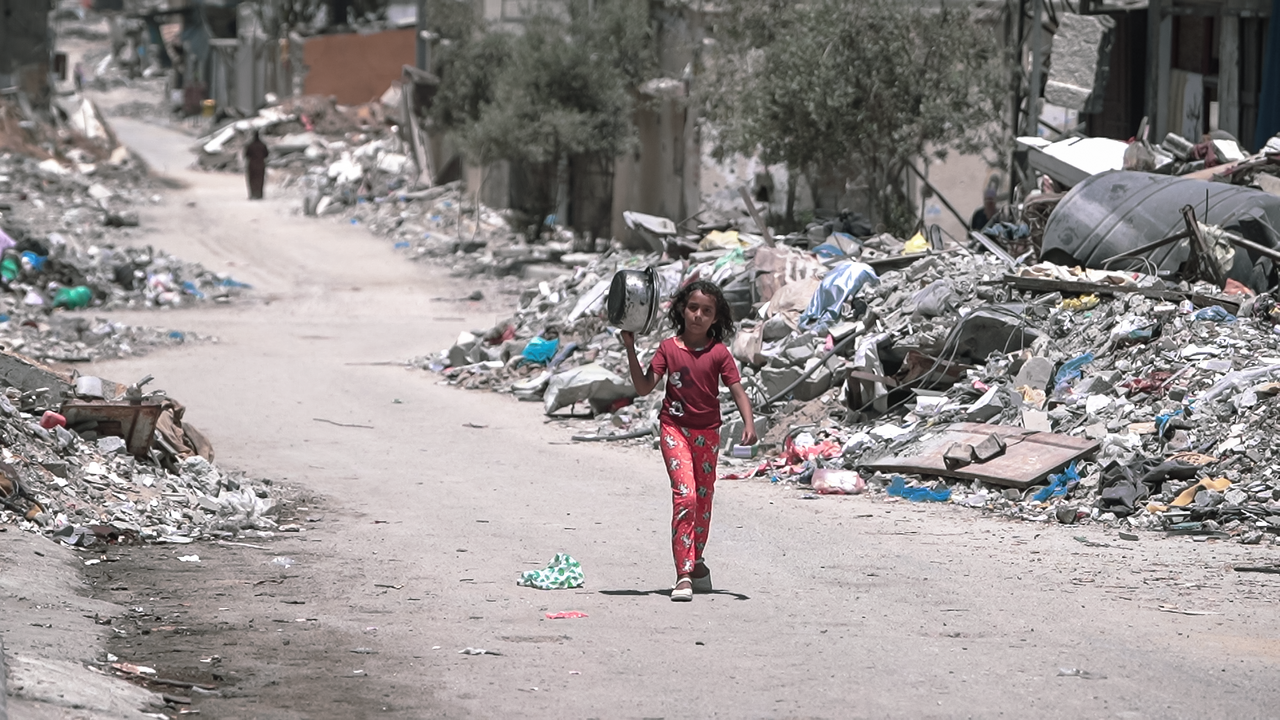
A 30-second commercial aired during NBC’s Thanksgiving Eve special on ‘Saturday Night Live’ has ignited a significant controversy, drawing sharp criticism from prominent Jewish organizations. The advertisement, created by the Palestinian rights advocacy group IMEU Policy Project, drew a direct link between American taxpayer assistance to Israel and the suffering of children in Gaza. The network subsequently decided not to re-air the spot, while the advocacy group expressed disappointment at the decision.
The Content and The Controversy
The spot presented a stark visual juxtaposition. It first depicted a suburban American girl saving money to buy a bicycle. The scene abruptly transitioned to a harrowing image of a young girl in Gaza, standing amidst rubble with a visible amputation and crutches. A voiceover narrator claimed that every three seconds, the government allocates $400 of public funds to Israel to facilitate this situation. IMEU Policy Project identified the injured child as Meral al-Babli, stating that she was harmed when the Israeli military attacked her home, resulting in the deaths of her mother and grandmother.
The advocacy group maintained that the advertisement successfully passed NBC’s internal verification protocols, asserting that the facts presented were ‘indisputable.’ However, the commercial generated immediate and widespread pushback from various Jewish religious and advocacy bodies. Groups including the Anti-Defamation League and the Orthodox Union condemned the piece, arguing that it misrepresented the reality of American financial support for Israel and the broader conflict in Gaza.
Examining the Critique
Critics pointed out that while they acknowledge the distress of innocent civilians in both nations, the ad was exploitative. The Orthodox Union noted that the commercial capitalized on civilian hardship while omitting the involvement of Hamas. Similarly, the Union for Reform Judaism argued that the piece reduced a complex and tragic war into a simple, emotionally manipulative accusation that American taxpayers were directly funding the maiming of Palestinian children.
Leaders from groups like the ADL described the decision to broadcast the spot as ‘indefensible,’ stating that there was no justification for promoting such a skewed narrative. The National Jewish Advocacy Center even threatened to file a complaint with the Federal Communications Commission if NBC failed to provide supporting evidence for the claims made in the advertisement.
Broader Geopolitical Context
The advertisement arrived amid ongoing discussions regarding a successor to the existing 10-year, $38 billion Memorandum of Understanding between the U.S. and Israel. While the current agreement provides military aid largely through grants for American-made defense purchases, the political landscape remains volatile. The IMEU Policy Project criticized the potential successor agreement as a ‘long-term weapons giveaway to Israel.’ The incident also reflects a wider trend of political messaging in the run-up to elections, where anti-Israel ads have used themes of financial aid to fuel political arguments, leading some advocacy groups to express concern over the normalization of antisemitic tropes.
World Views
New ICJ Legal Standard Challenges Genocide Narrative in Gaza
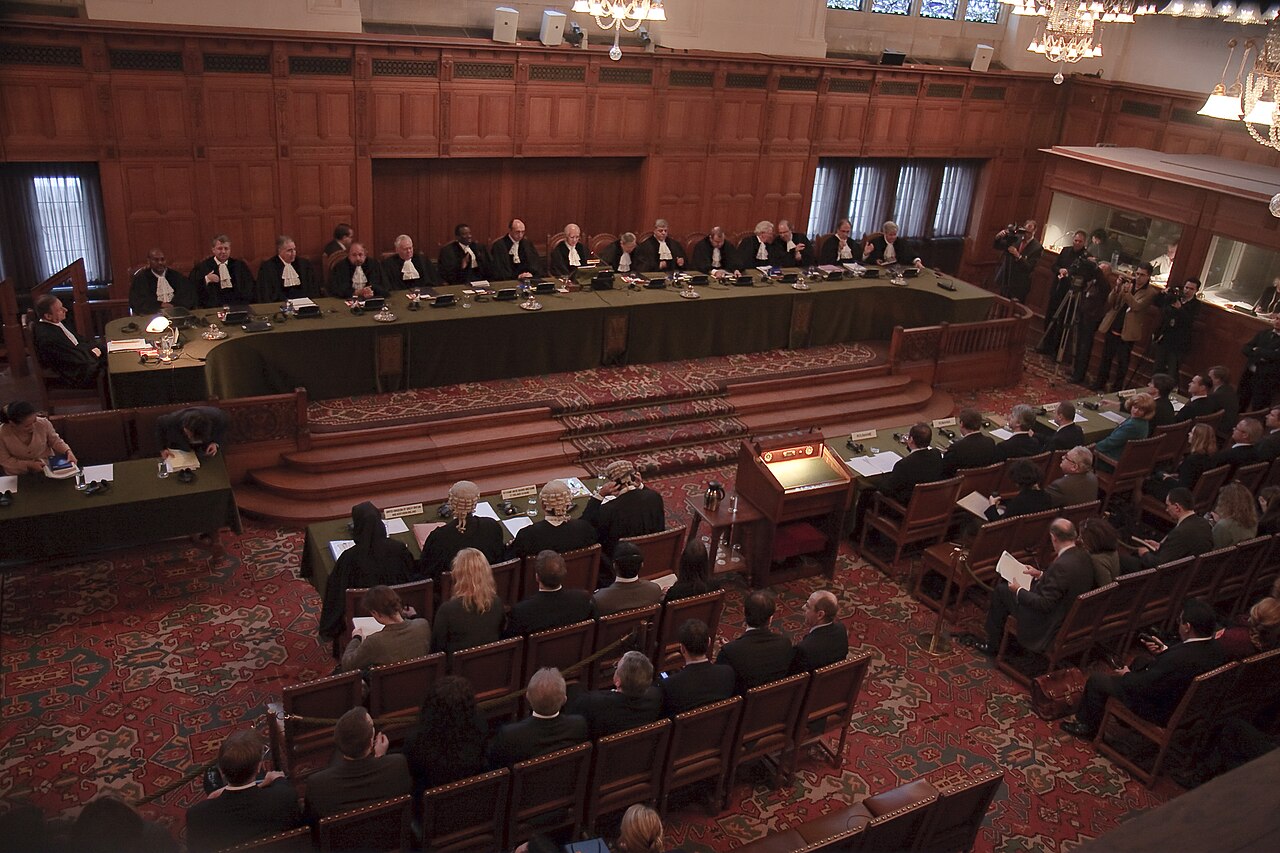
A recent ruling by the International Court of Justice (ICJ), which established a novel framework for determining genocidal intent in the Myanmar case, has sparked significant debate regarding its potential application to the ongoing conflict in Gaza. Legal observers suggest that the ICJ’s expanded methodology, which relies on a ‘totality of evidence’ approach, could fundamentally alter how the actions of both Israel and Hamas are viewed under international law, potentially reframing the conflict as a defensive response.
The Shifting Legal Threshold
Traditionally, proving genocidal intent required demonstrating explicit incitement or a clear, singular pattern of behavior. However, the ICJ’s new reasoning allows judges to consider four broad areas of circumstantial evidence when assessing intent: the general environment of the violence, the deliberate targeting of specific groups, acts that undermine the targeted community’s existence, and the systematic scope of the wrongdoing. Critics note that this comprehensive test, while intended to aid accountability, allows a court to construct a finding of intent by selectively including incriminating facts, thereby lowering the required burden of proof for such an extreme charge.
Contrasting Intentions in Gaza and Myanmar
The article highlights a stark contrast between the legal implications in Gaza and the Myanmar case. While the ICJ lacks jurisdiction over non-state actors like Hamas, applying the totality test to the Israeli situation suggests that the nation was lawfully defending itself against a genocidal threat posed by Hamas. The analysis points out that Hamas’s foundational charter explicitly demands the extermination of Jewish people, and its military communications have instructed fighters to maximize casualties.
When comparing the two scenarios, the author argues that the political climate in Gaza is more conducive to genocide than in Myanmar. For instance, Hamas’s religious laws are described as severely discriminatory, preventing Jewish people from entering Gaza without risk, and its educational system is noted for indoctrinating students to attack Jews. Furthermore, the piece details how both groups engaged in atrocities—including targeted violence and the destruction of villages—but emphasizes Hamas’s exploitation of civilians and the use of civilian structures as military assets.
A Defense Against Annihilation
The argument concludes that accusing Israel of committing genocide, according to this legal standard, effectively blames a nation for mounting a legitimate defense. The piece counters that Israel’s stated objective is solely to defeat Hamas, not the Palestinian population, while simultaneously making efforts to mitigate harm to civilians. The author contends that the scale of civilian casualties in Gaza must be viewed in the context of Hamas’s deliberate human shielding and seizure of public sites, suggesting that the application of the new ICJ standard ultimately undermines the integrity of the Genocide Convention itself.
