



World Views
Iraq’s Power Struggle Intensifies as PM Seeks Central Control Over Oil and Borderlands
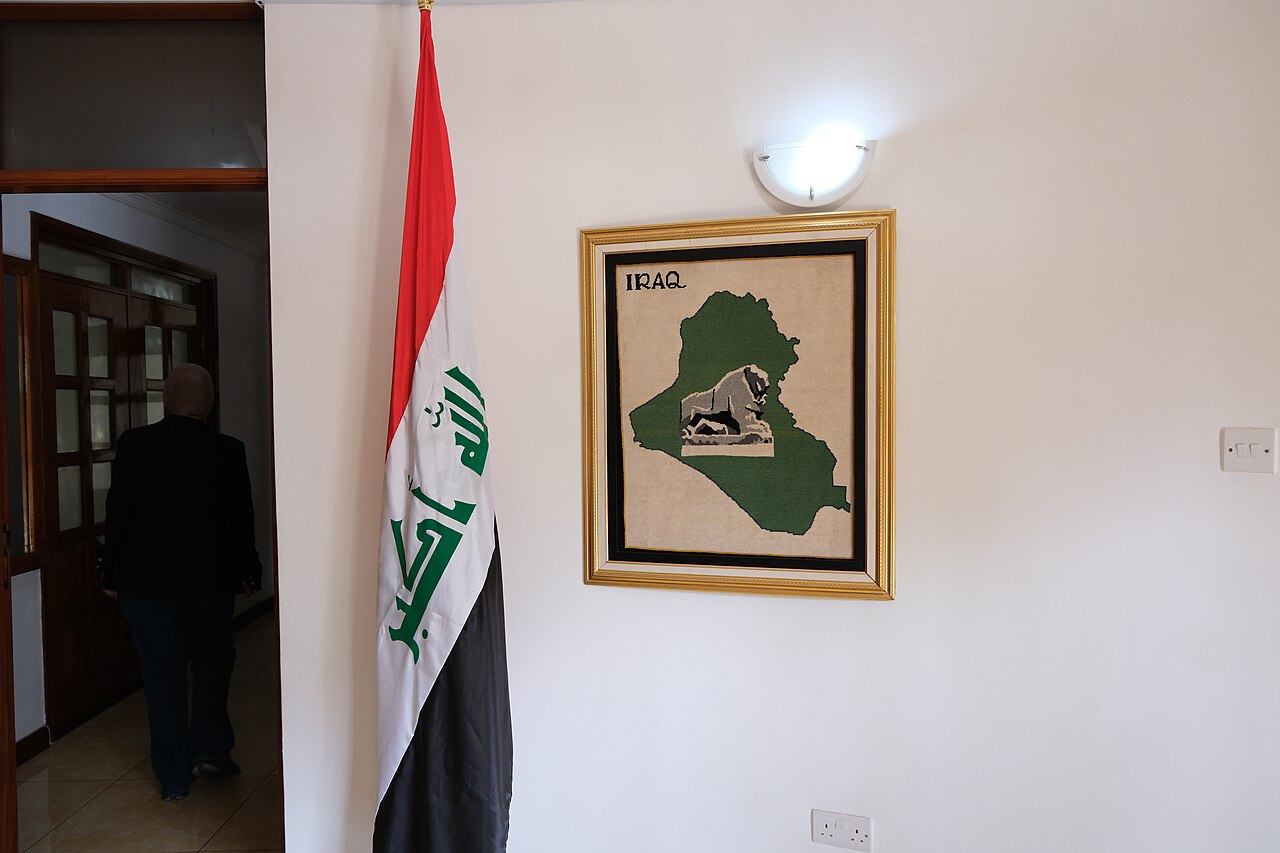
Iraq is currently navigating a period of intense political and economic upheaval as Prime Minister Ali al-Zaidi aggressively pursues measures to consolidate federal authority across the country. These efforts, aimed at combating rampant corruption and seizing control of vital resources, have placed Baghdad in direct conflict with powerful regional factions, including Iranian-aligned militias and the autonomous Kurdish authorities.
The Battle for National Wealth
At the heart of the crisis is the massive illicit trade in Iraqi crude oil. Government officials have highlighted that oil exports bypassing the official state marketer result in significant losses to the national treasury. Estimates suggest that the nation has suffered losses amounting to hundreds of billions of dollars due to smuggling operations originating within the Kurdish autonomous zone over the last decade. To curb this, the government recently ordered the closure of two key border crossings in the Kurdish region, one connecting with Syria and the other with Iran, demanding federal oversight.
The push for federal control has met strong resistance. Thousands of Kurdish citizens protested these moves, viewing the federalization of oil fields and the deployment of government troops near international boundaries as an infringement on regional self-governance. Despite the government securing a high court ruling confirming its right to deploy forces along all international frontiers, political observers caution that implementing such sweeping changes against deeply entrenched economic interests will prove extremely challenging.
Geopolitical and Security Tensions
Zaidi’s centralization drive is not limited to the Kurds. Just days ago, the Prime Minister also ordered military action against a heavily armed Shi’ite militia group, Kataib Hezbollah, which the government accuses of running a smuggling ring near Baghdad. This places the new administration in a volatile standoff with groups that have long held considerable sway over the nation’s security landscape. Furthermore, the Prime Minister’s initiative has received external validation, with a prominent US political figure publicly supporting the drive to end corruption and ensure state control over national assets.
The Path Forward
The Kurdish Regional Government has responded to the federal military language, stating that while they are collaborating with national authorities to fight illicit activities, they reject the perceived threats. The Prime Minister’s stated goal is to ensure that all Iraqi oil remains under the national flag and is managed optimally. As Iraq seeks substantial foreign investment to stabilize its struggling economy, the success of Zaidi’s centralization agenda will determine whether the nation can overcome decades of sectarian division and factional power struggles, or if the conflicts will deepen the country’s instability.
World Views
New ICJ Legal Standard Challenges Genocide Narrative in Gaza
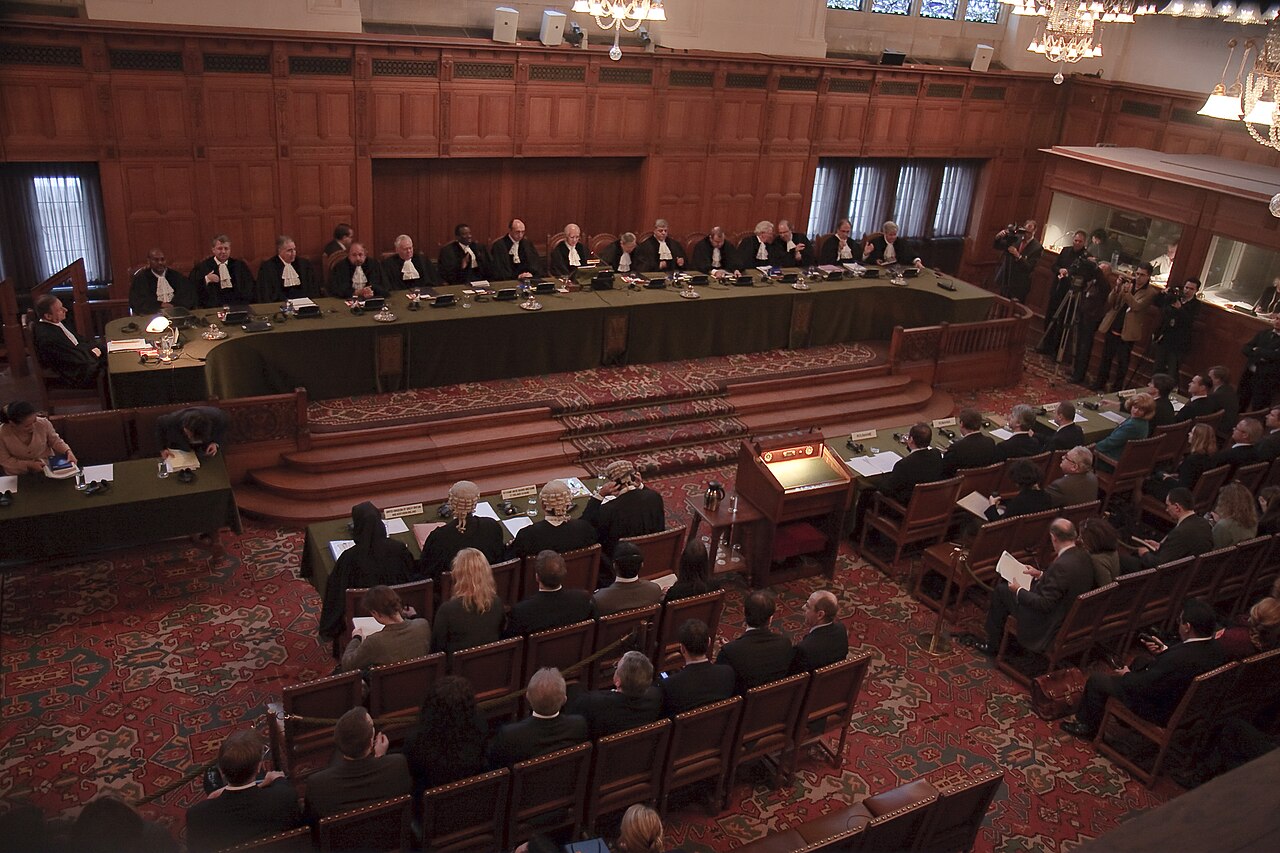
A recent ruling by the International Court of Justice (ICJ), which established a novel framework for determining genocidal intent in the Myanmar case, has sparked significant debate regarding its potential application to the ongoing conflict in Gaza. Legal observers suggest that the ICJ’s expanded methodology, which relies on a ‘totality of evidence’ approach, could fundamentally alter how the actions of both Israel and Hamas are viewed under international law, potentially reframing the conflict as a defensive response.
The Shifting Legal Threshold
Traditionally, proving genocidal intent required demonstrating explicit incitement or a clear, singular pattern of behavior. However, the ICJ’s new reasoning allows judges to consider four broad areas of circumstantial evidence when assessing intent: the general environment of the violence, the deliberate targeting of specific groups, acts that undermine the targeted community’s existence, and the systematic scope of the wrongdoing. Critics note that this comprehensive test, while intended to aid accountability, allows a court to construct a finding of intent by selectively including incriminating facts, thereby lowering the required burden of proof for such an extreme charge.
Contrasting Intentions in Gaza and Myanmar
The article highlights a stark contrast between the legal implications in Gaza and the Myanmar case. While the ICJ lacks jurisdiction over non-state actors like Hamas, applying the totality test to the Israeli situation suggests that the nation was lawfully defending itself against a genocidal threat posed by Hamas. The analysis points out that Hamas’s foundational charter explicitly demands the extermination of Jewish people, and its military communications have instructed fighters to maximize casualties.
When comparing the two scenarios, the author argues that the political climate in Gaza is more conducive to genocide than in Myanmar. For instance, Hamas’s religious laws are described as severely discriminatory, preventing Jewish people from entering Gaza without risk, and its educational system is noted for indoctrinating students to attack Jews. Furthermore, the piece details how both groups engaged in atrocities—including targeted violence and the destruction of villages—but emphasizes Hamas’s exploitation of civilians and the use of civilian structures as military assets.
A Defense Against Annihilation
The argument concludes that accusing Israel of committing genocide, according to this legal standard, effectively blames a nation for mounting a legitimate defense. The piece counters that Israel’s stated objective is solely to defeat Hamas, not the Palestinian population, while simultaneously making efforts to mitigate harm to civilians. The author contends that the scale of civilian casualties in Gaza must be viewed in the context of Hamas’s deliberate human shielding and seizure of public sites, suggesting that the application of the new ICJ standard ultimately undermines the integrity of the Genocide Convention itself.
World Views
New Study Reveals Deeply Entrenched Antisemitism Within Canadian University Campuses
A recent comprehensive study commissioned by the Canadian government has sounded a grave alarm regarding the growing acceptance of antisemitic ideology and conspiracy theories within the nation’s higher education institutions. The report, focusing on student experiences, indicates that prejudice against Jewish people is not merely present on university grounds but is increasingly normalized, prompting urgent calls for institutional reform and stronger protective measures for Jewish students.
Alarming Findings on Prejudice and Denial
The second installment of the ‘Campus Antisemitism and Student Experiences’ (CASE) report revealed stark figures. Over 40 percent of students surveyed reported having witnessed at least one instance of anti-Jewish hostility during the academic year. More concerning, the research exposed a significant lack of awareness regarding historical antisemitic tropes. The data showed that a majority of respondents failed to recognize the assertion that Jewish people hold excessive control over the financial sector as a form of hate speech. Furthermore, nearly 40 percent did not view the claims that the Holocaust was exaggerated or fabricated as antisemitic.
A National Crisis of Acceptance
Jewish advocacy groups and organizations across the country have reacted strongly to these results, describing the findings as profoundly disturbing. They emphasized that these statistics underscore a failure in current efforts to combat prejudice within educational settings. These groups pointed out that the issue extends beyond campus boundaries, noting that despite Jewish Canadians comprising only about one percent of the total population, they were targeted in 71 percent of reported religiously motivated crimes in 2025. The organizations highlighted a troubling link between the acceptance of conspiracy theories and hostility directed at individuals perceived to have ties to Israel, arguing that anti-Zionist rhetoric is being misused to justify discrimination.
Demands for Action and Prevention
The collective statement from various Jewish organizations urged universities and government bodies to move past mere public condemnations. They stressed that while institutions cannot resolve geopolitical conflicts, they bear a clear obligation to ensure that Jewish students can participate in campus life without facing intimidation or harassment. Additionally, the organizations raised concerns about the increasing threat of radicalization among young Canadians, referencing warnings from national security agencies. They called for educational bodies to prioritize early intervention strategies, noting that the speed at which radicalization can occur necessitates expanded prevention efforts. The overall message is clear: institutional policies must be not only in place but rigorously and consistently enforced.
World Views
Dutch Court Rejects Mandate for Government Aid to Palestinians Seeking Exit from Gaza

A Hague court has definitively ruled that the Dutch government holds no mandatory legal duty to assist a group of 111 Palestinians in leaving Gaza to secure entry visas for the Netherlands. The ruling rejects a significant legal challenge brought forward by the individuals and their sponsors, establishing that the provision of such consular support falls within the exclusive domain of political discretion, not legal obligation.
Legal Hurdles for Visa Collection
The civil proceedings determined that the plaintiffs sought help traveling to a Dutch embassy located in Jordan to obtain the necessary long-stay entry permits. Under standard international procedures, applicants whose visa applications have been approved must collect their official documents in person at the country’s diplomatic post. Since the Netherlands lacks a diplomatic presence within Gaza, applicants are required to travel to a representative office in a neighbouring country, such as Egypt or Jordan, to finalize their process.
Specific Cases and Approved Status
Reports confirm that Dutch authorities had already granted the individuals’ applications for provisional residence permits. These permits allow entry into the Netherlands for various purposes, including family reunification, pursuing educational opportunities, employment, or receiving medical care. The group of 111 included those seeking to join relatives, students, and individuals requiring specialized medical treatment.
The plaintiffs had argued that they could not safely make the journey to the Jordanian or Egyptian embassies without official governmental facilitation. However, the District Court concluded that the Dutch government is not legally required to provide this specific assistance or to facilitate their departure from the conflict zone. Furthermore, the court dismissed the request to compel the government to expedite new visa submissions after the initial approvals had already lapsed.
Policy Shift and Precedent
This decision follows a notable shift in Dutch policy regarding assistance to Palestinians seeking to leave Gaza. Initially, the government had facilitated departures for those whose applications were approved following the outbreak of conflict in October 2023. However, that assistance was subsequently withdrawn in December 2025, reverting the nation to its standard consular procedures.
The matter is not new to the Dutch legal system. While earlier this year, administrative judges issued interim orders compelling the government to make efforts to help a small number of Palestinians depart, the Netherlands’ highest administrative body, the Council of State, had previously determined that the government carried no general legal responsibility for providing such aid. This latest ruling reinforces that legal obligations surrounding consular support remain discretionary.
