


Uncategorized
Amid surging aliyah, Jews from former USSR gather for community’s biggest annual event in Israel
TIBERIAS, Israel — In a year when Israel has seen more immigrants move to the country from former Soviet republics than any other year over the last decade, there was plenty to discuss, worry about and celebrate at a major gathering of such Jews at Israel’s only lakeside city, Tiberias.
On the first weekend in December, over 1,200 Jews with roots in the former Soviet Union gathered at a resort hotel overlooking the Sea of Galilee for a weekend of Israeli and Jewish culture, food, music, dancing and comedy. Organized by Limmud FSU Israel’s team of more than 150 volunteers from a wide range of ages, the conference was held in a mix of Hebrew and Russian.
Through the first 10 months of 2022, over 47,330 immigrants have moved to Israel from former Soviet republics, with over 14,000 coming from Ukraine and over 30,000 from Russia. That’s about double the number of immigrants to Israel from former Soviet countries in 2019, the year before the pandemic limited immigration. Over 80% of all immigrants to Israel this year hail from formerly Soviet countries.
Osik Akselrud, regional director for Hillel International in Central Asia and Southeastern Europe and Limmud FSU Ukraine chair, said this is a particularly dark time for Jews in the former Soviet Union. With Russia’s war against Ukraine now in its 10th month, those remaining in Ukraine face the prospect of a freezing, dark winter without electricity.
“We are having a very hard time,” Akselrud said. “We feel part of the Limmud FSU family and are grateful for everything you’re doing for us, especially during these dramatic times. It’s like a breath of fresh air for all Ukrainians. Thank you for standing with us.”
Limmud FSU organizes Jewish learning festivals the world over for Jews with roots in the former Soviet Union.
The Tiberias event was held just a week before a scheduled Limmud FSU seminar in Warsaw, which took place Dec. 8-10. That gathering was focused on Ukrainian Jews still living in Ukraine as well as those who have fled to Europe and Israel to escape the war in their country. In March, Limmud FSU will hold another milestone conference: the first ever in Germany, another hub of refuge for Ukrainian Jews.
“The situation is devastating, and sadly it’s not getting better,” Matthew Bronfman, chairman of Limmud FSU, said of the war in Ukraine. “Berlin has been a desire of ours for more than a decade, and now with the recent influx of refugees there from war-torn regions, it’s amazing that we’ll be able to make it a reality for next March.”
Among the prominent speakers at the December conference were Avigdor Lieberman, Israel’s outgoing finance minister and a native of the former Soviet republic of Moldova; Elkayim Rubinstein, former vice president of Israel’s Supreme Court; Ze’ev Elkin, Israel’s outgoing minister of Jerusalem affairs and minister of housing and construction; Eliezer Shkedi, former commander of the Israel Air Force from 2004 to 2008; Amir Avivi, founder & CEO of Israel’s Defense & Security Forum, a movement of Israeli security personnel advocating for Israel’s security needs; Rabbi Jonathan Porath, who recounted the story of his lifetime of experiences with Soviet and post-Soviet Jews spanning over 50 years; and Ephraim Lapid, former senior intelligence officer in the Israel Defense Forces.
Attendees of the December 2022 Limmud FSU conference in Tiberias, Israel, included, from left to right, Monaco Jewish leader Jacques Wolzok and Nazi hunters Beate Klarsfeld and Serge Klarsfeld. (Alex Khanin)
Lapid spoke of Israel’s essential role as a safe haven for Jews everywhere.
“If you’re Christian and you’re in trouble, can you come to Italy, a Christian nation, and say you want citizenship? Of course not. If you’re Muslim, can you go to Saudi Arabia and get automatic citizenship? It doesn’t exist,” Lapid said. “Israel is the only country in the world where Jews receive shelter, both physically and spiritually.”
Limmud FSU’s founder, Chaim Chesler, thanked the 150 volunteers who organized the Tiberias event and noted that more than 80,000 people have participated in Limmud FSU programs since 2005.
“Sandra Cahn and I created Limmud FSU nearly 18 years ago,” Chesler said. “Who would believe that after 18 years we’d continue to flourish and educate Jews now in 12 countries?”
Highlights of the weekend festival included performances of Hebrew and Yiddish hits by singer Vladi Blayberg and violinist Sanya Kroitor; a concert by Stas Gavrilov’s 10-piece Klezmerband; a master class given by Ukrainian ballerina Valeriya Kholodova; and a Russian-language standup comedy routine by Ilya Axelrod.
Special recognition was extended to world-famous Nazi hunters Serge and Beate Klarsfeld, whose life mission has been to bring Nazi war criminals and their French collaborators to justice. The two received a sustained standing ovation following the screening of a short documentary film on the 76,000 French Jews who were deported to Nazi concentration camps during World War II; only 3,000 survived.
“I was a child during the Holocaust, and escaped arrest because my father built a hiding place in our house,” said Klarsfeld, 87. “When the Germans came, he opened the door and sacrificed himself, but we were hidden behind a false wall. They looked for us but didn’t find us. After the war, I devoted my life to tracking Nazi criminals and helping the State of Israel.”
Limmud FSU Israel participants listen during Ilya Axelrod’s stand-up performance in Tiberias, Israel, December 2022. (Yulia Berzon)
Among Limmud FSU Israel’s key supporters are the Conference on Jewish Material Claims against Germany, Nativ – Prime Minister’s Office, Genesis Philanthropy Group, the Jewish National Fund-Keren Kayemet LeIsrael, the World Zionist Organization, UJA-Federation of New York and philanthropists Diane Wohl and Bill Hess.
Speakers also touched on Israeli politics on the eve of what’s expected to be the swearing-in of a new right-wing government headed by former Prime Minister Benjamin Netanyahu.
Rubinstein, who served as Israel’s attorney general from 1997 to 2003, urged the new government not to weaken the country’s Supreme Court, which he called “a defender of human and civil rights” — particularly when it comes to gender issues, issues of religion and state and equity between Jews and Arabs.
“The ability to petition decisions straight to the Supreme Court has made it a strategic asset of the State of Israel, and I’m concerned about ideas to curb the court’s powers,” Rubinstein said. “I hope the politicians understand that while the court may make mistakes and be criticized, there’s a difference between criticism and undermining the court’s work.”
Shkedi, who spent several years as El Al’s CEO after leaving the Israel Air Force, stressed the importance of Jewish unity and urged for an end to political infighting.
“You can think one way and me another, but that doesn’t mean I’m the only one who’s right,” he said. “The priority for Israel now is learning how to live together. This is our biggest mission.”
—
The post Amid surging aliyah, Jews from former USSR gather for community’s biggest annual event in Israel appeared first on Jewish Telegraphic Agency.
Uncategorized
Israel’s culture minister called this documentary about IDF tactics ‘vile.’ It deserves to be seen.
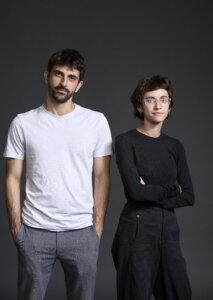
VENICE — At its premiere here last week, towards the end of the 83th Venice International Film Festival, Naza, Yuval Abraham and Rachel Szor’s documentary about Israel’s killing of Palestinian civilians in Gaza, received a 25-minute-long standing ovation, a record at the festival. Two nights later, the film won the festival’s Special Jury Prize. By Sunday, Israel’s culture minister, Miki Zohar, was calling the film “vile,” describing it as treason and threatening to revoke its directors’ citizenship. Zohar invoked his reform of cinema funding, saying Israelis should no longer have to pay for work that harms the army and the state.
I left the press screening of Naza angry, depressed and utterly convinced of its importance. Its account of the procedures that govern the deaths of civilians is devastating precisely because so much of the testimony sounds like people describing an ordinary working day. The film will have its North American premiere at the New York Film Festival on Sept. 26. It deserves to be seen, and debated with considerably more patience than some of its detractors have displayed.

Venice has traditionally worn its politics more lightly than Berlin, where a filmmaker’s acceptance speech can cause an international incident. This year, however, festival director Alberto Barbera programmed a competition that invited controversy. Alongside Naza was Ilya Khrzhanovsky’s DAU, which drew Ukrainian objections over the production’s Russian connections (including to Sergei Adoniev, a businessman who has been sanctioned by Ukraine and the U.S.) In the run-up to the festival, Barbera defended DAU as a denunciation of totalitarianism. Both films are international productions by directors whose countries have become objects of international opprobrium. Both venture into their societies’ heart of darkness. Barbera deserves enormous credit for programming them both in the main section of the world’s oldest film festival despite the objections of many.
Berlin supplies a cautionary precedent. No Other Land, the Oscar-winning documentary Abraham and Szor made with Palestinians Basel Adra and Hamdan Ballal, premiered there in 2024, where it won the festival’s documentary prize. After Abraham and Adra gave speeches condemning Israel’s policy of apartheid in the West Bank, the German culture minister Claudia Roth, caught on camera applauding at the ceremony, clarified that her applause had been intended for the Israeli director. I shudder to imagine the official response Naza might have elicited there. Venice at least offered an opportunity to discuss what was on screen.
The film, which presents testimonies from 24 serving and former military personnel, grew out of years of investigative reporting. Produced by the British newspaper the Guardian and JW Films, in collaboration with the Israeli-Palestinian magazine +972 and its news website Local Call, it builds on Abraham’s investigations into Israeli intelligence and his work with Guardian journalist Harry Davies. Revelations about targeting systems had appeared in print while filming was underway and were subsequently reported on by both The New York Times and Washington Post. All this means that the disclosures made in Naza are not brand new. However, the stark, focused and lean approach that Abraham and Szor take in the documentary ensure that the information hits home with chilling force.
The film’s unusual title is the Hebrew term for collateral damage — specifically, the anticipated civilian toll of a military strike in Gaza. Speaking to Abraham from a series of Tel Aviv rooftops at night, the interviewees, whose appearances and voices are digitally disguised, explain with patient detachment how targets in Gaza are identified and eliminated. One of the tools used to identify suspected militants is an AI system called Lavender. The frightening efficiency of such technology is discussed alongside the human decisions that determine what constitutes an acceptable loss.
One of the most disturbing claims has prompted a specific military rebuttal. An interviewee says a strike was once approved with 500 civilian deaths anticipated; he does not know how many were actually killed. The IDF claims it has never planned, approved or conducted a strike expecting anything near that toll, and challenges the filmmakers’ ability to verify the account. It also maintains that humans authorize strikes and questions the witnesses’ competence to discuss broader strategy.
The film’s restraint gives incendiary testimony such as this time to register. For the majority of the film, we only glimpse the interviewees’ faces in silhouette and watch as they crudely draw diagrams to explain the logistics of a military strike, say, on a crowded building. Every so often the camera wanders off the roof, peering into the illuminated homes and high-rise office buildings of Tel Aviv at night. The point is precisely to convey an unsettling sense of normalcy.
I was particularly struck by the absence of the racist invective I had half expected. Some interviewees describe themselves as educated, liberal people. Their accounts nevertheless reveal a callous disregard for civilian causalities. One recalls the pleasure of a job well done. “It’s so much fun,” he says of reaching his targets and we hear in his voice how the remote killings he takes part in gives him an indescribable rush. After a pause, he tells Abraham that as someone raised in the Israeli context, someone who had got to visit the death camps in Poland, he always considered and asked himself how they could do what they did. “For me the Nazis are evil,” he says. “So what does that make me?” It is perhaps the film’s most damning exchange.
One of Naza’s strength as a documentary is that it does not demand agreement that Israel is committing war crimes, including genocide, before its investigation begins. That gives it a chance to reach people who have defended Israel and remain capable of reconsidering their position.
Some of the most vociferous criticism of Naza has not come from IDF spokesmen or other Israeli officials. Almost immediately after the premiere, footage from the film’s lengthy ovation (where Abraham and Szor stand looking intensely uncomfortable and withdrawn) went viral, with numerous commentators on X and other platforms making ugly accusations against the filmmakers, including for granting anonymity to the whistleblowers who feature in the film.
“A viscerally nauseating spectacle. Imagine SS officers, shielded and protected by anonymity, getting a 25-minute standing ovation for recounting their tortures and murders. Criminal perpetrators should only be heard at their trials not at gala celebrations,” read one tweet that has been viewed close to 150,000 times. Though the language of that post is particularly incendiary, the sentiment it expresses is surprisingly widespread on social media.
Confidentiality was a condition of obtaining these accounts, a standard journalistic arrangement that confers no clemency. At the press conference, Abraham described that his sources were motivated variously by remorse and professional pride. He affirmed that his goal was to keep the victims of Gaza at the film’s center — and not to congratulate its witnesses.
The tenor of this debate recalls Nadav Lapid’s withdrawal from the Marseille film festival in June after boycott calls. His Yes, an infernal satire of post-Oct. 7 society, is a ferocious attack on Israeli complacency. It would take considerable ingenuity or imagination to claim that either it or Naza is an apology for Israel.
Accepting his award in Venice, Abraham said that he made Naza because “the denial of a crime is what helps it persist.” He later pledged to distribute the film as widely as possible in Israel. The interviewees, he explained, “spoke in Hebrew because they wanted to reach out to the Israeli public.” Not surprisingly, the film, sight unseen, has already been widely condemned within Israel. Former defense minister and opposition politician Avigdor Lieberman called the directors “haters of Israel” and accused them of turning Oct. 7 into a blood libel. Such accusations should make the necessity to reach Israeli viewers even more urgent.
Days after the film’s victory in Venice, Haaretz ran an editorial with the blunt headline, “Israelis Must Finally Confront What Israel Has Done in Gaza.” After years of trying to “air dirty laundry at home” with limited success, Abraham and Szor now had found in the Venice Film Festival a major platform where the conclusions of their investigations were impossible to ignore. The editorial’s key sentence is also its shortest: “Israel’s problem is not public relations, but reality.”
Naza only leaves the rooftops of Tel Aviv for two brief occasions. In the first of these, we see archival footage of a young Benjamin Netanyahu promoting his 1995 book Fighting Terrorism: How Democracies Can Defeat Domestic and International Terrorism, In the clip, a much-younger Netanyahu defines terrorism as a policy of deliberately killing and maiming civilians to advance political goals. Bibi’s words hang uncomfortably over the rest of the film, inviting and daring viewers to draw their own conclusions.
The post Israel’s culture minister called this documentary about IDF tactics ‘vile.’ It deserves to be seen. appeared first on The Forward.
Uncategorized
Macklemore dropped from Ed Sheeran tour after ‘Free Palestine’ backlash
Macklemore has been dropped from the remainder of Ed Sheeran’s stadium tour following backlash to pro-Palestinian comments the social justice rapper made onstage.
The promoter of Sheeran’s U.S. tour said several stadiums refused to allow Macklemore to perform after his headline-grabbing “Free Palestine” plea during a Sept. 4 show at MetLife Stadium in New Jersey. Ensuing backlash to the comments included a petition by the Israeli-American Council to get him canceled from the tour.
Macklemore was set to open for Sheeran at eight of the remaining 10 tour dates. Seven of the eight host venues said the concerts could not go on with Macklemore, according to Rolling Stone: Lincoln Financial Field in Philadelphia; Gillette Stadium in Foxborough, Massachusetts; Mercedes-Benz Stadium in Atlanta; Lucas Oil Stadium in Indianapolis; Bank of America Stadium in Charlotte, North Carolina; AT&T Stadium in Arlington, Texas; and Raymond James Stadium in Tampa, Florida.
Macklemore’s long record of pro-Palestinian remarks predates the tour, including a song, “Hind’s Hall,” about the 2024 takeover of a Columbia University building by student protesters. During his controversial Sept.4 speech, he said his ambition on the Sheeran tour was to promote the Palestinian cause.
In a statement on Instagram, Macklemore claimed Robert Kraft — the Jewish owner of the New England Patriots and Gillette Stadium, and arguably the NFL’s most powerful figure — pressured Sheeran to drop him.
“Ed told me that Kraft said I would not be allowed to perform in his stadium,” Macklemore wrote. “Ed also told me that Kraft had rallied some of the other stadium owners and collectively they gave him an ultimatum: if Macklemore stays on the tour, you will not be allowed to play in our venues.”
The post had received 1.6 million likes on the platform within four hours of its posting.
The controversy over Macklemore’s comments also embroiled the Jewish pop star Pink, who faced backlash for sharing a post by the pro-Israel organization StopAntisemitism. Pink later said she did not agree with all of the post’s contents, but felt alarmed as a Jewish person who had grieved both sides of the conflict and didn’t like being told she supported genocide.
She also brought up a 2014 incident in which Macklemore wore a fake nose, beard and black hair onstage in a costume some criticized as playing on antisemitic stereotypes. (He later apologized, saying that he had no antisemitic intent and linking to the Anti-Defamation League website.)
“Every Jew I know knew exactly what it was,” Pink wrote on Instagram. “But he apologized, and I let it go, because that’s what we do. We let it go. Then last weekend he stood in front of a stadium full of music-loving families, with violent images from a war on the screens, dedicated a song to the movement of his choice, and then took the mic to tell all of the Jews in the stadium that it wasn’t about them. You don’t get to decide that for us.”
The ADL was part of the 2026 anti-Macklemore movement, calling his speech “performative, biased and hateful anti-Israel ‘activism.’”
The post Macklemore dropped from Ed Sheeran tour after ‘Free Palestine’ backlash appeared first on The Forward.
Uncategorized
Jewish sleepaway camp made them comedians, so they made a movie about it

Jewish sleepaway camp is where parents send their children to forge a lasting connection with their ancient peoplehood. Perhaps regrettably, many also leave having developed something else: shtick.
“It’s a breeding ground for comedy bits,” said filmmaker Michael Lewen, 36, a proud alumnus of Camp Modin in Belgrade, Maine. “Everyone learned how to be a comedian at summer camp. This is where you first try out your stuff.”
Years after retiring his color-war uniform, Lewen, a regular collaborator of Judd Apatow, is returning to the cradle of his comedy career. His sophomore feature Tiny Fugitives, hitting theaters Sept. 18, takes us to Camp Fineman, where 12-year-old Jacob Udell (Benjamin Pajek) commands a cool-kid cachet apart from his public-school tormentors.
Jacob’s goals for the summer start off simple — a bunk-wide record for “ask outs” to the social and telling his longtime crush how he feels. But when his parents show up on visiting day to announce their divorce, and that they may not have the money to send him for another season, Jacob and his best friend Charnis (Aaron Harris) hatch a plan: When the buses leave camp, they won’t be on them. They will live at camp year-round.
It’s a notion not completely foreign to Lewen’s co-writer, Jacob Kaplan, 28.
While Kaplan spent less time than Lewen at his own camp (Young Judea in Amherst, New Hampshire), he keeps finding fresh material in the experience. He toured a standup show, Kings of Camp, about those halcyon days of canteen privileges and Capture the Flag. Lewen connected with Kaplan after reading a cartoon pilot he wrote about an alien child who sends dispatches back to his home planet from a Jewish summer camp, mistakenly believing his idiosyncratic environs to be representative of human civilization.
Kaplan remembers camp as his first brush with independence. The divorce plot is drawn from his life and he remembers it as a merciful break from parental logistics.
The jokes are an amalgam of his and Lewen’s field notes from back in the day and ideas from their capable cast of 12-year-olds, one of whom does a credible impression of Barack Obama saying kiddush. The foil to Jacob and Charnis’ great escape is a “lifer” named Bob, played by Johnny Knoxville, who gives chase and is often grievously injured in the pursuit. Thank Hashem for the infirmary.

“There was definitely some push and pull with the stunt coordinator,” Lewen said of Knoxville’s presence on set. Coming off of the later Jackass films, he wanted to drive his ATV without his glasses and urged people to hit him harder.
But for all the slapstick, Bob, based on a familiar archetype of a fanatical counselor is, along with Charnis and Jacob’s friendship, the heart of the film. His message, and one I’ve heard from many a counselor of my own: camp is special because it ends.
If it didn’t quite end for Lewen and Kaplan, who got to relive those days on the set of a couple different Toronto camps, and recreate some of the magic for their actors, they insist they’ve now had enough.
Tiny Fugitives Lewen said, is indebted to Stand By Me, includes visual nods to Francis Ford Coppola films like Apocalypse Now and The Conversation and seems to have no anxiety about the influence of another raunchy two-hander like Superbad (Seth Rogen and Evan Goldberg produced). It owes a less obvious debt to Michael Mann’s Heat, Lewen said, only “instead of De Niro and Pacino, it’s Johnny Knoxville and a 12-year-old who both want the same exact thing out of life, and only one of them is going to get it.”
Among the comedy’s most understated features is its ambient Jewishness, in no way essential to the plot, as it is in another recent camp film The Floaters, but key to its sensibility.
The kids find ancient Manischewitz in a dining hall. Jacob pads his elbow with a loose kippah to break the frame to a map of the old camp grounds. In a fanciful moment, he suggests laundering petty cash in $18 sums to skirt suspicion. A line, delivered out of context and without elaboration: “Charnis, what do you mean a three-state solution?”
Asked if the film might have been more marketable with a generic sleepaway camp, Kaplan and Lewen seemed to have heard that note a lot.

“For the comedy you want to go from what felt the most true to your life and the situations and what actually happened and painting as vivid a picture as possible,” Kaplan said, invoking Wet Hot American Summer, which presented a Jewish summer camp without ever quite announcing that it was one.
Lewen said they focused on the bigger idea when they went out to pitch: “When you’re young, there are places where you feel like you make sense. For some people, it’s the baseball team. For some people, it’s debate camp. For some people, it’s your cousin’s house. And for us, it was Jewish summer camp.”
The producers are betting big on Tiny Fugitives’ cross-quadrant appeal, making it a rare R-rated comedy to play theatrically. Among the hoped-for viewers are some actual 12-year-olds, who will need a parent or guardian owing to the film’s coarse language, which is likely not very scandalous to the tween set it’s depicting.
“I actually think it’s a totally good movie for young people to see,” Lewen said. “I just remember being that age and watching stuff that felt a little bit real, and like I actually saw myself in it, and it’s so satisfying and cathartic.”
To that end, he said, Knoxville is chartering a bus to take camper-aged kids to the theater.
“I think it’s cool for there to be a cool movie that’s also Jewish,” Lewen said. “It’s the same reason I like Jewish summer camp and want my kid to go there.”
The post Jewish sleepaway camp made them comedians, so they made a movie about it appeared first on The Forward.
