


Features
History of the Winnipeg Beach Synagogue: 1950-2025
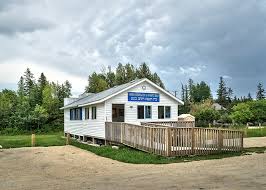
By BERNIE BELLAN The history of the Winnipeg Beach Synagogue is a fascinating one. We have had several articles over the years about the synagogue in The Jewish Post & News.
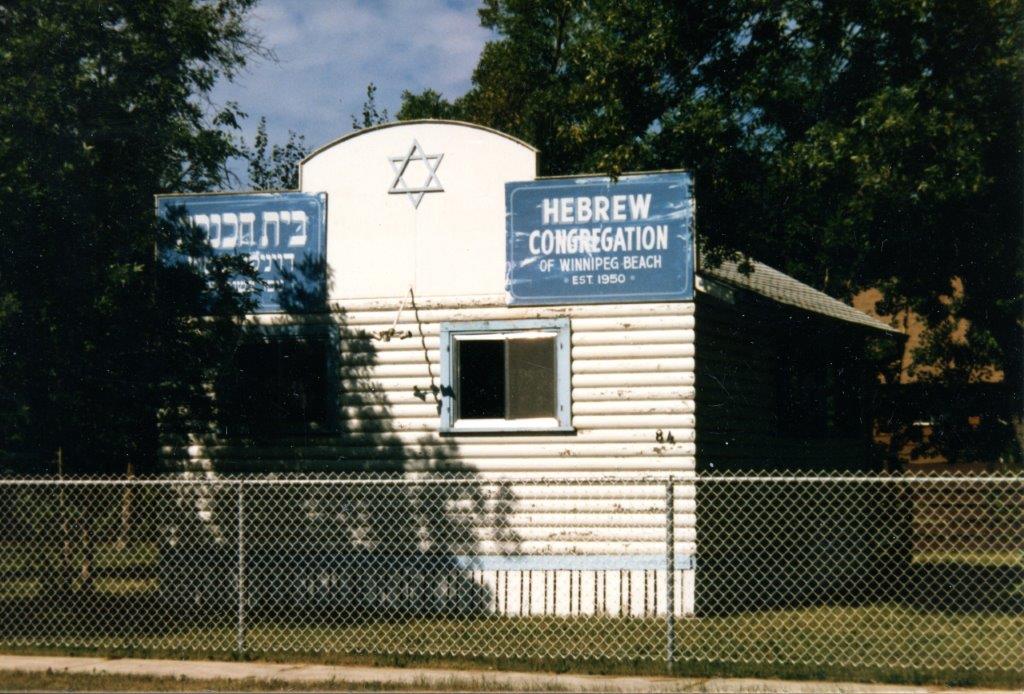
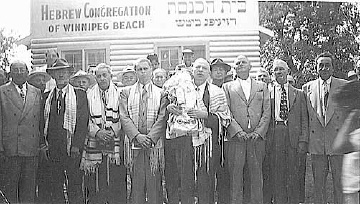
In June 2010 I wrote an article for The Jewish Post & News upon the 60th anniversary of the synagogue’s opening. Here are the opening paragraphs from that article:
“Sixty years ago a group of Winnipeg Beach vacationers decided that what their vacation area lacked was a synagogue. As it happened, a log cabin one-room schoolhouse in the Beausejour area happened to be available.
“In due course, the log cabin was relocated to the corner of Hazel and Grove in Winnipeg Beach, where it stayed for 48 years.”
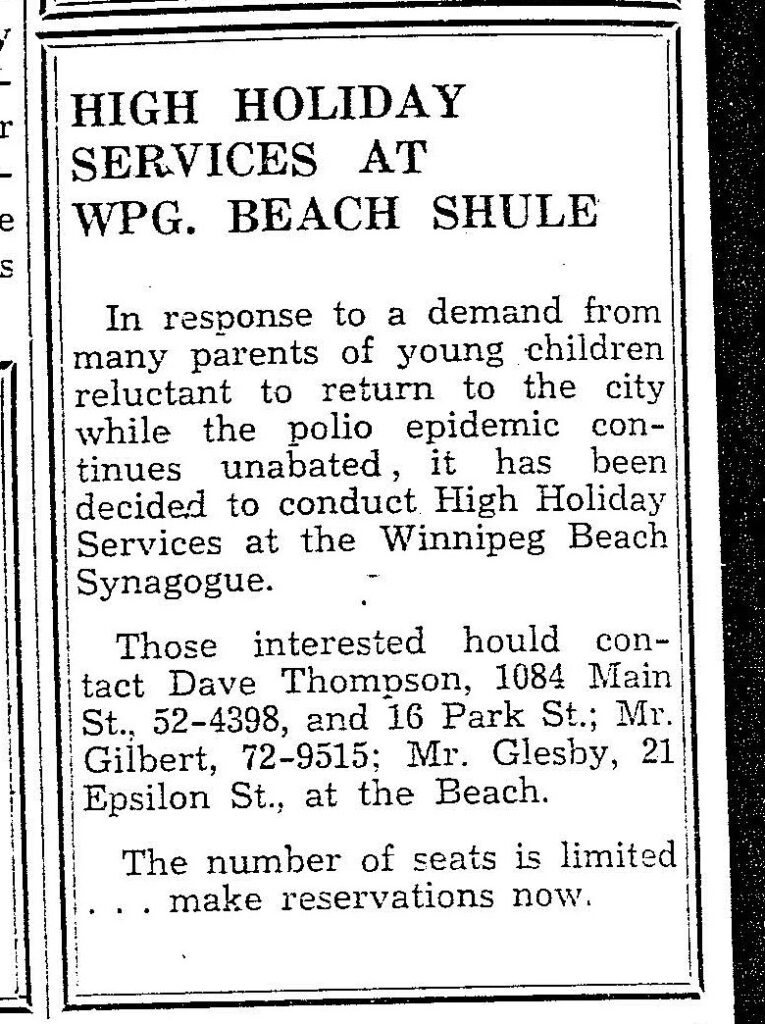
In December 1994 my late brother, Matt, wrote a story about the spraying of antisemitic grafitti on the synagogue which, at that time, was still situated at its original location on the corner of Hazel and Grove in the town of Winnipeg Beach:
“Two 16-year-olds spraypainted slogans like ‘Die Jews,’ ‘I’ll kill you Jews,’ and other grafitti in big letters on the beach synagogue.
“Jim Mosher, a news reporter for the Interlake Spectator in Gimli, said last Halloween’s vandalism against the synagogue wasn’t the first. In the late 1980s, he claimed, it was spraypainted with swastikas.
“Jack Markson, a longtime member of the Winnipeg Beach Synagogue, last week also said he could remember finding anti-Semitic grafitti spraypainted on the synagogue ‘a few years ago,’ and at least twice in the 1970s, when the cottage season was over.”
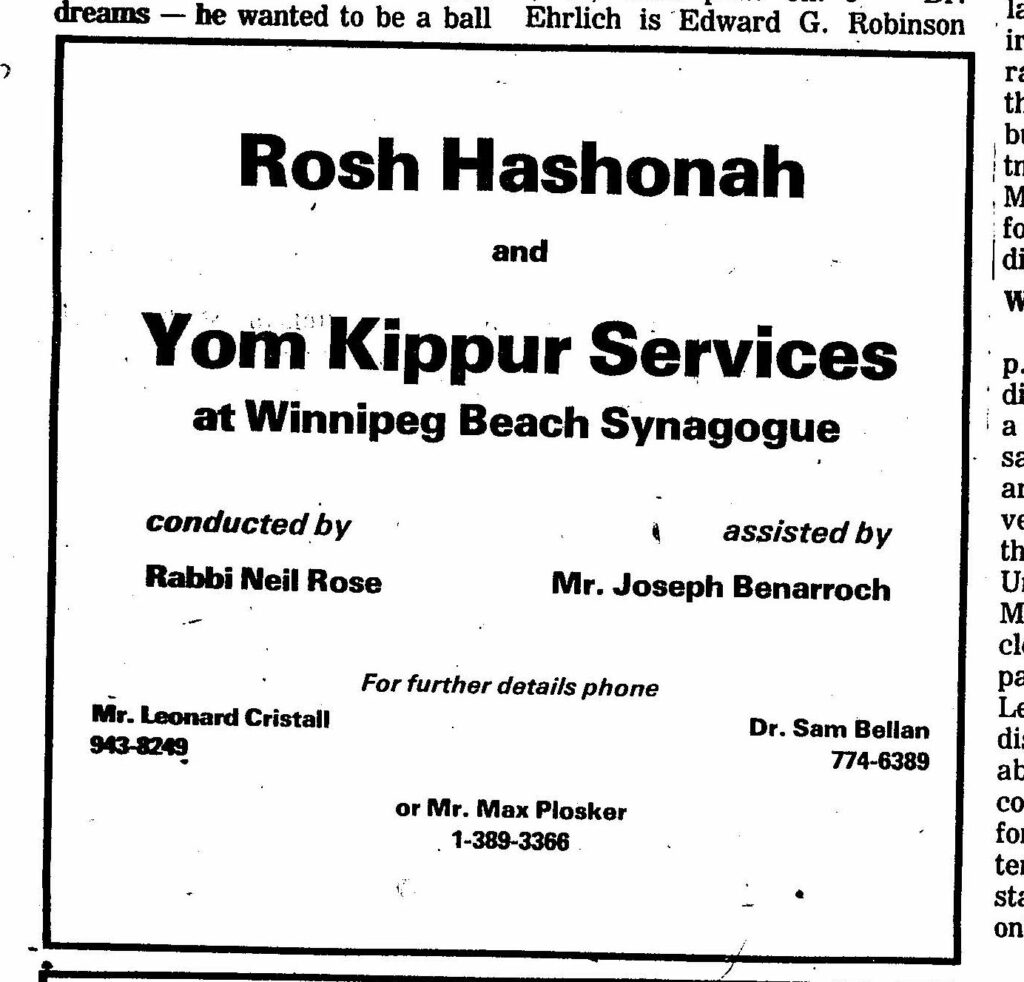
My 2010 article continued: “In 1998 the Town of Winnipeg Beach informed the members of the synagogue that the building would have to be hooked up to the town’s sewer and water system. Rather than incur the cost of $3-4,000, which was thought to be ‘prohibitive,’ according to longtime beach synagogue attendee Laurie Mainster, synagogue goers looked elsewhere for a solution.
“As a result, the board of Camp Massad was approached and asked whether the synagogue might be relocated there, with the understanding that the synagogue would be made available to the camp at any time other than what were then Friday evening and Saturday morning services.
“Over the years the ‘beach synagogue’ had come to be a very popular meeting place for summertime residents of Winnipeg Beach and Gimli. In fact, for years minyans were held twice daily, in addition to regular Saturday morning services. Of course, in those years Winnipeg Beach was also home to a kosher butcher shop.
“While the little synagogue, which measured only 18 x 24 feet, has gone through several transformations, including the move to Camp Massad, and the opening up to egalitarian services in 2007 (The move to egalitarian services was as much a practical necessity as it was a nod to the equality of women – the only Kohen present at the time was a woman!), it has always remained cramped at the best of times.
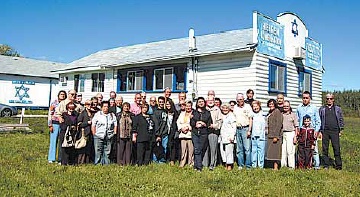
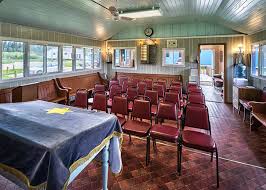
“In recent years the synagogue has seen the addition of a window airconditioner (although to benefit from it, you really have to be sitting just a few feet away), as well as a fridge that allows synagogue attendees to enjoy a regular Saturday morning Kiddush meal following the service.
“According to Laurie Mainster, the Saturday morning service has continued to be popular, even though many of the attendees now drive in from Winnipeg, as they have sold the cottages they once maintained.
“On the other hand, one of the side benefits to being located on Camp Massad’s grounds has been an infusion of young blood from among the camp counsellors.
“Since there is no longer a rabbi available to conduct services (Rabbi Weizman did lead services for years while he had a cottage at the beach), those in attendance now take turns leading the services themselves.
“Anyone may attend services and, while there are no dues collected, donations are welcome. (Donations should be made to the Jewish Foundation of Manitoba, with donors asked to specify that their donations are to be directed to the beach synagogue.)
“Mainster also says that the beach synagogue is now undergoing an expansion, which will be its first in 60 years. An entirely new space measuring 16 x 18 feet is being added – one that will allow for a real Kiddush area. (Until now, a table has been set up in the back of the synagogue and synagogue goers would help themselves to the buffet that is set up each Saturday during the summer. While pleasant enough, it will certainly be more comfortable to have an actual area set aside for the Saturday afternoon after service lunch.)
“As for dress, longtime attendee Abe Borzykowski (in an article written by Sharon Chisvin for the Free Press in 2007) remarked that ‘I don’t think there are many synagogues where people can attend in shorts, T-shirts and sandals and not feel out of place.’ “
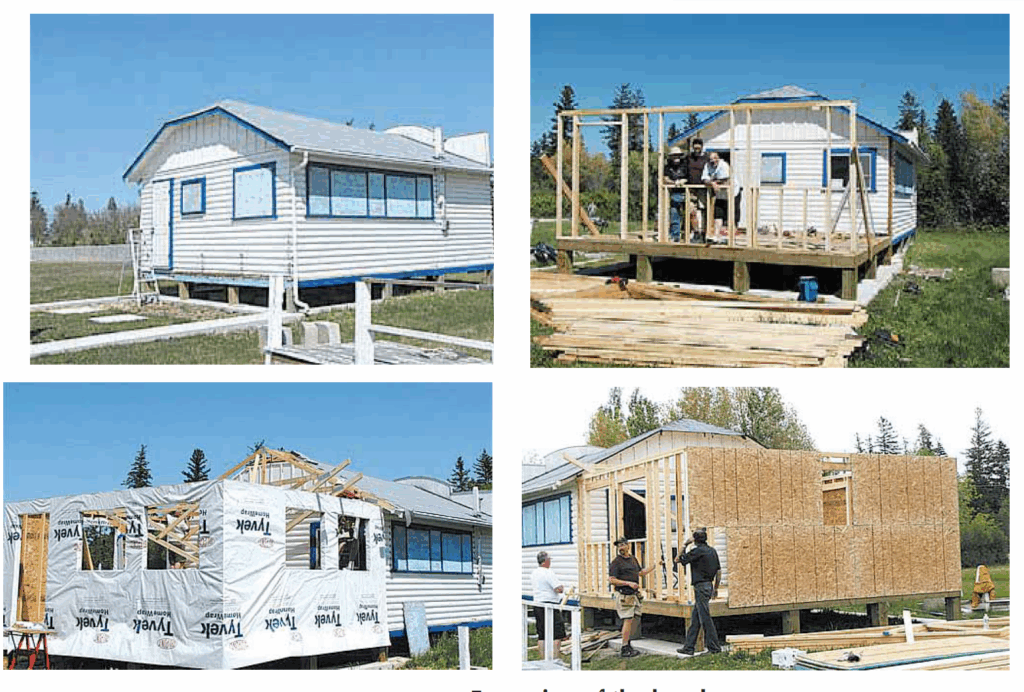
As mentioned in that 2010 article, the beach synagogue at that time was about to undergo an extensive remodelling. Here is an article from a January 2011 issue that describes that remodelling process. The article was written by Bernie Sucharov, who has been a longtime member of the beach synagogue:
“The Hebrew Congregation of Winnipeg Beach made a major change to the synagogue this past summer. With the help of many volunteers, Joel Margolese being the project manager, the synagogue was expanded and an addition was built to handle the overflow crowds, as well as to add more space for the kiddush following services.
“The volunteers spent many Sundays during the summer months building the addition. Bad weather caused many delays, but finally the addition was completed one week before the official summer opening.
“The volunteers were: Joel Margolese, Gordon Steindel, Sheldon Koslovsky, Viktor Lewin, Harvey Zabenskie, Nestor Wowryk, Kevin Wowryk, Victor Spigelman, Jerry Pritchard, and David Bloomfield.
“On Sunday, June 25, 2010 a special ceremony was held to affix a mezzuzah to the front entrance door. Gordon Steindel had the honour of affixing the mezzuzah, which was donated by Sid Bercovich and Clarice Silver.
“Refreshments and food for the day were prepared by Phyllis Spigelman, also known as our catering manager. Throughout the summer, Phyllis, Lenore Kagan and other friends prepared the food for our kiddush.
“A sound system was donated by Arch and Brenda Honigman in memory of their father, Sam Honigman z”l. “The system was installed by Joel Margolese and Stevan Sucharov. This will allow the overflow crowd to hear the service in the new addition.
“There were also generous donations of 50 chumashim and an air conditioner. The chumashim were donated by Gwen, Sheldon and Mark Koslovsky. The air conditioner in the new addition was donated by Joel and Linda Margolese.
“The official opening of the synagogue for the summer took place on July 3, 2010. We had an overflow crowd of 70+ people.”
Since that 2010 major addition to the synagogue, it has also added a wheelchair ramp (although I’ve been unable to ascertain exactly when the ramp was built). Also, the synagogue also has its own outdoor privy now. (Attendees used to have to use facilities in Camp Massad.)
And, as already noted in article previously posted to this site (and which you can read at Beach Synagogue about to celebrate 75th anniversary), in recognition of that occasion, on August 2nd members of the synagogue will be holding a 75th anniversary celebration.
As part of the celebration anyone who is a descendant or relative of any of the original members of the first executive committee is invited to attend the synagogue that morning.
If you are a relative please contact Abe Borzykowski at wpgbeachshule@shaw.ca or aborzykowski@shaw.ca to let Abe know you might be attending.


Features
An Overview of Antisemitism in Western Europe
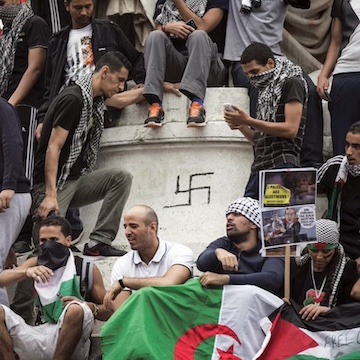
By HENRY SREBRNIK The European Union Agency for Fundamental Rights survey of 2024 found that 96 per cent of Jewish respondents had encountered antisemitism online or offline in the 12 months before the survey, and that 76 per cent avoided wearing or displaying items that would make them recognizable as Jewish in public.
Antisemitism in Austria remained at alarmingly high levels last year, reaching its highest point since records began. The Antisemitism Reporting Center of the Israelitische Kultusgemeinde Wien (IKG), the official body tracking antisemitic incidents against Austria’s Jewish community, released its annual report in April documenting 1,532 cases in 2025.
Last November, protesters rallied in Vienna against an event dedicated to Franz Dinghofer, an Austrian politician who was a self-confessed antisemite and a Nazi party member. They were protesting an event called the Dinghofer Symposium that they say is antisemitic. The far-right Freedom Party of Austria (FPO) members countered that they remember Dinghofer as a statesman in the period between World War I and World War II.
In Belgium, Jewish communities are described as tight-knit but insecure, and constantly aware that their citizenship and prosperity don’t guarantee their acceptance or safety. Too often, writes Brandeis University historian Flora Cassen, who grew up in the country, “governments and the media treat attacks on their Jewish communities as a front in the Israeli-Palestinian conflict, not as an attack on their own citizens.” In March, there was a car burning in the Jewish quarter of Antwerp. As well, a synagogue in Liège was damaged by an explosion in what the country’s interior minister called “an antisemitic act.”
In France, antisemitic violence has intensified while the experience of protection has weakened. Jewish students face harassment framed and justified as political expression. Synagogues operate behind security. Wearing a kippah can require calculation. These are no longer marginal experiences; they have become familiar features of Jewish life in places that once felt self-evidently safe. Since 2000, between 80,000 and 100,000 Jews have fled France — more than 20 per cent of the community.
More troubling still is the ideological shift. Antisemitism is increasingly reframed as political critique, social protest, or resistance to power. Jews are often excluded from the moral category of vulnerable minorities. The very frameworks designed to protect them can struggle to recognise them as victims.
A staggering number of antisemitic incidents has now become normal in France — 1,320 in 2025 is nearly double the already extreme 851 in 2014. But what’s more interesting is the shift in social permission to openly hate Jews.
The far-left La France Insoumise (LFI) Party in France has been accused by academics and ministers of antisemitism after their de facto leader, Jean-Luc Mélenchon, refused to call Hamas a terrorist organization and party members marched with Islamist-linked NGOs during Gaza protests. The LFI’s popularity has been on the rise in polling ahead of next year’s presidential election, according to the French newspaper Le Monde. Ninety-two per cent of French Jews believe that the LFI contributes to antisemitism in France.
Mélenchon took advantage of nationwide student protests in early October. To advance his political prospects, his strategy appears to be to capitalize on the discontent currently roiling the country. Mélenchon has also accused authorities of repression with a racist undertone, since many of the protesters are Muslim. No surprise, then, that Palestinian flags have appeared at the protests.
Although Mélenchon was known in the 1990s as a hardcore secularist, by 2020 he had allied himself with Houria Bouteldja, co-founder of the “decolonial” (anti-West) Parti des Indigènes de la République (PIR). Under Bouteldja’s influence, Mélenchon began to utter questionable remarks on the Jews. The way Mélenchon uses the idea of uniting against one enemy by speaking of Israel “is similar to the way Hitler used to speak about the Jews,” according to Israeli Ambassador to France Joshua Zarka. So it’s no surprise that French president Emmanuel Macron, getting more and more unpopular, recognized a Palestinian state in 2025.
Germany has cracked down on speech and demonstrations that assert support for Palestinians and accuse Israel of atrocities, part of a national policy toward antisemitism, defined over decades in the shadow of the Holocaust and sharpened recently under the helm of Felix Klein, the first federal commissioner for combating antisemitism. Many Jews say they feel safer under such bans. The Central Council of Jews in Germany recommended Klein for his appointment as antisemitism czar. Some human rights groups have objected, however, saying the bans limit free speech and criminalize legitimate expressions of support for the Palestinian cause.
Disputes over Israel recently erupted at the Buchenwald concentration camp memorial, as both Israel’s critics and its defenders claim the Holocaust for their terrain. The anti-Zionist group Kufiyas in Buchenwald announced a demonstration there on April 11, the anniversary of its liberation, in protest against a German court’s decision that the site could refuse entry to visitors who wear a Palestinian keffiyeh. The court said that wearing a keffiyeh to send a political message “would endanger the sense of security of many Jews, especially at this site.” The Buchenwald protest was condemned by the European Jewish Congress, and Klein said it marked a “new low point in the unfortunately all-too-common reversal of perpetrator and victim roles.”
In an election held Sept. 20 in Berlin, the left-wing Die Linke came in first, winning 25.7 per cent, more than doubling its 2023 share. Israel’s ambassador, Ron Prosor, described antisemitism within Die Linke as systemic. Philipp Peyman Engel, editor in chief of the Jüdische Allgemeine, the newspaper of the Central Council of Jews in Germany, wrote that party was “riddled with people who hate Jews and Israel.”
Italy in April announced that it was declining to renew a longstanding defence agreement with Israel, a sharp reversal for Prime Minister Giorgia Meloni’s right-wing government. Opposition parties had put pressure on the government for over a year to suspend the renewal. Marco Grimaldi, an opposition lawmaker, said the decision was “a victory” for those who had protested Israel’s military offensive in Gaza over the last three years.
On Oct. 3, 2025, there was a nationwide general strike, which the labour union leaders officially called “to support the residents of Gaza and a humanitarian aid mission.” While mass anti-Israel rallies gripped other parts of Europe, Italy’s were the most numerous.
Recent Italian demonstrations of “solidarity” with Palestine saw protesters carry Palestinian flags, flags of Italian labour unions, and red flags with hammers and sickles. Some of the banners had the words, in Italian, “yesterday partisans, today anti-Zionists and anti-Fascists,” and declared support for “Palestinian resistance.”
Dutch Jews have long been used to seeing security and armed police in front of their schools, synagogues and gatherings. Since a school and a synagogue were attacked over two days in March, an unsettling feeling has spread among Jews in the Netherlands. Assailants struck Jewish buildings — a religious school in Amsterdam, where most Dutch Jews live, and a synagogue in Rotterdam. Mayor Femke Halsema of Amsterdam called the blast at the school a “targeted attack against the Jewish community.”
Before the Holocaust, the Netherlands had a robust Jewish population. The Nazis deported 75 per cent of Dutch Jews to death camps, the highest such rate in Nazi-occupied western European nations. Today, the Jewish population of the Netherlands is estimated at about 35,000 people, just 0.2 per cent of the country’s 18 million residents.
“I am mostly angry,” declared Menno ten Brink, a rabbi at the Liberal Jewish Community in Amsterdam. The explosions have had a big impact on Dutch Jews and the wider society, added Eddo Verdoner, the Dutch national coordinator for combating antisemitism. Antisemitism has been increasing over the last decade or so, he said, with an “exponential increase” since October 2023.
Relations between Israel and Norway have plummeted to historic lows, with Oslo becoming one of the Palestinians’ staunchest supporters in Europe. Norway became the first European country to announce that it would arrest Israeli Prime Minister Netanyahu and former Defence Minister Yoav Gallant following the International Criminal Court’s issuance of warrants against them, and it then joined South Africa in its International Court of Justice case against Israel.
“I find it shameful that we have one of the most anti-Israel governments in Europe,” MP Himanshu Gulati, chairman of the Israel Allies Caucus in the Norwegian Parliament, has remarked. Not surprisingly, the Norwegian government has recognized. a Palestinian state.
In May, Norway’s higher education minister indicated that she did not intend to punish a university professor who praised Hamas’s Oct. 7 massacres in Israel because he had “the same freedom of expression as everyone else.” Sigrun Aasland was referring to Bassam Hussein, a professor at the Norwegian University of Science and Technology (NTNU), who on April 21, during a lecture before the Socialist Forum in Trondheim, said that the Oct. 7 massacres were “the most beautiful thing that has happened in our century.”
Norway’s Foreign Ministry put out a bill this fall before its parliament that would send Norwegian citizens and companies to prison for buying from, selling to, building for or investing in businesses owned by Jews who live in the West Bank. Negligent violators get six months.
In Portugal anti-Israel sentiment punctuates the actions of the political press. The most significant antisemitic events that occurred in recent years included demonstrations for better housing that targeted local Jews whose personal names were published in newspapers, bomb threats against the country’s largest synagogue and the Holocaust museum, which was called a “brothel that teaches the lie of the 6 million,” and hate messages written on the facades of Jewish homes to identify “Zionist pigs.”
Following October 7, 2023, antisemitic and antizionist incidents surfaced more visibly in public spaces and academic institutions. High-profile incidents include verbal electoral harassment against Jewish community figures like writer Esther Mucznik, acts of vandalism directed at the Lisbon Synagogue, and hostile propaganda targeting Jewish and Israeli students at the University of Coimbra
The far-left Sumar Party in Spain is part of socialist Prime Minister Pedro Sanchez’s ruling coalition. Their support has been strongest in areas with high Muslim populations, with party members attending demonstrations with Muslim Brotherhood-adjacent groups and Gaza protests organized by Islamist-leaning networks. Members also pushed for Spain to recognize a Palestinian state, which it did in 2024, while also referring to Israel as an “apartheid state.”
The political left spread a narrative across social media asserting that the recent migrant invasion by Moroccans of Spain’s Ceuta enclave is part of a vast American-Israeli conspiracy to destroy the country. Spain’s Transportation Minister supported the theory on social media while Gabriel Rufian, a spokesperson from the Spanish Congress, asserted that the U.S. and Israel were flooding Europe with migrants to “blackmail” the country.
In Sweden, debates about antisemitism loomed large throughout the recent election season, despite the country’s small population of Jews, who number about 20,000 in a country of more than 10 million people. Politicians on all sides repeatedly sought to position themselves as the best defenders against antisemitism.
Aron Verständig, who chairs the Official Council of Swedish Jewish Communities, said that while he appreciated gestures of solidarity with the Jewish community, he worried that politicians hurling accusations of antisemitism against each other could reduce Jews to a weapon of political debate. “Of course, it’s good that our situation is discussed and people are interested in what happens to the Jews here in Sweden — but on the other hand, there’s a risk that we are becoming a tool.”
Simona Mohamsson, Sweden’s minister for education and integration, who is of Palestinian and Lebanese descent, wore a Star of David during a televised debate. A member of the center-right Liberals, she wore the symbol “for the children who do not dare to in today’s Sweden.” She criticized members of the Left Party for “flirting with extremists.”
Since 2023, the war in the Middle East has been a defining trigger for antisemitic incidents in Switzerland. For the Jewish community, this has been a constant strain for more than three years.
Pro-Palestine activists are very active at Swiss universities. There have been anti-Israel demonstrations, some of which were associated with calls for violence and antisemitic slogans. The one in Bern in October 2025 stands out in particular because there was a massive outbreak of violence. In the larger cities of Switzerland, offensive graffiti relating to the conflict in the Middle East is omnipresent.
Here and there we see small improvements on the continent, but not enough to turn things around. The ancestral Jewish knowledge that safety can collapse with terrifying speed, even in civilised societies, begins to return.
Henry Srebrnik is a professor emeritus of political science at the University of Prince Edward Island.
Features
Musings from Dizengoff Street – by Bruce Brown (updated Oct. 5)
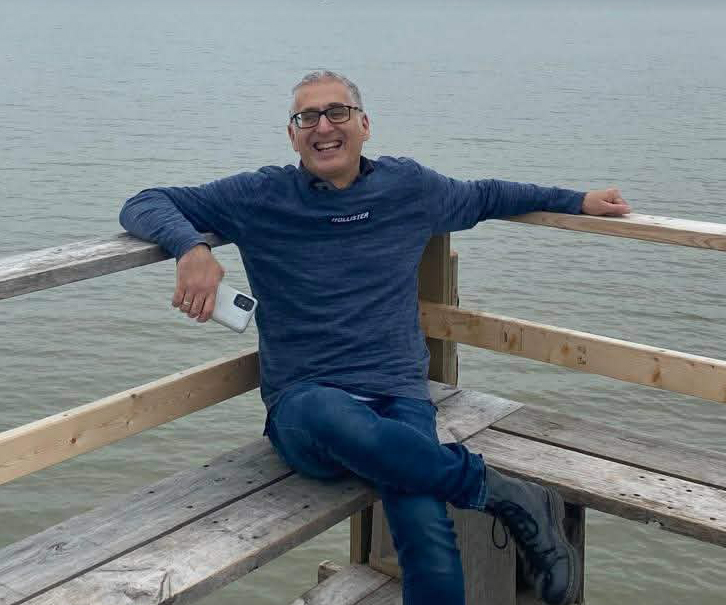
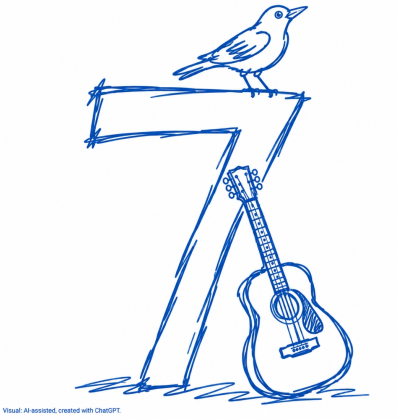
(Posted Oct. 6): Commemorating Oct 7 2023
Shortly after that tragic day. Visiting the haunting display of despair and hope at Dizengoff Square. The wounds still raw. Was mainly despair. With only a glimmer of hope. Overcome by the collection of bloodied and blindfolded stuffed teddy bears strewn against the Agam Fountain.
Driving home afterwards. Two songs played on the radio. One after the other. As if the music score to a very sad movie. Even today, when hearing these songs. They conjure up memories of my mindset three years ago.
George Harrison’s ‘While My Guitar Gently Weeps’. “I look at the world / And I notice, it’s turning / With every mistake / We must surely be learning / Still my guitar gently weeps…”
Paul McCartney’s ‘Blackbird’. “Blackbird singing in the dead of night / Take these broken wings and learn to fly / You were only waiting for this moment to be free / Blackbird fly / Into the light of a dark black night…”
Always remembering. But looking forward.
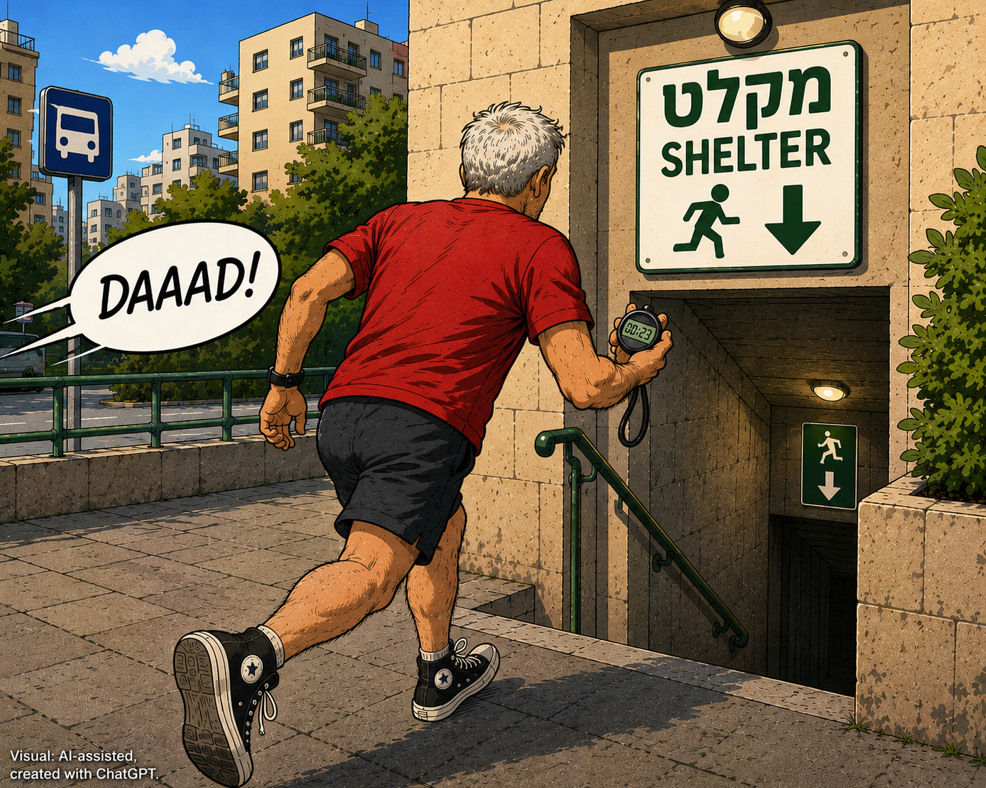
(Posted Oct. 1): So my daughter told me about the new apartment rental she was considering for the upcoming academic year in Jerusalem. “Third floor. Three bedrooms for three roommates. Twenty minutes from the university. Close to the bus stop. Grocery store nearby.” She itemized. Then with her next breath, “Shetler in the next building.” Kinda’ took my breath away. Is that where we live? What we’ve become? What pre-occupies us? Yes. Yes. Yes.
Despite my recurring safe room musings. It still kinda’ shook my core. But once I regained my existential footing. I realized how lucky we are. We have a well-prepared wartime infrastructure. We are conscious of wartime safety and security. It’s become second nature. Even when choosing an apartment. Then I recalled how last year. When my daughter first moved to Jerusalem. I focused on the shelter thing. Even timed a dash to the nearest shelter. She cringed with embarrassment. As she does with much of what I do – dad stuff and I digress. Now here she is. One year later. Itemizing her well thought out considerations. Including the shelter. I guess she listens to me after all. Well…sometimes anyway.
(Posted Sept. 28) Caution. Caution. A very long muse ahead….
So Prime Minister Netanyahu made his fifteenth address at the United Nations General Assembly. I get excited with every speech. Preparing some lightly buttered popcorn and comfortably settling in front of the T.V. for some high-stakes geopolitical posturing. And this one didn’t miss the mark and the high bar Netanyahu sets for himself.
Liked when he referred to our ‘friends’ leaving the hall before he spoke. Asking. And smirking. At the beginning of his speech. If there are any other “moral cowards” who would like to leave. He could have said much worse.
Liked his strong defense against the acrimonious, hostile, and simply incorrect accusation of genocide. Insisting, with examples, of Israel being guilty of the opposite. Supplying a million polio vaccinations. Distributing two million tons of food. Providing warnings of pending attacks -leaflets, cellphone calls, ‘knocks on the roof’ (an IDF tactic of firing non-lethal projectiles towards roof tops as warning to noncombatants to evacuate before a pending airstrike)- in civilian areas where Hamas is inevitably hiding. Netanyahu also referenced Colonel John Spencer, head of Urban Warfare studies at West Point and the preeminent expert on, well, urban warfare. Who clearly defends Israel as having done more to prevent civilian casualties in war than any other military in history. That’s quite a claim! So yes. Israel can actually be guilty of ediconeg – the opposite of genocide.
Didn’t like Netanyahu’s Ben-Gviresque defense of violent West Bank settlers. Or is it Judea & Samaria. I admittedly struggle in geographically defining the area, I digress. And didn’t like him referring to these settlers as “juvenile delinquents”. They are much more than that! If not terrorists, they should at least be called -and treated- as violent criminals. I admittedly struggle with finding the appropriate label, again digressing. Overall, this struck me as pandering to his far-right electorate. Standing before the green marble wall of the UN podium…hmmm, not the most appropriate venue for local electioneering.
Didn’t like his beeper reference. While brilliant, the pager attack in Lebanon happened in Sept 2024. Was so taken aback by this reference that I fact checked the date between mouthfuls of popcorn. And Israel already took credit for this publicly and at several international forums. Just seemed a bit dated, forced and out of place.
Liked the swipe at our ‘friend’ Mamdani. On the podium of the U.N. in N.Y. No less!
Liked his call for Jews around the world to stand tall. “Raise your head high. Be proud. Be confident. Don’t be intimidated.” He admonished. Okay, confession time. I will not speak Hebrew with the wife when travelling overseas. Am a bit scared and maybe need to stand a bit taller. I digress.
Liked Netanyahu’s callout to the Iranian people. Declaring that “The power of the people will overcome the people in power.” Although he didn’t have to provide a public service announcement for Elon Musk’s Starlink, waving a Starlink device at the podium.
Didn’t like, as pointed out by the Jerusalem Post, that there was no complementary vision to his fiery, hardline and somewhat Sparta-like rhetoric. No mention of a more conciliatory, Athenia-like vision for the day after. Emphasizing Israel’s desire for peace and what it can and has offered the world.
Loved the overall theme. That Israel will survive. And thrive. Because, as he exclaimed several times, “We have no other choice!” This was based on a reference in his address to his older brother Yonathan Netanayhu who led the rescue at Entebbe in 1976 and was the only Israeli casualty. Netanyahu even thanked the Uganda government for recently erecting a statue dedicated to his brother. Thought this a nice, personal touch.
Loved Netanyahu’s passion. His fiery indignation echoing throughout his almost forty-minute speech. His fury at the goldarn outrageous, bigoted, noxious branding of Israel as ‘bad’ by much of the world’s useful idiots. Although should have channeled some of that ire to a more conciliatory day after vision.
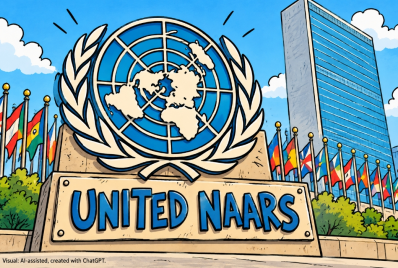
Anyway. As for the United Nations. That bastion of partiality and moral cowardice. Think it should be renamed the United Naars. Again I digress.

(Posted Sept. 25) Looping back to an August 9 muse about my visit to Jerusalem’s Basimta Café and its dispute with the neighborhood ultra-orthodox for opening on Shabbat. Which I felt was a bit of a storm in a teacup as there wasn’t much protest action when I visited. But kerfuffles nonetheless. Unfortunately the café decided against remaining open on Shabbat. According to the café manager “…it will return to what it was intended to be: a calm, pleasant and open place for coffee, culture and dialogue.” As it turns out, the manager is also CEO of Jews for Jesus. Which is fine by me. Live and let live. But just wondering if this was also reason for the café brouhaha. As there are many other Jerusalem cafes open on Shabbat which the ultra-orthodox do not protest against. Not that I want to give anyone ideas. Just sayin’.
(Ed. note: Just to put Bruce’s latest musing in context, here again is what he wrote on August 9): August 8, 2026)
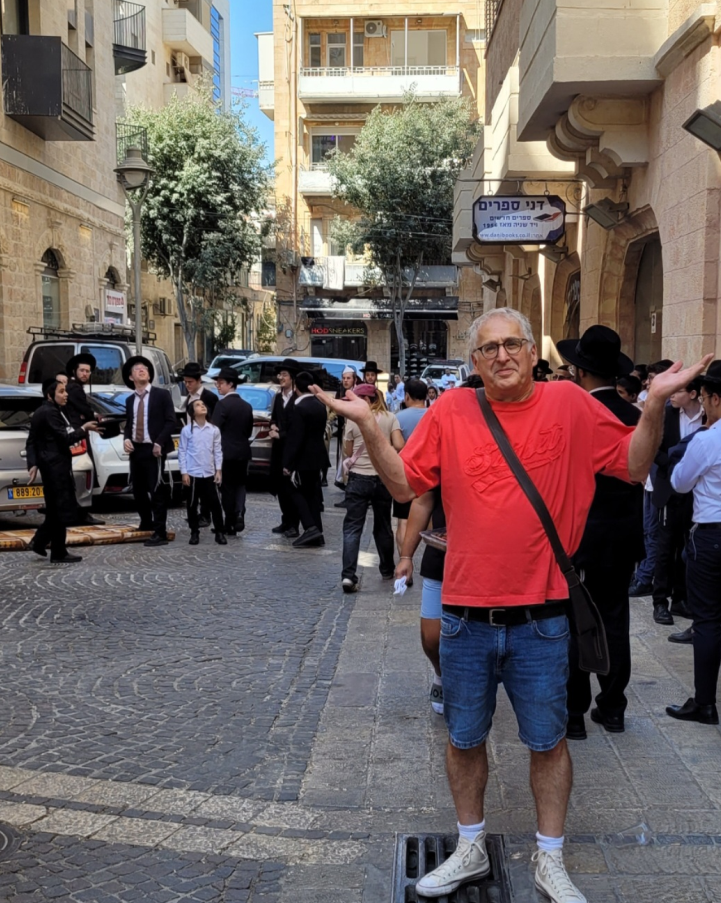
Outside Basimta Café in Central Jerusalem. Love the red shirt against a tiny sea of black. Not sure I am shrugging because of the ultra-orthodox uproar over a Jerusalem café operating on Shabbat or the lack of an ultra-orthodox uproar over a Jerusalem café operating on Shabbat. For the last six weeks Israeli headlines shouted about the cafe chaos. With the ultra-religious blocking entrances and storming the café. While shouting ‘Shabbos! Shabbos!’ Upsetting the secular amongst us just wanting to enjoy our Saturday iced matchas. So the wife and I thought we would check it out. And. Yes. Buy something to support the business. Uproar. Not. Blocked entrances. Not. Storming the café. Not. Albeit there were police barriers separating the devout protesters from the coffee drinkers. The protesters being just a few dozen black clad, pious Jews. Mostly teenagers. And yes. Shouting ‘Shabbos! Shabbos!’ Certainly underwhelming in its reported mayhem. Reminds me of the famous saying misattributed to Mark Twain – “If you don’t read the newspaper, you’re uninformed. If you do, you’re misinformed.” But I did enjoy my iced matcha.

(Posted Sept. 22) Admire him or despise him. Love him or hate him. Commend him or vilify him. Praise him or criticize him. Respect him or disdain him. Believe him or doubt him. Vote for him or not. However you perceive him. And whether you support him. Wishing Prime Minister Netanyahu a successful visit to New York and the U.N. And that we won’t have to send him a cake with a hacksaw baked inside. Mamdani… stand down!

(Posted Sept. 18) Just wonderin’. When a tree falls in a forest and no one’s there to hear it, does it make a sound? And if Iran says it’s not enriching uranium and no one’s there to verify it, do they develop fissile material?
Now Iran just obtained a seat on the General Committee of the International Atomic Energy Agency’s General Conference – how crazy is that. Like letting the cat guard the milk.
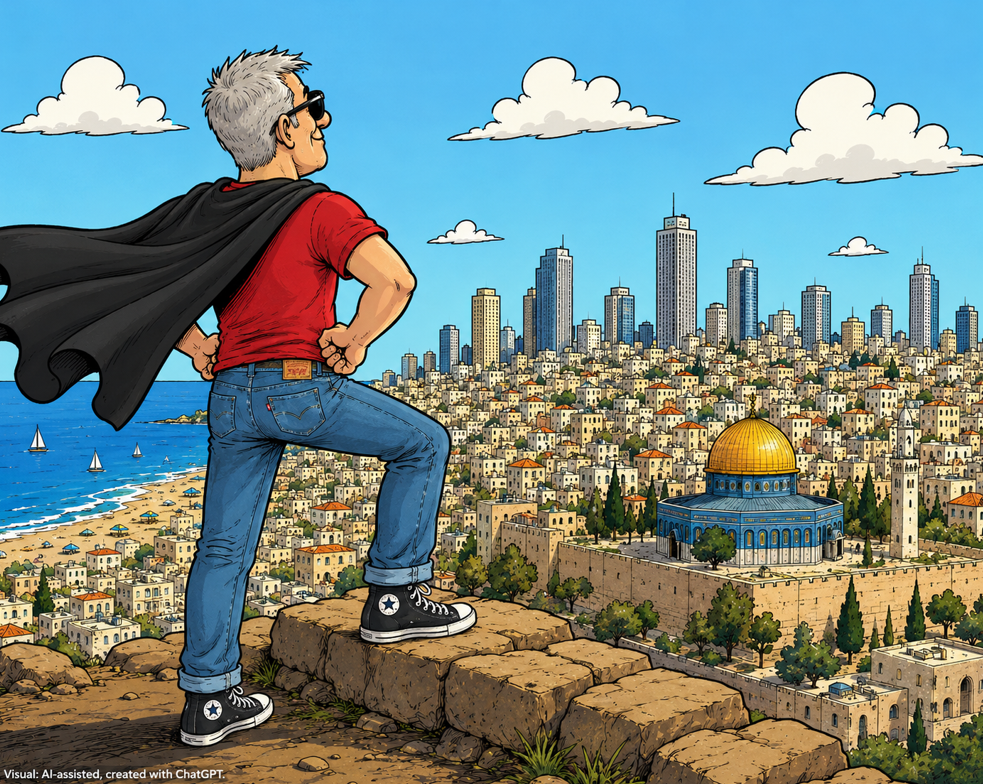
(Posted Sept. 15) Apparently some superheroes are against us. But not really. Whewww!!! Fortunately it’s just the progressive actors who play them in movies. Such as Benedict Cumberbatch (Dr. Strange) and Mark Ruffalo (the Hulk) as well as other minor actors not worth mentioning. What are these misinformed thespians aligning themselves with. Not sure they really know. Well. It’s with The Freedom for Marwan campaign, which pushes for the release of convicted, arch-terrorist mastermind Marwan Barghouti. Convicted in 2004 and sentenced to five life sentences plus 40 years for orchestrating various heinous shooting sprees in Israel during the Second Intifada (2000-2005). Killing and wounding too many innocent Israeli civilians including a Greek Orthodox monk outside Jerusalem. As a comic book fan, and closet Batman and Aquaman (when I swim), it saddens me that these guardians of the universe can be associated with defending evil. But then I remind myself it’s only the actors -what do they know anyway- and not really the superheroes. Unlike our own Gal Gadot (Wonder Woman), Natalie Portman (the Mighty Thor), Shira Haas (Sabra) and Liev Schreiber (Sabretooth). All firmly on the side of good.

(Posted Sept 10) Honey cakes. Honey cakes. Honey cakes. It’s that time of year. Yummy! Here comes Rosh HaShana 5787. And its…. You guessed it. Honey cake season. That light brown loaf our baba used to make. Starting a few weeks before Rosh HaShana and extending through Yom Kippur – a first bite to break the fast and usher in a sweet year- honey cakes are found throughout the country. The familiar sight of the ready-made, pre-packaged, ‘assembly-line’ honey cakes wrapped in cheap cellophane found in Grocery stores. The freshly baked honey cakes adorning window displays at local bakeries. The exorbitantly priced, gourmet honey cake desserts offered at fancy Tel Aviv restaurants. And of course, honey cakes festooning the festive, colorful, Rosh Hashana dinner tables across Israel. I bake my own honey cake which is pretty good. My wife and kids would beg to differ. But these slightly glazed honey cakes -of my own culinary, shtetl inspired creation- are heartedly enjoyed by me as I gain several honey cake induced pounds. Shana tova!

(Posted Sept. 8) Hoarding. A combination of my own little wartime PTSD and some recent headlines about Iran trying to coordinate a multifront attack (is that capability still there?!) and October 7 like rumblings from the West Bank (or Judea & Samaria, depending if you wear a kippa and if its knitted and if it tilts to this side or that side -that’s a shtetl insider joke). I digress and Yikes! And we just had a nation-wide drill of the IDF’s top-level headquarters preparedness for such scenarios. Double Yikes! So ya. I’m always checking and rechecking that we have way more than enough of some things. The thought of entering another prolonged war and some stuff no longer available, even for a short time, scares the bejeebers out of me. Just writing about it triggers the ‘go and buy’ dopamine hit. Medications. Toilet paper. Bottled water. Canned goods. Also worried about the country running out of bullets. But I can’t hoard those.

(Posted Sept. 5) An open letter to the zany and zealous mouthpieces of those delightful, anti-Israel protests held regularly in Toronto. In the heavily Jewish Bathurst & Sheppard area no less. Fear and harassment in the community? Not by the hairs of our chinny chin chins.
Dear Friends.
Are you serious.
Sincerely,
Bruce Brown, a Zionist who does not rape children. Who does not murder children. Who does not eat children. And, get this, who lives in Israel.
(Ed. note: To better understand what Bruce is talking about, go to this story on our website: Police open hate-crime investigation)

(Posted Sept. 1) Can you be more of an international embarrassment and liability? Yes talking about Israeli’s antagonist extraordinaire and National Security Minister Itamar Ben Gvir.
Declaring that Israel should kill ’30-40 Gazans a day’. Seriously?!?! His actual statement may have been more refined and qualified. But it doesn’t really make a difference. That’s the takeaway. Like whose side is he on anyway. Talk about giving our detractors ammunition to delegitimize our little shtetl. Hello?!?!
And a few days later. Showing off in front of a gallows site under construction at a high security prison. Seriously?!?! The death penalty for terrorists. Right or not – I think the former. But like can you give us reason to be compared to an extremist state. That’s the takeaway. Like whose side is he on anyway. Talk about giving our detractors ammunition to delegitimize our little shtetl. Hello?!?!
Serenity now!

(Posted August 28) Kites. Color. Childhood. Hamas and friends should watch Mary Poppins with the final kite flying scene. Remember that song, Let’s Go Fly A Kite. Ya, I know. Somewhat ethnocentric. But still…. I have fond memories of flying kites with my kids. Down the Mediterranean shoreline in Tel Aviv. At the Ness Tziona kite flying festival. Along the green grounds of the Weizmann Institute. Laughing and running. Looking to the sky with awe. Multi-shades and fancy. Kites.
With your fist ‘olding tight
To the string of your kite
…oh, oh, oh!
Lets go fly a kite
Kites. Fun. Laughter. Innocence.
Kites. Not an instrument of war.
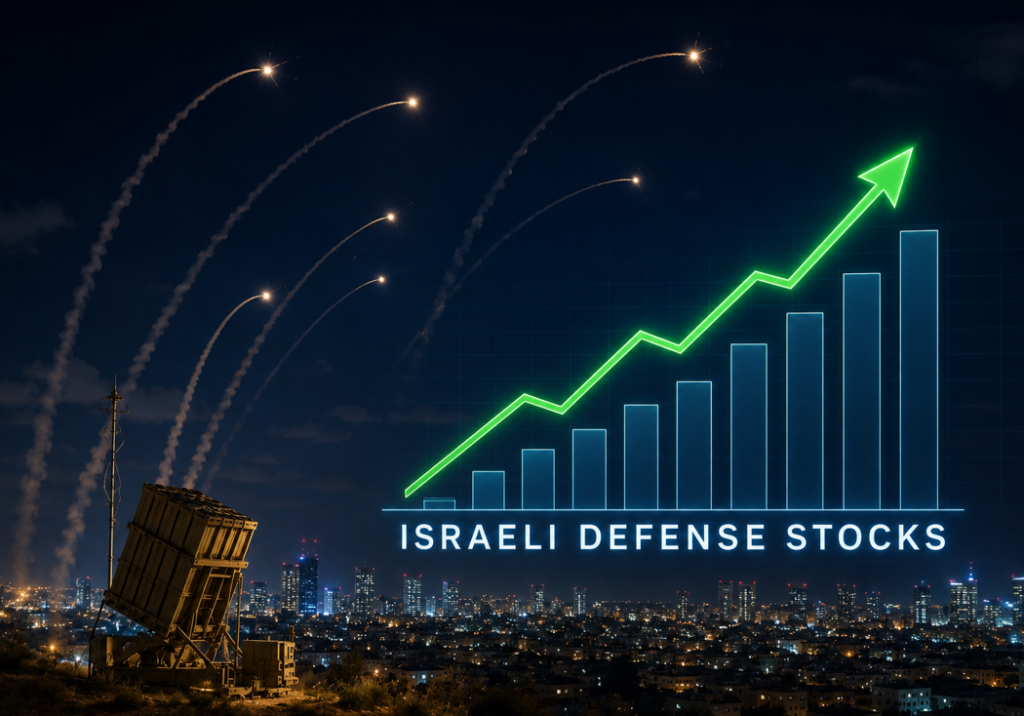
(Posted August 25) How principled can you be! Ireland -one of the most anti-Israel and foggiest countries in the EU- insisted that its government’s new, 60$M executive jet NOT be equipped with Elbit’s FalconEye navigation system, which helps pilots navigate in fog -how ironic- and other difficult weather conditions. Without this unique system the plane must be diverted to alternative airports. This a part of the government’s official boycott of Israeli goods. So good luck to Prime Minister Michael Martin in landing his aircraft in Dublin.
And despite some negative sentiment towards everything Israel, Elbit achieved over 32$B in backorders with Europe driving much of its export growth. On a more personal muse. The morning after Iran’s first attack on Israel (April 13 2024), I woke up not with fear and panic. Well. Okay. Some of that. But also great excitement regarding an investment opportunity which developed overnight. Actually it was the wife’s suggestion. After Israel successfully intercepted over three hundred missiles and drones – showcasing the strength of Israel’s defense industry- my wife had a eureka moment. What better public relations for Israel’s defense industry. Let’s buy stock in Elbit, a key player in that ecosystem. We did. And about eighteen months later we cashed in. With about 150% profit. This is not an endorsement to buy… blah, blah, blah….
Again. Good luck to Prime Minister Martin.

(Posted August 21) Sometimes musings are terribly sad. But should be shared.
Happy belated birthday beautiful Ariel. Turned seven on August 5th. Thought about him and his younger brother Kfir and mother Shiri. All murdered by Hamas shortly after their unbelievable and surreal abduction on Oct 7 2023.
As I was driving home today. “I Thank You Child” by Zakk Wylde shuffled onto my Spotify. Always kills me, this song. It was played by Yarden, the father who himself was held hostage, at the funeral of his family. For Ariel and Kfir. The lyrics chilling. The frequent drum rolls haunting.
It was you who made living all worth the while
Oh, I thank you, my child
Comfort in your eyes
For the warmth inside your smile
Faith’s done gone astray
It was you who made living all the while
All my fears repressed
Oh lovin’ you child it’s the best
This song. Written almost thirty years ago. Finds its devastating meaning today. With the Bibas family tragedy.
How.
Listen to the song here:
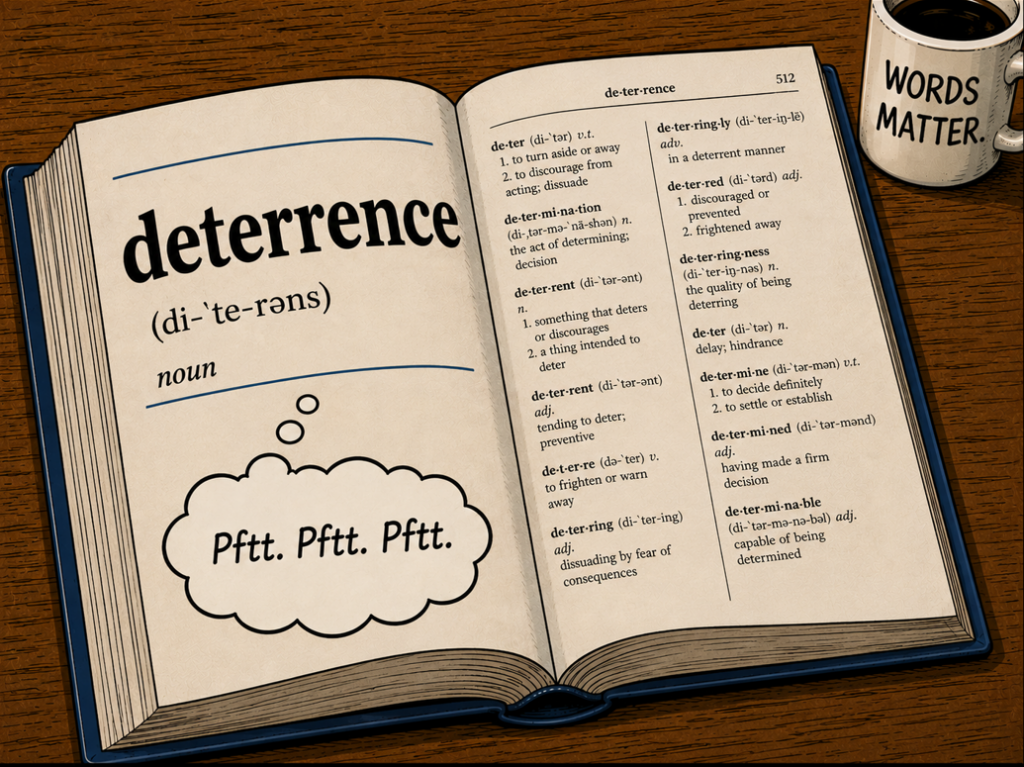
(Posted August 18, 2026) And the beat goes on in the strait. A bit quieter lately although may be heating up again with the 60day ‘ceasefire’ officially expired. And while Iran occasionally lashed out over the last two months, they did not attack Israel. How do you spell deterrence. According to my Yiddisha mama, its spelled ‘Pftt. Pftt. Pftt‘.
(August 14, 2026) Despite three years of varying degrees of warfare. Moody’s biannual report of the Israeli economy was quite positive. Basically, the report saw no pressures on Israel’s credit rating. While the macro data remains strong, Israel still faces a complex geopolitical situation further complicated by upcoming elections (we pondered about how crazy that is in an earlier muse). And Israeli’s inflation rate for the first half of 2026 fell to a historic five year low of 1.2% (vs Canada’s 2.6%). As for my own pocketbook. Haven’t had an infamous Israeli bank overdraft in years. So all is fine.
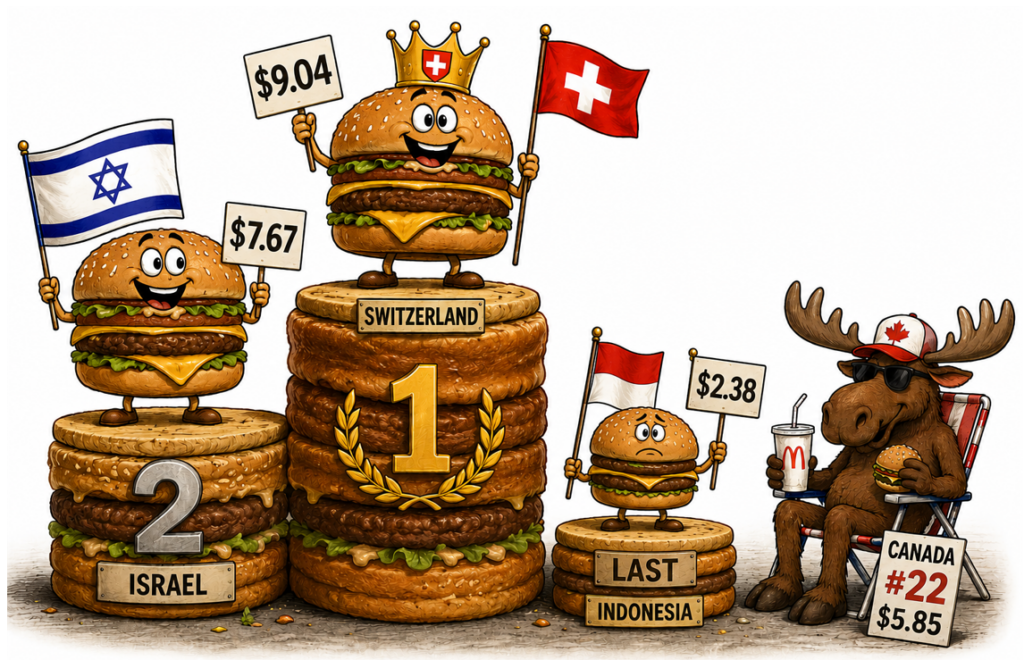
If that’s not enough economic voodoo talk for one musing. According to one famous barometer. Israel moved to second place in the Economist’s Big Mac Index. Introduced in 1986, this tasty indicator compares the purchasing power parity across countries by measuring the price of a McDonald’s Big Mac -which most can relate to- against the benchmark U.S. burger. So while a Big Mac in the U.S. costs $6.22. In Israel it costs $7.67, the second most expensive place to buy the hamburger in the world, Switzerland being the most pricey at a whopping (no reference to Wendy’s) $9.04. While the cheapest Big Mac can be enjoyed in Indonesia at only $2.38. Canada ranked 22nd of the fifty-four countries considered, at $5.85. Parity. Smarity. I’m going for my Big Mac fix. Just after I finish writing this muse….

(August 11, 2026) Bravo Boy George. We certainly will dance again! And what better way than with his new reggae tune. Now Boy George is dealing with a hostile backlash against his just stand for Israel. Having to withdraw from London’s East End production of Jesus Christ Superstar where he was going to play – guess it. King Herod. Never a big Culture Club fan, but I am anyway -as a sign of support- going to download his greatest hits to my Spotify library. And hoping to have a chance to buy a concert ticket should Boy George perform in Israel. Kind of reminds me of Bob Dylan’s 1983 song Neighborhood Bully. Also in defense of Israel. I’m going to download that song as well. Although don’t think he was hounded the way Boy George is now. Sign of the times I guess.
+++++
Coming clean. I sometimes find myself chanting, to no one in particular, that snappy little ditty ‘from the river to the sea, Palestine will be free.’ Now why can’t we come up with something as catchy. With such an impressive gene pool of great Jewish songwriters. George Gershwin. Irving Berlin. Burt Bacharach. Carole King. Neil Diamond. Leanard Choen. Paul Simon. Gene Simmons, Amy Winehouse. Bob Dylan. And yes, even the Buddhist Boy George. And still… gurnish! No wonder we’re losing the global PR battle
(August 8, 2026) Outside Basimta Café in Central Jerusalem. Love the red shirt against a tiny sea of black. Not sure I am shrugging because of the ultra-orthodox uproar over a Jerusalem café operating on Shabbat or the lack of an ultra-orthodox uproar over a Jerusalem café operating on Shabbat. For the last six weeks Israeli headlines shouted about the cafe chaos. With the ultra-religious blocking entrances and storming the café. While shouting ‘Shabbos! Shabbos!’ Upsetting the secular amongst us just wanting to enjoy our Saturday iced matchas. So the wife and I thought we would check it out. And. Yes. Buy something to support the business. Uproar. Not. Blocked entrances. Not. Storming the café. Not. Albeit there were police barriers separating the devout protesters from the coffee drinkers. The protesters being just a few dozen black clad, pious Jews. Mostly teenagers. And yes. Shouting ‘Shabbos! Shabbos!’ Certainly underwhelming in its reported mayhem. Reminds me of the famous saying misattributed to Mark Twain – “If you don’t read the newspaper, you’re uninformed. If you do, you’re misinformed.” But I did enjoy my iced matcha.

(August 6, 2026) Here we go again. Another round of forever negotiations. As someone who negotiates for a living. The way things are going in the straits. If I had to recommend a book on the subject to a new hire. Between The Art of the Deal, A Presidential Edition by Donald J. Trump or The Real Art of the Deal by the Mullahs of Iran with a special forward by the IRGC. Well. I would choose the latter.
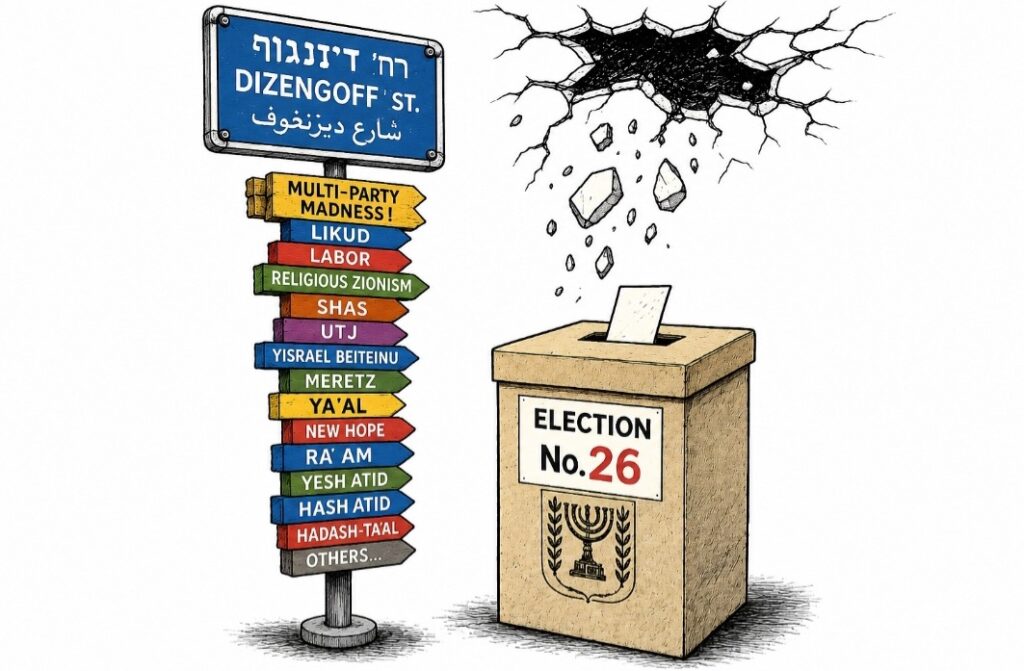
(August 3) Bravo Yoav Segalovitz, Liberal Yesh Atid MK and Monsour Abbas, United Arab Ra’am MK and party head. For breaking a glass ceiling where a Jewish lawmaker joins an Arab political party. No less a political earthquake in my little shtetl. Which can significantly impact coalition block arithmetic and posturing and strategy in the upcoming elections. Now Ra’am can be considered a legitimate ‘Zionist’ partner when forming coalition blocks and potentially pushing the ‘center left/right’ party over the 60 seat majority threshold. In our crazy parliamentary democracy defined by a multi-party (about fourteen!!), proportional representation system. To paraphrase Winston Churchill, Israel’s proportional representation model of governance is the best parliamentary democracy system except for all other forms of working democracies. Stay tuned for more amateurish political musings as we move towards Israel’s 26th national election – five of them held since 2019.
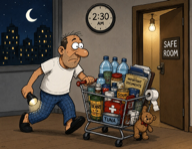
(August 1) Although both sides say they are open to diplomacy. Neither really trusts the other. And American military action, or its threat, continues. I read headlines in the middle of the night -it’s a nervous habit lately– that the Dynamic Duo of Trump and Netanyahu may again strike in unison. Possibly this weekend. Yikes! Prompting me, at 2:30 AM, to dash around the house stocking my safe room. Bottled water. Canned food. Medicines. Documents. The beat goes on….
If it’s crazy here. It’s insane in Italy. With a recent online ‘Jew Hunt’ in the Milan area. Before being removed, the digital forms urged reportings of Israelis and Italian Jews staying in local hotels. The infamous Global Sumud Movement -yes, the one coordinating ‘peace and humanitarian’ flotillas to Gaza- was somehow connected. Although they deny involvement?! This deranged decree was looking to identify Zionist tourism and Zionist neo-colonization in Italy. I’ll stick with stocking the saferoom.
Then there’s New York Mayor Mamdani, a Global Sumud Movement supporter, threatening to arrest Prime Minister Netanyahu if he comes to New York. But since discovered he has no legal right for such a grandstanding, antisemitic, anti-Israel, anti-Western, anti-democratic antic. Maybe Mandami should be arrested! Or at least impeached. For being a grandstanding, antisemitic, anti-Israel, anti-Western, anti-democratic mayor.
Here’s a post Bruce sent us Friday, July 31:
WARTIME MUSINGS
Should credible threats against FLOTUS and ‘FSOTUS’ (first son..) not be justification to attack first.
As for yesterday’s summit. Netanyahu really can’t win. Explainer. If Trump now attacks without victory its ’cause of Netanyahu. If Trump now attacks with victory its ’cause of Trump. And, in Israel, if Trump doesn’t attack -victory or not- Netanyahu failed in his eighth meeting with Trump. And if Trump does attack -victory or not- half the country will vilify Bibi anyway. Missing a permutation?
Ya. I know. Kinda’ need a definition of victory for that musing to work.
And here in my little shtetle. We go to sleep unsure if there will be a code red in the middle of the night. And if not. We wake up thinking it will be tonight. How do you define stress?

Seemed like an appropriate way to end this musing.
Bruce Brown is a former Winnipegger who made aliyah to Israel over 35 years ago. Bruce first began writing for us – in his own inimitable style, in 2012, during what was known as “Operation Pillar of Defense.” His occasional musings on aspects of life in Israel that were far from what you’d typically read in other reports from Israel were hugely popular – both in the print Jewish Post & News and on this website.
We’re now glad to report that Bruce is back writing for us – this time on a regular basis. We will post Bruce’s reports as they arrive – with the date of each post at the beginning of that post.
Here’s some information about Bruce – and awards he’s received for his writing:
Bruce Brown. Canadian born. Now living in Israel (for a long time). Bruce works in Israel’s hi-tech sector by day and, in spurts, is a somewhat inspired writer by night. He received the American Jewish Press Association’s award for writing excellence in 2019 and 2025. And wrote the1998 satire, “An Israeli is….”. Bruce’s visuals are AI-assisted and created with ChatGPT under his inimitable visual concept and creative direction. Bruce’s musings are political, social, economic and personal. With lots of biting, contrarian, sardonic, irreverent and mischievous insights.
Features
How the Experience Changes From Spectator to Player in Perya Games

Perya games often attract a crowd for a reason. Standing near a booth during a fiesta lets you track the colors, follow the dice, and read the reactions around the table. The tension builds with every roll, yet nothing personal sits on the line when you choose to watch. The moment you place a bet, the same game can feel entirely different, because what used to be casual observation turns into a committed choice with a real outcome.
This guide breaks down the difference between watching a perya game and actually playing one, including how digital Perya and online color games shift the social feel of the experience.
Quick Overview
Spectatorship allows time to observe. A viewer can study color trends, listen to other players’ comments, and enjoy the drama without making an immediate wager. Participation requires a decision before the result, plus the emotional and financial weight that tends to follow each round. Digital perya adds another layer by moving the experience from a shared booth environment to a private screen.
The Core Difference: Distance vs Decision
Watching provides distance. A spectator can linger for multiple rounds, note which colors appear, and talk to friends nearby. No deadline exists to commit, and leaving the booth stays simple because no money has been placed.
Playing removes that cushion. A player selects before the outcome appears. In a traditional perya color game, the decision comes first—choose a color—then the operator rolls three colored dice. Philippine event references often describe the same basic structure: a color choice followed by a three-dice result.
Why Watching Can Feel Lighter
From the sidelines, everything becomes easier to take in. A spectator can catch small details: one player switching picks at the last second, someone celebrating loudly, or the operator preparing the next round. With no wager involved, attention can stay flexible.
Spectators also get to mentally “test” picks for free. A viewer might think, “I would have chosen red,” without any consequences. When a player makes that same pick with money attached, the result tends to land harder. A win may feel like relief, while a loss can lead to disappointment, surprise, or the urge to jump into the next round quickly.
A Fiesta Scenario: When a “Streak” Becomes a Trap
Consider Nico, a typical fiesta visitor. Nico starts out watching the Color Game from behind the crowd. After three rounds, red appears more than once, and the repetition begins to stand out. From a spectator’s angle, noticing a “streak” feels like harmless pattern-spotting.
Once Nico decides to play, the emotional temperature changes. Money becomes tied to a color choice, and the next roll becomes personally important. The key issue is predictability: seeing repeated results does not create proof that the next outcome will follow the same direction. A sequence of earlier colors offers history, not certainty.
The Social Experience: Booth Culture vs Private Play
Perya in the Philippines is often tied to community celebrations. A traditional peryahan sits alongside rides, food stalls, and other booths, creating an atmosphere that feels closer to public entertainment than a quiet gambling setting. Many descriptions of perya culture focus on that social environment—neighbors gathering, friends commenting on outcomes, and strangers reacting together in real time.
This setting affects the split between watching and playing. Someone standing beside the booth can laugh, talk, and observe without the same pressure a bettor feels. Players stay inside the same lively space, yet attention narrows to selecting, waiting, and reacting.
Online perya removes much of that layer. The game may look familiar, but the crowd energy, booth sounds, and spontaneous conversation get replaced by an app interface. The experience becomes more individual, even when the rules resemble the ones used in physical perya booths.
Online Perya and Digital Color Games: What Carries Over, What Changes
Searches for “online perya” reflect how the term “perya” goes beyond a direct English translation of fair or carnival. In local use, it connects to fiestas, attractions, booth games, and shared social time. A digital platform can copy the mechanics of a particular perya game while leaving behind the environment that gives it much of its personality.
GameZone’s perya-related materials, for example, describe digital versions of familiar concepts such as Color Game and other arcade-style titles. Its Color Game format references six colors and three dice and includes reminders that previous results do not function as reliable predictors for future rounds. Gameplay familiarity and lived experience do not always match, especially when the setting shifts from a shared booth to a personal screen.
Pattern-Watching and the Illusion of Predictive Power
A common mistake involves turning observation into assumed advantage. A spectator might watch a sequence such as:
Red → Red → Blue → Red
and start looking for a rule. That mental move makes sense because humans naturally search for order in random sequences. Gambling research often discusses cognitive biases tied to pattern detection, including how representativeness and availability can influence judgment in chance-based activities such as dice tasks and bingo-style environments.
A pattern that feels meaningful may still fail as a guide. Past outcomes help describe what already occurred, rather than guarantee what happens next. Treating streaks as certainty can push decisions that rely more on emotion than probability.
Watching vs Playing: How Reactions and Behavior Shift
A spectator noticing repeated colors may treat it as casual information. A player seeing the same repetition may feel pressure to act on it, even without any real evidence that the next roll will follow the same direction.
Choice also reshapes emotional response. A viewer can imagine different picks without consequence. A player must commit to one selection, which makes uncertainty feel immediate. When a result conflicts with expectations, a spectator continues watching. A player may feel disappointment and consider changing strategy or betting again quickly.
Other people’s reactions land differently too. From the sidelines, celebrations and complaints add entertainment. From inside the game, those reactions can affect mood, focus, and decision timing, especially between rounds.
Risk and Responsible Play: When Money Enters the Picture
The gap between watching and playing becomes more serious when wagers are involved. Spectating stays low-risk entertainment. Playing introduces financial exposure and the need for self-control.
Time and budget planning can matter more than “reading” the table. Increasing a stake due to frustration, treating near-misses as signals, or believing a result is “due” can lead to impulsive choices. PAGCOR’s responsible gaming guidance commonly emphasizes setting time and money limits, expecting that losses can happen, avoiding borrowed funds, not chasing losses, and using self-exclusion tools when stepping away becomes difficult.
GameZone Notes: Licensing, Age Limits, and Official Sources
GameZone, also referred to as GZone in some materials, appears on PAGCOR’s regulatory listing as GAMEZONE (TOTAL GAMEZONE XTREME INCORPORATED), and the platform identifies itself as PAGCOR-licensed. Its terms and login flow indicate access for qualified users aged 21 and above, including an age confirmation step.

For iPhone users, the Philippine App Store listing for GameZone – #1 Tongits Platform identifies DigiPlus as the developer and lists an iOS 15.0 or later requirement. Verifying developer details and using official store listings can help avoid unofficial download sources.
FAQ
Is watching a perya game different from playing one?
Watching involves observation without wagering, while playing requires a personal decision and introduces financial risk.
Does watching many rounds help predict the next result?
Multiple past outcomes can show what has happened, but a sequence alone does not establish a dependable prediction for the next round.
Can people under 21 use GameZone?
GameZone’s terms and login requirements restrict registration and play to qualified individuals aged 21 and above.
