


Features
Jewish Entrepreneurship: Navigating Business Success in Canada
Canada has lots of businesses with creative people from different backgrounds. Some of these entrepreneurs are Jewish, and they have made a special mark on Canada’s economy. Before you get into the details, check out Betamo for the latest odds on live sports betting.
The Genesis of Entrepreneurship
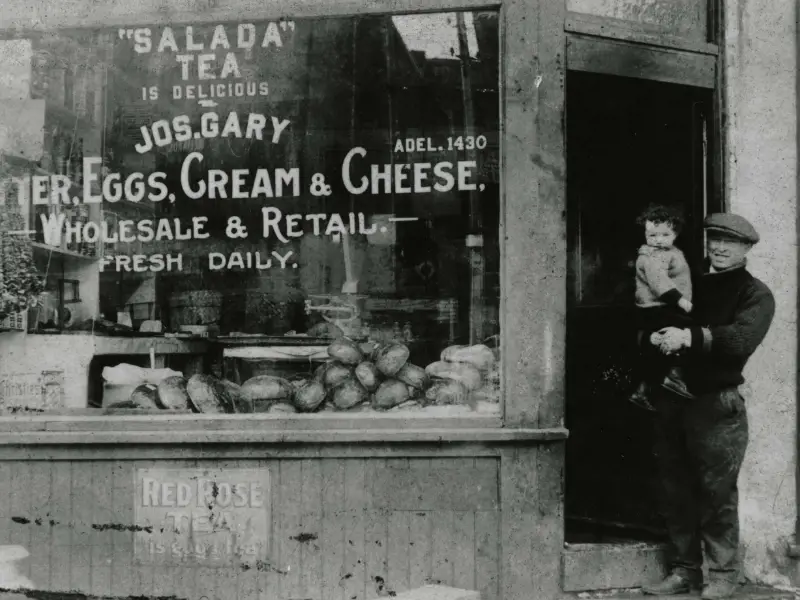
Arriving in Canada, Jewish people worked hard and began businesses during challenging times. They wanted to make money and help Canada grow. This early effort still affects how Jewish people do business and has a lasting impact on Canada.
Jewish immigrants in Canada began small businesses. Today, their entrepreneurial spirit continues. They’ve adapted well and play a big role in different industries. These entrepreneurs are innovative, adaptable, and committed to business and community success. Over time, Jewish entrepreneurship has strongly influenced and improved the Canadian economy.
From Mom-and-Pop Shops to Tech Innovators
Jewish businesses in Canada have often started small and grown big. Many businesses began as family-run shops, like corner stores and tailoring shops. They didn’t just make money, but also brought communities together.
Entrepreneurs continue to thrive, especially in technology today. They’ve seamlessly entered the tech industry, bringing new ideas and making significant contributions. This highlights the enduring impact of Jewish entrepreneurship on Canada’s ever-changing business scene.
Overcoming Challenges with Tenacity
Jewish entrepreneurs in Canada face challenges, especially during economic downturns. They use their skills and determination to navigate unpredictable market changes. Despite tough times, they demonstrate the ability to handle adversity. Being resilient is important. It helps them learn from challenges and use them as opportunities for new ideas.
The strong determination of Jewish entrepreneurs in Canada helps them keep going, even when things get tough. Instead of giving in to challenges, they use setbacks as a way to move forward and succeed. Facing challenges head-on makes you stronger and can lead to excellence in entrepreneurship.
Building Bridges through Philanthropy
Jewish entrepreneurs succeed by giving back to their communities. It’s not just about business; it reflects their cultural values. As they do well in business, helping communities becomes a priority. Success means more than personal achievements; it’s about making society better for everyone.
Cultivating Mentorship and Networking
In Jewish entrepreneurship, mentorship and networking are key. Entrepreneurs help each other out and build relationships beyond business. Within this community, mentorship is vital. It’s about passing down knowledge and experience to the next generation. This supportive culture keeps innovation and success going strong.
Within many Canadian Jewish-owned businesses, making connections with mentors and building networks is like creating a strong web. It’s not just about personal growth, but also about making the whole community stronger together. This goes beyond regular business ideas and focuses on forming real, meaningful relationships.
The Role of Jewish Community Institutions
Places like synagogues and cultural centers are important for new entrepreneurs in Canada. They’re not just for religious or cultural activities; they’re also great for businesses to grow. These spots don’t just give a space; they host events and programs to connect people. Jewish entrepreneurs enjoy community places to learn, share ideas, and make friends with people who think alike. Working together in these spots helps Jewish businesses grow all across Canada.
Jewish community places are involved in more than events. They help entrepreneurs by talking, sharing ideas, and creating a friendly community. Synagogues and cultural centers help Jewish business owners succeed and contribute to Canada. These places don’t just talk about business; they encourage it. They create a community where sharing ideas and working together are important for entrepreneurs.
Innovation in the Face of Change
In Canada’s business world, it’s crucial to adapt. Jewish entrepreneurs excel at coming up with new ideas when things change. They use technology to improve their businesses, work faster, and connect with more customers. Focusing on tech helps them stay ahead because not changing can make you fall behind.
Canadian Jewish entrepreneurs care about being eco-friendly. They use green technologies and make sure to get materials in a responsible way. These entrepreneurs don’t just get by; they focus on doing well in both business and society despite changes.
Celebrating Diversity within Jewish Entrepreneurship
Having diverse people isn’t just about having differences; it makes things better. Celebrating how Jewish entrepreneurs think and work creates a society that includes everyone. Appreciating each entrepreneur’s skills brings new ideas and success. Different ideas make businesses better and bring people together.
Features
What I miss

By DAVID TOPPER When my late wife, Sylvia, and I moved into the house I’m still in, we brought with us not only our furniture and other things from inside the old house, but some outdoor plants and flowers – even a shrub. The shrub, of course, was small: a young mock orange. Sylvia had a thing about mock oranges, so we dug it up and took it with us to the new house. Then there were irises that we inherited from the previous owners of our first house. I can still recall Sylvia doting over those irises when we moved there in 1971. They were very different varieties from those she was familiar with. I liked them, too. I also remember a rose bush. Well, everyone likes roses. Appropriately, it was red. So, the irises, along with the mock orange and the rose bush were transplanted to the new yard. That was in the summer of 1976.
For reasons that I cannot explain, when it came to plants and such, there was a sort of division-of-plant-labor between us. I took care of all the indoor plants and Sylvia did the outdoor ones. This meant that she only worked during the relatively short span from late spring to early fall, since we live in Winnipeg, Canada. Whereas, I looked over the house plants all year long.
Actually, I can explain something. You may have noticed that when speaking of digging up things I use the plural. This was because Sylvia enjoyed physically working in the yard. This digging urge she acquired in the year after High School that she spent working on a Kibbutz in Israel. It was daily hard physical labor in the field: digging, planting, pruning, picking and so forth. Yet she always talked about it lovingly. That was 1960-61 and I saw the blissful look on her face when working in our yard, from 1971 onward.
In time we had a diverse array of plants and flowers. In no particular order, we had lilacs, peonies, hostas, lilies, day-lilies, irises, roses, tulips, lungwort, elephant ears, clematis, rhubarb and the mock orange (which – along with the irises and roses – had grown quite nicely, since the summer of 1976).
All this lasted until the foremost transition in our lives. Early in 2014 Sylvia was diagnosed as being in an early stage of dementia. Over the next six years, as she drifted deeper into her black hole, I gladly obliged taking over the household chores, some of which I had begun already – such as doing most of the cooking. As for the outdoor tasks from spring through summer, that deeply implanted love of gardening was one of the last things to go from her immediate world. Even when she was not too sure who I was, she was glad to work with me in the yard with a shovel in her hands – and a smile on her face.
Sylvia died in the winter of 2020. Come spring, it was just me and the yard.
I don’t remember if it was that first spring or one later, but one day I noticed that the mock orange looked less robust – so I pruned it. That seemed to work for the summer, but the following spring it lost its vigor. More pruning didn’t help. Thus, slowly, over time, it died off and I dug up what was left.
Around the time I was still fiddling with the mock orange, I noticed the rose bush that Sylvia gave lots of love and care was not looking its usual hearty self. I got the fertilizer that she used to try to revive it, and that seemed to work. But the following year, the bush lost its vitality – and nothing I did (extra watering; keeping it dry) worked to impede the track it was on. In time, the rose bush died, too.
“What’s next,” I shouted to our yard.
The following spring the tulips came up as usual, but didn’t look as healthy as they should. These had a special meaning, since we bought the bulbs on a trip to Holland and planted them ourselves. Obviously, I tried everything I could to bring them back – reading all that the Internet had to say about tulips. Needless to say, that was the last summer for the tulips.
“Oh no,” I cried the following spring, when I first saw the irises. They were up, but not looking very well. This was probably the most difficult loss. I don’t know why, but those irises were part of an exceptional bond between us. Sylvia and I and the irises: their singularity symbolized the uniqueness of our relationship.
The irises were the last to go.
As I write this, the rhubarb still comes up, but it’s not as hearty as it used to be. The rest of the plants are doing fine: lilacs, peonies, hostas, lilies, day-lilies, lungwort, elephant ears and clematis. Incidentally, I also have a unique fondness for the clematis, since I bought it and planted it myself many years ago.
I wish to make clear that I’m not putting forth any causal or symbolic or spiritual or mystical meaning to all this, in relation to Sylvia’s demise. Rather, I’m just telling the story of my personal experience with the plants and flowers in our yard. You may read into it whatever you wish.
Now when I walk about my yard, enjoying the remaining plants and flowers amidst the bushes and trees, I not only see and derive pleasure from all that I still have – but I also “see” what is missing: that mock orange, the rose bush, those tulips and the irises.
It also reminds me what I intimately and ultimately miss.
Tags: bonding |caring |coping |loss |sharing |symbolism

David R. Topper writes in Winnipeg, Canada. His work has appeared in Mono, Poetic Sun, Discretionary Love, Poetry Pacific,Academy of theHeart & Mind, Altered Reality Mag. and elsewhere.
Related Posts
Features
A “Tour” of Antisemitism in Eastern Europe
By HENRY SREBRNIK As we enter the fourth year of the “October 7” wars, things in Eastern Europe remain dire. There have been dozens of attacks on Jewish institutions across the region.
True, there are a few bright spots. Albania’s prime minister is a surprising ally of Israel in a mostly Muslim country. Edi Rama openly defends Israel’s right to protect itself, and condemns Hamas in extremely harsh terms, calling them the “Nazis of the 21st century.” He notes that waves of Jewish refugees were welcomed over the centuries.
“On the eve of World War II, only about 200 Jews lived in Albania,” he told the Jewish magazine Mishpacha. “After the Holocaust, there were more Jews here than before — about 3,000. We didn’t hand over a single Jew to the Nazis. Seventy-five Albanians are officially recognized as Righteous Among the Nations, but in truth, the entire population mobilized.”
There is also better news from Croatia. Rabbi Pini and Raizy Zaklas moved to the country in 2004 to establish the first Chabad centre on “the land of a thousand islands.” Coming from their native Israel, it took time for them to come to terms with the fears of the Jewish community.
“We spent the first decade just earning their trust,” Raizy explained. “We had to put our grand ambitions aside and choose an individualized approach, fostering relationships through one-on-one meetings at coffee shops. Sometimes we felt disheartened at the slow pace of growth here, and worried we weren’t making progress. But I see in retrospect that we were putting down roots.”
In 2016, the Zaklas purchased a five-story building in the centre of Zagreb. Since then, it has become the spiritual center of Jewish life in the country. It’s a place where hundreds of weddings, bar and bat mitzvahs, and holiday programs take place annually. It’s a place where more than 3,000 Croatian Jewish men, women, and children find connection with their heritage. And it’s a place where thousands of tourists visit each year.
Less positive is the position of the Czech Jewish community. The Federation of Jewish Communities in the Czech Republic registered a total of 4,694 antisemitic incidents in 2024, compared with 2023, when 4,328 cases were reported. The severity of antisemitic incidents dramatically increased following the events of October 7. 2023. Anti-Jewish hatred, particularly in the form of demonization and delegitimization of Israel, became socially accepted and, according to the Federation, dominated public opinion.
In Greece, a spate of incidents in 2025 included a pro-Palestinian protest that blocked Israelis attempting to disembark from a ship in Syros, an alleged attack against Israeli teens in Rhodes, and an attack on King David Burger, a kosher eatery in Athens. Greek Jewish groups condemned an “anti-Zionist patrol” which took place on the streets of Thessaloniki, 95 years after assault squads targeted Jews in the same city. The left-wing anarchist Rouvikonas group organized the “anti-Zionist patrol” heading toward Mavili Square, which they said “Israeli capital has parasitically infiltrated.” They were joined by members of the groups Permanent Struggle for Class Liberation and the Libertarian Initiative of Thessaloniki.
However, in recent years there has been great improvement in formal Greek-Israeli relations, particularly following the disintegration of Israeli relations with Turkey. In August, Israel and Greece finalized a $3.5 billion deal, called the “Achilles Shield,” providing the Hellenic Republic with a multilayered antimissile system designed to protect the European Union country against aerial attacks from nations such as Iran and Turkey. It is one of the largest defence export deals in the history of the Jewish state.
The two countries “share common strategic interests and face shared regional challenges,” Israeli Defence Minister Israel Katz indicated. “At a time when actors with hegemonic ambitions are seeking to expand their influence and undermine stability in the region, Israel and Greece will continue to deepen their defence and strategic cooperation.”
Hungary too is a bright spot. It has stood virtually alone in defending Israel in the European Union. Budapest has consistently blocked one-sided, anti-Israel statements and stood firm on Israel’s right to defend itself. At the United Nations, where Israel is routinely demonized, Hungary has refused to go along with the mob. And not just on the international stage. At home, Hungary walks the walk.
Hungary is home to the largest Jewish community in Central Europe, with estimates ranging from 80,000 to 100,000 Jews, most of them living in Budapest. The city is one of the only capitals in Europe where Jews can freely wear a yarmulke without being harassed, attend synagogue without metal detectors and celebrate Jewish holidays without police guarding the doors of synagogues. The government has invested millions into preserving Jewish heritage sites, restoring synagogues and funding Holocaust education not just as a formality, but as a national priority.
Poland had the highest Jewish population in Europe prior to the Holocaust and was also the site of the Nazi death camps where most European Jews were murdered. It has therefore always been careful to curb expressions of antisemitism since it became a democratic state in 1989.
But the proportion of Polish citizens who dislike Jews has risen to 40 per cent, according to Poland’s Centre for Public Opinion Research’s 2026 findings. Conducted annually since 1993, the survey asks Poles whether they like or dislike various national and ethnic groups (21 in total). It found that the proportion of people saying they dislike Jews rose eight percentage points, more than for any other group.
Still, thousands of people converge on the historic Jewish quarter of Krakow every summer to attend the annual Krakow Jewish Festival. The festival was initially launched three-and-a-half decades ago for a non-Jewish audience as a new generation of young Poles has discovered a shared past in their mixed history.
“We seek to reintroduce the Jewish contribution to Polish culture to mainstream Polish society after many decades under Communism, where Jewish issues were banned in the country, and people didn’t know that Jewish contributed so much to our heritage,” Krakow Jewish Festival director Robert Gadek explained. “Here you have a Jewish festival that is being held in the open air, and everyone feels safe.”
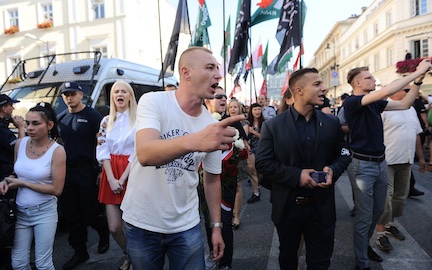
The war in Gaza sparked a wave of antisemitism in Romania, which has a poor track record of protecting its Jews. Antisemitism in Romania today is visible in far-right demonstrations, extremist political movements, and hostile rhetoric in parts of the media. “It’s getting worse,” according to Alexandru Muraru, a member of Romania’s parliament and vice-president of its National Liberal Party, who is not Jewish. “In Western Europe, they have big Muslim communities, which generates antisemitism. In Romania, there are only one or two mosques, but our antisemitism has historical roots.” Indeed, it does. In the 1930s, Greater Romania was home to some 800,000 Jews, giving it the world’s fourth-largest Jewish population after the United States, Poland and the Soviet Union.
“Back then, Jews made up an important proportion of Romanian society,” indicated Gilbert Șaim, who is the gabbai, or custodian, of Bucharest’s famous Choral Temple. “Despite widespread discrimination, there were villages, towns, and cities with large Jewish majorities — even villages established by ethnic Jews centuries ago, like Podu Iloaiei.”
Only 20 per cent of Romanians know about the Holocaust or its wartime role under pro-Nazi puppet Ion Antonescu. Most are unaware of their country’s role in the mass murder and deportation of hundreds of thousands of Jews during World War II. Antisemitism is expanding on social media, Facebook, TikTok and Telegram, though less visible in traditional mass media. The COVID pandemic amplified conspiracy dating back to the late 19th century. Despite a ban on glorification of Nazi heroes, at the end of November 2024, there was a public ceremony to commemorate a fascist leader.
This past April, the European Parliament lifted the immunity of one of its 33 Romanian members, Diana Sosoaca, the controversial leader of the ultra-nationalist and antisemitic SOS Romania party. Sosoaca, a lawyer, received the honorary Order of the State of for her support of the Palestinian cause.
Although antisemitic incidents are not too common, Serbia, like most other countries in Eastern Europe, also contends with a strong nationalist streak. Around 1,500 Serbs belong to extremist groups, of which perhaps 120 are active. Serbian Action, a small group of neo-Nazis, occasionally holds rallies and spray-paints antisemitic, anti-immigrant and anti-gay graffiti on public buildings.
Israeli and Serbian officials denounced antisemitic comments made by demonstrators during a clash between Serbian students and police at a protest last April. “Death to Vucic and all the Jews around him,” one protester said in a televised interview, referring to Serbian President Aleksandar Vucic. “Long live Serbia.”
Nemanja Starovic, the Serbian minister of European integration and the chair of Serbia’s delegation to the International Holocaust Remembrance Alliance, called on the protest leaders to “unambiguously condemn these antisemitic incidents and to immediately remove all antisemitic messages and slogans from university premises.”
A cause of uncertainty among Jews in Slovakia is the continuing defence by some traditionalist Slovak Catholic clerics and others of the reputation of Father Jozef Tiso, Slovakia’s most senior perpetrator during the Second World War. Tiso was responsible for extreme anti-Jewish laws and widespread Jewish impoverishment followed by expulsion of most of the country’s Jews to Nazi death camps. Yet there has emerged a whole literature of excuses for him.
As Slovenia takes a hard line against Israel, its tiny Jewish community feels increasingly isolated. Slovenia’s Jews have experienced a pattern of hostility for decades. In June 2024, Slovenia’s parliament voted to recognize a Palestinian state, only one week after Spain, Ireland, and Norway had taken that dramatic step. Half a year later, Slovenian public broadcaster RTV, became the first in Europe to demand Israel’s exclusion from the 2025 Eurovision Song Contest. RTV warned it might boycott future editions of Eurovision if Israel isn’t expelled.
Slovenia banned imports from Jewish settlements in the West Bank, only a week after prohibiting all weapons trade with Israel, the first EU member to do so. It also became the first European Union country to impose a travel ban on Israeli Prime Minister Benjamin Netanyahu.
Henry Srebrnik is a professor emeritus of political science at the University of Prince Edward Island.
Features
The Red Inheritance – a short story
By H.C. Piloski
PART I — ROOTS
Foreword
The Red Inheritance is a work of fiction built on real histories. The political movements, neighbourhoods, and events depicted here — from Winnipeg’s North End to the Holodomor, the gulag system, and the ideological battles of the twentieth century — are drawn from documented fact. The characters themselves are invented. Their names, relationships, and private lives have been changed.
This story engages with difficult truths: the idealism that drove many to fight fascism, the blindness that led some to excuse Stalinist terror, and the intertwined traumas carried by Jewish and Ukrainian families who fled Europe’s catastrophes. It also reflects the historical record of the Soviet security organs and the diverse individuals who served within them. These realities are presented not to assign collective blame, but to illuminate the moral complexity of an era when ideology often overshadowed humanity.
What follows is fiction. But the shadows it walks through are real.
This story is one thread in a larger tapestry of inherited memory and consequence.
I. The Tape (1934 → 2026)
Rachel Levinson found the box on a humid August afternoon in 2026, tucked behind dusty binders in the archives room of the Jewish Heritage Centre. It was unlabelled except for two faint words:
CP — Private.
Inside lay brittle pamphlets, yellowing papers, and a cassette tape with a fading label:
Labour Temple. 1934.
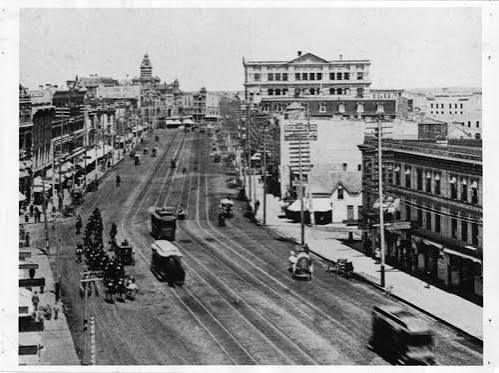
Her grandfather, David Levinson, born in 1915 to Polish immigrants Sarah and Moshe, had been the youngest of four children — a fact that shaped both his stubbornness and his need to prove himself in the crowded Levinson household. He had been a young Jewish organizer in Winnipeg’s North End, swept up in the Jewish Youth AntiFascist League. He had told her stories of the confrontation at Old Market Square, when Jewish and Ukrainian youth chased the brown shirts out of the square in 1934.
But he had never mentioned a tape.
She slid it into the old player.
A click. A whirr. Then his voice — younger, sharper, filled with conviction.
A faded photograph showed him as he once was: lean, brighteyed, a mediumsized North End boy toughened by winter streets and by the old prewar YMHA — the building Jewish youth used before the Hargrave and Qu’Appelle “Y” existed. That building was long gone now, replaced decades later by the Asper JCC in the south end — another reminder that the world her grandfather moved through had vanished, leaving only photographs and memory.
Her grandfather spoke of fascism rising in Europe, of solidarity, of the Soviet Union as “the only nation standing unflinchingly against tyranny.”
Then another voice mentioned a poet. A furnace. Books burned.
The tape clicked off.
Rachel sat frozen, the silence louder than the recording.
II. The North End (1930s → 1990s)
She drove to the North End the next day, needing to remember before she judged.
Her grandparents’ house on Matheson Avenue still stood — modest, sturdy, with a vegetable garden in the back. She remembered Shabbat dinners: the smell of chicken soup, her Baba Rivka’s laughter, her grandfather’s gentle voice blessing the candles.
The North End had always been a world unto itself:
Ukrainian churches with onion domes catching the prairie sun
Jewish bakeries on Selkirk Avenue selling poppyseed rolls and rye bread
Old synagogues tucked between corner stores
Brick houses, stucco cottages, and woodframe homes built by immigrants who arrived with nothing but hope
It was a neighbourhood shaped by trauma and by the stubborn hope that refuses to die:
Jews fleeing pogroms
Ukrainians fleeing famine
Poles fleeing war
Indigenous families surviving despite everything
Her grandfather’s politics had grown out of this soil — out of fear, out of solidarity, out of the belief that collective action could save people from the horrors they had escaped.
But the tape suggested a darker truth.
III. Her Grandfather’s War (1939–1945)
Rachel dug through old family papers until she found his service records.
David Levinson Royal Winnipeg Rifles Enlisted: 1942 Served in England, Normandy, and the Netherlands Demobilized: February 1946
He had fought fascism directly, not just in rallies but on the battlefield. He returned home a decorated veteran, married Rivka in 1947, and began work as a skilled employee at CP Rail.
He had been everything a family man should be.
And yet he had remained a Communist — not the romantic kind who drifted away after 1956, but the loyal kind, the dogmatic kind, the kind who refused to believe that Khrushchev’s revelations at the 20th Party Congress were anything more than Western propaganda.
A Stalinist.
IV. The Letters Home (1942–1945)
Among the papers Rachel found were copies of letters David had sent home during the war — to his parents, his siblings, and to Rivka, his wifetobe.
They were eloquent, heartfelt, and full of longing.
To Rivka:
“The nights here are long, and the cold seems to seep into the bones. But when I think of you lighting the candles on Friday night, I feel warm again. I carry that light with me.”
To his parents before Normandy:
“I don’t know what tomorrow brings. But I know why I’m here. If we don’t stop them, they will burn the world. I want to come home to Matheson Avenue. I want to sit at your table again.”
To his younger brother:
“Study hard. Live well. Don’t let the world make you bitter.”
Rachel felt her throat tighten. These were not the words of a zealot. They were the words of a young man trying to hold onto hope in a world on fire.
V. Her Father’s Story (1950s → 1978)
Her father, Michael, listened quietly as she explained what she had found.
“I knew he was involved,” he said. “More than involved. Dedicated.”
He admitted he had briefly joined the Young Communist League in the 1970s, swept up in youthful idealism. He had even attended the World Youth Festival in Havana in 1978, a gathering steeped in revolutionary rhetoric.
“But I drifted away,” he said. “Your grandfather never did.”
“He wasn’t perfect,” Michael said, “but he was steady. He worked hard, showed up for people, and carried more than he ever complained about. Whatever his politics were, he was a good father.”
“And he had a quiet sense of humour,” Michael added. “He could make you laugh when you least expected it.”
Then he told her something else — something his father had shared only once.
“During the war,” Michael said, “the men in his unit used to say, ‘Thank God the Red Army is fighting on the Eastern Front, so we don’t have to die.’ He never forgot that.”
It wasn’t ideology. It was survival. The Eastern Front had been a furnace, and the Red Army had walked into it first. For David, that memory fused with politics, becoming part of the reason he believed the Soviet Union had carried the heaviest burden in defeating fascism.
She asked whether he thought David had known about the poet.
Michael hesitated.
“He wasn’t a cruel man. But he believed in the cause. Maybe too much.”
VI. Her Mother’s Silence (1970s → 2026)
Her mother, Elaine, folded laundry as Rachel asked what she knew.
“I wasn’t political,” Elaine said. “Your grandfather knew that. He never pushed it on me.”
She explained that she had gone along with his beliefs because they were simply part of the household — relics of his past, not demands for her future.
“He was stubborn,” she said. “But he wasn’t a bully.”
Rachel believed her. But the poet’s books had burned. And someone had stood nearby.
VII. The Professor (2026)
She met Dr. Samuel Rosenfeld, a historian of Winnipeg’s Jewish left, in his cluttered office at the University of Manitoba. Books were stacked in uneven towers, papers spilled across his desk, and a halffinished cup of coffee sat precariously close to a pile of archival photographs.
He recognized her grandfather’s name immediately.
“A committed man,” he said. “Fiercely loyal. Sometimes too loyal.”
He handed her a folder about a Ukrainian poet who had immigrated to Canada, published a slim volume of verse, and then — in a burst of misguided hope — returned to the Soviet Union in 1932.
He disappeared into the gulag.
His books were burned in the Labour Temple furnace by local Stalinists.
Mykhailo Horodetskyi (1905–1933?)
Dr. Rosenfeld recommended books: Let History Judge by Roy Medvedev; The Strangest Dream by Merrily Weisbord; The Harvest of Sorrow by Robert Conquest; Red Famine by Anne Applebaum; The Forsaken by Tim Tzouliadis; How People Live in Soviet Russia (1932 in Yiddish, English translation 2020) by Mendel Osherowich.
“That last one,” he said, “was written by a Jewish journalist from New York who visited Ukraine during the famine. It was ignored for decades. Your grandfather probably never read it.”
Rachel felt a quiet ache. Her grandfather had lived in a world where certain truths were simply not allowed to enter.
VIII. The Prague Spring (1968)
As Rachel continued reading, she found references to another moment her grandfather had never spoken about: the Prague Spring of 1968.
Czechoslovakia had tried to build “socialism with a human face,” loosening censorship, expanding freedoms, allowing people to breathe again. And the Soviet Union crushed it under tank treads.
Her grandfather had been in his mid50s — old enough to understand, young enough to choose.
Had he defended the invasion? Had he doubted for the first time? Had he stayed silent?
The Prague Spring was a fracture point for many Western Communists.
But not for him.
His loyalty endured.
IX. Her Friend from Ukraine (2026)
Her friend Oksana Melnyk, a refugee who had fled Russia’s genocidal war against Ukraine, listened carefully as Rachel told her everything.
“My grandparents fled Ukraine during the Holodomor,” Oksana said. “My grandfather saw the Bolsheviks murder his parents in their village.”
Rachel felt her breath catch.
“They walked for days,” Oksana continued. “They buried their dead in frozen ground. They survived because they refused to die.”
She told Rachel about the missile strikes, the mass graves, the deported children — the new war of erasure.
“Russia is trying again,” she said.
Rachel realized her investigation was no longer just about her grandfather. It was about two histories colliding — but not equivalent histories.
David had fought fascists abroad, returned home, married, worked, raised children, tended a garden, blessed candles, and lived a long life in a free and democratic country.
Oksana’s grandfather had survived a stateengineered famine and witnessed murder.
The moral terrain was uneven, and she needed to tread carefully.
X. The Poet’s Poem (1932 → 2026)
Oksana translated one of Mykhailo Horodetskyi’s surviving poems — smuggled out of Ukraine before he disappeared.
“Harvest Without End” Translated by Oksana Melnyk
We cut the grain with blistered hands, but the fields do not forgive. Each stalk remembers those who fell, each seed refuses to live.
The earth is full of quiet bones, the sky of unsaid names. We gather what the land still gives, and carry sorrow like a flame.
Yet even in the darkest dust, we plant because we must. For harvest comes to those who wait, and hope grows from the rust.
Rachel imagined the book burning in the furnace, the pages curling, the words disappearing into smoke.
She imagined her grandfather standing nearby.
XI. Two Funerals (1998 & 2011)
She remembered her grandfather’s funeral in 2000 — the cold wind, the Hebrew prayers, the earth falling onto the coffin.
She remembered her Baba Rivka’s funeral in 2011 — the thawing spring air, the gentle mourning.
Two graves. Two lives. Two histories.
And now a third history — Oksana’s — had entered her own.
XII. The Decision (2026)
Rachel sat at her desk, opened her laptop, and began to write.
Not to condemn. Not to absolve. But to understand.
Her grandfather had fought fascists. Oksana’s grandparents had fled Communists. Both had suffered. Both had survived. Both had believed they were fighting for a future.
She would tell all of it.
The heroism. The blindness. The love. The silence. The contradictions. The pain carried across continents and generations.
She owed that to her grandfather. She owed that to Oksana. She owed that to the truth.
PART II — THE SHADOWS
XIII. The Embassy Rug (Late 1950s → Early 1960s)
There was another story — whispered, half forgotten — that Rachel could not ignore.
In the late 1950s or early 1960s, senior leaders of the Communist Party of Canada were invited to the Soviet Embassy in Ottawa. They were presented with a customwoven rug, a gesture of fraternal solidarity.
Pinned inside the rug, hidden beneath the fabric, were several thousand dollars in mixed denominations.
No receipts. No explanations. Just quiet loyalty.
It wasn’t a purge. It wasn’t a gulag. But it was a reminder: ideology had its networks, its incentives, its subtle pressures.
Her grandfather had lived in that world. He had trusted it. He had defended it.
And yet he had also blessed Shabbat candles, tended a garden, and carried her on his shoulders when she was small.
Contradictions. Everywhere.
XIV. The MP Who Spied (1940s → 1950s)
Rachel found another thread woven through her grandfather’s world: Fred Rose, Canada’s only Communist Member of Parliament.
Rose had been elected in 1943 on a wave of wartime goodwill — a Jewish labour activist who spoke passionately about workers’ rights and antifascism. But after the war, the truth emerged: Rose had been an agent of Soviet intelligence, passing information to the NKVD.
He was arrested in 1946, convicted, and eventually deported.
Her grandfather had never mentioned him.
Rachel realized that the Party David belonged to was not just a political movement. It was part of a global network — one that demanded loyalty, silence, and sometimes complicity.
The rug in Ottawa had not been an anomaly. It had been a symbol.
XV. The Jewish People’s Cultural League (1930s → 2026)
A week later, Rachel visited a modest community centre in the North End — home to the Jewish People’s Cultural League, a secular leftwing Jewish organization that had once been a hub of Yiddish culture, labour activism, and socialist politics.
The room smelled of old books and percolated coffee. Posters of Yiddish poets lined the walls. A faded banner read:
JUSTICE • PEACE • CULTURE
An elderly volunteer explained that the League had run choirs, libraries, lectures, and children’s programs. They had fought fascism. They had defended civil rights. They had also — sometimes reluctantly, sometimes fervently — defended the Soviet Union long after its crimes were known.
Rachel listened, thinking of the poet’s burned book.
The volunteer showed her a photograph from the 1940s: a crowd gathered for a League event, her grandfather somewhere among them, young and earnest.
“These were good people,” the volunteer said softly. “But they were caught in something bigger than themselves.”
Rachel felt the truth of it. Ideology had shaped communities as much as individuals. And her grandfather had lived at the centre of that world.
XVI. The Councillor’s Shadow (1940s → 1986)
Later that night, Rachel reread the article about Joe Zuken. She realized he was the perfect embodiment of the contradiction she was trying to understand.
A Communist and lawyer by training, he had fought for the poor first as a member of the Winnipeg School Board, and later as a longtime City Councillor. He even ran for mayor one year — a campaign that drew support from a wide range of leftists and other progressives, generating headlines across Canada and even in The New York Times.
He was an impassioned orator — sharp, articulate, and unafraid to confront injustice headon. A Marxist who defended civil liberties. A man who believed in the Soviet project but also challenged inequity at home.
Her grandfather had admired him. She found a note in one of David’s old journals:
“Zuken speaks truth even when it costs him.”
Rachel wondered whether her grandfather had seen in Zuken the version of Communism — really democratic socialism, much like that practiced by the governing New Democratic Party — that he wished were real: humane, principled, uncorrupted.
But history had not been kind to such hopes.
XVII. Sontag’s Reckoning (1982 → 2026)
Rachel reread Susan Sontag’s famous 1982 speech at Town Hall in Manhattan — the night she stunned a room full of American leftists by declaring:
“Communism is fascism with a human face.”
The audience had gasped. Some walked out. Others shouted. But Sontag didn’t retreat. She insisted that moral clarity required naming the crimes of Stalinism without euphemism, without nostalgia, without excuses.
Rachel wondered how her grandfather had reacted when he heard about it. Had he dismissed Sontag as a traitor to the cause? Had he ignored it? Had he felt a flicker of doubt?
She would never know.
But she understood something now: the moral rupture Sontag described was not abstract. It lived inside families like hers — in the gap between David’s idealism and the realities he refused to see.
XVIII. The Conversation (2026)
She met Oksana at a café on Corydon Avenue. They sat by the window, watching people pass by.
Rachel told her everything — the tape, the poet, the furnace, the rug, the League, Zuken, and Sontag’s Manhattan reckoning.
Oksana listened quietly.
“My grandfather saw the Bolsheviks murder his parents,” she said. “He never forgave. He never forgot.”
Rachel nodded.
“My grandfather fought fascists. He believed he was saving the world.”
They sat in silence, two women carrying two histories — different in scale, different in suffering, but both shaped by the same century’s storms.
Finally, Oksana said:
“Maybe your grandfather wasn’t wrong about the fight. Maybe he was wrong about the system.”
Rachel felt tears rise.
“Maybe,” she whispered.
They sat for a long moment, the café noise fading into a soft blur around them. Outside, a couple walked a dog. A bus hissed at the curb. Life went on — ordinary, unthreatened, free.
Rachel thought of her grandfather’s life: the house on Matheson Avenue, the garden he tended, the letters he wrote home from Europe, the steady job at CP Rail, the Shabbat candles he blessed with a gentle hand. He had lived in a country where he could argue, vote, complain, hope. His convictions had shaped him, but they had not destroyed him.
Oksana’s grandfather had lived in a world where hope itself was dangerous.
Rachel finally said, “He lived a good life, Oksana. A safe life. He came home from the war, married my grandmother, raised children, worked hard, grew tomatoes, read the Free Press, and believed he was part of something noble. He didn’t suffer the way your grandfather did. Not even close.”
Oksana nodded, her eyes softening. “I know. And that’s why this matters. Your grandfather had the luxury of believing. Mine had the burden of surviving.”
Rachel exhaled, feeling something settle inside her — not peace, but clarity.
“I’m not writing this to judge him,” she said. “I’m writing it because I finally understand the scale of the world he lived in… and the world your grandfather survived.”
Oksana reached across the table and squeezed her hand.
“That’s all any of us can do,” she said. “Tell the truth. Even when it’s complicated.”
Rachel looked out the window again. The lateafternoon light had shifted, turning the street a muted gold. Two histories — one sheltered, one scarred — had met in that small café on Corydon Avenue.
And for the first time, she felt she could carry both.
H.C. Piloski is a Winnipeg writer who works quietly at the edges of memory and history. His fiction often begins in archives and ends in the private places families rarely speak about.
